Categories
South Caucasus News

Caitlin Clark, Bullying And The Business Of Basketball – OpEd


Caitlin Clark, Bullying And The Business Of Basketball – OpEd

Caitlin Clark addresses the media in her press conference shortly after being selected first overall in the 2024 WNBA Draft. Photo Credit: JazzyJoeyD, Wikipedia Commons

By Kevin Duffy

Why do people watch sports? My mother believes it’s because “people want to be uplifted.” This may explain why many are upset about how basketball phenom Caitlin Clark, who broke the National Collegiate Athletic Association (NCAA) women’s and men’s scoring records, is being treated—or mistreated—in the Women’s National Basketball Association (WNBA).

As a longtime basketball fan, I’ve rarely given women’s basketball a second thought. Women play below the rim and lack the athleticism and WOW factor of their male counterparts. The WNBA brings in less than one-fiftieth the;revenue;of the National Basketball Association (NBA) for good reason ($200 million compared to;$10.58 billion).

Earlier this year, Clark hit a game winning, buzzer beating, deep three-point shot that got my attention. I kept hitting replay, not believing what I was seeing. This wasn’t a 1950s-style push shot but a jump shot with perfect form that looked like it came from the present-day men’s game. And it was from nearly thirty feet, truly a game changer. The hype surrounding Caitlin Clark was real, and the;viewership records;are no fluke.

Amid much fanfare, Clark was drafted number one by the WNBA and immediately tossed into a grueling schedule playing heavy minutes for the worst team in the league. The;fangs came out;early, even before she stepped foot on the court. Ten games into the season, Chicago Sky guard Chennedy Carter;blindsided;Clark on an inbound play that looked more like roller derby, then went to the bench where she was exuberantly greeted by her teammates. Carter’s coach;downplayed;the cheap shot, and Carter showed;no regrets: “I’m a competitor.;.;.;. It’s basketball. It’s all hoops. After we finish the game it’s all love.”

Whatever it is, it’s not good for business. Charles Barkley, NBA commentator and Hall of Fame player, reacted: “Y’all should be thanking that girl for getting y’all [expletive] private charters, all the money and visibility she’s bringing to the WNBA. Don’t be petty.” A few days later, Barkley;lamented, “Instead of talking about all the good things happening in the WNBA, we’re talking about negativity. There used to be the old saying, ‘All publicity is good publicity.’ No it’s not, not when you’re a niche sport trying to get the consumers to buy into your product.”

With a league in dire need of eyeballs, why would so many (not all) WNBA players be hostile to the one player who brings with her a massive fan base? According to;Clay Travis, founder of;OutKick, “The average WNBA player does not like Caitlin Clark because she is white, because she is straight and because now she is rich and getting a lot of attention. And there is a great deal of;resentment;about that.”

At the root of this;envy;is egalitarianism, the theory that all people are equal and that any differences in outcomes must be unjust and therefore remedied by the state. While;inequality in nature;is the norm, the sport of basketball provides one of the starkest examples on the planet: Victor Wembanyama, the top overall draft pick in the NBA, was paid $12.2 million his first year, 160 times that of;Caitlin Clark;($76,000).

From a free-market perspective, however, outcomes in sports are determined by;voluntary exchanges—fans, sponsors, and media pay for what they value. Only the process can be judged to be “fair” or “unfair.”

The Economics of Sports

The business of sports is highly scalable: games can be streamed to billions of viewers at practically zero marginal cost. Naturally, people have limited free time and prefer the highest quality product so outsized rewards accrue to a limited supply of top athletes. Demand for sports and sport figures is based on multiple factors: excitement, competition, spectacle, inspiration, achievement, fairness, community, relatability, likability, and physical attraction. Marketability of the product as well as individual athletes is based on checking as many of these boxes as possible. In contrast, the egalitarian is only interested in checking as many;victim group;boxes as possible—e.g., female, minority, gay, poor, short, ugly, etc.

Within a league and even within a team, inequality is the rule. Superstar NBA players like Michael Jordan, Lebron James, and Stephen Curry are exceedingly rare, but they can’t win by themselves. Teams need role players to complement their stars. For example, Jordan needed outstanding defenders and rebounders like Dennis Rodman as well as sharpshooters like John Paxson and Steve Kerr. You could not cobble together a more disparate group. Even though Jordan received most of the accolades and a disproportionate share of the financial pie, he elevated everyone around him. Kerr won five championships as a player (three with Jordan) and went on to become a successful NBA commentator and coach, adding another four championships with a team led by Curry. Not bad for a 6′;2″ white guy who can’t jump.

Sports leagues are constantly innovating to add excitement, competitiveness, and fairness. Basketball was once painful to watch as teams would get the lead and try to run out the clock without taking a shot. In 1954, the NBA introduced the twenty-four-second shot clock, ushering in the modern era of professional basketball. In 1951, the lane (an area below the basket where players can only spend three seconds) was widened to counter the dominance of big men like George Mikan and expanded further in 1964 due to Wilt Chamberlain.

During the 1979–80 season, the NBA added the three-point line which was initially dismissed as a gimmick. While its adoption was gradual and took decades, Stephen Curry’s entry into the league in 2009 revolutionized the three-point shot, making it a lethal offensive weapon and focus of the game. Caitlin Clark is the female version of Curry, which explains why she has NBA legends buzzing.

Source: Basketball Reference; WNBA Historical StatisticsSource: Basketball Reference; WNBA Historical Statistics

A Tale of Two Business Models

Following this meritocracy playbook, the NBA became a model of success: It boasts the third highest revenue among sports leagues in the world and attracts a truly global audience. China is its biggest international market with an estimated eight hundred million viewers.

In contrast, the WNBA failed to turn a profit throughout its twenty-seven years in existence,;propped up;ironically by the NBA, which owns 42 percent. Its primary mission is social activism, even if that means turning away paying customers. In February 2022, after;raising;$75 million from investors including Nike,;WNBA commissioner Cathy Engelbert said, “Our strategy is to deploy this capital to continue to drive the league’s brand as a bold, progressive entertainment and media property that embodies diversity, promotes equity, advocates for social justice, and stands for the power of women.”

To many, the WNBA’s brand image is a;welfare league;of angry women. Leaving Caitlin Clark off the Olympic team was another;missed opportunity, surely one of the biggest marketing blunders in sports history.

Despite the WNBA’s ineptitude, market forces threaten to rescue it from extinction. Three years ago, the NCAA allowed college athletes to profit from their name, image, and likeness. Companies like New Balance, LegalZoom, and State Farm feature WNBA players alongside NBA players in commercials. After all these years, the sport of basketball is finally becoming lucrative for a dozen or so women, even though the maximum salary in the WNBA is just $250,000. Clark recently signed a;$28 millionendorsement deal;with Nike.

Among Caitlin Clark’s most ardent defenders are black men associated with the NBA. Never at a loss for words, ESPN analyst;Stephen A. Smith;said,

Caitlin Clark is bringing more attention. When you get on the court with her and you perform and somehow, someway, you’ll find a way to attach yourself to that level of magnetism that she surely has, who knows what could be out there for you? And if suddenly the maximum salary goes from $250,000 to $450,000, and suddenly you’re on chartered jets instead of commercial flights, and suddenly you’re maximizing the potential of your name, image and likeness, what do you care? At the end of the day, the rising tide lifts all boats .;.;.

See how simple it is? It’s capitalism! It’s marketability! It’s taking advantage of the moment! That’s business!;Why be resentful of any of them? What is wrong with people? How do you not see that?

Russell Lamberti recently;tweeted, “Sport is a radical hierarchy of excellence sorted by genetics, upbringing, resources, luck, volition and character. Egalitarians therefore hate sport and are driven relentlessly to disfigure it with ideology.”

These forces are colliding on the basketball court.

Think of this as a teaching moment for the WNBA and its players. Life isn’t fair. Capitalism uplifts and grows the pie for everyone but doesn’t split it equally. The alternative is to tear down the most successful and fight over crumbs.

I hope Caitlin Clark and the profit motive will ultimately win out and that better days lie ahead for the WNBA. If so, perhaps the business of basketball will one day dissuade promoters of equality and zero-sum economics. One can dream.

  • About the author: Kevin Duffy is principal of Bearing Asset Management which he cofounded in 2002. The firm manages the Bearing Core Fund, a contrarian, macro-themed hedge fund with a flexible mandate.
  • Source: This article was published by the Mises Insitute

Categories
South Caucasus News

Climate Change And Urban Violence: A Critical Knowledge Gap – Analysis


Climate Change And Urban Violence: A Critical Knowledge Gap – Analysis

children mother family poverty suffering

By Dr Farah Hegazi

Cities will play a key role in humanity’s future. More than half;;of the world’s population (57 per cent) lived in urban areas in 2022 and the share is projected to reach;almost 70 per cent by 2050. Cities already feature in the climate change debate for their carbon footprints and, in many cases, leadership and innovation in the green transition. But they are also uniquely vulnerable to climate change.

There has been little research to date on how climate change could increase the risk of urban violence, but there are many reasons to think that it could do so. As both urbanization and climate change intensify, there is an urgent need to understand this relationship in order to prevent the effects of climate change from becoming yet another source of violence in cities.;

This blog examines one potential set of causal relationships by which climate change might increase the risk of violence being perpetrated by or against the urban poor: perceived governance failures that make them more vulnerable to climate change impacts, causing grievances that eventually result in violence.

Exposure and vulnerability to climate change in cities 

Cities are exposed to a wide variety of climate change effects. Research suggests that the;most important impacts;are likely to be higher average temperatures, heatwaves, flooding from changing rainfall patterns and sea-level rise, and water scarcity.;

An example of how climate change can impact urban residents is flooding. Around the world, about;25 per cent;of the global population lives in high-risk flood zones,;the vast majority in developing countries. Flooding has;myriad effects on cities, including by increasing public health risks and disease outbreaks when water and sanitation systems are compromised, and damaging or destroying property. Flooding can disproportionately impact the urban poor, especially if they live in informal settlements in flood-prone zones.;

While flooding can be the result of heavier rainfall, many of the world’s cities will also be exposed to the effects of sea-level rise. By 2050, it is projected that;about 800 million people;will be living in cities affected by at least half a metre of sea level rise. In Dar es Salaam, Tanzania, for example,;approximately 8 per cent of the city;is currently below sea level, putting at least 143;000 people at risk of coastal flooding. Informal settlements in Dar es Salaam are also growing as a result of a rapidly increasing population,;including in already coastal flood-prone areas. Coastal flooding not only destroys property but it can damage critical infrastructure and;contaminate;the city’s freshwater resources.;

From governance failures to grievances

Poor urban governance and infrastructure can;increase vulnerability to the effects of climate change. For example, in 2023,;Storm Daniel hit the east coast of Libya, bringing with it strong winds and heavy rainfall which led to extensive flooding. The storm caused the failure of a long-neglected dam, which led to the total destruction of whole neighbourhoods in the port city of Derna, with thousands killed and tens of thousands displaced.

Even before Storm Daniel,;poverty rates in Derna were high and other infrastructure was badly maintained. One week after the storm,;grievances against the city government spilled over;when residents of Derna took to the streets to demand accountability for the neglect of the dam and the mismanagement of the crisis. The protests escalated to violence when protesters set the house of the city’s then mayor alight.

Poor governance and neglect often contribute disproportionately to the climate change vulnerability of poor and marginalized urban communities. As well as failing to build these communities’ preparedeness and resilience ahead of time, authorities have often provided inadequate help during crises and post-crisis recovery. For example, during flooding in Accra, Ghana, in June and July of 2006, authorities;provided no concrete assistance;to informal communities, even after complaints were lodged, forcing residents to fend for themselves. Such neglect can fuel grievances, potentially leading to unrest and even violent protest—as well as violent suppression by state or private actors.;

In some cases, official responses to climate change impacts even make the situation worse for affected communities. For example, recent flooding in Nairobi, Kenya, affected;more than 380 000;people across the city, but the government’s response has;created more difficulties;for poor communities. Reportedly;invoking its ‘duty to protect lives’ as justification, the government has;evicted low-income residents;living within 30 metres of riparian zones, demolishing their homes and providing them with temporary shelter. Further fueling grievances and resentment against the government, many affected families have still not received financial compensation;promised;by Kenya’s President William Ruto.

More research is needed on the links to urban violence

There are solid grounds for believing that climate change impacts could increase the risk of violence in affected cities and urban communities. When authorities fail to protect and support communities, and especially when the actions of authorities—or indeed of private citizens or businesses—are perceived as contributing to a community’s marginalization and vulnerability, this can be a source of anger and resentment.;

The research on urban violence shows that such grievances can be a source of violence, direct or indirect. Because the world is rapidly urbanizing, and climate change will increasingly affect cities, it is reasonable to assume that—unless steps are taken to reduce the vulnerability of urban communities, increase their resilience and provide adequate, just responses—climate change could increase grievances among urban communities that in turn spill over into violence.

However, academic research on how climate change contributes to urban violence is very limited. Most of the research focuses on the impacts of urban flooding on unrest, including riots and violent demonstrations, and indicates that;flood-related violence tends to occur in places where affected groups are marginalized.;

However, the limitations of the research leave it unclear how, and even whether, grievances constitute a predictable pathway by which urban marginalization and climate vulnerability lead to unrest and potential violence. More research is therefore needed to understand what these circumstances are and how the climate-related grievance mechanisms play out—for example, when and how grievances might lead to violence and how this can be prevented.;There may also be other mechanisms linking climate change and urban violence that are worth exploring. For example, climate mitigation or adaptation measures could cause grievances if they are poorly planned or perceived as unjust.

Equipped with that understanding, addressing the effects of climate change can be used as an entry point for violence prevention in tomorrow’s cities.


Categories
South Caucasus News

Iran’s Presidential Selection – Foundation for Defense of Democracies


Iran’s Presidential Selection  Foundation for Defense of Democracies

Categories
South Caucasus News

Effort to restore Iran nuclear deal ‘remains elusive’, Security Council hears – UN News


Effort to restore Iran nuclear deal ‘remains elusive’, Security Council hears  UN News

Categories
South Caucasus News

Iranian presidential candidates debate foreign policy ahead of Friday vote – ABC News


Iranian presidential candidates debate foreign policy ahead of Friday vote  ABC News

Categories
South Caucasus News

Iran and UN Security Council Resolution 2231: E3 Joint Statement – GOV.UK


Iran and UN Security Council Resolution 2231: E3 Joint Statement  GOV.UK

Categories
South Caucasus News

Space Command Boss Warns of Russia, China Cooperation – Air & Space Forces Magazine


Space Command Boss Warns of Russia, China Cooperation  Air & Space Forces Magazine

Categories
South Caucasus News

Sen. Bob Menendez’s Egypt trip planning got ‘weird,’ Senate staffer recalls at bribery trial – KSTP


Sen. Bob Menendez’s Egypt trip planning got ‘weird,’ Senate staffer recalls at bribery trial  KSTP

Categories
South Caucasus News

Interest On US National Debt Surpasses Defense Spending – OpEd


Interest On US National Debt Surpasses Defense Spending – OpEd

dollar military

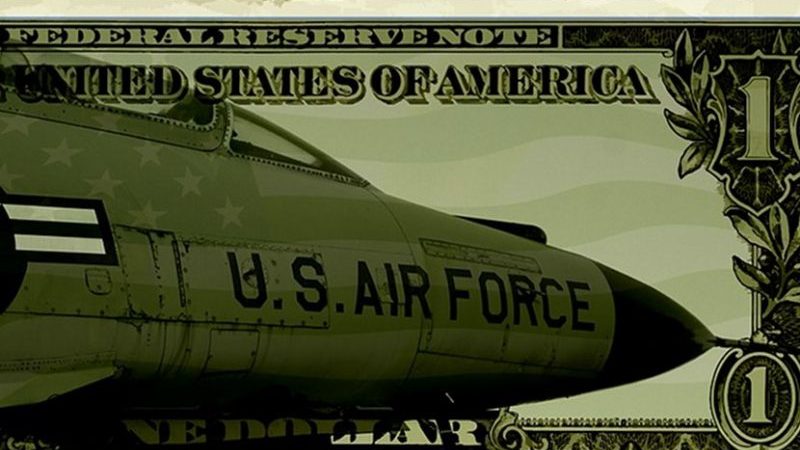
Interest on the national debt is;rapidly becoming;the biggest single category of spending by the U.S. government. As of May 2024, the amount of money spent to pay interest owed to the federal government’s creditors surpasses the annual amount it spends on national defense.

The Daily Shot tweeted the grim milestone.

Defense spending represents the largest category of discretionary spending by the U.S. government appropriated by the U.S. Congress each year. Interest on the national debt represents mandatory spending. It now ranks third behind the annual spending to fund other mandatory spending programs like Social Security and Medicare.

Fueled by excessive spending, the growth of the national debt and the surging amount of interest that must be paid on it is;crowding out;other parts of the U.S. government’s spending. The Biden administration announced it will;cut some Medicare benefits;starting in January 2025.

Part of the problem is how the Biden administration manages the national debt. After making the;worst fiscal blunder;in the department’s history in 2021, the U.S. Treasury Department is now gambling on interest rates falling.

The Treasury Department’s Gamble

That gamble;came to light;during Treasury Secretary Janet Yellen’s recent testimony before the U.S. Congress.

Republican Senator John Kennedy and Bill Hagerty criticized Yellen for issuing debt at higher interest rates amid an inverted yield curve. Currently the yield on the benchmark 10-year Treasury note is 4.33%, compared to 5.4% on the three-month Treasury bill.

Kennedy accused Yellen of deliberately boosting short-term debt to spur growth during an election year, suggesting this was putting downward pressure on long-term rates.

“You’re paying 5 percent to borrow money, when you could pay 4 percent to borrow money,” Kennedy said. “You’re working at cross purposes with (Federal Reserve Chair) Jay Powell. And the reason you’re doing this is to try to give the economy a sugar high five months before the election,” he said.

Yellen replied: “There’s nothing about issuing short term debt that creates a sugar high for the economy.”

She told the senator that market participants anticipate that short term rates will fall to substantially under 4.5%, so locking in debt for 10 years at current rates would likely result in higher long-term borrowing costs than the current path.

Short-term interest rates have risen higher than long-term rates because the Federal Reserve raised them to combat inflation unleashed by the Biden;administration’s;2021 fiscal stimulus. Because that inflation persists, the Fed has held those rates higher for much longer than many market participants, including bureaucrats like Yellen, who manage the U.S. government’s debt, ever anticipated.

Yellen’s national debt management strategy represents a losing gamble with guaranteed losses as long as that state of affairs continues. Even winning her bet would come with pain because the Fed;often;cuts interest rates in the face of economic recessions.

Investor Gary Shilling had a;useful insight;into this scenario based on his investment management experience.;“The market can remain irrational longer than you can remain solvent.”

There’s a reason economics is widely known as the dismal science.


Categories
South Caucasus News

Hezbollah Incites Lebanon Toward Armageddon – OpEd


Hezbollah Incites Lebanon Toward Armageddon – OpEd

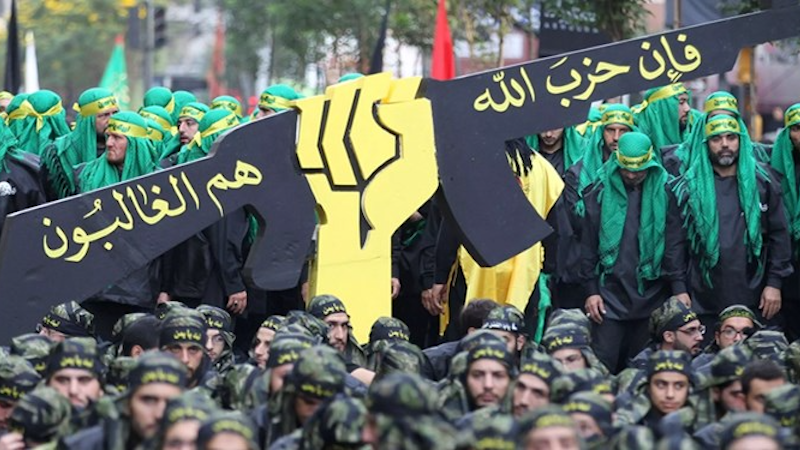
File photo of members of Hezbollah. Photo Credit: Fars News Agency

By Baria Alamuddin

In belligerent, warmongering language, Hezbollah chief Hassan Nasrallah last week threatened to attack the Mediterranean island of Cyprus — a European nation — if it opened its military bases to Israel.

The EU leapt to Cyprus’ defense and warned that any threat to a member state was a threat against the whole bloc, while pro-Hezbollah media gloated that Nasrallah had provoked global panic about a regional war. Before his speech, Israel said operational plans for an offensive in Lebanon had been approved and Foreign Minister Israel Katz said an all-out war would lead to Hezbollah’s destruction.

Meanwhile, other reports quoted eyewitnesses as saying Hezbollah had been using Beirut airport to transport and store weapons. The airport was bombed in 2006 and, before the latest conflict, Israel had threatened to bomb it again if Hezbollah used it for arms smuggling. Many Lebanese panicked about being trapped in a war zone with no flights out, while airport staff voiced fears about Israeli airstrikes. The airport is in a densely populated part of the capital that includes Hezbollah strongholds, stoking fears that it would be on the front line of any conflict. There are rumors about Hezbollah weapons stockpiled elsewhere in the capital, including districts controlled by the militia’s Christian allies. This conjures up traumatic memories of the mass loss of life in the immensely destructive 2020 explosion at Beirut port, where Hezbollah had also been storing explosives.

Nasrallah’s message to the Lebanese people is: “We are taking you to war, but it’s all going to be fine” — which fails to acknowledge the barbaric consequences of any such war. He may be correct in boasting about the massive post-2006 increase in Hezbollah’s military capacities, but the balance of firepower is still disproportionately tilted toward Israel and its allies. As UN Secretary-General Antonio Guterres warned: “One rash move, one miscalculation, could trigger a catastrophe … the people of the region and the people of the world cannot afford Lebanon to become another Gaza.”

“Resistance” supporters have bought into this kamikaze rhetoric, but Lebanon — like Tehran’s other satellite states — is already a disintegrating, bankrupt nation in which people can barely survive. While many Lebanese would dearly love to give Israel a black eye, most are sufficiently grounded to realize where confronting the planet’s most powerful armies would take them — particularly after watching the genocide unfolding in Gaza. Everyone recalls what befell Lebanon in 2006. So, no one can claim to be unaware of the savage manner in which Israel wages war — always seeking to inflict collective, indiscriminate vengeance 50 times as destructive as the original provocation.

Hezbollah flaunted surveillance drone footage of sensitive military sites and population centers and Nasrallah said no place in Israel would be safe from its missiles. Israeli military chief Herzi Halevi retorted that Israel’s enemies knew little about its capabilities but would face them when the time was right.

After Nasrallah’s speech, militants in Iraq threatened renewed attacks against US targets. On a visit to Baghdad, Iranian Foreign Minister Ali Bagheri Kani discussed scenarios for an expanded war, after which Iraqi Foreign Minister Fuad Hussein warned that such a conflict would affect the entire region and not just Lebanon.

Iraqi factions such as Kata’ib Hezbollah and Harakat Hezbollah Al-Nujaba are said to have promised Kani that their “hands are on the trigger.” However, one Iraqi militant source remarked that Hezbollah would probably not welcome deployment of these forces “because they view them as unqualified, lacking in cohesion and, at best, bad allies with countless problems in decision-making.” Tehran also prefers distancing its Syrian and Iraqi factions from full-blown conflict to avoid disrupting its crucial transregional networks. In the words of one Iraqi official: “Iraq is the crown jewel of the Iranians, more than Hezbollah, and they will not risk it in the south Lebanon war.”

Equally, Tehran has sought to insulate itself from conflict because it has no intention of playing any role in reconstruction — just as it did nothing to rebuild Lebanon after the 2006 war, apart from rearming Hezbollah. It was Arab states that invested billions in rebuilding Lebanon at that time, but Beirut should expect no such recompense again.

This vicious circle of escalatory provocation and rhetoric through which both sides arouse grassroots supporters into a frenzy risks straitjacketing the region into Armageddon. About 160,000 people have already been displaced from north Israel and south Lebanon. The cumulative damage to Lebanon is equivalent to that of a full-scale war, with hundreds dead and damage to at least 15,000 homes. The use of phosphorus bombs in agricultural regions furthermore seeks to render land there permanently barren, calculatedly decimating livelihoods and the national economy.

All we request from Nasrallah and his ilk is that they start being honest with citizens: macho, warmongering rhetoric and gambling with Lebanese lives will reap only utter destruction, in a war Israel and Hezbollah are jointly complicit in inciting.

Despite what Nasrallah claims, Palestinians themselves do not desire to see Lebanon suicidally ravaged as part of some futile gesture of support. Even Hezbollah’s supporters fear such an outcome for their nation, which can bear no more self-inflicted harm.

Lebanon was, until recently, the region’s capital of commerce, culture and intellectual endeavor: let’s not see it annihilated on a whim. It is high time that Hezbollah started prioritizing its loyalty to Lebanon, not to a far-off theocratic regime that harbors hostile intentions for the entire region.

  • Baria Alamuddin is an award-winning journalist and broadcaster in the Middle East and the UK. She is editor of the Media Services Syndicate and has interviewed numerous heads of state.