
Prof. Jeffrey Sachs : Why the West Hates Russia https://t.co/ulTyEfOl9N via @YouTube
— Michael Novakhov (@mikenov) June 24, 2024
Day: June 24, 2024
Indian-American director Tarsem Singh, best known to the Armenian audience as the author of the music video for Lady Gaga’s song “911” inspired by Parajanov aesthetics, will head the Golden Apricot International Film Festival’s “Regional Panorama” competition program.
He also directed the music videos for the the song “Losing My Religion” by “R.E.M.”, “Be My Baby” by Vanessa Paradis, “What’s Good” by Lou Reed, etc.
In 2000, Tarsem’s film debut – the cult sci-fi thriller “Cell” starring Jennifer Lopez – was released.
Singh has authored another five feature films since, the latest of which, the drama “Dear Jassi,” had its world premiere in 2023 at the Toronto International Film Festival, winning the “Platform” award.
This year the festival will take place on July 7-14. The international film festival will present competitive films from different countries of the world, as well as films from the most prestigious (Cannes, Berlin, etc.) film festivals.
Golden Apricot 2024 will make a special reference to the 100-year anniversaries of Charles Aznavour and Sergey Parajanov.
Yesterday’s terrorist attack in Dagestan caused unrest in the Caucasus region. The sudden incident not only worried the public, but also drew the attention of many political think tanks to the region. According to experts, Armenia, whose relations with Russia have been tarnished since the Second Garabagh War, and Washington, which has strained relations with Moscow due to the Kremlin’s increased nuclear threat, are cited as references among the suspects behind the terrorist attack.
“Ukraine has already destroyed 30 Russian oil refineries. For our drones, flying 1500 kilometers is not a problem.”
– Pres. Zelensky pic.twitter.com/YuqefF0CDo
— Jason Jay Smart (@officejjsmart) June 24, 2024

Donald Trump recently promised that, if he wins the November election, he will support eliminating taxes on tips as part of his proposal to renew and expand the 2017 tax cuts. This tax law change would be a long overdue boost for millions of Americans.
Tips often comprise a substantial portion of the earnings of waiters and waitresses, as well as of other service-sector employees. However, unlike regular wages, a service-sector employee usually has no guarantee of, or legal right to, a tip. Instead, the amount of a tip usually depends on how well an employee satisfies his customers. Since the amount of taxes one pays increases along with the size of tips, taxing tips punishes workers for doing a superior job!
Many service-sector employees are young people trying to make money to pay for their education, or single parents struggling to provide for their children. Making tips tax free gives these hard-working Americans an immediate pay raise. A person may use this pay raise to devote more resources to his children’s or his own education, to save for a home or retirement, or to start a business.
Eliminating taxes on tips will provide some (limited) relief from the Federal Reserve’s inflation tax. This tax results from the decline in the dollar’s purchasing power caused by the Federal Reserve’s monetization of federal debt. The inflation tax is the worst form of tax because it is hidden. Thus, most people will not blame the Fed for higher prices. The inflation tax is also regressive, as price inflation is more of a burden to those at the lower end of the income scale than to billionaires. The Fed-created price inflation has forced many Americans to work two jobs.
This is not to suggest that reducing taxes on tips will fully compensate working people for the income they lose to the inflation tax. The best way Congress can help relieve the people of the inflation tax is to cut federal spending that leads to the Federal Reserve monetizing debt. Congress should also pass a law forbidding the Fed from monetizing debt by purchasing federal debt instruments.
It is also long past time to stop talking about tax cuts “costing” the government money. Talking about tax cuts in terms of how much money they cost the government, as opposed to how much money they leave in the hands of the people, accepts the premise that the government has a greater moral claim to the money than those who actually earned it. In truth, saying cutting taxes cost the government money makes as much sense as saying stopping a mugger from taking everything in your wallet “cost” the mugger money. Instead of worrying about how much tax cuts cost the government, the politicians should worry about how much welfare and warfare spending cost taxpayers.
The idea that tax cuts should only be supported if they promote “efficiency” should also be rejected. All tax cuts promote efficiency because, as economist and Ludwig von Mises Institute President Thomas DiLorenzo put it, “private individuals always spend their own money more efficiently than government bureaucrats do.” Instead of worrying about whether the government can “afford” tax cuts or whether tax cuts promote economic efficiency, those concerned about the government deficit should focus their efforts on reducing government spending. If the government stopped trying to run our lives and run the world, there would be no need to punish hard-working.
- This article was published at RonPaul Institute
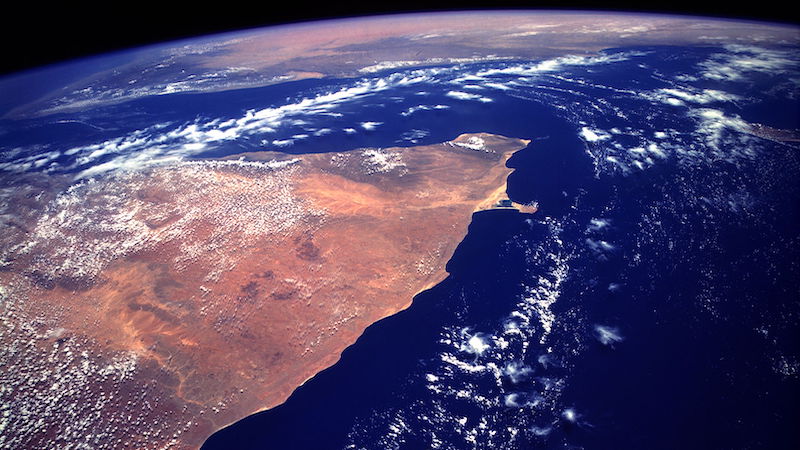
The Horn of Africa States region commands the major waterway, which connects the Indian ocean to the Suez Canal including the chokepoint of Bab El Mandab Straits. It is a troubled region, which neighbors the economically rising West Asian states of the Saudi Arabia, Qatar, Oman, the United Arab Emirates and the equally troubled countries of Yemen and Sudan.
The region, in addition to its geostrategic location, is also endowed with a large youthful population, a large agricultural base and an equally large blue economic potential. The region is also endowed with a significant sub-soil wealth including oil and gas, uranium and other mineral resources.
The troubles of the region are not the only troubles in the world, and it is not fair to present the Horn of Africa as the only region which is marred by crises. Many other regions of the world have similar problems. The Ukraine, the unsettled Taiwan issue, the Latin American drug stories, the Indo-Pacific turmoil that involve competition of major powers in those oceans are but a few of the troubles of the world that do not involve the Horn of Africa States region.
The interlocking crises of the Horn of Africa States region involve economic, inter-communal and environmental crises, complicated by an international community that pays lip service to the problems of the region. The international community will never solve the problems of the region. It is the onus of the region to solve its own problems and no one else’s.
The economic crisis involves poverty and food insecurity. However, throughout history, the region produced its own foods and, in fact, discovered many food plants such as the teff, the ensette and tamed many animals such as the camel and the donkey. The region provided food to others including the people of Arabia for centuries and it still does despite its poverty when it exports millions of animals on the hoof to that region.;
It is not explicable how it does not produce its own foods sufficiently these times? Perhaps the dependency on food aid from other parts may explain this new phenomenon. There seems to be a need for the region; to re-invent itself and work on producing its own foods and refuse to accept food aid from others.
This would certainly need peace and security to allow farmers and others to work in food production; for the region. Here lies the key. The inter-communal and inter-tribal and clan wars only add to the miseries of the region, and it is where the region’s leadership should be working to install peace through fair and square means. Martin Luther King Jr. once said:
“Injustice anywhere is a threat to justice everywhere. We are caught in an inescapable network of mutuality, tied in a single garment of destiny. Whatever affects one directly, affects all indirectly.”
If only the communal leaders and the regional state leaders would realize and adopt that motto, many issues would and could be solved with ease. Injustice is the source of the insecurities of the region, which fuel the civil wars and conflicts, including even inter-state conundrums.
The environmental crisis in the region, another catastrophe that affects the region is also partially manmade as the region’s energy seems to being spent on non-productive communal strives and hence ethnic-based political competition for power. Who would have time to address the environmental degradation in process; in the region? Droughts and famines have always affected the region and are a cyclical phenomenon which previous generations dealt with. The current generations apparently seem to be busy and mindful of other; matters that occupies them more than they should. It is where the region’s leadership needs to address.
The three issues of communal crisis, economic crisis and environmental crisis are inter-connected and inter-dependent. They can only be addressed through a collective approach which currently seems to be out of the orbit and beyond the horizon.
Will the Horn of Africa States region always depend on the Europeans or the Americans and more recently the Chinese and others, including the Arabs across the Red Sea and the Gulf of Aden for sustenance? While one must thank those who have come to help, it is illogical for one to become dependent on handouts and begging, when the region is wealthy and needs its people to exploit its resources for sustenance and development. Donors will, one day, get tired of the region’s continued troubles, and may disengage themselves.
The region is a focus of many nations and regions all pursuing their interests. The region’s geostrategic location, its mineral resources, and its large market all attract the powers that be in the world, which only leads the competing powers to cause more hardships for the region, and hence becoming stumbling blocks to the region’s development. These foreign competitions cause and portend political chaos in the region, which leads to more communal strives, hunger and poverty and all the three interlocking crises mentioned heretofore.
The region has the ability and the land and sea space to produce its own food. It only needs its politicians to realize and, theretofore, develop a more equitable society than what it currently has. It is clear that the region can do better. There is a great need for the leaders to embrace more dynamic people-oriented, fair and equitable systems where competency and professionalism are key components and not the tribe, clan and the loyal.