
At UN, call to restore nuclear plan for Iran China Daily
Day: June 24, 2024
Categories
NPR News: 06-24-2024 11PM EDT
NPR News: 06-24-2024 11PM EDT
Learn more about sponsor message choices: podcastchoices.com/adchoices
Background
This is a two-part tale of two Armenian brothers from Detroit: the eldest Haigus during World War II and the youngest Hagop (Jack) during the Korean War. It is a story of the Tufenkjians, an immigrant Armenian family who came to America after the Armenian Genocide, and their offspring, who were born in the early 1920s. Two of the oldest of them found themselves of draft age in 1942 after Pearl Harbor.
The Armenians of Detroit were primarily west siders; in fact, the vast majority, including the Tufenkjians, lived in southwest Detroit, which we referred to by its postal zone designation, Zone 9. This little Armenian world was subdivided into four distinct sections.
Beginning in the industrial part of south Dearborn, under the shadow of the historical four Ford smokestacks of the Rouge Plant, was Salina Street with its Armenian, Kurdish and Arabic restaurants and coffee houses. The mosque meets the end of the Woodmere Cemetery, where the Armenians are buried. This is where the Detroit city limit starts and Vernor Hwy. begins. “Highway” is a misnomer — Vernor is a busy two-lane city street that splits off of Dix Road and goes about three miles east to the first Armenian section called Clark Park.
The park was only two narrow blocks wide, bounded on the east by Clarke Street and the west by Scotten Street, a busy commercial thoroughfare. The 18-story Michigan Central Train Station is right down the street on Vernor Hwy. Today it is being refurbished by the Ford Motor Co. to its former glory after being abandoned for more than 60 years.
The Tufenkjian family resided in a two-family house on Ida, an east-west street that dead ended into Scotten Street two short blocks south of Vernor Hwy. Today, Ida Street is long gone due to the expansion of the high school. At that time, Western High School was right behind their house, and the kids had the whole park to enjoy in their youth. A five-minute walk from their home through Clark Park brought them to Christiancy Street, and another three blocks went to Ferdinand Street and the ARF Mourad Agoump, where there was a coffee house and the AYF Mourad Chapter met.
The park was narrow, but if you went three city blocks south on Scotten Street to Lafayette Street and turned right, you would reach the third Armenian section at the corner of Lafayette and Waterman, anchored by the ARF Hye Getron. The Armenian Community Center (ACC) building, affectionately known as Findlater, was designed as a four-story monumental masonic temple.
The Hye Getron was purchased by the ARF in 1940 and thereafter became the center of Armenian life in every respect. It was a church inside of a temple. It had two large halls, one for banquets and one for dances, and a theater with a stage. The Hye Getron had several organizational meeting rooms, including the AYF game and TV room, a museum and of course, the Armenian school. Finally, there was the coffee house and card room.
So, the Tufenkjian family lived very close to all of the Armenian community activities.
From Hye Getron, it is only a mile to the fourth Armenian section, the Delray Section, only two short blocks west to Green Street, then south through Fort Street to Jefferson Avenue. Each of these streets comprise the seven radial spokes that lead you to downtown Detroit. One short block before Jefferson, turn right on Cottrell Street to reach the ARF Zavarian Agoump, which is on the left at the corner of Erie Street. Here again, the story is the same as the ACC. There was a church, Armenian school, a hall with a stage, library, coffee house and card room. The Zavarian Agoump, the home of the Zavarian AYF, was built by the ARF in 1928-29 and was sold in the late 1960s after the Armenians of the Delray Section left Detroit in the mid- to late-1950s for the inner suburbs of Metro Detroit.
From the 1920s through the early 1960s, there were three other Armenian centers: the Hai Getron on Ferry Street in Pontiac near Jessie, the ARF Club at 77 Victor Avenue adjacent to the historic Ford Model T plant off Woodward Avenue in Highland Park, and last, but not least, the St. John Armenian Church, built in 1932 on Oakman Blvd. Around the corner on Linwood Avenue was the ARF Azadamard Club, home of the AYF Christopher Chapter, also known as the Civic Center building. All of these locations and facilities have long been abandoned, including the Tufenkjian family residence.
In 1960, both of the Armenian churches of the day moved 10 miles north and west to just outside the city limits — St. John to the city of Southfield and St. Sarkis and the ACC to Dearborn. Today, the ACC has purchased 40 acres of land in Novi and is planning to relocate 20 miles to the north and west, following the flight of our people. This may not be the typical Armenian community story, but it is the history of the Armenians of Detroit.
 2009 passport photo of Jack Tian
I hope you enjoyed this travelog through the past and that it brought a nostalgic smile to the faces of the present and former Detroiters old enough to recall fond memories of dinner dances and plays at the Zavarian, the Findlater and the Cultural Hall on Oakman Blvd.
Today, a couple of former Clark Park Armenians are khnamees (in-laws) of the Tufenkjians: Mike Manoogian of Philadelphia and his sister Elizabeth Vartanian of Springfield, Massachusetts, and their families.
Manos and Marie Tufenkjian’s family lived on Ida Street in Detroit in 1941. They had four children, three boys and a girl. As this story begins, the siblings, in order of their age, are Ghazaarn (John), age 26, Haigus, age 20, Angelle, age 19, and Hagop (Jack), age 12. The primary protagonists of this two-part story are Haigus, who became a five-star hero during World War II, and his younger brother Jack, who was in the Korean War a decade later between 1950-53.
Jack and the Korean War
This July 4 holiday weekend commemorates 73 years since Jack Tufenkjian’s participation in the Korean War in 1951. Hagop, or Jack as he was known, had two special powers that separated him from most of us. The first was that Jack was a musician, which was useful to him in the service; the second and more important will be revealed at the end of the story. Jack was a big band drummer. He told me at a church bazaar that he changed his legal name from Hagop Tufenkjian to Jack Tian before he went into the service to match his new stage name, because Tufenkjian did not fit well on the face of his bass drum. At that time, he did not realize it would later disguise his heritage when it could have been a problem.
The Korean War began on June 25, 1950, with the invasion of North Korea into South Korea, The U.S. and many countries of the United Nations came to its defense. At the time, Jack was a healthy 21-year-old and a primary candidate for the U.S. military draft, as both of his older brothers were during WWII. While he was in the Induction Center, it was common practice, especially at the beginning of the Korean War, for a person with selection authority to go down the line of inductees and tap every fifth person on the head to announce that they would go into the U.S. Marines. This is when Jack’s first special power came into effect. As a drummer, Jack joined the U.S. Marine bands, which afforded him the accompanying advantages of that service, thankfully.
After the war, Jack married a fellow Clark Park Armenian girl, Stella Manoogian, who lived around the corner on Scotten Street where her father Zakar had a barber shop, now a Latino district. They had three children, all Detroit AYF champion swimmers: two boys, Manse and Aaron, and a daughter Dawn.
In the year 2000, 50 long years had passed since the start of the Korean War, and the South Korean government commemorated its anniversary. Sometime around June 25, 2000, the Tians received a package at their home at 15543 Blue Skies Street in Livonia, Michigan.
 Letter from the Republic of Korea
The unexpected package was addressed to Jack Tian and contained two letters of commendation, both artistic in their design, one in Korean and the other in English. Neither of them were addressed to Jack but to “Dear Veteran.” Also included with the two distinctive letters was a Korean War Service Medal. Needless to say, Jack called all of his Armenian and non-Armenian veteran friends to see if any of them received a similar package. Much to his surprise, none had!
He told me the following story, which he thought must be the reason for this much-appreciated recognition by the South Korean government a quarter century after his service. He was in the mess hall in late 1951 and heard an announcement over the loudspeaker stating that, due to the United Nations involvement in the war effort, the Marine Corps was looking for Marines who were bilingual in any language. He applied and eventually was accepted by the translating section of the Marine Corps.
For over a year, Jack was assigned to the Turkish Army in Korea as an official Marine interpreter. I am not sure at what level his translating occurred, whether at the highest echelons of the Turkish army or with the common soldiers. All I know is that Jack never spent a day in Turkey! He did say that the Turks were very impressed that an American knew Turkish. When he left his service, one of the Turkish officers told him that if he didn’t know any better, based on his accent he could swear that Jack was from his district of Yozgat in Turkey.
Well, Jack’s father and mother, Manos and Mari Tufenkjian, were in fact from Yozgat, and I am sure they knew Armenian very well. But they were a Turkish-speaking household, which was not uncommon in those days. Jack was a proficient Turkish speaker, which was his second special power and the reason for his Korean Letter of Commendation and Medal. Jack did not grow up knowing Armenian; he learned Armenian when he married into the Stella Manoogian family.
Today, all the major protagonists of this story are long gone. May their memories shine bright with all of those who still remember them.
Part two of the story will feature Haigus Tufenkjian in honor of the 80th anniversary of his heroic sacrifice on August 26, 1944 in Germany during World War II.
Author information

Ned Apigian
|
The post A story of two Detroit brothers in war appeared first on The Armenian Weekly.
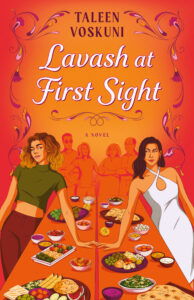 Lavash at First Sight
By Taleen Voskuni
299 pages
Published May 2024
“Sparks fly between two women pitted against each other in this delectable new romantic comedy by Taleen Voskuni, author of Sorry, Bro,” reads the description of Voskuni’s second novel.
“27-year-old Nazeli “Ellie” Gregorian enjoys the prestige of her tech marketing job but is sick of the condescending Patagonia-clad tech bros, her micromanaging boss and her ex-boyfriend, who she’s forced to work with every day. When Ellie’s lovingly overbearing parents ask her to attend PakCon — a food packaging conference in Chicago — to help promote their company and vie to win an ad slot in the Superbowl (no big deal), she’s eager for a brief change and a delicious distraction.
At the conference, she meets witty, devil-may-care Vanya Simonian. Ellie can’t believe how easy it is to talk to Vanya and how much they have in common — both Armenian! From the Bay Area! Whose families are into food! Their meet-cute is cut short, however, when Ellie’s parents recognize Vanya as the daughter of the owners of their greatest rival, whose mission (according to Ellie’s mother) is to whitewash and package Armenian food for the American health-food crowd.
Sworn as enemies, Ellie and Vanya must compete against each other under their suspicious parents’ scrutiny, all while their feelings for each other heat to sizzling temps.”
I devoured Lavash at First Sight in just two sittings and turned the last page feeling hungrier than when I started. The book is a feast for cultural foodies like me, and I savored every description of the Lebanese-Armenian delicacies reminiscent of my childhood and other dishes I have yet to try. While it may sound like a cookbook, it is more of a mash-up between a reality cooking show and romantic comedy with a strong Armenian flavor. Add in roasts of tech companies, recipes for success, queer romance and an Armenian rivalry for a sizzling experience to be remembered.
If you fall in love at first sight with the book cover, I can almost guarantee you will love the following 299 pages. Just as in her debut novel, Sorry Bro, Voskuni packed in Armenian words and surnames for authentic dialogue. In a sample size of 100 pages, 35 pages include at least one Armenian reference, while many pages have several. And yes, I did highlight and count them.
Voskuni brilliantly balances common characteristics of Armenian families (dare I say stereotypes) with exaggeration and comedy — the overly involved families, limited acceptance of difference, passion and pride for cooking and eating, and stubborn competitiveness, with a dash of elitism. I was pleased to see the acceptance from the families of their queer daughters, laughed out loud at their overbearing nature and rooted for the parents to eventually see how they were more alike than different.
Be sure to pack a copy of Lavash at First Sight in your beach bag this summer along with a hearty serving of lavash and your favorite hummus. Bon appetit. Pari akhorjag. Enjoy!
About the author
Taleen Voskuni is the author of Armenian sapphic romcoms, Sorry, Bro and Lavash at First Sight. She grew up in the Bay Area diaspora surrounded by a rich Armenian community and her ebullient family. She graduated from UC Berkeley with a bachelor’s in English and currently lives in San Francisco, working in tech. Other than a newfound obsession with writing romcoms, she spends her free time cultivating her kids, her garden and her dark chocolate addiction.
Author information
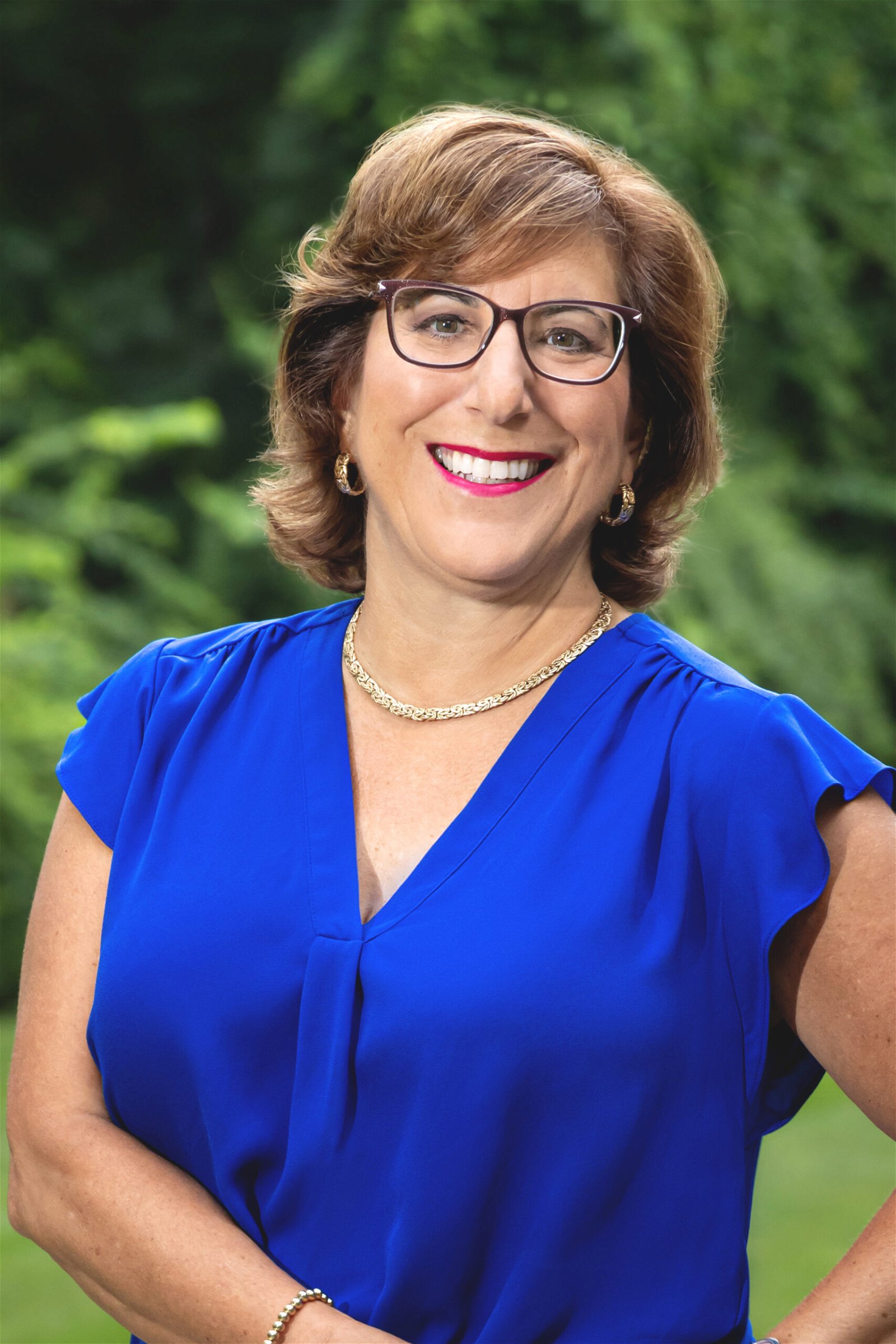
Victoria Atamian Waterman
Victoria Atamian Waterman is a writer born in Rhode Island. Growing up in an immigrant, bilingual, multi-generational home with survivors of the Armenian Genocide has shaped the storyteller she has become. She is a trustee of Soorp Asdvadzadzin Armenian Apostolic Church and chair of the Armenian Heritage Monument in Whitinsville, MA. She is the author of “Who She Left Behind.”
|
The post Book Review: Lavash at First Sight appeared first on The Armenian Weekly.
Photos by Berge Arabian
 Hangardz rehearsing William Saroyan’s “My Heart’s in the Highlands” in Western Armenian before departure for Armenia, June 2024, Istanbul
The original interview, conducted by Vartan Estukyan, was published in Agos in Turkish on June 7, 2024 and translated to English for the Armenian Weekly by Vural Özdemir (also known as Artun E. Azad in the Hangardz Writers Collective). Estukyan is a journalist at Agos who reports on culture, art, music, human rights and current politics.
Hangardz Independent Theater Ensemble is on tour in Armenia to stage its latest play, “My Heart’s in the Highlands.” The play, which premiered in April in Istanbul last year, is preparing to meet the audiences in Armenia on June 24 at the Abelyan Theater, on June 26 at the Sundukyan Theater and on June 30 at NPAG (Armenian Center for Contemporary Experimental Art).
Authored by William Saroyan, the play is directed by Yeğya Akgün and Tara Demircioğlu. Akgün also shares the leading role in the play with Diana Chilingaryan.
We talked with Yeğya Akgün before their tour in Armenia.
 Hangardz rehearsing William Saroyan’s “My Heart’s in the Highlands” in Western Armenian before departure for Armenia, June 2024, Istanbul
Vartan Estukyan (V.E.): You have expressed your interest in staging the play in Armenian in our previous conversations, and now you will realize it in Armenia. Who translated the text into Armenian? When did you start the rehearsals?
Yeğya Akgün (Y.A.): I must say that we were very lucky in terms of the translation. We were able to access “My Heart’s in the Highlands” as a Western Armenian text by Rober Haddeciyan, one of the esteemed writers from the Istanbul Armenian community, and published by the Teachers’ Foundation [Ususçats Himnarg]. It’s a very finely crafted translation that flows like water. When we contacted him, we mentioned that we would like to stage the play with his translation, and he happily shared the translation with us without expecting anything in return.
We started our work in November 2023. We had to do some preparatory work on the text. Artun Gebenlioğlu, one of Hangardz team members, took the initiative in adapting some of the revisions we had already made on the Turkish text to the Armenian text. As a whole team, we started reading and studying the Western Armenian text in December.
There is one thing I wish to underline: Hangardz’s mission is to create plays that will come to life on stage with the spirit of the Western Armenian language, just like in our previous plays, but we are also aware of the possible difficulties. We use our native language in such a limited area in our daily lives that this inevitably affects our work negatively. As a team, we worked on articulation and dialect for a long period; on this point, I can say that Artun Gebenlioğlu carried out extremely patient and meticulous work. After solving the issue of correct pronunciation, we stood up with our texts and moved on to the stage with the guidance of Tara Demircioğlu. Currently, our rehearsals will continue until our departure for Armenia on June 22.
 Hangardz rehearsing William Saroyan’s “My Heart’s in the Highlands” in Western Armenian before departure for Armenia, June 2024, Istanbul
V.E.: What kind of excitement does it create for Hangardz members to appear in front of the audience there?
Y.A.: We discuss this a lot among ourselves. Among our team members there are also people from Aleppo, Yerevan and Vanadzor. We are in a state of feeling similar to that in the question Saroyan asked and the answers he gave: Where is a person’s home — a mountain, a rock, the place where s/he was born, a flowing river, a garden where cheerful conversations take place?
In fact, I must say that we are just as embroiled and excited. First of all, the fact that the language bridge will be built from Istanbul to Armenia, similar to Saroyan’s journey to Bitlis and then to Armenia, is one of the things that excites us very much.
There is, on the one hand, the Western Armenian language, which is endangered, and on the other hand, our Eastern Armenian cultural richness. The excitement of appearing in front of an Armenian audience in Western Armenian, one of the venerable languages of the geography we once lived in, which leaves a poetic timbre in the ear, and our curiosity of their reactions, is actually the excitement of experiencing how the colors of Western Armenian, in which we feel at home, will find a response in the East.
 Hangardz rehearsing William Saroyan’s “My Heart’s in the Highlands” in Western Armenian before departure for Armenia, June 2024, Istanbul
V.E.: All right, how did your dream of performing in Armenia come true? Did they invite you, or did you contact them?
Y.A.: We will perform in Armenia through a project. I must state that this tour became possible thanks to the intense and arduous efforts of the project principal applicants. Our team members Artun E. Azad, Lara Narin, Tara Demircioğlu and I worked to finance the project in a process that required long follow-up and intensive research. The project application dossier was designed, developed and written by Hangardz in 2023, and then funded by the European Union and the Eurasia Partnership Foundation after being evaluated and selected by the jury. We are happy that independent theater staged in Western Armenian is supported and performed internationally.
After qualifying for the fund, we contacted the venues in Armenia. Our goal was to stage our plays in Yerevan and Gyumri. Taking into consideration one of our team members Diana Chilingaryan’s request to play in Vanadzor, the city where she was born, we started talks with the Vanadzor Abelyan Theatre. In the following process, Lara Narin contacted the NPAG stage in Yerevan and reached an agreement, and with the initiatives of the esteemed theater artist Aram Gosdanyan, we also reached an agreement with the Sundukyan Theater in Yerevan, and finally, Diana also contacted the Abelyan Theater in Vanadzor, and we agreed on a performance. I can say that this tour came to life as a result of the effort and will of all of our members for about eight months. We will take our hearts on a journey through the mountains on June 24 at the Abelyan Theater, on June 26 at the Sundukyan Theater and on June 30 at the NPAG stage.
 Hangardz rehearsing William Saroyan’s “My Heart’s in the Highlands” in Western Armenian before departure for Armenia, June 2024, Istanbul
About the play
Written before “The Bald Soprano” by Eugène Ionesco and “Waiting for Godot” by Samuel Beckett, and considered a predecessor of the Theatre of the Absurd theatrical movement, “My Heart’s in the Highlands” is set in Fresno, California in 1914. The play’s theme is based on Mac Gregor, a former Shakespearean actor who feels lost and disconnected from the world, and his encounter with a nuclear family of an elderly mother, son and grandchild.
The play, written by William Saroyan in 1938, was staged on Broadway the same year.
The Hangardz cast includes Diana Chilingaryan, Antranik Bakırcıoğlu, Artun Gebenlioğlu, Bared Çil, Dikran Peştemalcıgil, Miranda Şahinoğlu, Tvin Zeytounian, Garine Maral Çizmeciyan, Lara Narin, Nışan Şirinyan, Sevada Haçik Demirci and Yeğya Akgün.
Author information

Vartan Estukyan
Vartan Estukyan is a journalist at Agos who reports on culture, art, music, human rights and current politics.
|
The post Hangardz on tour in Armenia staging Saroyan’s “My Heart’s in the Highlands” appeared first on The Armenian Weekly.