NPR News: 06-22-2024 6PM EDT
Learn more about sponsor message choices: podcastchoices.com/adchoices
 The South Caucasus News - SouthCaucasusNews.com
Making small changes in how we live day-to-day can quickly create significant changes in society, especially in ways that benefit the environment. This idea is captured in the term social tipping points.
According to the authors of a new paper just published in the journal;One Earth, social tipping points are crucial for speeding up efforts to reduce carbon emissions. These points occur when social, political, economic, or technological systems rapidly shift to a new state due to positive feedback mechanisms. Understanding these tipping points requires analyzing the complexity of social systems, but current research lacks a practical framework that combines both theoretical and empirical aspects.
“Consider how one Swedish school student’s Friday protest has tipped millions into climate protest and activism that signal public support for climate action. Or how Norway’s electric vehicle policies have tipped the country’s vehicle fleet away from combusting fossil fuels. Given the promise of social tipping it’s essential that scientific analysis is rigorous, not just in identifying and evidencing potential tipping points, but also in modeling their dynamics to understand how they unfold and what may block them. Explaining how to do this is what we do in this paper,” explains study coauthor Charlie Wilson, a senior researcher at IIASA and professor of Energy and Climate Change in the Environmental Change Institute at the University of Oxford, UK.
The study introduces a dynamic systems approach to studying social tipping points, which includes looking at interconnected feedback mechanisms and interactions across different systems and scales. The authors also emphasize the importance of gathering and analyzing data to provide solid evidence and monitor these tipping dynamics, using global modeling to predict future changes.
The approach builds on the findings of an expert workshop where the team identified key feedback mechanisms that drive tipping dynamics. The authors point out that it is also important to consider factors that can counteract these dynamics. For example, while spreading pro-environmental values is seen as a positive tipping point, societal polarization can hinder this spread.
“Our research shows that small actions can lead to significant changes that ripple through social and economic systems. This means that both policymakers and everyday people have a lot of power to influence big changes. However, it’s crucial to carefully analyze which small actions can lead to these large impacts,” says study lead author Sibel Eker, a senior researcher at IIASA and Nijmegen School of Management at Radboud University in The Netherlands.
The comprehensive approach proposed and demonstrated in this study can support a better understanding of social tipping dynamics and strengthen the viability and effectiveness of climate policies. The authors however highlight that their approach could be enhanced further by identifying influential agents and considering differences between regions, like the Global North and South, through collaborative efforts to make the concept of social tipping even more robust and useful for policy and practice.

God’s name Al-Ghafūr (the forgiving One) occurs 91 times in the Quran and is often mentioned alongside Ar-Raheem (the merciful One): which is mentioned 72 times with Al-Ghafūr, one of the most common sets of pairs of Allah’s names.;
Al-Ism al-Aʿẓam (Arabic: الاسم الأعظم), literally “the Greatest Name”, also known as Ism Allah al-Akbar (اسم الله الأکبر, ‘the Greatest Name of God’), refers in Islam to the greatest name of Allah, known only by all the prophets.
The name of God used most often in the Hebrew Bible is in Hebrew: יהוה, YHWH. Jews traditionally do not pronounce the name of YHWH, and instead refer to God as HaShem, literally “the Name”. In prayer YHWH is substituted with the pronunciation Adonai, meaning “My Lord”. The Yahweh name for the God of the Israelites, represents the biblical pronunciation of “YHWH,” is the Hebrew name revealed to Moses in the book of Exodus.;
After revealing directly to the People of Israel the Ten Commandments (Exodus 20:1-17 “YHWH said to Moses, “Tell the Israelites this: ‘You have seen for yourselves that I have spoken (directly) to you from heaven: Do not make any gods alongside me; do not make for yourselves gods of silver or gods of gold. Make a (simple) altar of earth for me and sacrifice on it your burnt offerings and fellowship offerings, your sheep, goats and cattle. Wherever I cause my name (YHWH) to be honored, I will come to you and bless you.” (Exodus 20:22-24) Thus, YHWH spoke directly to the entire People of Israel at Mount Sinai promising that wherever his name was recorded he would grant his presence and blessing.
The Qur’an contains 99 Arabic names (attributes or character traits) for the multifaceted essence ; ;of the one God, but not one of them connects the one God with one people, while one of the dozens of Biblical names for God is ‘The God of the Hebrews’. “But they (Aaron and Moses) said, “The God of the Hebrews has met with us,”. “So let us take a three-day journey (Hajj) into the wilderness so we can offer sacrifices to the LORD our God. ” (Exodus 3:18 and 5 other verses in the Book of Exodus in the Torah).;
The Hebrew Prophet Malachi (2:5 New International translation) states: “My covenant was with him (Messengers Abraham, Jacob, Moses and David), a covenant of life and peace, and I gave them (the commandments) to him (Banu Israel); this called for reverence and he (Banu Israel) revered me and stood in awe of my name (YHVH for Jews and Allah for Muslims).”;
Awe and reverence for the one always forgiving God are basic for all monotheistic religions. As the Qur’an says: “Hold firmly to what We have given (the Torah) you (Banu Israel) and remember what is in it (the commandments).” (2:63).
A place is never holy through the choice of humans, but because it has been chosen by God, and revealed by God’s prophets. Believers in God’s Prophets can see the site’s holiness. Unbelievers are blind to it. Islam has two sacred sites rather than one because even before he left the rejection of the idol-worshipping Arabs of Makkah, for the future promise of Medina, Prophet Muhammad had already visited the other holy site in Jerusalem (Isra Qur’an 17:1-2), to personally experience Allah’s signs. Thus, both sacred scriptures use similar words to describe the two sanctuaries: Beitullah, BeitEl, Bayt al-Maqdis, and Beit HaMikdash to illustrate how they fit together like a pair of lungs.;
In the Hebrew Bible, Prophet Abraham is the first person to be called a “Hebrew” (Genesis 14:13). The term Hebrew comes from the verb;’to go over a boundary’—;like the Euphrates or Jordan river—;or;’to be an immigrant.’;The first thing God told Prophet Abraham;in the Biblical account;was: “Leave your country, your kindred, and your father’s household, and go to the land I will show you. I will make you into a great nation, and I will bless you; I will make your name great, so that you will be a blessing….”;(Bible,;Genesis 12:1-2)
So Prophet Abraham was;what we can call;the first;’Islamic Hebrew’;or the first ‘Muslim Hebrew,’as the Qur’an;indicates: “He (Abraham) was not;Yahuudiyyaan, “a Jew”, nor;Nasraaniyyaan,;’a Christian,’;but rather a;Haniifaan,;’a Muslimaan,’…;(Quran,;3:67) i.e. ‘a monotheistic Hebrew believer submitting (islam) to the one imageless God’;who;created all space and time and;who made Prophet Abraham-the-Hebrew’s descendants through Prophets Isaac and Jacob (Israel);into a great multitude of monotheists called the Children of Israel —B’nai Israel in Hebrew and Banu Israel in Arabic.
In addition, Prophet Isaiah said: “Listen to me, you who pursue righteousness, you who seek the Lord: Look to the rock from which you were hewn, and to the quarry from which you were dug. Look to Abraham your father and to Sarah who bore you; for he [Abraham] was only one when I called him, that I might bless him and multiply him.;(Bible,;Isaiah 51:1-2)
And the Qur’an states: “You have an excellent example to follow in Abraham.”;(Quran,;60:4)
;”Follow the way of Abraham as people of pure (monotheistic) faith.”;(Quran,;3:95)
What makes Prophet Abraham-the-Hebrew an excellent example of pure faith according to three different religion’s Sacred Scriptures? It;is that all three scriptures proclaim Abraham to be the one “whom God chose to be His friend”: the Arabic;Qur’an 4:125, the Hebrew Bible;Isaiah 41:8; and the Greek New Testament Book of;James [the brother of Jesus] 2:23.
Prophet Abraham-the-Hebrew,;”whom God chose to be His friend,”;—as far as we know—;is;also the only prophet to have two sons who were also prophets. And these two sons of Abraham, Prophet Ishmael and Prophet Isaac, are the only two Prophets who each had a descendant many many centuries later, who proclaimed a sacred scripture;each of which;has become the basis for;one of;the two largest religions in the whole world.
Prophet Abraham was the first of those we know to receive a Sacred Scripture;(Quran 87:18-19). All of the others were among his descendants. Is being ‘the first’ what makes Abraham so special that his name appears 69 times in the Qur’an, second only to Moses (136 times)? No.
Prophet Abraham is famous for the numerous ways God tested him, especially the two terrible tests:;banishing Hagar and his first born son Ishmael;(Qur’an 2:124,;&;Genesis 16:1-16);and calling on Abraham to make his son a;sacrificial;offering to God. (Qur’an 37:100-113;&;Genesis 22:1-24)
Most Muslim commentators say the son, unnamed in the Qur’an, was Ishmael;(Arabic Isma’il). Some Muslims assert it was Isaac. Perhaps both participated in the test at different times, so that each son could produce descendants who in time would become a blessing for other nations of the earth. (Genesis 22:16-18;&;Qur’an 4:163)
Because Muslims were the last major Abrahamic religion they needed only one Prophet and one book. Jews, as the first ongoing long lasting monotheistic community, needed many dozens of Prophets and Sacred Scriptures.
While Christians, Jews and Muslims should make no disrespectful distinction between any of their prophets or their sacred scriptures, we cannot help but notice that the circumstances and style of the Hebrew Bible and the Qur’an as written revelations are very distinct:
The Hebrew Sacred Scriptures are a vast collection (305,358 Hebrew words) of Divinely inspired books written over a period of almost a thousand years, by 48 male prophets and 7 female prophetesses (Talmud;Megillah 14a); plus many more anonymous Divinely-inspired historians, poets, and philosophers. The Arabic Qur’an is much shorter (a total of 77,934 Arabic words) recited by only one prophet during a period of less than two dozen years and written down by his own disciples.
Most people in the world have learned of Prophet Abraham, not by reading a book of Jewish history or religion, but by listening to and reading from the Christian Bible or the Muslim Qur’an. This unique and amazing situation is a reflection of a promise made to Prophet Abraham-the-Hebrew more than 36 centuries ago, and recorded in both the Torah and the Qur’an:
“I swear (says God) because you did this —not withholding your son, your favorite one— I will bestow My blessing on you and make your descendants as numerous as the stars in the sky and the sand on the seashore; and your descendants shall seize the gates of their foes.; All the nations of the earth shall bless themselves by your descendants, because you have obeyed My ;command.” (Bible,;Genesis 22:16-18) and “Indeed, We chose him (Prophet Abraham) as one pure and most distinguished in the world, and he is surely among the righteous in the Hereafter.”;(Qur’an 2:130)

In a recent terrorist operation in the Lakki Marwat district of Khyber Pakhtunkhwa, Pakistan, a tragic incident unfolded when a vehicle carrying security forces was struck by a landmine. This devastating attack resulted in the loss of seven brave officers, including Captain Faraz Ilyas, Subedar Major Muhammad Nazir, Lance Naik Muhammad Anwar, Hussain Ali, Sepoy Asadullah, Manzoor Hussain, and Rashid Mahmood, who were martyred in the line of duty. This incident underscores the ongoing threat posed by terrorism in the region and highlights the sacrifices made by those who defend the nation.
The security forces of Pakistan remain resolute in their mission to eliminate terrorist threats. Engaged in relentless operations, they workday and night with unwavering determination. Reports of terrorists being neutralized in these operations have been frequent, highlighting the continuous efforts of the security forces to restore peace and security in the region. The resolve of these forces is evident in their unwavering commitment to ensuring the safety and security of the citizens of Pakistan.
Just two weeks ago, a significant operation was conducted in Peshawar, Tank, and the surrounding areas, resulting in the elimination of 23 terrorists. This successful mission was a testament to the intelligence and operational capabilities of the security forces. Such operations are crucial in disrupting the plans of terrorist groups and preventing them from carrying out attacks. Prior to this, an intelligence-based operation in the Hasan Khel area of Peshawar led to the killing of five terrorists, although it came at the cost of two young soldiers who were martyred during the exchange of fire. These operations are part of a broader strategy to weaken terrorist networks and reduce their capacity to launch attacks.
The fight against terrorism in Pakistan is part of a broader strategy encapsulated in operations such as Ridd-al-Fasaad and Zarb-e-Azb. These operations aim to dismantle terrorist networks and eliminate their hideouts across the country. The persistent efforts of the Pakistan Army under these operations have significantly disrupted terrorist activities and reduced their capacity to launch attacks. Ridd-al-Fasaad, launched in February 2017, focuses on consolidating the gains made during Zarb-e-Azb and aims to target the remnants of terrorist groups across the country. Zarb-e-Azb, launched in June 2014, was a comprehensive military campaign aimed at eliminating militant strongholds in North Waziristan.
In Balochistan, the situation remains critical as terrorists frequently attempt to infiltrate from Afghanistan. The security agencies are highly active in this region, intercepting and neutralizing these threats before they can spread to other parts of the country. The proactive measures taken by the security forces have been crucial in maintaining stability and preventing the escalation of violence. Balochistan, due to its strategic location, has often been a target for cross-border terrorism, and the vigilance of the security forces in this region is vital in countering these threats.
The persistence of terrorist activities in Pakistan is inextricably linked to the situation in Afghanistan. The porous border between the two countries has often been exploited by terrorist groups to launch attacks and seek refuge. If the Taliban government takes serious action against the outlawed Tehrik-i-Taliban Pakistan (TTP) and conducts effective operations against them, it could significantly reduce their ability to infiltrate into Pakistan. Such measures would not only enhance security but also foster bilateral trade and strengthen the centuries-old bonds of brotherhood between the two countries. Improved security cooperation between Pakistan and Afghanistan is essential in combating the shared threat of terrorism.
The sacrifices made by the brave officers in Lakki Marwat are a stark reminder of the ongoing struggle against terrorism in Pakistan. The determination and resilience of the security forces, coupled with strategic operations and international cooperation, are key to overcoming this menace. The path to peace is fraught with challenges, but with continued effort and solidarity, Pakistan can hope to eliminate the scourge of terrorism and pave the way for a safer and more prosperous future.
The fight against terrorism is not just the responsibility of the security forces; it requires the collective effort of the entire nation. Civil society, government institutions, and international partners must all work together to address the root causes of terrorism and promote peace and stability. Education, economic development, and social inclusion are critical components of a comprehensive strategy to counter terrorism. By addressing these underlying issues, Pakistan can create an environment where terrorism cannot thrive.
Finally, the battle against terrorism in Pakistan, particularly in regions like Lakki Marwat, is ongoing and requires sustained efforts. The sacrifices of the security forces are a testament to their dedication and commitment to protecting the nation. With continued vigilance, strategic operations, and international cooperation, Pakistan can overcome the challenges posed by terrorism and build a future marked by peace and prosperity. The journey is long and arduous, but the resilience and determination of the Pakistani people will ultimately prevail.
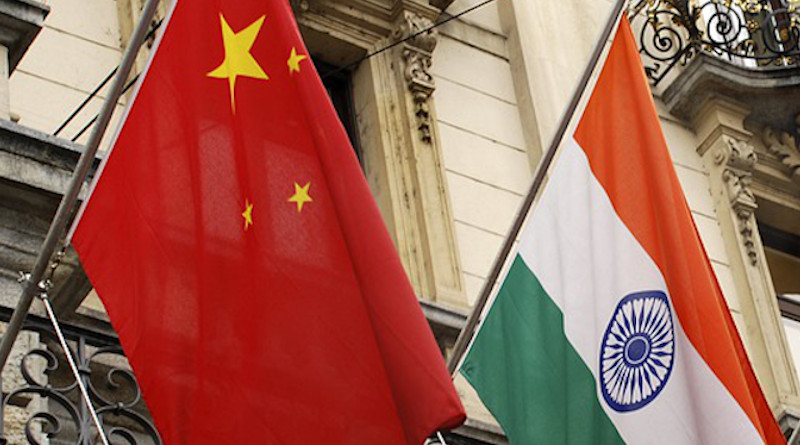
Mayuri Banerjee;a Research Analyst with the East Asia Centre at the Manohar Parrikar Institute for Defense Studies and Analyses (MP-IDSA), New Delhi. Her research focus is on India-China relations. She primarily looks at the role of memory and trust in India-China relations after the 1962 war and Indian media’s perception of China. In an article she traced the history of the;Sino-Indian border dispute;has a long and complex history. If one were to look for some key points one could mention: Aksai Chin: One of the disputed territories is;Aksai Chin, which is administered by China but claimed by India. It lies at the intersection of Kashmir, Tibet, and Xinjiang. Aksai Chin is mostly uninhabited high-altitude wasteland, but it has significant pasture lands at the margins. McMahon Line: The other disputed territory is south of the;McMahon Line, in an area formerly known as the North-East Frontier Agency (now Arunachal Pradesh). The McMahon Line was signed between British India and Tibet as part of the 1914 Simla Convention, but China disowns this agreement, stating that Tibet was not independent when it signed the Simla Convention.
1962 Sino-Indian War: The conflict escalated in 1962 when Chinese troops attacked Indian border posts in Ladakh in the west and crossed the McMahon Line in the east. The war resulted in significant casualties.; There were border clashes in 1967 in the region of Sikkim, despite an agreed border. In 1987 and 2013, potential conflicts over the;Line of Actual Control;(LAC) were successfully de-escalated. Recent Tensions: Multiple skirmishes broke out in 2020, leading to dozens of deaths in June. Agreements signed in 1993 and 1996 aimed to address the boundary question, including confidence-building measures and defining the LAC.;Various dispute resolutions have been established over the years.; In summary, the India-China border dispute remains ongoing, with historical roots and periodic tensions. Diplomatic efforts continue to find a resolution to this complex issue. Assessing the success of Border Dispute Management Talks and Confidence-Building Measures. The success of the bilateral dialogue mechanisms and confidence-building measures described above needs to be assessed according to three aspects; management of border conflict, addressing the bilateral trust deficit, and resolution of the border dispute. A cursory review of the state of affairs indicates that, in all three aspects, both countries have achieved minimal success. For instance, in the matter of border conflict management, the maintenance of peace and tranquility along the LAC has been one of the most important stated objectives. Although China and India have been able to avert a major 1962-style confrontation, the number of military incursions by China has risen sharply, from 334 in 2014 to 606 in 2019.; ;
The Galwan Valley military standoff led to severe military clashes; and the stalemate continues. Simultaneously, local feuds between the armies have inclined toward more violence, that is from fist fights and throwing stones, the armies of the two sides have resorted to more violent measures including the use of clubs studded with nails or wrapped with metal barbed wire.; These instances point toward a lack of local-level communication and understanding, which persists amid the backdrop of diplomatic proclamations of friendship and cooperation. Likewise, despite high level political and diplomatic exchanges and frequent meetings of the top leadership, the trust deficit between the two countries has only widened. There exists the perception of a considerable security threat on both sides as India and China have moved rapidly to upgrade their border infrastructure and military capabilities along the disputed border on the sidelines of the Special Representative Talks and Joint Working Group meetings. In recent years, a vigorous border infrastructure race has developed between the two countries, wherein both sides have engaged in building extensive road and railway connections on their respective sides of the border, upgrading military facilities, and increasing overall troop deployments for quick mobilization. This in turn has aggravated insecurities in both countries and is considered one of the primary reasons for the frequent border skirmishes along the LAC. In particular, the Doklam (2017) and Galwan Valley (2020) clashes were triggered by road-building activities undertaken by China and India, respectively. Apart from upgrading military infrastructure along the border, both sides have also invested heavily in modernizing their conventional and non-conventional combat forces as an indication of battle preparedness to the other. ; In view of increasing military capabilities, assertive behavior and intense distrust, the notion of peace along the LAC seems dependent on the political wisdom of their respective governments. Even after fifteen rounds of Joint Working Group meetings and eighteen rounds of Special Representative Dialogues, the border dispute is far from being resolved. Even though the negotiation process follows a generous principle of package settlement through a sectoral approach, the two countries have failed to go beyond routine delegation meetings and joint declarations.;
The ascent to power of Xi Jinping in China and Narendra Modi in India, known for their strong leadership and corporate style of politics, had raised hopes for a final settlement of the border dispute, but domestic political considerations and strategic threat perceptions continue to severely constrain the ability of these political leaders to undertake sweeping decisions to resolve the dispute. The border dispute undeniably remains one of the major issues impinging on Sino-Indian bilateral ties. Experts contend that there are multiple factors today which sustain the border dispute. The first is the geographical constitution of the disputed areas: The rugged, featureless terrain and extreme weather conditions make determination of the precise alignment challenging. Subsequently, implementation of border agreements on the ground also remains elusive. Second, there is asymmetry in the level of urgency for the settlement of the border dispute. In contrast to New Delhi’s endeavors seeking a quick settlement, Beijing has staunchly resisted any fast-tracking of the resolution process, arguing that the border dispute is a complicated question and should be negotiated only when conditions are favorable.;
The primary reason for this difference in approaches is that the disputed border does not pose a security threat to China, and therefore Beijing is willing to wait for a more beneficial resolution. In contrast, New Delhi sees the border dispute as source of instability and worries and that China would use the unresolved border to bully India. The third factor inhibiting the resolution of the border dispute is intense nationalism in both countries. For China, the border dispute is intrinsically linked to Tibet and the Dalai Lama, and since the CCP has always projected the Tibetan government-in-exile in a negative light, territorial concessions involving Tawang will not only endanger China’s own rule in Tibet but will also be seen domestically as sign of weakness; a terrifying prospect for the Chinese leadership. As for India, no political party would be able to propose a territorial exchange with China without seriously jeopardizing its electoral prospects, as the memories of 1962 war continue to haunt the Indian national psyche. Lastly, along with the boundary dispute, new issues have begun to stir trouble in Sino-Indian bilateral ties. India’s concerns regarding China’s diversion of the Yarlung-Tsangpo/Brahmaputra river water, the China-Pakistan Economic Corridor, and China’s growing influence in South Asia have emerged as new irritants for Indian policy makers.;
Similarly, Beijing too is annoyed by India’s increasing proximity with Southeast Asian countries and its diplomatic-military exchanges with the United States, Japan, and Australia. These issues further erode political will in both countries and in this context territorial exchange by swap or political settlement appears a daunting task. As evinced by the recent Galwan Valley clashes, managing the border dispute is both a political and an economic exigency for India and China because any major confrontation between the two countries will not only hurt the long-term prospects for development of both, but will also have significant repercussions on Asian stability and prosperity. Therefore, the policy-making elites of both countries need to frame innovative solutions like creating soft borders through civilian, cultural, and economic exchanges, and involving local communities in managing the border.; Such an approach can help reduce the number of military encounters between the two countries and create an enduring peace in the border region.;
The two countries should also aim toward building strategic trust through open dialogue, exchange of information, and verification mechanisms along the disputed border. Enhancing military-to-military communication, technological collaboration and engagement on multilateral platforms remain indispensable toward building trust. Public perception is another key area that needs to be urgently addressed through civilian exchanges. This would go a long way toward dispelling stereotypes and negative perceptions. Track-II dialogue involving strategic-affairs experts and academics from the two countries could also be organized to identify new areas for cooperation. For the foreseeable future, the border dispute will remain a pressing challenge in Sino-Indian ties, however, it is in the national interest of both countries to prioritize their larger bilateral relationship, while at the same time erecting confidence-building measures and dialogue mechanisms to better preserve the benefits accruing from the relationship.; The border dispute undeniably remains one of the major issues impinging on Sino-Indian bilateral ties.;
Experts contend that there are multiple factors today which sustain the border dispute. The first is the geographical constitution of the disputed areas: The rugged, featureless terrain and extreme weather conditions make determination of the precise alignment challenging. Subsequently, implementation of border agreements on the ground also remains elusive. Second, there is asymmetry in the level of urgency for the settlement of the border dispute. In contrast to New Delhi’s endeavors seeking a quick settlement, Beijing has staunchly resisted any fast-tracking of the resolution process, arguing that the border dispute is a complicated question and should be negotiated only when conditions are favorable. The primary reason for this difference in approaches is that the disputed border does not pose a security threat to China, and therefore Beijing is willing to wait for a more beneficial resolution. In contrast, New Delhi sees the border dispute as source of instability and worries and that China would use the unresolved border to bully India. The third factor inhibiting the resolution of the border dispute is intense nationalism in both countries.;
For China, the border dispute is intrinsically linked to Tibet and the Dalai Lama, and since the CCP has always projected the Tibetan government-in-exile in a negative light, territorial concessions involving Tawang will not only endanger China’s own rule in Tibet but will also be seen domestically as sign of weakness; a terrifying prospect for the Chinese leadership. As for India, no political party would be able to propose a territorial exchange with China without seriously jeopardizing its electoral prospects, as the memories of 1962 war continue to haunt the Indian national psyche. Lastly, along with the boundary dispute, new issues have begun to stir trouble in Sino-Indian bilateral ties. India’s concerns regarding China’s diversion of the Yarlung-Tsangpo/Brahmaputra river water, the China-Pakistan Economic Corridor, and China’s growing influence in South Asia have emerged as new irritants for Indian policy makers. Similarly, Beijing too is annoyed by India’s increasing proximity with Southeast Asian countries and its diplomatic-military exchanges with the United States, Japan, and Australia.;
;The famous newspaper The Diplomat in a report on the US containment of the Sino-Indian relations has reported that The United States and India have just completed a ministerial dialogue between the U.S. secretaries of state and defense, Antony Blinken and Lloyd Austin, and their Indian counterparts, Minister of External Affairs Dr. Subrahmanyam Jaishankar and Minister of Defense Rajnath Singh. ;This “2+2 Dialogue” was preceded by a video conference between U.S. President Joe Biden and Prime Minister Narendra Modi, and both leaders said they looked forward to meeting again shortly in Tokyo. Although the “2+2” was nominally focused on international security and was the first to occur since the Russian invasion of Ukraine, the world’s two largest democracies paid relatively little attention to the largest international assault on democratic values since World War II and what Russia’s assault means for international peace and security. In a;Joint Statement;remarkable for its 13-page length and the breadth of its coverage, only a short paragraph dealt with the situation in Ukraine. There was mention of a humanitarian crisis, a condemnation of civilian deaths, a call for the cessation of hostilities, and lip service to the principles of the United Nations Charter, but nothing more.;
India’s hesitancy to work as a full partner of the U.S. in furthering international peace and security on the basis of India’s own democratic values when it comes to Russia and Ukraine. This hesitancy can be more fully understood by examining Jaishankar’s framework for U.S.-India relations. Jaishankar’s views are of tremendous importance to the Modi government and to Modi himself. Not only has Jaishankar been the minister of external affairs since the start of Modi’s second term, but he became foreign secretary soon after Modi began his first term as prime minister, an office to which Modi arose without extensive experience in international security matters. A thumbnail and easily accessible statement of Jaishankar’s international framework can be found in;his talk;to the Atlantic Council on October 1, 2019. This framework is important not only because of the office held by Jaishankar, but also because it is largely a distillation of the views of many Indians, particularly those of India’s traditional academic and governmental elites. Jaishankar holds a Ph.D. from Jawaharlal Nehru University and is personally and professionally connected to prominent Indian governmental circles. The Jaishankar doctrine is grounded firmly in history and in two analytic divides: East vs. West and India’s political vs. non-political interests. As expressed in the Atlantic Council talk, the bedrock of his East vs. West analysis is “two centuries of national humiliation” during which “the West” extracted some “$45 trillion” in value from India (as well as subjecting China to a single century of national humiliation). In this formulation, the U.S. is definitely a part of “the West” and India a part of the “the East.” Thus, the U.S. presumably bears some responsibility for the two centuries of national humiliation experienced by India at the hands of the British Empire. This analysis leaves aside the fact that the U.S., like India, was a colony of the British Empire and fought two wars against the British for its independence. It had nothing to do with the “$45 trillion” extracted by the British Empire from India, and yet this Indian colonial experience is somehow relevant to U.S.-India relations.;
Unspoken is the concept that Russia and the Soviet Union were not and are not now part of “the West,” but, like India, are part of “the East” and outside any responsibility for India’s historic “two centuries of national humiliation.” Make no mistake that Jaishankar’s concept of “the West” is now centered on the United States. This concept evidently derives from U.S. leadership of a network of treaty obligations that were designed to constrain the Soviet Union and international communism. At one point in his talk, Jaishankar references Japan and South Korea, and even all the OECD countries, as part of “the West.” In this analysis, “the West” has become not a geographic designation but a political concept apparently growing out of the Cold War. Again, India is not a part of “the West.” Adding to the historic estrangement caused by colonialism, the U.S., as the leader of “the West,” has imposed on India a “Goldilocks” policy of both supporting India and suppressing India. According to Jaishankar, this is to ensure that India is neither too weak nor too strong but, like the porridge in the Goldilocks story, somewhere in between. Prime historical examples of this, according to Jaishankar, are the 1962 invasion by China, where the U.S. supported India, and the 1971 war for the independence of Bangladesh where the U.S. was not supportive. This historical interpretation of East vs. West fits snugly with the other major dichotomy of the Jaishankar doctrine, namely the political vs. non-political aspects of the East-West relationship.;
A strength of the Jaishankar doctrine is that it allows for a full range of cooperation on “non-political” aspects of the U.S.-India relationship.; There is a recognition that the United States has had a policy of strengthening India from an economic developmental perspective and has been a fount of growth for world development generally. Now that India has largely dismantled its top-down economic model, or “license raj,” the way is open for full cooperation on all “non-political” fronts. However, when it comes to “political” endeavors, i.e. those having to do with international security and strategic matters, the aforementioned East vs. West analytic dichotomy requires that the relationship must be more circumscribed. The Cold War ended badly for India in the sense that the USSR and Russia were no longer the strong sources of support they had been up until the collapse of the Soviet Union. Still the political nature of the India-Russia relationship seems to require that India maintain a distance from the United States and the West where Russia is involved. This distancing is often referred to by Indian commentators as “strategic autonomy.” A key component of this strategic autonomy seems to be resistance to outside requests, comments, or even questions concerning India’s strategic or political choices. Apparently still influenced by what Jaishankar formulates as the two hundred years of national humiliation by the West, such entreaties may be viewed as infringements on strategic autonomy if not national sovereignty.; To achieve full and equal partnership between the world’s two largest democracies, the U.S. needs to do more in working with India to satisfy India’s needs for arms and energy without bending to Russia. The 2+2 made continued progress on the arms front. Greater oil, gas, atomic, and renewable energy support also seem to be making progress.;
A full U.S.-India partnership requires that India adjust the analytic approach which contributes to India standing aside when it comes to opposing the Russian invasion of Ukraine. The old “East vs. West” dichotomy no longer applies to U.S.-India relations, if it ever did. Certainly, India and the U.S. are different, but these two great democracies have far more in common than India has with the traditional pillars of “the East” – Russia and China. This is particularly true when it comes to the fundamental value and rule of the post-World War II era: that nations must refrain from the use of force against the territorial integrity or political independence of any state. Some may seek to justify the Russian invasion of Ukraine on the basis of U.S. transgressions of the past. This is simply a reiteration of the schoolboy amoral justification of “he did it too.” Two wrongs still do not make a right and the rule of law requires that each situation be judged on its own merits. In the case of the Russian invasion of Ukraine, the use of force is singular in its breach of the rules that have kept the planet from another world war over the past seventy years. The dichotomy between political and non-political interests is also in need of adjustment. India is no longer a new republic struggling to throw off the remnants of British colonialism and rightly sensitive to perceived restraints on its sovereignty.;
India is a great power. The U.S. needs to treat India like a great power, and India needs to act like one. Great powers do not take umbrage at requests or criticisms simply because they are from foreigners. Rather they evaluate such entreaties and make judgments as to what is in their interests in the present and the future. Great powers work with others to strengthen their own security even where it involves binding commitments. Reality is not divided into political and non-political spheres. In today’s world some issues traditionally viewed as “non-political” are as important to national security as any traditionally “political” issues. The internet of things and the hacking of systems comes to mind. The opposite is also true. Numerous “political” issues from defense procurement to immigration have enormous “non-political” consequences.
The essential point is that strategic decisions should be premised on present and future interests, including fundamental values. The U.S. and India must make decisions based on present realities and future needs, not premised on an analysis of the superseded past. These decisions should not be bound by historical conceptions of East vs. West or political vs. non-political. The U.S. and India should recognize that present decisions are setting precedents. If the Russian use of death and destruction and nuclear threats in regard to Ukraine are successful, the use of these tactics by authoritarian regimes such as China is sure to follow. This is a manifestation of the violent approach to international affairs that has plagued mankind throughout history and now again faces the U.S., India, and the world.

In the Princes’ Islands of Istanbul, the old electric minibuses used to provide a pleasant journey with open sides during the summer, eliminating the need for air conditioning. In the winter, side panels were added, and passengers could board through three different doors. However, new “giant minibuses” have been introduced based on decisions made by those who do not live in the islands, and these new vehicles lack many of the old features, making them unsuitable in various ways.
Although the passenger capacity of the new minibuses is the same as the old ones, they have fixed side walls and only one door for boarding. This creates a significant safety risk, particularly in emergency evacuation situations where exiting through a single door could be challenging. Moreover, the standards used to select these new vehicles appear to be arbitrarily set, favoring the new design over the established system.
During the summer, the need to maintain cool and comfortable conditions inside will require air conditioning. However, air conditioners draw a substantial amount of power from the batteries, causing them to deplete quickly. This will necessitate frequent recharging and introduce operational challenges.
Being battery-powered, these vehicles also pose a considerable risk in the event of an accident, as conventional fire-fighting methods may not be effective. The single door design further complicates emergency evacuation, potentially leading to catastrophic outcomes.
The initial electric minibuses were well-suited for the islands and were accepted by the local community. In contrast, the new giant minibuses are not compatible with the environment or the needs of the residents. These vehicles are likely to be used primarily for expensive tours catering to tourists from outside the region, leading to rapid wear and tear. While the Istanbul Metropolitan Municipality (İBB) might benefit financially from these tours, they create significant issues for the local population. We hope that the local authorities will reconsider this poor choice in their next order.
Claims that operating these vehicles is a financial burden for the İBB and that they are subsidized by 35% might be misleading. The İBB frequently increases prices on Istanbulkart, especially for high-priced tours aimed at tourists. These tourists, who typically ride the buses only once, do not protest the high prices, indicating that the buses actually generate significant revenue. If there are losses, they likely stem from the İBB’s mismanagement.
Putin Predicts Zelensky’s Ouster: Western Backers to Ditch Ukraine President On This Day…|Oneindia | National News | https://t.co/nusjX4UBx3 https://t.co/3av7T208Ck
— Michael Novakhov (@mikenov) June 22, 2024
King and Queen joined by Qatar’s Sheikh Abdullah on day five of Royal Ascot | Shropshire Star https://t.co/7Wfj0m4Vjs
— Michael Novakhov (@mikenov) June 22, 2024
october 7 investigation – Google Search https://t.co/dEwfQ6BY43
– https://t.co/rOvKauuhV5— Michael Novakhov (@mikenov) June 22, 2024