
Day: June 21, 2024
Categories
Euro 2024 fixtures for Friday
It is quite possible to open communications with Azerbaijan before signing a peace treaty, as well as the delimitation of the border, the Armenian Prime Minister Nikol Pashinyan told local journalists in parliament on June 12. “It is quite possible to form a real world, through practical steps, and then…
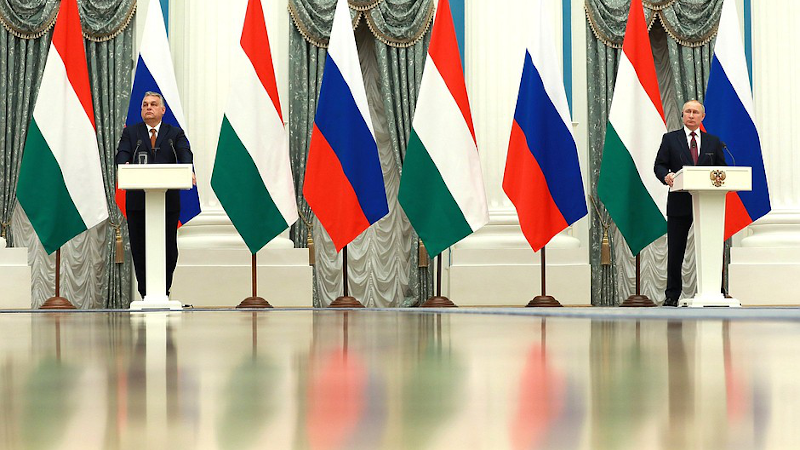
Budapest has long played up issues surrounding the 150,000-strong Hungarian minority in Ukraine and other Hungarian minorities across Eastern Europe to mobilize nationalist support at home and to advance its foreign policy goals (see EDM, June 3, 2020).
No Hungarian leader has done so more openly and vigorously than current Prime Minister Viktor Orbán has with the Hungarians in Ukraine. Orbán relies on Hungarians abroad who hold dual citizenship, which more than half of his 150,000 co-ethnics in Ukraine have, and can vote for his party, Fidesz, as they overwhelmingly do (Portfolio.hu, April 9, 2022; Novaya Gazeta Europe, June 17). More importantly, the Hungarian premier views this issue as one that allows him to boost his status by currying favor with Russian President Vladimir Putin and undermining the unity of Western institutions, including the North Atlantic Treaty Organization (NATO) and the European Union.
Orbán’s latest moves came to a head over the past week as Budapest engaged in brinksmanship on the issue of EU accession talks with Ukraine and Moldova. He demanded and received a commitment from Brussels to make the language issue central to the status of Hungarians in Ukraine and subsequently agreed that accession talks with Kyiv could open as planned. That exchange, however, may not turn out be the achievement that the Hungarian leader and his Kremlin ally believe it to be—a conclusion suggested by past developments on this issue. (On that precedent,UNIAN, February 14, 2018; see;EDM, July 17, 2018.)
The European Union offered candidate status to Ukraine and Moldova a year ago. Budapest made clear that it would insist on discussing the linguistic and political rights of the Hungarian minority in Ukraine before agreeing to accession talks (Telex.hu, September 25, 2023; News.ru, October 14, 2023). Many feared that Hungary’s position would kill the possibility of any talks. This was especially the case as Hungarian officials pointed out that the Venice Commission, which monitors the extent to which laws in applicant states correspond to EU standards, had already found Ukraine to be in violation of those standards regarding the Hungarian language (Council of Europe, June 12, 2019). The commission argued that Kyiv, despite some modifications in its laws, had clearly not done enough. (On Ukraine’s concessions to the linguistic rights of Hungarians and other minorities, see EDM, June 4, 8, 2020; Novaya Gazeta Europe, June 17).
In January, the European Union set up a working group to resolve the issue. That body, however, had apparently made little progress until earlier this month when discussions heated up as the planned date for the beginning of accession talks approached and as Hungary was set to take over the rotating EU presidency—a development that could further complicate the situation for Ukraine.
On June 15, representatives of the other EU member states finally agreed to include in accession talks Hungary’s demands that Ukraine cancel all of its language laws adopted since 2015 to ensure that the accession process will go ahead as scheduled. Not surprisingly, both Hungarian and Russian officials have been jubilant in celebrating this seeming victory for their policies intended to weaken the European Union and other transatlantic institutions and reduce the chances that the West will continue to support Ukraine (News.ru;;Topwar.ru;;Smotrim.ru, June 15;;TASS, June 18).;
Three reasons, however, cast doubt that Hungary’s “achievement” will be as great as some in Budapest and Moscow hope. First, despite the ways in which Budapest and Moscow are presenting EU actions, Brussels’ acceptance of the Hungarian demands only includes them in the negotiations. It does not necessarily determine the outcomes. As talks proceed, the final agreement about the inclusion of Ukraine in the European Union may not have the provision on this point that some now expect.
Second, Ukraine has shown itself extremely flexible with its language laws, modifying them and delaying their application whenever such legislation threatens the ability to achieve its larger goals of integration with the West. The current rules have already been softened and extended several times and are likely to be further modified and softened, reducing Budapest’s ability to find allies for its position. Third, more ethnic Hungarians in Ukraine are increasingly skeptical that Orbán is really interested in helping them. Instead, many believe that he is using them to win favor in Moscow and as a buffer against Brussels (Politicalcapital.hu, December 20, 2023;Novaya Gazeta Europe, June 17).
Some of the Hungarians in Ukraine, even those with dual citizenship, have petitioned Budapest to stop interfering in Ukrainian affairs and to not impede Ukraine’s accession to the European Union (Telex.hu, December 12, 2023). They also say they are less likely to vote for Orbán’s party in the future and thus will become less important for him. Given the Hungarian premier’s transactional approach to politics (for the latest example of this, see Orban’s agreement to approve the new candidate for NATO secretary-general in exchange for specific concessions,;Nezavisimaya Gazeta, June 18), Orbán may very well pull back again, especially if Western leaders come to view his words as reflecting his goals rather than the interests of those he claims to support.
Even if that is the case, it does not mean that the problems this latest dustup has highlighted are over. Orbán seems to be a committed anti-globalist and seemingly believes that Moscow will win in Ukraine. Thus, he will benefit most by aligning himself with the Kremlin (78.ru, May 31). The Hungarian leader will certainly have many opportunities once accession talks with Kyiv begin to delay the process until the outcome of the war in Ukraine is clear.
Beyond Ukraine, another problem is looming on the horizon: Moldova. Chisinau will be part of the same accession talks as Kyiv. Some in Moscow are already suggesting that the European Union’s willingness to make concessions on the language rights of the Hungarians may become a “precedent” for Moldova and its relations with Transnistria and its largely Russian-speaking population. Such a development may set the stage for that breakaway republic to gain independence given Chisinau’s hardline stance on its status (see;EDM, June 23, 2022;;Nezavisimaya Gazeta, June 16).
In short, Orbán and Fidesz will no doubt continue to cause problems in the region to benefit themselves and the Kremlin. The Hungarian premier, however, may find himself outmaneuvered and decide to change course, especially if he concludes that his actions on the international scene are not paying dividends at home.
- This article was published at The Jamestown Foundation’s Eurasia Daily Monitor Volume: 21 Issue: 94

By Zev Faintuch
After the Cold War, the US stood as the sole superpower providing the necessary stability for globalization. Many business executives today have only ever operated in the world America built. A world where international laws are largely respected and enforced, where freedom of navigation is a given and interstate conflicts are rare and geographically contained. However, those days are gone. America’s hegemonic power has dwindled, and an unstable multipolar system is taking its place.;
An “Axis of Disorder” comprising China, Russia, North Korea and Iran is rising and seeks to undermine US power. The members of this Axis are creating a more unpredictable and fragmented global landscape, fraught with uncertainties. This new reality has increased physical, social and cyber risks from state, non-state and individual actors. These threats concern not only the US and its allies but also international corporations with employees, assets and infrastructure around the globe.;
Businesses are now faced with navigating these challenges. Global Guardian’s new;Worldwide Threat Assessment;explores the effects of this changing order. These ramifications will reverberate across industries and nations, creating tumult that demands business executives to have a prepared response.
US power is diminishing
The peace and stability of the last three decades are gone. The US has fallen back from the leading role on the geopolitical stage economically and militarily. As a result, geopolitics is back and with a bite.;
In recent years, the;relative economic power;of the West has diminished. In 2000, America, Canada, France, Germany, Italy and the United Kingdom — known as the Group of Seven (G7) — represented 43% of the world’s GDP in purchasing power parity (PPP). Unencumbered, this bloc could project economic and military force globally. In the same year, Brazil, Russia, India, China and South Africa (BRICS) — the alternative to Western alliances — accounted for 18% of global GDP (PPP). However, by 2023 the BRICS share had soared to 32% as the G7 share dropped to 30%. The relatively weak position of the G7 has deprived Washington and her closest allies of a major lever for enforcing world order: sanctions.;
Once a powerful deterrent and coercive tool, sanctions are now ineffective against regional and near-peer powers. In response to Russia’s invasion of Ukraine, the West capped the price of Russian oil imports (with the US and UK outright banning oil and gas imports), froze Russian assets and barred the sale of certain technologies to Russia. While these measures will impact Russia over the long term, they have not slowed the Russian war machine in the near term. These measures didn’t exactly deliver a knockout blow.;
Despite the sanctions, Russia has increased its oil exports to China and India utilizing a “shadow fleet” of tankers to continue exporting;millions of barrels;of crude oil every day. Furthermore, Russia has been importing Chinese technology and rerouting sanctioned European goods through Central Asian third-party countries. Doing so has allowed the country to acquire the chips, transceivers and other components it needs to produce military equipment even faster than before the war.;
As sanctions lose effectiveness, American interest in spending resources on foreign engagements has also;dwindled. This decline stems from multiple factors: mission creep from the “War on Terror,” extensive state-building efforts and escalating domestic political polarization. The US military and its;military-industrial base;are under intense strain, compounded by;recruitment struggles;and various internal woes that are weakening military readiness capabilities.;
America’s;withdrawal from Afghanistan;in 2021 was a clear sign to foreign leaders that the US no longer has an appetite for foreign wars. Less than three years after exiting Afghanistan, cold conflicts have broken out into full-scale wars in Eastern Europe and the Middle East. Other nations, emboldened, are now taking actions they previously avoided due to fear of American retaliation. With the world in flux, more geopolitical conflict and chaos is expected, especially as the longstanding global referee appears to be retiring.;
The Axis of Disorder is rising
The perception of American weakness signals an opening for other nations to assert themselves as global and regional powers. The “Axis of Disorder” —; China, Russia, North Korea and Iran — is challenging the existing Western-dominated world order. Each member is facing American containment policies, whether military, economic, or both. As America’s positions continue to erode in Eastern Europe, the Indo-Pacific and the Middle East, the Axis sees a chance to rid themselves of American influence and dominate their regions.;
The Axis of Disorder is now collaborating at unprecedented and dangerous levels to undermine the United States. Iran has sent Russia;hundreds of drones;and licensed their domestic production in Russia. North Korea is shipping;millions of artillery rounds;to support Russia’s war in Ukraine. China is providing Russia with capital and goods to bypass Western sanctions. This creates a multipolar system replete with instability and heightens the threat of global disruptions. As a result, corporations now face a more unpredictable global landscape.
The basic realities of doing business overseas have materially changed. Decoupling with China and Russia, sticky high interest rates and the unstable geopolitical environment are all issues that businesses must grapple with. Companies, especially in the manufacturing space, need to work with greater redundancy to continue to operate and scale. Conflicted shipping lanes also force costly reroutes and drive up insurance premiums, further straining margins. All of these factors create even higher prices across the board for manufacturers, sellers and consumers.;
In the short term, having a high-level corporate strategy with risk management and duty of care must be a priority for companies with international operations. Members of the C-Suite — including chief executive officers, chief strategy officers, human resources directors, chief information officers and general counsels — must have resiliency plans in place to cover all possible threats. It is critical for companies to run through tabletop exercises so all parties involved understand their roles and responses during emergencies that could derail global operations.;
In the medium and long term, executives must pivot from a reactive posture to proactive preparation. Business leaders should explore alternative sourcing outside of politically turbulent regions. Replicating supply chains in other markets can save businesses from significant disruption during conflicts. The need for nearshoring has become increasingly clear as businesses and their customers face the economic impact of growing international tensions. Continued reliance on unstable supply chain choke points exposes businesses to greater risk and hampers the ability to meet consumer demand. While these measures are not cheap, they are essential to building resilience to withstand today’s unstable geopolitical environment.
As American hegemony slips, the fundamental pillars of our global economy continue to erode. Companies must adopt a proactive approach to risk and have plans for when, not if, a crisis occurs. Businesses that fail to recognize and prepare for the new threat landscape will fall behind when these threats become headlines. The worst-case scenario is one for which there is no plan. Now is the time for planning and finding the right partnerships to protect your people.
The views expressed in this article are the author’s own and do not necessarily reflect Fair Observer’s editorial policy.
- About the author: Zev Faintuch is a Head of Research and Intelligence for Global Guardian, an international security firm based in McLean, Virginia, that provides its clients with access to a comprehensive suite of duty-of-care services. He is a graduate of the Johns Hopkins School of Advanced International Studies. His interests include studying how political events influence broad market movements and individual firms and strategies to take advantage of their effects.
- Source: This article was published by Fair Observer
Categories