
Mazel Tov! The real Mr. Kalika is happily found! The Annual meeting of 6.12.24 – Report and Updates https://t.co/ZN9JnZgk0U
–#2900OceanCondo FBI #FBI
–
Roman Kalika, the Brooklyn Real Estate dealer, installed his puppet lap dogs Grace Bishop and her common law hubby Al… pic.twitter.com/4BweDm56LC— Michael Novakhov (@mikenov) June 21, 2024
Day: June 21, 2024
Categories
NPR News: 06-21-2024 11AM EDT
NPR News: 06-21-2024 11AM EDT
Learn more about sponsor message choices: podcastchoices.com/adchoices

ANCA launches nationwide campaign in support of key amendments holding Azerbaijan accountable for Artsakh Genocide
WASHINGTON – The Armenian National Committee of America is calling for U.S. House passage of three amendments to the Fiscal Year 2025 foreign aid bill, that would expand U.S. aid to Artsakh refugees forced from their homes during the 2023 Azerbaijan genocide and block military assistance to the Azerbaijani perpetrators of that crime.
The ANCA is leading a nationwide grassroots effort to encourage Representatives to cosponsor each of the amendments, which are set to be considered by the House Rules Committee as early as next week. The full U.S. House will have the opportunity to vote on amendments that are ruled in order, either separately or as groups of “en bloc” amendments. Amendments with strong bipartisan support are the most likely to be ruled in order.
“President Biden – having armed and abetted Azerbaijan’s genocide of Artsakh – has an opportunity this week to seek a measure of redemption for his shameful complicity in this crime, starting with vigorous public support for each of these three amendments,” said ANCA Executive Director Aram Hamparian. “He can – at long last – stop appeasing Azerbaijan, and start working with legislators to hold this dictatorship accountable.”
Amendment 146, introduced by Congressional Armenian Caucus Co-Chair Frank Pallone (D-NJ) and Nicole Malliotakis (R-NY), calls for $100 million in US funding for the Republic of Armenia under the Assistance to Europe, Eurasia, and Central Asia (AEECA) account to support victims from Nagorno Karabakh (Artsakh), forced to flee their ancestral homeland amid Azerbaijan’s full-scale attack in 2023.
Amendment 51, introduced by Rep. Dina Titus (D-NV), would prohibit funds in the bill from being used to support Azerbaijani security, development, or settlement in territories captured by force, including Nagorno-Karabakh (Artsakh).
Amendment 54, introduced by Rep. Mike Lawler (R-NY) with the support of Congressional Armenian Caucus Co-Chairs Frank Pallone and Gus Bilirakis (R-FL), prohibits funding to Azerbaijan in Fiscal Year 2025 until the President determines, and so reports to the Congress, that the Government of Azerbaijan is taking demonstrable steps to cease all blockades and other offensive uses of force against Armenia and Nagorno-Karabakh (Artsakh). This amendment includes no waiver authority since the Administration is currently exercising waiver authority to get around Section 907 of the Freedom Support Act, which prohibits such assistance.
The ANCA is also supporting bipartisan Amendment 48, led by Rep. Chris Pappas (D-NH), Gus Bilirakis, and Veronica Escobar (D-TX), which would streamline the review process for the sale of US defense articles to Cyprus.
Armenia’s Foreign Ministry on Friday issued an announcement recognizing the State of Palestine.
“The catastrophic humanitarian situation in Gaza and the ongoing military conflict are among the primary issues on the international political agenda that require settlement. The Republic of Armenia categorically rejects the targeting of civilian infrastructure, violence against the civilian population and the hostage-taking of civilians during armed conflict, joining the international community’s demands for their unconditional release,” said the foreign ministry’s statement.
“The Republic of Armenia has joined the resolutions of the UN General Assembly calling for an immediate ceasefire in Gaza. Furthermore, the Republic of Armenia is genuinely committed to establishing peace and stability in the Middle East and lasting reconciliation between the Jewish and Palestinian peoples. On various international platforms, our position has consistently been in favour of a peaceful and comprehensive settlement of the Palestinian issue, and we support the “two-state” solution to the Israeli-Palestinian conflict. We are convinced that this is the only way to ensure that both Palestinians and Israelis can fulfill their legitimate aspirations,” the statement added.
“Based on the aforementioned and reaffirming our commitment to international law and the principles of equality, sovereignty, and peaceful coexistence of peoples, the Republic of Armenia recognizes the State of Palestine,” the foreign ministry concluded.
The Palestinian Authority welcomed Yerevan’s decision.
“This recognition contributes positively to preserving the two-state solution, which faces systematic challenges, and promotes security, peace, and stability for all parties involved,” the Authority’s presidency said in a statement.
Israel’s foreign ministry reacted swiftly summoning Armenia’s Ambassador to that country, Arman Hakobyan, for what it called “a harsh reprimand.”
“Following Armenia’s recognition of a Palestinian state, the Ministry of Foreign Affairs summoned the Ambassador of Armenia to Israel for a harsh reprimand conversation,” Israel’s foreign ministry statement said.
Armenian foreign ministry spokesperson Ani Badalyan told Armenpress that there would be no additional comment on the matter outside the statement.
She, however, did say that the Hakobyan, Armenia’s Ambassador to Israel, did not meet with the Israeli foreign ministry.
“Concerning the recognition of the State of Palestine, the Armenian Ministry of Foreign Affairs published a statement presenting the approaches of Armenia, including the recognition of the ‘two-state’ principle. We have no additional public comment,” Badalyan said.
“At the moment, no meeting has taken place with the Armenian Ambassador at the Israeli Foreign Ministry,” Badalyan added.
Armenia joins dozens of mostly Middle Eastern, African and Asian countries that have also recognized Palestine as a state. Last month, four European countries — Spain, Ireland, Norway and Slovenia — also recognized the Palestinian State.
 The ANCA has launched a nationwide campaign in support of four amendments to the FY25 U.S. House foreign aid bill (H.R.8771), which would expand aid for Artsakh refugees, block aid to Azerbaijan and support stronger U.S.-Cyprus military ties.
WASHINGTON—The Armenian National Committee of America (ANCA) is calling for U.S. House passage of three amendments to the Fiscal Year 2025 foreign aid bill (H.R.8771), which would expand U.S. aid to Artsakh refugees forced from their homes during the 2023 Artsakh genocide and block military assistance to the Azerbaijani perpetrators of that crime.
The ANCA is leading a nationwide grassroots effort – anca.org/FY25aid – to encourage representatives to cosponsor each of the amendments, which are set to be considered by the House Rules Committee as early as next week. The full U.S. House will have the opportunity to vote on amendments that are ruled in order, either separately or as groups of “en bloc” amendments. Amendments with strong bipartisan support are the most likely to be ruled in order.
“President Biden – having armed and abetted Azerbaijan’s genocide of Artsakh – has an opportunity this week to seek a measure of redemption for his shameful complicity in this crime, starting with vigorous public support for each of these three amendments,” said ANCA Executive Director Aram Hamparian. “He can – at long last – stop appeasing Azerbaijan, and start working with legislators to hold this dictatorship accountable.”
Amendment 146, introduced by Congressional Armenian Caucus Co-Chair Frank Pallone (D-NJ) and Nicole Malliotakis (R-NY), calls for $100 million in U.S. funding for the Republic of Armenia under the Assistance to Europe, Eurasia and Central Asia (AEECA) account to support victims from Nagorno-Karabakh (Artsakh), forced to flee their ancestral homeland amid Azerbaijan’s full-scale attack in 2023.
Amendment 51, introduced by Rep. Dina Titus (D-NV), would prohibit funds in the bill from being used to support Azerbaijani security, development or settlement in territories captured by force, including Nagorno-Karabakh (Artsakh).
Amendment 54, introduced by Rep. Mike Lawler (R-NY) with the support of Congressional Armenian Caucus Co-Chairs Frank Pallone and Gus Bilirakis (R-FL), prohibits funding to Azerbaijan in Fiscal Year 2025 until the president determines, and so reports to the Congress, that the government of Azerbaijan is taking demonstrable steps to cease all blockades and other offensive uses of force against Armenia and Nagorno-Karabakh (Artsakh). This amendment includes no waiver authority since the administration is currently exercising waiver authority to get around Section 907 of the Freedom Support Act, which prohibits such assistance.
The ANCA is also supporting bipartisan Amendment 48, led by Rep. Chris Pappas (D-NH), Gus Bilirakis and Veronica Escobar (D-TX), which would streamline the review process for the sale of U.S. defense articles to Cyprus.
Author information
The Armenian National Committee of America (ANCA) is the largest and most influential Armenian-American grassroots organization. Working in coordination with a network of offices, chapters and supporters throughout the United States and affiliated organizations around the world, the ANCA actively advances the concerns of the Armenian American community on a broad range of issues.
| Twitter |
The post U.S. House lawmakers press for major increase in aid to Artsakh refugees, total ban on aid to Azerbaijan appeared first on The Armenian Weekly.
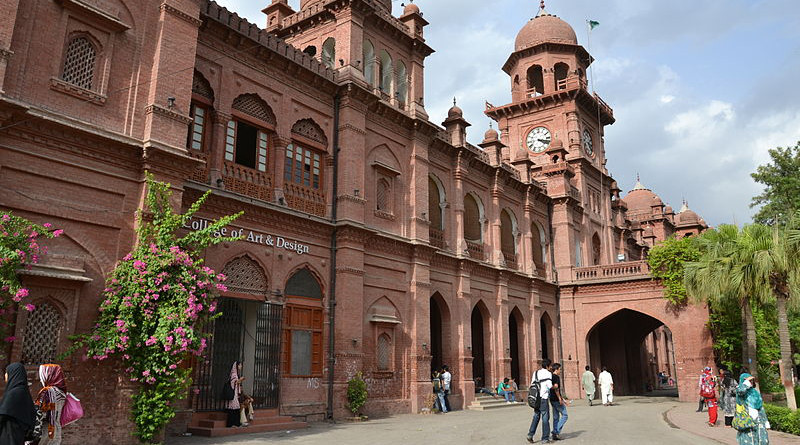
Radicalization in higher education institutions is an issue of increasing concern globally, and Pakistan is no exception. The phenomenon, which involves students adopting extreme political, social, or religious ideologies, has significant implications for the stability and security of society. In Pakistan, this issue is particularly pertinent due to the complex interplay of historical, socio-political, and economic factors that contribute to an environment conducive to radicalization. This article explores the causes, manifestations, and potential solutions to the problem of radicalization in higher education institutions in Pakistan.
The roots of radicalization in Pakistan’s higher education institutions can be traced back to a combination of historical legacies and contemporary socio-political dynamics. The legacy of the Afghan War in the 1980s, during which Pakistan became a frontline state, significantly influenced the ideological landscape of the country. The influx of extremist ideologies during this period found fertile ground in educational institutions, where they were often promoted under the guise of religious or ideological purity. This historical backdrop has been compounded by ongoing political instability, economic challenges, and social fragmentation, all of which create a breeding ground for radical ideologies.
One of the primary drivers of radicalization in Pakistani universities is the inadequacy of the educational curriculum. The curriculum in many institutions has not evolved to promote critical thinking, tolerance, and inclusivity. Instead, it often perpetuates narrow interpretations of religion and history, which can foster intolerance and extremism. This issue is further exacerbated by the lack of adequate teacher training and the influence of conservative elements within the educational system. As a result, students are often exposed to a biased and dogmatic educational experience that leaves little room for critical engagement with diverse perspectives.
In accumulation to curricular deficiencies, the socio-economic environment within which many students operate also plays a crucial role in fostering radicalization. Many students come from underprivileged backgrounds and face significant economic and social pressures. The promise of belonging and purpose offered by radical groups can be particularly appealing to these students, who may feel alienated and disenfranchised. Furthermore, the lack of adequate student support services and extracurricular activities in many institutions means that students have few constructive outlets for their energies and frustrations.
The influence of external radical groups and individuals cannot be underestimated in the context of radicalization in higher education institutions. These groups often actively recruit on campuses, exploiting the vulnerabilities of students. They use sophisticated propaganda techniques, including social media, to spread their ideologies and attract followers. The presence of radicalized faculty members and administrators can also contribute to the problem, as they may use their positions of authority to promote extremist views.
The manifestations of radicalization in Pakistani universities are varied and multifaceted. They can range from the adoption of extremist ideologies to active participation in radical groups and activities. In some cases, radicalized students have been involved in violent incidents, both on and off-campus. The presence of radical elements within universities can create an atmosphere of fear and intimidation, stifling academic freedom and open discourse. This not only undermines the primary mission of higher education institutions but also poses a broader threat to societal harmony and stability.
Addressing the issue of radicalization in higher education institutions in Pakistan requires a multifaceted and holistic approach. First and foremost, there is a need to reform the educational curriculum to promote critical thinking, tolerance, and inclusivity. This involves not only updating textbooks and course materials but also providing adequate training for teachers to help them foster a more open and critical learning environment. Engaging students in discussions about diverse perspectives and encouraging them to question and critically evaluate different viewpoints is essential in combating radicalization.
To curricular reforms, it is crucial to address the socio-economic challenges faced by students. This can be achieved by providing better financial support, counseling services, and extracurricular activities that offer constructive outlets for students’ energies. Creating an environment where students feel supported and valued can significantly reduce their vulnerability to radicalization. Universities should also establish mechanisms to identify and support students who may be at risk of radicalization, including providing access to mental health services and creating safe spaces for open dialogue.
The role of technology and social media in the radicalization process must also be addressed. Universities should implement comprehensive digital literacy programs that help students critically evaluate the information they encounter online. This includes teaching students about the tactics used by radical groups to spread their ideologies and how to resist online radicalization efforts. Additionally, collaboration with tech companies and law enforcement agencies can help monitor and counteract the online activities of radical groups targeting students.
Furthermore, it is essential to foster a culture of inclusivity and tolerance within universities. This can be achieved by promoting diverse student bodies and faculty, encouraging interfaith and intercultural dialogue, and creating an environment where differences are respected and valued. Universities should also actively engage with the broader community, including parents, religious leaders, and civil society organizations, to create a united front against radicalization.
The government and educational authorities have a crucial role to play in combating radicalization in higher education institutions. They must provide adequate funding and resources to support curricular reforms, student support services, and extracurricular activities. Additionally, there should be a clear and consistent policy framework for addressing radicalization, including guidelines for identifying and responding to radicalization on campuses. Collaboration between different government agencies, educational institutions, and civil society organizations is essential to create a comprehensive and effective response to this issue.
The radicalization of students in higher education institutions in Pakistan is a complex and multifaceted issue that requires a comprehensive and holistic approach. By addressing the root causes of radicalization, including curricular deficiencies, socio-economic challenges, and the influence of external radical groups, it is possible to create a more resilient and inclusive educational environment. This, in turn, will help to foster a generation of critical thinkers who can contribute to the stability and prosperity of Pakistan. The stakes are high, but with concerted effort and collaboration, it is possible to turn the tide against radicalization in Pakistani universities.