
“Я поняла, что это будет не допрос, а нечто другое”. Жительницы Украины рассказывают об изнасилованиях и угрозах убийством со стороны российских военных. Две личные истории pic.twitter.com/W9JMeJVIK4
— DW на русском (@dw_russian) June 21, 2024
Day: June 21, 2024
“Я поняла, что это будет не допрос, а нечто другое”. Жительницы Украины рассказывают об изнасилованиях и угрозах убийством со стороны российских военных. Две личные истории pic.twitter.com/W9JMeJVIK4
— DW на русском (@dw_russian) June 21, 2024
“Я поняла, что это будет не допрос, а нечто другое”. Жительницы Украины рассказывают об изнасилованиях и угрозах убийством со стороны российских военных. Две личные истории pic.twitter.com/W9JMeJVIK4
— DW на русском (@dw_russian) June 21, 2024
“Я поняла, что это будет не допрос, а нечто другое”. Жительницы Украины рассказывают об изнасилованиях и угрозах убийством со стороны российских военных. Две личные истории pic.twitter.com/W9JMeJVIK4
— DW на русском (@dw_russian) June 21, 2024
“Я поняла, что это будет не допрос, а нечто другое”. Жительницы Украины рассказывают об изнасилованиях и угрозах убийством со стороны российских военных. Две личные истории pic.twitter.com/W9JMeJVIK4
— DW на русском (@dw_russian) June 21, 2024
“Я поняла, что это будет не допрос, а нечто другое”. Жительницы Украины рассказывают об изнасилованиях и угрозах убийством со стороны российских военных. Две личные истории pic.twitter.com/W9JMeJVIK4
— DW на русском (@dw_russian) June 21, 2024
“Я поняла, что это будет не допрос, а нечто другое”. Жительницы Украины рассказывают об изнасилованиях и угрозах убийством со стороны российских военных. Две личные истории pic.twitter.com/W9JMeJVIK4
— DW на русском (@dw_russian) June 21, 2024
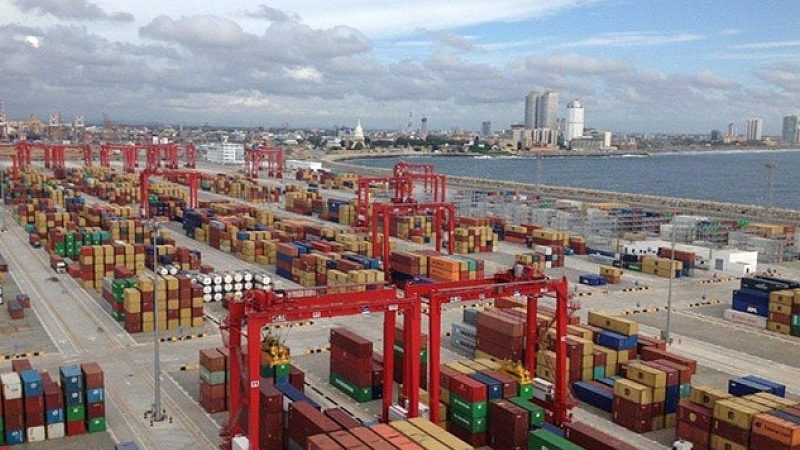
In a move that will up alarms in India, China’s giant conglomerate Sinopec is entering Sri Lanka’s energy market with its inaugural overseas refinery at the Chinese-managed Hambantota port. Sri Lanka approved the $4.5 Bn investment in November.
Doubtlessly, this strategic move flags Sinopec’s ambition to offset declining growth in China’s oil demand and move capacity in emerging markets in developing economies. Sri Lanka figures prominently in China’s Maritime Belt & Road Initiative which is designed to give Beijing control over crucial Indian Ocean lanes.
Sinopec’s refinery project was geared more towards meeting Sri Lanka domestic needs, contrary to Sri Lanka’s export-oriented preference, intensifies the rivalry with India.;
Despite India’s significant fuel supply role in Sri Lanka, Sinopec’s initiative signals a strategic contest for market dominance.
Driven by a newly launched investment arm, Sinopec is prioritizing global expansion, with Sri Lanka and Saudi Arabia as focal points. As China’s oil demand approaches saturation amid economic deceleration and rising electric vehicle adoption, Sinopec seeks to leverage its expertise and financial strength in overseas ventures.
This endeavor represents a departure from previous trends in Chinese oil investments abroad, which dwindled post-2015 due to oil price fluctuations and heightened financial scrutiny by Beijing.
;Sinopec’s meticulous planning includes finalizing plant specifications and negotiating market access terms with Colombo, that was critical in influencing its investment decision.
Sinopec’s foray into Sri Lanka’s energy landscape underscores the evolving dynamics of global oil investments, as major players adapt to shifting market realities and geopolitical rivalries.
This move, which is a major change in Sinopec’s foreign strategy, is perceived as a reaction to China’s slowing increase in demand.;
The proposed investment, estimated at $4.5bn by Sri Lankan officials, would be the country’s largest-ever foreign investment.;;
While the initiative is commercially driven, it also places Sinopec in competition with India, which is promoting a rival plan to build a fuel products pipeline to Sri Lanka.;;
State-owned Indian Oil Corporation is currently the second-largest fuel supplier to Sri Lanka, following government-owned Ceylon Petroleum.;;
Sinopec’s investment in Sri Lanka, along with another project in Saudi Arabia, is part of a broader effort to leverage the company’s expertise and financial resources for global expansion.;;
This comes as oil demand in China approaches its peak amidst economic slowdown and the rise of electric vehicles.;;
The company’s international investment strategy has evolved following a decline in Chinese oil and gas investments abroad, which dropped to $344m in 2023 from a record $31bn in 2012, the report said, citing London Stock Exchange Group data.;
In negotiations with Colombo, Sinopec is seeking greater access to the import-reliant Sri Lankan market, a critical factor for its final investment decision.;;
Sri Lanka, facing a foreign exchange crisis, desires a refinery that would satisfy 20% of its domestic fuel needs and allow for exports to generate hard currency.;;
However, Sinopec believes focusing on domestic sales could be more profitable.;
The company is considering constructing either a 160,000 barrels per day (bpd) refinery or two phased 100,000bpd plants, primarily producing gasoline and diesel.;;
Sinopec has been requesting more accommodating conditions for the project’s domestic marketing share for several months now, but Colombo has not agreed.;
Sinopec declined to comment and requests for comments from India’s foreign ministry and Indian Oil Corporation did not elicit a response, the publication said.
Sri Lanka’s power and energy minister, Kanchana Wijesekera, has indicated that the government is maintaining its stipulation for the refinery’s output and expects Sinopec to sign an investment agreement by June.;
Sinopec’s Hambantota project is a top priority, alongside a significant investment in expanding a refinery into a petrochemical complex at Saudi Arabia’s Yanbu port, in partnership with Saudi Aramco.;
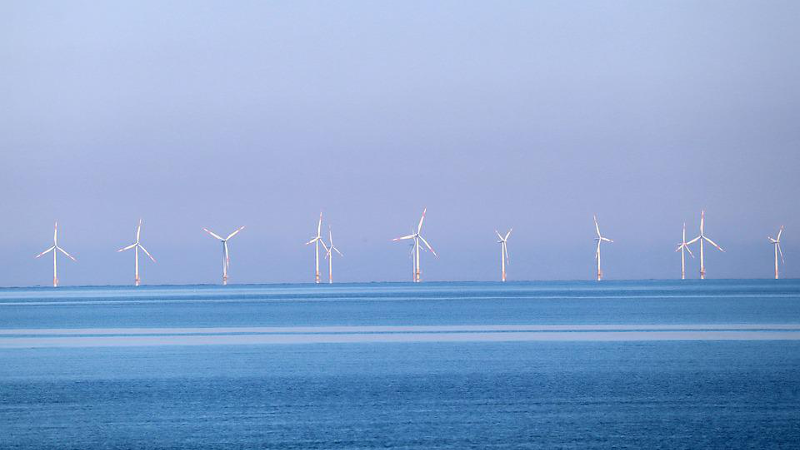
TotalEnergies, as shareholder of Offshore Wind One GmbH, has been awarded the maritime concession N-11.2 by the German Federal Network Agency, following auctions held in Germany.
Located in the North Sea, around 120 kilometers north-west of the German island of Heligoland, concession N-11.2 (1.5 GW) covers an area of around 156 square kilometers. This success will enable TotalEnergies to build a 3.5 GW offshore wind hub in German North Sea, taking benefit of the synergies between this new lease and the 2 GW concession N-12.1 won last year.
Under the terms of this award, Offshore Wind One GmbH will pay, at the latest in June 2025, the German Federal government €196 million, which will be allocated to marine conservation and the promotion of environmentally friendly fishing. An annual contribution of €88 million will also be paid to the electricity transmission system operator in charge of connecting the project, for a term of twenty years starting from the commissioning of the site.
The concession will run for a term of 25 years, extendable to 35 years.
“Building upon the successful award of concession N-12.1 in the German North Sea last year, the award of the N-11.2 site will enable TotalEnergies to establish a 3.5 GW offshore wind energy hub, building on the quality of both sites and taking advantage of the development and operational synergies between them. This marks a new step for the deployment of TotalEnergies Integrated Power strategy in Germany after the acquisition of;Quadra Energy, one of the top 3 aggregators of renewable electricity production and of;Kyon Energy, a prominent developer of battery storage solutions. TotalEnergies is also very pleased to contribute to Germany’s decarbonisation targets,” said;Stéphane Michel, President Gas Renewable and Power of TotalEnergies.

In an era where global peace and stability are increasingly threatened, the idea of forming a military alliance among Turkic-speaking nations akin to NATO has resurfaced. Prompted by Kyrgyzstan’s recent proposal to Azerbaijan, this concept seeks to leverage historical alliances, shared values, and mutual interests to enhance regional security. This article delves into the feasibility, potential structure, and implications of establishing such an alliance, tentatively dubbed the “Turkic NATO” or “Army of Turan,” especially within regional dynamics involving major powers like Turkey, Iran, and Russia.
Historical context and rationale
Historically, military alliances have played pivotal roles in shaping global and regional security landscapes. From the successful NATO to the now-defunct Warsaw Pact, these blocs have varied effectiveness and impact. For the Turkic-speaking nations, the motivation to form a military bloc stems from persistent regional instability, including poverty, ethnic conflicts, and geopolitical tensions. The occupation of Azerbaijan’s territories by Armenia, despite international recognition of these lands as Azerbaijani, underscores the need for a robust defense mechanism. Azerbaijan’s decisive victory in the 2020 Nagorno-Karabakh war demonstrated the potential for a unified military effort among Turkic nations.
Potential structure & objectives
Formation and Membership: The alliance could initially comprise Azerbaijan, Turkey, Kazakhstan, Kyrgyzstan, Uzbekistan, and Turkmenistan, all of which share linguistic and cultural ties. This core group could eventually expand to include other interested Turkic-speaking states.
Command Structure: A centralized command, akin to NATO’s structure, would be essential. Each member state would contribute military personnel and resources, with command responsibilities rotating among member nations.
Primary objectives:
Collective defense: Similar to NATO’s Article 5, an attack on one member would be considered an attack on all, ensuring collective defense.
Counter-terrorism: Coordinated efforts to combat terrorism, insurgency, and cross-border threats.
Humanitarian assistance: Providing aid during natural disasters and humanitarian crises within member states.
Peacekeeping operations: Deploying joint forces for peacekeeping missions under the UN or regional mandates.
Financial considerations
The establishment and maintenance of a Turkic NATO would require substantial financial investment. Based on NATO’s budget and the economic capacities of the potential member states, initial estimates suggest annual costs could range from $1 to $3 billion, depending on the scope of operations and the scale of joint exercises and infrastructure development.
Comparative analysis with regional powers
Turkey: As a NATO member with a strong military, Turkey’s involvement would provide strategic and operational expertise. Its experience in NATO could help shape the alliance’s structure and enhance interoperability with NATO forces.
Iran: While Iran’s regional ambitions and relationships are complex, its position as a neighboring power would necessitate careful diplomatic engagement to avoid escalation and ensure regional stability.
Russia: Historically a dominant regional force, Russia’s response to a Turkic military bloc would be crucial. The alliance would need to navigate its formation without provoking unnecessary conflict with Russia, possibly seeking diplomatic channels to maintain a balance of power.
Precedents & strategic importance
The world has witnessed regional military alliances before, though none perfectly parallel the proposed Turkic NATO. For instance, the Gulf Cooperation Council (GCC) has a collective security mechanism, but its efficacy has been limited. The Arab League’s Joint Defense Pact also serves as a model, though it has seen varied success. The proposed Turkic NATO would need to learn from these examples, ensuring strong political will, adequate funding, and effective coordination among member states.
Conclusion
The proposal for a Turkic NATO, while ambitious, is grounded in the strategic need for enhanced regional security and cooperation among Turkic-speaking nations. With Azerbaijan potentially playing a leading role, bolstered by its recent military successes, the alliance could offer a new paradigm for regional stability. However, careful planning, substantial investment, and diplomatic finesse will be essential to navigate the complex geopolitical landscape and establish a viable and effective military alliance.