Categories
Audio Review - South Caucasus News

Challenging The Status Quo: The Rise And Implications Of Germany’s AfD – OpEd


Challenging The Status Quo: The Rise And Implications Of Germany’s AfD – OpEd

The rise of the Alternative, for Germany (AfD) in politics poses a threat not only to Germany but also to the broader European Union. Initially viewed as a fringe party it has now gained prominence within the right-wing populist movement across Europe. This essay will explore the AfD ascent in Germany its underlying factors and its implications not only for Germany but for Europe as a whole.

We will examine upcoming trends and policy shifts in response to the AfD. What are the potential political and economic ramifications for Europe and North America? A crucial aspect of our analysis will be to investigate how these developments could impact structures. If this party’s influence grows what might that signify for Germany’s fabric?

Established in 2013 by a group of free-market economists who were dissatisfied, with the bailouts provided to European nations during the Eurozone crisis the AfD emerged when Chancellor Angela Merkel led the Christian Democrats (CDU) and its Bavarian counterpart, the Christian Social Union (CSU) in government.

The creators of the AfD mostly consisted of long-time supporters of the CDU who became disillusioned with the party’s deviation, from a market-oriented economic policy. After the beginning, the AfD gained momentum during the 2014 European Parliament elections. However, the party struggled to gain influence, especially with its limited number of initially elected representatives on the European stage. They mainly focused on duties. Due, to re-elections introducing unfamiliar faces the far-right orientation of the AfD often seemed inconsequential until it decided to change its approach.

During the crisis, the AfD capitalized on fears and concerns surrounding migration security issues and societal unrest to further its agenda. The rise of the Alternative, for Germany (AfD) has had an impact on politics. Despite criticism of their party platform for being seen as xenophobic and Islamophobic, many AfD supporters express a distrust in mainstream politics and dissatisfaction with the direction established parties are taking the country. These voters resonate with the AfD as a party that not only promises to shield them from changes they perceive as threatening but also aims to reverse these changes to create a society governed by the AfD that offers more favourable economic and social conditions akin to what was experienced in the former GDR.

The AfD has made gains in success securing 12.6 per cent of the vote in the 2017 federal election positioning it as the third-largest party in the Bundestag. This achievement follows its performance in 13 out of 16 state elections held between 2016 and 2017. Despite being relatively young at four years old the AfD has managed to find a balance between its moderate factions contributing to its grassroots success. The results of the September 2021 election further solidified the AfD influence, in politics.

The emergence of this party has prompted mainstream parties to reconsider their views, on national identity and immigration. These are pressing issues that directly impact the voters who have switched their allegiance to the AfD. In an attempt to win them back the CDU/CSU and the SPD have somewhat shifted towards a stance similar to that of the AfD.

The influence of the Alternative for Germany (AfD) party extends far beyond Germany’s borders. Not do they wield power within their own country but they also possess the ability to shape policies across the European Union. They stand out as one of the parties within an EU member state critical of the EU direction in terms of policies and integration. The success of AfD may embolden right and populist movements in Europe leading them to consider forming alliances.

The rise of AfD further complicates Germany’s stance on EU support and government stability. This has implications for what can be achieved by the EU and how efficiently it can do so—determining which policies can be implemented. It underscores the struggle, between interests and shared European priorities.

It’s no secret that not all Germans share the hopes and dreams when it comes to EU policies. The AfD, a part of the category of ‘Right Wing Populism’ is gaining prominence across Europe. This political ideology offers both promises and threats – a pledge, for increased democracy and responsiveness to people’s concerns during challenges. In Germany, the AfD represents a voice from the right with nationalist populist leanings and an authoritarian social agenda that challenges the standing liberal establishment post World War II. Understanding why voters are drawn to parties like Alternative for Germany (AfD) is crucial for maintaining stability and unity, in the European Union. To do so we need to delve into what attracts supporters to these parties and the underlying fears and uncertainties that influence them.

To conclude, if we fail to address the concerns of people and groups, within the EU region we won’t be able to revive democracy, which is currently struggling. The emergence of the AfD marks an event in European political history. Initially opposing EU policies it has evolved into an immigration party with nationalist sentiments. Today it stands as one of Germany’s growing parties challenging established norms and the dominance of pro-Europe and pro-immigration stances. Navigating the landscape of politics ahead requires caution to prevent exacerbating issues. The EU and Europe as a whole are at a juncture; hence it’s crucial to avoid missteps, by clearly articulating positions and maintaining transparency.

The opinions expressed in this article are the author’s own.

References

  • Arzheimer, K. (2015). The AfD: Finally a Successful Right-Wing Populist Eurosceptic Party for Germany? West European Politics, 38(3), 535-556.
  • Berbuir, N., Lewandowsky, M., & Siri, J. (2015). The AfD and its Sympathisers: Finally a Right-Wing Populist Movement in Germany? German Politics, 24(2), 154-178.
  • Brubaker, R. (2017). Between Nationalism and Civilizationism: The European Populist Moment in Comparative Perspective. Ethnic and Racial Studies, 40(8), 1191-1226.
  • Häusler, A. (2019). Right-Wing Populism in Europe: Politics and Discourse. Routledge.
  • Inglehart, R., & Norris, P. (2016). Trump, Brexit, and the Rise of Populism: Economic Have-Nots and Cultural Backlash. Harvard Kennedy School Working Paper No. RWP16-026.
  • Lees, C. (2018). The ‘Alternative for Germany’: The Rise of Right-Wing Populism at the Heart of Europe. Politics, 38(3), 295-310.
  • Mudde, C. (2019). The Far Right Today. Polity Press.

Categories
South Caucasus News

Challenging The Status Quo: The Rise And Implications Of Germany’s AfD – OpEd


Challenging The Status Quo: The Rise And Implications Of Germany’s AfD – OpEd

The rise of the Alternative, for Germany (AfD) in politics poses a threat not only to Germany but also to the broader European Union. Initially viewed as a fringe party it has now gained prominence within the right-wing populist movement across Europe. This essay will explore the AfD ascent in Germany its underlying factors and its implications not only for Germany but for Europe as a whole.

We will examine upcoming trends and policy shifts in response to the AfD. What are the potential political and economic ramifications for Europe and North America? A crucial aspect of our analysis will be to investigate how these developments could impact structures. If this party’s influence grows what might that signify for Germany’s fabric?

Established in 2013 by a group of free-market economists who were dissatisfied, with the bailouts provided to European nations during the Eurozone crisis the AfD emerged when Chancellor Angela Merkel led the Christian Democrats (CDU) and its Bavarian counterpart, the Christian Social Union (CSU) in government.

The creators of the AfD mostly consisted of long-time supporters of the CDU who became disillusioned with the party’s deviation, from a market-oriented economic policy. After the beginning, the AfD gained momentum during the 2014 European Parliament elections. However, the party struggled to gain influence, especially with its limited number of initially elected representatives on the European stage. They mainly focused on duties. Due, to re-elections introducing unfamiliar faces the far-right orientation of the AfD often seemed inconsequential until it decided to change its approach.

During the crisis, the AfD capitalized on fears and concerns surrounding migration security issues and societal unrest to further its agenda. The rise of the Alternative, for Germany (AfD) has had an impact on politics. Despite criticism of their party platform for being seen as xenophobic and Islamophobic, many AfD supporters express a distrust in mainstream politics and dissatisfaction with the direction established parties are taking the country. These voters resonate with the AfD as a party that not only promises to shield them from changes they perceive as threatening but also aims to reverse these changes to create a society governed by the AfD that offers more favourable economic and social conditions akin to what was experienced in the former GDR.

The AfD has made gains in success securing 12.6 per cent of the vote in the 2017 federal election positioning it as the third-largest party in the Bundestag. This achievement follows its performance in 13 out of 16 state elections held between 2016 and 2017. Despite being relatively young at four years old the AfD has managed to find a balance between its moderate factions contributing to its grassroots success. The results of the September 2021 election further solidified the AfD influence, in politics.

The emergence of this party has prompted mainstream parties to reconsider their views, on national identity and immigration. These are pressing issues that directly impact the voters who have switched their allegiance to the AfD. In an attempt to win them back the CDU/CSU and the SPD have somewhat shifted towards a stance similar to that of the AfD.

The influence of the Alternative for Germany (AfD) party extends far beyond Germany’s borders. Not do they wield power within their own country but they also possess the ability to shape policies across the European Union. They stand out as one of the parties within an EU member state critical of the EU direction in terms of policies and integration. The success of AfD may embolden right and populist movements in Europe leading them to consider forming alliances.

The rise of AfD further complicates Germany’s stance on EU support and government stability. This has implications for what can be achieved by the EU and how efficiently it can do so—determining which policies can be implemented. It underscores the struggle, between interests and shared European priorities.

It’s no secret that not all Germans share the hopes and dreams when it comes to EU policies. The AfD, a part of the category of ‘Right Wing Populism’ is gaining prominence across Europe. This political ideology offers both promises and threats – a pledge, for increased democracy and responsiveness to people’s concerns during challenges. In Germany, the AfD represents a voice from the right with nationalist populist leanings and an authoritarian social agenda that challenges the standing liberal establishment post World War II. Understanding why voters are drawn to parties like Alternative for Germany (AfD) is crucial for maintaining stability and unity, in the European Union. To do so we need to delve into what attracts supporters to these parties and the underlying fears and uncertainties that influence them.

To conclude, if we fail to address the concerns of people and groups, within the EU region we won’t be able to revive democracy, which is currently struggling. The emergence of the AfD marks an event in European political history. Initially opposing EU policies it has evolved into an immigration party with nationalist sentiments. Today it stands as one of Germany’s growing parties challenging established norms and the dominance of pro-Europe and pro-immigration stances. Navigating the landscape of politics ahead requires caution to prevent exacerbating issues. The EU and Europe as a whole are at a juncture; hence it’s crucial to avoid missteps, by clearly articulating positions and maintaining transparency.

The opinions expressed in this article are the author’s own.

References

  • Arzheimer, K. (2015). The AfD: Finally a Successful Right-Wing Populist Eurosceptic Party for Germany? West European Politics, 38(3), 535-556.
  • Berbuir, N., Lewandowsky, M., & Siri, J. (2015). The AfD and its Sympathisers: Finally a Right-Wing Populist Movement in Germany? German Politics, 24(2), 154-178.
  • Brubaker, R. (2017). Between Nationalism and Civilizationism: The European Populist Moment in Comparative Perspective. Ethnic and Racial Studies, 40(8), 1191-1226.
  • Häusler, A. (2019). Right-Wing Populism in Europe: Politics and Discourse. Routledge.
  • Inglehart, R., & Norris, P. (2016). Trump, Brexit, and the Rise of Populism: Economic Have-Nots and Cultural Backlash. Harvard Kennedy School Working Paper No. RWP16-026.
  • Lees, C. (2018). The ‘Alternative for Germany’: The Rise of Right-Wing Populism at the Heart of Europe. Politics, 38(3), 295-310.
  • Mudde, C. (2019). The Far Right Today. Polity Press.

Categories
South Caucasus News

South Africa Reshapes Its Democracy, Shows Readiness For Economic Transformation – Analysis


South Africa Reshapes Its Democracy, Shows Readiness For Economic Transformation – Analysis

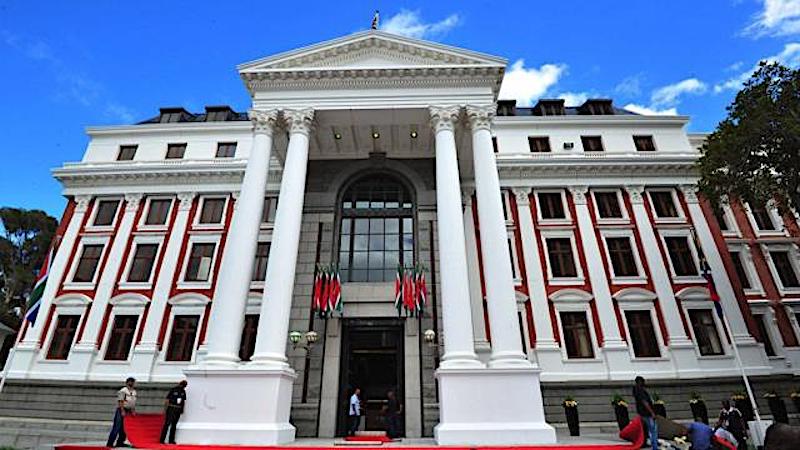
South Africa's Parliament. Photo Credit: SA News

South Africa’s historic election results in late May 2024 were another credible testament which, by simple guiding definition, explicitly illustrated democracy as the aggregate will of the people. It was held as stipulated by its constitution. The diverse political expressions were presented through political parties, the the African National Congress (ANC) and its largest rivals the Democratic Alliance (DA), the hard-left Economic Freedom Fighters (EFF), the Inkatha Freedom Party (IFP), and uMkhonto weSizwe Party. Minority parties had their chance to participate, which made it fair and free an electoral progress in South Africa.

This is unlike what happened in Nigeria the so-called giant of Africa, where an election process was mired with ballot box snatching, rigging, violence, and irregularities thereby totally undermining the will of the people.

Despite heightened criticisms, South Africa has illuminated an exemplary template of good governance. In most significant practice, adherence of good governance is one fundamental principle that African leaders have to uphold, as a guiding principle combined with transparency and accountability, to shy away from the shame of being accused over functional political irresponsibility.

Worth reiterating that the political initiative taken by the African National Congress, headed by President Cyril Ramaphosa, to form a coalition has set the rhythmical parameters for the evolutionary processes, without much resistance to the obvious glaring weaknesses and shortfalls of the past administration. The creation of the new executive government emboldened the concept of “unity in diversity” and would have to float a common understanding towards ratifying and removing the existing complexities and contradictions within the framework of aspirations stipulated in the constitution. In another context, it has some relevance for the current shifting geopolitical situation and emerging multipolar architecture.;

With its chequered history behind it, South Africa needs comprehensive result-oriented development initiatives, and this can only come through striking compromise and consequently be adopted by the coalition government. The political stalwarts such as the Democratic Alliance (DA) and Inkatha Freedom Party (IFP), now grossly involved in treading the tricky balanced act approved by the parliament on June 14, 2024, raised unswerving hopes for South Africa, the southern African nation of approximately 62 million.

It was a breakthrough to merge political forces marking the ‘great beginning’ of a new chapter, as Economic Freedom Fighters, uMkhonto weSizwe, and other parties have remained antagonistic, and have been termed as the game-losers of the century, marking a significant shift in South African political history after 30 years of ANC dominance. It has some implications, though.

The preceding political agitations culminating in the coalition agreement marked the most significant political change since Nelson Mandela led the ANC to victory in 1994, ending apartheid. “Today is a historic day for our country,” DA leader John Steenhuisen stated, highlighting a new chapter focused on the nation’s interests and future. Similarly acknowledging all these without the least doubts, Ramaphosa described the success as “a remarkable change” and “It will once again be a privilege and pleasure to serve this great nation … (as) president,” said the 71-year-old Ramaphosa, emphasizing a new era of hope and cautious inclusivity. (1)

Tackling Existing Tasks

The newly created executive government would necessarily have to determine the scope of transformation, and the contours for a broader strategic economic resuscitation to uplift South Africa back to its status as Africa’s economic power and an influencer on the global stage, starting from the regional bloc, Southern African Development Community (SADC) and to continental organization, the African Union (AU).

As President Cyril Ramaphosa secured the second term, the preliminary pathway must lead towards tackling the existing pertinent issues that were raised during the election campaign and resulted in a fall of supporters (42%), below the simple majority, for the ANC.;

Several reports monitored for this article, the ANC’s decline primarily stemmed from persistent issues such as high poverty, inequality, crime, rolling power cuts, and internal corruption. The DA’s entry into national government signifies a watershed moment for South Africa, as the party advocates for scrapping some of the ANC’s Black empowerment programs, aiming for good governance and a strong economy to benefit all citizens.

Perhaps, South Africa’s newly instituted government has to acknowledge the undeniably challenging future tasks that would require adopting suitable strategies for implementing a set of result-expected policy directions. Across the board, however, experts and investors have already welcomed the coalition, expecting policy continuity and accelerated reforms. It is worth mentioning here that the coalition agreement also outlines priorities, inextricably linked to comprehensive sustainable development, such as economic growth, job creation, land reform, infrastructure development, and fiscal sustainability.

South Africa is the fourth-most populous country in Africa, 80 % of the population are blacks, located entirely south of the equator, after Tanzania. But the most paramount feature is that South Africa has a mixed economy. South Africa’s economy is the most industrialized and technologically advanced in Africa respectively, and has the second largest economy in Africa, after Nigeria. According to research reports, South Africa has a private wealth of $651 billion making its population the richest in Africa followed by Egypt with $307 billion and Nigeria with $228 billion. (2) Despite these, South Africa is still burdened by a relatively high rate of poverty and unemployment and is ranked in the top ten countries in the world.

Unlike most of the world’s industrialized countries, Energy power outrages have bugged down industrial production and domestic utilization. Electricity deficits in an increasing headache across Africa, and majority of the African countries lacked access to this vital component. African Development Bank and African Import-Export Bank reports said half the total Africa’s population has no daily access to electricity. The impact is considered simply as immeasurable, though surmountable. South Africa is currently the only country on the African continent that possesses a nuclear power plant. The primary electricity generator is Eskom, the utility is the largest producer of electricity in Africa and also needs capital repairs as the equipment is obsolete and experiences frequent breakdowns, consequently limiting power supply.

Due to severe mismanagement and corruption at Eskom, the company is R392bn ($22bn) in debt and is unable to meet the demands of the South African power grid. Due to this, Eskom implemented load-shedding, which is periodically switching off electricity to specific power grids in specific time frames. In South Africa, load shedding is done to prevent a failure of the entire system when the demand for electricity strains the capacity of Eskom’s power-generating system. Load shedding is characterized by periods of widespread national-level rolling blackouts.

Dr Kelvin Kemm, a nuclear physicist and former chairman of the South African Nuclear Energy Corporation (NECSA), and current Chairman of Stratek Global, a nuclear project management company based in Pretoria, suggested in a report that the ultimate pathway forward, possibly the “energy mix” can effectively fill certain functions in electricity provision, but “much financial arm-twisting has taken place, in the forms of supposedly soft loans and other inducements to save mankind from the sins of the Industrial Revolution and modern day industrialists.” (4)

Under former President Jacob Zuma, the power crisis in South Africa steadily worsened, as the authorities tried to make up their minds on which direction to follow, according to Kemm. In reality, Zuma pushed for more nuclear power. However, this initiative was vehemently opposed by anti-nuclear green groups who are significantly funded by the countries exporting their green solutions. Zuma-era project to build an additional 9600 MW of nuclear power was torpedoed by the anti-nuclear greens. Then President Cyril Ramaphosa deposed President Jacob Zuma. A hallmark of the tenure of President Ramaphosa has been dithering and uncertainty. The country hoped for a show of strong leadership under President Ramaphosa, but that did not materialize. Thankfully, South Africa is now advancing the nuclear agenda not only by announcing the planned building of a new large nuclear power station but also by supporting the introduction of Small Modular Reactors.

Combined with the energy question discussed above, South Africa is widely infected by corruption. It scored 41 points out of 100 on the 2023 Corruption Perceptions Index. Notwithstanding that, more examples of corruptible governments are abounding in Africa. Critics noted that African leaders are fond of making unilateral decisions, bartering natural resources without cabinet approval and parliamentary discussions. And according to critics, Africans consistently blame their poor performance on external factors. Corruption is a global phenomenon, but that socioeconomic cancer should be tackled seriously in South Africa.;

Senior Writer Kate Whiting indicated, in her report on Transparency International’s Global Corruption Barometer, that Corruption is hindering Africa’s economic, political, and social development… More than this, it affects the well-being of individuals, families, and communities.” The report attributed the deterioration of the rule of law and democratic institutions, as well as a rapidly shrinking space for civil society and independent media to corruption in Africa.;

Over the years from the apartheid era until today, there has been tremendous growth in multifaceted crimes across South Africa. Reasons could not be far-fetched, as, blacks are unemployed. The entire economy creates highly limited employment places, and again due to porous official policies. From April 2017 to March 2018, on average 57 murders were committed each day in South Africa. More than 526,000 South Africans were murdered from 1994 to 2019. As of February 2023, South Africa unbelievably has the sixth-highest crime rate in the world.

In an article headlined “Coalition Government: A Test For South Africa’s Democracy” published in June 2024, (5) Samir Bhattacharya, a research associate at Observer Research Foundation (ORF) in New Delhi, India, pointed to the possible impact on its future foreign policy and aspects of its implications. Moving forward, the next administration would need to give the country’s foreign policy issues serious attention, chief among them being the delicate balancing act between the West, China, and Russia. At a deeper level, the incoming administration must develop a realistic foreign policy agenda that inspires confidence among investors, both local and foreign. Due to its close ties to all of the superpowers and the BRICS countries, South Africa’s non-alignment approach to international affairs is unlikely to alter in the current environment.

However, there arises a firm need to keep in mind that South Africa still finds strength in its democratic system, which remains a cornerstone of stability and inclusivity. Due to its participation in numerous international issues and membership in groups such as the G20 and BRICS, South Africa is a significant global player. It has lately surpassed Nigeria to become the largest economy on the African continent. South Africa’s latest developments are closely watched not only in the continent but also globally.;

Logical Glimpse into the Future

South Africa boasts of an excellent reputation on the global stage. It is also a member of the Southern African Development Community and the African Union. ;It is a founding member of the AU’s New Partnership for Africa’s Development. After apartheid ended, South Africa was readmitted to the Commonwealth of Nations. Chronicling history, Johannesburg hosted the latest XVI BRICS summit, and continues to play a pivotal role in the BRICS association. China supported by Russia, in 2011, South Africa was enrolled into the informal association BRICS (Brazil, Russia, India, China, and South Africa). ;Jacob Zuma asserted that BRICS member countries would also work with each other through the UN, G20, and the India, Brazil South Africa (IBSA) forum.;

According to local African and foreign critics, despite its widened bilateral relations with many foreign countries, and yet South Africa suffers from high youth unemployment, grappling with energy supply deficits, and many other economic obstacles discussed earlier in this article. Ramaphosa consistently attributes weak economic performance to external factors. In his speeches after the second inauguration on June 19, 2024, Ramaphosa unswervingly promised to embark on a swift and vigorous economic resuscitation of South Africa, and within the new geopolitical reality. Nonetheless, the past was seemingly a difficult time. Ramaphosa has to ‘walk the talk’ as illustrated by well-coined linguistic phrases to win the hearts of the working-class, entrepreneurs, and middle-class population. The logic behind his re-election and re-appointment signalizes a complete turning point and a new chapter, at first with steadfastness, cooperating and collaborating in a close-knitted manner with the broad coalition and stakeholders in readiness to adopt radical measures in dealing with the existing economic deficiencies, striving further to improve the economic status of South Africa. The new chapter brings in its fold the necessity to make contentious steps toward achieving visible economic progress and ensuring ultimate economic sovereignty, creating an inspiring bright future for the generations as stipulated within the constitution of South Africa.

References

1. Official speeches by DA leader John Steenhuisen and ANC Cyril Ramaphosa, made available at the websites (June 2024).

2. “World Bank: South Africa” (PDF). Archived (PDF) from the original on 20 April 2023.;

3. Transparency International’s Global Corruption Barometer, April 2023 report.

4. Ramaphosa’s Administration and the Electricity Challenges in South Africa. Dr Kelvin Kemm (May 2024) interview published by Eurasia Review.;

5. Samir Bhattacharya, Coalition Government: A Test For South Africa’s Democracy (June 2024), interview published by Global Research.

Categories
South Caucasus News

Rumors About St. Martin’s Island Amid Myanmar Conflict – OpEd


Rumors About St. Martin’s Island Amid Myanmar Conflict – OpEd

As Myanmar’s ongoing conflict turns up on the doorstep of Bangladesh’s St. Martin Island, vested interests are spreading rumour and propaganda that the island is going to be occupied by Myanmar. Nothing could be further from the truth. As a matter of fact, the rumour mongers are trying to take advantage of the escalation of the current situation prevailing in the island where the sound of fierce gunfire between the Myanmar military junta and the resistance group(s) is being heard every now and then. Two people were killed and many injured as mortar shells were fired on the Bangladeshi territory. 264 members of Myanmar’s border and security forces have managed to escape to Bangladesh. The people of bordering areas are in a state of panic. Such times are convenient for spreading rumour and spewing out lies by the propaganda machine.;

However, the Inter-Services Public Relations (ISPR) has urged the public not to be hoodwinked into believing such rumours circulated on social media. ISPR argues that since the island is situated in close proximity to the Myanmar coast (only eight kilometers away), the quarters with vested interests are spreading rumours in order to give a confused account of the events surrounding the situation. It has also stated that the Myanmar military junta is conducting operations against the Arakan Army (AA) rebel group in Rakhine State situated on the western coast which has led to “unintended” firing incidents on Bangladeshi boats in the Naf River and adjacent areas.

Myanmar’s naval forces are targeting Arakan Army positions from their territorial waters and warships are operating in the vicinity of Saint Martin’s Island near the border. This has resulted in an untoward incident that took place on June 5, 2024. A Bangladeshi boat carrying election equipment and officials was fired upon from Myanmar’s territory as it returned from the island. Although none was shot, it is a thing to be widely condemned. The situation was worsened on June 8, 2024 when the crackle of gunfire stopped a cargo vessel traveling from Teknaf to Saint Martin’s. Again, on June 11, 2024 an armed group from the coast of Myanmar fired upon a speed boat in the Naf River bound for St. Martin’s Island. As a result, the local administration postponed travel on this route. About 10,000 inhabitants of the   island are having to suffer from a great scarcity of food and other daily necessities. Moreover, Myanmar naval warships are now visible from Saint Martin’s. This chain of events has detached the island from the mainland and aggravated the sufferings of the islanders. And sufferings of the local people coupled with the potential threat of invasion has led to mounting tension along the border and the country as well. 

However, the Bangladesh government has expressed deep concern over the incident of firing on the Bangladeshi boat and made a formal protest on June 12, 2024 against Myanmar military junta’s reckless warfare that impacts greatly on Bangladesh’s border security. In addition, Bangladesh Navy and Coast Guard are keeping a round-the-clock vigil at the place.  

The rumour or propaganda that the St. Martin’s Island may be under the occupation of Myanmar or the government may lease it out is completely unfounded. However, why such rumours are fueled and propaganda is spread is quite obvious. Let’s look back on some facts. It was on October 6, 2018, the then Government of Myanmar doctored the country’s 2015-2018 map showing St. Martin as part of their territory and posted it on their websites. Consequently, on October 6, 2018, the Myanmar Ambassador to Dhaka Mr. Lwin Oo was called for by the Government of Bangladesh and handed over a strongly worder letter of protest. The Myanmar envoy admitted to their mistakes in showing the St. Martin’s Island as part of their country’s territory. And after constructive dialogue between the two countries, the Myanmar government removed it. However, that administration has been ousted by the current military junta. However, Myanmar’s deliberate falsification of their country’s map adding to it another country’s part of territory and sharing it on Government approved websites during their dilly dallying with the Rohingya repatriation process smacks of an “ulterior motive”. 

However, such unrealistic plans will go up in smoke. Myanmar must have no claim on the Saint Martin’s Island on any account. As a matter of fact, Bangladesh’s only coral island, St. Martin’s Island had never been a part of Myanmar, not any time from time immemorial. So far as history is concerned, approximately 5,000 years ago, the place was a part of the mainland Teknaf. But it eventually sank beneath the ocean. Subsequently, the southern region of modern-day Saint Martin’s Island emerged about 450 years ago. The northern portion and the remainder of the island surfaced after a century. As many as 250 years ago in the 18th Century, Arab merchants explored the island. During their trade with Southeast Asia, they would take breaks on the island. They had named it ‘Jazira’ that was subsequently dubbed ‘Narikel Jinjira’ by local people which means ‘Coconut Island’. It is also known as ‘Daruchini Dwip’(Cinnamon Island). 

In the year 1900, a British land survey team included Saint Martin’s Island as part of British-India, and named it after a Christian priest Saint Martin. It may also have been named after the then Deputy Commissioner of Chittagong Mr. Martin. In 1937, when Myanmar was separated from India, it was still a part of British-India. After the partition of the British India in 1947, St. Martin’s Island was on the Pakistani side which finally became a part of independent Bangladesh after the Liberation War of 1971. In 1974, Bangladesh and Burma reached a settlement that St. Martin’s Island is part of the territory of Bangladesh. Once again, when Bangladesh won the maritime boundary dispute against Myanmar in the International Tribunal for the Law of the Sea (ITLOS) in March 2012, it was clearly stated that St. martin Island belongs to Bangladesh. Under no circumstances should Myanmar lay any claim to the island, and the publication of this map is a deliberate attempt to damage bilateral ties and regional peace. There has been no dispute over the ownership of St. Martin as such till date. The only debate regarding the delimitation of the maritime boundary that prevailed between Bangladesh and Myanmar for long was already settled in the ITLOS.

The St. Martin’s Island, by virtue of its strategic location, has become a focal point of global geopolitical interest. Its proximity to Matarbari Deepsea Port under construction will multiply its geopolitical importance. The US and China may have a sneaking interest in using this small island in the largest Bay in the world. The US, as part of its Indo Pacific Strategy (IPS), seeks to make its presence felt in the Bay of Bengal. It wants Bangladesh to be included in the Quadrilateral Security Dialogue (QSD), commonly known as the Quad, which is a strategic security dialogue between Australia, India, Japan and the United States established in order to counter China, and help the US to achieve its IPS objectives in the Bay of Bengal region.  Likewise, China may want to extend to Saint Martin’s considering the significance of maritime routes through the Bay of Bengal for its booming trade and military strategy to counter IPS. 

The most important thing for Bangladesh is that the Prime Minister Sheikh Hasina has a firm grip on the situation and she won’t budge an inch on the issue of St. Martin’s. She has assured the nation that she would go to the stake for safeguarding her country against any foreign intervention. She has categorically stated that her government will never compromise with anybody on the country’s sovereignty and resources.  She has categorically stated that no national assets, including Saint Martin’s, would be leased out to nobody on earth.

The Government of Bangladesh should resolve the tension along the Myanmar border peacefully through dialogue, avoiding conflict, to suit to the principles of its foreign policy and Bangabandhu’s ideals.  And the people of Bangladesh should turn a deaf ear to such baseless rumours. Bangladesh is committed to extending the hand of friendship towards all and bearing no malice towards anybody, but remains poised to retaliate against any external attacks on its sovereignty.

Subsequent to the strong protest on the part of Bangladesh, Myanmar was bound to remove the information that showed St. Martin as part of its own territory. The Parliamentary Committee of Bangladesh dealing with foreign affairs has asked the ministry to take steps to monitor if such information was published on any other website. After their visible acts of bad faith in the entire Rohingya humanitarian crisis, the mere explanation of ‘unintentional mistake’ is not credible. The government of Bangladesh has to cautiously face and overcome all the diplomatic acts of Myanmar.


Categories
South Caucasus News

Islam And Judaism On Atonement – OpEd


Islam And Judaism On Atonement – OpEd

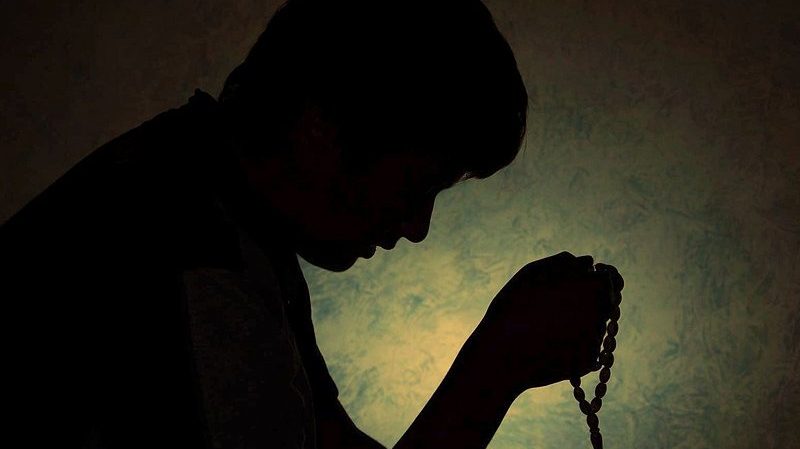
Muslim prayer beads. Photo by Muhammad Rehan, Wikipedia Commons.

On the Day of Atonement-Yom Kippur Jews world wide pray not at the usual three daily services, but [like Muslims] at five services, which all together last for about 8-10 hours of introspection and seeking reconciliation, forgiveness and atonement.

One of the meanings of Kippur is to cover over or conceal [like God’s Arabic name Al-Ghafoor]. Some of us might have committed sins that are too many, or too shameful, to even think about. But when Allah forgives a sin, He covers it over and conceals it.

Al-Ghafoor is the One who does not expose the sins of His servants. God forgives us whenever we repent, even while knowing of the wrongs we have committed; and Yom Kippur is the day when Jews should focus for the whole day on deep self-examination, seeking God’s forgiveness.

Mentioned as Al-Ghafoor (the most forgiving) in 90+ places in the Qur’an, God offers every sinner many chances of redemption and repentance saying: “O My servants who have transgressed against themselves (by sinning), do not despair of the mercy of Allah. Indeed, Allah forgives all sins. Indeed, it is He who is the Forgiving, the Merciful’.” (Qur’an, 39:53)

And as the Bible states: “If My people who are called by My name humble themselves, pray, seek My presence, and turn from their wicked ways, then I will hear [their words] from heaven, and forgive their sins and heal their land.” (II Chronicles 7:14)

Prophet Muhammad clarified this when he narrated in a Hadith Qudsi, “Allah the Exalted said: ‘O son of Adam, if you call upon me and place your hope in me, I will forgive you without any reservation. O son of Adam, if you have sins piling up to the clouds and then ask for my forgiveness, I will forgive you without any reservation.” (Sunan Al-Tirmidhi, 3540)

As Prophet Isaiah says: “I have swept away your transgressions like a fog, and your sins like a cloud. Return to Me, for I have redeemed you”. (Isaiah 44:22)

Even God’s Prophets and Messengers who are very righteous and pure individuals, used to acknowledge their mistakes too, and turned to Allah in repentance all the time. Prophet Adam and his wife accepted their mistake and said: “Our Lord, we have wronged ourselves, and if You do not forgive us and have mercy upon us, we will surely be among the losers..” (Qur’an, 7:23).

Similarly, Prophet Musa said: “My Lord, indeed I have wronged myself, so forgive me.” (Qur’an, 28:16) and Prophet Muhammad said: “Sometimes I perceive a veil over my heart and ask Allah for forgiveness one hundred times a day.” (Muslim, 2702)

We should learn from them that, as the Bible states: “Indeed, there is no one on earth who is [always] righteous, no one who [always] does what is right and never sins.” (Ecclesiastes 7:20)

And we should learn from this super dramatic allegory that whoever sincerely and strongly turns to God in repentance will be helped also by God to repent. 

Abu Sa’id al-Khudri reported Allah’s Messenger as saying that a man [a Jewish man according to Al-Bukhari Book #56, Hadith #676] who killed ninety-nine persons began to seek if there was any way left for him for repentance. He came to a Christian monk and asked him about that, and the monk said: There is no chance for repentance for you (non-believers in Jesus the Son of God).;

So, he killed the monk; and then began seeking again going from one village to another village where there lived pious persons, but at some distance away he was overtaken by death, yet he kept crawling on his belly (to the village where the pious men lived).

When he died, there was a dispute between the angels of mercy and the angels of punishment [over his status] and (when it was measured) he was found to be nearer the village where pious persons were living, so he was included among them.;(Muslim Book #037, Hadith #6663)

In the allegory the Monk says there is no chance for repentance for you, not because you killed many people, but because Jews do not believe that Jesus was the Son of God who died on the cross as an atonement for all those who believe in the sacrifice of God’s son.

But the allegory teaches that Al-Ghafoor’s mercy extends to everyone who sincerely and strongly turns to God in repentance; and that they will even be helped by God Himself to repent; because in the Al Bukhari version the allegory states that Allah himself moved the pious village closer to the dying Jew.

There are many verses in the Qur’an and sayings of the Prophet Muhammad on God’s love, mercy, and forgiveness. In one of the prayers that the Prophet taught, he said: “O God, You are most Forgiving One, You love to forgive, so forgive me.” (At-Trimidhi & Ibn Majah).

We need God’s mercy and forgiveness all the time. It is wrong to assume at any time that one will find eternal salvation without the forgiveness of God. Just as it is important to believe in God’s mercy and forgiveness, it is also necessary to base human relations on forgiveness.

We cannot expect God’s forgiveness unless we also forgive those who do wrong to us. Forgiving each other, even forgiving one’s enemies is one of the most important of Islamic teaching. In the Qur’an, God has described the Believers as: “those who avoid major sins and acts of indecencies, and when they are angry they forgive.” (42:37)

Yom Kippur is a day of fasting for 24 hours; and during that fast all Jews will hear the words of Prophet Isaiah read during the service in the synagogue as follows:

“Is this not the fast that I have chosen: To lose the bonds of wickedness, To undo the heavy burdens [and];let the oppressed go free, and that you break every yoke? Is it not to share your bread with the hungry, and bring to your house the poor who are cast out;

When you see the naked, that you cover them, and not hide yourself from your own flesh?
Then your light shall break forth like the morning, Your healing shall spring forth speedily,
And your righteousness shall go before you; The glory of the Lord shall be your rear guard.

Then you shall call, and the Lord will answer; You shall cry, and He will say, ‘Here I am.’
“If you take away the yoke from your midst; the pointing finger, and speaking wickedness,
If you extend your soul to the hungry and satisfy the afflicted soul,

Then your light shall dawn in the darkness, and your darkness shall be as noon-day. The Lord will guide you continually, satisfying your soul in drought, and strengthen your bones; You shall be like a watered garden, like a spring of water, whose waters do not fail.” (Isaiah 58:6-11)

The following fable illustrates the importance of all the stages of atonement. A Jewish mother once gave her daughter a bag of nails and told her that every time she lost her temper or insulted somebody she must hammer a nail into a large tree in the back of their house.

The first day the girl hit 14 nails into the tree. Over the next few weeks, as she learned to control her anger, the number of nails hammered daily gradually dwindled. She discovered it was easier to hold her temper than to drive those nails into the tree.

Finally the day came when the girl didn’t lose her temper at all. She told her mother about it and the mother suggested that the girl now pull out one nail for each day that she was able to hold her temper. The days passed. Finally, she told her mother that all the nails were gone.;

The mother took her daughter by the hand and led her to the tree. She said, “You have done well, my daughter, but look at all the holes in the tree. This tree will never be the same. When you say things in anger, they leave a scar just like these.” You can put a knife in a person and draw it out. It does not matter how many times you say I’m sorry, the wound is still there. A verbal wound is almost as bad as a physical one.

“How can I fix the tree?” asked the girl. “Will it have to remain damaged forever?”;

“Yes and no” said the mother. “Our Rabbis say that if the tree is a special tree called a tree of life, and she responds to the way you have changed, she too can change and heal herself. If the tree is not a tree of life, and is dead to the possibility of your repentance, it will carry its scars onward.; The tree will never be as it was before, but she doesn’t have to become like new to be a good tree of life. If you do your part and change, and the tree of life does her part in response, God will do something wonderful.;

God will promote a healing that will make you and the tree of life better. This process is called repentance and atonement. It means that the changes that come about from repentance and forgiveness lead people to higher levels of relationship than was the case before the wound took place.”

“What happens if the tree doesn’t respond?” asked the girl. “Can I ever make it whole?”

“Our rabbis say you should try on three different occasions,” said the mother, “but if the tree remains dead even after you have changed, YOU can’t force it to become whole. In that case you should fix another tree somewhere else. There are always lots of other trees that need fixing, and most of them are trees of life.;

Whenever you fix a tree of life God will make something wonderful happen. That is the miracle of repentance and atonement. God always responds to our attempts to change for the good, by helping us change; and then always responds to our change for the good, by giving us new and wonderful opportunities for repentance and atonement. This is why we have a Day of Atonement (Yom Kippur) ten days after the beginning of every New Year; so the New Year will be a better one than the last one.” ;;

Finally, Proverbs 3:18 tells us that by making a strong commitment to following God’s teachings we will live a life of goodness and love. “She (wisdom) is a Tree of Life to those who take hold of her; those who hold her tight will be happy.”;

The rabbis took the feminine words wisdom and Torah (Jewish teachings) as interchangeable. To understand the nature of her Torah wisdom, we have to read the preceding verses of Proverbs 3:;

1 My child, do not forget my Torah, keep my Mitsvot (commandments) in your heart,;
2 for they will prolong your life many years and bring you peace and prosperity.
3 Let love and faithfulness never leave you; bind them around your neck, write them on the tablet of your heart. 4 Then you will win favor and a good name in the sight of God and man…

13 Blessed are those who find wisdom, those who gain understanding, 
14 for she (Torah wisdom) is more profitable than silver and yields better returns than gold. 
15 She is more precious than rubies; nothing you desire can compare with her. 
16 Long life is in her right hand; in her left hand are riches and honor. 17 Her ways are pleasant ways, and all her paths are peaceful. 
18 She is a Tree of Life to those who take hold of her; all who hold her tight will be happy.


Categories
South Caucasus News

Armenia News – NEWS.am


Armenia News  NEWS.am

Categories
South Caucasus News

Jean-Christophe Buisson: France will provide Armenia with 36 howitzers – NEWS.am


Jean-Christophe Buisson: France will provide Armenia with 36 howitzers  NEWS.am

Categories
South Caucasus News

Official visit of the Chief of General Staff of Azerbaijan Army to Serbia continues


Official visit of the Chief of General Staff of Azerbaijan Army to Serbia continues

The official visit of the First Deputy Minister of Defense of the Republic of Azerbaijan – Chief of the General Staff of the Azerbaijan Army, Colonel General Karim Valiyev to Serbia continues.
A delegation led by Colonel General K. Valiyev visited the Yugoimport SDPR company.
After getting acquainted with the company’s products, the Chief of the General Staff arrived at the combat systems factory.
The Azerbaijani delegation was provided with detailed information about the factory’s main activities.
Then the “Rastko Nemanjić” Barracks and the special operations brigade were visited.
Samples of weapons and equipment were presented here to the Chief of the General Staff of the Azerbaijan Army.
In the end, Colonel General K. Valiyev watched the combat training activities.

Official visit of the Chief of General Staff of Azerbaijan Army to Serbia continues


Categories
South Caucasus News

Azerbaijan eliminates double taxation on income with Kyrgyzstan – News.Az


Azerbaijan eliminates double taxation on income with Kyrgyzstan  News.Az

Categories
South Caucasus News

Azerbaijan, EU bring up green energy collaboration – News.Az


Azerbaijan, EU bring up green energy collaboration  News.Az