Categories
South Caucasus News

The Region in Brief


Iranian presidential candidates 2024

Artsakh

Ruben Vardanyan’s family has reported that severe torture was inflicted on him in an Azerbaijani prison during his hunger strike in April. He was placed in a punishment cell with constant lighting and deprived of sleep, water and communication with his family. International lawyers have urgently appealed to the U.N. Special Rapporteur on Torture to condemn Azerbaijan’s treatment of Vardanyan. His family has called for international accountability and protection for his well-being and raised broader concerns over the treatment of political prisoners in Azerbaijan.

Georgia

Georgia is set to implement a ban on public events about LGBTQ issues following the enactment of the “Family Values and Protection of Minors” law. This legislation will prohibit public meetings and demonstrations aimed at “promoting sex change and same-sex relationships.” The new law grants police the authority to enforce the ban and, in cases of non-compliance, to take legal measures. Repeated violations of these standards will result in criminal liability. The legislation has sparked significant debate, with queer activists calling it anti-democratic and unconstitutional. 

Iran

Over 52% of Iranian eligible voters are expected to participate in snap elections on June 28 following the death of President Ebrahim Raisi in a helicopter crash on May 19. The Iranian Constitutional Council, a 12-member body that oversees elections, has finalized the list of presidential candidates. They include former Minister of Justice Mostafa Pourmohammadi, lawmaker Massoud Pezeshkian, Head of Iran’s Martyrs and Veterans Affairs Foundation Amir-Hossein Ghazizadeh, Tehran Mayor Alireza Zakani, former Nuclear Negotiator Saeed Jalili and Parliament Speaker Mohammad Bagher Ghalibaf. In the first of five televised debates on Islamic Republic of Iran Broadcasting (IRIB), the candidates discussed their economic plans and strategies.

Russia

In a recent interview with “Komsomolskaya Pravda,” Russian Deputy Foreign Minister Mikhail Galuzin stressed the critical importance of maintaining strong economic and security relations between Russia and Armenia. Galuzin said that Armenia’s full participation in the Collective Security Treaty Organization (CSTO) aligns with the aspirations of the Armenian people and supports peace and stability in the South Caucasus. He argued that assurances from the West are not a viable alternative for ensuring Armenia’s security. Galuzin warned against adopting Western security models under the influence of the U.S. and NATO, which he said would undermine Armenia’s ability to maintain a common defense area with Russia and within the CSTO framework. This news follows Armenian PM Nikol Pashinyan’s declaration that Armenia will exit the CSTO at an appropriate time.

Author information

Hoory Minoyan

Hoory Minoyan

Hoory Minoyan was an active member of the Armenian community in Los Angeles until she moved to Armenia prior to the 44-day war. She graduated with a master’s in International Affairs from Boston University, where she was also the recipient of the William R. Keylor Travel Grant. The research and interviews she conducted while in Armenia later became the foundation of her Master’s thesis, “Shaping Identity Through Conflict: The Armenian Experience.” Hoory continues to follow her passion for research and writing by contributing to the Armenian Weekly.

|

The post The Region in Brief appeared first on The Armenian Weekly.

Categories
South Caucasus News

Armenia Rejects Azeri Criticism Of New Arms Deal With France – azatutyun.am


Armenia Rejects Azeri Criticism Of New Arms Deal With France  azatutyun.am

Categories
South Caucasus News

Do EU Citizens Feel Less European?


Do EU Citizens Feel Less European?

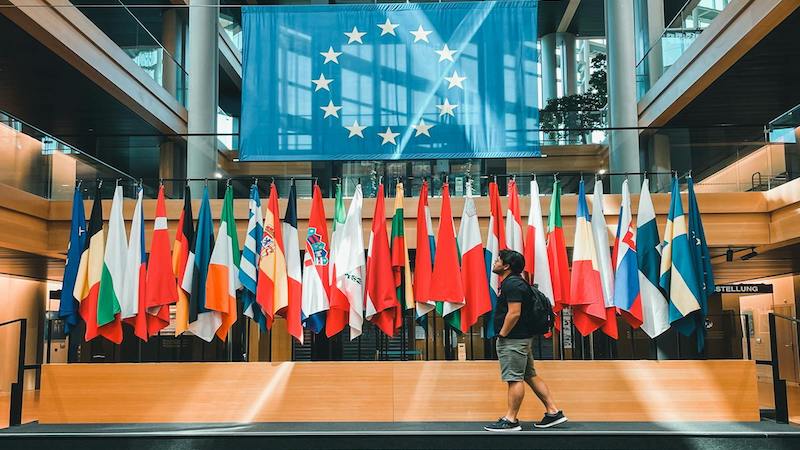
flags European Union

(CORDIS) — The 2024 European elections – the world’s largest multi-country vote – saw the rise of nationalist and Eurosceptic parties. Going back a few years, there was Brexit and the debt crisis. How have these and other major events negatively impacted European identity? A report by the University of Amsterdam sought to answer this question.

A new perspective on European identity

A team of researchers combined various opinion polls from 34 European countries over a period of 41 years. Using advanced statistical modelling, they gathered data from all polls, countries and years.

“We wanted to map out how European identity has evolved over the years, but our research into this was severely limited by the types of opinion polls that we usually consult for our research,” commented lead author Theresa Kuhn, professor of modern European history and politics, in a news release. “Most polls don’t date back very far and usually only one type of question was asked on the subject.”

The results showed that the sense of European identity between people of most EU countries has increased in the last 15 years. Prof. Kuhn gave reasons for the findings: “That surprised us to be honest. The past two decades were marked by crises, not only externally, but also internally, such as Brexit and the Eurozone crisis. You might expect that this would make people want to distance themselves from the European Union, but that does not appear to be the case. One explanation for this could be that people are more inclined to adhere to a group as a result of a crisis. People feel threatened and are more likely to surround themselves with people whose views align closely with their own.”

According to Prof. Kuhn, another reason is that an entire generation only knows a Europe with more expansion, and the introduction of the single market, border-free travel and the euro. “This group of people have grown up in an era in which there are open borders and many countries have the euro as currency unit. These things have also made Europe something tangible, as a result of which people have been able to experience the EU, rather than it being an abstract institution.”

The role of the sceptics

EU discontent has boosted Euroscepticism. However, Prof. Kuhn doesn’t believe citizens also feel less European. “A clear differentiation needs to be made between the perception of a European identity and support for the European Union. Someone may feel European, but not agree with the current policy. The opposite may also be true.”

She further added: “Eurosceptic voters have most likely existed since the 1950s. However, they didn’t have any way yet to express that electorally, because almost all parties were pro-European at national level. Parties have only decided to make this an issue since the 1990s.”

Prof. Kuhn concludes by urging the EU to bolster a sense of European identity. “Many important decisions are taken at European level. That’s why it is important for the democratic legitimacy of the EU that a significant proportion of Europeans also feel connected to Europe. In addition, research shows that people who identify as European are less likely to vote for populist parties and more likely to show solidarity for other Europeans.”


Categories
South Caucasus News

Myanmar: Junta Arrests Scores Of Residents In Sittwe


Myanmar: Junta Arrests Scores Of Residents In Sittwe

A Myanmar junta prisoner transport vehicle. Photo Credit: DMG

The military regime abducted about 200 residents from Mingan Ward in Arakan State’s Sittwe Town on Sunday. They have been held incommunicado since, according to residents.

Ten vehicles full of junta troops arrived in Mingan Ward at around 1 p.m. on June 16, and went door to door arresting people, said witnesses.

A family member of one detainee said: “They made arrests until 4 p.m. They didn’t explain the reason for the arrests. Some were taken blindfolded. We don’t know where they were taken to.”

The detained residents range in age from 15 and 50 years old, including both men, women and children. Some residents from Yaychanpyin, Aung Taing, Palin Pyin, Ohyayphaw and Kyettawpyin villages who were forcibly moved to Sittwe Town recently were also detained.

Family members do not know their whereabouts, and have expressed concerns for their safety.

Some detainees reportedly phoned their families on Sunday evening, and told them that they were in Darpaing (Muslim) Village in the west of the township, and that they were told that they would be released if a ransom was paid.

“Family members received a phone call asking for ransom money of 700,000 kyats per person,” said a resident.

As of press time, DMG could not independently verify those claims.

The regime reportedly arrested more Mingan Ward residents on Sunday night as junta personnel knocked on doors purportedly to check for unregistered overnight guests.

“They came again and arrested more people around 9 p.m. My friends were also arrested. I don’t know where they were taken to,” said a Sittwe resident.

Many residents have fled the Arakan State capital for fear of possible fighting between the Myanmar military and Arakkha Army, but many low-income families cannot afford to flee the town.

One resident who remains in Sittwe said: “We don’t feel safe in the town, but we are left with no choice. We are constantly worried that they might come and we were already consumed with worries about how to make ends meet.”

The regime arrested more than 300 residents of Byaing Phyu Village in Sittwe Township on May 29, killing at least 76 people and burning many of their bodies, according to the AA. It has also prosecuted some detainees.


Categories
South Caucasus News

South Africa: Ramaphosa Sworn In As President


South Africa: Ramaphosa Sworn In As President

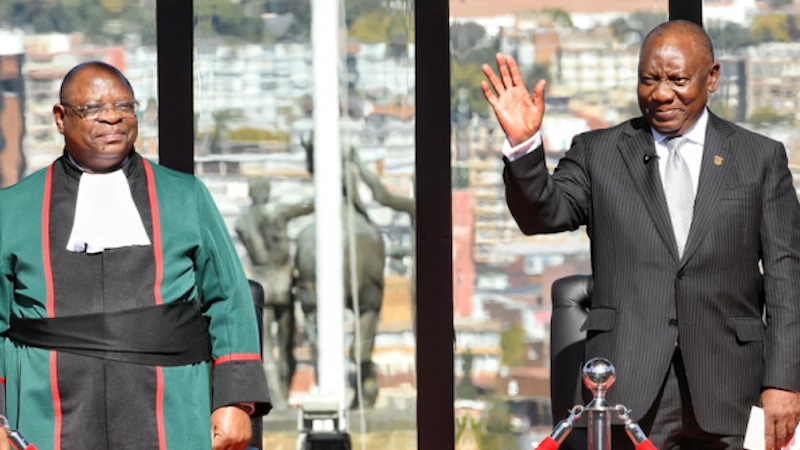
Matamela Cyril Ramaphosa is sworn in as president of South Africa. Photo Credit: SA News

“In the presence of everyone assembled here, and in full realisation of the high calling I assume as President of the Republic of South Africa, I, Matamela Cyril Ramaphosa, swear that I will be faithful to the Republic of South Africa and will obey, observe, uphold and maintain the Constitution and all other law of the Republic.

“And I solemnly and sincerely promise that I will always promote all that will advance the Republic and oppose all that may harm it, protect and promote the rights of all South Africans, discharge my duties with all my strength and talents to the best of my knowledge and ability and true to the dictates of my conscience, do justice to all and devote myself to the wellbeing of the Republic and all its people, so help me God.”

With that solemn oath, President Matamela Cyril Ramaphosa has taken his place in the highest office in the land – the Presidency of South Africa. This is his second term as President.

The President was inaugurated and took the Oath of Office – administered by Chief Justice Raymond Zondo – at the Union Buildings on Wednesday. This signals the official start of the seventh administration of democratic South Africa.

South Africa will be led by a Government of National Unity following the National and Provincial Elections held on 29 May 2024 in which no political party received a clear majority.

Ramaphosa urged all political parties to put their differences aside and work together, as South Africans, through the ballot, have spoken and made clear their needs for the seventh administration.

“[The] people of South Africa have stressed that they are impatient with political bickering and the endless blame game among politicians and political parties. They want us to put their needs and aspirations first and they want us to work together for the sake of our country,” Ramaphosa said, adding, “Today I stand before you as your humble servant to say we have heard you.”


Categories
South Caucasus News

US Federal Indictment Alleges Alliance Between Sinaloa Cartel And Money Launderers Linked To Chinese Underground Banking


US Federal Indictment Alleges Alliance Between Sinaloa Cartel And Money Launderers Linked To Chinese Underground Banking

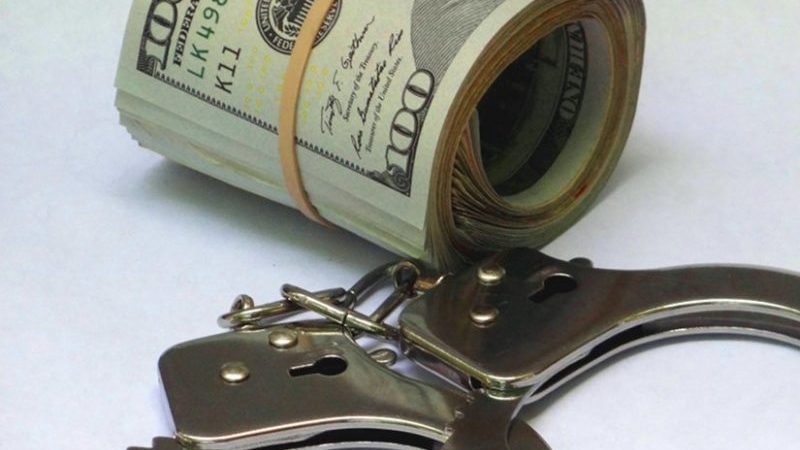
dollar crime handcuffs

The Justice Department announced Tuesday a 10-count superseding indictment charging Los Angeles-based associates of Mexico’s Sinaloa drug cartel with conspiring with money-laundering groups linked to Chinese underground banking to launder drug trafficking proceeds. During the conspiracy, more than $50 million in drug proceeds flowed between the Sinaloa Cartel associates and Chinese underground money exchanges.

Following close coordination with the Justice Department, Chinese and Mexican law enforcement informed United States authorities that those countries recently arrested fugitives named in the superseding indictment who fled the United States after they were initially charged last year.

The multi-year investigation into this conspiracy—dubbed “Operation Fortune Runner”—resulted in a superseding indictment returned on April 4 and unsealed on Monday charging a total of 24 defendants with one count of conspiracy to aid and abet the distribution of cocaine and methamphetamine, one count of conspiracy to launder monetary instruments, and one count of conspiracy to operate an unlicensed money transmitting business.;

The superseding indictment alleges that a Sinaloa Cartel-linked money laundering network collected and, with help from a San Gabriel Valley, California-based money transmitting group with links to Chinese underground banking, processed large amounts of drug proceeds in U.S. currency in the Los Angeles area. They then allegedly concealed their drug trafficking proceeds and made the proceeds generated in the United States accessible to cartel members in Mexico and elsewhere.

Lead defendant Edgar Joel Martinez-Reyes, 45, of East Los Angeles, and others allegedly used a variety of methods to hide the money’s source, including trade-based money laundering, “structuring” assets to avoid federal financial reporting requirements, and the purchase of cryptocurrency.

Twenty of the individuals charged in the superseding indictment are expected to be arraigned in the U.S. District Court in downtown Los Angeles in the coming weeks, including one who was arraigned on Monday.

“Dangerous drugs like fentanyl and methamphetamine are destroying people’s lives but drug traffickers only care about their profits,” said U.S. Attorney Martin Estrada for the Central District of California. “To protect our community, therefore, it is essential that we go after the sophisticated, international criminal syndicates that launder the drug money. As this indictment and our international actions show, we will be dogged in our pursuit of all those who facilitate destruction in our country and make sure they are held accountable for their actions.”;

“Relentless greed, the pursuit of money, is what drives the Mexican drug cartels that are responsible for the worst drug crisis in American history,” said DEA Administrator Anne Milgram. “This DEA investigation uncovered a partnership between Sinaloa Cartel associates and a Chinese criminal syndicate operating in Los Angeles and China to launder drug money. Laundering drug money gives the Sinaloa Cartel the means to produce and import their deadly poison into the United States. DEA’s top operational priority is to save American lives by defeating the cartels and those that support their operations. This investigation is the latest example, and there is more to come.”

“Drug traffickers generate immense amounts of cash through their illicit operations. This case is a prime example of Chinese money launderers working hand in hand with drug traffickers to try to legitimize profits generated by drug activities,” said Chief Guy Ficco of IRS Criminal Investigation. “We have made it a priority to identify, disrupt, and dismantle any money launderers working with drug cartels and we are committed to our partnerships with federal, state, and local law enforcement agencies to combat drug cartels and those who assist them in laundering drug proceeds.”

As part of this investigation, law enforcement has seized approximately $5 million in narcotics proceeds, 302 pounds of cocaine, 92 pounds of methamphetamine, 3,000 Ecstasy pills, 44 pounds of psilocybin (magic mushrooms), numerous ounces of ketamine, three semi-automatic rifles with high-capacity magazines, and eight semi-automatic handguns.

The Sinaloa Cartel is largely responsible for the massive influx of fentanyl into the United States over the past approximately eight years, and for the accompanying violence and deaths that have afflicted communities on both sides of the border. The cartel’s activities generate enormous sums of U.S. currency in the United States that belong to the cartel in Mexico. Profits from the drug trade must be repatriated to Mexico for use by the cartel.

Chinese underground money exchanges in the United States assist the Sinaloa and other cartels to move their profits from the United States to Mexico by providing a ready market for U.S. currency in the United States.;

Many wealthy Chinese nationals who live, work, or invest in China wish to transfer assets to the United States for various reasons but are barred by the Chinese government’s capital flight restrictions from transferring the equivalent of more than $50,000 per year out of China. These individuals seek informal alternatives to the conventional banking system to move their funds.

To transfer money to the United States, the China-based investor contacts an individual who has U.S. dollars available to sell in the United States. The seller of U.S. dollars provides identifying information for a bank account in China with instructions for the investor to deposit Chinese currency (renminbi) in that account. Once the owner of the account sees the deposit, an equivalent amount of U.S. dollars is released to the buyer in the United States.

The sellers of U.S. currency in the United States obtain dollars in a variety of ways. Some of them accept cash from individuals engaged in criminal activity that generates large amounts of bulk currency, including drug trafficking. These U.S. currency brokers charge a percentage commission as a fee to the owner of the criminal proceeds to conceal the nature and source of the funds—typically far less for their services than their competitors. Drug traffickers increasingly have partnered with Chinese underground money exchanges to take advantage of the large demand for U.S. dollars from Chinese nationals.

The funds that are transferred in China are then used to pay for goods purchased by businesses and organizations in Mexico or elsewhere such as consumer goods or items needed to aid the drug trafficking organization to manufacture illegal drugs, such as precursor chemicals, including fentanyl.


Categories
(@mikenov) / Twitter

@mikenov: https://t.co/BFYw9yrxru Putin The Scythian #NewsAndTimes #NT #TNT #News #Times #World #USA #POTUS #DOJ #FBI #CIA #DIA #ODNI #Israel #Mossad #Netanyahu #Ukraine #NewAbwehr #OSINT #Putin #Russia #GRU #Путин, #Россия #SouthCaucasus #Bloggers https://t.co/O0SIgLVWzM


Categories
South Caucasus News

Houthis On Rampage Despite U.S., UK Attacks; Another Ship Hit By Iran-Backed Group Sinks In Red Sea – Hindustan Times


Houthis On Rampage Despite U.S., UK Attacks; Another Ship Hit By Iran-Backed Group Sinks In Red Sea  Hindustan Times

Categories
South Caucasus News

29th High-Level Meeting underway with discussion of featured topic


On June 19, the 29th High-Level Meeting held in Baku as part of preparation for COP29 continued with panel meetings. One of the discussions on the first day of the meeting was on “Balance, mitigation, adaptation, and sustainability”.

Categories
South Caucasus News

Armenia purchases 36 “Caesar” self-propelled weapons from France


Armenia bought 36 “Caesar” self-propelled artillery systems from France.