
Day: June 18, 2024
Azərbaycan Respublikası Müdafiə Nazirliyinin açıqlaması
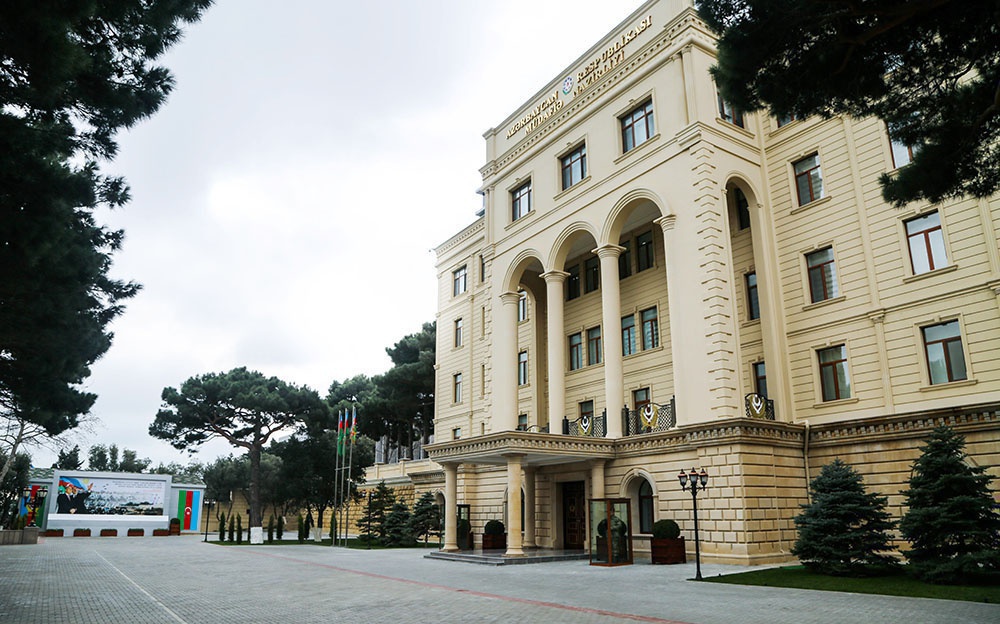
Media vasitələrində Fransa ilə Ermənistan arasında “Caesar” özüyeriyən artilleriya qurğularının alqı-satqısı barədə kontraktın imzalandığı haqqında məlumat verilir.
Azərbaycan tərəfinin xəbərdarlığına rəğmən Fransanın Ermənistanı öldürücü və hücum təyinatlı artilleriya qurğuları və digər silah növləri ilə təchiz etməsi Fransanın Cənubi Qafqaz regionunda təxribatçı fəaliyyət aparmasının növbəti sübutudur.
Fransa Müdafiə Nazirliyi keçən ilin oktyabrında verdiyi açıqlamasında Ermənistana tədarük edilən hərbi texnikanın müdafiə xarakteri daşıdığını iddia etsə də, hazırkı hərbi sövdələşmə ilə Ermənistanın öldürücü silahlarla təchiz edilməsi Fransa rəhbərliyinin riyakarlığının növbəti təzahürüdür.
Cənubi Qafqaz regionunda militarizasiya və geosiyasi intriqa siyasəti yürüdən Makron rejimi Ermənistan ilə Azərbaycan arasında normallaşmaya və regionda davamlı sülhün təmin olunmasına maneə olur. Bu kimi destruktiv və qərəzli siyasətinə görə normallaşma və regional proseslərdən kənarda qalan Fransanın indiki rəhbərliyi bunu Azərbaycana bağışlaya bilmir və ona görə də pozucu siyasətini davam etdirir.
Ermənistan Azərbaycana qarşı hərbi təcavüz və işğal törətmiş dövlətdir. BMT Təhlükəsizlik Şurasının daimi üzvü olan Fransa tərəfindən qanlı hərbi təcavüz törətmək təcrübəsi olan Ermənistanın yenidən silahlandırılması və Ermənistan rəhbərliyinin revanşizm siyasətini dəstəkləməsi siyasi məsuliyyətsizlik olmaqla bərabər yeni müharibəyə aparan yoldur.
Müstəmləkəçi imperiya olaraq Fransanın tarixən dünyanın müxtəlif yerlərində müharibə və münaqişə ocaqları yaratmaq kimi ikrah doğuran zəngin təcrübəsi vardır. Yeni Kaledoniya və digər dənizaşırı müstəmləkə ərazilərində baş verən proseslər, yerli xalqların istismara məruz qoyulması, təbii sərvətlərinin talanması, irqçi siyasət nəticəsində həmin ərazilərin demoqrafik tərkibinin dəyişdirilməsi, etiraz aksiyalarının qan və silah gücünə yatırılması Makron rejiminin əsl mahiyyətinin göstəricisidir. Utancverici müstəmləkə irsinin qalığı olan bu kimi köklü problemləri həll etmək və neokolonializmə son qoymaq əvəzinə Fransa Azərbaycana qarşı çirkli təbliğat və dezinformasiya kampaniyası aparır.
Bəyan edirik ki, Cənubi Qafqaz regionunda vəziyyətin gərginləşməsinə və yeni müharibə ocağının yaranmasına görə məsuliyyəti tam şəkildə revanşist siyasət yürüdən Ermənistan rəhbərliyi və Makron diktaturası daşıyacaqdır.
Azərbaycan Respublikası Müdafiə Nazirliyinin açıqlaması
The former Human Rights Defenders of Nagorno-Karabakh and Armenia have condemned what they called ‘hate speech’ towards Nagorno-Karabakh Armenians by Prime Minister Nikol Pashinyan.
On 12 June, Pashinyan accused Armenia’s opposition of ‘not caring’ about the fate of Nagorno-Karabakh, and that they needed the Armenian population of the region to support them and keep them in power.
In a speech in parliament, he accused the opposition of bribing Nagorno-Karabakh Armenians to join the anti-government Tavush for the Motherland movement’s protests.
‘Today you brought them as material for the demonstration, for ֏5,000 ($13) to attend the demonstration. This is you, this is your truth, these are your politics’, he said.
Pashinyan also called Nagorno-Karabakh’s generals ‘cowardly deserters’, stating they should ‘end up in prisons and spend many years there’.
Following Nagorno-Karabakh’s surrender to Azerbaijan in September 2023, practically the entirety of the region’s Armenian population fled to Armenia.
In a joint statement on Monday, former Nagorno-Karabakh Human Rights Defender, Gegham Stepanyan, and former Armenian Human Rights Defender, Arman Tatoyan, condemned Pashinyan’s ‘directed hate speech’ towards Nagorno-Karabakh Armenians.
They said there was a ‘vicious phenomenon’ of blaming and targeting Nagorno-Karabakh Armenians ‘for everything’ and ‘in every issue’, which they said had caused widespread hatred towards them.
They said that following the prime minister’s speech, ‘insults and hate speech against the people of Artsakh [Nagorno-Karabakh] and mockery of them intensified on various social media platforms.’
‘Freedom to spread hate speech’
In their statement, the former human rights defenders also criticised the police and Armenian media for targeting Nagorno-Karabakh Armenians with hate speech.
They stated that many examples showed that the campaign against Nagorno-Karabakh Armenians is ‘spread and even directed’ by the Armenian Public TV, which became a ‘participant in the generation of hatred towards a section of Armenians’.
‘Such a policy of the Public TV, as a company founded by the government, makes it obvious that this is the intended policy of the authorities’.
Tatevik Khachatryan, a journalist from Nagorno-Karabakh, agreed that government-affiliated media and the authorities were discriminating against Armenians from Nagorno-Karabakh.
‘What amazes me more is their freedom to spread hate speech and show discriminatory attitudes’, Khachatryan told OC Media. ‘If before it was done between the lines, with media affiliated with the government and so on, now it is done by [Pashinyan].’
Khachatryan added that she was keeping a close eye on the public broadcaster’s coverage of Nagorno-Karabakh Armenians, and that she was highlighting instances of discrimination.
‘Now our tax-fed television has become the mouthpiece of the government in the worst sense of the word.’
The former human rights defenders’ statement also cited testimonies accusing police officers of targeting and harassing Nagorno-Karabakh Armenians detained in the latest wave of anti-government protests.
They noted that the police used ‘humiliating expressions’ accusing them of losing Nagorno-Karabakh and ‘having no place’ in Armenia as ‘guests’.
They also criticised the prosecution of four former Nagorno-Karabakh regional administrators and heads during the protests, stating that the detained former officials were denied their right to protest in Armenia.
The former officials were charged in May with fraud and forging illegal documents, with one of them additionally being charged with bribing people to join the Tavush for the Motherland protests.
The post Pashinyan accused of hate speech towards Nagorno-Karabakh Armenians appeared first on OC Media.
 Father and daughter Apo Saghdejian (center) and Nayiri Saghdejian with ANCA chairman Raffi Hamparian. The ANCA will be celebrating the life and legacy of Hovig Apo Saghdejian, in whose honor the Capital Gateway Program was named, on July 2.
WASHINGTON—On July 2, 2024, the Armenian National Committee of America (ANCA) will host a special gathering to honor the legacy of community advocate Hovig Apo Saghdejian, namesake of the Capital Gateway Program that has, over the past two decades, empowered hundreds of young Armenian Americans to pursue careers in public service.
Launched in 2003, the ANCA Hovig Apo Saghdejian Capital Gateway Program (CGP) has helped secure permanent employment and professional internships for hundreds of young Armenian American professionals and students in Washington, D.C. For over a century, the ANCA family has developed countless relationships in and around Capitol Hill, identifying a wide range of job-related opportunities in the nation’s capital. The CGP utilizes these resources and contacts to help candidates identify and secure jobs that fit their interests and ambitions. The program was named after Hovig Apo Saghdejian, a beloved young community leader who lost his life in a tragic car accident in 2004 and whose eternal memory continues to inspire new generations of Armenian Americans.
“My family is proud of my brother’s legacy — which lives on in the hearts and minds of each ANCA Hovig Apo Saghdejian Capital Gateway Program fellow,” shared Hovig’s sister Nayiri Saghdejian. “Like my entire family, Hovig was so very committed to the Armenian cause and our Hairenik. It is fitting that this ANCA program, which bears his name, continues to inspire new generations of ANCA rising leaders committed to serving our common cause,” added Saghdejian.
“A hallmark program of the ANCA, the Hovig Apo Saghdejian Capital Gateway Program has helped usher countless young Armenians into the halls of power in Washington, D.C. An instrumental part of our mission — the activation and empowerment of new generations of Armenian-American professionals and leaders — hinges on vital initiatives like the Capital Gateway Program,” stated ANCA Chair Raffi Hamparian. “By honoring Hovig’s legacy, and through the steadfast support of the Saghdejian family, we can help Armenian youth throughout the nation realize their dreams.”
 Since 2003, hundreds have explored careers in policy, politics and media in the nation’s capitol through the ANCA Hovig Apo Saghdejian Capital Gateway Program and the youth programs it has inspired.
The Hovig Apo Saghdejian Capital Gateway Program offers several key benefits to its fellows: housing at the Aramian House with waived fees for the first three months; a series of enrichment seminars during the first two weeks of each session on topics such as resumes, cover letters, networking, interviewing and professionalism, which are presented by program alumni; personalized mentorship matched to each fellow’s interests, where fellows are responsible for maintaining the mentor relationship; and office space provided by the ANCA for fellows to use as a productive environment for their job search during weekdays until they secure an internship or employment.
“I’m so thankful for the Hovig Apo Saghdejian Capital Gateway Program, as it changed the trajectory of my professional career and life. The CGP program exposed me to a new city, to new opportunities, and to friends, colleagues and mentors I would never have met if not for the Fellowship. I’m so proud to now serve as the chair of the Capital Gateway Program Advisory Committee and give back to young Armenians who, like me when I arrived in 2017, are looking for an opportunity to make a difference and an impact in our nation’s capital,” stated Tadeh Issakhanian.
Hovig, a 23-year-old community activist from Fresno, California, lost his life in 2004 in a tragic car accident. Hovig’s father Apo, his late mother Rosine and sister Nayiri established the Hovig Apo Saghdejian Memorial Fund, the principal of which is held by the ANCA in perpetuity. The annual income the fund produces is used to support the ANCA Capital Gateway Program, named in Hovig’s memory. Family, friends and supporters continue to add to this fund to help ensure the program’s expansion.
 Hovig Apo Saghdejian and fellow Land and Culture Organization (LCO) volunteers with the children of Ayroum, where they worked during the summer of 2003.
Beyond their transformative support for the growth of the Gateway Program in the United States, the Saghdejian family has also honored Hovig’s legacy in the Armenian homeland. Immediately after Hovig’s passing, they donated a home to the needy residents of the small village of Haykavan, located in a war-ravaged Hadrut region of southern Artsakh. They also built a chapel (madour) in the village of Ayroum, where Hovig worked during his Land and Culture Organization campaign in Armenia. This beautiful chapel — a gathering place for the village residents — represents the town’s only spiritual center.
Hovig’s sudden and tragic death was not only a great loss for his family, but also for his many friends, the Armenian American community in the Central Valley and for Armenians around the nation and the world. He was an exemplary son, brother, grandson, nephew and friend who left a legacy of love for his family and friends and of selfless devotion to his fellow Armenians and his cultural heritage. Hovig was, fittingly, laid to rest in Fresno’s historic Ararat Masis Cemetery, alongside Armenian national hero Soghomon Tehlirian.
Hovig Apo Saghdejian was born on December 31, 1980, in Fresno. He completed his elementary education at the Armenian Community School of Fresno. After graduation from the Armenian school, Hovig attended Kastner Intermediate and later Clovis West High School, where he received his high school diploma as an Advanced Placement Scholar with Honors.
Early in life, Hovig became a member of the Homenetmen Armenian General Athletic Union and Scouts, and he joined the ranks of the Armenian Youth Federation (AYF). After graduating from Clovis West in 1998, Hovig attended Fresno City College, California State University, Fresno and the University of California, Berkeley, where he majored in interdisciplinary studies, with an emphasis on economics, philosophy and film studies. While attending college, Hovig was active in the Armenian Students’ Association. He also received numerous honors, including the Armenian Relief Society Merit Scholarship and the Foundation West Merit Scholarship.
Hovig’s family instilled in him a passion for his Armenian culture. As an active member of AYF and Homenetmen, as both a scout and athlete, he contributed to the welfare of the Armenian American community and reinforced his commitment to his homeland. He traveled to Beirut, Lebanon, with the Hamazkayin Armenian Educational and Cultural Society to broaden his cultural understanding.
As a devoted son of the Saghdejian family, Hovig lived a life of commitment to the Armenian cause and his ancient Armenian homeland. He breathed life into the ideals of his youth by working to preserve and reinvent Armenian identity in America, while bringing a sense of optimism to the people of Armenia for a better future. As a volunteer with the Land and Culture Organization, Hovig traveled to Armenia during the summer of 2003 to work as a volunteer in Ayroum, developing infrastructure and self-sustainability for the impoverished population of this village.
His memory and spirit continue through the work of his family and the lives of Armenian-American youth who can realize their full potential through the Hovig Apo Saghdejian Capital Gateway Program.
Author information
The Armenian National Committee of America (ANCA) is the largest and most influential Armenian-American grassroots organization. Working in coordination with a network of offices, chapters and supporters throughout the United States and affiliated organizations around the world, the ANCA actively advances the concerns of the Armenian American community on a broad range of issues.
| Twitter |
The post ANCA to celebrate Hovig Apo Saghdejian’s legacy of youth empowerment appeared first on The Armenian Weekly.
Following the flash floods in Armenia’s Lori and Tavush regions in May, the European Union is providing €100 000 in humanitarian funding to assist the most affected villages.
This EU funding supports the Armenian Red Cross in delivering much needed relief assistance, including cash assistance and essential supplies.
This humanitarian aid aims to directly benefit 5060 individuals in total, including 2,500 individuals who will receive cash assistance for their most immediate needs and 2,760 individuals who will receive support with gaining access to shelter, water, sanitation and hygiene. The assistance is targeting families whose homes, crop fields, livestock or food supplies were destroyed during the floods.
The funding is part of the EU’s overall contribution to the Disaster Response Emergency Fund (DREF) of the International Federation of Red Cross and Red Crescent Societies (IFRC).
On May 26, 2024, heavy thundery rain showers across Armenia led to significant rainfall, with up to 100 mm recorded locally. This caused the sudden overflowing of the Debed, Aghstev, and Tashir rivers, exacerbating the flood impact in the Lori and Tavush regions.
The European Union and its Member States are the world’s leading donor of humanitarian aid. Relief assistance is an expression of European solidarity with people in need all around the world. It aims to save lives, prevent and alleviate human suffering, and safeguard the integrity and human dignity of populations affected by natural disasters and man-made crises.
Through its Civil Protection and Humanitarian Aid Operations department, the European Union helps millions of victims of conflict and disasters every year. With headquarters in Brussels and a global network of field offices, the European Union provides assistance to the most vulnerable people on the basis of humanitarian needs.
The European Union is signatory to a €8 million humanitarian delegation agreement with the International Federation of Red Cross and Red Crescent Societies (IFRC) to support the Federation’s Disaster Response Emergency Fund (DREF). Funds from the DREF are mainly allocated to “small-scale” disasters – those that do not give rise to a formal international appeal.
The Disaster Response Emergency Fund was established in 1979 and is supported by contributions from donors. Each time a National Red Cross or Red Crescent Society needs immediate financial support to respond to a disaster, it can request funds from the DREF. For small-scale disasters, the IFRC allocates grants from the Fund, which can then be replenished by the donors. The delegation agreement between the IFRC and ECHO enables the latter to replenish the DREF for agreed operations (that fit within its humanitarian mandate) up to a total of €8 million.