Categories
South Caucasus News

A Critique Of Latin American Neocons – OpEd


A Critique Of Latin American Neocons – OpEd

latin america

By Marina Rocha

In attempting to counter Marxists, some libertarians inadvertently align themselves with statist institutions and support;immoral;war efforts. This concession to evil contradicts the foundational;principles;laid out by authors like;Murray;Rothbard;and should be challenged.

A couple of months ago, I heard such a naïve perspective from an Argentinian libertarian in an X Spaces, reflective of a broader trend within the libertarian liberty movement. Recent foreign policy;decisionsmade by prominent Latin American libertarians show how this view is prevalent.

In this text, neoconservatism is not used to label people who merely have traditional conservative views. As demonstrated in a recent Ron Paul;interview, it’s;entirely possible to be a pro-market Christian without embracing neoconservatism, an ideology that is distinguished by its belief in America’s;role as the world’s;police, advocates for a totalitarian;surveillance state, and supports preemptive and disproportionate wars abroad. Furthermore, neoconservatives often endorse a mixed economy model restrained by national security concerns or interventionist policies during busts, as exemplified during George W. Bush’sadministration both;before;and;after;the 2008 financial crisis.

Therefore, my critique of the local Right’s;embrace of neoconservatism stems from its unconditional support for America’sforeign policy in past and present conflicts and its alignment with a philosophy at odds with genuine antistatist principles. However, this was somewhat provoked by other concerning trends in Latin America.

Rather than promoting genuine antiwar and anti-imperialist views, Marxists in the Latin American region often adopt positions akin to those of neoconservatives, albeit from a;“different”;ideological standpoint. In Brazil, for instance, the ruling party has been embroiled in corruption;scandals, funneling public funds to governments like those of Cuba and Venezuela, which have, as expected, failed to repay their debts. Latin American socialists advocate for a;“proactive”;foreign policy;aimed at strengthening;entangling;alliances;with other socialist governments, all funded by taxpayers.

Former Brazilian president;Dilma Rousseff, who basically;did;everything the Austrian business cycle theory advises against and whose policies created a huge;economic crisis, was;appointed;to a lucrative position at the BRICS Bank in China—a country over ten thousand miles away—instead of being imprisoned for her;destructionist;policies.

Leftist politicians in Latin America justify such foreign policy adventures by citing the supposed benefits of nation building and by deflecting attention from domestic issues through references to American imperialism, with not only;war;crimes;seen as imperialist, but also anything coming from America—even authors like Rothbard,;far from a friend of the military-industrial complex—seen as a CIA regime-change plot to destabilize the region. As a reaction, the Latin American Right often tries to debunk socialists by turning to pro−American empire sources, engaging in war crimes apologetics. This approach, however well-intentioned it might be, can backfire and should be challenged by the historical and theoretical framework established by the Austrian School of economics and libertarianism in general, as explained below.

The Economic Calculation Problem and the Private Production of Defense

Hans-Hermann Hoppe;argues in;The Private Production of Defense;that the state is;not necessary;for national defense and may actually be harmful. He points out the contradiction of peaceful relationships between individuals compared to states constantly being at war:

However, before the arrival of a single world state not only are S1, S2, and S3 in a state of anarchy relative to each other but in fact every subject of one state is in a state of anarchy vis-à-vis every subject of any other state. Accordingly, there should exist just as much war and aggression between the private citizens of various states as between different states. Empirically, however, this is not so. The private dealings between foreigners appear to be significantly less war-like than the dealings between different governments.

Individuals familiar with the dynamics of state authority and its associated motivations are not shocked by this fact. The state actors’;exclusive control over force escalates the expense of providing protection against potential threats, while diminishing efficiency—as alternative security mechanisms are not allowed to compete—just as in any other monopoly. Moreover, given that they do not directly bear a significant portion of the war-induced losses—passed on to those subjected to taxation and conscription—government agents face fewer restraints in entering conflicts compared to private individuals.

As expected of any system of collective ownership,;national defense also suffers;from a problemof;economic;calculation.;Assume, for example, that an army has only five weapons, seven military personnel, and ten wars—ranging from attacks on cities in its own country by violent gangs to terrorist attacks on an allied country thousands of miles away—to resolve.;Since the means are not privately owned, there is no market price for them, which makes it impossible to calculate the costs and benefits involved in each war. Nor is it possible to know which resolution would bring the greatest value to the population, which also;cannot;be solved through;“public-private”;enterprises and defense contractors.

War as the Most Used Weapon for Political Power Grabs

Since national defense cannot be carried out efficiently through the state, other questions can be asked about the outcomes involved in wars. In this sense, the economist;Robert;Higgs;in;Crisis and Leviathan;shows;how crisis, combined with existing ideological inclinations, increases the power of the government, with a ratchet effect after its end.

In chapter 7, “The Political Economy of War, 1916–18,” Higgs analyzes how the United States’;entry into World War I led to the creation of various regulatory agencies and the nationalization of previously private economic sectors. These measures, despite being partly reversed after the conflict, had permanent effects on the regulation of the economy and society, as well as setting important legal precedents.

Of the various precedents upheld by the US Supreme Court in the war scenario, one may be of interest to those concerned about today’s;growing censorship regime. The famous;“you can’t yell fire in a crowded theater”;decision—much used by those who want to silence speech they do not agree with—led to the;censorship;of a pamphlet opposing the draft during World War I, showing once again how individual liberties, once limited during times of war, can be infringed upon afterward.

Blowback and When the Enemy of My Enemy Is Not My Friend

Reading the previous section, some libertarians in Latin America may wonder why they should worry about the increasing size of the military-industrial complex, since only American citizens would suffer from the consequences of this phenomena. This question can be answered with two examples from Brazil.

During the Cold War, Brazil went through a military;coup;with the help of the American government, which resulted in several violations of individual rights. Even if one does consider that some of those who were politically persecuted had intentions of establishing a socialist government in the country, the twenty-one years of dictatorship resulted in a blowback afterward, with left-wing ideas becoming the unquestioned mainstream for a long time.

A more recent case can be seen in Brazil’s;current censorship regime, as;exposed;by journalist David Agape. Agents linked to the FBI have contributed to the restriction of expression in Brazil, especially during the 2022 Brazilian presidential elections. Just as the war on terror came;home;to restrict the freedoms of the American population, the same state apparatuses strengthened during that period are now helping to implement the Brazilian censorship regime.

The Path Forward: Between Neoconservatism and Marxism

With these challenges in mind, many libertarians may wonder what a viable alternative to the region’s;socialist plans could be. Would supporting an external enemy power to combat this threat be necessary? Beyond blowback, revisiting the economic calculation problem is crucial. State-owned external forces are plagued by the same bad incentives as its institutions and are inefficient.

Private forces, like Elon Musk’s;efforts through the;Twitter;files, are better at revealing the truth to the public. Additionally, establishing parallel institutions and gradually persuading more individuals of libertarian beliefs are a more sustainable approach in the long run.

In practical terms, a noninterventionist foreign policy applied to the Latin American context involves strongly opposing the expansionist desires of the Marxists and standing against sending money abroad and forming political alliances to integrate the region that aim to create an increasingly centralized government but without an unconditional alliance with the opposing side. The Marxist;polylogism;of criticizing everything from Western countries as not applicable to Latin America must also be rejected, as brilliantly done by;Wanjiru Njoya.

To conclude, it is important to express that these criticisms are made with great respect and admiration for many Latin American libertarians, who have achieved significant victories, particularly in Brazil and now in Argentina. Exactly for this reason, I ask that they apply the defense of private property rights and methodological individualism—foundational principles of libertarian philosophy—consistently in all areas. The enemies of our enemies are not necessarily our friends.

  • About the author: Marina Rocha is a young economist from Belo Horizonte, Brazil. Currently, she is an apprentice at the Mises Institute and also has jobs in finance and as an economic advisor to libertarian city councilors around the country. 
  • Source: This article was published by the Mises Institute
Categories
South Caucasus News

We Spent A Billion Dollars Fighting The Houthis…And Lost – OpEd


We Spent A Billion Dollars Fighting The Houthis…And Lost – OpEd

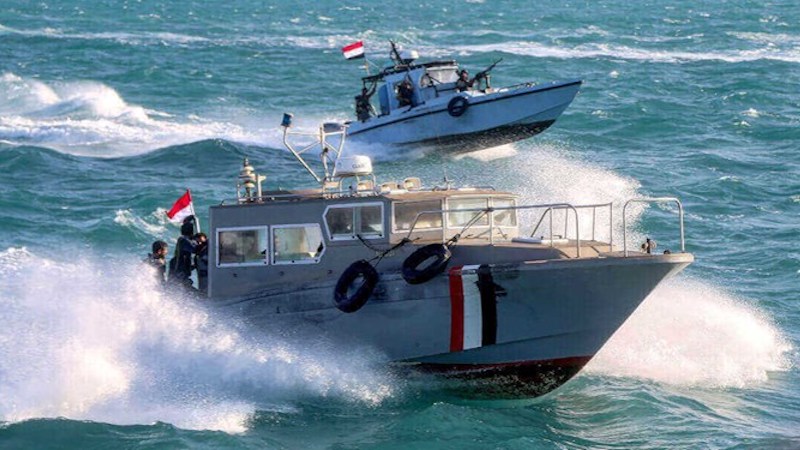
Houthi militia patrolling Red Sea. Photo Credit: Fars News Agency

Why does it seem the Pentagon is far better at spending money than actually putting together a successful operation? The failed “Operation Prosperity Guardian” and the disastrous floating Gaza pier are but two recent examples of enormously expensive initiatives that, though they no-doubt enriched military contractors, were incapable of meeting their stated goals.

To great fanfare, last December the Pentagon announced the launch of Operation Prosperity Guardian, a joint US/UK military operation to halt the Yemeni Houthi disruption of Israel-linked commercial shipping through the Red Sea. The Houthis announced their policy in response to civilian deaths in Israel’s war on Gaza, but when the US and UK military became involved they announced they would target US and UK shipping as well.

The operation was supposed to be quick and easy. After all, the rag-tag Houthi militia was no match for the mighty US and UK navies. But it didn’t work out that way at all. Over the weekend the Wall Street Journal published a devastating article revealing that after spending more than one billion dollars on munitions alone, the operation had failed to deter the Houthis and failed to re-open commercial shipping in the Red Sea.

The Journal reported that Avril Haines, the director of national intelligence, recently told Congress that “the U.S.-led effort has been insufficient to deter the militant group’s targeting of ships and that the threat will ‘remain active for some time.’”

Meanwhile, the article informed us that a continued US effort to fight the Houthis over Red Sea shipping was “not sustainable.” Perhaps the most revealing part of the article comes from a Washington military expert, Emily Harding of CSIS: “Their supply of weapons from Iran is cheap and highly sustainable, but ours is expensive, our supply chains are crunched, and our logistics tails are long.”

It is reminiscent of a recollection by Col. Harry G. Summers of a discussion he had with North Vietnamese Col. Tu: “You know, you never defeated us on the battlefield,” said Summers. Tu paused for a moment, then replied, “That may be so. But it is also irrelevant.”

Similarly, the US military spent a quarter of a billion dollars building a temporary floating pier to deliver aid to the starving Palestinians even though a land route already existed and would have been far cheaper to use. The project was doomed from the beginning, as days after opening stormy weather broke up the pier and washed part of it up on Israel’s shore. The US military managed to gather the pieces together again, but in total only a few aid trucks managed to use it before, over the weekend, the pier was again disassembled for fear of another weather-related break-up.

The only thing the pier was good for, it seems, was assisting the Israeli military in a Gaza raid on June 8th that killed 270 Palestinian civilians.

As neocons inside the Beltway continue to plot war with China over Taiwan, it seems someone should notice the trouble we have had dealing with Houthis and floating piers. For now, the growth in military spending seems unlimited, but increasing spending bringing diminishing results raises the question of just how much bang are we getting for our bucks?

We have the most expensive military on earth, they say. That may be true, but it is also irrelevant.


Categories
South Caucasus News

Is The Middle Corridor The Best Alternative For EU-Asia Trade? – Analysis


Is The Middle Corridor The Best Alternative For EU-Asia Trade? – Analysis

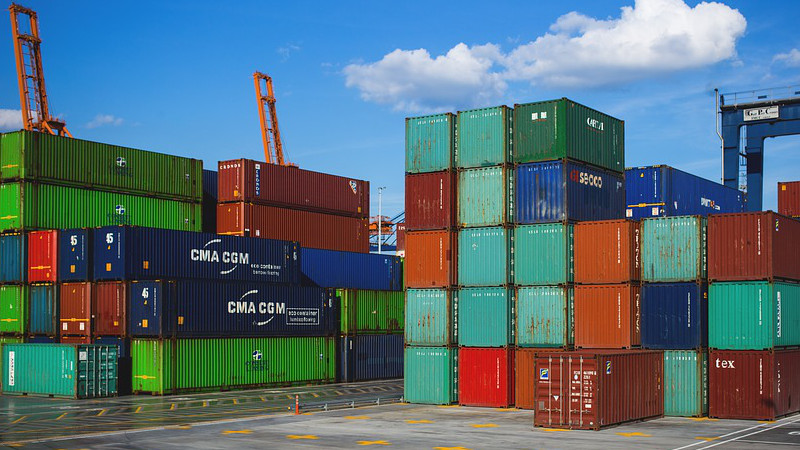
trade shipping Business Cargo Containers Crate Export Freight

The;Middle Corridor;AKA the Trans-Caspian International Transport Route, is a multimodal transport corridor connecting China to Europe. At over 4,700 km (and 2,000km shorter than Russia’s Northern Corridor according to the;Caspian Policy Center), the Corridor is the;shortest route;and;most sustainable;transport corridor, between Europe and Western China. The Corridor ;received renewed ;attention after the start of the Russia-NATO war in Ukraine as it will enable Europe to trade with China and Central Asia while avoiding shipping goods via Russia and the;Northern Corridor, and avoiding the route via the Red Sea and the Suez Canal which is threatened by Houthi attacks on Israel-linked shipping.

Per the;World Bank: “The Middle Corridor links China, and Kazakhstan by rail through Dostyk or Khorgos/Altynkol, crosses Kazakhstan by rail to the Aktau Port, crosses the Caspian Sea to the Port of Baku/Alyat, and Azerbaijan and Georgia by rail to then either continue by rail to Europe through Türkiye or crossing the Black Sea.”

Of the five Central Asia states, only Kazakhstan has assumed a significant role in the Corridor by hosting rail lines, but the China-Kyrgyzstan-Uzbekistan (CKU) railway which;begins construction;in October 2024 will add another leg to the East-West corridor. But, according to;The Diplomat, the project is an “enormous undertaking with unclear financing” even though the;World Bank;reports it will “triple freight volumes and halve travel time by 2030.” One impediment to securing financing is that “it will remain mostly a regional corridor, with transcontinental trade representing a small fraction of the volumes,” according to the Bank.;

The European Bank for Reconstruction and Development identified an ambitious menu of priority infrastructure investment needs in the Central Asia republics. Though the Bank says soft connectivity challenges are the greatest challenge to improved transport connections, eventually the bricks and mortar have to be paid for. Mr. Edward Chow of the Center for Strategic and International Studies argues that it is “fanciful” to discuss the MC without considering a role for China as a large volume of goods is needed to finance the required infrastructure, so a project sold as a way to minimize Russian involvement in the region’s supply chain may instead be opening the door to more China.

Europe is shedding Russian natural gas and fertilizer and, without cheap energy, is facing a wave of;deindustrialization;as industrial capacity shrinks, most starkly illustrated by Germany’s contracting;chemical and heavy industry;sectors. And there’s another thing Europeans aren’t making more of – Europeans. Eurostat reports, “Almost 2 times fewer children born in the EU in 2022 than 6 decades ago” so Europe will have fewer workers and consumers in the future.

Europe’s limited prospects are opposed to Asia which will see an;increasing share;of global GDP rising from about 45% today to around 58% by 2030. And;Forbes;reports “Asia is expected to contribute about 60% of economic growth in 2024.”

And then there’s Africa which will be the “second-fastest-growing region after Asia,” according to the;African Development Bank. The Bank also notes that ten African countries “will be among the world’s top 20 fastest- growing economies in 2024, sustaining the trend of the past two decades,” though the outlook is mixed across the continent.

And the growth of;Africa’s population;will have the biggest impact on global demographics this century, increasing by a factor of almost five from 2000 to 2100. “GDP per person employed” as measured by the;World Bank;is vastly higher for Europe than for Africa, but a market of Africa’s size can’t be ignored.

Countries mostly trade with their;neighbors;and the Central Asia republics are no exception. Their challenge is that the neighbors include Russia, Iran, and Afghanistan, all targets of Washington’s enmity for unfinished business: Tehran, the 1979 revolution; Kabul, the 2021 defeat of NATO; and Moscow, the peaceful end to the Cold War.

And opportunities to the South are sizeable: Pakistan (population over 240 million), Iran (almost 90 million), India (1.4 billion), and the Arab Gulf petro states (Gulf Cooperation Council states are classified by the;World Bank;as “High income,” and Iraq is “Upper middle income”).

Turkmenistan and Iran share over 2,200 km of land and maritime borders. During the first half of 2022 their trade $233 million, a big jump over 2021 trade of $227 million.

Turkmenistan wants to be a Central Asia;transit hub;and can;link;Russia, Iran, the Central Asia republics, and India via the North-South Transport Corridor, which Ashgabat;joined in 2023.

Uzbekistan has publicly engaged with the Taliban;in 2018;and in 2022 hosted a 30-nation;conference;on the future of the region in the wake of the Taliban victory. Tashkent also wants improved relations with Iran and access to the seaports of Bandar Abbas and Chabahar. Uzbekistan’s president Shavkat Mirziyoyev;visited Iran;in 2023 and the two sides inked agreements in agriculture, energy, customs affairs, Chabahar port, the environment, industry, and tourism, and announced their intent to increase trade to $3 billion annually.

Tashkent’s key regional initiative is the;trans-Afghan railway;to connect Central Asia to Pakistan, and to facilitate the exploitation of Afghanistan’s mineral resources, believed to be worth;$1 trillion. The $6.9 billion project will face engineering challenges but a bigger risk is unresolved Taliban-Pakistan tensions. But if Pakistan and the Taliban can’t resolve their dispute, Uzbekistan has Plan B, Iran’s ports and the North-South Transport Corridor.

Or, as;Andrew Korybko;has observed, even if the rail line gets no further than Afghanistan, that may allow Uzbekistan to backhaul the minerals for processing in Uzbekistan, or to export them to Russia or China.

Kazakhstan hosts the Middle Corridor but is also interested in Southern routes, in line with Astana’s;multi-vector foreign policy, reinforced in early 2024 when Kazakh president;Kassym-Jomart Tokayev;noted that the Middle Corridor complements China’s Belt and Road Initiative.

Kazakhstan plans to;increase trade;with Iran, and in 2023 Kazakhstan’s prime minister noted that Iran is a;strategic partner;of Kazakhstan in the Persian Gulf. In 2022 Tehran and Astana inaugurated a;rail link;that connects Kazakhstan to Turkiye via Iran.

In November 2023, Tajikistan’s president Emomali Rahmon hosted a visit by Iran’s late president, Ebrahim Raisi, Raisi’s second visit in 18 months, in an effort to continue improving relations. In October 2023, Iran’s;defense minister;visited;Dushanbe, and in May 2022, Iran’s;chief of staff;of the armed forces arrived and announced the launch of local production of the Ababil-2 drone.

Tajikistan’s foreign trade is with Kazakhstan, Switzerland, China, Turkey, Uzbekistan, and Russia. Tajikistan shares a 1,200 km border with Afghanistan that was a major smuggling route for Afghan opium before the Taliban banned opium harvesting so the countries have established transport route that can be repurposed to legitimate cargo.

The Central Asia republics value their ties to the U.S. but are uninterested in helping Washington with its “unfinished business” in Iran and Afghanistan, and would rather make up for the lost decades of the 2001-2021 American intervention in Afghanistan.

The republics will use the Middle Corridor to increase trade with Europe, but can’t ignore their neighbors to the South who unfortunately have been targeted by U.S., European Union, and United Nations sanctions. Washington can “tsk-tsk” all it wants but it won’t make up the lost opportunity that comes with ignoring trade with (and via) Iran and Afghanistan, or make up for the region’s “lost decades,” create jobs for their large youth populations, or manage potential rural-to-urban migration as a result of climate change-induced water shortages.

Trade with Afghanistan is part of being a good neighbor, and that trade will help Afghanistan find jobs for the;1.5 million Afghan refugees;who have returned from Pakistan and Iran. More jobs may lessen the appeal of fighting for the Islamic State of Al-Qaeda which will benefit the West, and satisfy a key objective of the Central Asian republics: stability along the border with Afghanistan.

And the republics understand they can’t ignore geography:;Tass;reports Afghanistan is ready to ink a;transit agreement;with Turkmenistan, Russia, and Pakistan; Kazakhstan and Turkmenistan plan to build a;logistics hub;in northwestern Afghanistan to facilitate the export of Russian oil to South Asia by road and rail. These projects will do more than generate cash; they will start integrating Afghanistan into the affairs of the region and teach the Taliban the local “rules of the road” and so build confidence between ;the governments of the region.

Washington’s economic warfare on Iran and Afghanistan is a tax on the region, with no offsetting benefits.  The completion of the Middle Corridor will please the Americans and will benefit the region, but it is an “and” solution not an “or” solution for Central Asia’s future connectivity and economic growth.


Categories
South Caucasus News

The Impact Of China’s Digital Silk Road On The Digital Domain Of The Philippines – Analysis


The Impact Of China’s Digital Silk Road On The Digital Domain Of The Philippines – Analysis

Screenshot of E-Government Philippines website. Credit: e.gov.ph

By Julio S. Amador III and Deryk Matthew N. Baladjay

One of the first policy directives given by President Ferdinand Marcos Jr. to his government is the “digitalisation of vital government services.”[1] However, this mandate is nothing new to the wider global economy. The ongoing process of digitalisation is swiftly reshaping the contours of business and trade, while intersecting with international politics. The evolution of innovative technologies facilitated the emergence of a world without conventional borders, albeit accompanied by a surge in intricate digital challenges. Noteworthy among these challenges are dilemmas associated with managing cross-border data flows, enforcing Intellectual Property Rights (IPR), and safeguarding consumer welfare. These concerns, far from being confined within domestic borders, extend to regional domains and global ones, marking a paradigm shift in the complexity and interconnectivity of contemporary digital issues.[2]

The digital sector, buoyed by robust government support, serves as a substantial driver of the Philippine economy. As of 2020, the estimated value of the Internet economy within the Philippines amounted to USD 7.5 billion. Projections indicate a noteworthy annual growth rate of 30 percent, with expectations set for the sector to expand significantly, reaching an estimated escalation to USD 28 billion by 2025. This trajectory underscores the pivotal role played by government backing in fostering the growth and sustainability of the country’s digital landscape.[3] Bilateral partners also play a significant role in supporting the Philippines’ digital transformation.[4] Of all countries with much stake in the Philippines’ digitalisation, none has matched the promise and ambition of China’s economic presence in the country.[5] Through its Belt and Road Initiative or other informal channels, Beijing and Manila continue to hold economic engagement in high regard. China is flooding the Philippine market with its technologies. To recall, China has been and continues to provide cheap and competitive technology alternatives to Filipinos;[6] its 5G technology is dominating the telecommunications sector;[7] it has begun introducing cloud-based technology[8] and financial technologies;[9] and Beijing has even nearly funded and operated a city-wide surveillance initiative.[10]

While the entrance of Chinese technology into the Philippine digital injects innovation and competition, concerns loom over data security, privacy, and potential economic dependencies. The expanding footprint of Chinese tech giants raises questions about the implications for the nation’s digital sovereignty and the need for a robust legal framework to address these complex issues. Given the Chinese Communist Party’s links with private companies,[11] and the presence of domestic laws that allow the PRC government to request people’s data from private entities, states and peoples have rightly expressed concern over China’s involvement in technology.[12] China’s Belt and Road Initiative (BRI), an ambitious global infrastructure project, and its Digital Silk Road (DSR) extension further complicate the digital landscape in the Philippines. The Digital Silk Road, focusing on digital interconnectivity, introduces the Philippines to the complexities of international digital cooperation, requiring careful consideration of its implications on national security, technology standards, and regulatory frameworks.[13]

Major challenges for the Philippines include a potential lack of institutional capacity to negotiate complex agreements, manage the cybersecurity risks associated with increased digital interconnectivity, and ensure that economic benefits are distributed equitably. As the country seeks to balance between embracing technological advancements and safeguarding its interests, the importance of strategic planning, international collaboration, and domestic capacity building cannot be overstated.

As the Philippines grapples with the influx of Chinese technology and participation in BRI-DSR, the need for a stronger legal and policy framework becomes increasingly apparent. The existing laws have proven insufficient in addressing the intricate challenges posed by the digital age; what is required is a comprehensive and adaptive legal infrastructure that safeguards national interests, ensures data privacy, and promotes fair competition. In navigating these uncharted waters, the Philippines requires astute policy decisions, legal fortification, and diplomatic acumen. This comprehensive examination of the evolving digital landscape in the Philippines encompasses not only economic and technological considerations but also geopolitical and legal dimensions.

THE PHILIPPPINES’ DIGITALISATION EFFORTS

The Philippines is embracing the digital age, as signalled by recent policy pronouncements from the Marcos Jr. administration. However, despite a longstanding ambition for a digital presence, ​​it was not until the onset of the coronavirus pandemic that major service sectors were prompted to embrace digital technologies.[14] Spearheading the country’s digitalisation efforts is the Department of Information and Communications Technology (DICT), established in 2017.[15] The DICT is mandated to enhance ICT policy and planning, improve public access to technologies, facilitate intra-agency resource-sharing and capacity-building, ensure consumer protection, and foster ICT industry development.

The Philippine government cannot create and implement effective and efficient digitalisation projects and programmes without digital-focused and up-to-date legislation and regulations. From the late 1980s to the early 2000s, the Philippine government took a regulatory and preventive approach[16] when it passed several of its digital-focused legislation, such as the Public Telecommunications Policy Act of 1995,[17] the Access Devices Regulation Act of 1998,[18] and the Anti-Red Tape Act of 2007.[19] Subsequently, the country pioneered legislation relevant to the changing digital landscape, with the Electronic Commerce Act[20] and the Data Privacy Act of 2012[21] being among the first of their kind in the ASEAN region. Soon after, legislation began to focus on the rapid facilitation of digital adoption in the Philippine government. Laws began to focus on encouraging foreign direct investments, inviting international interlocutors, and facilitating the ease of doing business among market players.

In spite of new laws and regulations, the Philippine Government lags in ensuring that its earlier established laws remain relevant and updated. This has resulted in a corpus of antiquated laws regulating new technological breakthroughs. The chasm that exists between the two has slowed the Philippines’ digitalisation push which began as early as the late 1990s. For instance, the 1995 Public Telecommunications Law, which is still in effect, is designed to focus on traditional telecommunications and does not include substantial provisions on the internet. While technological breakthroughs are very fluid and dynamic, legal responses and regulatory approaches have been reasonably short-sighted.[22] Because of the chasm, the Philippines had delayed policy responses to important technological novelties such as AI,[23] cloud technology,[24];quantum computing,[25] and many more. Innovation was bolstered by the passing of the Philippine Innovation Act in 2019.[26] Addressing legal gaps had largely been a wait-and-see strategy, based on systematically learning from international best approaches and adopting a tailored approach unique to the country, as done with the Data Privacy Act of 2012 which drew heavy inspiration from the European Union’s 1995 Data Protection Directive and the subsequent proceedings on the General Data Protection Regulation that began as early as June 2011.[27] What the Philippines cannot properly address legally and has raised alarm among certain sectors is the dual nature of technologies entering the country.

CONTENDING WITH CHINESE TECHNOLOGY

Since late 2013, China’s BRI has put the country in a leading global role in economic development. Starting with only nine countries, BRI has captured the attention of both developed and developing nations. This momentum rapidly accelerated,[28] resulting in a total of 148 countries signing memorandums of understanding (MoUs) with China. As an integral component of BRI, China initiated the DSR in 2015. This sets itself apart from the BRI not only in its thematic emphasis but also in terms of the involved Chinese stakeholders, contract types, and geographical scope.[29] Today, through the DSR, China has invested in the Philippines along certain critical fronts including digital infrastructure (both hard and soft infrastructures), major smart city projects, financial technology, and the Philippine supply chain.

China’s engagement in telecommunications, both terrestrial and subsea projects, has also been a focal point. The duopoly of Smart Communications and Globe Telecom, powered by Huawei, has played a central role in this domain, with the entry of new players like DITO Telecommunity and Converge ICT disrupting the industry.[30]

Surveillance technology export is another noteworthy aspect, with China’s influence extending to the installation of monitoring systems in major Philippine cities.[31] Projects like the “Safe Philippines” initiative, backed by China, involved the deployment of thousands of closed-circuit television (CCTV) cameras.[32] China’s export of surveillance technology has faced scrutiny and public opposition, leading to the discontinuation of some projects.[33]

The DITO[34] and Safe Philippines[35] projects raise significant national security concerns, particularly in light of the Chinese National Intelligence Law of 2017.[36] As a joint venture between a China state-owned enterprise (SOE) and a Philippine private company, DITO may bear the brunt of the requirement to provide data to the Chinese government, and this arrangement has direct implications for national security. Entrusting control of parts of the Philippines’ national telecom infrastructure to Chinese SOEs presents clear risks. China’s well-documented use of cyber-attacks for strategic and economic advantages adds an additional layer of concern. Given the Philippines’ existing vulnerability to cyber-attacks, relinquishing control over cyber-infrastructure could potentially compromise the country’s ability to defend itself. TikTok, a social media platform owned by Chinese company ByteDance, is immensely popular in the Philippines,[37] ranking as the most downloaded entertainment app despite controversies. The surge in TikTok usage is noted to be correlated to an increase in China-related disinformation in the Philippines,[38] prompting discussions on potential security risks associated with the platform.

Overall, China’s evolving economic interests in the Philippines underscore a strategic pivot towards digital domains, encompassing a wide spectrum of sectors from infrastructure and telecommunications to energy, surveillance technology, and entertainment platforms. Undeniably, the shift toward a digital economy offers the potential to enhance efficiency, innovation and productivity, and generate new job opportunities. However, trust and confidence in China’s BRI has taken a toll on account of slow delivery of promised gains.[39] This shift in the Philippines’ disposition towards the BRI not only reflects geopolitical considerations but also highlights increasing concerns about China’s economic deceleration,[40] property market crises, and the associated challenges tied to foreign investments. For the Philippines, China’s engagement[41] seems to be characterised by a form of diplomacy often referred to as a “pledge trap”, that involves strategic concessions in the South China Sea in exchange for promises of investment which have not, for the large part, materialised.[42]

Moreover, concerns arise about BRI-DSR projects being coupled with authoritarian tendencies, enabling governments to use centralised power to control citizens through digital tools and technology.[43] Some democracies, like the Philippines, are worried that China might spread its model of;technology-driven authoritarianism.[44] This concern comes as Chinese firms get involved in building 5G networks and infrastructures in recipient countries, setting technology standards. This involvement raises fears of spying and coercion. Already, PRC-based hackers are attempting to breach the websites of Philippine political leaders and national security organisations, aggravating an already volatile security relationship with China.[45] Additionally, the DSR, along with technology norms pushed by other states, offers ways for countries to control their internet through measures like filtering, content moderation, data localisation, and surveillance. What is more worrying is that the CCP’s tightening of its control over PRC tech companies encourage values and practices that can lead to a more divided global internet.[46] This divide emerges[47] as some democracies opt for internet control while others stick to preserving internet freedoms.

CONCLUSION & POLICY RECOMMENDATIONS

The country’s archipelagic nature necessitates digital transformation of all its regions, not simply of the major city hubs. The Philippines will have much to do in terms of connectivity and infrastructure, its regulatory and innovation environment, and digital literacy. Taken together as part of a whole, these point to an overarching goal of building up internal resiliencies, so that the Philippines can safely harness technologies.

The Philippines’ deployment of diverse technologies for digital infrastructure, including fixed lines, wireless mobile, satellite internet, and underwater cables. However, acquiring and establishing these technologies is a difficult task, particularly in the absence of sufficient funds for infrastructure investment. Failure to address the connectivity issue will exacerbate the digital divide, particularly due to rapid technological advancements. Findings have indicated that access to adequate internet speeds diminishes in the rural areas of the Philippines.[48]

The Philippine government must also be equipped with relevant policies to facilitate its digitalisation initiatives and adapt to emerging technologies. Unfortunately, many of these regulations are antiquated and lack prompt and clear solutions to the demanding and swiftly evolving requirements posed by Fourth Industrial Revolution technologies. As per the International Telecommunication Union, the Philippines is the third most expensive provider of ICT services among all ASEAN countries,[49] considering various ICT price categories. Furthermore, the Philippines’ complex and tedious bureaucratic processes deter many possible investors and competitors from participating in its digital ecosystem, impeding its development.

Connectivity reforms are capital-intensive. The government needs to engage with a wider range of foreign investors from different countries to facilitate and encourage direct foreign investments. Telecommunication companies play a big role in connectivity initiatives, and enabling and supportive network of laws, such as Executive Order No. 32,[50] will streamline the permitting process for the construction of telecommunications and internet infrastructure. Private sector linkages are also important. By partnering and coordinating with relevant actors in the private sector, the government can establish strategies and frameworks to motivate them to participate, stimulate investments, and jumpstart digital infrastructure in the country.

Regulation is a double-edged sword, and it must facilitate innovation. The Philippines will need to update legislation by developing custom-made reforms taken from international best practices in consultation with domestic and foreign partners. The digital transformation of regulatory processes needs to be supported as well. For instance, the roll out of the novel Electronic Business One-Stop Shop (EBOSS) system[51] by the DICT, ARTA, and the DILG require resources and support to ensure that national government agencies and local government units have the human and physical capacity to fully integrate it. This would also propel its efforts to establish ease of doing business for the business community. The government needs to support projects that promote good regulatory principles. The Philippine-Business Regulations Information System (PBRIS)[52] for example aims to cultivate and practise good and sound regulatory principles among government agencies, such as conducting regulatory impact assessments before agencies introduce or revise new regulations.

Advancing digitalisation in the Philippines poses challenges for stakeholders due to several factors. Given the country’s limited capacities and its association with China, ongoing collaboration in digital development is unavoidable. However, to mitigate the possible risks that come along with engaging with Beijing, the Philippines must equip itself with the necessary tools and mechanisms to maintain a balance between advancing its digital development and ensuring digital security. President Marcos Jr.’s renewed push for digitalisation is a good signal as significant digital reforms begin taking shape. However, much like with past administrations, reforms only hold if there is impetus and political will.

For endnotes, please refer to the original pdf document.

  • About the authors: Julio S. Amador III is Senior Fellow at the Ateneo Policy Center and Philippine Lead Investigator for the NORM Project. Deryk Matthew N. Baladjay is Research Associate for the NORM Project. This work was supported by the Research Council of Norway as part of the project ‘Shaping the Digital World Order: Norms and Agency along the Digital Silk Road in Southeast Asia (NORM)’, under grant number 325129. For more information on the NORM project, please visit: https://www.prio.org/projects/1920.
  • Source: This article was published by ISEAS – Yusof Ishak Institute (ISEAS)

Categories
South Caucasus News

NPR News: 06-17-2024 8PM EDT


NPR News: 06-17-2024 8PM EDT

Learn more about sponsor message choices: podcastchoices.com/adchoices

NPR Privacy Policy


Categories
South Caucasus News

AP Headline News – Jun 17 2024 20:00 (EDT)


28013281


Categories
South Caucasus News

AP Headline News – Jun 17 2024 19:00 (EDT)


28013281


Categories
South Caucasus News

Iran’s presidential candidates debate economic policies ahead of the June 28 vote – Toronto Star


Iran’s presidential candidates debate economic policies ahead of the June 28 vote  Toronto Star

Categories
(@mikenov) / Twitter

@anders_aslund: RT by @mikenov: I agree. Putin appears not to care less about the military’s ability to fight in Ukraine. He seems worried about a possible military revolt against his incompetence. Belousov was appointed minister of defense because he is weak & loyal to Putin. His deputies are loyal to Putin.


Categories
South Caucasus News

Weak mag. 2.1 earthquake – Armenia on Tuesday, Jun 18, 2024, at 02:42 am (Yerevan time) – VolcanoDiscovery


Weak mag. 2.1 earthquake – Armenia on Tuesday, Jun 18, 2024, at 02:42 am (Yerevan time)  VolcanoDiscovery