
Abkhazia to Open Embassy in Damascus Asharq Al-awsat – English
Day: June 16, 2024
Categories
NPR News: 06-16-2024 6PM EDT
By Lisa Vives
In a lengthy statement, members of the Kenya Conference of Catholic Bishops are warning against passage of the 2024 finance bill, which if passed, they say, would hurt the vast majority of the country’s poor.
The bishops criticized the proposed slew of new taxes, calling them “punitive” because they would mostly affect the poorest people of Kenyan society.
“Given the current economic challenges, it is our opinion that the proposed punitive taxes are likely to devastate the economy and impoverish the majority of Kenyans,” the bishops said in a June 7 statement.
“We therefore urge the government to establish a tax regime that is predictable and conducive to economic growth, rather than one that stifles the private sector and overburdens the poor and vulnerable.”
The bill aims to broaden the tax base and boost state revenue in order to curb the country’s budget deficit. It would raise taxes on telephone and internet data services, as well as money transfer services, from 15 percent to 20 percent, reversing the previous year’s figure which lowered the tax.
In a stinging piece on TikTok, famed author and professor Ngugi Wa Thiong’o added his voice to denounce the controversial tax policies supported by Kenya’s current president, William Ruto – policies that are unpopular even with his supporters.
Ruto campaigned on a platform of reducing the cost of living. While seeking election, he accused former President Uhuru Kenyatta of letting food costs “skyrocket” for having come from a wealthy and politically powerful Kikuyu family.
Kenya’s Finance Minister Njuguna Ndung’u is expected to present the country’s biggest ever budget to Parliament alongside a controversial $31 billion finance bill that contains a raft of new or increased taxes.
“The budget today is going to emphasize the policies that we need to support a fragile economic recovery,” he told reporters.
Parliament has already approved the proposed spending plan, but the finance bill could lead to an acrimonious session.
Parting with about 40 percent of income
The new tax hikes will see some Kenyans part with about 40% of their income.
While there are valid concerns about the manner in which the government is using taxes to raise revenue, there are even greater concerns about how the money collected is managed.
The bishops also raised such worries, urging the government to tackle corruption head-on.
“It is regrettable that despite pleas to our leaders to implement measures to lower the cost of living and reduce suffering, a significant portion of tax revenues ends up in the pockets of a few well-connected individuals,” they said.
President Ruto claims the tax hikes are the only way to reduce borrowing for a government struggling with a public debt of $67 billion and classified by the World Bank as being at high risk of debt distress.
Kenya has one of the most dynamic economies in East Africa but about one third of the country’s 51.5 million people live in poverty.
Meanwhile, Kenyans in the Diaspora will be honoring East Africa’s leading novelist on June 22 at Georgia State University in Atlanta. Among his many written works are “Weep Not Child,” ‘Petals of Blood”, “Wizard of the Crow,” and “Decolonizing the Mind – the Politics of Language in African Literature.” The 86-year-old Ngugi has 84 books listed on Goodreads. His most popular book is “A Grain of Wheat.”
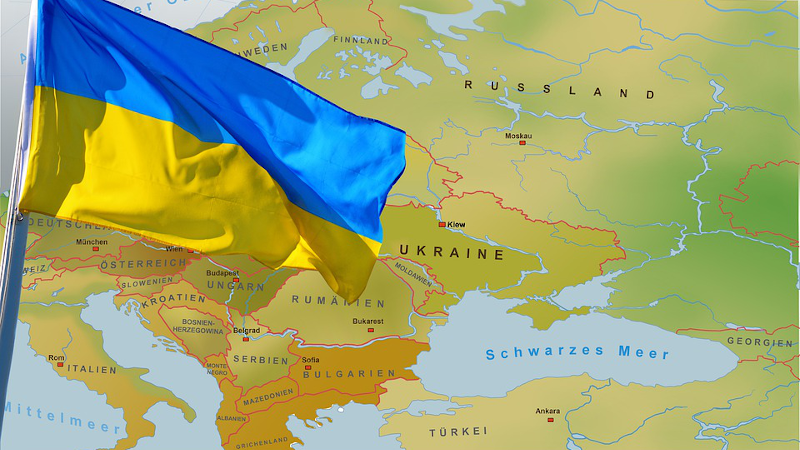
(RFE/RL) — Eighty countries have called for the “territorial integrity” of Ukraine to be the foundation of any peace agreement to end Russia’s war in a communique issued on the second and final day of their gathering at a Swiss resort on June 16.
Russia’s absence at the Ukrainian-initiated Global Peace Summit has dampened hopes of any breakthrough, as has China’s decision to stay away.
Participants India, Saudi Arabia, and the United Arab Emirates were among those that did not sign the final document, which focused on issues of nuclear safety, food security, and the exchange of prisoners.
The final statement said the UN Charter and “respect for territorial integrity and sovereignty…can and will serve as a basis for achieving a comprehensive, just and lasting peace in Ukraine.”
“We believe that reaching peace requires the involvement of and dialogue between all parties,” it also said.
Viola Amherd, the Swiss president who hosted the event, told the final news conference that the fact that the “great majority” of participants agreed to the final document “shows what diplomacy can achieve.”
On the eve of the summit, Russian President Vladimir Putin issued harsh terms for a cease-fire, including that Ukraine hand over control of four regions in areas not only occupied by Russian invading forces, but Ukrainian-controlled regions as well, demands immediately rejected by Kyiv and its Western backers.
Ursula von der Leyen, president of the European Commission, said the conference was “rightly” titled “Path to Peace” because such a goal will not be achieved in a single step.
“It was not a peace negotiation because Putin is not serious about ending the war. He is insisting on capitulation. He is insisting on ceding Ukrainian territory — even territory that today is not occupied by him,” she said. “He is insisting on disarming Ukraine, leaving it vulnerable to future aggression. No country would ever accept these outrageous terms.”
Speaking at the end of the two-day meeting in Burgenstock, Ukrainian President Volodymyr Zelenskiy said the support of Western and other leaders demonstrates that the rule of international law can be restored.
“I hope that we can achieve results as soon as possible,” Zelenskiy said. “We’ll prove to everyone in the world that the UN Charter can be restored to full effectiveness.”
Responding to a question from RFE/RL at the final news conference, Zelenskiy said more countries may join the final communique.
“First of all, [the term is] not signing but joining [the final communique]. This is an important difference, because joining the communique means that the communique is open,” he said. “Even countries that are now thinking to join it have consultations ongoing in their respective countries.”
Russian political scientist Aleksandr Morozov told Current Time, a Russian-language network run by RFE/RL in cooperation with Voice Of America, that countries such as South Africa and India that did not join the communique are reserving space for their own peace initiatives. He said that while these wouldn’t be bad, they would only prove that Putin’s demands are unrealistic because they disrespect Ukraine’s territorial integrity and thus go against the UN Charter.
In holding the summit, Zelenskiy had been seeking to rally a greater number of countries behind Ukraine’s cause, especially those from the so-called Global South, and maintain world attention on Russia’s brutal invasion. That has become more urgent amid some global fatigue with the 28-month war, fighting in the Middle East, and growing concern about Chinese aggression toward Taiwan.
The June 15-16 summit was the culmination of Zelenskiy’s efforts over the past 19 months to engage global leaders in helping end the biggest war in Europe since World War II.
Switzerland agreed to host the summit with the hope it would pave the way for a future peace process that includes Russia. Zelenskiy did not want Russia to participate at this stage.
At their meeting on June 16, delegates agreed on a final summit declaration that focused on three issues: a call for the need for nuclear and food security and the return of prisoners of war and children removed from Ukraine during the conflict.
Ihor Zhovkva, Zelenskiy’s deputy chief of staff, told reporters on the sidelines of the summit that Kyiv decided to focus on these three issues “because the majority of the international community is united around these positions today.”
“The text is balanced. All of our principled positions on which Ukraine had insisted have been considered,” Ukrainian Foreign Minister Dmytro Kuleba told reporters on June 16 about the final communique.
“Of course we…understand perfectly that a time will come when it will be necessary to talk to Russia,” he said. “But our position is very clear: We will not allow Russia to speak in the language of ultimatums like it is speaking now.”
The conference was expected to decide the host country for a follow-up conference, but the meeting in Switzerland closed with the location of a second meeting undetermined.
Swiss Foreign Minister Ignazio Cassis said it was conceivable that a follow-up summit could be held before the U.S. presidential election in November.
Saudi Arabia was believed to be one of the leading candidates, and Foreign Minister Prince Faisal bin Farhan Al Saud said on June 15 that the kingdom was ready to assist the peace process, but he warned a viable settlement would hinge on “difficult compromise.”
China, which backs Russia, joined scores of countries that sat out the event. Beijing has said any peace process would require the participation of both Russia and Ukraine, and has put forward its own ideas for peace.
Ukrainian security analyst Alina Hrytsenko told Current Time that China is trying to position itself as a peacemaker and doesn’t believe that either side can achieve a military victory. She pointed out that that Putin’s “peace offer” included a refusal to consider Zelenskiy legitimate, making it unclear under China’s peace initiative who could be Putin’s counterpart in peace talks.
On June 15, on the first day of the Swiss summit, many Western leaders condemned Russia’s full-scale invasion of Ukraine, citing the UN Charter in defense of its territorial integrity, and rejecting Putin’s demands for Ukraine to cede land for peace.
“One thing is clear in this conflict: There is an aggressor, which is Putin, and there is a victim, which is the Ukrainian people,” Spanish Prime Minister Pedro Sanchez said.
“Russia should realize that it has borders, like any other state, and that it has neighbors, like any other state. This international community, the new security architecture, can exist only when the big countries, the biggest of the biggest, recognize their neighbors, respect their neighbors and their territorial integrity,” Georgian President Salome Zurabishvili;said.
“Sovereignty, territorial integrity, and discrediting aggression as a tool of statecraft are crucial principles that must be upheld in case of Ukraine and globally,” Estonian Prime Minister Kaja Kallas told the opening session on June 15. “That is why I’m concerned about so-called peace plans and initiatives that ignore the core UN Charter principles. We cannot treat Ukraine’s territorial integrity and sovereignty as somewhat secondary,” Kallas added.
U.S. Vice President Kamala Harris, representing the United States while President Joe Biden attended a fundraiser in California, said Putin’s June 14 “peace” proposal was not a call for negotiations but a call “for [Ukraine’s] surrender.”
Harris also reiterated America’s full backing for Ukraine and announced $1.5 billion in new U.S. assistance for multiple projects, including energy infrastructure and civilian security.
German Chancellor Olaf Scholz stated that “peace in Ukraine cannot be achieved without involving Russia” but noted Russia has refused all collective calls for peace.
Ahead of the summit, leaders from the Group of 7 major industrial nations announced a $50 billion loan package for Kyiv that will leverage interest and income from the more than $260 billion in frozen Russian assets.
Biden and Zelenskiy this week signed a security agreement that commits the United States over 10 years to continued training of Ukraine’s armed forces.
Biden, who decided not to attend the summit despite pleas from Zelenskiy, also approved sending Ukraine a second Patriot missile system and imposed another round of financial sanctions on Russia.
The White House also eased restrictions that kept Ukraine from using American weaponry to strike inside Russia, allowing strikes into Russia for the limited purpose of defending Kharkiv.
Last month, Russia launched a small-scale offensive in the northern Kharkiv region, seeking to stretch Ukraine’s outgunned and outmanned forces across the roughly 1,200-kilometer front line. The effort has slowed, as Ukraine rushed new units to the area, reinforced positions, and fired on Russian positions across the border.
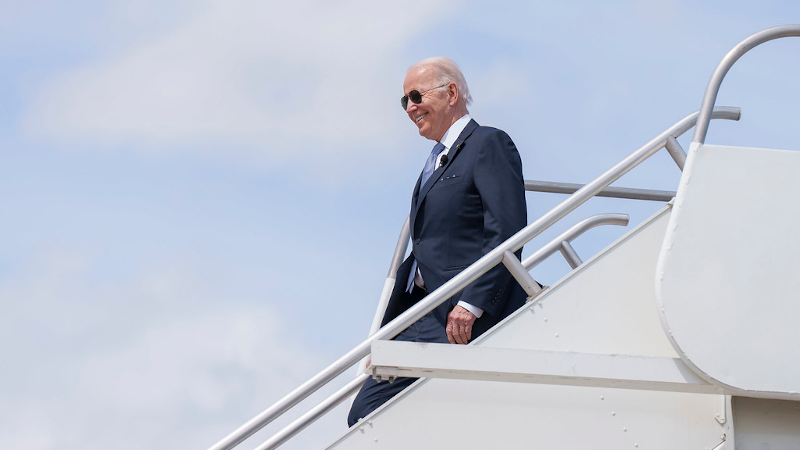
By Dalia Al-Aqidi
Immigration has long been a central issue for American voters, consistently ranking among the top three concerns according to numerous polls. Since May 2022, data from Harvard/Harris has indicated that President Joe Biden’s approval rating on immigration has been persistently low, reflecting widespread public dissatisfaction.
RealClearPolitics’ polling averages currently place the president’s approval rating on immigration at 32 percent, underscoring a critical area of discontent among voters. This sustained low approval rating is indicative of the public’s concern over immigration policies and the ongoing situation at the southern border.
American concern over the country’s border with Mexico has been unwavering for the past three years. This period has seen significant increases in the number of migrants attempting to enter the US, creating substantial challenges for both border enforcement and humanitarian efforts. The public’s apprehension is primarily fueled by the perception that the southern border is inadequately secured, leading to uncontrolled migration and potential security risks.
In response to mounting political pressure and the persistent influx of migrants, Biden this month signed an executive order designed to temporarily halt asylum requests once the average number of daily encounters exceeds 2,500 at official ports of entry. According to the Department of Homeland Security, this measure is intended to provide temporary relief to overwhelmed border facilities and staff, who currently handle an average of more than 4,000 daily encounters. The executive action aims to address the immediate logistical challenges posed by the high volume of migrants, while also signaling a shift toward more stringent border control measures.
US Customs and Border Protection reported 179,725 encounters along the southern border in April alone. This is a slight decrease from previous months but remains very high, reflecting the ongoing pressures on border security and immigration management. More than 1.5 million encounters have been recorded for the current fiscal year, meaning it is likely to surpass the total number of encounters recorded in fiscal years 2023, 2022 and 2021. This trend highlights the escalating scale of migration and the increasing complexity of the issues at hand.
The president’s executive action has drawn various responses from different stakeholders. Advocates for more robust border security have welcomed the move, viewing it as a necessary step to control the flow of migrants and reduce the burden on border facilities. They argue that temporarily suspending asylum requests is critical for managing the surge and maintaining national security. On the other hand, immigrant rights groups and some political opponents have criticized the measure, arguing that it may violate international asylum obligations and undermine the rights of individuals seeking refuge from persecution and violence. They contend that the policy could deny protection to vulnerable populations and exacerbate humanitarian crises.
The administration has acknowledged these concerns and emphasized that the executive action is a temporary measure intended to address the immediate crisis at the border. The US president has stated that his administration is committed to a comprehensive approach to immigration reform, which includes addressing the root causes of migration, such as poverty, violence and corruption in the migrants’ countries of origin. The White House has outlined plans to work with international partners, including governments in Central America and Mexico, to mitigate the conditions that drive migration and to create legal pathways for individuals seeking to enter the US.
However, many Americans remain skeptical, as similar promises have been made in the past, with little to show for them. Upon taking office, Biden tasked Vice President Kamala Harris with spearheading the White House’s efforts to address illegal immigration. Her role included collaborating with Central American countries to tackle the root causes of migration. Despite these initiatives, the mission of the first female vice president in the nation’s history has failed.
In addition to immediate border control measures, the current administration announced its intention to focus on reforming the asylum process to make it more efficient and fairer. Efforts are underway to streamline the adjudication of asylum claims, reduce backlogs and ensure that individuals with legitimate asylum claims can receive protection in a timely manner.
The liberal Biden administration has highlighted its commitment to bolstering border security through a multifaceted approach that includes increased funding for advanced technology, expanding personnel and making significant infrastructure improvements. It claims that this comprehensive strategy aims to enhance the effectiveness of border controls and address the complex challenges associated with illegal immigration and national security threats.
Despite these statements, federal authorities last week conducted a significant operation that led to the arrest of eight foreign nationals suspected of having ties to the terrorist group Daesh. US Immigration and Customs Enforcement carried out these arrests, apprehending the Tajikistani nationals in various locations across the country, including Los Angeles, New York and Philadelphia. The individuals were allegedly involved in activities that raised serious concerns about national security and public safety.
The arrest of these individuals underscores the persistent and evolving nature of security threats. It also highlights the need for ongoing vigilance and stricter border management policies. The presence of foreign nationals with alleged connections to a terrorist organization within the US serves as a stark reminder of the challenges faced by immigration and law enforcement agencies. These agencies must continually adapt their strategies to effectively counter sophisticated and transnational threats.
In addition to these arrests, FBI Director Christopher Wray, in an address in April, expressed grave concerns about people-smuggling operations at the southern border. Wray warned that these operations might be facilitating the entry of individuals with affiliations to terrorist groups. This statement drew attention to the broader implications of human trafficking networks that exploit weaknesses in border security, posing significant risks to national security.
The warning from the FBI underscores the complexity of border security challenges and the need for a coordinated response that addresses both immediate and long-term threats. The smuggling of individuals with potential terrorist connections not only endangers public safety but also complicates the broader efforts to manage and secure the border. These concerns are particularly relevant in the context of the increasing number of migrants attempting to illegally enter the country, which has been a focal point of national debate and policymaking.
President Biden’s new measures are unlikely to improve his approval rating. Many Americans view his decision as a case of too little, too late.
•;Dalia Al-Aqidi is executive director at the American Center for Counter Extremism.

Boeing and Airbus, the top two commercial aeroplane-makers, may have used titanium acquired with fake documents. This claim comes from a supplier and has led to an investigation by the Federal Aviation Administration (FAA), as reported by NBC News.
Spirit Aerosystems, located in Wichita, Kansas, in central United States, produces various aeroplane components, including fuselages and wings, for such leading aircraft manufacturers as Boeing and Airbus. They specialize in creating these essential parts to support the construction of commercial aeroplanes for the aviation industry.
Spirit Aerosystems alerted the authorities that there was an issue with titanium. It alleged that Boeing and Airbus might have used titanium in their aircraft with possibly fake documents. On Friday morning (June 14), the FAA announced its intention to probe Spirit Aerosystems’s claims. They quickly took action to remove all the questionable titanium from the supply chain.
The company said in a statement that titanium with fake documents had entered their supply system. Once they discovered this, they quarantined and removed all the suspect parts from their production. Spirit Aerosystems added that they had completed over 1,000 tests to verify the mechanical and metallurgical properties of the affected material, ensuring that it remained safe for use in aircraft.
This news comes at a tough time for Boeing, which is already under federal investigation for supposed safety issues. It also puts the spotlight on Airbus, Boeing’s main competitor based in France, adding to the broader scrutiny that the aviation industry is currently facing.
The FAA confirmed another investigation into Boeing, stating that the company voluntarily reported buying materials from a distributor who might have falsified, or provided incorrect, records. The statement added that Boeing had released a bulletin advising suppliers to stay vigilant for potential fake records.
Airbus holds about 60% of the commercial airline market, while Boeing has the remaining 40%, making the two companies a duopoly in the industry. Boeing mentioned in an e-mail statement that this issue affected some titanium shipments received by a limited number of suppliers. However, tests so far have shown that the correct titanium alloy was used.
Boeing also stated that they were “removing any affected parts from aeroplanes before delivery. The company’s analysis revealed one reassuring fact—that the planes now in service could continue to fly safely. Airbus, too, released a similar statement after carrying out its own tests, stating that several of these had been conducted on parts supplied by the same source. These tests show that the aircraft are still safe to fly, which, the company said, was their top priority.
Earlier, on Friday, the FAA announced an investigation into how a Boeing-737 Max jet had experienced a ‘Dutch roll’ incident during a flight from Phoenix to Oakland last month. ‘Dutch roll’ is a type of aircraft motion that involves a combination of yawing (side-to-side motion) and rolling (tilting of the wings). It can make the plane appear to wobble in flight and is usually undesirable, requiring the pilot to correct it to maintain a stable flight.
Boeing had a trying start to the year in January when a door panel on one of its 737 Max-9 aircraft blew off during a flight. The FAA is also looking into whether Boeing completed the necessary inspections on its 787 Dreamliner jets.
Risks and Consequences of Using Defective Titanium in Aircraft
Using defective titanium material in commercial aircraft can have serious safety implications. Titanium is a critical component in many parts of an aircraft due to its strength and light weight. If the titanium is faulty, it can lead to structural weaknesses, potentially causing parts to fail during flight. This can compromise the integrity of the aircraft, posing significant risks to passengers and crew.
In addition to safety concerns, the use of defective titanium can result in financial and reputational damage for the airline manufacturers. They may face costly recalls, repairs and legal liabilities. Furthermore, their reputation for safety and reliability could be severely impacted, leading to a loss of trust from airlines and passengers alike.
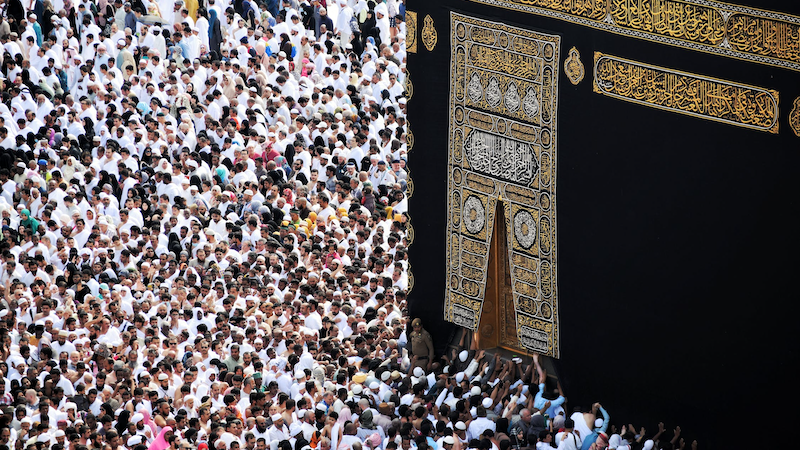
Both the Holy Qur’an and the Holy Bible stress the religious importance of an annual pilgrimage to a sacred location (Hajj in Arabic, Hag in Hebrew). In Biblical times the Hebrew word Hag was pronounced Haj.;
The Qur’an states: “So keep the three Haj (Pilgrimage) days and seven fasts when you return.” (2:196) and the Torah states: Three times a year all your men are to appear before the God of Israel. (Exodus 34:23);
Few Jews today realize that for more than 1.000 years, while Jerusalem’s First and Second Temple–Bait ul Muqaddas/Beit HaMiqdash stood, the week long Jewish festivals of Hag/Haj Sukkot and Hag/Haj HaMatzah were celebrated as a Hajj, a pilgrimage festival.
In the centuries after the Jerusalem Temple was destroyed; pilgrimage ceased. Today the overwhelming majority of Jews outside the Land of Israel live in Protestant countries where pilgrimage plays little or no role in religious life. Thus, it is very hard for most Jews to feel the tremendous spiritual uplift that can occur to pilgrims on the long path to, and amidst the mass tumult of, a uniquely holy and sacred place. ;
We can however see in the Muslim Hajj, some of the spiritual uplift that occurs when large numbers of people from all over the world travel to one holy place and join together in a traditional religious ceremony. Muslims in turn, can see some similarities, especially during Haj Sukkot, with the ancient Jewish practice of Haj ceremonies.
The Torah declares, “Celebrate Haj Sukkot for seven days after you have harvested the produce of your threshing floor and your winepress. Be joyful at your festival—you, your sons and daughters, your male and female servants, Levites, foreigners, orphans and the widows who live in your towns. For seven days celebrate the festival to the Lord your God at the place the Lord will choose. For the Lord your God will bless you in all your harvest and in all the work of your hands, and your joy will be complete. Three times a year all your men must appear before the Lord your God at the place He will choose: at the Haj of Matzot, the Haj of Weeks, and the Haj of Sukkot. (Deuteronomy 16:13-16)
The Haj of Sukkot was chosen by Prophet Solomon to dedicate the First Temple in Jerusalem. (1 Kings 8; 2). Haj Sukkot was so important during the centuries when Solomon’s Temple stood that the holy day week of Sukkot was often called simply “the Haj” (1 Kings 8:3; 8:65; 12:62; 2 Chronicles 5:3; 7:8) because of the very large numbers of Jews who came up to the Temple in Jerusalem,
On each of the first six days of Haj Sukkot it was traditional to circle the Temple altar while reciting psalms of Prophet David. On the seventh day of Sukkot the custom was to circle the Temple altar seven times. As the Oral Torah says: “It was customary to make one procession around the altar on each day of Sukkot, and seven on the seventh day.” (Mishnah Sukkah 4:5).;
Each of the seven circles done on the seventh day is done in honor of a prophet; Abraham, Isaac, Jacob, Joseph, Moses, Aaron and David, all of whom both Jews and Muslims revere. Muslims will see some similarities and some differences between the Jewish Haj and the Islamic Hajj.;
For example Islamic tradition urges one who goes on Hajj to remember his or her parents and other close relatives who have passed away with pious prayers; and make-up for them if they could not fulfill their obligations for hajj. And Jewish tradition has a special service on the last day of Haj Sukkot and Haj HaMatzot called Yizkor; to remember parents and other close relatives who have passed away with pious prayers.
The ritual slaughter of Qurbani (Korban in Hebrew) Halal/Kosher animals toward the end of all the ritual reenactments comes to teach everyone that: “Their flesh and their blood do not reach Allah, but the devotion from you reaches Him.” (Quran 22:37). This is the same basic understanding that the Hebrew Prophets and the Rabbis gave to the offerings in the Temple of Solomon. “Prophet Muhammad was once asked by his Companions: “O Prophet of Allah! What is this qurbani?” He replied, “It is the Sunnah of your father Ibrahim.” To that I say: Amen.
With the destruction of the Second Temple by the Romans in 70 CE, the pilgrimage aspect of the week-long harvest festivals of Haj Sukkot and Hajj HaMatzot began a gradual decline in the spiritual consciousness of the Jewish People. Most of the many thousands of Jews from foreign lands outside the Land of Israel; and the tens of thousands of Jews from all over the Land of Israel outside the city of Jerusalem; who used to came each year to celebrate the week of Haj Sukkot and Hajj HaMatzot in Jerusalem at Bait ul-Muqaddas, the furthest sanctuary; ceased coming.
Two generations later, after a second major Jewish revolt (132-135 CE) in the land of Israel, the Romans rebuilt Jerusalem as a pagan city filled with idols, That stopped all Jews from coming to the ruined site of the Jerusalem Temple–Bait ul Muqaddas/Beit HaMiqdash.;
But even centuries after the destruction of the Temple, and the end of pilgrimage, generations of Jews repeated wonderful tales about pilgrimage experiences in Jerusalem and at the Holy Temple.
Crowded as Jerusalem was, there always seemed to be enough room to squeeze everyone in. Indeed, every year it seemed a continuing miracle that a pregnant woman didn’t suffer a miscarriage, a rain shower never quenched the fire on the altar, the wind never blew smoke from the fire into the crowds of worshipers, and no one was ever bitten by a scorpion or a snake. Most amazing ;of all, no one complained, “It is difficult for me to find lodging in Jerusalem”. (Pirkay Avot 5:8);
The wonderful fragrance of the Temple incense was so widespread throughout the city that brides in Jerusalem did not need to use perfume. (Yoma 39b) ;Monobaz, king of Adiabene, and his mother Queen Helene, who were well known converts to Judaism, contributed a very large golden candlestick that was placed over a Temple entrance. When the sun rose in the east, sparkling rays were reflected from it, and people knew it was time to recite the morning prayers. (Mishnah Yoma 3:10 and Tosefta Yoma 2:4)
Only a rare outside observer can experience even a small fraction of the spiritual feelings of those who belong to a pilgrimage tradition. One such observer, Mark Twain, wrote: “It is wonderful, the power of a faith that can make multitudes upon multitudes of old, weak, young and frail enter without hesitation or complaint upon such incredible journeys and endure the resultant miseries without repining.”
For Muslims, the Furthest Sanctuary is located in Jerusalem. “Glory to He Who carried His servant by night, from the Holy Sanctuary to the Furthest Sanctuary, the precincts of which We have blessed. so that We might show him some of Our signs. Surely He is the All-Hearing, the All-Seeing. (Qur’an 17:1) ;It is significant that the ruins of the Jerusalem Temple was the site of Prophet Muhammad’s ascension—miraj– up to the heavens.;
One might say the destruction of the Furthest Sanctuary center of monotheistic pilgrimage in Jerusalem by the pagan Romans, was five and a half centuries afterward overcome by Prophet Muhammad’s ascension (miraj) up to the heavens, and the soon to be realized removal by Prophet Muhammad of all the 300 idols from the paganized Ka’ba in Makka. The Ka’ba of Abraham
The Prophet Zechariah envisions a future time when God helps all humanity to establish worldwide peace. All the nations in the world may then travel to Makka and Jerusalem to worship God. Then during Haj Sukkot, Jerusalem will welcome both Jews and non-Jews, even including those who were previously Israel’s enemies: “Then the survivors from all the nations that have attacked Jerusalem, will go up year after year to worship the King, the Lord Almighty, and to celebrate Haj Sukkot.” (Zechariah 14:16);
Just as the Ka’ba has always welcomed all Muslims from all the nations of the world, who answer the call: “Call upon the people for Hajj. They will come to you on their bare feet, or riding any weak camel, and they will come to you from every far desert. (Qur’an 22:27).
Russian forces kill Islamic State-linked hostage takers at detention centre | Reuters https://t.co/TBkFZz0RVb
— Michael Novakhov (@mikenov) June 16, 2024
Russian forces kill Islamic State-linked hostage takers at detention centre | Reuters https://t.co/TBkFZz0RVb
— Michael Novakhov (@mikenov) June 16, 2024
Russian forces kill Islamic State-linked hostage takers at detention centre | Reuters https://t.co/TBkFZz0RVb
— Michael Novakhov (@mikenov) June 16, 2024