
PM, President Aliyev convey Eid greetings, pray for unity, peace, prosperity of Ummah Associated Press of Pakistan
Day: June 16, 2024
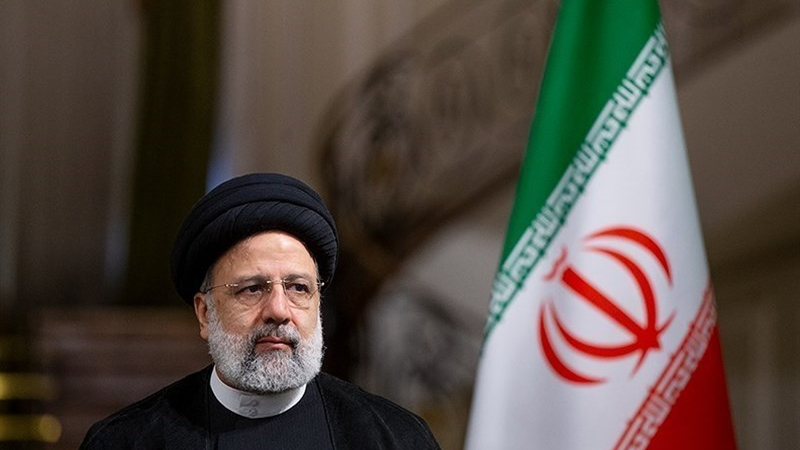
In a;previous article;about the Iranian regime’s upcoming elections masquerade, we wrote: “The main and amusing feature of this drama is that all six actors play the same role and say the same thing with minor differences. They not only declare their allegiance to regime supreme leader Ali Khamenei, but also outdo each other in their commitment to continue [Ebrahim] Raisi’s path and program.”
Now, let’s pause to consider the reason why all six actors are playing one role! Apparently, it is very ridiculous and meaningless. But in its essence, it has a thought-provoking meaning.
In any election, even in the sham electoral shows of this regime, the common practice is that each candidate speaks of past mistakes and showcases what they have for change. The issue is so clear that the government-affiliated newspaper Etmad wrote on June 14: “In a word, an election means the possibility of change… an election in which there is no possibility of change, no matter what it is called, is not an election.”
It is clear that talking about the mistakes of Raisi’s failed government is not difficult. The scandal and failure of his government had reached a point where the hardline parliament supporting Raisi advised him to resign to preserve the regime. Even more than 170 members of the parliament who had signed a letter during the 2021 elections in support of Raisi’s presidency expressed regret and admitted their mistake in the second year of his presidency.
Attacks on Raisi and his mockery within the regime were so widespread and common that regime supreme leader Ali Khamenei said on June: “After the loss of this dear one, I saw that many newspapers, all the media, in the virtual space, various individuals from different currents, all speak of his services and his round-the-clock efforts, praise him, commend him. My heart ached. I felt sorry for Raisi! During his lifetime, they were not willing to say a word of this but rather said the opposite.”
On May 31, Yusef Tabatabaei Nejad, Khamenei’s appointee as Friday prayers leader in Isfahan, also said: “God willed that Mr. Raisi have a good death. If he had been around, some people would have put the arrow in the bowstring to ensure he would not be elected for the next term, and they would have accused him of anything as they did.”
Parliament Speaker Mohammad Bagher Ghalibaf also took up the mantra of “new governance” and targeted Raisi with his taunts every other day. Therefore, the question remains why Ghalibaf and five other candidates now insist on continuing Raisi’s path?
The answer is simple. Khamenei, as the owner of the election circus, wants Raisi’s way and manner to continue; “not one word less, not one word more!” Raisi’s path means nothing but maximum repression, including suppression, execution, and absolute suffocation internally, and warfare and export of terrorism externally to block uprisings and the risk of the regime’s overthrow.
However, this general situation of the regime in the crisis of overthrow clarifies three specific realities in the context of the electoral show:
First, the gravity and irreparability of Raisi’s death, which Khamenei described as: “It is irreparable. It is a heavy loss, a great grief.”
Second, the effort of all six candidates to play one role shows that Raisi’s role in Khamenei’s suppressive structure to control the regime’s crises and block uprisings is beyond any of them. Because each one plays his own tune in Raisi’s name. The ridiculousness and steep decline into absurdity of the election campaign, which has even drawn complaints from the regime’s own election decorators, stems from this very contradiction.
Third and more importantly, regardless of the predefined results of the elections, not only is the blow of Raisi’s death not compensated, but the effects of the blow become more and more evident in every political and social tremor.
On the day of Raisi’s death, Mrs. Maryam Rajavi, the president-elect of the National Council of Resistance of Iran (NCRI), emphasized: “This represents a monumental and irreparable strategic blow to the mullahs’ Supreme Leader Ali Khamenei and the entire regime, notorious for its executions and massacres. It will trigger a series of repercussions and crises within theocratic tyranny, which will spur rebellious youths into action.” The regime’s desperate moves ahead of the elections further underlines the depth of this strategic blow.
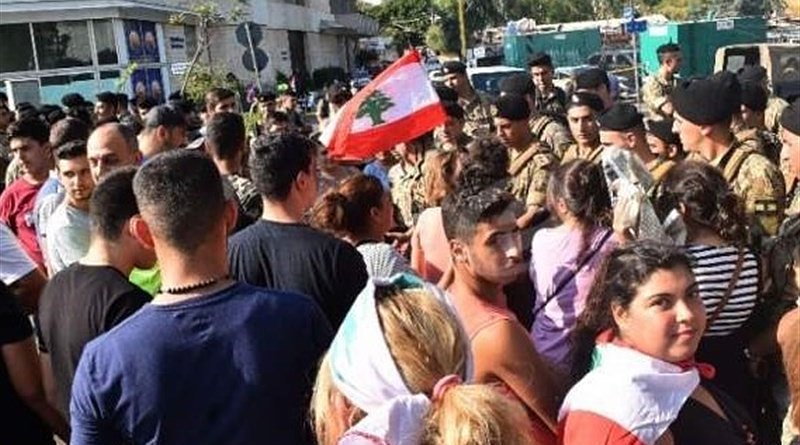
By Jean AbiNader
In 2019, a Ponzi scheme, operated for years by Lebanon’s Central Bank, commercial banks, and politicians, triggered economic collapse. Since then, Lebanon has grappled with a profound recession. More than half of the population is below the povertyline. The state is not equipped to assist the poor, and most go without aid. Essential services like electricity and education are deteriorating. In 2020, 2,750 tons of ammonium nitrate stored improperly in a warehouse in the capital, Beirut, exploded, killing over 200 people. The blast literally rocked the entire country, but the authorities have still not identified those responsible.
Citizens are angry, and in response, the state has cracked down on free expression, using criminal defamation laws to punish those who complain. Meanwhile, the government is in a state of paralysis. Twelve sessions of voting in parliament have;failed;to elect a new president since Michel Aoun’s mandate expired in 2022.
To make matters worse, war is brewing to the south. Ever since the Israel–Hamas war started in October 2023, hostilities along the border between Lebanese militant group Hezbollah and the Israel Defense Forces (IDF) have mounted.
To make a long matter short, Lebanon is in crisis, and something must be done.;
Current prescriptions for Lebanon
Everyone, of course, is full of ideas on how to solve the crisis. Few realize how many contradictions their recommendations involve. “Sovereignty and stability” are the watchwords.
Nearly everyone agrees there must be;détente;between the various, sometimes warring, political factions in Lebanon in order to elect a new president and make the accompanying government changes. They further agree on the United Nations’ 1989;Taif Accords;and the UN’s 2006 Security Council;Resolution 1701. These two diplomatic documents aim to promote order in Lebanon by detailing power-sharing among various factions and outlining the responsibility of the Lebanese Army (LAF) and the Lebanese Internal Security Forces (ISF) to maintain security and secure Lebanon’s borders. In April 2022, the International Monetary Fund (IMF) added another plan for recovery when it reached a staff-level;agreement;for economic reform with Lebanon. Yet despite the consensus, efforts have been fruitless.
It is not clear that effective efforts are even possible. The situation on the Israeli border is rapidly deteriorating, with over;90,000;people internally displaced. It is not likely that internal reforms are on the government’s agenda at all when Lebanon’s territorial integrity and state functionality are in question.
External relations with the US, Hezbollah and Israel
Externally, Lebanon is unable to control or even positively influence its relationships with the many outside powers who seek to influence Lebanese policy. Chief among those actors are Iran and the US. Iranian and American influence on Lebanon, whether good or ill-intentioned, has not caused any palpable improvement in Lebanon’s situation.
Many Lebanese ascribe Lebanon’s ills to the machinations of;Hezbollah, a Shia Islamist political party and militant group, and its patron, Iran. The recent cross-border violence between Hezbollah and Israel is seen as an existential threat to Lebanon, and some believe Lebanon may consequently become a victim of the “cleansing” Israel is visiting upon Palestinians. Furthermore, Lebanese believe that Israel, thanks to US support, faces little opposition to its posture of deterrence through preponderant;destruction;in Lebanon.;
Then there is the US, which is cast as both the savior and tormentor of Lebanon. Through its relationships with the LAF and ISF, the US has;affirmed;and worked to;bolster;their status as the first defenders of Lebanon. Unfortunately, US reluctance to act to rein in the excesses of the IDF, violent settlers, and the extremist cabinet of Israeli Prime Minister Netanyahu tars the US as the abettor of Lebanon’s looming potential destruction. Additionally, the US seems to be shirking some of its ability to aid Lebanon by using SCR 1701 to place unworkable responsibility on the LAF.
On the one hand, voices in the US Congress and government remind the Lebanese that SCR 1701 places relatively clear guidelines on the central role of the LAF in stabilizing Lebanon. They raise the topic whenever appropriations are allocated or the;mandate;of the UN Interim Force in Lebanon (UNIFIL) is annually;renewed. On the other hand, the US insists that the LAF follow civilian leadership and respect Lebanon’s laws. This requirement severely;undermines;the LAF’s power because that same civilian leadership obstructs it from maintaining borders and ensuring peace. Whether the theater is violence on the Lebanon–Israel border or dealing with armed militias, the LAF and ISF are routinely barred from carrying out their increasingly complex responsibilities.;
Despite the inconsistencies in America’s role, many Lebanese believe that only the US holds the power to keep Lebanon together. Just this week, LAF commander General Joseph Aoun visited the US to;meetwith senior Pentagon officials and discuss possible solutions to the border violence. Aoun’s visit reinforced the perception that US support is critical. Still, while the intentions behind the talks were good, it remains to be seen whether the US will take action.
Military leadership and complex foreign dynamics
Many Lebanese are calling for the LAF to corral Hezbollah in order to;avoid;provoking Israel. The Quintet (the US, Qatar, France, Saudi Arabia and Egypt), too, is pushing for the LAF to keep a short leash on Hezbollah pursuant to SCR 1701. (For example, just this June, French President Emmanuel Macron;called;for the implementation of SCR 1701 in order to temper escalations on the Lebanese–Israeli border.)
Iran, on the other hand, wants Hezbollah to put pressure on Israel. Could the West and Iran be pushing the LAF and Hezbollah into a civil war — one in which the LAF is outgunned? How far will the US go to support Israel?
How does one balance the Abraham Accords — a US declaration affirming the importance of cooperatively;maintaining;peace in the Middle East — with the deterioration in US public support for a solution that sidelines Palestine?
How long can Saudi Arabia and others tolerate rogue behavior by Israel that may affect their regional priorities?
The dynamics of this region are as fraught as ever, and divided Lebanon seems to be caught in the middle of it all. Amid the turmoil, Lebanon might turn to a military leader. Officers have taken presidential office four times since 1958. Lebanon tends to rely on the military when no political consensus emerges. An article in Al Majalla last year detailed how each case of general-turned-president was in response to a particular crisis or crises.
Currently, there is a buzz about;electing;Aoun as president. To many, he seems the only option left as politicians who lack the motivation to sacrifice their personal agendas for Lebanon’s sake fail to compromise.
This presidential crisis is nearly;two years;old now. The rest of the region has better things to do than abet a continuation of dysfunctional Lebanese politics. While members of the Quintet, particularly the US and France, have;made;recent proposals to cease hostilities in Lebanon, they have more urgent business than holding Beirut by the hand. Clashes on the Lebanese-Israeli border continue to;escalate. Lebanon must take the lead.
The views expressed in this article are the author’s own and do not necessarily reflect Fair Observer’s editorial policy.
- About the author: Jean AbiNader
- Source: This article was published at Fair Observer
israel – Google Search https://t.co/0m7XnErVwu https://t.co/hzkcCsMxA3
— Michael Novakhov (@mikenov) June 16, 2024
Video News Review #NewsAndTimes #NT #TNT #News #Times#World #USA #POTUS #DOJ #FBI #CIA #DIA #ODNI#Israel #Mossad #Netanyahu#Ukraine #NewAbwehr #OSINT#Putin #Russia #GRU #Путин, #Россия #SouthCaucasus #Bloggershttps://t.co/O0SIgLVWzMhttps://t.co/DO5LG3PY4T… pic.twitter.com/AzFfKuinBr
— Michael Novakhov (@mikenov) June 16, 2024