
Today, the U.S. and Ukraine took a step to strengthen Ukraine’s defense in the war for its independence.
By signing an agreement to support Ukraine’s efforts to defend itself and deter future aggression, we’re showing Putin that we stand together – now and for decades to come. pic.twitter.com/fRJdIUx1id
— President Biden (@POTUS) June 13, 2024
Day: June 13, 2024
The North Atlantic Treaty Organization (NATO) is planning to install a permanent special envoy to Kyiv as a new envoy post. This has to do with “institutionalizing” some of “the bilateral support that has flowed to Ukraine”, says US ambassador to Kyiv, Julianne Smith. At the same time, last week, Biden made it (again) abundantly clear that Ukraine is not to become a NATO member.
By Uriel Araujo*
One should keep in mind that back on 21 December 2022, during a;joint press conference;in Washington, when Ukrainian President Volodymyr Zelensky visited the US, Biden had already been;clear enough;on the limits of Washington’s willingness to be there for Ukraine. The American’s replies must have been a cold shower to his Ukrainian counterpart: when asked about sending more powerful weapons to Kyiv, Biden said that doing so “would have a prospect of breaking up NATO”, and “breaking up the EU and the rest of the world.”
“Not looking for A third world war”
Moreover, according to him, his Atlantic Alliance allies were “not looking to go to war with Russia. They’re not looking for a third world war”. Then, he went on to “reassure” the Ukrainian president right next to him, by telling that “as I said, Mr. President, you don’t have to worry—we are staying with Ukraine as long as Ukraine is there”, in an unintended amusing remark that inadvertently almost paraphrased the famous cruel joke about Americans being willing to fight “to the last Ukrainian”.
One could perhaps add “to the last European”. It is true that the US has reportedly;secretly sent long-range ATACMS missiles to Ukraine, which has;made use;of them, but;one should not make that much of it—according to Mark Galeotti, head of the consultancy Mayak Intelligence and honorary professor at the UCL School of Slavonic and East European Studies, this is;no game-changer. The overall American attitude is increasingly one about “let the Europeans spend more, and do the fighting”. Many voices within the American establishment have indeed been;calling for;European troops (“not NATO”) being deployed in Ukraine—which is more than just rhetoric.
Europe has spent more money in Ukraine than the United States
In an;interview;to TIME, Biden claimed that Washington did spend “a lot of money in Ukraine”, but, trying to downplay it, he argued “Europe has spent more money than the United States has, collectively. Europe has spent more money in taking on Russia”. According to TIME’s own;fact-checking, the EU has provided Kyiv with more than $107 billion dollars in assistance (military, humanitarian, financial etc). The US congress, in comparison, has authorized Washington to send Ukraine up to $175 billion (much more than $107 billion, therefore) —however, thus far, has sent only about $81 billion, which, in any case, is already, for a single country, close enough to what the European Union has sent collectively.
In the same interview, asked about what the “endgame” for Ukraine looks like, the US President had this to say: “Peace looks like making sure Russia never, never, never, never occupies Ukraine. That’s what peace looks like. And it doesn’t mean NATO, they are part of NATO, it means we have a relationship with them like we do with other countries, where we supply weapons so they can defend themselves in the future. But it is not, if you notice, I was the one when—and you guys did report it at TIME—the one that I was saying that I am not prepared to support the NATOization of Ukraine.”
One might;remember;that, in December 2023, Oleksiy Goncharenko, a member of Rada (the Ukrainian parliament), in a series of;Telegram posts, claimed that US Secretary of State Antony Blinken was pressuring European diplomats to cease any talks about Ukraine joining NATO. His allegations could not be verified, but are in line with Biden’s latest remarks on the matter.
Much has been made of former US President Donald Trump’s;rhetoric point;about not going to rescue European nations who fail to meet the Alliance’s defense spending duties. During a February rally, he did say “You didn’t pay? You’re delinquent? No, I would not protect you. In fact, I would encourage them to do whatever the hell they want. You gotta pay. You gotta pay your bills.” Rhetoric aside, Biden has a similar attitude in terms of making clear that the American role should, to some extent, limit itself to funding and arming its allies. Such funding in any case has also become the target of much criticism domestically, amid corruption accusations.
Biden has traveled six times to Ukraine as a Vice President
In the same TIME;interview;Biden added, quite surprisingly, that “I spent a month in Ukraine when I was a Senator and Vice President. There was significant corruption. There was a circumstance that was really difficult.” Indeed,;according to TIME, Biden has traveled six times to the Eastern European country as a Vice President, which is more than any previous President or Vice President. His out of the blue mentioning of corruption there (a true problem) is quite ironic, considering that the issue has;a lot to do with him and his family personally—something which had been deemed by some a “conspiracy theory” before but, more recently, has been covered by major media outlets across the political spectrum. In fact it’s been an issue since at least 202, with;scandals surrounding;the American President’s special envoy to (now gone) Nord Stream 2. Biden’s supposed;signs of senility;have become, quite openly, a hot political issue, not to mention an embarrassment to his Democrat Party (this was even a topic touched upon during his interview with TIME itself). Those corruption remarks perhaps could be interpreted while keeping that context in mind.
To sum it up, the West’s plan for Ukraine seems to be something like: “not NATO – but kind of NATO”. I wrote before on how French President Emmanuel Macron is on record;saying;deploying European forces (“not NATO”) to Ukraine is a possibility. In a way, this is;already a reality, as;admitted;by NATO’s Secretary General Jens Stoltenberg, who stated that “several NATO allies have men and women in uniform at the embassies” (in Ukraine), while claiming they are merely “giving advice.”
Stoltenberg also announced that NATO countries have air defense systems ready to be sent to the Eastern European country. He stressed NATO members have the “right” to “help” Ukraine, however, according to him, this does not make the Alliance itself a party to the conflict.
I’ve described this logic as a Schrödinger’s cat kind of reasoning: it is all about coming up with a coalition of NATO members which, however, is not NATO, somehow. In this context, installing a new NATO special envoy to Ukraine is not just a consolation prize, but adds to this ambiguous approach that is about giving it to Kyiv without giving too much (in any case giving enough to trigger Moscow national security concerns)—and of course adds to tensions, thereby increasing the risk of conflict escalation.
- Uriel Araujo is a researcher with a focus on international and ethnic conflicts. The original source of this article is InfoBrics

By Kelli Ballard
It has been more than a week since President Joe Biden took executive action on the border, reportedly to help stem the flow of migrants into the United States. Part of the plan is to turn back migrants and asylum seekers once 2,500 people have crossed per day. But is it working?
Border Still Overflows With Migrants
When the president announced his new plan, the media went crazy, publishing articles that praised its hard-line policies and alluding to a swift end to the immigration crisis. Is that the truth? The numbers show otherwise.
Liberty Nation News;detailed the new;border policy;once it was enacted and explained that migrants were supposed to be barred once their numbers reached 2,500 per day but would be in effect only when the border was overwhelmed. On Thursday, June 6, two days after enforcement began, there were around 10,000 migrants in Border Patrol custody, about four times what the policy was supposed to allow. Video taken by the;New York Post;also showed “hundreds of migrants from mainly China and Turkey still crossing the border unhindered into California, then rounded up by Border Patrol,” the outlet reported.
Obviously, new policies take time to start working. But when a cutoff number on how many immigrants seeking asylum can cross the border is pinpointed, and that number is dramatically exceeded, it suggests the plan is failing. And failing huge. In San Diego, CA — the top illegal crossing area — Customs and Border Protection processing centers are at 237% capacity,;The Post;explained.
How the administration came up with the cap is not clear, especially when for years, according to the Department of Homeland Security, the average daily number of illegals crossing into the United States has been far more than that. In December, for example, there were more than 8,000 individuals in a day.
CNN conducted an analysis and found that the last time the daily encounters at the southwestern border were less than 2,500 was in January 2021. But that was also during the COVID pandemic, with travel restrictions in place. Also, this does not count the encounters at southern coastal ports, which also are covered under Biden’s new policy. Setting the bar at 2,500 per day does not do much to stem the flood of migrants into the country, though. Before 2019, the average was 1,500 or lower, so setting the limit at nearly double that seems counterproductive.
Biden is not gaining a lot of support, either. César Cuauhtémoc García Hernández, an immigration law professor at Ohio State University, complained about the executive action to;The Hill:
“Those are various tentacles of a significant rightward shift, which frankly I think should not be a surprise because Biden is himself a political creature of the 1980s and 1990s, when Democrats were quite aggressive in trying to outflank the Republican Party from the right on a host of issues.
“These are people who have a political sensibility about migration that was different from the one that we find ourselves in now. But it’s hard to step away from your upbringing. I think the;Joe Biden;of 2020, who was so critical of the Trump administration, was much more of a deviation than the Joe Biden that we’ve seen in the last 12 months.”
It’s no secret that Biden’s numbers have been dropping in the;polls;and that the border crisis is a top concern for Americans. The crush of migrants at the border doesn’t seem to be diminishing at all, and there’s concern that even more will be seek to enter illegally. So far this year, more than 170,000 migrants crossed the Darien Gap, which connects Panama to Colombia, a 2% increase from this time last year when 167,000 immigrants made the crossing. That, by the way, was also a record number of travelers.
As the 2024 presidential election gets closer, some officials warn migration could see an uptick as the undocumented are concerned that if Donald Trump is elected, stricter immigration policies will be put into place. A new government in Panama will come into power on July 1, and it is expected to harden the country’s border security to halt migration.
Advocates for stronger border control have suggested the president is only trying with this late-breaking executive action to make it seem like he’s doing something to derail mass migration into the United States. Up until this point, his entire presidency has been promoting open borders. Unfortunately for Biden, most Americans have observed how little he has done to protect our southern border, and many consider his new policy to be a matter of too little, too late; smoke and mirrors; and a flimsy band-aid over a gaping wound.
- About the author: National Correspondent at LibertyNation.com. Kelli Ballard is an author, editor, and publisher. Her writing interests span many genres including a former crime/government reporter, fiction novelist, and playwright. Originally a Central California girl, Kelli now resides in the Seattle area.
- Source: This article was published by Liberty Nation

By Junko Ito
In accordance with the United Nations International Convention on the Elimination of All Forms of Racial Discrimination, the Japanese Diet passed a law banning hate speech in 2016. But despite years of advocacy calling for stricter regulation, the;Hate Speech Act;still lacks specific penalties for those who commit hateful acts or speech.
There are several reasons for this. Legal concerns remain that such penalties would restrict freedom of expression, as does a lack of awareness of the rights of minorities. But more importantly, the law remains vague on what constitutes ‘hate speech’. The two cases in which;the Supreme Court of Japan;recognised the existence of hate speech both involved expressions such as ‘kill’ and ‘throw them out of Japan’ — directed at ethnic Koreans living in Japan.
Japan’s Hate Speech Act has evolved in a political culture prone to denial and revisionism. For example,;former prime minister Shinzo Abe’s;2007 overt;denial;that ‘comfort women’ were forced into sexual slavery by the Japanese military and assertion that there was no evidence to support such claims, were seen in Japan as just one historical interpretation.
The same was true when Mayor of Nagoya;Takashi Kawamura;told a delegation from the Chinese city of Nanjing in 2012 that there was no Nanjing Massacre in 1937. Despite much domestic and international controversy, the 2016 Hate Speech Act remains vague in its definition of hate speech.
While not the only ethnic group targeted, high-profile cases of discrimination against Zainichi Koreans in the 2000s were central to the push for stricter regulation of hate speech in Japan. This was due to fear caused by the Association of Citizens against the Special Privileges of the Zainichi — also known as;Zaitokukai;— a far-right extremist political group in Japan that calls for the end of alleged privileges afforded to the Zainichi Koreans. Since its founding in 2007,;Zaitokukai;protests;have targeted;Zainichi Korean schools;and occurred in residential areas in Japan that have large ethnic Korean populations.
To remedy the lack of penalties in the 2016 law, local governments have taken a more progressive approach by including penalties and other provisions in local ordinances.;Osaka’s ordinance, for example, requires that the ‘name or title’ of a person who engages in ‘hate speech-like acts’ be made public. In 2022, the;Supreme Court of Japan;concluded that while publicising the name of someone committing hate speech can restrict freedom of expression, the ordinance was constitutional. This is because it was ‘limited to extremely malicious discriminatory speech and behaviour’ and there was a ‘strong need to deter’ hate speech.
The first city in Japan to enact an ordinance with a fine of;up to 500,000 yen (US$3200) was Kawasaki. Yet since this ordinance’s enactment, local hate speech activists have reportedly moved their activities out of the city. Hate speech remains a visible problem, and in early 2024, reported cases of hate speech in Kawasaki reached an all-time high. In Kawaguchi, north of Tokyo,;protests against the city’s Kurdish community;have escalated.
But the legal debate in Japan is shifting, albeit slowly. A case in point is the warning issued by the;Osaka Legal Affairs Bureau;to Liberal Democratic Party lower house lawmaker Mio Sugita. The bureau issued its warning in response to Sugita’s 2016 blog post, in which she described Ainu and ethnic Korean women dressed in traditional costumes as partaking in ‘cosplay’.
While this is an important first step, a national debate needs to occur to ensure stricter regulation of hate speech. By default, this will involve a critical legal and political debate that recalibrates the balance between freedom of expression and hate speech.
Other countries may serve as models from which Japan can learn. The United States favours freedom of expression, while many European countries tend to regulate hate speech. In the United States, near-absolute free speech is seen as essential to democracy, and is constitutionally enshrined;under the First Amendment. In contrast, in many European countries, hate speech is seen as a threat to democracy — and therefore needs to be regulated.
The French;Gayssot;Act, enacted in 1990, serves as an effective model for regulating hate speech. French courts and the European Court of Human Rights have ruled that negating crimes against humanity constitutes discrimination, though the French Court of Cassation does not consider historical revisionism to be hate speech. Constitutional scholars in Japan have long favoured the United States’ approach.
Yet in the face of growing criticism for unchecked hate speech, Japan is gradually moving towards a more European attitude, with the 2016 law being a critical juncture on this path. During this transition, Japan’s laws remain largely ineffective, as the national government continues to pass responsibility for eliminating hate speech to local governments while failing to promote a coherent national approach.
Despite the 2016 Hate Speech Act, Japan’s current legal framework;remains inadequate. As the Kawasaki ordinance shows, punishment is not a perfect solution. Instead, Japan should follow the European path and broaden the definition of hate speech as the basis for an effective legal approach.
- About the author: Junko Ito is a Senior Lecturer in Constitutional Law at the College of Humanities and Social Sciences, Ibaraki University.
- Source: This article was published by East Asia Forum
By Ryan McMaken
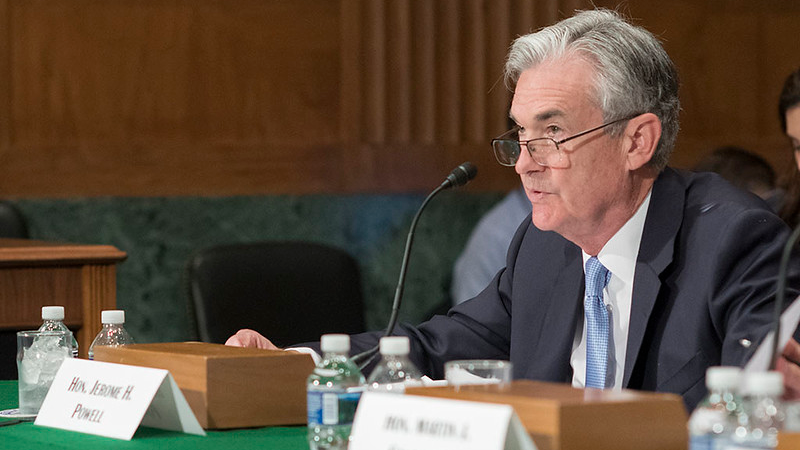
The Federal Reserve’s Federal Open Market Committee (FOMC) Wednesday left the target policy interest rate (the federal funds rate) unchanged at 5.5 percent. The target rate has now been flat at 5.5 percent since July of 2023—as the Fed waits and hopes that everything will turn out fine. In his prepared remarks at Wednesday’s FOMC press conference, Powell continued with the soothing message he has generally employed at these press conferences over the past year. The general message has been one of moderate but sustained growth, and an economy marked by “strong” employment trends and moderating inflation.
Powell then combined this view of the economy with a general narrative on Fed policy in which the FOMC will hold steady until the committee believes that inflation is returning to the “long-run target of two-percent inflation.” Once the Fed is “confident” that the target inflation level has been secured, then the Fed will begin cutting the target interest rate, and this will then send the economy back into another expansion phase.
Through it all, Powell and the FOMC insist that there will be no significant bumps in the road and a “soft landing” will be achieved. That is, Powell and the Fed repeatedly tell the public that the Fed will thread the needle of pulling down price inflation while also ensuring that the economy continues to grow at solid rates while employment remains strong.;
But there are two problems with this narrative: The first is that the Fed has never actually managed to pull this off—at least not at any time in the last 45 years. In actual experience, this is what happens: the Fed denies there is a recession approaching well until;after;the recession has begun. Then, the Fed cuts interest rates;after;unemployment has already begun to march upward.;
The second problem with the narrative is that the Fed is;not;motivated simply by concerns over the state of employment and the economy. Yes, the Fed would have us believe that it cares only about an unbiased reading of economic data, and that Fed policy is guided by this alone. When the Fed claims to be “data driven” this is what it means. In reality, the Fed is deeply concerned with something else entirely: keeping interest rates low so that the federal government can continue to borrow enormous amounts of money at low yields. The more the federal government adds to its enormous debt, the more pressure there will be on the central bank to keep rates low and send them lower.;
Yes, it’s true the Fed fears price inflation because price inflation causes political instability. When this fear wins out, the fed lets interest rates rise. But, the Federal Treasury also expects the Fed to keep interest rates low for the elites in the federal government who never tire of deficit spending. When the “need” for deficit spending wins out, the Fed forces interest rates down. These two goals are directly opposed to each other. Unfortunately, if the Fed has to choose between the two, it is likely to choose the path of lower interest rates and rising price inflation.;
How “Soft Landings” Really Happen
Let’s first look at the “soft landing” myth. Talk about “soft landings” have been common in the mas media since at least the recession of 2001. As late as July of 2001, for example,;Bloomberg;authors;were speculating;about;how soft;the soft landing would be. It eventually turned out there was no soft landing and the Dot-Com bust soon followed.;
“Soft landing” talk was even more prominent in the lead-up to the Great Recession. As late as mid-2008, months after the recession had already begun, fed Fed Chairman Ben Bernanke was predicting a soft landing and that there would be no recession at all. In that recession, the unemployment rate reached 9.9 percent.;
We see this all at work again right now. A look at the Fed’s;Summary of Economic Projections;(SEP) shows that Fed officials are committed to claiming there will be no recession and economic growth will continue on a slow, steady, and positive trajectory. Yes, the SEP suggests the Fed will soon begin to lower interest rates, but in this fantasy version of the economy, that will be followed by continued economic growth and stable employment.;
That’s not what happens in real life, though. Note, for example, that over the past 30-plus years, that Fed rate cuts did not cap off a “soft landing,” but actually preceded the most vigorous period of job losses. As can be seen in the graph, cuts to the federal funds rate come several months;before;sizable increases in the unemployment rate. Sharp rate cuts began in 1990, for example, and the 1991 recession soon followed. Similarly, the Fed began to cut rates in late 2000, and then the unemployment rate soon accelerated upward. This again happened in 2007 when unemployment began to mount shortly after Fed rate cuts.;
I’m not saying that the cuts to the federal funds rate;caused;rising unemployment, of course. I’m saying that the Fed knew there was no soft landing in the works, and knew that recessions were on the way. That’s why the Fed hit the panic button when it did, and cut rates in hopes of shortening the coming recession.;
This reality makes it clear that there is absolutely no reason to believe Fed claims that it has everything under control, and that rate cuts will come only after the Fed has tightened;just enough;to rein in inflation without popping the many bubbles that fueled employment and consumer spending in the lead up to the recession.
In summary, this is how it has really worked: fearful that inflation is getting out of control, the Fed will raise the target interest rate and generally “tighten” monetary policy. Through it all, the Fed will insist there is no recession on the horizon and that a “soft landing” is in the works. Eventually, however, it becomes clear that the economy is substantially weakening and the Fed has been either lying about the economy or has been simply wrong. At that point the Fed then then does what it always does (in recent decades) when it fears a recession: it loosens monetary policy in hopes of blowing up a whole new series of bubbles to create a new boom period.;
This is far cry from the sedate, measured, and perfectly controlled story of monetary policy that the Fed would have us believe.
The Fed Exists to Keep the Federal Government Funded with Easy Money ;
The second problem with Powell’s narrative is that the Fed is not motivated simply be concerns over the state of employment and the economy. While it would be nice to think the Fed is primarily concerned with the “everyman” and his job prospects, the reality is that the Fed is very much concerned with keeping borrowing costs low so that Mitch McConnell, Nancy Pelosi, et al, can keep buying votes and fueling the warfare-welfare state with enormous amounts of deficit spending.;
Keeping borrowing costs low—by forcing down interest rates—is now more important than it has been in many decades. Over the past four years, the total federal debt has skyrocketed by 11 trillion dollars from $23 trillion to $34 trillion. In an environment of near-zero interest rates, this might be manageable. However, when this kind of debt is combined with rising interest rates, interest payments are rapidly rising and consuming ever larger portions of the federal budget. If the regime is not careful it could face a sovereign debt crisis.;
When the Fed is able to force interest rates down without fear of runaway inflation, rising debt is not much of an urgent problem. As we can see in the graph, a rapidly rising federal debt did not lead to sizable growth in interest costs in the wake of the Great Depression. That, however, was during a period of very low interest rates. Since 2022, however, Interest costs on the debt have rocketed upward as the Fed has been forced to allow interest rates to rise.
In fact, interest costs have more than doubled since 2021. Yet, we’re not even seeing the full impact of mounting debt combined with rising interest rates. Interest costs over the past few years have been kept somewhat under control by the fact that federal debt does not mature all at once. In 2024, however,;nearly 9 trillion dollars worth of federal debt will mature.;That will need to be replaced with;new;debt which will need to be paid off at higher interest rates (i.e., at higher yields) than the maturing debt. Combined with the $2 trillion or so in new debt that will be added in 2024, the Federal government will need;somebody;to buy more than 10 trillion dollars worth of federal debt. That a whole lot of debt and the Fed will be expected to help the federal government somehow keep interest rates from rising further. This will require the Fed to enter the marketplace and buy up large amounts of debt in order to push down yields.;
In other words, political realities will mean the Fed will have to embrace new rate cuts whether price inflation is at the two-percent goal or not. The Fed will;say;that price inflation has hit the “target” regardless of whether or not that is the reality. Since the Fed now defines its two-percent target in terms of averages and long-term trends, the Fed need only say that it has determined that the “trend” points toward falling price inflation.;
Then,;voilà,;the Fed can get to doing what;really;matters to the federal government: laundering federal deficits by forcing down interest rates.;
Yesterday, Jay Powell performed the usual song-and-dance that is the foundation of the central bank’s political legitimacy: claim it is skillfully managing the economy while claiming to be deeply concerned about the daily struggles of ordinary people who face the ravages of price inflation. The reality behind this routine is something very different.
- About the author: Ryan McMaken (@ryanmcmaken) is executive editor at the Mises Institute, a former economist for the State of Colorado, and the author of two books: Breaking Away: The Case of Secession, Radical Decentralization, and Smaller Polities and Commie Cowboys: The Bourgeoisie and the Nation-State in the Western Genre. Ryan has a bachelor’s degree in economics and a master’s degree in public policy, finance, and international relations from the University of Colorado. Send him your article submissions for the Mises Wire and Power and Market, but read article guidelines first.
- Source: This article was published by the Mises Institute

By Michael Reid
Few doubted that Claudia Sheinbaum, the hand-picked candidate of President Andrés Manuel López Obrador, would win;Mexico’s presidential election on 2 June. But similarly, few foresaw the scale of her victory. Not only did she win 59.8% of the popular vote but the ruling coalition also won the two-thirds majority of seats in the lower house of Congress required to change the constitution and ended just three short of a similar majority in the Senate.;Sheinbaum will thus have a clear mandate;–she won more votes and a higher percentage than López Obrador (or AMLO, as he is often known) did in 2018–.
Should it wish to, the ruling coalition will not have much difficulty winning over the senators required to approve AMLO’s proposed constitutional amendments, which include the election of Supreme Court justices and the abolition of independent regulatory agencies. For Sheinbaum that is more of a problem than an opportunity. The prospect of constitutional change and untrammelled executive power triggered fears among investors that saw the peso plunge in value by 8% against the US dollar in the week after the election, its sharpest fall since the start of;the pandemic in 2020. The underlying question which Sheinbaum will soon have to answer is whether she wants to lead a social-democratic government or continue along the populist nationalist path followed by AMLO.
Sheinbaum owes her victory almost wholly to AMLO, the most powerful president since Carlos Salinas de Gortari (1988-94). Salinas opened Mexico, a previously introverted country, to globalisation, negotiating the North American Free Trade Agreement (NAFTA or TLC). That opening was followed by democratisation: the victory in 2000 of Vicente Fox for the conservative National Action Party (PAN) ended seven decades of authoritarian rule by the Institutional Revolutionary Party (PRI). Parts of the Mexican economy have prospered and become deeply integrated with the US. But many Mexicans feel that they have not seen much benefit from globalisation or from liberal democracy. They form AMLO’s constituency. Like him or hate him, he is an extraordinarily effective politician, having travelled Mexico town by town several times. He has forged a deep bond with many ordinary Mexicans. As president he has almost doubled the minimum wage and expanded cash benefits for poorer Mexicans. Poverty fell by 7% according to official statistics.
On paper, the opposition had an effective candidate in Xochitl Gálvez, a self-made entrepreneur and independent politician of partly indigenous descent. But she was burdened by the discredit of the parties in her coalition (principally the PAN and the PRI). Ultimately, she disappointed, winning only 27%.;Movimiento Ciudadano, a newish centre-left party, won 10.3% and would appear to have a future. Sheinbaum made no big mistakes and grew in confidence on the campaign trail. Her victory is historic, the first woman to be elected president in a country that is almost synonymous with machismo.
AMLO has insisted that he will retire, saying of Sheinbaum ‘will try not to bother her’ (‘voy a procurar no molestarla’). She will hope he sticks to his promise. Mexico cannot be governed by a puppet. Sheinbaum has been publicly loyal to AMLO. But her political origins are different to his. He cut his political teeth in the PRI as a supporter of Luis Echeverría, a leftist-populist president (1968-76). He is above all a nationalist who believes in state control of energy. She comes from the hard left associated with the National University (Universidad Nacional Autónoma de México) She combined political activism with an academic career as a scientist. She is a feminist and a proponent of green energy. While he is a communicator who sets the political agenda with his rambling morning press conferences (‘las mañaneras’), as governor of Mexico City for the past six years she portrayed herself as a technocrat and policy wonk. She says she wants to expand social provision, improve health care while encouraging private business and investment –a seemingly social-democratic agenda–.
Her first and perhaps biggest challenge will be managing her relationship with AMLO, and with Morena, the faction-ridden party that he created. Others include the economy, fiscal and energy policy; crime and insecurity; and relations with the US. Take the economy: partly thanks to the pandemic, income per person has barely grown under AMLO. With lower costs and almost seamless access to the US market, Mexico is uniquely well-placed to take advantage of ‘nearshoring’. Yet not much of this has happened. Nearly all the foreign direct investment Mexico has received recently has come from companies already established there, not new arrivals. Investors complain that Mexico cannot provide the cheap energy, reliable water supply and security that they need. That is partly because AMLO pursued a nationalist and statist energy policy, pouring public money into Pemex, the grossly inefficient state oil and gas company, and largely reversing a reform that allowed private investment in energy.
AMLO’s macroeconomic policy was generally orthodox, involving fiscal austerity (he cares about the stability of the peso). But public spending ballooned ahead of the election. The fiscal deficit is forecast to reach 5.9% of GDP this year, the highest figure since the 1980s. Sheinbaum has ruled out immediate tax increases. But to fulfil her promises, she will need to raise taxes and/or slash transfers to Pemex.
The second big challenge is;organised crime. The murder rate has climbed to 23 per 100,000 and large swathes of rural and small-town Mexico are under the de facto control of crime gangs. In Mexico City Sheinbaum cut murders by strengthening the police, giving them investigative powers, installing tens of thousands of security cameras and investing in educational facilities and community centres for young people. It will not be easy to scale up these policies nationally, as she proposes.
Mexico’s next government may have Donald Trump as a neighbour. He is likely to press even harder than Joe Biden for Mexico to control migration and the export of drugs, especially fentanyl. Sheinbaum says she wants ‘a very good relationship’ with the US. She faces a possibly difficult renegotiation of the USMCA (US, Mexico and Canada Trade Agreement), Trump’s replacement for NAFTA, in 2026 in which the US may press to stop Chinese companies using Mexico as a base to export northwards.
But the biggest headache of Sheinbaum’s presidency may come even before it starts. The new Congress is installed on 1 September, a month before the presidential handover. AMLO wants to use this period to ram through his constitutional proposals, which include big pension increases, the formal transfer of the national guard to the armed forces, as well as the abolition of legally independent regulators of telecoms, energy, competition policy and freedom of information. His plan for the election of supreme-court justices –only Bolivia does this– seems aimed at guaranteeing political control of the judiciary. Taken together with his plan for the direct election of the electoral authority, in the view of critics these changes would abolish the checks on absolute executive power which are at the heart of liberal democracy.
These proposals risk embroiling Sheinbaum’s presidency right from the outset in economic turbulence and political confrontation. She has called for a wide public debate on judicial reform, which could offer a way to water it down. In victory, she was conciliatory, promising to listen to opponents. Many friends of Mexico will hope she does.
- About the author: Michael Reid is a writer, journalist (former correspondent for The Economist) and Adjunct Professor at the London School of Economics and Political Science (LSE). He is also a member of the Advisory Council of the Elcano Royal Institute. His books include Forgotten Continent: A History of the new Latin America (Yale).
- Source: This article was published by Elcano Royal Institute
recent exchange of messages between Putin and Trump, Orban – Google Search https://t.co/NVCmFB2cEL
— Michael Novakhov (@mikenov) June 13, 2024
recent exchange of messages between Putin and Trump, Orban – Google Search https://t.co/NVCmFB2cEL
— Michael Novakhov (@mikenov) June 13, 2024