
UPDATE – #Iran media now talking about the joint drills with #Azerbaijan, but no additional info provided, they’re citing official sources in Baku.
Some sources:
1.https://t.co/WkGsRvDkYD
2.https://t.co/YteYvYoUIK
3.https://t.co/gni9BfVoD6 https://t.co/Fx8BpNipgz pic.twitter.com/vWwsx2Gg9l— Nagorno Karabakh Observer (@NKobserver) June 12, 2024
Day: June 13, 2024
#Azerbaijan reports #Russia‘s peacekeeping forces have now completely withdrawn from #NagornoKarabakh, ending their presence in the area.
All temporary housing, including the Russian Orthodox church have been dismantled and removed.
Source: https://t.co/AucHyklRZt pic.twitter.com/W2WdAi6uLk
— Nagorno Karabakh Observer (@NKobserver) June 12, 2024
A society that ignores so blatantly the price paid by tens of thousands of people for the rescue of four of its hostages and a moment of joy for its members, is a society that is missing something vital | Opinion | Gideon Levyhttps://t.co/wLRl2YCQN2
— Haaretz.com (@haaretzcom) June 13, 2024
The FY25 Budget proposals are the initial steps to broaden the tax base in Pakistan (tax to GDP is still paltry 9%). It raises taxes on some key agriculture inputs (DAP fertilizer and tractors), strives to encourage tax filing, and does attempt to tax retailers and real estate, albeit with question marks over sustainability.;
The Budget removes a concessionary tax regime for the exporters (barring the services export industry e.g. IT) and introduces hefty punitive measures for non-tax filers, including a restriction on foreign travel.
The key positive from the market’s standpoint is that the feared sharp increase in CGT on securities did not come through. The Budget has made CGT uniform for tax filers at 15%,;but;hikes to as high as 45% for non-filers. The market is likely to react positively to this.
The tax on exporters has been termed a negative. Business/ trade associations have taken sharp exception to this and significant pushback from them is anticipated to persuade the government to reverse this.
The budget proposals target a 40% increase in tax revenue. Achievement of targets depends a lot on how well the government is able to manage the pushback from exporters/ retailers.;
If enforceability is an issue, then the IMF may demand additional tax measures before the Budget is passed in parliament, or there could be a mini budget by mid-year to fill any potential shortfall in tax collection.
An even higher petroleum development levy (PDL) and cuts in the development expenditure, as in the past few years, thus become very likely as well.
If the IMF accepts the budget at face value, it may be enough to secure the IMF program. In part, this may be because of the clear thrust to go after non-tax filers and some effort to bring retailers/ real estate in the tax net.
However, the IMF may wait to see the final approved budget first, and there may yet be changes given the PPP’s show of reluctance ahead of the budget presentation.
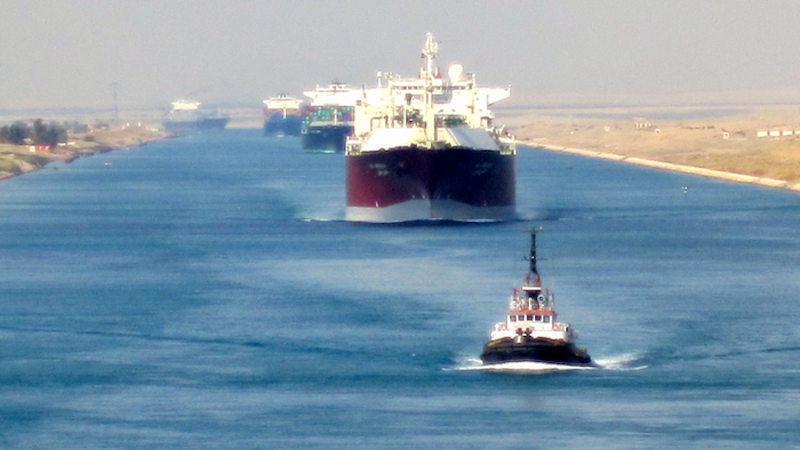
The Horn of Africa States region lies on the western rim of the Red Sea and Indian Ocean. Both seas were always a center of commerce for thousands of years and even handled spiritual and human travel and transfers as well. Currently this expansive theater encompasses countries of South Asia, Eastern Africa, the Arabian Gulf and many islands from Sri Lanka in the East to Madagascar in the West. It accommodates and houses a population of not less than 3 billion people, of which probably half is from India alone.
It is, indeed, huge and diverse and connects resource-rich Africa to energy rich Arabia and South Asia’s dense population with markets, labor and manufacturing facilities. This highlights its geostrategic importance, which always attracted the powers that be in the world. It is currently a theater of competition between the US-led West and the BRICS Plus economic actors with resource-rich Africa remaining the target of the competition.
There was a time when the Muslim world held sway in the region and the ocean, which was followed by Europeans, mostly the British, the French and the Portuguese, and currently many countries including the United States, European, and Asian countries have pushed it back into the spotlight. The competition on trade and commerce and maritime security are key issues which place the Indian Ocean and the Red Sea on the spotlight and in particular with respect to their connection to the Suez Canal.
India and China which prior to the eighteenth century held sway in international trade but which almost vanished from international commerce for some two centuries are rising again and is probably the main cause of the current unease in many quarters with respect to world affairs.;
Chinese naval presence was probably last seen in the region in the Middle Ages (between 1403 to 1433) when Chinese Naval vessels, under the command of Admiral Zheng He, are reported to have visited the Eastern Coast of Africa only to come back recently to set up base in the Horn of Africa States region, Djibouti, in particular, with presence in Ethiopia and Eritrea as well.
And because of the Chinese presence in the Indian Ocean and the Red Sea theaters, India is waking up to a new call to build its maritime power. They see the Indian Ocean and the Red sea as its backyard and a great highway through which flows its commerce as well as military.
The Red Sea and the Indian Ocean connect resource-rich Africa to the Middle East, Southeast Asia, Europe, and eventually the Americas through the Suez Canal. It is a vital link whose disruption would put the economies and security of many countries at risk including those of China, Japan, South Korea, three large manufacturing countries who depend on the Middle East for their energy, Africa for mineral resources, and Europe and the Americas as markets for their products.
There are two major chokepoints adjacent to the region, namely the Suez Canal and the Bab El Mandab, with the Strait of Hormuz not too far from the region. Any blockage of these chokepoints can cause serious damage to commerce and security of the region, and of course to the major trading parties of the world.
There are other non-commerce activities that also highlight the Indian Ocean and the Red Sea as vitally important and which draws the attention of not only regional parties but also the international community. These involve illegal fishing as the Indian Ocean and the Red Sea are both fish resource rich waters. There are also piracy, human trafficking and drug smuggling that are putting these waters into focus as well.
The Indian Ocean with its offshoot seas, the Red Sea to Europe via the Suez Canal and the Persian/Arabian Gulf is becoming more the Ocean of the center in the place of the Ocean of the South as it was known in the past.;
The key issues of the Indian Ocean and the Red Sea are manyfold but can be looked at for the Horn of Africa States region as involving:
- The region is one of the poorest in the world, which allows others to interfere in its affairs, including terror groups, mercenaries and of course other countries. They all take advantage of the long coast of the region including its major ports and those that are to be built. This also plays a factor in the calculations of many aspiring players in the region.
- The strategic location of the region puts it in the map, where military rivalries involving countries like the United States, Russia, China and even regional countries like the UAE and Türkiye are confronting each other.
- The traditional European presence in the region is not going away either as France, the United Kingdom and Italy continue to play vital roles using their in-depth knowledge of the region.
- The terror groups, pirates, human traffickers and drug smugglers take advantage of the weak security infrastructures of the region. The region does not, however, seem to be cooperating and on the contrary, appears to be drifting apart as old rivalries seem to being used by interfering foreigners to seed suspicions and political instability in the region.
The Indian Ocean Rim and the Red Sea both represent a complex geostrategic maze for the Horn of Africa States region. On the one side, it is important for world trade and could offer the region the space to connect with the rest of the world. On the other, it brings all the unnecessary attentions of those it should not have attracted in the first place in the form of mercenaries, traffickers of humans, drugs, weapons, and religious terror groups.
It is why and where the region needs to sit back and take stock of its situation, its geo-strategic location and it economic challenges, which it could have handled together as a region instead of the individual countries. The opportunities available but which the region is wasting are enormous and could have enabled the population of the region to live comfortably instead of running away from it as is currently the case.
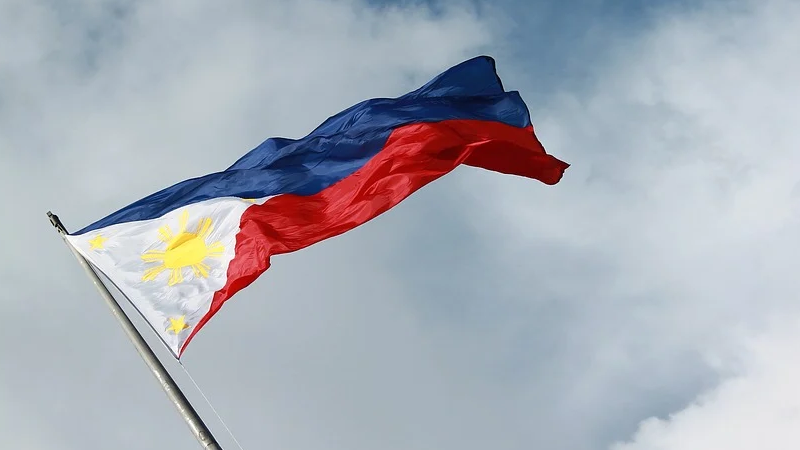
The Embassy of the Philippines in Jakarta has organized a big reception on June 12 at the St. Regis Hotel in Jakarta to celebrate the 126th anniversary of the Philippines proclamation of independence.
Filipinos living in Indonesia, senior officials from various Indonesian ministries, diplomatic corps, representatives of ASEAN and public figures attended the joyful reception.
This year is also a special year for both Indonesia and the Philippines. Both countries are celebrating this year the 75 years of establishment of diplomatic relations. Both established their diplomatic relations on Nov. 24, 1949.
The governments of Indonesia and the Philippines intensified bilateral ties in economy, politics, and security as well as in strengthening the region during the 75th year anniversary commemoration of diplomatic relations between the two countries.
Philippine President Ferdinand Marcos Jr. sent a video message in Tagalog language to the reception congratulating all Filipinos on 126th anniversary of the Proclamation of Philippine independence.
“As we continue to fight for independence. Independence in different aspects of our being Filipinos, but more than this independence in our territory, our sovereignty,” the Associated Press reported quoting Marcos Jr. as saying in his message. ;
This year’s main theme of the Independence Day celebrations was “Kelayaan (Freedom), Kinabukasan (Tomorrow), Kesaysayan (History)”.;
In Jakarta celebration, Philippine Secretary for Foreign Affairs Enrique A. Manalo and Indonesian Foreign Minister Retno LP Marsudi sent their special video messages to the audience.
“I wish to greet all Filipinos overseas on the occasion of the 126th anniversary of the proclamation of our country’s independence,” Manalo said in his message.
Retno congratulated all the Filipinos and reminded them about the 75 years of diplomatic relations between the two countries.
In her welcoming address, Philippine Ambassador to Indonesia Gina A. Jamoralin appreciated the growing strong relations with Indonesia.
“Our President Marcos Jr. visited Indonesia in September 2022 just after his inauguration as Philippine President. Last year, he visited Indonesia two times to attend ASEAN Summits. Indonesian President Joko “Jokowi” Widodo visited the Philippines in January 2024. Our bilateral relations are growing very strong,” Ambassador Gina said.
It was Marcos Jr.’s first foreign visit (to Indonesia) as President of the Philippines. It was Jokowi’s first foreign trip (to the Philippines) this year.
Gina also congratulated all Indonesians for successfully holding general elections.
“We congratulate Indonesia for successfully holding the elections this year,” Gina said.
Last year, the bilateral trade between Indonesia and the Philippines reached US$12.55 billion, a slightly lower than bilateral trade of $14.39 billion in 2022.
The Philippines is a major export destination for Indonesia. Indonesia mainly exports coal, palm oil, rubber, paper, tea, coffee and other consumer goods to the Philippines.
There are so many similarities in culture and languages between Indonesia and the Philippines.
The chief guest at the Philippine National Day was Indonesian Environment and Forestry Minister Siti Nurbaya Bakar. She congratulated the Filipinos on their National Day.
“Indonesia wants to see a stable, peaceful and prosperous Philippines,” Nurbaya said in her speech.
There was a spectacular music show by Filipino musicians. There were also so many attractive prizes in the lucky draw. The event was ended with a delicious Philippine dinner.
Both Indonesia and the Philippines are not only archipelagic countries but also maritime neighbours. The Philippines always considers Indonesia as a strategic partner.
Indonesia and the Philippines can promote regional maritime cooperation in the wider Indo-Pacific region and help establish maritime rules-based norms and the interoperability of various navies in cross-border and multilateral maritime operations. They can address backdoor corridor issues in maritime Southeast Asia, and help strengthen the maritime interagency structure covering Mindanao in the southern Philippines and North Sulawesi in Indonesia, a corridor that has long been plagued by a range of non-traditional security threats. Insecurities in the Sulu-Sulawesi seas prescribe tight borders and more holistic approaches to addressing minilateral mechanisms pertaining to security, peace and development, and mutual defense agreements.
So far both countries have signed more than 20 bilateral defense and security agreements.
During his visit to the Philippines earlier this year, President Jokowi said that the 75th anniversary of diplomatic relations between Indonesia and the Philippines is a momentum to strengthen concrete cooperation between the two countries in various fields.
“In political and security fields, we agree to strengthen border cooperation and I have emphasized the importance of accelerating the revision of the border patrol agreement, border crossing agreement, settlement of the continental shelf boundary, and strengthening defense cooperation, including the reinforcement of primary weapons system,” said President Jokowi in a joint press statement with President Ferdinand Marcos Jr. at Malacañang Palace, Manila.
In economic sector, both countries agreed to continue opening market access as an effort to increase trade between them. In particular, Jokowi also sought support from the Philippines regarding security measures for Indonesia’s coffee products.
“We agree to continue opening market access and Indonesia seeks support from the Philippines regarding special safeguard measures for Indonesia’s coffee products,” Jokowi said.
Regarding regional cooperation, Indonesia and the Philippines agreed to strengthen ASEAN unity and centrality. The President emphasized that ASEAN must continue to adhere to the principles of international law.
“We agree on the importance of strengthening ASEAN unity and centrality which is not just jargon, and ASEAN must continue to adhere to the principles of international law and maintain positive force for peace, stability and prosperity,” Jokowi said.
On this occasion, the President also expressed his appreciation for the Philippines’ trust in Indonesian state-owned enterprises to build important infrastructure in the country. President Jokowi encouraged immediate completion of the Philippines’ North-South Commuter Railway Project that also involve Indonesian state-owned enterprises.
“It is important to accelerate the groundbreaking of the North-South Commuter Railway Project,” stressed the President.;
The Philippines can offer many things to Indonesia. It is the second most populous country of 119.02 million people in ASEAN after Indonesia. It has the potential to become Indonesia’s biggest trading partner in ASEAN.
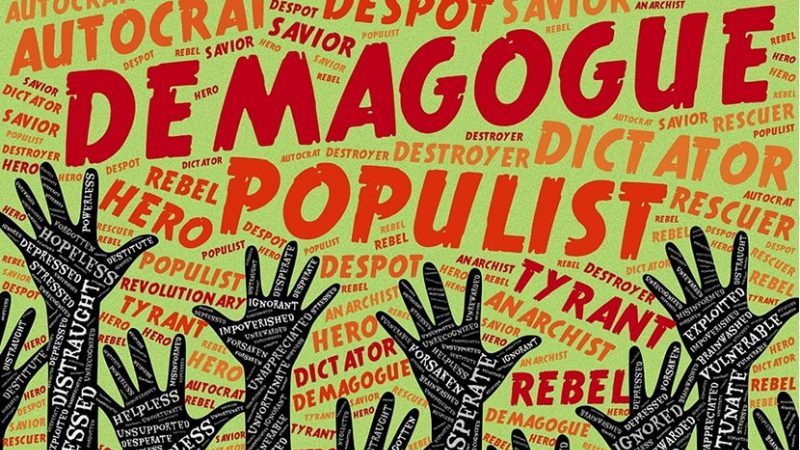
It is worrying to see the far-right power gaining in Europe and winning support for its policies which are often nationalistic and populist. Several European countries are governed by far-right parties or alliances. And one thing is clear: these groups now hold positions where they can directly shape policy. The European Union meanwhile, has been weakened by the skepticism that far-right groups have sown. That can’t be good for the immediate and long-term prospects of the continent. At the same time, far-right rhetoric pays for itself in terms of electoral gains, and as long as that’s the case this is going to be an unsuccessful strategy for ending the divisions that have already been baked into European societies for one reason or another.;
To appeal voters to on the far right of the political spectrum, mainstream parties are adopting nationalist platforms. But these positions which threaten the social cohesion that forms the very basis of European democracy, are far from new. And they cannot be limited to Europe: across the globe, politicians on both center-right and center-left have leaned into same the kind of identity politics that can foster division. While the surge in right-wing politics elicits natural concerns about a return to the era of far-right movements and the disastrous destructive practices associated with them, it is far from clear whether they will have these effects over the long term.;
Restrictive immigration policies in the European Union and certain of its member states look set to lead to a decline in global mobility and hence a more fragmented international community. And with many in the European far right reviving the old nationalist language of the pre-period 1945 political leaders in that region are emphasizing the reduction of the growth of the European presence abroad. This is happening at a time when a series of uprisings and civil wars in the Middle East and North Africa has sent millions of people heading across the Mediterranean journeys on that often end in disaster. Meanwhile, well over a million people have traveled overland through the Balkans, heading for Berlin Vienna, and Stockholm.
In addition, the appearance of far-movement Europe is bound to change the political scene in a significant way. This will not only happen within countries individually but it is also going to provoke conflicts between European states on issues related to fundamental rights like the independence of the judiciary freedom of the press, or the protection of people who seek refuge. The Brexit debate in the UK is one example of this. It showed that far-right forces can provoke the kind of geopolitical changes we have witnessed since 2016. What far-right forces can certainly provoke is these forces within the international order that emerged from the ashes of World War II an order rooted in multilateralism, and which too far often in recent years has been denounced as a kind of “globalism” by forces on the nationalist right.;
The strong support the far right gives to protectionist economic policies is an urgent matter. These policies would impact not only our country but also the entire world. The far right both in the United States and elsewhere, threatens to reduce not just our benefits from international trade but also the benefits our global partners enjoy. The promises of President Trump and his supporters to build walls and restrict immigration are already inspiring like-minded forces elsewhere. The far right’s international agenda has consequences for labor markets, demographic trends, and, of course, the global economy, the impact of which could be disastrous and quite long-lasting.;
Moreover, if recent history and current political trends are any indication, the drift towards the right in many parts of the world could further upset ecosystems for the environmental movement. Far-right parties are complicit in hampering international cooperation on issues as important as food safety and as basic as human rights. These parties driven as they are by reappearing nationalistic fervor, prioritize the interests of their supposed above nation most other things. And this, in essence, is what decreasing collaboration on shared threats looks like. The United States, of course, has supplied us with most of the salient examples of what can happen when a nation acts in this way.;
Parties on the far right, criticized by conservatives in the EU for being too middle-of-the-road have gained steam by taking a more forceful stance against the bloc. This emergence of far-right politics in Europe has created widespread political disagreement, even pushing some countries like Hungary Poland, and Austria toward authoritarianism. These developments call into question the promises of European unity put and serious democratic on strain the core political processes of the EU. Seen as a global trend it also creates new kinds difficulties of for international order and issues of international trade. If it is happening in the wealthy stable EU, what might it mean for global interaction?
To conclude, the rise of the far-right in Europe threatens not just the continent itself but the entire global order. Their nationalist risk agendas fracturing international cooperation on issues like climate change trade and human rights. The EU once a symbol of unity, is particularly vulnerable. Far-right dominance could push member states towards authoritarianism and undermine the bloc’s core democratic values. This trend, if not addressed has the potential to destabilize global interaction for years to come.
The opinions expressed in this article are the author’s own.
References
- Mudde, Cas Mudde. “The Populist Zeitgeist.” Government and Opposition 44.4 (2009): 547-573. (https://www.cambridge.org/core/journals/government-and-opposition/article/populist-zeitgeist/2CD34F8B25C4FFF4F322316833DB94B7)
- Betz, Hans-Georg. The Radical Right in Europe: An Ideology of the Extreme Right. Palgrave Macmillan, 2011. (https://link.springer.com/book/10.1007/978-1-349-23547-6)
- Langer, Matthew B. Alliances, Rivals, and Revenge: The Clashes of Democracies and Autocracies in the 21st Century. Oxford University Press, 2020. (https://www.amazon.com/Troubled-Partnership-Re-Appraisal-Atlantic-Alliance/dp/0313232199)
- Hale, Thomas. Gridlock: How Ideology and Institutions Are Blocking Policy Change in America. Brookings Institution Press, 2012. https://www.healthaffairs.org/doi/10.1377/hlthaff.14.1.102)
Categories