
Categories
South Caucasus News

The Kuwait Tragedy Exposes Migrant Worker Exploitation In GCC – OpEd


The Kuwait Tragedy Exposes Migrant Worker Exploitation In GCC – OpEd

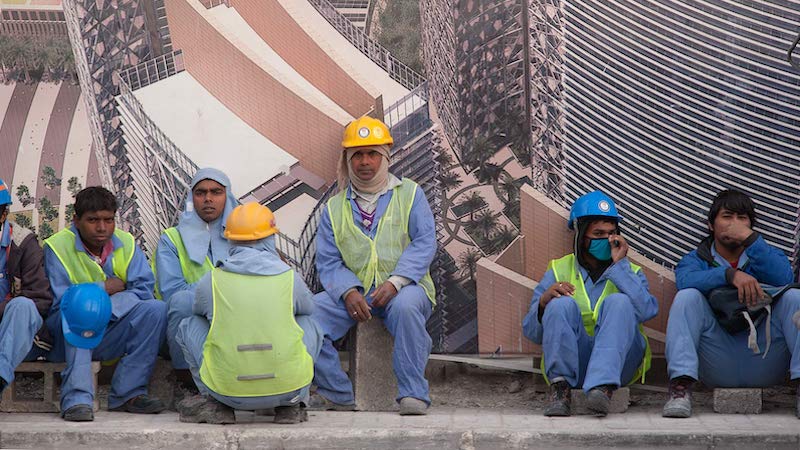
Migrant workers from South Asia in Doha, Qatar. Photo Credit: Alex Sergeev, Wikipedia Commons

Kuwait experienced one of the most tragic labour camp disasters on June 12. A massive fire in Mangaf claimed the lives of 49 workers, mostly Indians, and left many others injured, marking it the deadliest building fire in Kuwait’s history. This catastrophe has sparked calls for accountability from real estate owners and employers who endanger lives by overcrowding foreign labourers in unsafe living conditions to cut costs.;

The blaze broke out in early morning of Wednesday, while most of the 196 male occupants of the seven-storey building were asleep. Thick black smoke caused by the fire led to the suffocation of many victims, as confirmed by officials from the interior ministry and fire department. The foreign ministry described the fire as ‘tragic,’ noting it claimed the lives of 49 Indian nationals residing in Kuwait. The confirmation has already come regarding the death of 23 Keralites and a few from Tamil Nadu, both South Indian states. The number of casualties may increase, according to sources.; ;

The apartment building housed labourers from India, Pakistan, Nepal, and other countries. The building, which reportedly violated several safety regulations, was leased to KG Abraham, a Kuwait-based Malayali businessman. KG Abraham is the partner and managing director of the NBTC Group, one of the largest construction companies in the Gulf region, which owns the Kuwait building.;

Kuwaiti Deputy Premier and Defense and Interior Minister Sheikh Fahad Al-Yousef Al-Sabah promptly visited the site and the hospitals treating the injured. He ordered the arrest of the building’s Kuwaiti owner and the Egyptian guard, insisting they not be released without his approval. The minister declared the fire a catastrophe and announced that municipal teams would inspect all buildings and enforce regulations without prior warning. The Public Authority of Manpower will also begin addressing the overcrowding of expatriate workers and safety violations from tomorrow. ;

The exact cause of the fire remains unclear, though some local media speculated a gas leak on the building’s ground floor. Investigations by the Kuwait Fire Department revealed that inflammable materials used as partitions contributed to the dense smoke, and many victims suffocated while trying to escape because the stairs were filled with smoke and the rooftop door was locked. The investigation team found around two dozen gas cylinders on the ground floor, further complicating the firemen’s efforts, which resulted in injuries to five firefighters.;

On Thursday, First Deputy Prime Minister, Defense Minister, and Interior Minister Sheikh Fahad Yusuf Al-Sabah led a comprehensive inspection campaign targeting illegal properties across various areas in Kuwait.; In response to the incident, Minister of Public Works and Municipality Affairs Noura Al-Mashaan instructed Kuwait Municipality’s director to suspend top officials related to the incident. Consequently, four officials from Ahmadi Municipality were suspended, and an investigation into violations in the affected building and others in the area was ordered.;

This fire is reported to be the worst in Kuwait’s history and the second deadliest disaster in the country. The public has taken to social media, demanding stringent measures against violators and those involved in human trafficking. A former minister urged the incident to trigger a thorough review of corruption related to trafficking in unskilled workers and housing violations. A former lawmaker blamed the legalization of illicit human trafficking and government negligence for the tragedy, calling for strict enforcement of the law and practical solutions to prevent future disasters. A legal expert criticized the negligence of authorities and the greed of businessmen, questioning who will protect expatriates from exploitation. Another scholar highlighted the incident as a reflection of landlords’ greed and the government’s failure to enforce regulations. ;

The majority of Kuwait’s population, which exceeds four million, consists of foreigners. Many of these individuals come from South and Southeast Asia, working primarily in the construction and service industries. According to the latest statistics from the Public Authority for Civil Information (PACI) of Kuwait, as of December 2023, the population of Kuwait reached 4.859 million, comprising 1.546 million citizens and 3.3 million expatriates.; Indians make up 21% (1 million) of Kuwait’s total population and 30% (approximately 900,000) of its workforce. Keralites constitute more than 50% of the Indian expats. Indian workers dominate both the private and domestic sectors. Among Indian professionals in Kuwait, the medical sector stands out. Indian doctors and paramedics are highly regarded for their expertise, helpfulness, and empathetic attitude. The medical community includes around 1,000 Indian doctors, 500 Indian dentists, and approximately 24,000 Indian nurses.;

Migrant Worker Abuses

Human rights organizations and media have long highlighted the dire living and working conditions of low-wage migrant workers in the GCC’s construction sector. For example, a; few years ago, Human Rights Watch issued guidelines to protect these workers, urging international and domestic companies in Gulf Cooperation Council countries to adopt standards that respect migrant workers’ rights and prevent abuses like trafficking and forced labour. Sarah Leah Whitson, Middle East director, emphasized the need for construction firms to safeguard their workforce amid rampant exploitation in GCC countries. The “Guide to Doing Ethical Business in the GCC” details specific standards for companies operating in Bahrain, Kuwait, Oman, Qatar, Saudi Arabia, and the UAE to ensure workers’ rights and reduce the risk of labour abuses. Based on over a decade of research, the guidelines address issues such as recruitment fees, timely wage payments, passport confiscation, accommodation, and health and safety, and recommend independent third-party monitoring for effective implementation.

Despite recent legal reforms in the UAE and Saudi Arabia, migrant workers in GCC countries still face hazardous working conditions, long hours, unpaid wages, and cramped, unsanitary housing. Except for Bahrain, GCC governments prohibit migrant workers from forming unions. Workers often incur significant debts to pay recruiters, despite laws requiring employers to cover these fees, which are poorly enforced. The exploitative kafala system restricts workers from changing employers without consent, and passport confiscation is common. Legal remedies are limited, and employers rarely face prosecution for labour law violations. Authorities frequently detain and deport striking workers. Businesses must adhere to international human rights standards and can act without waiting for new laws. Human Rights Watch urges companies in the GCC to commit publicly to upholding migrant workers’ rights and verify their compliance, focusing on employment practices, health and safety, living conditions, and labour disputes.; Last year, Human Rights Watch highlighted the indispensable role of migrant workers in combating extreme heat in GCC countries, yet these workers face severe exploitation and unsafe conditions.;

Despite recent positive legal reforms, the majority of the construction labour force in the Gulf Cooperation Council states remains vulnerable due to hazardous working conditions, unpaid wages, and unsanitary housing. Many migrant workers incur significant debts to secure jobs and are subjected to the exploitative kafala system, which ties their visas to employers and restricts their ability to change jobs. Employers often confiscate workers’ passports and fail to provide adequate safety protections, while authorities rarely prosecute labour law violations. Human Rights Watch urged businesses in the GCC to commit to upholding migrant workers’ rights and implement international standards to protect them from abuse, especially as climate change exacerbates the risks of extreme heat in the region.

In sum, the devastating fire in Mangaf serves as a stark reminder of the dangerous conditions many migrant workers undergo in Kuwait and across the Gulf region. This tragedy has pointed to the urgent need for systemic change, including rigorous enforcement of safety standards and better living conditions for expatriates. The Kuwaiti government’s swift response, including arrests and inspections, is a step in the right direction, but long-term solutions require a commitment to addressing the root causes of such disasters, including corruption, overcrowding, and negligence. Human rights organizations have long highlighted the vulnerabilities of low-wage migrant workers in the GCC’s construction sector, calling for adherence to international standards that protect these workers’ rights. This incident should galvanize a collective effort among governments, businesses, and civil society to prioritize the well-being of migrant workers and to ensure that their contributions to the region are met with dignity and respect. As Kuwait and the migrant-sending countries mourn this tragic loss, all GCC countries must also seize the opportunity to enact meaningful reforms that prevent future tragedies and uphold the safety and dignity of all workers.;
Categories
South Caucasus News

G7 Summit 2024: Italy’s Agenda And Global Challenges – Analysis


G7 Summit 2024: Italy’s Agenda And Global Challenges – Analysis

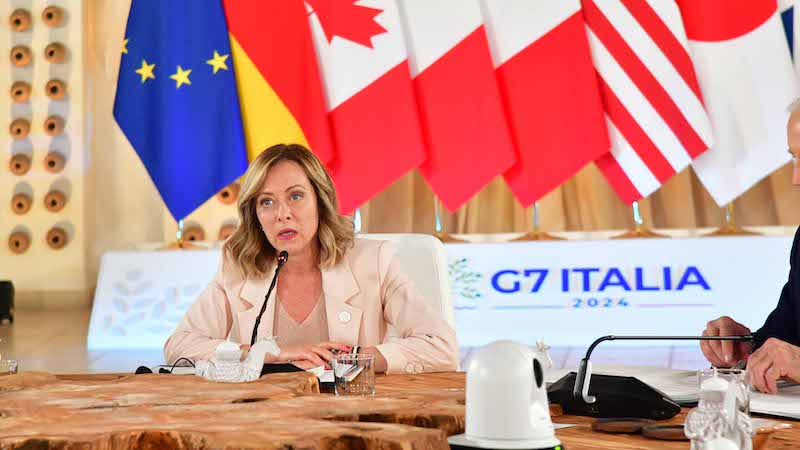
Italy's Prime Minister Giorgia Meloni at G7 Italy summit. Photo Credit: G7 Italia

In 2024, Italy will hold the Group of Seven (G7) presidency. This is happening at a delicate moment, as conflicts continue in Ukraine and Gaza and with elections coming up for President Biden, President Macron and British Prime Minister Rishi Sunak.

The G7 is a group of the world’s seven largest ‘advanced’ economies—countries that play a dominant role in world trade financce. The members are Canada, France, Germany, Italy, Japan the UK and the US.

In 1998, Russia joined the grouping, which effectively it the G8. But the country was excluded in 2014 because of its action of taking over Crimea. China has never been a member, even though it has a large economy and the world’s second-largest population. Its lower wealth per person means it is not considered an advanced economy like the G7 countries.

China and Russia are both part of the G20, which includes both developed and developing countries. The EU is not a G7 member, but attends the annual summit. In the course of the year, G7 ministers and officials meet to agree on, and release, joint statements on world issues.

Italy’s Agenda for 2024 Summit

The 2024 G7 summit, the 50th, is scheduled to take place in Apulia, Italy, from June 13 to June15. Apulia, also known as the Puglia region, is located in the southern part of Italy. The meeting will take place at Borgo Egnazia, a luxury hotel in the southern Puglia region. This hotel features a restaurant with a Michelin star—a star awarded by the Michelin Guide, a prestigious rating system for exceptional dining experiences.

This will be the first big international event hosted by Italy’s Prime Minister, Giorgia Meloni, since she took office in October 2022.

6 Working Sessions on Key Topics

  • Africa, climate change and development
  • The current Middle East situation
  • Russia’s aggressive actions in Ukraine
  • Migration issues
  • Economic security in the Indo-Pacific region
  • Artificial intelligence, energy and the Mediterranean region

Special Guests at the Italy Summit

It is a custom for the host country to invite guests to join some sessions. This year, the summit is likely to see Pope Francis, the King of Jordan and leaders from India, Ukraine, Brazil, Argentina, Turkey, Kenya, Algeria, Tunisia, the UAE, and Mauritania, which holds the African Union presidency.

The UN Secretary-General will also attend, along with leaders of the World Bank, IMF, African Development Bank and Organization for Economic Co-operation and Development.

World Leaders Attending the Summit

Prime Minister Modi will travel to Italy for the G7 summit, marking his first international trip after being elected for a third consecutive term. PTI quoted sources as saying that PM Modi would depart for Italy on June 13 and attend the summit session on June 14. He will be accompanied by a high-level delegation, including External Affairs Minister S Jaishankar, Foreign Secretary Vinay Kwatra and NSA Ajit Doval.

Prior to the visit, Kwatra, while addressing the media, reiterated India’s unwavering position that diplomacy and dialogue were crucial for resolving the Ukrainian crisis. He reminded the media of Modi’s statement in September 2022, where the prime minister had famously said, “Today’s era is not of war.” The fallout of the war—including supply disruptions of food, fuel and fertilizer, would pose difficulties for global supply chains and the world’s overall economic instability.

Since 2003, India has taken part in ten Outreach Sessions of the grouping. These sessions have been hosted in different countries like France, the UK, Russia, Germany, Japan, and Italy. The most recent ones were in Germany (2022) and Japan (2023). Each time, the Indian Prime Minister has attended, showing how seriously India takes these summits.

India’s attendance holds significance in several ways:

  • India, the world’s fifth-largest economy, has a GDP higher than that of France, Italy and Canada—all G7 members
  • After a successful term leading the G20, India has become a strong voice for the Global South
  • At past G7 Summits, India has regularly brought attention to important issues affecting the Global South

Apart from PM Modi, other world leaders who are expected to attend the summit are US President Joe Biden, French President Emmanuel Macron, Canadian Prime Minister Justin Trudeau and Japanese Prime Minister Fumio Kishida.

The Two Wars in Ukraine and Gaza

Ukrainian President Volodymyr Zelensky is set to take part in a discussion on June 12 about Russia’s ongoing war against Ukraine, which has now lasted three years. During this event, he will once again urge Western allies to provide more support.

The G7 nations have already placed the largest set of sanctions ever on Russia’s economy. They have restricted Russia from international trade and the global financial system. Additionally, they have frozen around $300 billion (approximately £236 billion, or INR 25 lakh crore) of Russian assets, including the foreign currency reserves of Russia’s central banks, held in their countries.

The G7 countries are reportedly planning to transfer the interest earned from frozen Russian assets to Ukraine as a loan, which could total $50 billion (approximately INR 4.15 lakh crore). On June 3, the G7 leaders supported a plan by US President Joe Biden to end the war in Gaza. His proposal includes an immediate ceasefire between Israel and Hamas, the release of all hostages, more aid for Gaza and a peace agreement ensuring the security of Israel and the safety of Gaza’s residents.

Warning Russia, China Amid Tensions

US officials anticipate a strong G7 warning in the coming week to smaller Chinese banks asking them to halt aid to Russia for avoiding Western sanctions. In addition, sources in Washington say the US is set to announce major new sanctions against financial institutions and other entities involved in supplying technology and goods to the Russian military. It is not clear if the rest of the G7 will support this tough stance.

China will also be a major topic of discussion. The leaders are likely to release a statement showing concern about China’s industrial over-production and may consider new measures to compete with heavily subsidized Chinese companies.

Working With Developing Nations

Italy’s government has said its relationships with developing and emerging economies will be a key focus at the forthcoming G7 summit. They want to build partnerships that are mutually beneficial. Italy is inviting leaders from 12 developing countries in Africa, South America and the Indo-Pacific region to attend the summit—including India, China, Japan and Brazil.

Italy has also created a programme, called the;Mattei Plan, which will provide 5.5 billion Euros in grants and loans to several African countries to help develop their economies. The overall message is that Italy is prioritizing cooperation and support for developing nations as part of the G7 summit agenda. The plan aims to make Italy an energy hub by constructing gas and hydrogen pipelines between Africa and Europe.

However, some people think this might be an excuse for Italy to tighten its control on migration from Africa. Italy is requesting financial support from other countries for the project.

Addressing Risks Associated With AI

As the G7 president in 2023, Japan encouraged the group to create a plan for international economic security. The G7 agreed on an anti-coercion pact to prevent such countries as China and Russia from using their economic power to influence others. In December 2023, Italy decided to leave China’s ‘Belt and Road Initiative‘, which aims to expand ports and transport routes around the world to increase trade.

Meloni called joining the initiative ‘a serious mistake’, while the US has criticized it as a form of ‘debt-trap diplomacy’ by China. It is believed that the US wants G7 leaders to focus more on economic security at the forthcoming summit.

At the 2023 summit in Japan, AI safety was a key topic, leading to the;Hiroshima AI Process, which aims to ensure ‘safe, secure and trustworthy AI worldwide’. However, these were only voluntary measures. The G7 summit may consider creating more international regulations for AI safety, building on the AI Act from the EU and the US President’s executive order on AI.

What are the Powers that G7 Has?

The G7 cannot make laws, but its decisions can have worldwide impacts. For instance, in 2002, the G7 was key to creating a global fund to combat malaria and AIDS. Before the 2021 G7 summit in the UK, the group’s finance ministers agreed to increase taxes on multinational companies. The grouping has also granted financial help to developing countries and ensured actions addressing climate change.


Categories
South Caucasus News

Integrated Megapolises, Next Stage Of Chinese Reforms – Analysis


Integrated Megapolises, Next Stage Of Chinese Reforms – Analysis

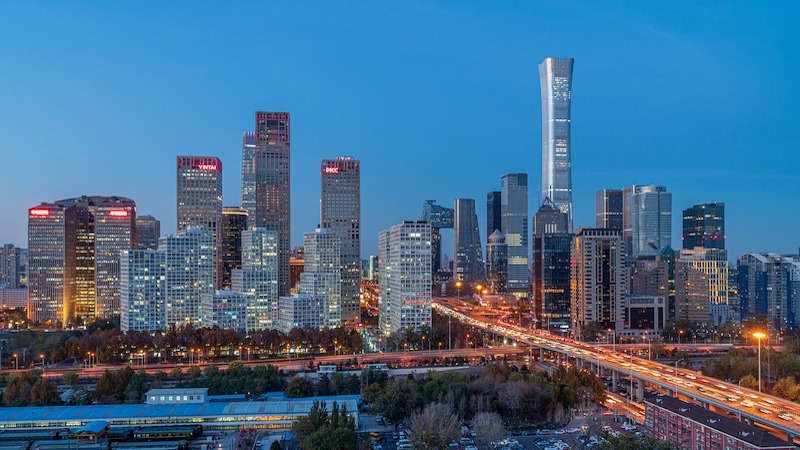
beijing china city

After record rapid urbanization, China is moving to the next stage with integrated and coordinated multi-city clusters. The Yangtze River Delta region is a case in point. 

Last November, Chinese President Xi Jinping chaired a Shanghai symposium on advancing the integrated development of the Yangtze River Delta (YRD). Half a decade before, he had championed the initiative that made the integrated development of the delta region a national strategy.;

In light of development, integrated megapolises represent the next stage of reforms and opening-up. It is vital to Chinese modernization.;

Yangtze River Delta as regional engine

The Yangtze River Delta is China’s longest waterway. Running more than 6,300 km, it encompasses a set of economic powerhouses and megacities, including the provinces of Jiangsu, Zhejiang and Anhui and Shanghai.;

Between 2018 and 2022, the YRD’s gross domestic product (GDP) grew at an average annual rate of about 5.5 percent, accounting for 24 percent of the national total. Its GDP exceeds that of Japan’s economy.;

Recently, Tesla inaugurated its new megapack battery factory in Shanghai, highlighting the US carmaker’s increasing investment in China amid intense competition. Among other industrial ecosystems, the YRD is a major automobile production base in China, and a hub of new energy vehicles (NEVs). With chip and software sourced from Shanghai, batteries from Jiangsu, die-casting machines from Zhejiang, an NEV factory in the YRD can reportedly acquire all auto parts within a 4-hour drive.

From microchips to large aircraft, and cloud computing to artificial intelligence (AI), coordination among these locations fosters industrial transformation and upgrading in the region.;

As one of the most economically vibrant regions in China, the YRD city cluster has attracted major state-owned and private enterprises, and a large number of international Fortune 500 companies for setting up headquarters in China.;

Next stage of reforms

As an increasingly diversified industrial, financial, retail and corporate hub, Shanghai can drive regional clusters, while benefiting from their complementary strengths. But it’s not alone. It is developing in parallel with China’s other major regional engines.;

In 1950, only 13 percent of Chinese people lived in cities. In 1980, at the eve of the economic reforms led by Deng Xiaoping, that figure had climbed to 19 percent. Since then, it has soared to a stunning 66 percent. The initial urban takeoff occurred in the special economic zones of the largely coastal 1st and 2nd tier megacities. Now it is intensifying in smaller 3rd and 4th tier cities.;

Meanwhile, the momentum in development is shifting from urbanization toward integration of major regional city clusters.;

In comparative international view, China has several major “megapolises” today. In addition to the Yangtze River Delta, this set includes the Guangdong-Hong Kong-Macao Greater Bay Area (GBA), the Jing-Jin-Ji City cluster (Beijing-Tianjin-Hebei city cluster), and the Chengdu-Chongqing dual-city hub.;

Moreover, there are emerging multi-city clusters that have potential to develop into new regional growth engines in a decade or two.

Chinese and international regional growth engines

Internationally, China’s emerging megapolises face competitive threats by and cooperative opportunities with incumbent regional engines in the advanced economies.;

As the world’s leading global financial center, the New York Metropolitan Area hosts HQs of more than a third of Fortune 500 companies in the US. If the San Francisco Bay Area is the heart of global innovation, it is coupled with Boston and its Ivy League research universities, such as Harvard and the MIT, Austin’s energy cluster, Raleigh’s Research Triangle and Seattle’s Microsoft engine.;

These dynamic US regions compete with Western Europe’s innovation cities like London, Berlin, Paris and the tiny Nordic hubs. And in Asia, major city regions feature the Tokyo Bay, Seoul and Singapore.;

What makes Chinese city regions unique is that they can combine world-class innovation with affordable costs in a way that rich economies can’t. Over time, some major multi-city clusters in India, Brazil, Mexico, and Indonesia have potential to follow in the footprints.

Beware of mega protectionism;

But whenever new challengers emerge, they face entrenched incumbents, some of which seek to retain their privileged monopolies. From New York City to Los Angeles, farsighted Western metropolises and their mayors understand that businesses compete, whereas cities and countries cooperate. By contrast, governments that prioritize win-lose geopolitics over win-win cooperation don’t.;

Some portray the rise of regional multi-city clusters in the Global South as threats rather than opportunities. They have tried to contain China’s rise by undermining successful Chinese companies, such as Huawei and ByteDance, the parent of TikTok. Now they engage in protectionist initiatives to undermine entire regional ecosystems.

That has little to do with “competition” they claim to promote. Instead, such efforts are reminiscent of colonial protectionism and imperial preferences that once legitimized monopolies in the name of Western supremacy.;

Today terms differ, but goals don’t. It is geopolitics to avoid real competition with the Global South. Today, it targets China. Tomorrow, it will target India, Brazil, Mexico and Indonesia. Mega protectionism should have no role in the early 21st century.;

  • A version of the commentary was published by China Daily on June 12, 2024

Categories
(@mikenov) / Twitter

@mikenov: Belarus


Categories
South Caucasus News

Belarus Delivered Advanced Weapons to Azerbaijan During Artsakh War, Leaked Documents Reveal


Belarus delivered advanced weapons to Azerbaijan during the 2020 Artsakh War in a secret pact that defies the mandate of the Russia-led Collective Security Treaty Organization, recently leaked document reviewed by Politico have revealed.

This revelation sheds new light on Prime Minister Nikol Pashinyan’s announcement Wednesday that Armenia will leave the Russia-led CSTO, a move he has hinted to since earlier this spring when he announced that Yerevan would freeze its participation in the bloc.

Pashinyan on Thursday cited remarks by President Aleksander Lukashenko of Belarus, who during visit to occupied Shushi boasted to his Azerbaijani counterpart, Ilham of Aliyev, of Minsk’s support for Baku during the war.

The prime minister’s statement was swiftly followed by an announcement by Armenia’s foreign ministry that Yerevan was recalling its ambassador in Minsk. Belarus followed suit by recalling its ambassador to Yerevan.

Politico reported on Thursday that it had reviewed a cache of more than a dozen letters, diplomatic notes, bills of sale and export passports showing that Belarus actively aided Azerbaijan’s armed forces between 2018 and 2022, as tensions peaked with Armenia. “The services offered included modernizing older artillery equipment and providing new gear used for electronic warfare and drone systems,” Politico said

“The documents include letters from the Belarusian state arms export agency to its own military-industrial firms relating to orders of state-of-the-art artillery targeting equipment for Azerbaijan as well as correspondence between the two states agreeing the purchase of Groza-S counter-drone mobile warfare stations for Azerbaijan’s armed forces,” Politico reported.

One of the diplomatic communications seen by Politico said that Belarusian companies were playing an active role “in the restoration of de-occupied territories of Azerbaijan, as well as the export of Belarusian goods and services” to the country.

Eduard Arakelyan, a military analyst at Yerevan’s Regional Center for Democracy and Security, verified to Politico that the leaked documents pertained to hardware used by Azerbaijan in recent wars, both in Artsakh and against Armenia itself.

“This equipment was used with devastating effect against Armenian troops and was provided by a country that is supposed to be an ally of Armenia,” he told Politico. “In formal terms, it’s a complete breach of the CSTO alliance but, in practice, we’ve always known the bloc was more supportive of Azerbaijan.”

“It’s ridiculous to think these transfers could have taken place without Moscow’s knowledge, and that Russia couldn’t have stopped them if it wanted to,” Ivana Stradner, a research fellow at the Foundation for Defense of Democracies told Politico.

“There is no such thing as loyalty when it comes to Moscow — it’s all about preserving their own security even if it’s at the expense of their own allies,” she added.

Read the Politico report.


Categories
Selected Articles

The secret arms deal that cost Putin an ally


GettyImages-1243953056.jpg


Categories
South Caucasus News

@NKobserver: #Armenia’s government suggests it cut ties with #Belarus due to arms supplies to #Azerbaijan, but those have been going on for the past 15 years. Severing ties with a lesser CSTO member may be an initial move to eventually sever ties with larger #Russia.


#Armenia‘s government suggests it cut ties with #Belarus due to arms supplies to #Azerbaijan, but those have been going on for the past 15 years. Severing ties with a lesser CSTO member may be an initial move to eventually sever ties with larger #Russia. https://t.co/YZXbjk2RGj pic.twitter.com/XveCJHhaIE

— Nagorno Karabakh Observer (@NKobserver) June 13, 2024


Categories
South Caucasus News

@NKobserver: #Armenia on its way to becoming another post-Soviet state in a major east-west crisis as the government embraces its 180º turn against #Russia, in favour of strengthening ties with the U.S., which is quickly taking place.


#Armenia on its way to becoming another post-Soviet state in a major east-west crisis as the government embraces its 180º turn against #Russia, in favour of strengthening ties with the U.S., which is quickly taking place.

— Nagorno Karabakh Observer (@NKobserver) June 13, 2024


Categories
South Caucasus News

@NKobserver: EU representative of the monitoring mission in #Armenia reports some statistics:


EU representative of the monitoring mission in #Armenia reports some statistics: https://t.co/BElO7XOV9e

— Nagorno Karabakh Observer (@NKobserver) June 13, 2024


Categories
South Caucasus News

@NKobserver: GEOLOCATED – Joint live-fire #Azerbaijan-#Iran battalion-scale military drills taking place next to the Aras Dam Lake, small scale, but include 107mm rockets, U.S. 105mm howitzers and the Ababil-3 UAVs with guided missiles, Panha 2091 gunships (Version of U.S. Bell AH-1).


GEOLOCATED – Joint live-fire #Azerbaijan – #Iran battalion-scale military drills taking place next to the Aras Dam Lake, small scale, but include 107mm rockets, U.S. 105mm howitzers and the Ababil-3 UAVs with guided missiles, Panha 2091 gunships (Version of U.S. Bell AH-1). twitter.com/NKobserver/status/1800903241489899724#m