Categories
Audio Review - South Caucasus News

Iran releases French citizen, says France’s Macron


BARI, Italy — French President Emmanuel Macron announced on Wednesday the release of Louis Arnaud, a French citizen who had been held in Iran since 2022 and who had been sentenced to five years in prison in November.

“Louis Arnaud is free. He will be in France tomorrow after a long incarceration in Iran,” Macron said on X, thanking Oman in particular for its role in obtaining his release. 

The release is rare positive news about France and Iran. 

Bilateral relations have deteriorated in recent months, with Tehran holding four French citizens — including Arnaud — in what Paris has said are arbitrary arrests equivalent to state hostage taking. 

France is also increasingly concerned by Iran’s regional activities and the advance of its nuclear program. 

Arnaud, who had been held since September 2022 after traveling in the country, was sentenced to five years in prison in November on security charges. He was held in Tehran’s notorious Evin prison. 

“This evening, I also think of Cecile, Jacques and Olivier,” the remaining French citizens held in Iran,” said Macron. “I am calling on Iran to liberate them without delay.” 

In recent years, Iran’s elite Revolutionary Guards have arrested dozens of dual nationals and foreigners, mostly on charges related to espionage and security. 

Rights groups have accused Iran of trying to extract concessions from other countries through such arrests. Iran, which does not recognize dual nationality, denies taking prisoners to gain diplomatic leverage. 


Categories
South Caucasus News

Iran expanding enrichment capacity after IAEA resolution, diplomats say 


VIENNA/PARIS — Iran is responding to last week’s United Nations nuclear watchdog board resolution against it by expanding its uranium-enrichment capacity at two underground sites, diplomats said on Wednesday. The escalation, they added, is not as big as many had feared.

Iran bristles at such resolutions by the International Atomic Energy Agency’s 35-nation Board of Governors, and it reacted to the previous one 18 months earlier by enriching to up to 60% purity, close to weapons grade, at a second site and announcing a large expansion of its enrichment program.

This time it plans to install more cascades, or clusters, of centrifuges, the machines that enrich uranium, at both its underground enrichment sites, five diplomats said. IAEA inspectors observing Iran’s progress plan to issue a report to member states on Thursday, three of the diplomats said.

“It’s not as much as I would expect,” one Vienna-based diplomat said, referring to the scale of Iran’s escalation.

“Why? I don’t know. Maybe they’re waiting for the new government,” they said, referring to the death in a helicopter crash last month of Iranian President Ebrahim Raisi and Foreign Minister Hossein Amirabdollahian, and the presidential election to be held on June 28.

The IAEA board passed a resolution a week ago calling on Iran to step up cooperation with the IAEA and reverse its recent barring of inspectors. The board acted despite U.S. concerns Tehran would respond with atomic escalation. Only Russia and China opposed.

Diplomats did not go into specifics on the number or type of centrifuges being added or what level they would enrich to, though one diplomat said they would not be used to quickly expand Iran’s production of uranium enriched to up to 60%, close to the 90% of weapons grade.

The diplomats said they would wait to see what the IAEA said Iran had actually done but they were aware of Iran’s plans.

The move is “at the lower end of expectations and something we’re pretty sure they were going to do anyway,” one diplomat said, meaning it would have happened even without the resolution.

Iran did not fully follow through on its November 2022 announcement after the previous resolution. While it installed all the centrifuges it said it would at its underground enrichment plant at Natanz, 12 cascades of one advanced model, the IR-2m, are not yet in operation.

Iran is only enriching to up to 60% at an above-ground pilot plant at Natanz and its Fordow site, which is dug into a mountain. In November 2022 it started enriching to up to 60% at Fordow but it has yet to install all the additional cascades it said it would.


Categories
South Caucasus News

Iran releases French citizen, says France’s Macron


BARI, Italy — French President Emmanuel Macron announced on Wednesday the release of Louis Arnaud, a French citizen who had been held in Iran since 2022 and who had been sentenced to five years in prison in November.

“Louis Arnaud is free. He will be in France tomorrow after a long incarceration in Iran,” Macron said on X, thanking Oman in particular for its role in obtaining his release. 

The release is rare positive news about France and Iran. 

Bilateral relations have deteriorated in recent months, with Tehran holding four French citizens — including Arnaud — in what Paris has said are arbitrary arrests equivalent to state hostage taking. 

France is also increasingly concerned by Iran’s regional activities and the advance of its nuclear program. 

Arnaud, who had been held since September 2022 after traveling in the country, was sentenced to five years in prison in November on security charges. He was held in Tehran’s notorious Evin prison. 

“This evening, I also think of Cecile, Jacques and Olivier,” the remaining French citizens held in Iran,” said Macron. “I am calling on Iran to liberate them without delay.” 

In recent years, Iran’s elite Revolutionary Guards have arrested dozens of dual nationals and foreigners, mostly on charges related to espionage and security. 

Rights groups have accused Iran of trying to extract concessions from other countries through such arrests. Iran, which does not recognize dual nationality, denies taking prisoners to gain diplomatic leverage. 


Categories
South Caucasus News

Western Agricultural Communities Need Water Conservation Strategies To Adapt To Future Shortages


Western Agricultural Communities Need Water Conservation Strategies To Adapt To Future Shortages

irrigation agriculture

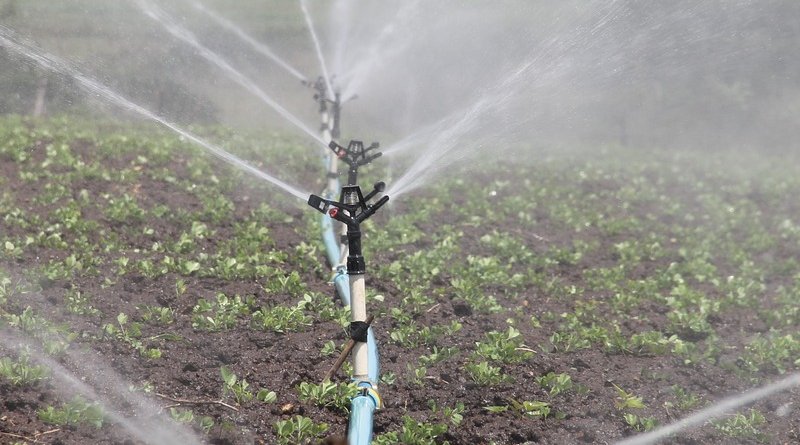
The Western U.S. is heavily reliant on mountain snowpacks and their gradual melt for water storage and supply, and climate change is expected to upend the reliability of this natural process. Many agricultural communities in this part of the country are examining ways to adapt to a future with less water, and new research shows that a focus on supplementing water supply by expanding reservoir capacity won’t be enough to avert future water crises.;;

Led by scientists at the Desert Research Institute (DRI), the study published in Earth’s Future. By identifying agricultural communities considered at-risk from looming changes in snowfall and snowmelt patterns, the researchers found that water conservation measures like changes in crop type and extent were more stable adaptive strategies than changes to reservoir capacity. By the end of the century, many areas could have less than half the water they have historically relied on to refill their reservoirs, but changing the types and extent of their crops could help by restoring an average of about 20% of reservoir capacity.  

The research team included scientists with the diversity of expertise needed to capture the complexities of water systems while balancing concerns for locally focused adaptation. Beatrice Gordon, lead author of the study and sociohydrologist and postdoctoral researcher at DRI, says the research is needed to inform water management at the local level, where most decisions are made. Gordon herself grew up on a ranch in Wyoming, where she learned firsthand the challenges that face water-insecure communities – an experience that helped lead to her research focus on agriculture and water in the Western U.S.   

“A lot of decisions about water are made at the local level, but there’s this big disconnect between that reality and the macro-scale level of most research on this topic,” Gordon says. “We really wanted to understand what the future could look like at the scale that most communities manage their water resources. What are the levers that folks in these communities have when it comes to a future with less snow?”;;

Mountain snowpacks have historically acted as nature’s water towers across much of the region by storing winter precipitation and releasing it downstream during drier months. Water management systems were designed with this process in mind, but climate change is altering snowmelt patterns in ways that will make it difficult for existing systems to meet the needs of downstream water users. As the world’s largest user of freshwater, irrigated agriculture is at particularly high risk from these changes.;;

Strategies for addressing water shortages that focus on augmenting supply include expanding reservoirs and replenishing groundwater with surplus water, but these approaches become less effective as the timing and availability of precipitation become more unpredictable. In contrast, water conservation strategies such as reducing total crop acreage, periodic crop fallowing, and shifting toward higher value crops can help manage these risks.;;

To find out how risk management practices could work on a community-level scale, the researchers built a comprehensive risk assessment framework based on guidance from the Intergovernmental Panel on Climate Change (IPCC). For each of 13 communities, they gathered historical data on irrigation water supply, agricultural water demand, snow storage and snowmelt patterns, and more. They then used projections for the future climate through 2100 to understand how supply and demand dynamics may change in the near future.;;

“We gathered all these data together and looked at the picture of risk, and then also the ways that adaptation could reduce risk,” Gordon says. “Our goal was really to make this as relevant as possible for the people who are actually making decisions on the ground.”;

“Dr. Gordon assembled a very impressive and unprecedented dataset for this paper linking agricultural water supply and demand across the Western United States,” says study co-author Gabrielle Boisramé, assistant research professor at DRI.  

The Western agricultural communities the researchers selected are located in headwaters areas, making them both subject to significant changes in future climate and sentinels for the future of the West. Several of them are located in the Upper Colorado River Basin, which feeds into the main stem of the river – a water system that supports more than 40 million people.;;

“A lot of these areas are providing downstream water to other communities,” Gordon says. “So, if they have an increase in demand and a decrease in supply, it impacts not only that area, but also the areas that rely on that water downstream.”;

The study results show that there will be a stark decline in how much many of these communities will be able to refill their reservoirs in just a few decades, with some seeing declines to about half of the water they were historically able to store. A drop that significant is particularly acute in many of the smaller reservoirs that can only hold about a year’s worth of water.;;

“It shows how important it is to dedicate effort – now, not in 20 to 50 years — to figuring out how we, as scientists, can provide better information about water conservation,” Gordon says. “And I think that there’s an opportunity to really think about how we support communities in these efforts, especially small communities in headwaters regions that might be fully dependent on agriculture.”;;

“Our results indicate the importance of water conservation as an adaptive strategy in a warmer future with less snow,” she continues. “And that’s broadly true across a lot of different places in the Western U.S.”;


Categories
South Caucasus News

Official testifies Sen. Menendez asked him to ‘look at’ criminal case targeting his friend • New Jersey Monitor – New Jersey Monitor


Official testifies Sen. Menendez asked him to ‘look at’ criminal case targeting his friend • New Jersey Monitor  New Jersey Monitor

Categories
South Caucasus News

New Jersey’s top federal prosecutor testifies for government in Sen. Bob Menendez prosecution – News-Press Now


New Jersey’s top federal prosecutor testifies for government in Sen. Bob Menendez prosecution  News-Press Now

Categories
South Caucasus News

New Jersey’s top federal prosecutor testifies for government in Sen. Bob Menendez prosecution – The Associated Press


New Jersey’s top federal prosecutor testifies for government in Sen. Bob Menendez prosecution  The Associated Press

Categories
South Caucasus News

Menendez defense team blasts prosecution’s star witness Jose Uribe as ‘a very good liar’ – NorthJersey.com


Menendez defense team blasts prosecution’s star witness Jose Uribe as ‘a very good liar’  NorthJersey.com

Categories
South Caucasus News

Armenia: Pashinyan Defends Yerevan Police After Bloody Clashes With Demonstrators – Eurasia Review


Armenia: Pashinyan Defends Yerevan Police After Bloody Clashes With Demonstrators  Eurasia Review

Categories
South Caucasus News

Dozens injured during anti-government demonstration in Armenia – Social News XYZ


Dozens injured during anti-government demonstration in Armenia  Social News XYZ