
Day: June 12, 2024
In order for democracy and stability to come to Azerbaijan and the region, the Aliyev regime must go. https://t.co/ewhy1o9EUe
— Emin Bred (@emin_bred) June 12, 2024
Categories
NPR News: 06-12-2024 3AM EDT
Azerbaijan stands for an early cessation of hostilities in Ukraine, as well as a diplomatic solution to the conflict based on the norms of international law. This was stated by Azerbaijani Foreign Minister Ceyhun Bayramov at a conference in Germany on the restoration of Ukraine, confirming Baku’s support for the…
A long road has been passed since Armenia and Azerbaijan were fighting a violent war that erupted in the wake of the deadlock in the peace negotiations for around three decades. As President Ilham Aliyev of Azerbaijan rightfully said, the chance for peace was eventually brought about by the war in 2020 that put an end to the occupation of the Azerbaijani territories. Having liberated its occupied territories, Azerbaijan immediately initiated a peace treaty with Armenia based on the fundamental principles of international relations, including mutual recognition of each other’s territorial integrity and non-use of force.
It is a telling fact that Azerbaijan put forward this initiative in March 2022, when the Armenian separatist regime still had some control over the parts of the Karabakh region where Russia’s peacekeeping mission was temporarily deployed. This clearly manifested Baku’s intention to peacefully reintegrate the Armenian population in the Karabakh region and diplomatically resolve the remaining disputes with Armenia.
This goodwill was, unfortunately, not properly reciprocated by the Armenian side. The refusal of the separatist leaders in the Karabakh region to meet Azerbaijani officials, the Armenian government’s continued military supplies to these forces, the reluctance to recognize Azerbaijan’s territorial integrity, etc. lead to the anti-terror operation in September 2023. This marked the definitive end of the Karabakh conflict and the restoration of Azerbaijan’s territorial integrity – which opened up a historic window of opportunity for regional peace and security.
Unfortunately, the newfound chance for signing a peace treaty was overshadowed by Armenia and its supporters in the West making unfounded claims about Azerbaijan’s supposed plans to invade the southern part of Armenia. Despite Baku’s repeated denials, including President Aliyev’s rejection of these claims on numerous occasions, those disseminating them continued unabated, their objectives remaining unclear. Some argue that Armenia and its Western partners sought to legitimize the increasing military and political presence of the West in Armenia by using a potential Azerbaijani attack as a scapegoat. As recently as early June, Thomas de Wall, a prominent analyst on the South Caucasus, rather conspiratorially suggested that Azerbaijan is collaborating with Russia to invade Armenia. On the flip side, whether intentionally or not, these claims seriously undermine peace efforts by instilling fear in Armenian society, stirring them against initiatives for peace with their neighbor and fostering distrust in their intentions.
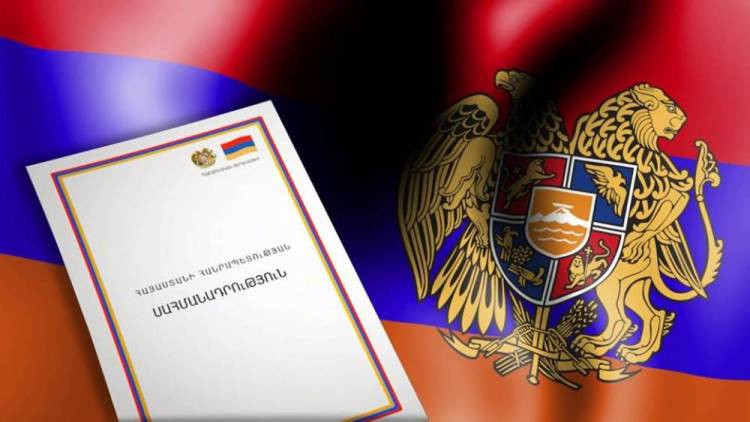
However, in the meantime, Baku and Yerevan have achieved an important progress in the journey towards a peace treaty and normalization of the bilateral relations. The launch of the delimitation of the interstate border and peaceful return of the four occupied border villages of Azerbaijan truly underscored the potential for peace between the two countries. There is now only one major impediment to the signing of a peace treaty which started to be discussed by President Aliyev immediately after the 2020 war. In an interview with a Turkish media channel on September 28, 2021, Aliyev declared, “There is a territorial claim against Türkiye [and Azerbaijan] in the Constitution of Armenia. They should abandon that. They need to revise and re-adopt their constitution… They must give up their claims against Türkiye and Azerbaijan”. The recent past of Armenia’s territorial claims against Azerbaijan urges Baku to make sure that no revanchist government in the future will have any legal pretexts to reignite the conflict.
In a crucial development for resolving the dispute, Armenia’s Prime Minister Nikol Pashinyan has acknowledged the significance of the issue and attempted to address it. During a meeting with members of his political party on January 20 of this year, Pashinyan emphasized the necessity for Armenia and Azerbaijan to ensure that there are no grounds for future territorial disputes. He stated, “Diplomatic documents often carry nuanced implications and caveats. The fine print of Azerbaijan’s proposals, and potentially ours, highlights the risks of territorial disputes, whether immediate or looming.” He went on to calling for a new constitution, asserting that Armenia needs “a new constitution, not constitutional changes,” that would make the country “more competitive and viable in the new geopolitical and regional environment”.
To the detriment of the peace treaty talks, the Armenian government seems to have backpedaled from this position. The June 7 statement of the Armenian Foreign Ministry rejects the calls for removal of the territorial claims from the constitution and presents this demand as “a gross intervention into the internal affairs of the country”. They disregard the fact that the constitution of a state is no longer its exclusive internal affair if it contains territorial claims and legal grounds for a military conflict against another state.
Baku’s position on this matter is crystal clear as outlined by President Aliyev the day before the Armenian Foreign Ministry’s statement: Azerbaijan is not planning to sign a peace treaty with Armenia as long as this country’s state constitution holds claims against the territories of Azerbaijan.
“Azerbaijan has a legitimate right to demand the removal of this claim from the Constitution that directly affects our national security, and it cannot be labelled as an interference into Armenia’s internal affairs”, said Azerbaijan’s Foreign Ministry in response to the statement of the Armenian ministry.
It is true that a constitutional change is not an easy endeavor for the Armenian government, particularly given the present anti-government sentiments in Armenia. However, this cannot serve as an excuse to alter Baku’s stance on this crucial legal matter. Azerbaijan is not in a rush and can afford to wait for Armenia to amend its constitution before signing a peace treaty, as the two countries need a lasting solution to their conflict and eradication of its root causes.
Prime Minister Nikol Pashinyan sent congratulatory messages to the President of the Russian Federation Vladimir Putin and the Prime Minister of the Russian Federation Mikhail Mishustin on the occasion of Russia Day.
The message addressed to Vladimir Putin reads:
“Dear Vladimir Vladimirovich,
Please accept my sincere congratulations on the national holiday of the Russian Federation, Russia Day.
This important day in Russia’s modern history symbolizes the desire of Russians to open a new political milestone in the history of a country with a rich history, culture and traditions.
I am sure that the centuries-old relations between Armenia and Russia, based on the unshakable principles of equality and respect for the interests of the peoples of both countries, will continue to develop constructively, contributing to the strengthening of bilateral and multilateral cooperation in all areas of mutual interest.
Taking the opportunity, dear Vladimir Vladimirovich, I wish you health, well-being and all the best, and good and prosperity to the people of Russia.”
The message addressed to Mikhail Mishustin reads:
“Dear Mikhail Vladimirovich,
I heartily congratulate you and all Russians on Russia Day.
Every year on this day, Russians mark the declaration of the country’s state sovereignty as the beginning of a new era in the history of modern Russia.
I am sure that the mutually beneficial, multilateral cooperation based on the long-standing traditions of mutual respect between the governments of our states, will continue to develop both bilaterally and multilaterally in the trade, economic, scientific, technical, humanitarian and other fields for the benefit of the people of Armenia and Russia.
On this significant day for all Russians, dear Mikhail Vladimirovich, I wish you health, well-being and future success.”
Massachusetts Senator Ed Markey called on the U.S. and the international community to use every available diplomatic tool – including the upcoming COP29 Climate Summit planned for Baku – to secure the release of Armenian hostages being illegally detained and tortured by Azerbaijan’s dictatorial Aliyev regime, reported the Armenian National Committee of America (ANCA).
In powerful remarks on the Senate floor, Senator Markey condemned Azerbaijan’s forced deportation of Artsakh’s ethnic Armenian population in September 2023, and the subsequent illegal arrest and detention of former Karabakh government leaders, including former State Minister Ruben Vardanyan, ex-presidents Arkady Ghoukasian, Bako Sahakyan, and Arayik Harutunyan, former Foreign Minister David Babayan, Parliament Speaker Davit Ishkhanyan, and former generals Levon Mnatsakanyan and David Manukyan. The Senator went on to detail the various forms of torture Vardanyan has been subject to, including “punitive extended stays in solitary confinement, poor prison conditions, denial of water and clean clothing, and orders that require him to stand for hours on end.”
“Azerbaijan has routinely resorted to hostage diplomacy, prolonging unlawful detention and using prisoners of war as bargaining chips to impose its demands on Armenia, in clear violation of international law. In fact, Azerbaijan is still holding dozens of Armenian prisoners of war and civilian political prisoners that it took captive during the 2020 Nagorno-Karabakh war,” stated Sen. Markey.
Among the actions Congress has already taken to address these concerns, Sen. Markey referenced an April 2024 bi-partisan Senate letter to Secretary of State Antony Blinken, cosigned by Senators Bill Cassidy (R-LA), Thom Tillis (R-NC), Gary Peters (D-MI), and himself, calling for Azerbaijan’s immediate release of the Armenian hostages and supporting the right of return of Artsakh’s indigenous Armenian population. “Forcefully removing and detaining the political leadership of an ethnic group is a well-known tactic of those committing ethnic cleansing. Denying their freedom and ability to participate in the peace process means that peace is being negotiated without the voice or perspective of those with key knowledge of those affected by Azerbaijan’s atrocities,” the Senators.
Senator Markey went on to argue that Azerbaijan’s illegal detention of Armenian hostages and anti-Armenian aggression should not be rewarded by the US and international community with the privilege of hosting this year’s international climate summit, COP29. “We must ensure that we take this opportunity to put the spotlight on all of those political prisoners who are being held wrongly by the Azerbaijan government,” argued Sen. Markey, calling for their release prior to the November COP29 summit in Baku, Azerbaijan.
“We join with Senator Markey in demanding decisive American leadership to secure the release of Armenian hostages illegally held by Azerbaijan,” said ANCA Executive Director Aram Hamparian. “For all the Biden Administration’s big talk about no business-as-usual with Aliyev, all we have seen from the President is business-as-usual – normalizing Azerbaijan’s genocide of Artsakh, abuse of prisoners, and desecration of holy sites. It’s time for Joe Biden to stop appeasing Aliyev and to start holding this dictator accountable.”
Sen. Markey has been an outspoken voice of justice for the people of Artsakh for decades. In February, he and Sen. Cassidy introduced a bipartisan resolution (S.Res.540) requesting a report on Azerbaijan’s human rights practices pursuant to Section 502B(c) of the Foreign Assistance Act. The resolution requests information from the State Department on Azerbaijan’s human rights abuses both within the country, as well as during its sustained military assault against Nagorno-Karabakh (Artsakh) that last year resulted in the ethnic cleansing of its entire indigenous Armenian population.