
Favoritism is a disease and causes immense damages to any organization, country or region. It removes competency out of the equation and if one goes back to history, one will note that any leader who used favoritism as a guide to his/her leadership appointing friends, loyal people and family members in key positions in an administration have always failed. Those who used competent and professional people, built not only countries but empires far beyond their original locations and sizes.
It is often said that many empires such as the Roman Empire, as big and expansive as it was in its last years, was marked by rising inequalities and corruption, which infiltrated many aspects of society, weakening it. Bribery, nepotism, embezzlement of government resources and assets all undermined the legitimacy of governance and empire. One of the greatest stories of Rome was the year of the six emperors, the year 238 AD, when Maximinus Thrax, Gordian I, Gordian II, Balbinus, Pupienus, and Gordian III ascended the throne in quick succession, which is reported to have been due to internal rifts, foreign threats, corruption and elitism, ignoring the needs of the general populace.
The Alexandrian Greek Empire, the Ancient Indian empires, the Chinese kingdoms, the Islamic Empires and Sultanates, the Mongol empires,; the Spanish, the Portuguese and many other empires built by great leaders all ended up through corruption, weakening of governance, weakening judicial systems, moral decay of societies, which eventually led to military corruption and hence inefficient security systems which could not defend the empires and kingdoms from both internal and external enemies and threats.
Corrupt regimes are also marked by lack of accountability, where there is no mechanism or ignoring of mechanisms even if they exist, to hold people accountable for their actions in a society. The children, spouses of leaders, their relatives and friends often cause most damages to any governance of a corrupt regime. When there is no consequence for corrupt actions of people, it only adds to the weakening and eventual downfall of any government.;
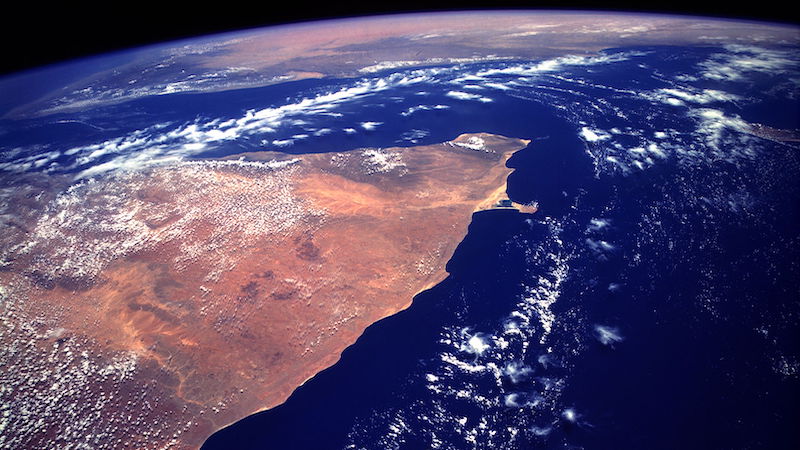
Many regimes who assume rulership through corrupt means, civil wars, assassinations, coups and counter coups, clans and tribal wars only weaken states and their abilities to face off external challenges as well as internal challenges. The regimes of the Horn of Africa States all appear to be products of one or more of these causes and appear, therefore, vulnerable.;
No wonder, they still cause more problems not only in their countries but also the region and allow external forces to interfere in the region’s affairs. How does one address such a situation and guide the region to a better future? This is the subject of this article and it is only to add to the ongoing thought processes among the many more who have the same feeling that there is truly something wrong in the region.
Recognizing that there is truly something wrong in the region is, itself, a first step in the right direction, which perhaps leads to the next step that there is a need for visionary leaders in the region away from the narrow mindset. Visionary leaders lead nations and regions from generation to generation and indeed, require a mindful of intelligence and farsightedness that does not pit a part of the population against another i.e. one tribe/clan against another. It is what we notice in the region today – the tribal/clan competition for power.
A visionary leadership would no doubt not only benefit his/her country but also the region and the world at large. Such a leader would often have a zest for life and a desire to handle challenges and not cause more problems for one’s country and region. Challenges and obstacles fade away in front of such leaders while the opposite happens to those with no vision. Why is the region so troubled?
Richard Blanton, a professor emeritus of anthropology at Purdue University said, “We refer to an inexplicable failure of the principal leadership to uphold values and norms that had long guided the actions of previous leaders, followed by a subsequent loss of citizen confidence in the leadership and government and collapse.” This happens when a new leadership of a country attempts to undermine everything a predecessor leader ever did for a country and embarks on untested new ventures which only culminates in loss of confidence by the citizenship.
It is often said that societies with good governance last long while those with power concentrated in one person or a small group of people would fade away and collapse quicker. Effective leadership demonstrates integrity and honesty and dedication with ethical behavior at the core. It is what attracts people to leadership and lack of which pushes people and citizens away.
Maulana Wahiduddin Khan, a moral scientist in his book “The Moral Vision” wrote about the teacher tree, where he noted that there is as much of a tree under the ground as there is on top of the ground in what a philosopher described as:
“Root downward, fruit upward, that is the divine protocol”
The perfect combination of color, line and aroma atop a tall rose stem can only happen when first a root went down into earth. The teacher tree tells us if one has to build a strong and successful society and country, one must first build oneself inwardly and base oneself on solid footing before one can hope to build a good society and progress and development not only in one’s country but also the region and the world at large.
A competent leader maintains moral values and would reflect on national, regional and world concerns. He or she would forgo personal biases and control his/her ego and those of his family and friends and in the case of the Horn of Africa States region those of his tribe and clan. A leader must always ensure that he makes impartial decision-making with respect to national issues and even regional issues.;
No country lives alone these days and the actions of one country would not only affect the nation but also the region and the world at large. That is the reason there is the United Nations Organization, the African Union and other regional organizations. The Horn of Africa States region perhaps needs one such regional organization, which it presently does not have. No decisions should be made on the personal likes and dislikes of a leader. Every decision that concerns a country should be based on the needs of the country and the eventually the region and the world.