
Day: June 12, 2024
The Islamic Republic of Iran, situated in West Asia, is the sixth-largest country in Asia and the second-largest in West Asia, covering a land area of approximately 1,648,195 square kilometres. With a total population of 89,705,600, Iran shares extensive borders with various neighbouring countries. To the west, it shares a border stretching over 1,400 kilometres with Iraq, while to the northwest lies Turkey. In the east, Iran’s border spans over 900 kilometres with Afghanistan, and to the southeast, over 900 kilometres with Pakistan. To the north, Iran shares borders with Azerbaijan, Armenia, the Caspian Sea, and Turkmenistan, while to the south, it is bounded by the Persian Gulf and the Gulf of Oman.
Iran’s strategic importance in the region is derived from its economic, geopolitical, and cultural influence, as well as its military strength and regional alliances. This makes Iran a crucial player in the Middle Eastern region.
Military Strength and Strategic Importance:
Iran’s military doctrine, which combines ideological and technical elements, underscores its commitment to achieving political goals through military means. Iran defense budget for 2022 was 6.85 billion USD, With a total military personnel count of 1,180,000, including 610,000 active military personnel and 350,000 reserves, Iran possesses a formidable force. Its air force, consisting of 42,000 personnel and 551 aircraft, including 205 combat aircraft, 186 fighter aircraft, and 19 multi-role aircraft, further solidifies its military might. Additionally, Iran’s substantial UAV count, exceeding 2,000, enhances its reconnaissance and strategic capabilities.
The Iranian navy, with 18,500 personnel and a fleet of 101 vessels, including 07 frigates, 19 submarines, and 942 merchant marines, ensures Iran’s presence and influence in crucial waterways such as the Persian Gulf and the Gulf of Oman. Despite these considerable military capabilities, Iran’s power projection remains incomplete, primarily due to the asymmetrical nature of modern warfare.
Forward Defense Strategy and Proxy Warfare:
However, these military capabilities are insufficient for Iran to claim regional power. To compensate, Iran has adopted a strategy of Forward Defense, supporting friendly militias and insurgent groups across the Middle East. The Quds Force, a part of the IRGC (Islamic Revolutionary Guard Corps), trains and equips such proxies to achieve Iran’s goals.
Hezbollah, the oldest and strongest political non-state actor in Lebanon, boasts approximately 45,000 fighters. In Iraq, the Badr Organization, formed in 1982, has 20,000 fighters.
Iran’s partnership with Houthi rebels, a Zaidi Shia Muslim minority in Yemen, allows Iran to strike deep into Saudi Arabia, its Sunni rival in the region. The Houthis have posed challenges for the U.S. Navy in the Red Sea and have not supported Israel in the Israel-Palestine conflict.
Through these proxies, Iran gains security benefits, including assistance in countering foreign intelligence threats, intelligence sharing, and counter-terrorism efforts.
Iran supports Hezbollah in Lebanon, the Badr Organization in Iraq, and the Houthis in Yemen to project its power in the region, deter Israel and the United States, and secure a more than 1000-kilometer-long land corridor connecting Iran to the Mediterranean Sea.
Iran’s Contemporary Military Confrontations and Retaliatory Actions:
Iran’s military capabilities were tested when Israeli F-35 jets carried out an airstrike on an Iranian consulate building in Damascus, Syria, resulting in the fatalities of several high-ranking IRGC officials. In retaliation, Iran launched a significant operation against Israeli territory on April 13th and 14th, deploying 170 drones, 30 cruise missiles, and 120 ballistic missiles. However, the majority of Iranian missiles and attack drones were intercepted by the Israeli Defense Forces (IDF), along with British and US forces stationed in the region. Approximately 7 missiles struck the Nevatim airbase in Southern Israel.
Additionally, on January 18, 2024, Pakistan launched an operation called “Marg Bar Sarmachar” meaning “death to insurgents” effectively striking hideouts inside Iran used by terrorists responsible for recent attacks in Pakistan. The precision strikes, carried out using killer drones, rockets, loitering munitions, and stand-off weapons, demonstrated the professionalism of Pakistan’s armed forces and the lack of preparedness of Iran’s armed forces.
Economic Challenges and International Sanctions:
Despite its military ambitions, Iran’s economy grapples with serious challenges, exacerbated by international sanctions and a struggling currency. With one USD equal to 42,075.00 Iranian Rials, Iran’s economy faces significant hurdles in achieving sustainable growth and development.
Iran has been labelled as a rogue and irresponsible state by the West, posing a serious threat to world peace. Its nuclear program remains under sanctions by the (P5+1) 5 permanent member of United Nation Security Council (UNSC) which includes US,UK, France ,China, Russia and Germany, in the 2015 Joint Comprehensive Plan of Action (JCPOA) agreement.
Conclusion:
In conclusion, Iran ranks 14th out of 145 countries in the Global Firepower Index in terms of military strength. However, its conventional power is insufficient and dependent on outdated weapons, making it ineligible for regional power status. Iran is a challenger in the region, challenging Saudi Arabia and the United Arab Emirates. To achieve regional power status, and to overcome these challenges Iran needs to focus on economic growth through cross-border trades and investments, heavy investment in research and development, and modernization of its weapons and military equipment. Only by addressing its economic vulnerabilities can Iran hope to achieve its aspirations of regional power and secure its position as a key player in the Middle East.
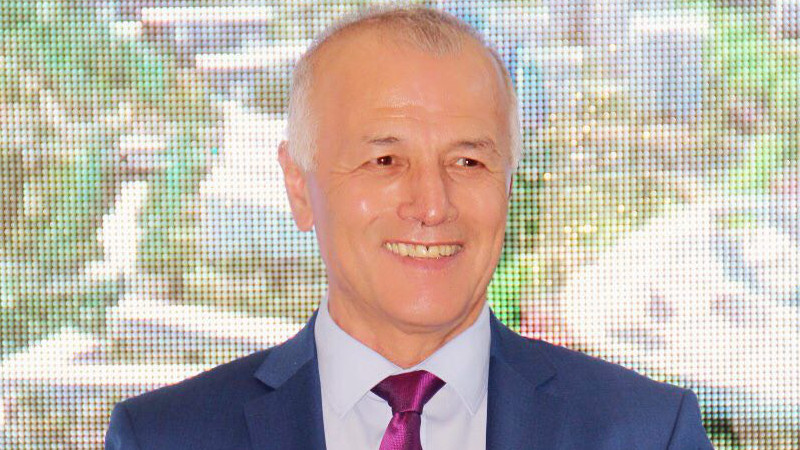
The Association for Human Rights in Central Asia (AHRCA), International Partnership for Human Rights (IPHR), the Norwegian Helsinki Committee (NHC) and the Helsinki Foundation for Human Rights (HFHR) are relieved to have learned that Kadyr Yusupov, a former diplomat, has been released after being arbitrarily imprisoned for five and a half years following deeply flawed and unfair proceedings.
We call on the Uzbekistani authorities to ensure Yusupov’s protection following his release and to launch an effective, transparent and impartial investigation into allegations that he was arbitrarily detained and tortured in detention and grant him redress and compensation for the rights violations he has suffered, in line with the calls of international human rights bodies.
Kadyr Yusupov, who previously worked in Uzbekistan’s embassies in Austria, the United Kingdom, Sudan, and Middle Eastern countries, as well as in Uzbekistan’s Permanent Missions to the UN and the OSCE, was convicted on charges of treason (under Article 157, Part 1 of the Criminal Code) in January 2020 and sentenced to five and a half years in prison following an investigation and closed trial that fell seriously short of international fair trial standards. He was released on 10 June 2024 after serving his full sentence. Following his release, Yusupov will be held under administrative supervision for a year, during which time he will be subjected to restrictions on his movement and participation in public events.
Yusupov was first arrested on treason charges in December 2018. The charges against him appear to have been based on a statement he made;during a psychotic episode, when he was undergoing medical ;treatment following a failed suicide attempt. Whilst in hospital, suffering from brain trauma and clearly confused, Yusupov reportedly said that he had been a spy for the West.
There are credible allegations that state security officers repeatedly threatened Yusupov in pre-trial detention, saying that he, his wife and daughter would be raped unless he confessed to the accusations. Yusupov was also allegedly denied essential medication and treatment in pre-trial detention. He filed complaints about his treatment with relevant government agencies. However, on 3 June 2019, the Prosecutor General’s Office responded that they did not find any evidence of abuse.
Following his conviction in January 2020, Yusupov first served his sentence in the KIN-4 penal colony in Navoi (southwest Uzbekistan), where he was allegedly subjected to torture and held in deplorable detention conditions that seriously endangered his health and well-being. He was subsequently transferred to the KIN-42 settlement colony in the Zangiata district of Tashkent region, where he was for the last two and a half years prior to his release.
In May 2021, the UN Working Group on Arbitrary Detention (UNWGAD) issued a;decision, finding Kadyr Yusupov’s detention to be arbitrary and in violation of Uzbekistan’s international human rights obligations. It called on the Uzbekistani authorities to release him immediately and provide him with adequate compensation. However, to date, the Uzbekistani authorities have taken no steps to implement the recommendations of the WGAD.
Other UN bodies and procedures have also raised concern about Yusupov’s case, including ;the UN Special Rapporteur on torture and the UN Special Rapporteur on health in a;joint letter;from July 2019, the UN Committee against Torture in its;concluding observations;on Uzbekistan adopted in November 2019, and the UN Human Rights Committee during its review of Uzbekistan in March 2020. These bodies have, among others, called on the Uzbekistani authorities to examine the allegations of torture and ill-treatment made by Yusupov and bring the perpetrators to justice.
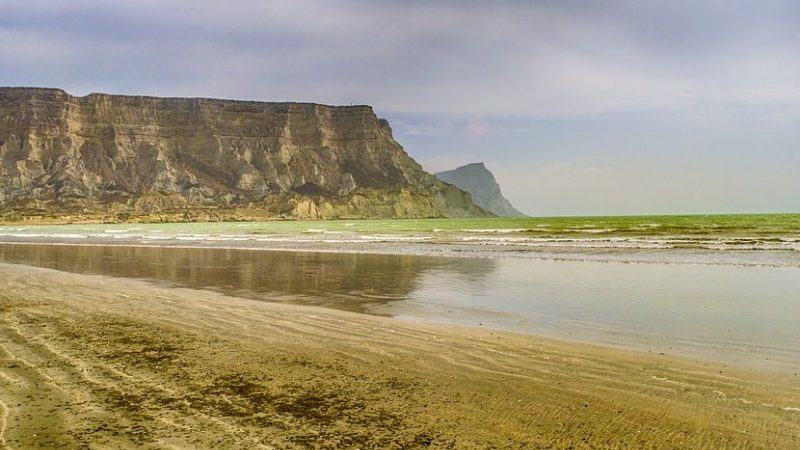
The windswept plains and rugged mountains of Balochistan hold within them a story of resilience, a yearning for progress, and a future waiting to be written. Yet, the narrative surrounding this land has often been hijacked by small but disruptive Baloch separatist movements. A significant figure within these movements was Gulzar Imam Shambay, whose capture in April 2023 marked a turning point. These groups have cast a shadow on the genuine aspirations of the Baloch people, but Shambay’s capture has created a significant leadership vacuum within the Baloch Nationalist Army (BNA), formed from the merger of the Baloch Republican Army (BRA) and the United Baloch Army (UBA). This absence has unleashed internal conflicts over resources and finances, severely hindering the insurgency’s ability to function as a cohesive unit, leaving the BNA on the verge of collapse.
The humane treatment extended to surrendered members, like Sarfaraz Bangulzai and his men, presents a tempting proposition for others. Bangulzai’s defection, along with his fighters, has created a domino effect, potentially leading to a mass exodus from the BNA. This critical situation presents a unique opportunity to explore possibilities of peace talks. The key question is: can a path towards a peaceful resolution be forged, or are there insurmountable obstacles?
The Pakistani state emphasizes reconciliation and inclusivity, aiming to foster a sense of shared identity and belonging among the diverse groups within Balochistan. The Baloch are an inclusive nation striving for a peaceful and prosperous future for all its citizens. Any attempt to create division among them in the name of a greater Balochistan is seen as a designed plan to break Pakistan. This narrative emphasizes that Balochistan belongs to its people and that the state will not allow “anarchists working at the behest of foreign agencies” to hijack Baloch nationalism.
The leadership is acutely aware of the grievances of the Baloch people, particularly the harm inflicted by “misguided dissidents” in remote areas. To address these concerns, the government offers Baloch youth opportunities for success through improved access to quality education and employment opportunities. They also promise a share in the prosperity promised by the exploration of mineral resources in the province. Furthermore, law enforcement actions and the fencing of the international border have demonstrably improved security in Balochistan. This enhanced security, coupled with the offer of reconciliation, presents a compelling reason for dissidents to lay down arms and rejoin society.
The onus now falls on the patriotic Baloch to deny space to these anarchists through collective action and cooperation with security forces. The anti-state elements (ASAs) employ a multifaceted approach to exploit various issues in Balochistan — physical attacks, political maneuvering, and manipulation of humanitarian concerns — to cultivate a hostile perception of Pakistan both domestically and internationally.
Pakistan’s efforts to develop Balochistan are highlighted, particularly through China-Pakistan Economic Corridor (CPEC) projects and the development of Gwadar Port. These initiatives aim to generate revenue for the province and create jobs. However, the latest episodes of terrorist attacks on these projects demonstrate the insurgents’ intention to undermine the development in Balochistan. If the insurgents were genuinely fighting for the rights of the Baloch, why would they target projects that are crucial for the province’s progress? The ASAs are hindering Balochistan’s progress by attacking vital infrastructure projects like dams, communication facilities, and transportation networks. These actions inflict real damage on the Baloch people themselves, hindering economic development and essential services.
Moreover, human rights activists — vociferous in their call against illegal abductions, rightfully so — are accused of turning a blind eye to the ASAs’ recruitment of students into militant groups. This recruitment is a clear violation of the right to education and a tactic to exploit young people. The issue of missing persons is a contentious one. The state contends that exaggerated figures are being quoted and that many missing persons are actually hiding in militant camps. Some activists are said to have manipulated the issue for propaganda purposes.
Recent events like the involvement of Abdul Wadood Satakzai and Karim Jan Baloch in terrorist attacks are used as examples of Baloch youth being manipulated. The families of these men were reportedly engaged by a human rights activist in a ‘long march’ seen as a propaganda campaign against Pakistan. Such actions hinder genuine efforts towards peace.
Shambay’s capture marks a significant juncture in the Balochistan conflict, underscoring the significance of reconciliation, improved security, infrastructural development, and opportunities for the Baloch people. However, it also paints a picture of external manipulation and domestic actors hindering progress. Whether this translates into lasting peace or a temporary lull in the conflict remains to be seen. This critical situation necessitates the continuation of genuine efforts to address the root causes of the insurgency, ensure fair treatment of all citizens, and foster a sense of justice.
Pakistan’s development initiatives in Balochistan, particularly those under the CPEC, are crucial for the province’s economic revival. Projects like Gwadar Port are designed to create jobs and boost local economies. The insurgents’ attacks on these projects reveal their true intentions — to hinder development and maintain a state of unrest. For genuine peace to prevail, it is essential that these projects are protected and completed. The economic benefits from these projects can significantly uplift the local population, providing them with better living standards and reducing the allure of insurgent propaganda.
One of the most effective ways to counter insurgency is through education and employment. The government’s efforts to improve access to quality education and create job opportunities for Baloch youth are steps in the right direction. Educated and employed individuals are less likely to be swayed by insurgent rhetoric. The promise of a share in the prosperity from the province’s mineral resources can further incentivize the youth to support the state’s efforts towards peace and development.
Civil society organizations have a crucial role to play in the peace process. They can help bridge the gap between the government and the local population by facilitating dialogue and promoting understanding. These organizations can also play a vital role in monitoring human rights and ensuring that the government’s actions are transparent and accountable. By working closely with the government and local communities, civil society can contribute to creating an environment conducive to peace and development.
The capture of Gulzar Imam Shambay and the subsequent leadership vacuum in BNA presents a unique opportunity for the Pakistani state to push for a peaceful resolution to the conflict in Balochistan. This requires a multifaceted approach that includes continued development initiatives, enhanced security measures, improved access to education and employment, and inclusive governance. The state must also address the grievances of the Baloch people and ensure fair treatment of all citizens. By doing so, it can foster a sense of justice and belonging among the local population, thereby reducing the appeal of insurgent groups.
One of the most significant challenges in achieving peace in Balochistan is the manipulation by external actors. The state’s narrative suggests that foreign agencies are behind the separatist movements, aiming to destabilize Pakistan. Whether this is entirely accurate or not, it is undeniable that external influences can exacerbate internal conflicts. Therefore, it is crucial for Pakistan to engage in diplomatic efforts to mitigate these external influences and garner international support for its efforts towards peace in Balochistan.
The role of the media in shaping perceptions and influencing public opinion cannot be overlooked. The media can either contribute to peace by promoting positive narratives and highlighting the government’s efforts towards development and reconciliation or fuel conflict by sensationalizing issues and focusing on negative aspects. Therefore, responsible journalism is essential in this context. The media should strive to provide balanced coverage, give voice to the Baloch people’s genuine grievances, and highlight the positive developments in the province.
The path to peace in Balochistan is fraught with challenges, but it is not insurmountable. The capture of Gulzar Imam Shambay has created a unique opportunity for the Pakistani state to push for a peaceful resolution to the conflict. By addressing the root causes of the insurgency, improving security, fostering economic development, and promoting inclusive governance, Pakistan can pave the way for lasting peace in Balochistan. However, this requires a sustained and multifaceted approach, involving all stakeholders, including the government, civil society, and the international community. Only through collective efforts can the genuine aspirations of the Baloch people be realized, and a peaceful and prosperous future be secured for all.
The special envoys meeting on Afghanistan, organised by Iran and including Pakistan, Russia, and China, seeks to enhance regional collaboration on Afghanistan, tackle security issues, and deliver humanitarian aid. The gathering will concentrate on preventing Afghanistan from turning into a terrorist hub, aiding the Afghan government in attaining lasting and inclusive peace, and offering humanitarian support to the Afghan populace.
China, Pakistan, Russia, and Iran are scheduled to participate in a special envoy meeting on Afghanistan, which will be hosted by Iran. The primary objective of this meeting is to engage in discussions regarding the current state of affairs in Afghanistan and the ongoing peace and reconciliation process.
China, being heavily invested in Afghanistan’s mining sector, is particularly concerned about the security of its economic ventures and the potential impact of instability on its economic interests. The presence of terrorist organizations, notably the East Turkestan Islamic Movement (ETIM), is viewed by China as a threat to its national security.
Pakistan, on the other hand, is apprehensive about the security situation in Afghanistan, fearing that any instability might spill over into its territory. Additionally, Pakistan is troubled by the presence of terrorist groups like the Tehrik-i-Taliban Pakistan (TTP), which operate in both Afghanistan and Pakistan. Given its significant economic stakes in Afghanistan’s trade sector, Pakistan is also worried about the potential disruption to its economic interests and the flow of goods and services between the two countries.
Russia shares similar concerns regarding the security situation in Afghanistan, particularly in terms of its national security. The presence of terrorist groups like ISIS-K, which operate in both Afghanistan and Russia, is a cause for alarm. Russia also has substantial economic interests in Afghanistan’s energy sector and is anxious about the potential impact of instability on its economic investments and the flow of energy resources from Afghanistan.
Iran is keeping a close eye on the security situation in Afghanistan, especially the risk of instability spilling over and impacting its national security. Additionally, Iran is troubled by the existence of terrorist organizations like Jaish al-Zulm, which are active in both Afghanistan and Iran. Iran’s economic ties with Afghanistan, especially in the realm of trade, are substantial. The country is worried about how any instability could disrupt its economic interests and the smooth flow of goods and services between the two nations.
The participating nations will reaffirm their commitment to respecting Afghanistan’s sovereignty, independence, and territorial integrity, as well as the decisions made by its people regarding their future and development trajectory. The gathering will stress the importance of an Afghan-led and Afghan-owned peace and reconciliation process, which involves the Taliban in decision-making and promotes regional cooperation to tackle security challenges.
The participating nations will express their concerns about the significant terrorism threat present in Afghanistan and urge all parties to take decisive action against terrorist organizations. The meeting will deliberate on the necessity of repatriating and reintegrating Afghan refugees, recognizing that it is crucial for the stability and progress of the region.
The meeting is expected to foster enhanced regional cooperation in Afghanistan, particularly within the ongoing peace and reconciliation process. It aims to enhance security in the region by preventing Afghanistan from becoming a haven for terrorist organizations and addressing the serious terrorism threat it faces. The meeting will prioritize providing humanitarian assistance to Afghanistan, including urgent aid and the repatriation and reintegration of Afghan refugees.
Impact and Challenges
The meeting is expected to have a significant impact on the actions of the Taliban, as it will underscore the importance of a thorough and lasting peace process, respect for Afghanistan’s sovereignty, and decisive measures against terrorist groups. The Taliban will face pressure to prove its dedication to these objectives and engage in constructive discussions with other regional players. Additionally, the meeting could foster greater collaboration and coordination among the nations involved in tackling the security and humanitarian crises in Afghanistan.
Howbeit, the success of the meeting hinges on the Taliban’s willingness to participate in a meaningful peace process and address the concerns of all parties. However, achieving tangible outcomes may be challenging due to the intricate and delicate nature of the issues at hand. Ultimately, the impact of the meeting will be limited if the participating countries do not present a united front or if the Taliban fails to show genuine commitment to peace and reconciliation.
In conclusion, the special envoy gathering on Afghanistan, organised by Iran and including Pakistan, Russia, and China, aims to enhance regional collaboration, address security concerns, and provide humanitarian aid. The meeting’s main objective is to prevent terrorism and support a comprehensive peace in Afghanistan, while also discussing the current situation and peace process. By emphasizing peace, sovereignty, and action against terrorists, the meeting hopes to influence the Taliban. China and Russia’s economic interests in Afghanistan shape their approach, prioritizing dialogue, engagement, incentives, and regional security. These interests are crucial for regional stability and development.