Categories
South Caucasus News

Can Bangladesh Bear The Increasing Burden Of Rohingyas? – OpEd


Can Bangladesh Bear The Increasing Burden Of Rohingyas? – OpEd

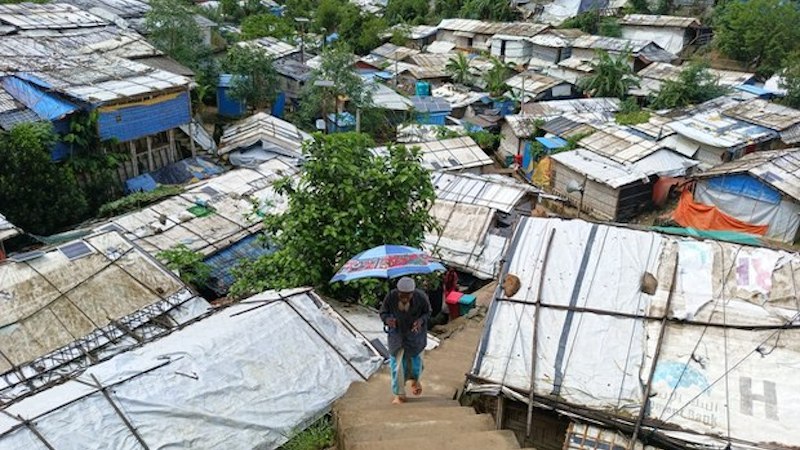
A Rohingya man walks inside Balukhali refugee camp in Cox’s Bazar. Photo Credit: BenarNews

In August 2017, the world witnessed a massive influx of Rohingya refugees into Bangladesh, fleeing violence and persecution in Myanmar. As of now, Bangladesh hosts more than 1.3 million Rohingyas, predominantly in Cox’s Bazar district, which has become the largest refugee settlement in the world. While the Bangladesh government and international aid organizations have made commendable efforts to provide for these displaced people, the situation has reached a breaking point, especially due to the political instability in Myanmar.;

Recently, another 45,000 Rohingyas fled to an area on the Naf River near the border with Bangladesh due to the escalating violence in conflict-torn Myanmar’s Rakhine State. UN rights chief Volker Turk and UN Special Rapporteur on the situation of human rights in Myanmar Thomas Andrews has already urged to open the border again and take these Rohingyas. But Bangladesh cannot and should not bear the burden of taking in more Rohingya refugees. This stance is not rooted in a lack of empathy but rather in the harsh realities confronting the nation and its capacity to sustain such a large population.

Firstly, the economic strain on Bangladesh is considerable. Cox’s Bazar, one of the poorest districts in Bangladesh, has seen its resources stretched to their limits. The sudden influx of refugees has dramatically increased the demand for basic services such as healthcare, education, and sanitation. According to the World Bank, the annual cost of hosting the Rohingyas is around $1.21 billion. This figure is staggering for a developing nation like Bangladesh, which has its own challenges in eradicating poverty and achieving sustainable development. The resources allocated to the refugees could have been utilized to improve the living standards of Bangladeshi citizens. The prolonged economic burden is unsustainable and unfair to the local population, who have shown remarkable hospitality despite their own hardships.

The environmental impact is another pressing concern. The Rohingya camps have caused significant deforestation in the region, as trees are cut down to make space for shelters and to provide firewood for cooking. The United Nations Development Program (UNDP) has reported that around 8,000 acres of forest land have been razed in Cox’s Bazar since the arrival of the Rohingyas. This deforestation has led to soil erosion, loss of biodiversity, and increased vulnerability to natural disasters such as landslides and floods. Environmental degradation is a local issue and contributes to broader ecological challenges that affect the entire nation.

Social tensions have also escalated as a result of the refugee crisis. The massive presence of Rohingyas has disrupted the local economy and labor market, leading to increased competition for jobs and resources. This has bred resentment among local Bangladeshis, who feel that their needs and opportunities are being overshadowed by the international focus on the refugee crisis. Additionally, there have been reported increases in crime rates and social unrest in the areas surrounding the refugee camps. The rise in criminal activities, including drug trafficking and human trafficking, has further strained the already limited law enforcement capabilities.

The education of Rohingya children poses another complex challenge. With limited access to formal education and a lack of proper educational infrastructure, a whole generation of Rohingya children risks growing up without basic literacy and numeracy skills. This educational deficit not only affects their future prospects but also hinders the overall development of the refugee community. The international community has provided some support, but the efforts have been insufficient to meet the overwhelming demand. Meanwhile, the local Bangladeshi children in Cox’s Bazar face disruptions in their own education as resources and attention are diverted to address the needs of the refugees.

Health concerns are equally dire. The overcrowded and unsanitary conditions in the refugee camps have led to outbreaks of diseases such as cholera, diphtheria, and measles. The healthcare facilities, already inadequate to serve the local population, are now overwhelmed. The health crisis extends beyond the camps, as infectious diseases do not recognize borders and can easily spread to the surrounding communities. The strain on the healthcare system indicates that Bangladesh’s capacity to manage such a large influx of refugees is being tested to its limits.

Furthermore, the international response has been far from adequate. While numerous countries and organizations have pledged financial support and aid, the actual disbursement of funds has continuously fallen short of the commitments. For example, in the 2024 joint response plan (JRP), only 72.9% was funded halfway through this year. The fund shortage in the 2021, 2022, and 2023 JRP is 26.9%, 30.6%, and 34.8%, respectively. At the same time, the international community’s response has been more reactive than proactive, failing to address the root causes of the crisis or provide a long-term solution. Bangladesh has been left to shoulder the burden with insufficient global support, highlighting a stark disparity between promises and actions.

It is crucial to acknowledge that the Rohingya crisis is fundamentally a political issue that requires a political solution. The root of the problem lies in Myanmar, where the Rohingyas have been systematically marginalized and persecuted. The international community must exert pressure on Myanmar to ensure the safe and dignified return of the Rohingyas to their homeland. Diplomatic efforts, economic sanctions, and international legal actions should be pursued vigorously to compel Myanmar to address human rights violations and create conditions conducive to the voluntary repatriation of the Rohingyas.

While the humanitarian impulse to aid the Rohingyas is commendable, it must be balanced with the pragmatic limitations faced by Bangladesh. The country has done more than its fair share in providing refuge and support to the Rohingyas, often at great cost to its own citizens and environment. It is time for the international community to step up and share the responsibility. Bangladesh cannot continue to bear this burden alone. The focus must shift to sustainable solutions that address the root causes of the crisis and ensure a fair distribution of responsibilities among nations. Only through such concerted efforts can we hope to resolve the Rohingya crisis in a manner that is just and sustainable for all parties involved.

Categories
South Caucasus News

The Pakistan, Afghanistan, And India Triangle – OpEd


The Pakistan, Afghanistan, And India Triangle – OpEd

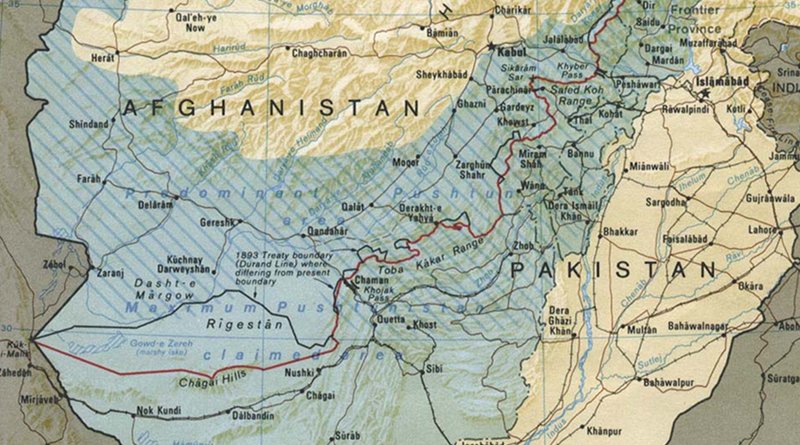
Detail of Durand Line Border Between Afghanistan And Pakistan. Credit: CIA World Factbook

Pakistan-Afghan relations are complicated and multidimensional, due to historical grievances, geopolitical realities, and volatile security concerns. Adding to the complication is India’s growing participation in Afghanistan, which Pakistan sees as a geopolitical manoeuvre to weaken its regional power. This article examines the complexities of Pakistan-Afghan relations, focusing on India’s consistent engagement in Afghanistan with the repercussions for Pakistan.

Historical Context of Pak-Afghan Relations

The Durand Line and Early Tensions

The Durand Line, created in 1893, has long been a point of friction between Pakistan and Afghanistan. Afghanistan’s refusal to recognise this line has exacerbated tensions since Pakistan’s independence in 1947. Afghanistan’s backing for the Pashtunistan Movement, which advocates for an independent state for Pashtuns, has further exacerbated the relationship between both states. Since 1947, no Afghan administration has officially accepted the Durand Line as an international boundary. They see it as a colonial imposition that divided Pashtun territories. Pakistan, on the other hand, regards the Durand Line as a legally formed boundary based on negotiations. The controversial status of the Durand Line contributes to regional instability. It complicates border control, exacerbating challenges such as terrorism and extremism.

Soviet Invasion and the Rise of the Taliban

When the Soviets invaded Afghanistan in 1979, Pakistan became a Cold War frontline state, that supported Afghan mujahideen with US aid. The withdrawal of Soviet soldiers and the subsequent civil war resulted in the takeover of the Taliban in the 1990s, which Pakistan first supported to secure a favourable administration in Kabul. However, it later withdrew from it due to certain political reasons.;

Contemporary Dynamics

Post-9/11 Era and the U.S. Invasion of Afghanistan

The US-led invasion of Afghanistan in 2001 and the overthrow of the Taliban Administration presented new difficulties and opportunities for Pakistan-Afghan relations. Pakistan found itself trapped between supporting the United States’ “War on Terror” and maintaining its strategic interests in Afghanistan, which sometimes led to charges of harbouring Taliban militants.

Ongoing Security Concerns

Cross-border terrorism, the presence of Tehreek-e-Taliban Pakistan (TTP) terrorists in Afghanistan, and refugee extends continue to strain bilateral ties. Recent skirmishes on the Pak-Afgan border and tensions over border administration show the persistent instability in bilateral relations.

India’s Role in Afghanistan

Strategic Involvement

India’s role in Afghanistan has increased dramatically since 2001, with major economic aid, infrastructural projects, and political engagement. Pakistan views India’s investments in Afghanistan, such as the construction of the Afghan Parliament and the Salma Dam, as attempts to surround and confine it.

Diplomatic and Economic Moves

India’s strategic alliance with Afghanistan, includes security, commerce, and cultural interactions. More recently, India has sought to increase its influence through economic initiatives, such as using Iran’s Chabahar Port to circumvent Pakistan and get direct access to Afghan and Central Asian markets.

Continued Support During Taliban Rule

Despite the Taliban’s return to power, India has maintained ties with Afghanistan. Indian delegates met with Taliban leaders to explore economic collaboration and humanitarian assistance. This perseverance demonstrates India’s willingness to sustain its presence in Afghanistan, much to Pakistan’s dismay.

Pakistan’s Strategic Concerns

India-Afghanistan-Iran Axis

Pakistan is concerned about the India-Afghanistan-Iran axis. India’s backing for the building of Chabahar Port challenges Pakistan’s strategic influence. An Iran-Afghanistan corridor leading to Central Asia might bypass Pakistan, weakening its ambitions to become a regional commerce powerhouse.

Security Implications

TTP terrorists’ presence in Afghanistan, as well as their cross-border incursions into Pakistan, continue to be key security issues. Pakistan’s diplomatic and military efforts to handle this danger have had little effectiveness, owing in part to Indian interests’ alleged backing for anti-Pakistan groups. From the Afghan Taliban side, it is a strict violation of the Doha Agreement, according to which the Afghan Taliban had to ensure that Afghan Soil would not be used for terrorism.

Diplomatic Efforts and Challenges

Recent diplomatic initiatives, including the March 11 meeting between Pakistan’s chief of mission in Kabul, Ubaid ur Rehman Nizamani, and Kandahar Governor Mullah Ali Hanafi, try to resolve these security issues besides improving bilateral ties. However, underlying conflicts and opposing interests continue to pose substantial obstacles.;

Assessment of India’s Role

Encroachment on Pakistani Interests

Pakistan perceives India’s growing presence in Afghanistan as a purposeful infringement on its strategic interests. By developing a foothold in Afghanistan, India hopes to create a buffer zone and offset Pakistan’s influence, aggravating a regional conflict.;

Destabilizing Intentions

Pakistan considers India’s activities as destabilising, notably its support for anti-Pakistan terrorist organisations. India’s involvement with the Afghan Government and the Taliban, allegedly for economic and humanitarian reasons, is seen with mistrust, exacerbating Pakistan’s security concerns. India can use TTA and TTP against Pakistan to destabilize its security and economy. ;

Regional Power Play

India’s push for regional supremacy through partnerships with Afghanistan and Iran seeks to isolate Pakistan. This policy jeopardises Pakistan’s geopolitical position while also complicating its security situation, as it deals with extremist threats and border control concerns.

Conclusion

Regional geopolitics, historical grudges, and modern security issues are all inextricably linked to Pakistan-Afghan ties. Pakistan perceives India’s strategic involvement in Afghanistan, which includes economic help, infrastructural development, and diplomatic engagement, as an attempt to weaken and encircle the country. As Pakistan navigates these complicated circumstances, it must find methods to handle security concerns, manage ties with Afghanistan, and balance India’s expanding presence in the area. The route forward necessitates delicate diplomacy, strategic forethought, and a dedication to regional security.


Categories
South Caucasus News

Thousands rally in Armenia against PM – The News International


Thousands rally in Armenia against PM  The News International

Categories
South Caucasus News

Azerbaijan, Georgia set to establish new customs checkpoint – News.Az


Azerbaijan, Georgia set to establish new customs checkpoint  News.Az

Categories
South Caucasus News

Pakistan: Central Bank Must Cut Interest Rate – OpEd


Pakistan: Central Bank Must Cut Interest Rate – OpEd

Pakistan, already suffering from cost-pushed-inflation, faces two challenges. The Monetary Policy Committee (MPC) has to make a difficult decision of cutting interest rate for making debt servicing sustainable.

The business community is already jittery due to likely introduction of new taxes, no reduction in interest rate, but more distressing hike in electricity and gas tariffs.;

Analysts believe, Pakistan’s current account just can’t be improved without restoring competitiveness of the local manufacturers.

During this past week, Moody’s statement suggesting a status quo in the upcoming MPC meeting exerted some pressure on the stock market.

Looking ahead, the upcoming MPC meeting on June 10 will be in the spotlight, with any rate cut expected to shift the market’s focus towards cyclical sectors.

More than two years into the;steepest;interest-rate tightening cycle in decades, central banks around the world are grappling with how fast to unwind the policy.;Policymakers from South Korea;to Canada are weighing progress on slowing inflation, and some have started cutting rates.

Policymakers in Latin America have been trimming since earlier this year. While that;all marks a major milestone, price pressures have;proven stubborn, a strong dollar has roiled developing nations;and geopolitical tensions have added a layer of uncertainty to the post-pandemic economic recovery.

US Federal Reserve officials will meet next week and are widely expected to hold interest rates steady;as the;US economy hums along and the labor market keeps firing on;all thrusters.;

The Labor Department data this week suggesting last year’s payroll gains might not have been as robust as first counted,;there’s now the risk;that Fed Chair Jerome Powell and his colleagues could keep monetary policy too tight for;too long.

Even as the Fed’s;central bank peers;diverge;(the en-vogue;term for the current;unwinding cycle), rate cuts by the European Central Bank and the Bank of Canada “are less bold departures and more like components of a mosaic,” Daniel Moss;writes;in;Bloomberg Opinion. “Harmony has been breaking down for a while.”


Categories
South Caucasus News

Digital Capitalism And Its Techno Feudal Order – OpEd


Digital Capitalism And Its Techno Feudal Order – OpEd

cryptocurrency bitcoin digital

Feudalism managed to survive in different stages of its history.  As a social, economic, political, and cultural system that emerged in the Middle Ages, has shown remarkable resilience by adapting and transforming throughout history. In contemporary times, it has reinvented itself in the form of techno-feudalism.

This modern iteration is dominated by platform companies that dominate and control various aspects of economic activities of producers, consumers, and distributers. These companies extract rent from producers, consumers, and distributors, influencing the economic activities of individuals, societies, states, and governments. The pervasive reach of these online platforms underscores the enduring nature of feudal structures, albeit in a new, technologically driven context. 

Like medieval feudalism, technological feudalism does not produce tangible goods and services but instead survives through the accumulation of rent. While medieval feudal lords extracted agricultural produce and labour from serfs, techno-feudal lords extract value through data and user engagement on digital platforms. Both systems thrive by leveraging their control over resources and populations to generate wealth, not by producing anything themselves but by appropriating the productivity and creativity abilities of the working masses.;

The owners of tech corporations and online platform companies have become the new landlords of the digital age. They exert significant control over individuals, societies, and political systems, effectively enslaving them. By fostering a culture that controls the creative abilities of working people, these tech giants ensure their dominance. Moreover, they actively reshape legal systems to maintain their influence and control over every sphere of life and the planet. This modern form of feudalism underscores the power and reach of these feudal corporate entities in the contemporary world.

The accumulation of rent has been a central feature of feudalism throughout all stages of its history. This principle, which originally manifested through the collection of agricultural produce and labour from serfs, has evolved over time. In modern iterations, such as techno-feudalism, rent accumulation is evident in the control and monetisation of digital spaces by tech corporations. Whether in medieval manors or contemporary online platforms, the core mechanism remains the same: extracting rent from dependent or subordinate groups to enhance the wealth and power of the feudal ruling and non-ruling entities.

Techno-consumers of social media are akin to free slaves, labouring for the rental profits of social media company owners. Despite the perception of freedom and choice, these users are, in reality, contributing to the wealth of the digital platform owners through their engagement and data generation. This dynamic reflects a modern form of exploitation, where the users’ activities and personal information are commodified for corporate gain.

Technofeudalism is designed to subjugate working people and manipulate their consciousness to serve the interests of techno-feudal lords, all under the guise of technological progress. This system thrives without fostering genuine technological education, skills, and consciousness among the masses, primarily due to digital divides and the lack of availability and accessibility of technology for all. The technological barriers are intentionally crafted to create an army of unemployed workforce that remains perpetually available to work for low wages and under unfavourable working conditions imposed by the techno-feudals. This dynamic perpetuates inequality and exploitation, reinforcing the dominance of the tech elites.

Digital capitalism in all its forms, along with technofeudalism in all its iterations, complement each other to survive and thrive together, often at the expense of people and their planet. This symbiotic relationship enables these systems to exploit resources, labour, and data, prioritising rental profit over the well-being of individuals and the environment. As they reinforce each other’s structures and practices, they create a landscape where the interests of the few dominate, leading to increasing inequality, exploitation, and environmental degradation.

The working-class control over technology, the democratisation of digital platforms and technological infrastructure, the availability and accessibility of technological education and skills for all, and the prioritisation of technology for people rather than profit are some of the immediate alternatives to ensure technological progress that upholds the interests of the masses. Through these concerted efforts, working people can harness technology as a tool for societal advancement and empowerment, ensuring that its benefits are accessible to all members of society, regardless of their socioeconomic status.

The cessation of the rent-seeking culture inherent in digital capitalism and technofeudalism stands as a pivotal factor in fostering the development of technology for the benefit of all, thereby ensuring the cultivation of a progressive technological consciousness. By dismantling the barriers erected by rent-seeking behaviours within these systems, working people can pave the way for equitable access to technological advancements. This inclusivity not only democratises innovation but also nurtures a collective awareness of the transformative power of technology, empowering individuals, and communities alike to actively engage with and shape the trajectory of technological progress and future.


Categories
South Caucasus News

Pakistan’s Nuclear Program: A Triumph Of National Resilience – OpEd


Pakistan’s Nuclear Program: A Triumph Of National Resilience – OpEd

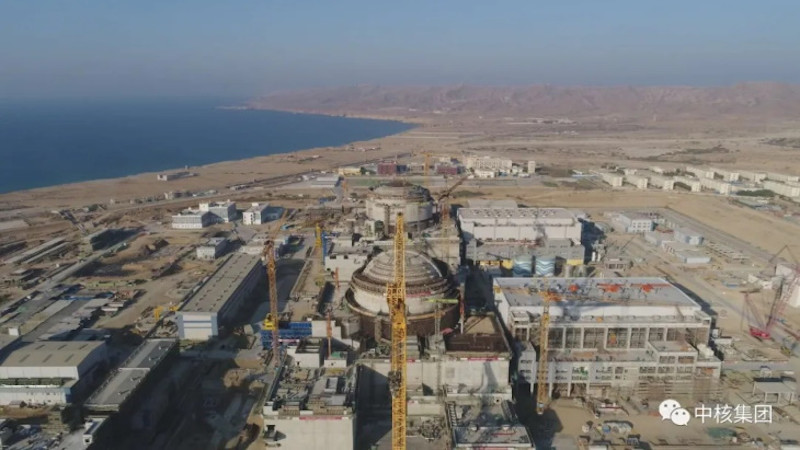
Nuclear power plants Karachi units 2 and 3 in Pakistan (Image: CNNC)

The commemoration of significant historical events often serves as a poignant reminder of a nation’s resilience and determination. Among the milestones in Pakistan’s history, the Youm-i-Takbir, marking the nation’s nuclear tests in May 1998, stands as a testament to Pakistan’s unwavering commitment to national sovereignty and security. However, the genesis of Pakistan’s nuclear journey dates back to decades earlier, rooted in the imperatives of strategic deterrence and regional stability.

Historial realities and Pakistan’s inherited rivalry hold significance in Pakistan going nuclear. The aftermath of Pakistan’s independence in 1947 and significantly the Kashmir issue created a security dilemmas in South Asia. Confronted with a larger, militarily potent neighbour and historical grievances, Pakistan grappled with threats to its sovereignty and strategic vulnerabilities. The loss of its eastern wing in the 1971 war underscored the imperative of strategic parity and deterrence against India’s conventional superiority. Thus, Pakistan’s decision to pursue a nuclear weapons option, catalyzed by India’s nuclear tests in 1974, was a rational response to safeguard national security interests and restore strategic balance in the region.

Pakistan’s nuclear program evolved amidst geopolitical complexities and regional power dynamics. The quest for strategic parity and deterrence against India’s nuclear advancements necessitated a concerted effort to acquire nuclear technology and capabilities. Despite global skepticism and adversity, Pakistan remained steadfast in its pursuit, culminating in successful nuclear tests in 1998. These tests not only neutralized India’s conventional advantage but also established Pakistan as a credible nuclear deterrent force, ensuring stability and preventing all-out conflict in South Asia.

India’s nuclear posture with relation to Pakistan is comprised of various critical aspects. To begin with, India is aggressively modernizing;and strengthening;its nuclear capabilities. Second, India is employing;limited military tactics against Pakistan, and staying below the nuclear threshold.;Importantly, India’s long-standing “no first use” policy on nuclear weapons is possibly being;reevaluated. ;India offensive posture,;taking proactive counterforce actions against Pakistan, creates concerns about inadvertent escalation.;

Pakistan’s nuclear policy, characterized by principles of restraint and responsibility, serves as a crucial deterrent against India’s aggressive nuclear posture. Pakistan’s progression towards establishing a triad of nuclear forces within its full-spectrum deterrence posture, particularly in response to India’s augmented naval nuclear capabilities, serves as a strategic countermeasure against India’s military dominance. This evolution from strategic to full-spectrum deterrence aims to deter and counter India’s military advancements and limited warfare policy. The incorporation of comprehensive deterrent strategy within the concept of “minimum credible deterrence” underscores Pakistan’s commitment to bolstering its deterrence capabilities. By incorporating a triad of nuclear forces, Pakistan aims to enhance the credibility and effectiveness of its deterrence across various potential conflict scenarios, ensuring the protection of its national security interests amidst regional power dynamics.

Beyond its military implications, Pakistan’s nuclear program has contributed significantly to socio-economic development and national prosperity. Nuclear technology, harnessed for peaceful purposes, has addressed energy needs, enhanced healthcare services, improved agricultural productivity, and advanced industrial development. With six nuclear power plants operating within its borders, Pakistan generates a substantial portion of its electricity for promoting energy security. Moreover, nuclear technology finds diverse applications in agriculture, healthcare, water resource management, and industrial processes, aligning with Sustainable Development Goals (SDGs) and fostering sustainable development.

Pakistan’s nuclear program represents a triumph of national resilience, strategic prudence, and socio-economic development. By acquiring nuclear capabilities, Pakistan has ensured its security, deterred aggression, and maintained regional stability in South Asia. The peaceful applications of nuclear technology have contributed to Pakistan’s sustainable development goals. As Pakistan navigates the complexities of the global arena, its nuclear policy remains anchored in principles of restraint, deterrence, and socio-economic progress, ensuring stability amidst evolving challenges.


Categories
South Caucasus News

The Einstein Effect: How The World’s Favorite Genius Got Into Our Cars, Our Bathrooms, And Our Minds – Book Review


The Einstein Effect: How The World’s Favorite Genius Got Into Our Cars, Our Bathrooms, And Our Minds – Book Review

"The Einstein Effect: How The World's Favorite Genius Got Into Our Cars, Our Bathrooms, And Our Minds," by Benyamin Cohen

Albert Einstein was the first modern-day celebrity and, decades after his death, still has the world’s most recognizable face. His influence is seen in much of the technology we use every day: GPS, remote controls, weather forecasts, even toothpaste.

But it’s not just Einstein’s scientific discoveries that continue to shape our world. His legacy underpins the search for aliens, the rescue of refugees, the invention of time machines, and the debunking of fake news. He appears in new books, TV shows, and movies all the time―and fans are paying millions for Einstein relics at auction.

Award-winning author and journalist Benyamin Cohen has a bizarre side hustle as the manager of Einstein’s official social media accounts, which have 20 million followers―more than most living celebrities.

In The Einstein Effect, Cohen embarks on a global quest to unearth Einstein’s ongoing relevance today. Along the way, he meets scientists and celebrities, speaks to dozens with the last name Einstein (including two rabbis), and even tracks down the brain of Einstein, stolen from his body during the autopsy.

Cohen shows us the myriad ways the Nobel Prize winner’s influence is still with us, giving an in-depth―and often hilarious―look at the world’s favorite genius like you’ve never seen him before.


Categories
South Caucasus News

Climate Change Will Make Air Pollution Worse: Here’s How


Climate Change Will Make Air Pollution Worse: Here’s How

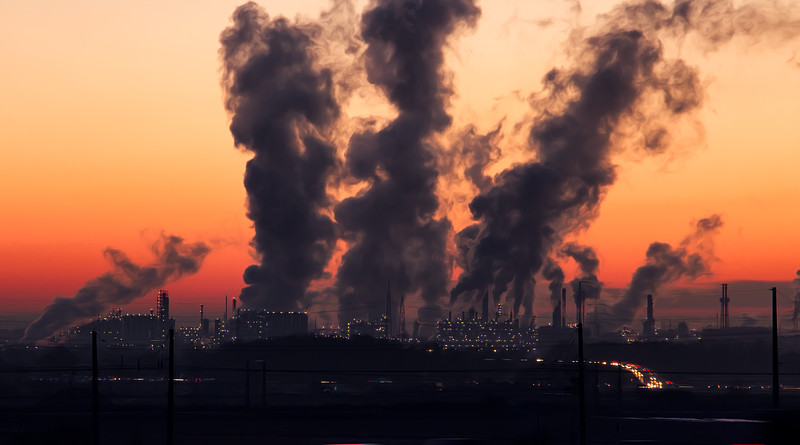
Industry Sunrise Air Pollution

A new study finds climate change is likely to make upward spikes of ozone at ground level worse by 2050, which could result in many parts of the United States falling out of compliance with air quality standards and increasing risks to public health.

Ozone is a reactive gas that consists of three oxygen atoms. And while it can be naturally occurring, at ground level it is often formed by the interaction of volatile organic compounds (VOCs) and nitrogen oxides (NOx) – which are both air pollutants.

“Climate change affects ozone formation through a complex set of factors, but warmer temperatures are correlated with increases to ozone in polluted areas,” says James East, first author of a paper on the study and a former Ph.D. student at North Carolina State University who is now a researcher at Harvard University.

“That means areas that already have higher levels of air pollution of VOCs and NOx will likely see increases in ozone as average temperatures go up. What’s more, climate change is expected to increase naturally occurring VOC emissions in some parts of the U.S., such as the Southeast, exacerbating the challenge.”

Increases in ozone are important because ground-level ozone can cause a wide array of health problems, including decreased lung function and inflammation of airways, contributing to hundreds of thousands of deaths each year.

“It’s pretty well-established that climate change will increase ozone pollution, but there has been a tremendous amount of uncertainty regarding what that increase might look like,” says Fernando Garcia Menendez, corresponding author of the work and an associate professor of environmental engineering at NC State. “Our goal with this work was to quantify the range of outcomes and get a much clearer picture of how climate change will affect ozone pollution events in the U.S.”

“Atmospheric chemistry is complex, and climate change affects the rate of chemical reactions, the amount of ozone precursors present, and how long the ozone will linger in the environment,” Garcia Menendez says. “We built on a variety of existing models and incorporated statistical tools that allow us to account for this wide array of variables to look at ozone pollution in the years ahead.”

Specifically, the researchers looked at how often ozone levels would exceed air quality standards designed to protect public health, how far ozone levels would overshoot the standards, and how that may change by 2050.

The study’s findings are presented as a range, because climate scientists still have some uncertainty about how sensitive the climate is to changes in the concentration of greenhouse gases.

The best case scenario is that the climate has a relatively low sensitivity to carbon dioxide. If that is the case, the new study finds that the high end of ozone measurements would – on average – go up by less than 0.3 parts per billion (ppb). Those high measurements could still be below the existing air quality standards for many locations.

“However, even in this best case scenario, we found that more variability in ozone levels is projected for 2050 – meaning that we’d still expect to see an increase in the number of days where there is an exceptionally high increase in ozone, violating the air quality standard,” says East.

The worst case scenario is that the climate is highly sensitive to carbon dioxide. In that case the study says the high end of ozone measurements would – on average – go up by more than 2.3 ppb. Coupled with the increase in variability, this would mean that many parts of the country would see a significant increase in the number of days when ozone levels exceed air quality standards.

“In practical terms, our study finds that between 5 million and 13 million additional people will be exposed to dangerously high levels of ozone in 2050,” East says.

“Right now, state and federal governments are trying to manage ozone levels by reducing emissions of air pollutants,” says Garcia Menendez. “This work suggests that the current emissions reductions efforts may be less effective for helping meet ozone standards for many parts of the country, particularly those that are already struggling to meet air quality standards.”

“This work is important for two reasons,” East says. “First, it contributes to our understanding of how climate change will affect ground-level air quality and, by extension, human health. Among other things, this contributes to the way we estimate cost/benefit analyses of climate regulations and related technologies.

“Second, by clarifying the range of climate impacts on ozone, we’re providing critical information that can inform policy decisions – such as EPA’s ongoing review of the air quality standard for ozone.”


Categories
South Caucasus News

Nikol Pashinyan received Hambik Sarafian | ARMENPRESS Armenian News Agency – ARMENPRESS


Nikol Pashinyan received Hambik Sarafian | ARMENPRESS Armenian News Agency  ARMENPRESS