
Categories
South Caucasus News

Accession Of Jammu And Kashmir: Dimensions And Outputs – OpEd


Accession Of Jammu And Kashmir: Dimensions And Outputs – OpEd

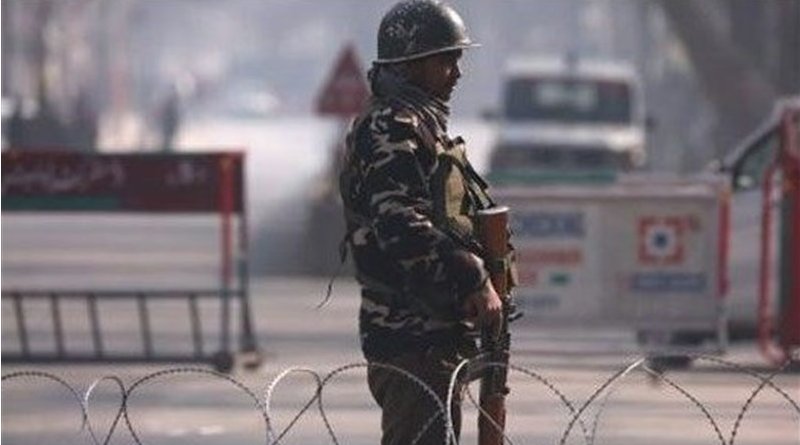
india pakistan soldier kashmir border

The accession of Jammu and Kashmir to India is a complex and historically significant event that took place in 1947, during the partition of British India into the newly independent dominions of India and Pakistan and its overview include:;

Historical Background:

Princely State under British Rule: Jammu and Kashmir were a princely state ruled by Maharaja Hari Singh at the time of India’s independence in 1947. The state was predominantly Muslim, but the ruler was Hindu, creating a unique situation amid the communal tensions of the partition. 

Partition of British India: The Indian Independence Act of 1947 allowed princely states the option to join either India or Pakistan or remain independent. Maharaja Hari Singh initially chose to remain independent, hoping to maintain autonomy over his state.;

Events Leading to Accession: Invasion by Tribal Militias: In October 1947, tribal militias from Pakistan, supported by the Pakistani army, invaded Jammu and Kashmir. The invasion aimed to force the Maharaja to accede to Pakistan, given the state’s Muslim majority.;

Request for Assistance: Facing an existential threat from the invasion, Maharaja Hari Singh sought military assistance from India. India agreed to send troops on the condition that the Maharaja would accede to India.;

Instrument of Accession: On October 26, 1947, Maharaja Hari Singh signed the Instrument of Accession, formally joining the state to India. The accession was provisionally accepted by the then Governor-General of India, Lord Mountbatten, with the understanding that the final decision would be made by the people of the state once the situation stabilized.;

Aftermath and Conflict: Military Action and Ceasefire: Indian troops were airlifted into Jammu and Kashmir and successfully pushed back the invading forces. However, the conflict escalated into a full-scale war between India and Pakistan, leading to a UN-mediated ceasefire in January 1949.;

UN Involvement: The United Nations Security Council passed resolutions calling for a plebiscite to determine the will of the people regarding accession to India or Pakistan. Jammu and Kashmir were granted special autonomy under Article 370 of the Indian Constitution, allowing it to have its own constitution and considerable independence over internal matters.;

This special status was abrogated by the Indian government in August 2019, integrating the state more closely into the Indian Union and reorganizing it into two separate Union Territories: Jammu & Kashmir and Ladakh.;

Current Status: Ongoing Dispute: The region remains a flashpoint between India and Pakistan, with both countries claiming it in full but controlling only parts of it. The Line of Control (LoC) serves as the de facto border between the Indian-administered and Pakistani-administered parts of the region.;

Internal Developments: The abrogation of Article 370 has led to significant political and social changes within Jammu and Kashmir, alongside increased security measures and administrative restructuring. The accession of Jammu and Kashmir to India continues to be a highly sensitive and contentious issue, influencing regional politics, international relations, and the lives of the people in the region.

First three wars on Jammu and Kashmir

The Kashmir conflict has led to several wars and military engagements between India and Pakistan. Here’s a detailed overview of these conflicts:;

First Indo-Pak War (1947-1948): Background: Following the partition of British India in 1947, Pakistan-supported tribal militias invaded the princely state of Jammu and Kashmir. Maharaja Hari Singh, the ruler of Jammu and Kashmir, signed the Instrument of Accession to India in exchange for military assistance. Conflict: Indian forces were airlifted to Srinagar to repel the invasion. Intense fighting occurred, with both sides suffering heavy casualties.;

Outcome: The war ended with a United Nations-mediated ceasefire on January 1, 1949. The Line of Control (LoC) was established, dividing the region between Indian-administered and Pakistani-administered areas. The UN called for a plebiscite to determine the region’s future, which has not been held.;

Second Indo-Pak War (1965): Background: Tensions remained high along the LoC. Pakistan launched Operation Gibraltar, intending to infiltrate forces into Jammu and Kashmir to incite rebellion against Indian rule.;

Conflict: Heavy fighting erupted along the international border in Punjab and Kashmir. Major battles included the Battle of Tithwal, Battle of Haji Pir Pass, and the Battle of Asal Uttar.;

Outcome: The war ended with the Tashkent Agreement brokered by the Soviet Union and the USA in January 1966. Both countries agreed to withdraw to pre-war positions and restore economic and diplomatic relations.;

Third Indo-Pak War (1971): Background: Although the primary theater was East Pakistan (now Bangladesh), the conflict extended to the western front, including Kashmir. This war was primarily triggered by the Bangladesh Liberation War and humanitarian crisis in East Pakistan.;

Conflict: Fighting occurred along the western front, including skirmishes in Kashmir. India achieved a decisive victory in the eastern theater, leading to the creation of Bangladesh.;

Outcome: The Simla Agreement was signed in July 1972, converting the ceasefire line in Kashmir to the Line of Control (LoC) and committing both countries to resolve issues bilaterally.

Latest war and thereafter

In line, the fourth war between India and Pakistan held at Kargil (1999). Its background and other aspects include: a. Infiltration by Pakistani soldiers and militants across the LoC into Indian territory in the Kargil district of Jammu and Kashmir. The infiltration aimed to cut off Indian supply lines and cause international intervention in the Kashmir dispute.;

Conflict: Intense fighting took place in high-altitude, rugged terrain. The Indian Army launched Operation Vijay to evict the infiltrators.;

Outcome: India successfully regained most of the positions occupied by the infiltrators by July 1999. The conflict resulted in heightened tensions but was limited in scope compared to the previous wars.;

Ongoing Conflict and Skirmishes: Post-1999 Skirmishes: Sporadic clashes and skirmishes have continued along the LoC. Incidents of cross-border firing, infiltration attempts, and terrorist activities in Jammu and Kashmir are frequent.;

Notable Incidents:;

2001: Attack on the Indian Parliament led to Operation Parakram, a major Indian military mobilization.;

2016: Uri attack, resulting in Indian surgical strikes across the LoC.;

2019: Pulwama attack followed by Indian airstrikes in Balakot, Pakistan, and subsequent aerial dogfights.;

Diplomatic Efforts and Current Status:;

Diplomatic Efforts: Various diplomatic efforts have been made to resolve the conflict, including the Simla Agreement (1972) and Lahore Declaration (1999). The conflict remains unresolved, with both countries maintaining claims over the entire region of Jammu and Kashmir.;

Current Status: The region remains highly militarized, with frequent violations of the ceasefire agreement along the LoC. Efforts for a lasting peace and resolution continue to face significant challenges due to deep-rooted historical grievances, nationalistic sentiments, and geopolitical dynamics. The Kashmir conflict continues to be a major source of tension between India and Pakistan, impacting regional stability and international relations in South Asia.

Categories
South Caucasus News

Kidnapping Of Yemeni UN Employees By Houthis Widely Condemned


Kidnapping Of Yemeni UN Employees By Houthis Widely Condemned

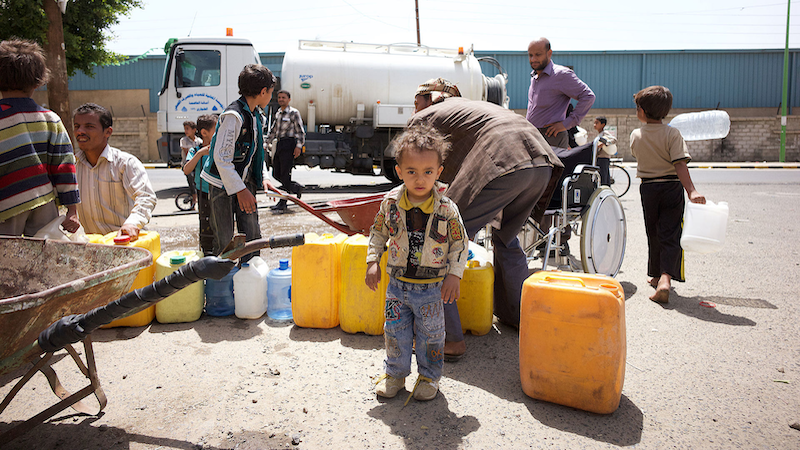
The shortage of water in Yemen is a crucial problem for Yemenis, and the lack of clean water can put the Yemeni children at risk of diverse diseases. Photo Credit: Julien Harneis, Wikipedia Commons

By Saeed Al-Batati

Human rights groups on Saturday strongly denounced the Houthis’ abduction of scores of Yemenis working for the UN and for US organizations in Yemen.

Yemeni Human Rights Minister Ahmed Arman said on Friday that the Iran-backed militia had kidnapped around 50 Yemeni personnel from various UN agencies, the US Embassy, US-funded NGOs, and other foreign organizations in Sanaa after storming their residences.

The Houthis also reportedly abducted Yemeni workers in other Yemeni provinces under their control.

On Saturday, Arman told Arab News that the Houthis had resumed their raids on residences in Sanaa and abducted more Yemenis working for foreign organizations, but did not provide the names of those people or the organizations they work for.

In a joint statement, 118 Yemeni human rights organizations said the Houthi intelligence and security services had conducted simultaneous raids on the homes of Yemenis working for the UN and other international organizations in Sanaa, Hodeidah, Saada, and Amran, abducting them and taking their mobile phones and laptops.

“The Houthi militia’s continued crimes constitute a blatant breach of national and international laws and standards, as well as a manifest disrespect for all international and regional attempts aimed at restoring peace in the country,” the Yemeni groups said in their statement.

The Houthis have not provided an official explanation for their campaign, but they have previously accused Yemeni workers employed by foreign embassies or organizations of collaborating with their enemies.

When asked by Arab News to comment on reports that the Houthis were continuing to target Yemeni UN agencies’ personnel, Farhan Aziz Haq, a spokesman for UN Secretary-General Antonio Guterres, said: “We have nothing new to report.”

The Houthi raids occurred as the US military said it had intercepted a fresh barrage of Houthi drones and missiles over the Red Sea and Bab Al-Mandab Strait.

The US Central Command said on Friday night that the Houthis had fired four ballistic missiles from regions under their control over the Red Sea in the previous 24 hours, none of which hit any navy or commercial ships.

CENTCOM forces destroyed four drones and two ballistic missiles in Yemeni areas controlled by the Houthis before they reached their targets on international shipping routes.

The US military also destroyed one Houthi drone launched into the Bab Al-Mandab Strait and a Houthi boat in the Red Sea.

Houthi media said on Friday that US and UK planes had carried out four airstrikes on the airport in the western province of Hodeidah, and another on the province’s Al-Salif port.

Four more US and US airstrikes hit a military base north of Sanaa on Friday, according to the Houthis.

Houthi military spokesperson Yahya Sarea announced on Friday that their forces had launched drones and missiles at two ships in the Red Sea for allegedly breaching their ban on sailing to Israel.

According to ship-monitoring apps, one of the ships, the Elbella, is a Malta-flagged container ship heading from Jeddah to Egypt, while the other, the Aal Genoa, is a Cyprus-flagged general cargo ship sailing from Poland to the UAE.

Since November, the Houthis have sunk one ship, seized another, and fired hundreds of ballistic missiles and drones at international naval and commercial ships in what the Yemeni militia claims are actions in support of the Palestinian people intended to force Israel to end its assault on Gaza.


Categories
South Caucasus News

NPR News: 06-08-2024 7PM EDT


NPR News: 06-08-2024 7PM EDT

Learn more about sponsor message choices: podcastchoices.com/adchoices

NPR Privacy Policy


Categories
South Caucasus News

Turkish astronaut of Azerbaijani origin flies into space – News.Az


Turkish astronaut of Azerbaijani origin flies into space  News.Az

Categories
South Caucasus News

Right Diagnostic Test And Right Treatment At The Right Time Can Prevent Antimicrobial Resistance – OpEd


Right Diagnostic Test And Right Treatment At The Right Time Can Prevent Antimicrobial Resistance – OpEd

New guidelines were launched in India’s capital Delhi to help healthcare personnel rightly diagnose and treat people in a timely manner. Failure to do so is fuelling antimicrobial resistance (AMR). Early and accurate diagnosis and treatment (without any delay), with medicines that work on a person, along with standard infection control and disease prevention efforts, remain a cornerstone for public health. And yet this is a distant dream for many in need.

Underlining the human impact of late and/or incorrect diagnosis, and misuse or irrational use of medicines on human beings, Dr Sangeeta Sharma (who led the guideline development process) said: “How can we ignore the substantial impact of poor quality of care on premature mortality rates – 60% of untimely deaths result from treatable conditions that are not addressed correctly.” Dr Sangeeta Sharma is a senior Professor at the Institute of Human Behaviour and Allied Sciences (IHBAS), and President (Honorary) of the Delhi Society for Promotion of Rational Use of Drugs (DSPRUD).

She emphasised the importance of the new guidelines “as a reliable tool to improve healthcare quality and patient safety; providing clear, evidence-based guidelines tailored to the Indian context and helping clinicians avoid irrational or inappropriate prescribing practices.”

Why are these guidelines important?

These guidelines are an important tool to help the healthcare workers at all levels to use the right diagnostic test and offer right treatment in a timely manner – and help combat antimicrobial resistance (AMR).

Let us understand how misuse or overuse of medicines result in antimicrobial resistance (or drug resistance) and is now ranked amongst the top-ten global health threats.

“Antimicrobial Resistance (AMR) is a problem driven by misuse and overuse of antimicrobial medicines, including antibiotics and antivirals, and results in critical medicines losing effectiveness to treat infections,” said Thomas Joseph, Head, AMR Awareness, Advocacy and Campaigns, World Health Organization (WHO).

“AMR inflicts significant mortality, morbidity and economic loss in low- and middle-income countries, including India. Several countries in Asia and Africa have observed a worrying trend of increasing drug resistance, while progress towards AMR containment efforts remain scattered and fragmented,” said Dr Kamini Walia who is the Convener and Co-Chairperson of Scientific Committee of Global AMR Media Alliance (GAMA) and a senior AMR scientist at the Indian Council of Medical Research (ICMR).

Agrees Thomas: “AMR is associated with 5 million deaths a year. Besides this, there is the huge burden of morbidity and healthcare expenditure that can affect severely household welfare. The World Bank estimates that Global GDP could fall by US$ 1 to US$ 3.4 trillion annually after 2030 due to AMR,” he added. The World Bank estimates that an additional 24 million people would be forced into extreme poverty by 2030 if no action is taken on AMR today.

7th Edition of the Standard Treatment Guidelines

The 7th Edition of the “Standard Treatment Guidelines: A Comprehensive Resource for Informed Clinical Decision-Making”, was developed by Delhi Society for Promotion of Rational Use of Drugs (DSPRUD) and launched at Lady Hardinge Medical College in Delhi, India. The guideline launch took place at the 7th Diagnostic Stewardship Programme to combat AMR.

These guidelines encompass over 350 priority diseases across 11 medical super-specialties, providing medical experts with invaluable insights into clinical manifestations, therapeutic advances, patient management, and patient education.;

Dr Atul Kotwal, Executive Director, National Health Systems Resource Centre (NHSRC is a technical support institute with National Health Mission of Government of India) said that NHSRC and DSPRUD are partners in disseminating and implementing Standard Treatment Guidelines effectively in clinical practice.

Over the past two years, these joint initiatives (guidelines and diagnostic stewardship programmes) have engaged over 10,000 healthcare professionals from across India, demonstrating the demand for continuous professional development and adherence to standardized treatment protocols.

Absence of diagnosis and AMR

In the absence of a diagnosis, there is overuse of antibiotics (or other antimicrobials such as antivirals, antifungals, or antiparasitics), said Dr Ranga Reddy Burri, President, Infection Control Academy in India. “Diagnostic uncertainty is influenced by factors such as challenges in diagnosing infections, fear of missing a diagnosis, limited access to rapid diagnostic tests, reliance on clinical judgment, and patient expectations.”

Inter-relatedness of diagnostic stewardship and adherence to standard treatment guidelines is paramount in ensuring effective patient care, said Dr Sarita Beri, Director, Lady Hardinge Medical College. By promoting accurate diagnosis, informed treatment decisions, and responsible antimicrobial use, these initiatives aim to enhance patient safety and combat the spread of AMR.

Dr Sangeeta Sharma said that these standard treatment guidelines have been formulated to:

– Assist clinicians in making informed and effective patient management decisions as they serve as a guiding light across various levels of healthcare- from primary health care to tertiary care health centres

– Ensure their reliability and relevance in today’s dynamic healthcare environment, as they are meticulously crafted through the collaboration and contribution of a multitude of experts and reviewers

– Offer reader-friendly, up-to-date, and evidence-based expert information at the point of care

– Include pharmacological and non-pharmacological management strategies tailored to different healthcare settings, along with clear goals of treatment, criteria for assessing response to therapy, step-up and step-down approaches, referral criteria, and guidelines for follow-up.

Advancing AMR stewardship when multiple medical disciplines are practiced in India is a challenge. Dr Sangeeta Sharma added that “There is a significant variation in clinical practice, where different practitioners may adopt diverse approaches to treating similar conditions, leading to inconsistencies in patient care at times. This variation often stems from a reliance on past practices rather than evidence-based guidelines, resulting in treatments that may not reflect the latest research or best practices.”

Furthermore, the rising demand for healthcare services has put a strain on resources, necessitating more efficient and standardised approaches to treatment in order to effectively meet patient needs.

Diagnostic delays = Catastrophic costs and Access versus Excess paradox

When we fail to diagnose a disease timely and accurately, we add to diagnostic delays, fuel the spread of disease (either in the affected person in case of a non-communicable disease or in the community as well if it is an infectious one) – and this results in avoidable human suffering, as well as an onslaught of catastrophic cost – all of this is so avoidable.

Dr Sharma shared that “Access versus Excess paradox highlights the issue where, despite broad availability of medications, there can be either a lack of access to necessary drugs or an excess leading to inappropriate use. The abundance of different types of pills, coupled with free over-the-counter availability, further contributes to misuse and potential harm.”

In addition, there are issues with labelling, packaging, and nomenclature of medicines that create confusion and increase the risk of medication errors.

Additionally, factors such as illegible handwriting in prescriptions, incomplete knowledge of drug names, and the similarity in clinical use of different medications exacerbate the risk of errors.

“Standard Treatment Guidelines significantly enhance the value of health systems by promoting consistency, cost-effectiveness, and quality in patient care. They provide a framework for uniform care delivery, ensuring that patients receive evidence-based treatments irrespective of the healthcare provider or location,” said Dr Sharma.

What’s new in the 7th edition of the guidelines?

Dr Sharma worked with a team of medical experts from across super-specialities in the country to revise the latest guidelines. Dr Kamal Kishore Chopra, who is the former Director of the prestigious New Delhi TB Centre and part of the leadership of TB Association of India was also a part of the experts’ group that shaped the 7th edition of the guidelines. Dr Kuldeep Singh Sachdeva, who is the former head of Indian government’s TB and HIV programmes (earlier served as Deputy Director General at the Ministry of Health and Family Welfare, Government of India) and former Southeast Asia Director of International Union Against Tuberculosis and Lung Disease (The Union) was also part of the experts’ group that worked on the guidelines. Dr Rajendra Prasad, Dr BC Roy National Awardee and former Director of Vallabhbhai Patel Chest Institute in Delhi and former Head of Respiratory Medicine, King George’s Medical University (KGMU) was also part of the guideline development panel of experts.

Dr Sangeeta Sharma said: “The 7th edition of the standard treatment guidelines introduces several key updates and new features to ensure comprehensive and up-to-date medical guidance. All sections have been thoroughly revised and updated with the latest recommendations, including new algorithms and evidence-based practices for critical areas such as hypertension, sepsis, burns, trauma, bleeding disorders like haemophilia, chronic obstructive pulmonary disease (COPD), tuberculosis, HIV/AIDS, and dental conditions.”

“New sections have been added, focusing on palliative care, with a special emphasis on opioid use, and psychiatric emergencies, including management of patients with suicide risk, delirium tremens (severe form of alcohol withdrawal), acute agitation, extra-pyramidal syndrome, neuroleptic malignant syndrome, lithium toxicity, and valproate toxicity,” added Dr Sharma.

Updates also extend to surgical conditions such as urolithiasis (formation of urinary stones) and benign prostatic hyperplasia (enlarged prostate gland).

“These guidelines offer a detailed, practical approach to diagnosing and managing a wide range of conditions. For example, the hypertension section emphasizes a comprehensive diagnosis process, outlining common mistakes while measuring the blood pressure (BP) and the need for multiple readings to avoid misdiagnosis. It also provides a step-by-step approach to managing hypertension, diabetes, and infections, highlighting the importance of lifestyle modifications and evidence-based treatment protocols.”

Another notable feature is its detailed guidance on handling snake bites and dog bites, including crucial do’s and don’ts to prevent complications and ensure effective initial treatment.

For trauma management, the book offers clear instructions on first aid measures, ensuring timely and effective response to injuries.

This edition also includes comprehensive coverage of common pitfalls and precautions, ensuring that healthcare professionals can provide accurate and effective care in various clinical scenarios.

7th meeting on diagnostic stewardship

Diagnostic stewardship involves ordering the right tests for the right patient at the right time and interpreting the results to provide the right antibiotic in the right dose, said Dr Sangeeta Sharma, key organiser of the 7th Diagnostic Stewardship meet.

“The aim of this meeting is to foster a culture of responsible antimicrobial use by equipping healthcare professionals with the knowledge and skills needed to order the right tests, interpret results accurately, and select the appropriate antimicrobial for treatment” said Dr Renu Gupta, faculty at IHBAS and Secretary of DSPRUD.

‘Just in case’ medicine

Diagnostic uncertainties have emerged as a crucial factor to fuel the inappropriate use of antimicrobials. Doctors sometimes prescribe antimicrobials as a precautionary measure, known as “just in case” medicine, due to an inability to establish a confirmed diagnosis. This is often due to suboptimal availability of laboratory support or the misinterpretation of laboratory reports.

For example, microscopy test underperforms in diagnosing TB. That is why WHO has called upon the countries to completely replace microscopy with WHO-recommended molecular tests. We have to do so to stop missing TB cases among those who take a TB test. More importantly, we have to take the lab to the people by deploying point-of-care and point-of-need, laboratory independent and battery-operated, decentralised TB screening and diagnostic tools- like ultraportable x-rays and WHO recommended Truenat (World’s only point-of-care and decentralised molecular test for TB). Truenat is also being used on solar power in several countries such as Democratic Republic of the Congo and Nigeria. We have to find all TB, treat all TB and prevent all transmission of TB in a people-centred, rights-based and gender transformative manner.

But we are not doing as good as we can with existing tools. As per the latest WHO Global TB Report (2023), we could diagnose less than HALF of people with drug-resistant TB: out of 410,000, globally we could just diagnose only 170,000 in 2022. Imagine the diagnostic delays and catastrophic costs, as well as human suffering, for 170,000 people with drug-resistant TB, and for the remaining people who were not even diagnosed or linked to therapy – and risk of further spread of infection and untimely death. All this could have been averted if we had diagnosed each one of them accurately and early, and linked them to effective treatment, care and support. Hugely missed opportunity it is, as we believe at CNS and Global Call to Find All TB.

A Call to Action

Addressing AMR is a shared responsibility. Health authorities, healthcare providers, and the public must work together to promote the responsible use of antimicrobials. Enhancing microbiological laboratory infrastructure, training healthcare professionals in diagnostic stewardship, and raising awareness about AMR are critical steps towards this goal.

A ray of hope lies in Dr Sangeeta Sharma’s led initiative to train healthcare workers to combat AMR. To date, her course has trained over 1,000 doctors and engaged 1,600 nurses and laboratory technicians in diagnostic stewardship.

Judicious use of medicines, along side other meausres, will go a long way in controlling antimicrobial resistance and protecting human lives!


Categories
South Caucasus News

Strengthening Bonds: Dynamic Relationship Between Turkey And Pakistan – OpEd


Strengthening Bonds: Dynamic Relationship Between Turkey And Pakistan – OpEd

The bond between Turkiye and Pakistan transcends mere diplomatic relations. It is a testament to the enduring ties between two pivotal nations in the Islamic world. Rooted in shared history, culture, and a common vision for the future, the relationship has evolved into a multifaceted partnership. This spans defense, economics, culture, and social aspects.

The historical connection between Turkey and Pakistan dates back to the Ottoman Empire. The empire was a beacon of Muslim power and a center for arts, sciences, and culture. During World War I and the Turkish War of Independence, the people of the Indian subcontinent provided significant support to the Ottoman Turks. This support was both moral and financial. It forged a deep emotional and spiritual brotherhood. Today, we see remnants of this camaraderie in the streets of Lahore. Allama Iqbal Road pays homage to the philosopher and poet who envisioned a unified Muslim ummah with the Ottoman Caliphate at its heart.

Historical bonds, fraternal socio-political affinity, and shared cultural heritage support the defense collaboration between Turkey and Pakistan. Soft power initiatives, such as cultural exchanges and solidarity on issues concerning the Islamic community, have laid the foundation for robust defense ties. Defense industry collaborations have led to the joint production of state-of-the-art military equipment. These efforts showcase the synergies between their defense industries. Additionally, they foster technological exchange.

Recent developments highlight the continued growth and diversification of the Turkiye-Pakistan partnership. High-level military dialogue and defence ties underscore the commitment of both nations to enhancing bilateral defence and security cooperation. The conclusion of the 18th edition of the High-Level Military Dialogue Group recently has reaffirmed the momentum of defense collaboration. There were discussions covering a broad spectrum of areas, including training exercises and co-production of military equipment. Additionally, initiatives like the Preferential Trade Agreement (PTA) have bolstered economic partnerships. Strategic discussions aim to increase bilateral trade volume to USD $5 billion in the near future.

Pakistan and Turkiye both maintain well trained and equipped Armed Forces to meet the needs of this forces. Both countries have developed good defence industries set ups. The diversity of thought and viewpoint on various conflicts like Pakistan, Kashmir and global Islamophobia brings the two nations and their Armed Forces closer together. Their joint exercise and training are thus a common but delightful sight.;

Economic Partnership

Economic cooperation between Turkiye and Pakistan is poised for further expansion. This growth is driven by mutual interests and complementarities. Strategic discussions between high-level officials have focused on leveraging existing agreements. They are also exploring new avenues for collaboration. T

he establishment of a Special Economic Zone (SEZ) in Pakistan aims to attract investments and facilitate business ventures. Discussions on Turkiye’s FDI potential in areas like corporate farming and agricultural machinery highlight the mutual benefits of economic engagement. Plans to establish a branch of a Turkish bank in Pakistan demonstrate the commitment to strengthening economic relations. This commitment spans both governmental and private sector levels.

Cultural Exchange and Social Welfare

Cultural exchanges play a vital role in fostering people-to-people ties and promoting mutual understanding between Turkiye and Pakistan. Initiatives like the “Turkish Cultural Season in Pakistan” and educational exchanges nurture camaraderie and appreciation for each other’s heritage. Both nations have shown solidarity in times of crisis. Turkiye has provided assistance during natural disasters in Pakistan. Pakistan has reciprocated with support and relief efforts during Turkiye’s times of need.

Challenges and Policy Considerations:

Despite strides in their partnership, Turkiye and Pakistan face challenges that need careful consideration and strategic planning. Navigating global pressures and addressing economic constraints are key areas of focus. Reconciliation of strategic interests is also crucial. Establishing joint crisis management protocols is essential. Enhancing civil society engagement and fostering candid discussions on mutual threat perceptions are imperative. These steps are vital for building a resilient defense relationship.

The Turkiye-Pakistan relationship is a shining example of the transformative power of friendship and cooperation. Building on their shared history, cultural affinities, and strategic imperatives, both nations are poised for a future of peace, prosperity, and mutual respect. As they navigate modern complexities, Turkiye and Pakistan stand united. They are committed to realizing their shared vision for the advancement of their nations and the broader Islamic world.


Categories
South Caucasus News

Official Dinner Hosted On Behalf Of President Abdel Fattah El-Sisi In Honor Of President Ilham Aliyev – MENAFN.COM


Official Dinner Hosted On Behalf Of President Abdel Fattah El-Sisi In Honor Of President Ilham Aliyev  MENAFN.COM

Categories
South Caucasus News

Nikol Pashinyan visited Lori Province – 1Lurer


Nikol Pashinyan visited Lori Province  1Lurer

Categories
South Caucasus News

Iran blames Israeli attack on Gaza on ‘inaction’ by world states, UNSC | World News – The Indian Express


Iran blames Israeli attack on Gaza on ‘inaction’ by world states, UNSC | World News  The Indian Express

Categories
Audio Review - South Caucasus News

@mikenov: Video shows helicopter rescue of Israeli hostages youtu.be/l-RBT5KE_Z4?si… via @YouTube


Video shows helicopter rescue of Israeli hostages https://t.co/AnMEy4ErKY via @YouTube

— Michael Novakhov (@mikenov) June 8, 2024