
Armenia’s reliance on Russian remittances drops as Ukraine war reorders regional economies – CIVILNET CivilNet English
Day: June 5, 2024
Fauci, well masked – Google Search https://t.co/WWzXscYdjF – pic.twitter.com/OV6IzLQKpE
— Michael Novakhov (@mikenov) June 5, 2024
Part I of this series focused on the war on testing that is being waged by those who claim to be helping minority students, but are in fact keeping them from succeeding. These same persons want to dumb-down disciplinary measures, creating an untenable condition in the classroom.
Those educators, politicians and activists who are responsible for this development have such low expectations of minority students, especially African Americans, that it smacks of racism. They simply refuse to treat blacks as equals. They have sunk so low that they are no longer satisfied with lowering the bar—they want to do away with it altogether.
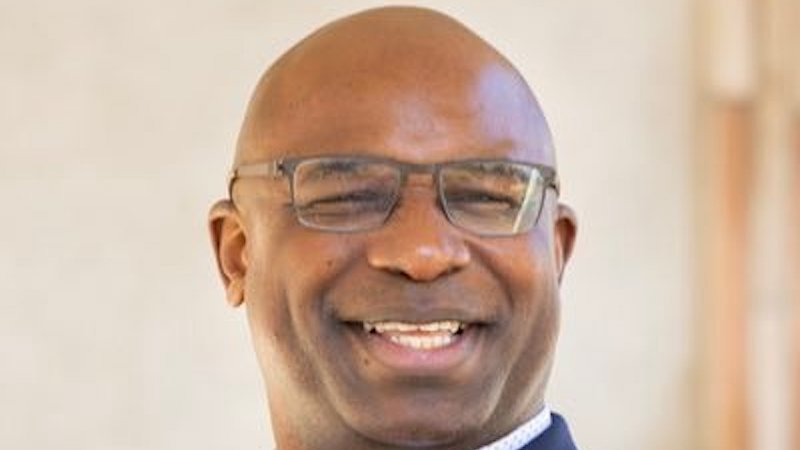
If there is one politician who epitomizes this vision of education it is Rep. Jamaal Bowman of New York. Most Americans know nothing about him, with the notable exception of the irresponsible prank he pulled off last fall: he intentionally set off a false fire alarm in the Cannon House Office Building. He was duly censured by the House for committing this criminal act.
Bowman took office in 2021 and fast became a member of the “Squad”; they are the most radical left-wing members in Congress. He made campaign promises when running for office in 2020 that were so extreme that even he had to walk away from some of them. [Note: What follows can no longer be found on his campaign website or his congressional one.]
Bowman is an enemy of school testing, not just standardized tests. He says those who believe in testing are part of a “test-and-punish regime,” one that stigmatizes students, teachers and schools that don’t pass the grade. He also doesn’t want to punish unruly students. “Instead of punitive discipline, such as suspensions and expulsions,” he advises, “let’s invest in restorative justice and trauma-informed pedagogy and care.” So when violence breaks out, bring in the therapy dogs.
Bowman listed 20 reforms that should be implemented in the elementary and secondary schools. We need more social workers and counselors, and less police officers. The professional talkers, he says, are best suited for dealing with students who refuse to go to school. This is his plan to “decriminalize truancy.”
Students should be required to spend “at least 60 minutes of gym/and or recess per day.” He does not say how much time should be spent on reading, writing, math and science.
Bowman wants to reform higher education as well. He wants free schooling in the public colleges and universities. Students should also be given grants to cover their living expenses. “This can be largely funded through raising taxes on Wall Street and a wealth tax.” For some reason, he did not apply his policy to Hollywood moguls or professional athletes.
The same wealthy Wall Streeters should also have to pay for all student loan debt. He does not say what is to be done about all those students and parents who shelled out hundreds of thousands of dollars for their loans.
Should private colleges and universities also be tuition free? No. He says they shouldn’t even be allowed to exist. “Ban for-profit colleges.” Did you hear that Harvard?
What makes Bowman’s utopia so rich is that he wants to kill all charter schools, knowing full well that they are the best public school hope for minority students. Moreover, he ran a successful charter school before becoming a congressman.
In 2009, Bowman was the founding principal of Cornerstone Academy for Social Action Middle School in Manhattan; it was part of an educational initiative launched by New York City Mayor Michael Bloomberg. Like most charter schools, it quickly earned a stellar record. Bowman credited “High expectations” as the reason he succeeded.
So why would Bowman now want to drive charter schools out of business? Why would he want to force black kids to go to lousy public schools? Moreover, if having high expectations for black students worked well in his charter school, why the shift to low expectations now?
We know that the teachers unions give lavishly to Democrats who want to destroy charter schools, but if that is enough for Bowman to take the low road and sell out his fellow African Americans, then he has obviously become their enemy.
When Bowman was born in 1976, he lived in the East River Houses in East Harlem, more popularly known then as Spanish Harlem. I taught down the block from those units at that time, working with African American and Puerto Rican students in a Catholic school. My students were a model of academic excellence. One reason why they succeeded is because I demanded much from them.
There is nothing more racist than to treat blacks as second-class citizens, expecting little from them. But that is the way liberals treat them, including black radicals like Jamaal Bowman.
Contact Sarah Iddrissu, Bowman’s chief of staff:;Sarah.Iddrissu@mail.house.gov
John Dalberg-Acton quoted that Power tends to corrupt, and absolute power corrupts absolutely. Great men are almost always bad men, even when they exercise influence and not authority, still more when you superadd the tendency or the certainty of corruption by authority. This quote unequivocally demonstrates a sharp correlation between corruption and power.
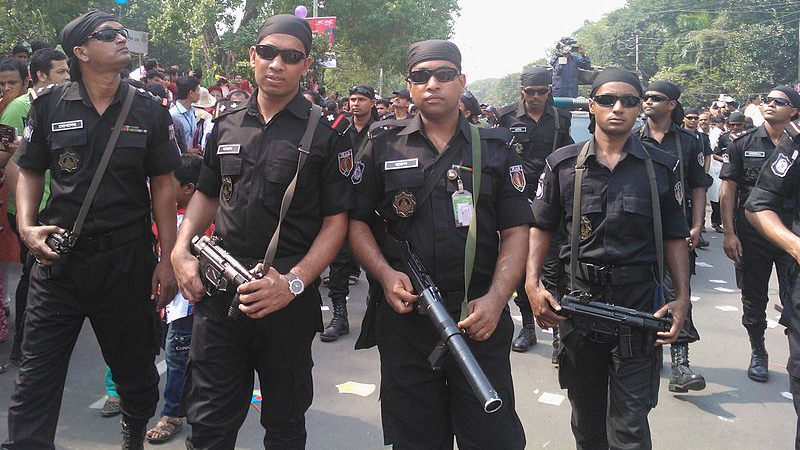
Arbitrary use of discretionary power by government officials can cause serious dissatisfaction in the citizen’s mind. In recent investigative reports of Al Jazeera and DW, law enforcement agencies in Bangladesh Specially RAB and Bangladesh Army have been accused of illegally using their power under the political government to support a particular group or interest. Such conduct would be alarming for society, as it violates democratic values and fundamental human rights. Such practice should not be allowed by our accountability system to happen. What role do the various other state agencies play in Bangladesh in regulating and counterbalancing the discretionary power of law enforcement agencies, if they are indeed engaged in such activities?
Law enforcement agencies strive to ensure public safety and hold criminals accountable for their actions, as they are given such power. They are the troops of the state, boosted with power by ceding the freedom and power of mass people for their protection. Over the decades, these agencies haven’t only served the people in their country but also ensured the safety of cross-border people. Since independence, Bangladesh has experienced a myriad of political upheavals, calamitous occurrences, and widespread societal upheaval. However, it is noteworthy that the bureaucracy and law enforcement agencies, renowned for their unwavering discipline, have consistently demonstrated their unwavering commitment to serving the nation without fail.;
After independence, in the initial years of Bangladesh there were a power balance but soon after the killing of Father of the Nation Bangabandhu Sheikh Mujibur Rahman, Bangladesh Army officials hold the power and took the charge of the state as Martial Law Administration. From 1975 to 1990s, the state machinery was under the control of the military government. In the 1990s, we evidence mass uprising for bringing democracy back in the country and citizen’s representatives took the charge of running the state through a general election procedure. From the 1990s to 2024 national election, we have seen political parties contesting in the election by placing their mandate to the citizens to gain support and win on their respective constituencies. During the election time, in most cases there were charges against the police and other law enforcement agencies to be partial for the incumbent government, but nothing could stop the voice of the citizens. But in recent times, international community is very concern about the human rights conditions, good governance indicators and social development indicators in Bangladesh. Rapid Action Battalion, an elite force under Bangladesh police, had been given sanction by the state department of United States of America back in 2021. Soon after that the number of extra judicial killing, forced disappearance and political victimization claims were declined significantly.;
In his visit last month, Donald Lu, Assistant Secretary of, the Bureau of South and Central Asian Affairs, himself praised the overall performance of the law enforcement agencies. Notably, there have been a minimal number of extrajudicial killings or alleged disappearances in the last three years after that sanction. Undoubtedly, the country’s law enforcement agencies are doing better since the government is much stricter in terms of human rights. However, sudden news about UN peacekeeping operations and the participation of Bangladeshi law enforcement agencies sparked hesitancy among the country’s mass population. What’s the purpose of this news? Is it to defame the recent goodwill of the country’s law enforcement agencies, or anything else?
The country’s law enforcement agencies provide services to the UN peacekeeping mission by adhering to their guidelines and structures. Before taking part in UN missions, peacekeepers must go through the UN’s well-established human rights screening procedure. Furthermore, there is no evidence that Bangladeshi law enforcement agencies have ever broken the UN peacekeeping code during certain operations. In addition, there is no policy within a UN mission that prohibits law enforcement agencies in Bangladesh from participating in a peacekeeping mission. This is a form of discrimination because they have been actively involved in the country’s fight against terrorism. Political motivation drives the exclusion of those who have risked their lives to combat terrorism, citing grave human rights concerns. Thus, the report completely contradicts UN policy. In the post-election period, the country is going through a hard time in terms of its financial condition. The global economic crisis is also stifling the country’s economic growth. As the country becomes increasingly concerned about its economy and focuses on enhancing its global image, unfavourable news can come as a shock to its peace-loving citizens. Such news can damage the image of the country’s law enforcement agencies, reducing their position in UN peacekeeping operations.
At present, we are living in a networked society where digital technologies intimately connect people. Technology and networked forms of communication have a role in mediating the interactions between people and their countries. The media’s role in such a networked society has always been a subject of debate, as they struggle to fulfil their ideal role in this context. They are being biased for political gain and spreading such news to the people who will set their agendas. They are making trials for the country’s law enforcement agencies, fostering a culture of hasty judgment without a thorough understanding of the facts, and disseminating these judgments through the network in a manner that could quickly become viral without proper balance. We acknowledge that a hasty trial or judgment cannot yield accurate outcomes. The UN provides proper rules and regulations for participation in the UN peacekeeping mission. If certain law enforcement agencies violate any existing rule, we should question their participation. Otherwise, it will merely manifest as a form of clickbait, aiming to garner rapid acclaim without undergoing adequate foundational research.
By Martin Plaut
It is difficult to overestimate just how significant the May 29 election has been for South Africans. The deluge swept away old certainties and revealed a new political landscape. The Election Commission declared the result free and fair, and so it was.
At its most basic, the election repeated lessons from abroad: Over time, parties that lead nations in their fight against colonialism lose their gloss. The Indian National Congress or the Kenyan African National Union are cases in point. When the reality of running a country comes home to roost, voters gradually become disillusioned.
In South Africa, the proportional representation system exacerbated this disillusionment. Voters elect national lists and are deprived of someone to represent their own suburbs, towns and villages in parliament. Further, the low vote threshold allowed dozens of tiny parties to emerge, eroding the vote shares of the once mighty African National Congress (ANC).
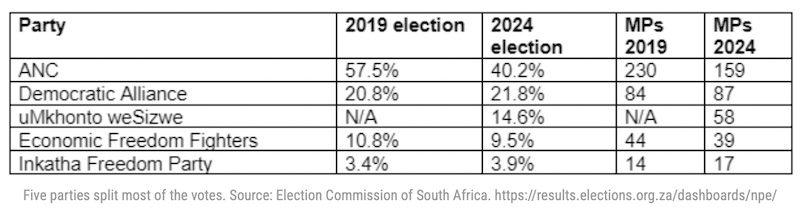
South African voters are unhappy, and only;58.6%;of them turned out to vote this year, down from 66% in 2019. Still more dramatically, the ruling ANC dropped to 40.2% from 57.5%. This is the first time that the ANC has failed to win a majority since the implementation of universal suffrage in 1994.
“Doomsday coalition”
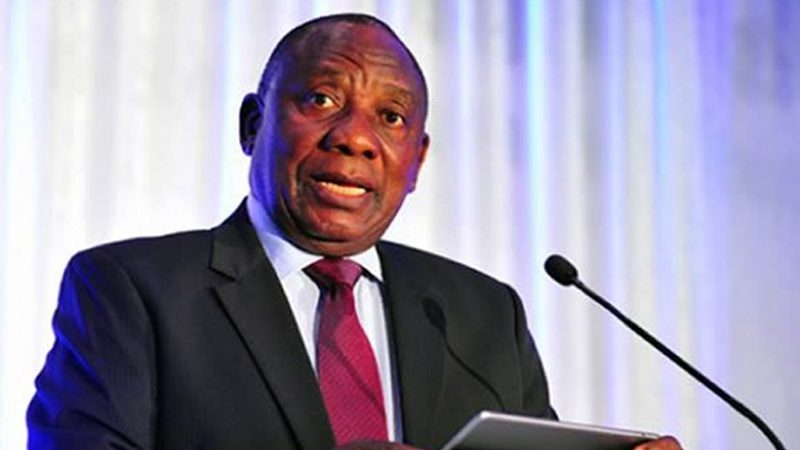
The ANC can no longer rule alone. What should it do now? The party has;rejected;suggestions that President Cyril Ramaphosa fall on his sword and resign — at least for the moment. Ramaphosa and other party higher-ups have been;locked in meetings;all weekend. The National Working Committee of the ANC met on Monday, followed by the National Executive Committee meeting today.
The choices the party faces are stark. One path would lead to an alliance with the new party of former President Jacob Zuma, uMkhonto weSizwe (MK). The party is so new and so dependent on Zuma’s charisma that it could hardly forge a stable relationship with the ANC. It is also deeply critical of the judiciary and the constitution.
The other possibility for the ANC would be to seek a relationship with the Economic Freedom Fighters (EFF) of Julius Malema. They are sometimes described as “radical,” but in reality, they combine xenophobia against Africans from the rest of the continent with demands for the seizure of land and wealth.
Either alliance would see an acceleration of capital flight, combined with an exodus of skilled South Africans, black and white.;
“The reality is if we do end up with an ANC-EFF or ANC-MK (coalition) there will be initial market jitters,”;said;Mandisa Zavala, head of asset allocation at financial firm Alexforbes in Johannesburg. Zavala predicted that this could spark an outflow from government bonds and pressure on the currency. The official opposition, the Democratic Alliance (DA),;described;a potential alliance ANC–EFF alliance as a “doomsday coalition.”
A government of national unity?
Alternatively, the ANC could take a completely different direction. Dr. Frans Cronje, chair of the Social Research Foundation,;arguesthat the ANC really has only one alternative: to seek an alliance with the DA. This would require both parties eating a good deal of humble pie, since they have engaged in vitriolic attacks on each other.
The ANC is strongly statist, arguing that only the government can really run major institutions and redistribute jobs and wealth to the black majority. In reality, this has meant redistributing wealth to the ANC elite, in gross corruption that was termed “state capture” by an;official enquiry. The DA — which has been holding its own;meetings— takes exactly the opposite approach. While it believes in state payments to lift the poor out of poverty, it is strongly free-market in its economics. It is difficult to see how the approaches can be reconciled.
Perhaps the DA could offer the ANC a “confidence and supply” arrangement. It would allow the ANC to hold the presidency, but would possibly take the influential position of speaker of parliament in return for guaranteeing that the ANC get its budget adopted. Still, the DA would seek other assurances. Many measures would be negotiated bill by bill as they came up for debate.
Such an arrangement could provide South Africa with a degree of stability and a generally centrist governance. This would be in line with the views of the majority, who are mostly Christian and conservative in outlook.
Instead of a confidence and supply arrangement, it is not impossible for the ANC and DA to form a full national unity coalition. However, the DA, as the potential smaller partner, is wary of being forced to compromise too greatly.
The situation is anything but clear. Many options could be considered before the dust settles. South Africans, along with their neighbors who rely so heavily on their regional economic strength, will be looking on nervously.
The views expressed in this article are the author’s own and do not necessarily reflect Fair Observer’s editorial policy.
- About the author: Born in South Africa, Martin Plaut is currently senior research fellow at the Institute of Commonwealth Studies and holds the same post with King’s College London. He studied at the Universities of Cape Town, Witwatersrand and Warwick before joining the Labour Party as secretary on Africa and the Middle East. In 1984 he joined the BBC, working primarily on Africa. He became Africa editor at World Service News, retiring in 2013. Plaut has advised the British and American governments, as well as the European Parliament. He has published widely on the Horn of Africa and southern Africa.
- Source: This article was published by Fair Observer
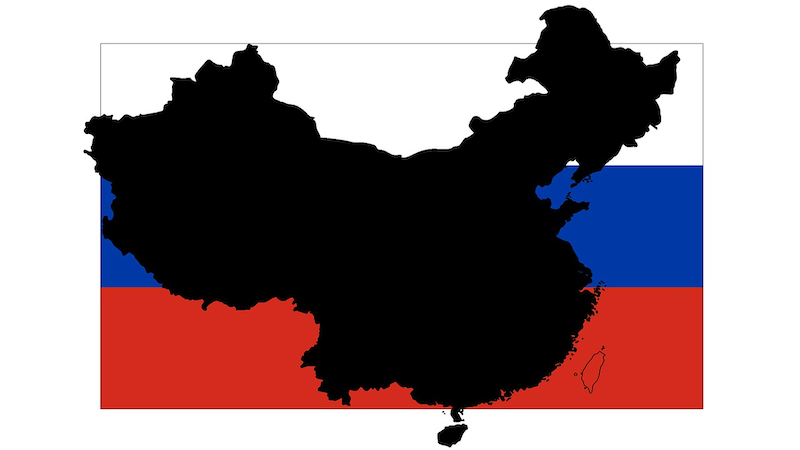
Russia’s economic problems and Moscow’s growing need for money and more industrial production to support its war effort in Ukraine are forcing the Kremlin to take a step that it has long avoided. The Kremlin has agreed to allow China to develop mines and processing facilities not in some distant part of the Russian Federation but in Moscow oblast, the region that immediately adjoins the Russian capital (Vpoanalytics.com, May 27).
The Chinese have long wanted to carry out such plans, but Moscow officials have resisted due to environmental concerns, the problematic optics of Chinese involvement, and the risk that Chinese exploitation of mines and processing industries will spark environmental protests close to the Kremlin. Such protests could then grow into more dangerous political demonstrations, as has been the case elsewhere in the country (see EDM October 6, 2020, January 23, February 8, 27;Realtribune.ru, January 18).
Now, because of Russian President Vladimir Putin’s need for Chinese help, the Kremlin is opening the way for Chinese involvement in an environmentally fraught industry in Moscow oblast. This development will likely stoke problems at home and could ultimately threaten both the Kremlin leader and his alliance with China.
Russia has a long history of mining in Moscow oblast. The development of extractive industries there, however, has been relatively slow because of population pressures and because the exploitation of similar mineral deposits elsewhere has been cheaper. In the years after World War II, there was greater interest in developing mines near Moscow due to the disruption of the Soviet transportation network caused by the war. As a result, Moscow gave expanded attention to the mines in Moscow oblast, and, in 1953, signed an agreement with Beijing to have Chinese experts and workers develop them. The agreement, which was supposed to go into force in 1954, was never implemented. Thus, the mines of Moscow oblast never became “the klondike,” as some Russian commentators had hoped (Vpoanalytics.com, May 27).
Those favoring such Chinese involvement in Moscow oblast’s mines and chemical industries periodically raised the possibility that Beijing could help. They were effectively blocked, however, until the last decade by those concerned about environmental degradation and the potential for protests (Kommersant, August 28, 2012). Since the beginning of Putin’s expanded war against Ukraine and his “turn to the east,” those officials who opposed such an opening for the Chinese have been elbowed aside (see;EDM, January 23).
In early 2023, with the Kremlin’s blessing, Moscow oblast signed agreements with Chinese firms to develop mines and mineral processing facilities in the region (Tsargrad.tv, March 20, 2023;;Agroxxi.ru, January 14). In the months since, China has begun reopening mines in the oblast, which Russian officials closed in the early 1990s. By the start of 2024, the new Chinese mines and plants were projected to provide as many as 10,000 new jobs, something the governor of the oblast celebrated during a visit to Beijing in May (Rossiyskaya Gazeta, May 19).;;;
China is now involved in mining a wide variety of minerals throughout the oblast. Oil, coal, phosphorites, and rare earth minerals such as titanium and lithium are among the natural resources that Chinese firms are now involved with or plan to be in the near future (Tdofk.ru, accessed June 4). These mines are located in places ranging from the edges of the oblast in the south and west to places very near the border of the city of Moscow. As a result, some or all of these look to be the source of environmental degradation. Such a development will likely spark local protests, as similar outcomes have in Shiyes, Siberia, and Bashkortostan, that could quickly spread to other places (Publizist.ru, July 4, 2019;;Window on Eurasia, July 6, 2019;;Novaya Gazeta, October 9, 2019).
In all such cases, environmental “not in my backyard” protests have become political and rapidly turned into attacks, not against local and regional officials as well as Moscow and Putin’s authoritarian system (Window on Eurasia, October 30, 2019; Region.expert, August 18, 2020). This is particularly the case when the Kremlin has chosen to support the involvement of a foreign country (e.g., China) against the local population (Kasparov.ru, January 10, 2020).
The problems these protests have posed, however, have been limited by the fact that such demonstrations, as massive as they have been (the protests in Shiyes were the longest-lasting and those in Bashkortostan the largest in recent decades), took place far from the Russian capital. As a result, they received less coverage in the central media and could be countered more easily than any taking place in Moscow or another major Russian city.
Now, the Kremlin itself has opened the door to the possibility of such protests close to its walls by allowing the Chinese to take the lead in developing two of the most ecologically dangerous industries—mining and the processing of minerals and chemicals. This is taking place in a region where many Russians live and work. That makes it almost a certainty that if there are problems, and the Chinese record of economic development is such that there almost certainly will be, and if protests do arise in Moscow oblast, they will become political and likely link up with opponents of the Putin regime in the Russian capital.
The Kremlin is undoubtedly aware of that risk. After all, it avoided taking such drastic measures for half a century. However, like the Bourbons, officials in the Kremlin appear to have “remembered nothing and forgotten nothing.” That means the Kremlin can likely take advantage of Chinese involvement in the Moscow oblast with little risk if it increases repression to prevent any upsurge in popular protest.
Such a strategy may prove counterproductive, not only because it threatens to politicize and nationalize protest. It will also highlight for Russians in the capital and, more generally, that the Kremlin, for all its talk about being a defender of “the Russian world,” has allied itself with China against the Russian people and their well-being. That is a recipe for long-term disaster, regardless of how attractive the immediate results of earnings and products of nearby Chinese mines and processing plants may be to the Kremlin.
- This article was published at The Jamestown Foundation
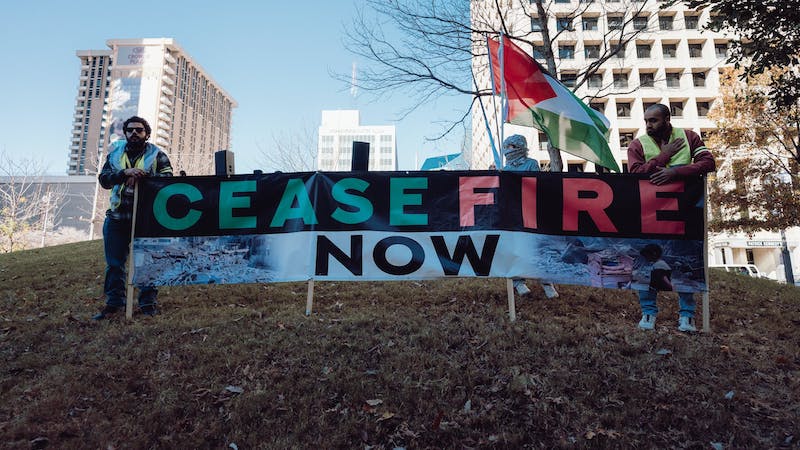
The Israel-Hamas war, which was precipitated by Hamas’ savage attack on Israel, has tragically inflicted massive death and destruction on the Palestinians in Gaza. Although Israel’s retaliation is deemed disproportionate to the number of Israelis slaughtered by Hamas, Israel’s onslaught on Gaza should not be sinisterly classified as an act of genocide
By Alon Ben-Meir*
I condemn in the strongest terms the death of any innocent Israeli or Palestinian, regardless of the circumstances that wrought their untimely death. However, righting the wrong in any violent conflict is never served by quickly jumping to conclusions and accusing one party or the other of committing crimes on the scale of genocide, as Israel has been accused of committing against the Palestinians.
By definition, the Israeli invasion of Gaza and its continuing unfolding havoc and devastation;do not meet the criteria of genocide.
The;Convention on the Prevention and Punishment of the Crime of Genocide, adopted by the UNGA in 1948, defines genocide as “acts committed;with intent to;destroy, in whole or in part, a national, ethnical, racial or religious group,;as such: (a) Killing members of the group; (b) Causing serious bodily or mental harm to members of the group; (c) Deliberately inflicting on the group conditions of life calculated to bring about its physical destruction in whole or in part;; (d) Imposing measures intended to prevent births within the group; (e) Forcibly transferring children of the group to another group.” [emphasis added]
The assumption is that clauses A and B apply to the Israeli army’s efforts to capture or kill Hamas operatives, as in pursuing that, thousands of innocent Palestinians were killed. And, no doubt, had Israeli forces been more cautious, especially at the initial stages of the war, many Palestinian lives would have been spared.
But sadly, Hamas’ unfathomably barbaric attack brought to life images of the Holocaust to many Israelis and obscured both their moral values and rationality. For many Israelis, revenge and retribution were instinctive emotional reactions, and while some of the initial bombings were carried out with little or no consideration of the collateral damage they could cause, the;intention, critical to the definition of genocide, was to eliminate Hamas terrorists, not the civilian population of Gaza.
One such horrific case is an Israeli air strike in Rafah on May 26, which hit a camp sheltering displaced civilians in Tal al-Sultan and reportedly killed at least 46 civilians, including 23 women, children and older persons. UN experts;said, “These barbaric attacks are a flagrant violation of international law.
Genocide by definition vs. consequences
They are also an attack on human decency and our collective humanity.” Although Israel claims that the strike on the camp was accidental, it is still inexcusable. But then, irrespective of how heart-wrenching the Israeli strike was, it is not akin to genocide.
It is essential to distinguish what constitutes genocide by definition and its consequences. One modern genocide occurred in Bosnia and Herzegovina in July 1995 at Srebrenica.
The International Criminal Tribunal for the former Yugoslavia (ICTY) ruled that “the intent to kill all the Bosnian Muslim men of military age in Srebrenica constitutes an;intent to destroy in part the Bosnian Muslim group;within the meaning of Article 4 and therefore must be qualified as a genocide.”
Up to 8,000 Bosnian Muslim men and boys were lined up and;executed, nearly 2,000 are still missing, and up to 30,000 Bosnian Muslim women, children, and elderly persons were forcibly transferred.
Another fitting example is the Armenian Genocide which occurred between 1915-1918, when Armenians were forcibly;deported;from the eastern part of the Ottoman Empire, including through forced marches where they faced starvation and massacres.
Those who survived the marches were sent to concentration camps near modern Turkey’s southern border with Syria.;Over 1 million Armenians died over the period, with the rest of the Armenian population living in the diaspora. Currently, over 30 countries recognize the Armenian Genocide.
And, of course, in the Holocaust, 1933-1945, 6 million Jews and 5 million non-Jews were;murdered;over this period by Nazi Germany, including Roma, Sinti, homosexuals, religious leaders who refused to support the regime, and people with disabilities. The Auschwitz camps alone were responsible for the execution of 960,000 Jews from 1940-1945.
These acts against other groups of different ethnicities were characterized as genocides because they were “committed;with intent to;destroy, in whole or in part, a national, ethnical, racial or religious group.” Israel did not intend to destroy;“in whole or in part”;the Palestinians in Gaza but intended to destroy Hamas as a terrorist organization.
What is deeply troubling, however, is the frequent nonchalant association of genocide with Israel as if it were a given, and often to cheering audiences without giving the matter and its implications serious thought.
In mid-May, I attended the Mailman School of Public Health graduation ceremony at Columbia University. I was shocked to hear the speech delivered on behalf of the student body.
The speaker accused Israel of committing genocide against Palestinians five times in her presentation to the cheering of several thousand students, guests, and faculty members. To level such an accusation on that auspicious setting in an Ivy League university with a significant Jewish student body was appalling.
The normalization of associating genocide with Israel, as if it is a matter of fact,;is extremely dangerous, mainly because the majority of non-Jews do not differentiate between Israeli Jews and diaspora Jews, which risks, in this case, the safety of Jewish students.
Moreover, this sort of narrative expressed casually by anyone gives free rein not only to the Jews’ traditional enemy—white supremacists—but also to non-Jews who need easy prey to satisfy their innate hatred of Jews, and gives rise to endemic antisemitism.
Thus, although antisemitism existed from time immemorial, the spike of antisemitism is not accidental. The Gaza war and the escalating tragic death toll of Palestinians, coupled with the occupation and the frequent killing of Palestinians in the West Bank, give further credence to the antisemites’ contention that the Jews are the real enemy.
Sadly, extremist right-wing Israeli officials, especially the two messianic lunatics Ben-Gvir and Smotrich, add fuel to the fire of antisemitism when they recklessly call for ridding all Palestinians from the “Land of Israel,” which is, of course, ethnic cleansing to the letter: “… a purposeful policy designed by one ethnic or religious group to remove by violent and terror-inspiring means the civilian population of another ethnic or religious group from certain geographic areas,” as defined by;S/1994/674, the final report on crimes committed in Bosnia and Herzegovina in 1992.
In March, South Africa submitted a case to the International Court of Justice (ICJ) accusing Israel of genocide, requesting provisional measures that the court order Israel to end its military operations in Gaza. In January, the ICJ determined in an order that it does have standing to “entertain the case,” which is not a ruling – just an acknowledgment of South Africa’s standing to present the case.
The Court is also of the view that Israel must take all measures within its power to prevent and punish the direct and public incitement to commit genocide against members of the Palestinian group in the Gaza Strip.
In essence, the ICJ has;not;ruled that Israel has committed genocide but rather that it must;take all possible measures to prevent genocide from taking place,;which in some way, may well be attributed to the dangerously loose tongues of Ben-Gvir and Smotrich, who put Israel to shame in the eyes of the international community.
To be sure, Israel has not and is not committing genocide against the Palestinians, but the horror rained on the Palestinians is unspeakable by any definition. Unless they embrace humanity and peaceful coexistence, the continuing violent conflict and the massive losses both sides will continue to sustain are tantamount to nothing less than mutual suicide.
- Dr. Alon Ben-Meir is a retired professor of international relations, most recently at the Center for Global Affairs at New York University (NYU). He taught courses on international negotiation and Middle Eastern studies.
Categories
NPR News: 06-05-2024 12PM EDT
NPR News: 06-05-2024 12PM EDT
Learn more about sponsor message choices: podcastchoices.com/adchoices