
https://t.co/hUkfsKu59y
Путин – это Рязанский татарин Бутин, слуга “Батый-Хана”.#NewsAndTimes #NT #TNT #News #Times#World #USA #POTUS #DOJ #FBI #CIA #DIA #ODNI#Israel #Mossad #Netanyahu#Ukraine #NewAbwehr #OSINT#Putin #Russia #GRU #Путин, #Россия #SouthCaucasus #Bloggers… https://t.co/ukGHF0vQ6a pic.twitter.com/anWUdJPKKd— Michael Novakhov (@mikenov) June 5, 2024
Day: June 5, 2024
By Felix Corley
The criminal trial of Ukrainian Orthodox Church (UOC) priest Fr Kostiantyn Maksimov on charges of “espionage” is due to begin on 6 June after more than a year in Russian detention. It appears that the trial will take place at the Russian-controlled Zaporizhzhia Regional Court in the occupied city of Melitopol. If convicted, the 41-year-old priest faces a prison term of 10 to 12 years.
Seized by Russian occupation forces in May 2023, Fr Kostiantyn is known to have been held in Investigation Prison No. 2 in the Crimean capital Simferopol since at least February 2024. It remains unclear if he will be taken to Melitopol or participate in the trial via videolink from prison in Crimea (see below).
Fr Kostiantyn’s mother, Svetlana Maksimova, would like to be able to attend the trial. But the long journey through third countries, with no guarantee she would be allowed in, make such a journey unrealistic, she told Forum 18 (see below).
Fr Kostiantyn is facing trial under Article 276 (“Espionage”) of the Russian Criminal Code. It is illegal under international law for Russia to enforce its own laws on occupied Ukrainian territory, as Russia is required to leave Ukrainian law in force (see below).
If convicted and sentenced to a jail term, Fr Kostiantyn is likely to be transferred to a prison in Russia, despite this breaking the Geneva Convention (IV) relative to the Protection of Civilian Persons in Time of War (see below).
Zaporizhzhia Regional Court did not answer Forum 18’s questions as to which Judge will be presiding over the trial and whether Fr Kostiantyn will be present in court or will join the hearing by videolink from the Investigation Prison in Simferopol (see below).
The occupation forces’ Zaporizhzhia Region Prosecutor’s Office in Melitopol would not say by phone who would be leading the prosecution case against Fr Kostiantyn in court. Nor has it responded to written questions (see below).
Russian occupation forces have a record of fabricating false charges against those they dislike.
Artyom Sharlay, the head of the Russian occupiers’ Religious Organisations Department at Zaporizhzhia Regional Administration’s Social and Political Communications and Information Policy Department, claimed to Forum 18 in October 2023 that Fr Kostiantyn had not wanted the Berdyansk Diocese of the Ukrainian Orthodox Church (UOC) to move to be an integral part of the Russian Orthodox Church. The Russian Orthodox Church took over the Diocese in May 2023 (see below).
A Protestant in her early fifties is also facing criminal trial at the Russian-controlled Zaporizhzhia Regional Court in occupied Ukraine. The Russian occupation forces arrested her in early 2024. She is being prosecuted for remarks she allegedly made at a prayer meeting in a home in the occupied city of Melitopol in July 2023 (see below).
The Russian occupying forces disappeared two Greek Catholic priests – Fr Ivan Levytsky and Fr Bohdan Heleta – in Berdyansk in Zaporizhzhia Region in November 2022. Both priests now in 2024 appear to be facing criminal trial, under false charges related to weapons, explosives, and allegedly “extremist” texts the Russian occupation forces claim to have found in Berdyansk’s Church of the Nativity of the Blessed Virgin (see below).
Russia’s Ombudsperson Tatyana Moskalkova claimed on 23 May that Russia had proposed to the Ukrainian side to exchange two Catholic priests for two Orthodox priests. “But Ukraine, for absolutely unknown reasons, did not agree to such an exchange,” she claimed. She did not name the priests, but Fr Ivan and Fr Bohdan are the only two Catholic priests known to be in Russian detention (see below).
“I recently visited the Catholic priests in their place of detention and made sure that the conditions corresponded to international standards,” Moskalkova claimed. “On their part, only one request was made, to see their family and friends as quickly as possible” (see below).
Moskalkova did not say when and where the alleged meeting took place. However, she visited Russia’s Rostov Region on 2 May. The following day she was in Ukraine’s Russian-occupied Donetsk Region. There she visited the town of Horlivka (Gorlovka in Russian), together with the Russian-appointed Human Rights Ombudsperson for Donetsk, Darya Morozova. It is possible that Moskalkova and Morozova met Fr Ivan and Fr Bohdan in Russia’s Kalinin Labour Camp in Horlivka (see below).
Neither Moskalkova nor Morozova replied to Forum 18’s questions about the reported meeting with Fr Ivan and Fr Bohdan (see below).
The Donetsk Exarchate of the Greek Catholic Church – to which Fr Ivan and Fr Bohdan belong – told Forum 18 it has received no news of the two priests. It said it had no confirmation that Moskalkova had visited Fr Ivan and Fr Bohdan. However, the fact that Moskalkova talked about them appears to show that they are alive and is a “good sign”, chancellor Fr Andriy Bukhvak told Forum 18 (see below).
Russia’s Kalinin Labour Camp in Horlivka did not respond to Forum 18’s questions as to – if it is holding the two priests – whether they can exercise freedom of religion or belief; whether they have access to lawyers; and what is preventing them being returned to their families (see below).
Russian occupiers’ pressure on religious communities
Russian occupation authorities have repeatedly tried to pressure priests of both the Orthodox Church of Ukraine (OCU) and the Ukrainian Orthodox Church linked to the Moscow Patriarchate (UOC) to join new dioceses the Moscow Patriarchate Russian Orthodox Church has unilaterally established on occupied Ukrainian territory. Both OCU and UOC clergy have been disappeared after they have refused.
Unknown men from the Russian occupation forces seized 59-year-old Fr Stepan Podolchak of the Orthodox Church of Ukraine (OCU) on 13 February in the Ukrainian village of Kalanchak in the Russian-occupied part of Kherson Region. They took him away barefoot with a bag over his head, insisting he needed to come for questioning. His bruised body – possibly with a bullet-wound to the head – was found on the street in the village on 15 February.;No one appears to have been arrested or punished for Fr Stepan’s torture and murder.
Russian occupation forces in Zaporizhzhia Region not only;banned four religious communities;– including the Greek Catholic Church – in the occupied parts of the Region in December 2022, they also drove out the five Greek Catholic priests who were serving in the 10 or so parishes in and around Melitopol.
Occupation officials have also;pressured and tortured Muslim clergy;and pressured mosque communities if they refuse to join Russian-controlled Islamic structures.
Occupation authorities have;closed and seized many places of worship;of communities they do not like.
Russian occupiers disappeared Fr Kostiantyn in May 2023
Ukrainian Orthodox Church (UOC) priest Fr Kostiantyn Vyacheslavovich Maksimov (born 16 March 1983) served as priest of the UOC’s Church of the Assumption of the Blessed Virgin Mary in the city of Tokmak in Ukraine’s Zaporizhzhia Region. He chose to remain there when Russian forces occupied the area in early 2022.
Russian occupation forces;detained Fr Kostiantyn in the southern town of Chongar;when he attempted to cross the administrative boundary with the occupied Ukrainian territory of Crimea in May 2023.
Artyom Sharlay, the head of the Russian occupiers’ Religious Organisations Department at Zaporizhzhia Regional Administration’s Social and Political Communications and Information Policy Department,;claimed to Forum 18 in October 2023;that Fr Kostiantyn had not wanted the Berdyansk Diocese of the Ukrainian Orthodox Church (UOC) to move to be an integral part of the Russian Orthodox Church. The Russian Orthodox Church took over the Diocese in May 2023.
Sharlay did not answer his phone on 3 or 4 June 2024.
Fr Kostiantyn’s whereabouts have been uncertain since occupation forces seized him. Yelena Shapovalova, the head of the Bar Association in the Russian-occupied part of Zaporizhzhia Region,;told Forum 18 from Melitopol on 8 Aprilthat Fr Kostiantyn had been held at the temporary holding centre in Melitopol while the pre-trial investigation was underway. She declined to say where he was after that. She did not respond to further questions or calls in late May and early June.
Forum 18 has learnt that after being initially held in Melitopol, Fr Kostiantyn was transferred to a Russian detention centre in occupied Donetsk Region. In or before February 2024, the Russian occupiers transferred him to Investigation Prison No. 2 in the Crimean capital Simferopol. He remains there.
Fr Kostiantyn’s mother Svetlana Maksimova has been searching for her son since he was detained, trying to seek answers from the Russian and the Ukrainian authorities. She worries about his physical wellbeing. “He was in his summer clothes when they took him in May 2023,” she told Forum 18. “He has been allowed no parcels while in prison.”
The Russian occupation authorities opened the second Investigation Prison in Simferopol in October 2022. Forum 18 was unable to reach Investigation Prison No. 2 by phone in late May or early June.
Fr Kostiantyn’s address in Investigation Prison:
295051 Respublika Krym
g. Simferopol
per. Elevatorny 4
FKU Sledstvenny izolyator No. 2 UFSIN Rossii po Respublike Krym i g. Sevastopolyu
Criminal case against Fr Kostiantyn
The Russian occupation forces’ Zaporizhzhia Region Prosecutor’s Office;opened a criminal case;against Fr Kostiantyn in February 2024. It claimed in a 29 March 2024 announcement that in Tokmak between April 2022 and February 2023, Fr Kostiantyn “using an Internet messenger, transmitted to an employee of the Ukrainian security service information with the coordinates of the deployment of Russian air defence technical equipment located in the city and district”.
The Prosecutor’s Office announcement gave no evidence for its claims and made no reference to Fr Kostiantyn’s status as a priest.
“The accomplice of the Ukrainian special services was caught transferring confidential data to his overseers in Kyiv,” local pro-Russian politician Vladimir Rogov;claimed on his Telegram channel on 31 March 2024. “The information leak threatened the security of Russia and all residents of the Zaporizhzhia Region.”
Russian occupation forces have a record of fabricating false charges against those they dislike.
Prosecutors prepared a case against Fr Kostiantyn under Article 276 (“Espionage”) of the Russian Criminal Code. They then handed the case to Zaporizhzhia Regional Court in the occupied city of Melitopol, the Russian Prosecutor’s Office;announced on 29 March.
It is illegal under international law for Russia to enforce its own laws on occupied Ukrainian territory, as Russia is;required to leave Ukrainian law in force.
The Russian-occupied or partially-occupied regions of Ukraine – including Zaporizhzhia where Fr Kostiantyn is facing prosecution – which Russia;illegally claimed to have annexed in 2022;– began;imposing punishments under Russia’s Criminal and Administrative Codes in late 2022;in courts which Russia controls.
The official who answered the phone on 4 April at the occupation forces’ Zaporizhzhia Region Prosecutor’s Office – who did not give his name –;claimed not to have information in Fr Kostiantyn’s case.
The duty official at the Russian Investigative Committee for the occupied part of Zaporizhzhia Region, who did not give his name,;refused to say on 8 April;if its investigators had prepared the criminal case against Fr Kostiantyn.
No exchange
Fr Kostiantyn’s mother Svetlana Maksimova had hoped her son would be released as part of a prisoner exchange between Ukraine and Russia.;
“We lodged documents for Kostiantyn to be included in a prisoner exchange,” she told Forum 18 from Ukrainian government-held territory. “But the Ukrainian government considers him a ‘lost person’ because it has not been officially informed where he is.” This means that Ukraine would not include him in a prisoner list to submit to the Russians, Maksimova explained.
The Ukrainian and Russian governments have held multiple prisoner exchanges since Russia launched its full-scale invasion of Ukraine in February 2022. However, negotiations are often delicate and apparent agreements often break down at the last minute.
Trial to begin on 6 June
The criminal trial of Fr Kostiantyn Maksimov on charges of “espionage” is due to begin on 6 June, Fr Kostiantyn’s mother Svetlana Maksimova told Forum 18. It appears that the trial will take place at the Russian-controlled Zaporizhzhia Regional Court in the occupied city of Melitopol. He has a lawyer named by the Russians. The family has also engaged a Kyiv-based lawyer Yuliya Bogdan.
Svetlana Maksimova would like to be able to attend the trial. But the long journey through third countries, with no guarantee she would be allowed in, make such a journey unrealistic, she told Forum 18.
No one at the Russian-controlled Zaporizhzhia Regional Court answered the phone on 3 or 4 June. Forum 18 wrote to the court the same day asking who would be the judge in the case. Forum 18 also asked whether Fr Kostiantyn would be present in the courtroom or whether he would participate by videolink from Investigation Prison No. 2 in Simferopol. Forum 18 had received no response by the afternoon locally of 4 June.
Vladimir Polukhin, the Russian-installed head of the court, did not respond to Forum 18’s message about the trial of Fr Kostiantyn;sent to his personal email address on 8 April.
Two Judges at the court, Nikita Vdovin and Roman Doroshenko,;told Forum 18 separately on 8 May;that they were not the judge in Fr Kostiantyn’s case. Asked the same day if he was the Judge in the case, Yevgeny Zadkov responded: “Get lost.”
Forum 18 asked the duty officer at the occupation forces’ Zaporizhzhia Region Prosecutor’s Office in Melitopol on 3 June who would be leading the prosecution case against Fr Kostiantyn in court. He said he could not answer any questions by phone, but that they could be sent in writing. He added that he had never met Fr Kostiantyn. Forum 18 asked in writing the same day who would be leading the prosecution case. Forum 18 had received no response by the afternoon locally of 4 June.
If convicted and sentenced to a jail term, Fr Kostiantyn is likely to be illegally transferred to a prison in Russia.
The;Geneva Convention (IV) relative to the Protection of Civilian Persons in Time of War;covers the rights of civilians in territories occupied by another state (described as “protected persons”). Article 76 includes the provision: “Protected persons accused of offences shall be detained in the occupied country, and if convicted they shall serve their sentences therein.”
Protestant facing trial for remarks at prayer meeting?
A Protestant in her early fifties has been under arrest by Russian occupation forces;since early 2024, and may already be facing criminal trial at the Russian-controlled Zaporizhzhia Regional Court. She is being prosecuted for remarks she allegedly made at a prayer meeting in a home in the occupied city of Melitopol in July 2023.
With information from Russia’s Federal Security Service (FSB), the occupation forces’ Investigative Committee;launched a criminal case;against the woman under Russian;Criminal Code Article 207.3, Part 2, Point D. This punishes “Public dissemination, under the guise of credible statements, of knowingly false information about the use of the Armed Forces of the Russian Federation” when conducted “for reasons of political, ideological, racial, national or religious hatred or enmity, or for reasons of hatred or enmity against any social group”. Punishments range from a large fine to up to 10 years’ imprisonment.
The occupation forces’ Zaporizhzhia Region Investigative Committee refused to say whether the FSB had secretly recorded the religious meeting at which the woman is alleged to have made her remarks. An official;told Forum 18 on 8 May from Melitopol;that the case had been handed to the Russian-controlled Zaporizhzhia Regional Court and that all questions should be addressed to the Court.
No one at the Russian-controlled Zaporizhzhia Regional Court answered the phone whenever Forum 18 called on 3 or 4 June.
Disappeared Greek Catholic priests in Horlivka camp?
The Russian occupying forces disappeared two Greek Catholic priests – Fr Ivan Levytsky and Fr Bohdan Heleta – in Berdyansk in Zaporizhzhia Region in November 2022.
Both priests now in 2024;appear to be facing criminal trial, under false charges related to weapons, explosives, and allegedly “extremist” texts the Russian occupation forces;claim to have found in Berdyansk’s Church of the Nativity of the Blessed Virgin.
Russia’s Ombudsperson Tatyana Moskalkova claimed on Telegram on 23 May that Russia had proposed to the Ukrainian side to exchange two Catholic priests for two Orthodox priests. “But Ukraine, for absolutely unknown reasons, did not agree to such an exchange,” she claimed. She did not name the priests, but the 47-year-old Fr Ivan and 59-year-old Fr Bohdan are the only two Catholic priests known to be in Russian detention.
“I recently visited the Catholic priests in their place of detention and made sure that the conditions corresponded to international standards,” Moskalkova claimed. “On their part, only one request was made, to see their family and friends as quickly as possible.”
Moskalkova did not say when and where the alleged meeting took place. However, she visited Russia’s Rostov Region on 2 May. The following day she was in Ukraine’s Russian-occupied Donetsk Region. There she visited the town of Horlivka (Gorlovka in Russian), together with the Russian-appointed Human Rights Ombudsperson for Donetsk, Darya Morozova.
Forum 18 wrote to the offices of Moskalkova in Moscow and Morozova in Donetsk on 30 May asking whether they had met Fr Ivan and Fr Bohdan in Russia’s Kalinin Labour Camp in Horlivka or somewhere else, and what the two priests had said about conditions they face. Forum 18 had received no response from either by the afternoon locally of 4 June.
The Global Alliance of National Human Rights Institutions (GANHRI) decided to strip Russia’s Ombudsperson’s Office of accreditation in October 2023 over a range of concerns. Among these concerns was its support of Russia’s invasion of Ukraine. GANHRI’s Sub-Committee on Accreditation added that Russia’s Ombudsperson’s Office “is not acting independently when considering human rights violations committed by Russian authorities, and is supporting positions and actions of the Russian authorities against international norms”.
The Donetsk Exarchate of the Greek Catholic Church – to which Fr Ivan and Fr Bohdan belong – told Forum 18 on 3 June that it has received no news of the two priests. It said it had no confirmation that Moskalkova had visited Fr Ivan and Fr Bohdan.
However, the fact that Moskalkova talked about them appears to show that they are alive 18 months after they were seized and is a “good sign”, Fr Andriy Bukhvak, chancellor of the Donetsk Exarchate, told Forum 18.
It is possible that Moskalkova and Morozova met Fr Ivan and Fr Bohdan in Russia’s Kalinin Labour Camp in Horlivka. The Russians have held many prisoners of war and other detainees in the camp since their renewed invasion of Ukraine in February 2022.
Forum 18 was unable to reach Russia’s Kalinin Labour Camp in Horlivka by phone in late May or early June. On 3 June, Forum 18 wrote to Andrei Felendash, its acting head, asking (if Fr Ivan and Fr Bohdan are indeed there):
– what conditions are like in the camp;
– whether they can exercise freedom of religion or belief, including by having religious literature and praying;
– whether they have access to lawyers;
– and what is preventing them being returned to their families.
Forum 18 had received no response by the afternoon locally of 4 June.
The address of the Russian Labour Camp in Horlivka, where Fr Ivan and Fr Bohdan might be being held:
Donetskaya narodnaya respublika
g. Gorlovka
ul. Nemirovicha-Danchenko
Kalininskaya ispravitelnaya koloniya
By Dalia Al-Aqidi
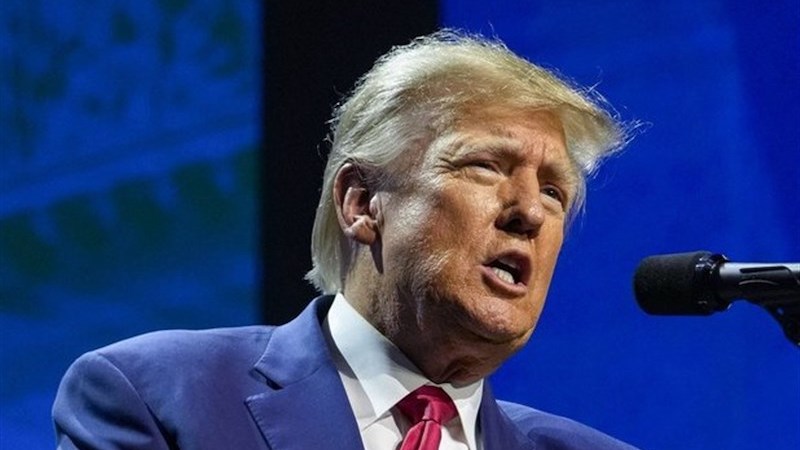
Former US President Donald Trump has vehemently denounced his criminal trial in New York, describing it as “extremely unfair” after being convicted last week of falsifying accounting records to cover up a payment intended to silence an adult film actress. The high-profile trial culminated in 34 guilty verdicts related to a $130,000 payment to Stormy Daniels, with whom he allegedly had an affair before the 2016 presidential election.
In a fiery speech from the lobby of Trump Tower in Manhattan, Trump — who is once again the Republican candidate for the upcoming November election — did not hold back his contempt for the legal proceedings and the current administration. He accused Democratic President Joe Biden and his administration of being “sick” and “fascists,” framing the trial as a politically motivated attack designed to undermine his candidacy.
The former president passionately criticized the decision, labeling it “unfair” and the trial itself as “fake.” He asserted that the verdict resulted from a biased judicial process, emphasizing: “We will challenge this fraud.” Despite his strong words, Trump acknowledged that he would have to wait until the final ruling on July 11 before he can initiate an appeal. Addressing a crowd of supporters and media, Trump claimed that the case against him was part of a broader effort by his political adversaries to sabotage his campaign. As he portrayed himself as a victim of a corrupt system, he insisted that the charges were fabricated to prevent him from returning to the White House.
The sentence handed down will likely be suspended until the appeals process plays out, meaning Trump will not serve any time or face any penalties in the short term. This process could take months or even years, allowing Trump to continue his activities, including his presidential campaign, without immediate legal consequences.
Trump’s conviction marks a significant moment in his post-presidential life, as he continues to grapple with multiple legal challenges while also campaigning for a return to power. His defiant stance and allegations of political persecution are likely to further polarize an already-divided electorate, setting the stage for a contentious and high-stakes election season.
The GOP quickly rallied around its presidential candidate to send a unifying message to its base. Several high-ranking Republicans launched strong attacks against the justice system, arguing that the legal actions taken against Trump are politically motivated and intended to undermine his candidacy. They emphasized that these actions are part of a broader attempt by Democrats to influence the outcome of the 2024 election.
At the same time, these Republican leaders are underscoring the importance of the upcoming election, framing it as a pivotal moment for the party and the country. They argue that the election’s outcome will determine the nation’s future direction and the preservation of conservative values. In their statements, they defend Trump and call on their supporters to mobilize and participate actively in the electoral process.
Many of these leaders also seized the opportunity to make fundraising appeals, urging their supporters to contribute to their campaigns and the party. Financial support is crucial to counteract political attacks and ensure a robust campaign leading up to November. By doing so, they aim to galvanize their base, generate enthusiasm and secure the necessary resources to compete effectively against their Democratic opponents at every level.
Indeed, a significant influx of money began to flow toward the GOP presidential candidate following the verdict. According to Lara Trump, the Republican National Committee co-chair and the former president’s daughter-in-law, more than $70 million was raised from small-donor contributions in just three days. This substantial fundraising surge demonstrates the solid financial support and loyalty from the party’s grassroots base. The rapid accumulation of funds highlights the energized response from Trump’s supporters, who are rallying behind him despite his legal challenges.
The looming question is whether Trump will end up behind bars. The judge has set July 11 as the sentencing date, a moment when the world will discover the former American president’s future.
The minimum penalty for first-degree falsification of business records starts at zero, meaning Trump could be given probation or a conditional discharge, resulting in no jail time. Alternatively, he could be sentenced to up to four years for each offense. However, any prison time would likely be served concurrently, meaning the maximum duration would be four years in total.
Trump might also face the possibility of home detention as an alternative to jail time. This would require him to wear an ankle bracelet for electronic monitoring, allowing the authorities to keep track of his movements without confining him to a cell. Such a sentence would allow some freedoms that jail does not, enabling him to serve his time in the comfort of his own home.
Home detention would allow Trump to continue his political activities uninterrupted. He could campaign virtually from his residence, utilizing video conferencing technology to connect with supporters and hold press briefings. This arrangement would also permit him to remain highly active on social media, giving him a direct line of communication to his base. By staying engaged in the political discourse, Trump could sustain his influence and visibility, effectively running a campaign from home.
He could pursue a delay in serving any sentence by appealing the verdict, effectively postponing his time behind bars until an appeals court makes its ruling. This strategy could push back any incarceration until after the election or even further.
Despite the hurdles that a possible prison sentence might introduce to Trump’s presidential campaign, his conviction does not prevent him from running for office. Even if he were to be incarcerated, the legal judgment does not disqualify him from continuing his bid for the presidency. Thus, his political aspirations remain viable, irrespective of the legal challenges he encounters.
- Dalia Al-Aqidi is executive director at the American Center for Counter Extremism.
By Patsy Widakuswara
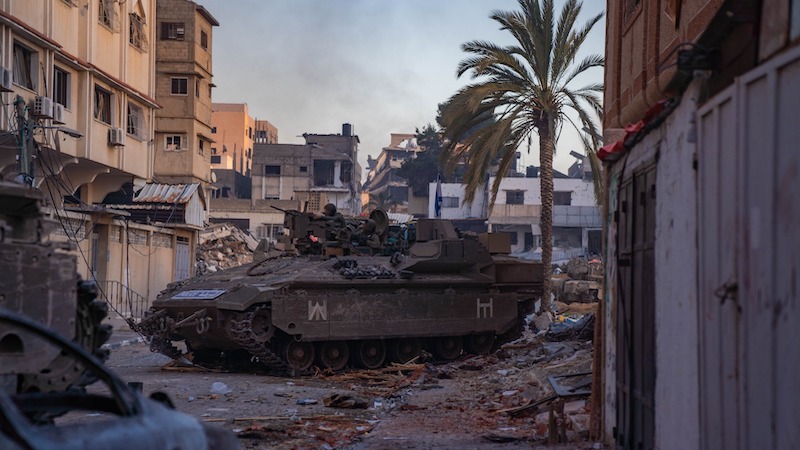
President Joe Biden’s top aides are in the Middle East to push for a three-phase Gaza cease-fire plan that the U.S. leader announced last week as the latest offer from the Israeli war cabinet. The deal would see an initial six-week pause of fighting and secure the release of some hostages held by Hamas and some Palestinians detained in Israeli jails.
CIA director Bill Burns arrived in Doha Tuesday, and Brett McGurk, Biden’s top Middle East adviser, is in Cairo Wednesday, administration officials confirmed to VOA. The pair is expected to convey Biden’s message that Hamas should sign the deal, via key mediators Qatar and Egypt.
Earlier in the week,;Biden spoke with the Emir of Qatar Amir Sheikh Tamim Bin Hamad Al-Thani, reiterating that the plan “offers a concrete roadmap for ending the crisis in Gaza.”
The deal is structured toward a permanent cease-fire in exchange for the release of all hostages and the reconstruction of Gaza. But neither party appears close to agreement.
Despite the Israeli war cabinet signing off on the proposal, shortly after Biden’s announcement Prime Minister Benjamin Netanyahu vowed there will be no permanent cease-fire without “the destruction of Hamas’s military and governing capabilities.”
In response, Hamas official Osama Hamdan declared Tuesday it could not agree without a clear Israeli position on a permanent cease-fire and complete withdrawal from Gaza.
“You’re going to hear a lot of things in the media, a lot of statements from a lot of different voices and a lot of different people,” National Security Adviser Jake Sullivan said. He spoke aboard Air Force One Tuesday evening enroute to France where Biden is scheduled to commemorate the anniversary of D-Day on Thursday.
Hamdan’s declaration aside, Sullivan said the administration would only consider the group’s formal response as conveyed to the Qataris, who transmitted the proposal from Israeli negotiators to Hamas.
“We have not gotten that yet,” Sullivan said, noting that the U.S. is in “hourly contact” with Qatar.
What happens next?
The plan’s three-phase outline appears fundamentally similar to a proposal that Hamas said it had accepted in early May. But given the world’s condemnation of Israel’s actions on Rafah paired with a ruling by the top U.N. court ordering the government to halt its military offensive there, the group may seek to leverage its advantage on the negotiation table.
“There is no guarantee that Hamas won’t come back with additional conditions,” said Aaron David Miller, a former U.S. negotiator on Middle East peace talks who is now a senior fellow at the Carnegie Endowment for Peace.
Once Hamas provides its formal response, Netanyahu must present it to his entire coalition, Miller told VOA. “And that’s where things get to be very complicated.”
With far-right ministers of the coalition threatening to leave the government if Netanyahu agrees to a cease-fire, and his war cabinet members saying they would quit if he does not agree, the prime minister faces the risk of a collapsed coalition no matter what he decides. That could trigger early elections, potentially sending Netanyahu into the opposition and making him more vulnerable to a conviction in his corruption trial.
Biden’s announcement of the cease-fire plan has brought those pressures on Netanyahu to a head.
“I think Netanyahu is trying to buy his time and stretch this out and hope maybe that Hamas will actually be the one to say no more definitively,” said Mairav Zonszein, a senior analyst on Israel-Palestine at the International Crisis Group.
The prime minister could also find alternative opposition parties to enter a temporary government, she told VOA. “It could be that Netanyahu has something up his sleeve to be able to go with the deal and still remain in power for a while.”
In an interview this week with Time magazine, Biden said “there is every reason” for people to conclude that Netanyahu is prolonging the conflict for his own political self-preservation.
He appeared to walk back the statement Tuesday when asked whether Netanyahu is playing politics with the war.
“I don’t think so. He’s trying to work out the serious problem that he has,” Biden said.
Biden under pressure
With polls suggesting Biden losing support from progressives and young voters over his support for Israel, securing a cease-fire ahead of the November election would appeal to swaths of Biden’s constituents.
“The Democrats would like to avoid the ugly optics of ‘Genocide Joe’ demonstrations at their August convention,” said Laura Blumenfeld, a senior fellow at Johns Hopkins School for Advanced International Studies. Biden is set to be formally nominated as the party’s presidential nominee during the convention.
Meanwhile, Arab and Muslim Americans are having “difficult discussions” over whether to support Biden or his Republican opponent, said Muslim Public Affairs Council founder Salam Al-Marayati.
“On the one hand, no Republican has supported a cease-fire,” Al-Marayati told VOA. “On the other hand, the president himself has enabled genocide, has financed the genocide, has been a part, complicitly, of this genocide.”
Biden and his aides have rejected the characterization that Israel’s offensive in Gaza amounts to genocide.
From a domestic political point of view, Blumenfeld noted that Biden’s timing of the announcement on the cease-fire was “spot on.”
“It is one of multiple gestures meant to highlight his leadership,” she told VOA, noting a series of international engagements Biden is embarking on as the White House sought to highlight his global leadership.
Biden announced an executive order Tuesday on the migrant crisis along the U.S. southern border with Mexico. He is set to deliver a speech defending democracy on the beach of Normandy, France, on the 80th anniversary of D-Day. He’ll meet leaders of the world’s leading economies at the G7 summit in Italy later this month and host a NATO summit in July.
“We are mobilizing common action to solve the great challenges of our time,” Sullivan said in response to VOA’s question. “In these next six weeks, the president will try to put all that on display.”
Biden has invested much on his cease-fire strategy. But neither of the warring parties are in a hurry to end their conflict, Miller said.
“The Biden administration is clearly under the most pressure and the most urgency to see something happen,” he said, not just for domestic political aims but also the goal of advancing a historic agreement to normalize ties between Israel and Saudi Arabia that could only happen with peace in Gaza.
On Tuesday, Secretary of State Antony Blinken spoke with Saudi Foreign Minister Prince Faisal bin Farhan Al Saud and reiterated that Hamas should agree “without further delay,” State Department spokesman Matthew Miller said.
The U.S. is also keen to keep in check Israel’s conflict with Hezbollah near the northern Israeli border with Lebanon, which has been fought in parallel to the Gaza war.
On this front, Biden is again dependent on Netanyahu. The prime minister said Wednesday Israel is prepared for “very strong action” against Hezbollah, saying he would restore security “one way or another.”
VOA’s Virginia Gunawan and Anita Powell contributed to this report.

NASA astronauts Butch Wilmore and Suni Williams are safely in orbit on the first crewed flight test aboard Boeing’s Starliner spacecraft bound for the International Space Station.
As part of NASA’s Boeing Crew Flight Test, the astronauts lifted off at 10:52 a.m. EDT Wednesday on a ULA (United Launch Alliance) Atlas V rocket from Space Launch Complex-41 at Cape Canaveral Space Force Station in Florida on an end-to-end test of the Starliner system.
“Two bold NASA astronauts are well on their way on this historic first test flight of a brand-new spacecraft,” said NASA Administrator Bill Nelson. “Boeing’s Starliner marks a new chapter of American exploration. Human spaceflight is a daring task – but that’s why it’s worth doing. It’s an exciting time for NASA, our commercial partners, and the future of exploration. Go Starliner, Go Butch and Suni!”
As part of NASA’s Commercial Crew Program, the flight test will help validate the transportation system, launch pad, rocket, spacecraft, in-orbit operations capabilities, and return to Earth with astronauts aboard as the agency prepares to certify Starliner for rotational missions to the space station. Starliner previously flew two uncrewed orbital flights, including a test to and from the space station, along with a pad abort demonstration.
“With Starliner’s launch, separation from the rocket, and arrival on orbit, Boeing’s Crew Flight Test is right on track,” said Mark Nappi, vice president and program manager of Boeing’s Commercial Crew Program. “Everyone is focused on giving Suni and Butch a safe, comfortable, ride and performing a successful test mission from start to finish.”
During Starliner’s flight, Boeing will monitor a series of automatic spacecraft maneuvers from its mission control center in Houston. NASA teams will monitor space station operations throughout the flight from the Mission Control Center at the agency’s Johnson Space Center in Houston.
“Flying crew on Starliner represents over a decade of work by the Commercial Crew Program and our partners at Boeing and ULA,” said Steve Stich, manager, Commercial Crew Program, at NASA’s Johnson Space Center in Houston. “For many of us, this is a career-defining moment bringing on a new crew transportation capability for our agency and our nation. We are going to take it one step at a time, putting Starliner through its paces, and remaining vigilant until Butch and Suni safely touch down back on Earth at the conclusion of this test flight.”
Starliner will autonomously dock to the forward-facing port of the station’s Harmony module at approximately 12:15 p.m. Thursday, June 6, and remain at the orbital laboratory for about a week.
Wilmore and Williams will help verify the spacecraft is performing as intended by testing the environmental control system, the displays and control system, and by maneuvering the thrusters, among other tests during flight.
After a safe arrival at the space station, Wilmore and Williams will join the Expedition 71 crew of NASA astronauts Michael Barratt, Matt Dominick, Tracy C. Dyson, and Jeanette Epps, and Roscosmos cosmonauts Nikolai Chub, Alexander Grebenkin, and Oleg Kononenko.
President Zelensky confirms use of HIMARS and ATACMS to strike inside Russia#UkrainianArmy #Russia #Moscow #Putin #Ukraine #Kyiv #UkraineWar #France #Germany #UK #Canada #USA #Australia #Poland #Finland #Sweden #Norway #Netherlands #Denmark #Ireland #Israel #Spain #Italy… pic.twitter.com/ZZKbWQIfOK
— Global Defense Corp (@GlobalDefCorp) June 5, 2024
https://t.co/yXjCqaREPj
The Anatomy Of Putin’s Revolution#NewsAndTimes #NT #TNT #News #Times#World #USA #POTUS #DOJ #FBI #CIA #DIA #ODNI#Israel #Mossad #Netanyahu#Ukraine #NewAbwehr #OSINT#Putin #Russia #GRU #Путин, #Россия #SouthCaucasus #Bloggershttps://t.co/O0SIgLVWzM… https://t.co/oD9EyjjplD pic.twitter.com/1Ai9Bu6llw— Michael Novakhov (@mikenov) June 5, 2024
President Zelensky confirms use of HIMARS and ATACMS to strike inside Russia#UkrainianArmy #Russia #Moscow #Putin #Ukraine #Kyiv #UkraineWar #France #Germany #UK #Canada #USA #Australia #Poland #Finland #Sweden #Norway #Netherlands #Denmark #Ireland #Israel #Spain #Italy… pic.twitter.com/ZZKbWQIfOK
— Global Defense Corp (@GlobalDefCorp) June 5, 2024
https://t.co/yXjCqaREPj
The Anatomy Of Putin’s Revolution#NewsAndTimes #NT #TNT #News #Times#World #USA #POTUS #DOJ #FBI #CIA #DIA #ODNI#Israel #Mossad #Netanyahu#Ukraine #NewAbwehr #OSINT#Putin #Russia #GRU #Путин, #Россия #SouthCaucasus #Bloggershttps://t.co/O0SIgLVWzM… https://t.co/oD9EyjjplD pic.twitter.com/1Ai9Bu6llw— Michael Novakhov (@mikenov) June 5, 2024