
Categories
South Caucasus News

Debunking Robert Reich’s Debunking – OpEd


Debunking Robert Reich’s Debunking – OpEd

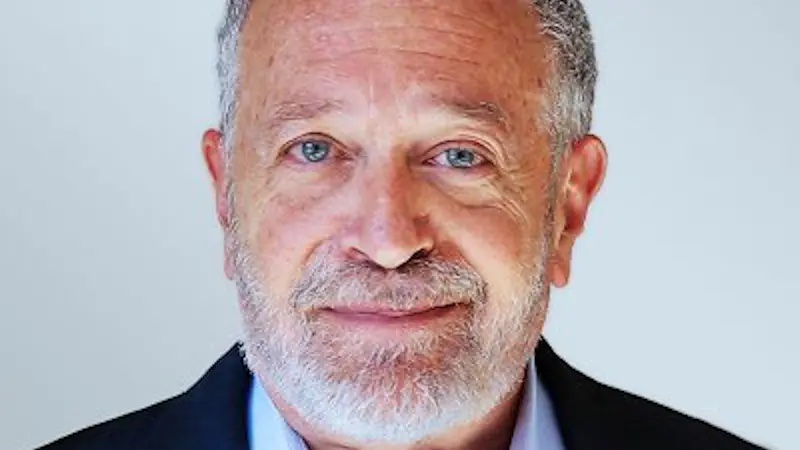
Robert Reich

By Jonathan Newman

“Additional units of a homogeneous good must go toward less important ends.” Is this an ethical claim? Does it fall under political science? Or is it an economic law?

According to Robert Reich, economics, properly considered, is in a mush with politics and morality. He has started a new ten-week series debunking economic myths, and the first one is “Economics is Objective.” I wouldn’t say he is off to a good start.

Reich asserts that economics ought to be all about one question: “What sort of society do we want?” He says that economics used to be called “political economy” back in the nineteenth century and that Adam Smith referred to himself as a moral philosopher. These two tidbits are the only substance of his video, which is less than three minutes long.

He lists some silly questions like “How much inequality is acceptable?” and “Is it ok for the children of the superwealthy to inherit so much wealth that they never have to work a day in their lives?” and then a cartoon animation declares the myth debunked.

It will be tough to debunk his debunking due to the lack of any coherent argument for his assertion. Perhaps we can construct an argument for him. If he really wanted to contend that economics is inseparable from politics and ethics, he could have made the case that some of the underlying assumptions in economics are value-laden, or that legal institutions like private property often form the basis for markets to exist in the first place.

Indeed, eminent Austrian economists have made such claims. Ludwig von Mises said, “Private ownership of the means of production is the fundamental institution of the market economy.” Similarly, in Dr. Shawn Ritenour’s textbook, students read the following: “All of the benefits of voluntary exchange can be had only if people have the right to private property.”

But then, a few pages later, students read this:

It is important to note that the correlation between economic freedom and prosperity does not, by itself, imply that economic freedom is ethically good and morally desirable. . . . Economics, by itself, cannot tell us what is good. It can only tell us that if we do a, then b will result.

Now we’re getting somewhere. Economics gives us if-then, cause-and-effect statements derived from the starting point of human action. To the extent that we want economic theory to apply to the real world, we must incorporate real-world conditions. In the real world, we trade goods that we control—and this control is very often institutionalized via political, legal, and moral codes and norms that we call “private property.”

This doesn’t detract from the objectivity of economics as a science. A physicist may incorporate earth’s gravitational pull and the density of air to explain airplane lift, and this does not detract from the objectivity of physics. These conditions are brought into the scientist’s analysis not only to apply the relevant physical laws but also to explain the phenomenon in question.

For example, we do not apply the laws of supply and demand to Robinson Crusoe. Crusoe does not supply or demand because he does not exchange with other people. We can, however, say all sorts of things about Crusoe’s opportunity costs, his time preference, and his structure of production because these elements of economic theory do not require other people. In fact, thought experiments involving Crusoe are especially helpful in explaining these concepts because they help us isolate necessarily true cause-and-effect statements without other people in the mix, confounding the analysis.

If economics is not an objective science, then we will be at a loss when we step outside the boundaries of economics and try to make policy prescriptions. If we want to answer Reich’s question “What sort of society do we want?,” then we need to know the causes that will bring about our desired effects.

Reich obviously wants more wealth equality. He likes labor unions and minimum wage legislation because he sees them as an effective way to bring about higher wages for workers. He doesn’t want parents to bequeath wealth to their children without the government taking a big cut and spreading it around.

But to propose such things, he must have some understanding (even if he’s hopelessly wrong) about what causes what. He must have some idea about objective cause and effect before he can suggest certain causes to bring about his desired effects. We might as well respond to Reich by saying, “Yes! Let’s eliminate inequality by requiring every plumber in Montana to eat liverwurst at 6:00 a.m. on Tuesday!”

Reich’s political-ethical-economic mush reveals his dishonest modus operandi. He wants to muddy the waters so that he can pretend he’s doing economic analysis by starting with a socialist utopian dream and working backward to big government redistribution schemes.

  • About the author: Dr. Jonathan Newman is a Fellow at the Mises Institute. He earned his PhD at Auburn University while a Research Fellow at the Mises Institute. He was the recipient of the 2021 Gary G. Schlarbaum Award to a Promising Young Scholar for Excellence in Research and Teaching. Previously, he was Associate Professor of Economics and Finance at Bryan College. He has published in the Quarterly Journal of Austrian Economics and in volumes edited by Matthew McCaffrey and Per Bylund. His research focuses on Austrian economics, inflation and business cycles, and the history of economic thought. He has taught courses on Macroeconomics and Quantitative Economics: Uses and Limitations in the Mises Graduate School. He is the author of two children’s books: The Broken Window and Ludwig the BuilderHis commentary appears regularly in the Mises Wire and Power & Market.
  • Source: This article was published by the Mises Institute
Categories
South Caucasus News

India’s Role In Bangladesh Elections Sparks Outrage – Analysis


India’s Role In Bangladesh Elections Sparks Outrage – Analysis

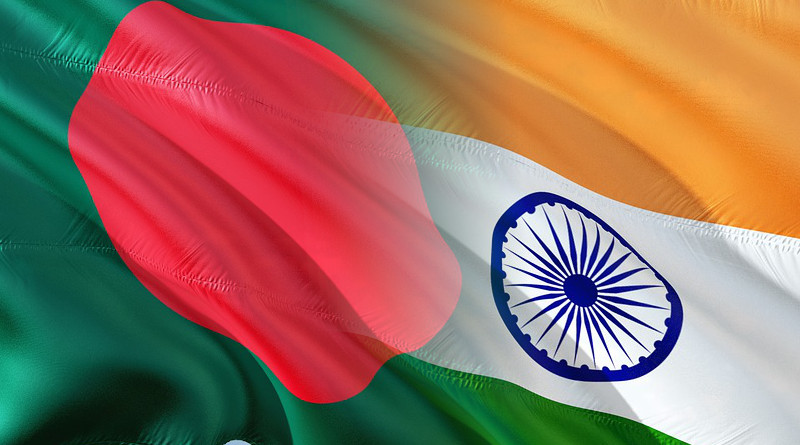
Bangladesh India Flags

By Saimum Parvez

In 2024, Bangladesh has seen the emergence of a so-called ‘India Out’ boycott movement. This campaign, kicked off by allegations of Indian interference in Bangladesh’s national parliamentary elections on 7 January 2024, gained momentum domestically and internationally. It urges Bangladeshis to choose local products over Indian imports.

Resentment toward India intensified following the incumbent Awami League’s fourth successive win in the controversial 2024 elections. The election was characterised by a low voter turnout, an opposition boycott and the presence of ‘dummy candidates’—ostensible independents supported by the ruling party to simulate competition.

Bilateral relations between India and Bangladesh were not always so tense. Indian support during Bangladesh’s Independence War in 1971 against Pakistan was significant, but there have also been intermittent tensions stemming from issues ranging from the treatment of minority communities and irregular migrants to trade imbalances and intense cricket rivalries.

The Bangladesh–India border, another source of tension, is one of the deadliest in the world. Between 2000 and 2021, approximately 1253 Bangladeshis lost their lives and 1157 sustained injuries due to incidents involving the Indian border security forces.

As like 2024, the main opposition parties boycotted the 2014 elections in protest against the Awami League’s decision to rescind the practice of appointing a non-partisan caretaker government ahead of elections. The opposition’s boycott marked a watershed moment in contemporary Bangladeshi politics, which has been marked by a decade-long process of democratic backsliding under Prime Minister Sheikh Hasina.

When all domestic and international actors, except the incumbent Awami League, sought an agreement on the 2014 election process, Indian Foreign Secretary Sujatha Singh visited Bangladesh and pressured the opposition Jatiya Party (JP) to desist from boycotting the elections. JP’s reluctant participation provided much-needed opposition and a degree of legitimacy to the election.

In the 2018 elections, the incumbent Awami League assured a ‘fair’ electoral process, which saw the participation of opposition parties. Yet, the elections were marred by reports of intimidationarreststortureenforced disappearances and assaults on opposition figures. Some government critics have made claims that an Indian intelligence agency played a role in aiding election manipulation strategies in 2018.

Similar suspicions of Indian interference became an issue in 2024’s election. The opposition’s massive street mobilisation demanding the reinstatement of the caretaker government system, followed by Western pressure to uphold democracy and human rights—including US visa restrictions for those it said had undermined democracy in Bangladesh—put the Awami League regime under pressure.

According to Indian media reports, Indian policymakers were unhappy with Washington’s position, claiming it would destabilise Sheikh Hasina’s regime and be detrimental to the security of India and South Asia. India, according to the Awami League’s General Secretary Obaidul Quader, therefore engaged in an ‘underhand negotiation’ between the United States and Bangladesh to dodge US sanctions. Quader commented after the election that ‘when the Bangladesh National Party tried to foil the national election with the help of another country, India stood beside Bangladesh and behaved like a good neighbour’.

Regarding India’s role in the last three rigged elections, Foreign Minister Hasan Mahmud said that there were ‘conspiracies’ in the 2014 and 2018 elections, but that India was on Bangladesh’s side. A candidate in the 2024 election remarked that, ‘I am the candidate of Sheikh Hasina, I am the candidate of India.’

Influencing foreign countries’ elections is always a covert business, especially if foreign intelligence agencies are involved. But the open discussion of alleged Indian interference in Bangladesh by political leaders, commentators and journalists in Bangladesh and India media have triggered a virulent anti-Indian backlash in Bangladesh.

The ‘India Out’ campaign started brewing on social media platforms. Many leaders and activists from the main opposition party, the Bangladesh Nationalist Party, embraced it wholeheartedly, but the party has not endorsed it officially. Despite this, as an AFP fact checker found, more than 10 Indian media outlets claimed that the opposition launched the boycott movement.

An analysis of the ‘India Out’ campaign reveals that the boycott has been portrayed as an initiative of radical Islamists or the pro-Pakistan and anti-Indian BNP.

Indian commentators and policymakers believe the boycott in Bangladesh was inspired by a similar movement in the Maldives, which they suspect enjoyed the patronage of China. These speculations miss a crucial factor — the people of Bangladesh who have been deprived of their voting rights in the last three elections.

The campaign gained traction among the youth, social media activists, civil society and leftist political parties. In contrast, influential Islamist parties have remained silent about ‘India Out’. One conservative Islamist group, Bangladesh Islami Front, has completely rejected the campaign.

India’s unqualified support for a government holding power without a proper mandate and geopolitical issues likely fuel the resentment. Portraying it as a movement of only radical Islamists fails to address the root of the crisis. This approach will further worsen the bilateral relations between India and Bangladesh.

Many question the prospects of the burgeoning anti-India campaign, given the dependency of Bangladesh on Indian imports — totalling more than US$16 billion in 2022. Boycotting Indian products will impact the availability and price of essential items, as well as the health and tourism sectors.

Bangladesh only constitutes around 3.5 per cent of the Indian export market. An effective boycott of Indian consumer products and tourism could boost Bangladesh’s domestic tourism, entertainment and consumer product sectors.

The main implication of this campaign is therefore not economic, but political. The ‘India Out’ campaign has achieved its aims in having clearly transmitted a message of growing anti-India sentiment in Bangladesh in both India and around the world.

  • About the author: Saimum Parvez is a Marie Curie Postdoctoral Research Fellow at Vrije Universiteit Brussels, Belgium.
  • Source: This article was published by East Asia Forum

Categories
South Caucasus News

Moscow Accuses EU Armenia Mission of Intelligence Gathering


Moscow on Tuesday accused the European Union mission in Armenia of gathering intelligence against Russia, Iran and Azerbaijan, Russia’s Deputy Foreign Minister Mikhail Galuzin told the Tass news agency.

Galuzin blamed Armenia for rejecting proposals by the Collective Security Treaty Organization, instead opting to engage the EU to provide a monitoring mission.

The EU mission, which was expanded this year, began its effort along the Armenia-Azerbaijan border in 2023. Both Moscow and Baku have voiced their opposition to the mission, with Russia accusing Armenia of advancing the West’s — NATO’s — agenda in the region

“Many of the risks Armenia faces today could have been prevented if in 2022 Yerevan agreed to the proposal to implement through the CSTO complex of measures to stabilize the situation on the border with Azerbaijan,” Galuzin added.

“Unfortunately, the Armenian leadership preferred to invite the European Union mission, which does not protect the borders of the state, but collects intelligence against Azerbaijan, Iran, and Russia under the guise of ‘monitoring,’” the Russian official said.
Galuzin also emphasized that, in the case of the CSTO, “we were talking about serious initiatives, including military-technical assistance, sending a monitoring mission, assistance in the training of border troops.”


Categories
South Caucasus News

‘Tavush for the Homeland’ Protesters Arrested and Charged


YEREVAN (Azatutyun.am)—Three supporters of Archbishop Bagrat Galstanyan have been arrested and charged in connection with Friday’s antigovernment demonstration in Yerevan that ended in scuffles with riot police.

Armenia’s Investigative Committee said on Tuesday that they as well as two other men committed “hooligan” acts, including a kick on a riot policeman’s shield.

At least one of the five suspects was among 27 demonstrators who were detained during the protest staged outside the Armenian Foreign Ministry building and set free without charge on Monday. Gegham Petrosian was rearrested and indicted just hours later.

A Yerevan court remanded Petrosian in custody. Court hearings on the pre-trial arrest of the two other detainees were expected to start late on Tuesday.

In a statement, the Investigative Committee said that the five suspects swore at the police officers guarding the ministry building and pelted them with various objects. One of them also kicked a shield held by a policeman, it said, adding that this “disrupted the calm of the persons at the scene.” The law-enforcement agency also released a 35-second video of the scuffles meant to prove its accusations.

The Investigative Committee said nothing about injuries inflicted on officers. The Armenian claimed earlier that seven of them were injured during Friday’s incident.

“The video shows nothing,” countered Ruben Melikian, an opposition-linked lawyer representing many protesters.

“Is kicking a shield more dangerous than smashing people’s heads? Is the police shield a more important value in our country than citizens’ heads?” he told RFE/RL’s Armenian Service.

Melikian referred to several protesters who were seriously injured when security forces tried to push the crowd back from the building.

“Five or six policemen toppled me to the ground and started kicking and then punching various parts of my body,” said one of those protesters, Arman Sargsyan. “I don’t remember how long it lasted. When they stopped for a moment I tried to move, but one of the policemen grabbed by foot and they continued to hit me in the head and other parts of my body.”

No police officer has been prosecuted for using what Galstanyan and Armenian opposition leaders see as excessive force against participants of antigovernment protests that began in the northern Tavush province on April 20 and reached Yerevan on May 9. Several policemen were caught on camera punching, kicking and swearing at an opposition lawmaker, Ashot Simonyan, during such protests on May 27.

By contrast, the authorities have pressed “hooliganism” charges against at least 24 protesters. Nearly half of them are now under arrest.

Galstanyan has condemned these cases as politically motivated and decried other “repressions” against his supporters. Hundreds of people led by the archbishop picketed the Investigative Committee headquarters in protest on Monday.


Categories
South Caucasus News

ARF Western U.S. Central Committee Announcement


For the last four years our Homeland and Nation have been set on an unending trajectory of self-destruction by the Pashinyan regime, whose policies and approaches have systematically diminished and degraded all that is core and foundational for our entire Nation.

From our military and church, to our education and judicial systems, to our people’s dignity and resolve, to our lands and our Cause; whether tangible or intangible all has been and continues to be surrendered.

Corruption has been legalized, national values are being replaced with our enemies’ perspectives in our schools, one man and one party exercises full dominion over all branches of governance, fundamentally important articles of Constitution have been violated, Artsakh has been surrendered, hundreds of square kilometers of sovereign Armenian lands remain occupied by our enemy – while additional lands and our strongest defense positions have been unilaterally surrendered. The pursuit of justice for the Armenian Genocide is being trampled upon, and our enemies – without any objection by the Pashinyan regime – openly state that they dictate the process of our
border’s demarcation.

The Tavush for the Homeland movement led by Archbishop Bagrat Galstanyan – born in response to the regime’s unilateral surrender of sovereign Armenian lands in Tavush — has since spread throughout Armenia as a movement for truth and justice, and a movement against the regime that has put us on this path of national self-destruction.

In response to the movement, the Pashinyan regime has only increased its repressive efforts. Physically attacking and assaulting political opponents, using brute force against protestors, usurping state funds to counter protests, and attacking the Armenian Apostolic Church; have become common repressive tactics of the regime – which in turn lay the foundation for further escalation and potential unrest.

The ARF Western USA Central Committee strongly condemns the Pashinyan regime’s anti-democratic, unconstitutional, and effectively anti-Armenian and anti-Church policies; and reaffirms its total and unequivocal support to Archbishop Bagrat Galstanyan and the Tavush for the Homeland movement.

As we salute the unity it has created around the Homeland and Nation, as we honor the values it places at its core; we call on Armenians throughout the Western United States to stand with the unified movement at this critically fateful time for the Armenian Nation.

ARF Western U.S. Central Committee
June 4, 2024


Categories
Audio Review - South Caucasus News

@haaretzcom: RT by @mikenov: As northern Israel burns, residents have no expectations from the state | Haaretz Today


As northern Israel burns, residents have no expectations from the state | Haaretz Today | @AllisonKSommer https://t.co/ixte7Jv49p

— Haaretz.com (@haaretzcom) June 4, 2024


Categories
Audio Review - South Caucasus News

@Jerusalem_Post: RT by @mikenov: A Jewish soldier fighting for the Ukrainian military against Russia’s invasion fell in battle on the front lines over the weekend and, with the support of Ukraine’s Jewish community, he received a halachic burial. jpost.com/diaspora/artic…


A Jewish soldier fighting for the Ukrainian military against Russia’s invasion fell in battle on the front lines over the weekend and, with the support of Ukraine’s Jewish community, he received a halachic burial.https://t.co/YYV1RirwOO

— The Jerusalem Post (@Jerusalem_Post) June 4, 2024


Categories
Audio Review - South Caucasus News

@john_sipher: RT by @mikenov: The hate-America crew of Kushner and Grenell include a memorial to the “victims of NATO aggression” in their multi-million dollar Belgrade deal spytalk.co/p/kushners-dea…


The hate-America crew of Kushner and Grenell include a memorial to the “victims of NATO aggression” in their multi-million dollar Belgrade deal https://t.co/KPuPjFMdmb

— John Sipher (@john_sipher) June 4, 2024


Categories
Audio Review - South Caucasus News

@PlohoiTovarisch: RT by @mikenov: @dw_russian У нас будет как-то так:


У нас будет как-то так: pic.twitter.com/8dSBfZdLyu

— Тот Самый (@PlohoiTovarisch) June 4, 2024


Categories
Audio Review - South Caucasus News

@dw_russian: RT by @mikenov: Рада приняла закон об использовании английского языка в Украине. В нем закрепляется статус английского языка как одного из языков международного общения в Украине, а от госслужащих категории А требуется владеть им. Знать ангийский должны будут часть госслужащих категорий Б и В,…


Рада приняла закон об использовании английского языка в Украине. В нем закрепляется статус английского языка как одного из языков международного общения в Украине, а от госслужащих категории А требуется владеть им. Знать ангийский должны будут часть госслужащих категорий Б и В,… pic.twitter.com/GE6lXeI3Zz

— DW на русском (@dw_russian) June 4, 2024