
Day: June 3, 2024
Mexico’s election: A victory for organised crime posted: Under Claudia Sheinbaum’s presidency, organised crime will likely be calling the shots. https://t.co/4Wh1b9i9MW
–https://t.co/OG3j7Rs7CY
–https://t.co/7KyCOVB6Cj
–
russian mafia in mexico – GS: https://t.co/3zofhwBCKB – pic.twitter.com/btMyy2kYId— Michael Novakhov (@mikenov) June 3, 2024
Mexico’s election: A victory for organised crime posted: Under Claudia Sheinbaum’s presidency, organised crime will likely be calling the shots. https://t.co/4Wh1b9i9MW
–https://t.co/OG3j7Rs7CY
–https://t.co/7KyCOVB6Cj pic.twitter.com/6yEoY6ZcMX— Michael Novakhov (@mikenov) June 3, 2024
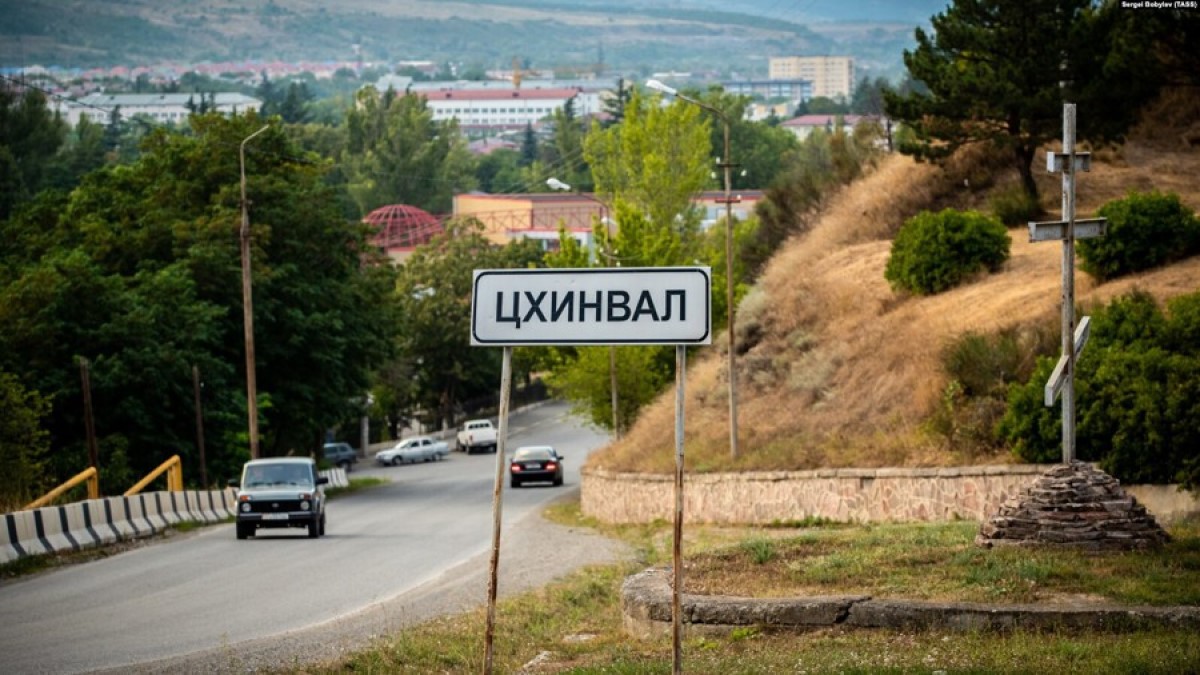
Georgian-Ossetian economic cooperation
The Georgian-Ossetian conflict of the early 1990s led to Georgia losing control of South Ossetia and severed ties between Georgians and Ossetians.
For years, the only avenue of interaction was through the economy, notably the Ergneti market—a vast trading space near the conflict line, operating as an informal free economic zone. In 2004, Georgian authorities closed the market to prevent smuggling.
This action severed economic ties between Georgians and Ossetians. Now, Georgian organizations, supported by international partners, seek to re-establish and strengthen Georgian-Ossetian economic cooperation on a legal basis and at a new, more substantial level.
“Without the Russians, we’d solve it ourselves.” Report from Georgian-Ossetian conflict zone villages
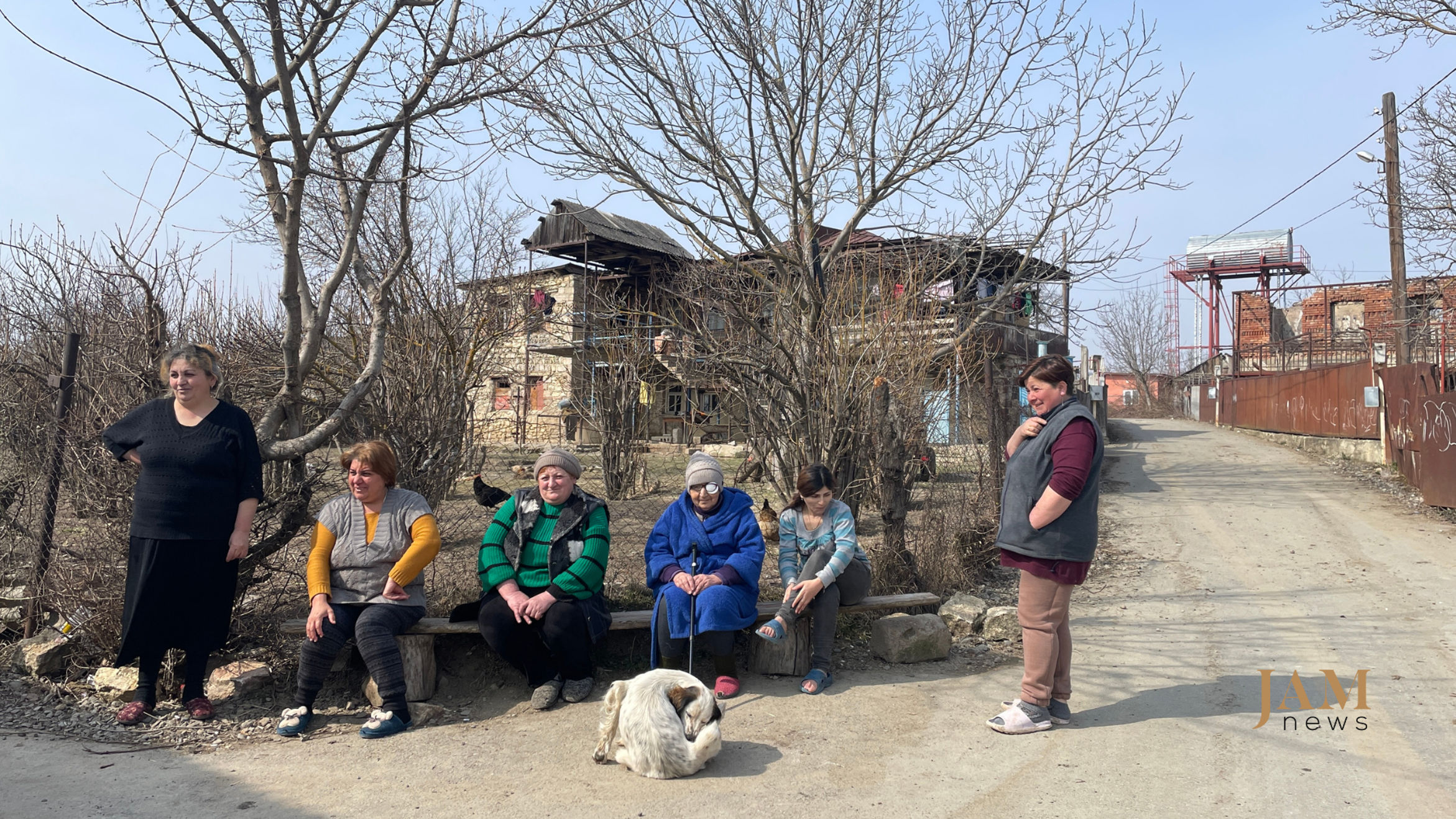
The organization “Human Rights Center” believes that such connections are crucial to prevent the parties of the conflict from complete alienation and to restore trust and normal human relations between them.
In which economic sectors can Ossetians and Georgians collaborate? Why are such relationships important for conflict resolution? Is there a willingness on both sides to establish such connections, and what hinders the strengthening of economic cooperation?
Possible intersections of Ossetian and Georgian economic interests
In the first half of 2024, Georgians and Ossetians already met to discuss the prospects of economic cooperation. One of the participants of this meeting was Nino Tlashadze from the Human Rights Center. She explains that several directions were mentioned during the meeting where Georgians and Ossetians could establish economic ties:
“There are opportunities for cooperation at the small and medium-sized enterprise level, as well as in the fields of agriculture and tourism. We discussed several specific initiatives: for example, the introduction of Ossetian cheese from the Tskhinvali region to the Georgian market. There was also the idea for Georgian tour operators to offer Ossetian products and souvenirs to their clients. There was a very interesting idea regarding the production of Ossetian beer. Ossetian herbal tea and mineral water were also mentioned.”
- South Ossetia hit by increase of customs duties on goods from Russia
- Who bears responsibility for the customs crisis in South Ossetia: local authorities, Russia, or the “Georgian lobby”?
- Trout farmer shares his experience of keeping small business afloat in S.Ossetia
- How South Ossetia may weather sanctions on Russia
Tako Juruli, a young winemaker from eastern Georgia, who also participated in that meeting, says it gave her much food for thought:
“Imagine that Ossetians live nearby and are completely unfamiliar to us. Especially for the younger generation. We know nothing about their daily lives, their problems, and joys. They exist and at the same time seem not to exist for the rest of the world, living their lives in a completely closed circle, in a closed space.”
Tako believes that this isolation can be overcome through mutually beneficial economic cooperation, and often ponders on what she can share with emerging Ossetian entrepreneurs:
“If I were in their shoes, if I were Ossetian, I would be interested in producing Ossetian beer. I would study this issue and try to create a natural product that meets European standards. I would seek Georgian funds, organizations that would help me bring the project to fruition and assist in exporting my product to natural beer festivals.”
In addition to Tako, some other Georgian entrepreneurs have also shown interest in Ossetian beer and offer assistance to Ossetian breweries in penetrating European markets.
Land of abandoned villages
Stories from the deserted Truso Gorge, where Ossetians and Georgians once lived together

Alu Gamakharia, the founder and director of the “Peaceful and Businesslike Caucasus” association, says there is a desire for economic cooperation and mutual assistance between the conflict parties:
“Ossetians even reproached us for working more with Abkhazians. The prevailing opinion in the media is that Ossetians will join Russia sooner or later and do not want any ties with Georgia. Perhaps this influenced me as well. I did not think that there was such a readiness for cooperation.”
Alu Gamakharia also knows specific examples of such cooperation. For instance, one Ossetian entrepreneur [whose identity is not disclosed publicly for safety reasons] has a nursery on the periphery of Tskhinvali and wants to import dwarf walnuts and paulownia seedlings from the Georgian side.
Dwarf walnut is a variety of walnut that has become established in Georgia in recent years. This plant bears fruit already in the fifth year after planting and is becoming increasingly popular. Paulownia is a type of wood widely used in furniture production, musical instruments, shipbuilding, and aviation.
“We have started working. Of course, it is very difficult, but we have found a way out,” says Gamakharia.
Why this is important and what hinders Georgian-Ossetian economic cooperation
“A sustainable peace in the region is impossible without creating economic opportunities for the population,” according to the research “From the Economics of War to the Economics of Peace in the South Caucasus,” prepared in 2004 with the support of International Alert.
The same research notes that the physical, cultural, and economic blockade caused by conflicts in the South Caucasus has led to the emergence of a specific form of trade activity in the region. At its core lies the recognition of the need to establish trade for survival and the desire of individual entrepreneurs to utilize existing, albeit limited, opportunities.
Why are Ossetians affected by the conflict unable to regain Georgian citizenship and their property?
The country has had a restitution law in place for 18 years, but it has yet to be enforced.
“People need to trade, and they will do so regardless of the political situation. In the absence of any regulation, informal economic relationships are an important survival mechanism for those who remain in conflict zones,” the document states.
Our respondents confirm this. However, they also speak about factors that hinder economic cooperation. There are several such factors, including the “Law on Occupied Territories,” the status of conflict territories, mobility issues, lack of information, and so on.
The “Law on Occupied Territories”
The “Law on Occupied Territories” was adopted by the Georgian government in 2008, after the August War and Russia’s recognition of the independence of Abkhazia and South Ossetia.
The law permits foreign citizens to enter those territories only from the territory controlled by Georgia.
This law also restricts economic activities, air, sea, and rail transport, international transportation, extraction of natural resources, and money transfers to unrecognized republics.
Violation of these prohibitions is punishable by a fine or imprisonment for a term of 2 to 4 years.
“In fact, this law imposes restrictions on all types of movement – people, businesses, transport,” explains Tengiz Shergelashvili, Chairman of the Georgian Development Platform.
“It is very difficult for Ossetian products to reach Georgian-controlled territory. The only way is through the Russian-Georgian border, but this makes the product very expensive,” explains Nino Tlashadze, adding that changing legislation will be important for the development of economic cooperation.
Prayer in an abandoned village. For the first time in 16 years Ossetian pilgrims visit sanctuaries in Georgia’s border zone
“I understand the arguments of the Georgian side, and to some extent, they are acceptable. However, changes need to be made so that it does not hinder Georgian-Ossetian economic or any other form of cooperation. For example, an exception should be made for the residents of Tskhinvali,” believes Nino Tlashadze.
One of the red lines for the Georgian side is the status of these territories.
“Changes should not happen in a way that turns de facto reality into de jure reality. That is, it should not mean the legal recognition of Abkhazia and South Ossetia’s independence.
It is also necessary to exclude the factor of Russia, which currently fully controls these territories. Russia should not have the opportunity to benefit from this. But there should be more opportunities for economic cooperation between the conflict-affected parties. However, changes in one law will not be enough for this. A state strategy is needed,” says Tengiz Shergelashvili.
According to him, this strategy should be very clear, consider the long-term perspective, and the goals for achieving which economic cooperation is necessary:
“What should this contribute to, and to what extent do we perceive the people living there as part of the future of the common Georgian state? If there is a strategy, there will be an understanding of what exactly needs to be changed in legislation.”
And most importantly, in his opinion, all these changes must be very well explained to the public:
“If you take it out of context and just make changes to the law, society will not understand. Not just Georgian society. Therefore, there must be very clear information about what is happening, and the law should be just a tool.”
Information vacuum
Another problem for establishing economic cooperation, even on a limited scale, is the lack of information about such opportunities in South Ossetia. Participants of the 2024 meeting say that for many Ossetians present there, this was news.
“Unfortunately, civil society in Tskhinvali is very passive. And those engaged in entrepreneurship leave for North Ossetia or Russia,” laments Nino Tlashadze.
Peace Fund
In 2019, as a result of realizing the importance of mutually beneficial economic cooperation for conflict resolution and rebuilding trust through joint efforts, the State Minister’s Apparatus for Reconciliation and Civil Equality, the Partnership Fund, and the Georgian Chamber of Commerce and Industry created the “Peace Fund.”
The goal of this fund is to support the population affected by the conflict and improve their socio-economic situation by supporting economic ties and business projects.
The fund provides grants for the implementation of joint Georgian-Abkhaz or Georgian-Ossetian projects, finances the agricultural and industrial sectors. One beneficiary can receive from 5,000 to 15,000 lari [approximately from 1800 to 5500 dollars], and if the grant application is collective, the funding ranges from 15,000 to 50,000 lari [5500-18000 dollars].
Despite the risks associated with cooperation with the Georgian side, economic interests have proven to be an important motivator for residents of Abkhazia and Tskhinvali. To date, the “Beyond the Line of Division” Fund has financed more than 30 joint economic projects involving over 100 people.
What will effective economic cooperation change?
Alexander Kukhianidze, a professor at Tbilisi State University, claims that the Ergneti market, despite its illegality, played an important role in strengthening relations between Georgians and Ossetians:
“Everyone knew that contraband goods were sold there, that cargoes arrived unchecked, and no one paid taxes. But Georgians and Ossetians stood there together and traded. And it helped resolve the conflict at least on a personal level. Economic cooperation always contributes to normalizing personal relationships and resolving conflicts on a personal level.”
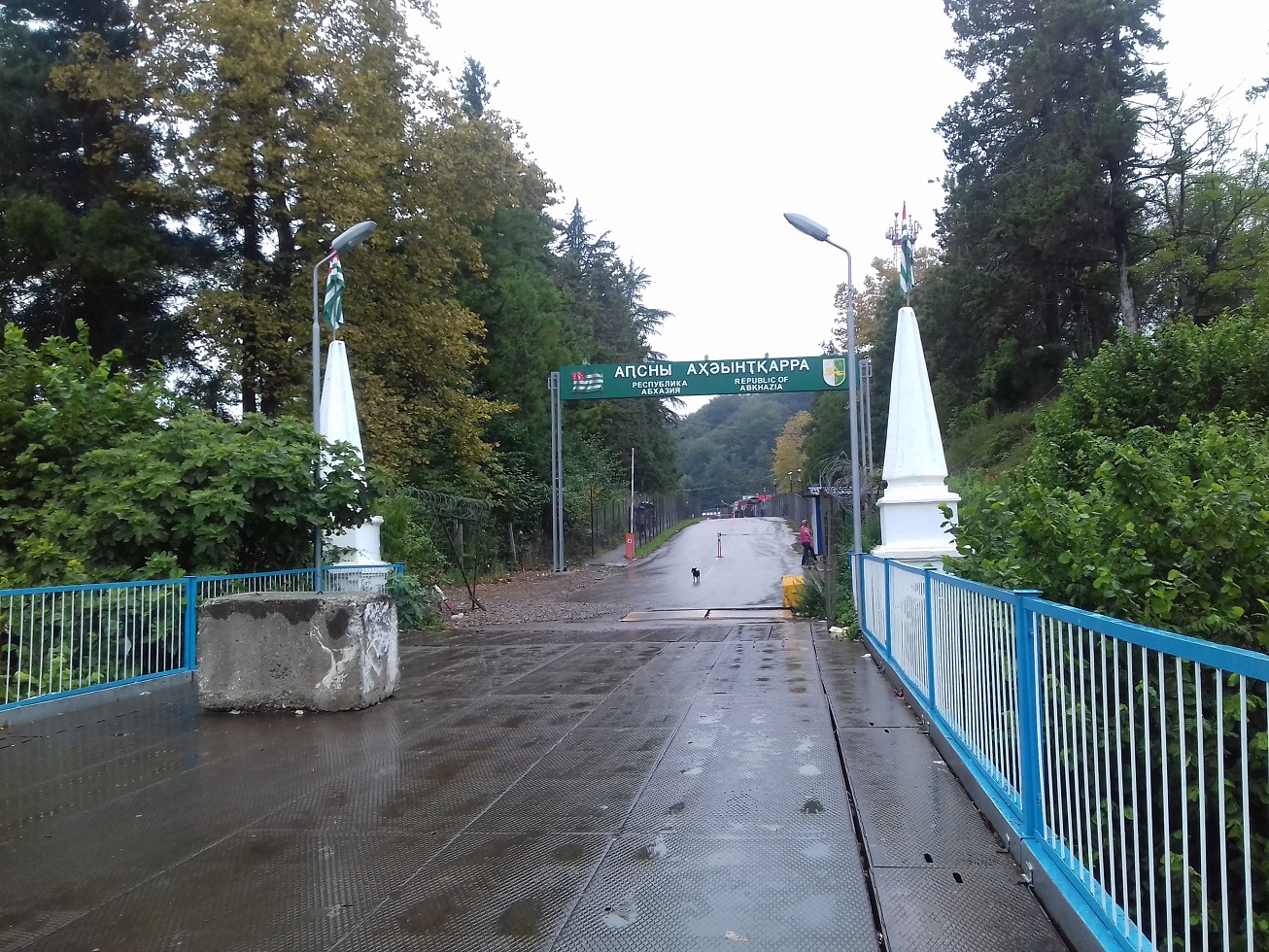
The rest of our respondents hold a similar opinion about the Ergneti market. They remember the Ergneti market as a platform for interaction between Georgians and Ossetians, which played a positive role.
A similar role in restoring relations is played, for example, by the Georgian state healthcare program, within which several people residing in conflict-affected areas were able to receive treatment in Georgia.
Alexander Kukhanidze emphasizes how much this program has changed:
“Even though there weren’t many of these people, their hearts were won over. Resolving conflicts does not lie in reclaiming territories, but in winning back human hearts. If we win over the hearts of Ossetians and Abkhazians, territories will also be returned. And if we focus on reclaiming territories rather than on the Abkhazians and Ossetians, we won’t be able to regain those territories. And this happens through cooperation in sports, culture, science, economics, and so on.”
Tengiz Shergelashvili adds that one cannot rely solely on the expectation that the geopolitical situation will change and the problem of Georgia’s territorial integrity will be automatically resolved:
“The task is not only that. The task is the complete integration of these people into a unified Georgia.“
Toponyms, terminology, views and opinions expressed by the author are theirs alone and do not necessarily reflect the views and opinions of JAMnews or any employees thereof. JAMnews reserves the right to delete comments it considers to be offensive, inflammatory, threatening or otherwise unacceptable
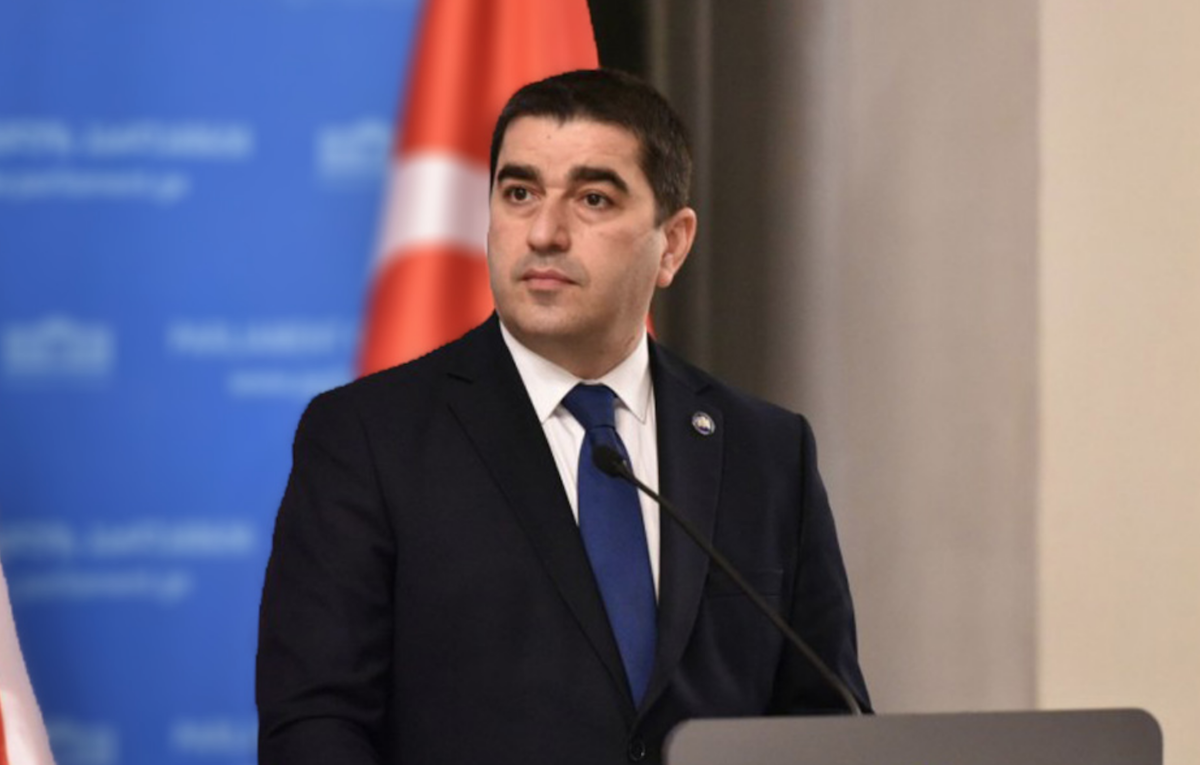
The Chairman of the Parliament of Georgia, Shalva Papuashvili, signed the “foreign agents” law today. According to Papuashvili, the law will enter into force on June 4. He explained that organizations with foreign funding will have a period of 60 days to register on the relevant electronic portal and declare their finances for 2023.
“I signed [the law] today, it will be published in the Legislative Gazette. From tomorrow it will be considered published, and within 60 days from tomorrow, the Ministry of Justice will develop all subordinate normative acts, as well as create an electronic portal for organizations. After 60 days, organizations with foreign funding will be obliged to register on the portal and declare their finances for 2023.
The law will come into effect tomorrow, although the obligation to register will arise in 60 days, around September 4-5, if I’m not mistaken,” said Shalva Papuashvili.
The law, signed by the Speaker of the Parliament today, has already been published on the website of the Legislative Herald.

At the government session, the prime minister of Georgia, Irakli Kobakhidze, stated that by adopting the law, Georgia secured its sovereignty and security. According to Kobakhidze, during the past two months, a lot of misinformation about the law has been spread, leading to excessive emotions based solely on artificial grounds.
“Now that the law is in force, we all must act pragmatically and set aside unnecessary emotions, especially those attempting to mask their protest failures with liberal-fascist actions.
Liberal fascism, an ideology as dangerous as classical fascism and Bolshevism, has been artificially introduced into our country for years through opaque finances, and it is completely incompatible with Georgian culture,” Kobakhidze said.
The general secretary of “Georgian Dream” and mayor of Tbilisi, Kakha Kaladze, stated that organizations failing to comply with the “foreign agents” law will face fines, confiscation of assets, and ultimately, termination of operations.
“If they fail to comply, they will face financial penalties, asset confiscation, and more. They will be unable to operate or access their funds. If one is genuinely committed to their work without any malicious intent, there shouldn’t be an issue with disclosing their finances, income sources, and financed projects. However, there’s suspicion that this opacity has fueled polarization and funded revolutionary scenarios,” Kaladze added.
- “Visa liberalization, trade, security” – What Georgia will gain from the US if it returns to democracy
- German foreign minister: “Georgian authorities block citizens’ EU membership dream”
Civil organizations operating in Georgia have announced their continued legal battle against the “foreign agents” law at a joint briefing held on May 30. They stated their intention to utilize both domestic and international mechanisms to block the implementation of the law, with plans to submit a lawsuit to the Constitutional Court of Georgia.
“We are preparing a lawsuit to be submitted to the Constitutional Court of Georgia, and we will do so in the near future. The Constitutional Court possesses the authority granted by the Constitution to suspend the operation of the relevant articles of the law.
However, we do not view the Constitutional Court as the sole avenue for our legal struggle. Should the Constitutional Court fail to act in a timely manner and within the constitutional framework, we will pursue alternative legal mechanisms. Additionally, we are preparing to lodge a complaint with the European Court of Human Rights, to which we will apply at the appropriate time”.
The United Kingdom has appointed Gareth Ward as His Majesty’s new Ambassador to Georgia, replacing Mark Clayton. Ambassador Ward will take up his new post in August.
Gareth Ward joined the Foreign and Commonwealth Office (FCDO) in 1996. He served as the British Ambassador to Vietnam from August 2018 to July 2022.
According to the UK government information, Ward’s expertise spans a diverse range of diplomatic areas, from serving as Deputy Director and Head of the China Department in the Asia Pacific Directorate of the FCDO from 2014 to 2017 to his role as Her Majesty’s Consul General in St Petersburg from 2010 to 2013. His diplomatic career began in 1998 when he served as Second Secretary (Political) in Moscow.
Vladimir Solovyov threatens Germany – Google Search https://t.co/RP0G8F7r6O
— Michael Novakhov (@mikenov) June 3, 2024