Categories
South Caucasus News

China: Closing Off Memory Of Tiananmen Massacre, Says HRW


China: Closing Off Memory Of Tiananmen Massacre, Says HRW

Tank Man (Tiananmen Square protester) Photo Credit: The Associated Press, originally photographed by Jeff Widener, Wikipedia Commons

The Chinese government is further suppressing any discussion and commemoration of the 1989 Tiananmen Massacre, Human Rights Watch said. Leading up to the 35th anniversary of the Tiananmen Massacre on June 4, 2024, Chinese authorities have again preempted commemorations.

The government has imprisoned those in China and Hong Kong who have sought to honor the memory of the victims, while refusing to acknowledge responsibility for the mass killings or provide redress for victims and their families.

“The Chinese government is seeking to erase memory of the Tiananmen Massacre throughout China and in Hong Kong,” said Maya Wang, acting China director at Human Rights Watch. “But 35 years on, the government has been unable to extinguish the flames of remembrance for those risking all to promote respect for democracy and human rights in China.”

On April 3, Xu Guang (徐光), a 1989 student leader, was sentenced to four years in prison for “picking quarrels and provoking trouble” after he demanded that the Chinese government acknowledge the Tiananmen Massacre and held a sign calling for redress at a local police station in May 2022. Xu was reportedly tortured, shackled, and mistreated while in detention.

Tiananmen Mothers, a group of relatives of victims of the 1989 massacre, reported that one of their founders, Zhan Xianling, is under surveillance with guards outside her home. Other activists connected to the 1989 democracy movement including Pu Zhiqiang, a human rights lawyer who had been a student representative at Tiananmen, and Ji Feng, a student leader in Guizhou, are similarly under tightened police surveillance or taken away from their homes.

On May 28 and 29, Hong Kong police arrested seven people, including the already detained lawyer-activist Chow Hang-tung (鄒幸彤), and her 65-year-old mother, for alleged “seditious” posts regarding an “upcoming sensitive date.” Chow was one of the organizers of Hong Kong’s annual Tiananmen vigil with the now-disbanded Hong Kong Alliance in Support of Patriotic Democratic Movements of China. These were the first arrests under the city’s recently adopted Safeguarding National Security Ordinance, known as “Article 23,” which punishes peaceful speech and civil society activism with heavy prison sentences. 

In January, Hong Kong’s Court of Final Appeal overturned Chow’s acquittal. She had been acquitted of the charge of “inciting others to take part in an unauthorized assembly” in December 2022. The United Nations Working Group on Arbitrary Detention has determined that Chow’s arrest and detention were arbitrary and has called for her immediate and unconditional release.

Chow and two other members of the Hong Kong Alliance also face potential life sentences on charges of “inciting subversion” under Hong Kong’s draconian National Security Law and are awaiting a trial date.

In November 2023, Hong Kong authorities did not renew the work visa of a Canadian-Chinese history professor, Rowena He. The Chinese University of Hong Kong subsequently fired her. She is the author of Tiananmen Exiles: Voices of the Struggle for Democracy in China, which the authorities removedfrom Hong Kong public libraries in May 2023. 

The Chinese government has long ignored domestic and international calls for justice for the Tiananmen Massacre. Some of the sanctions that the European Union and United States imposed at the time have over the years been weakened or evaded. The lack of a sustained and coordinated international response to the Tiananmen Massacre and ensuing crackdown has contributed to Beijing’s increasingly brazen human rights violations.

These include crimes against humanity against Uyghurs and other Turkic Muslims in Xinjiang, the imposition of two national security laws in Hong Kong that have suppressed the city’s long-protected freedoms, deepening repression in Tibet, and the persecution of human rights defenders throughout the country.

The Chinese government’s largely unchecked and expanding abuses across its borders, including its role in the abduction of Chinese activists living abroad, its exports of surveillance systems, and its efforts to undermine UN human rights mechanisms, all increasingly threaten human rights globally.

The Tiananmen Massacre was precipitated by the peaceful gatherings of students, workers, and others in Beijing’s Tiananmen Square and other Chinese cities in April 1989, calling for freedom of expression, accountability, and an end to corruption. The government responded to the intensifying protests in late May 1989 by declaring martial law.

On June 3 and 4, People’s Liberation Army soldiers fired upon and killed untold numbers of peaceful protesters and bystanders. In Beijing, some citizens attacked army convoys and burned vehicles in response to the military’s violence.

Following the killings, the government carried out a nationwide crackdown and arrested thousands of people on “counter-revolution” and other criminal charges, including arson and disrupting social order.

The government has never accepted responsibility for the massacre or held any officials legally accountable for the killings. It has been unwilling to investigate the events or release data on those who were killed, injured, forcibly disappeared, or imprisoned. Tiananmen Mothers documented the details of 202 people who were killed during the suppression of the movement in Beijing and other cities.

On the 35th anniversary of the Tiananmen Massacre, the Chinese government should take the following steps:

  • Respect the rights to freedom of expression, association, and peaceful assembly, and cease the harassment and arbitrary detention of those who challenge the official account of the Tiananmen Massacre;
  • Meet with and apologize to members of the Tiananmen Mothers, publish the names of all who died or were wrongfully imprisoned, and appropriately compensate the victims’ families;
  • Permit an independent public inquiry into the Tiananmen Massacre and its aftermath, and promptly publish the findings and conclusions;
  • Allow without conditions the return of Chinese citizens who were exiled due to their connections to the events of 1989; and
  • Investigate all government and military officials who planned or ordered the unlawful use of lethal force against demonstrators and appropriately prosecute them.

Foreign governments should renew efforts to hold the Chinese government accountable by supporting the June 2020 call by 50 UN human rights experts urging the UN Human Rights Council to establish an independent UN mandate to monitor and report on human rights violations in China. They should also publicly mark the 35th anniversary, including in their embassies and consulates and online accounts in China, and press the Chinese government for accountability on this date.

“The international community should not give Beijing a pass for failing to address the Tiananmen Massacre atrocities or its continuing persecution of those keeping the memory of the massacre alive,” Wang said. “Foreign governments should seize this opportunity of the 35th anniversary and renew their commitments to take strong, coordinated, and principled actions against China’s worsening rights record.”


Categories
South Caucasus News

California’s Energy Policies Are Using Its Population As Sacrificial Lambs – OpEd


California’s Energy Policies Are Using Its Population As Sacrificial Lambs – OpEd

Los Angeles, California

California is obsessed with the concept that JUST electricity from wind turbines and solar panels can replace fossil fuels. All the policymakers of the State are oblivious to the reality that wind and solar can ONLY generate “electricity”, as they CANNOT make any products for society.

Energy literacy starts with the knowledge that crude oil is the basis of our materialistic society.Conversations are needed to discuss the difference between just “ELECTRICITY” from renewables, and the “PRODUCTS” that are the basis of society’s materialistic world. All the parts for wind turbines and solar panels are themselves MADE from oil derivatives, and only generate occasional electricity from favorable weather conditions but manufacture NOTHING for society.

California remains intent on following Germany’s “green” Energiewende” plan that has German consumers paying the highest electricity prices in the world. The California population of 39 million represents only about 0.5% of the world’s population of 8 billion. The other 99.5% are mostly in poorer developing countries with miniscule environmental policies to limit their emissions.

Germans have been forced to come to grips with the sober electricity of its Green Revolution that has made their electricity prices among the world’s highest, so it’s no wonder that the country’s economy is hemorrhaging economically, and companies are shutting down and moving out.

Since all hospitals, airports, communication systems, militaries, planes, trains, and vehicles are based on the products that did not exist before the 1800’s, that are now made from fossil fuels, Governor Newsom will not discuss his plan to support a supply chain of the products and fuels demanded by today’s materialistic society and economy, as America reduces its dependency on crude oil.

Governor Newsom will never discuss how to maintain the supply chain of cost-effective PRODUCTS that are essential to the materialistic demands for human flourishing. 

California policymakers pursuing net-zero emissions are oblivious to the reality that wind turbines and solar panels do different things than crude oil, thus Mandatory Emissions To Achieve Net-Zero Is A Fool’s Game.

Latinos make up about half of Californians living in poverty, despite being less than 40% of the population. By comparison, about 10% of white Californians live in poverty. 

For the growing poverty of the State of California, a State that only represents 0.5% of the world’s population, California continues to demand that its residence continue to “pay” for green policies to set an example for the 99.5% of the world’s 8 billion that do NOT live in California.

Affordable and reliable electricity is of major importance to the poor, because they spend the largest percentage of their income on electricity and fuels and are harmed the most by high energy prices.

Green policies are the primary cause for the escalating California electricity and fuel prices. 

ELECTRICITY:

  • Over the last two decades, the state retired 11 coal-fired power plants that were providing continuous uninterruptible electricity.
  • The San Onfre Nuclear Generating Station closed I 2013, that was also providing continuous uninterruptible electricity.
  • Today, California imports more electricity than any other US state, more than twice the amount of Virginia, the second largest importer of electricity. California typically receives between one-fifth and one-third of its electricity supply from outside of the state.
  • Electricity prices have increased more than 98% over the last 15 years.
  • The Diablo Canyon Power Plant, the state’s last nuclear plant, that also provides continuous uninterruptible electricity has been scheduled for closure.

FUEL:

NATURAL GAS:

  • Prices are high because the state has long discouraged local production (like the States’ success at discouraging oil production), importing more than 90% of its natural gas from other states. There is also a shortage of natural gas storage facilities.

With the average debt in this country greater than $100,000 per person (across credit cards, mortgages, auto loans and student loans), and with more than half of Americans living paycheck to paycheck, society is facing an unsustainable problem where those “financially challenged” will never pay off their continuously increasing debt.

Many have no retirement savings, as a graying America is worrying more and more about how to make ends meet. Everyday expenses and housing costs, including rent and mortgage payments, are the biggest reasons why people are unable to save for retirement. Thus, with the loss of just one paycheck, there are many millions of people on the verge of joining the growing homeless population.

California is already home to more than 180,000 homeless people. With the average person in heavy debt and unable to save for retirement, California leaders refuse to forecast how fast the States’ homeless population is expected to GROW and its impact on businesses and the economy.

When we look outside California and the few wealthy countries, we see that at least 80 percent of humanity, or more than six billion in this world are living on less than $10 a day, and billions living with little to no access to electricity, politicians are pursuing the most expensive ways to generate intermittent electricity. Energy poverty is among the most crippling but least talked-about crises of the 21stcentury. We should not take energy for granted. The financially stable folks within the wealthy countries may be able to bear expensive electricity and fuels, but not by those that can least afford living in “energy poverty.”

California, desperately need dependable, affordable electricity AND THE PRODUCTS AND FUELS MANUFACTURED FROM FOSSIL FUELS to create jobs, lift families out of poverty, modernize homes, schools, and hospitals, provide clean water, and replace wood and animal dung for cooking and heating. 

Even today, millions of parents and children in poorer developing countries die from respiratory and intestinal diseases that are unheard of in wealthy countries, because they don’t have electricity nor any of the 6,000 products made from oil derivatives manufactured from crude oil.

Like Germany, the “Greener” California gets, the bloodier its economy becomes as the “green” polices are the primary cause for the escalating cost of electricity and the escalating cost for the products and fuels from crude oil. Costly California looms as an example of poor energy policy with the states’ population being used like sacrificial lambs to set an example for the 99.5% of the world’s 8 billion that do NOT live in California. 


Categories
South Caucasus News

Why Russians Still Support The War – OpEd


Why Russians Still Support The War – OpEd

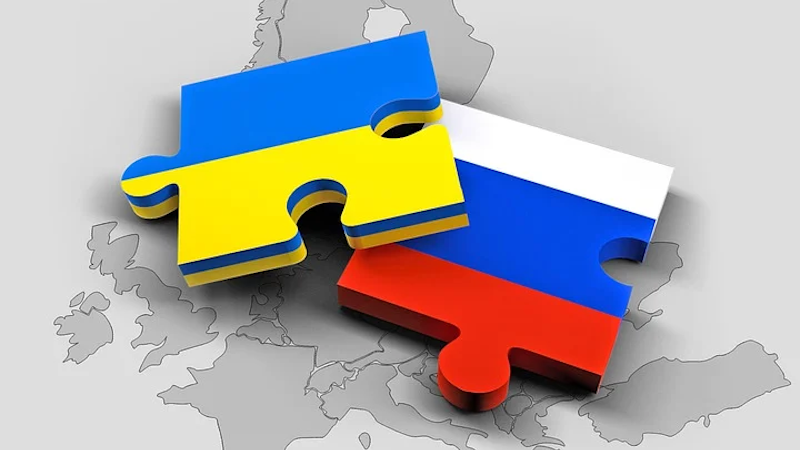
Ukraine Russia Puzzle Flags Map Ukrainian Flag

Despite some Western expectations of an imminent decline in Russian backing for the conflict in Ukraine, akin to the fading public support observed in recent Western conflicts, Russia’s civilians and soldiers exhibit an unwavering determination to sustain their support

Russian President Vladimir Putin arrived in Beijing for a two-day trip on May 15, 2024, and was greeted with a red-carpet welcome by Chinese President Xi Jinping. The two leaders pledged a “new era” for the Russia-China relationship, building on their “no limits partnership” struck just before Russia’s 2022 invasion of Ukraine. As Putin’s first foreign trip since winning reelection in March, the visit showcased his and Russia’s enduring stature amid the war in Ukraine.

Despite Russia’s 2024 election being marked by systemic repression of serious alternative parties and candidates and decades of brazen statements about Russia’s “managed” democracy, Putin captured 87 percent of the vote from a record-high voter turnout. Even with some self-censorship and a slight drop in approval, the Russian public still largely backs the war, despite a largely static frontline, the severance of ties with Europe, declines in living standards, and the deaths and injuries of hundreds of thousands of Russian soldiers. The staggering number of casualties is mirrored in Ukraine, a nation that Putin and many Russians consider a brotherly nation and the mother culture of Russia.

In contrast, U.S. domestic support for the wars in Afghanistan and Iraqbegan to decline markedly a couple of years after the conflicts began, and predictions of a collapse in Russian public support for the war emerged soon after it began. Yet although the costs of Russia’s war in Ukraine continue to escalate and it appears far from conclusion, several reasons have compelled Russian citizens to continue supporting the war and the President who initiated it.

Opposition to war in Russia faces unique challenges not encountered in the U.S., but convincing a population that war is unavoidable is essential for any government to sustain a war effort. The Kremlin has framed the nation’s military actions as a noble fight to save ethnic Russians and Russian speakersin Ukraine from a fascist regime in Kyiv—a narrative that resonates with many Russians and the country’s history in World War II. Highlighting growing restrictions on the Russian language in Ukraine furthers this message, while Russia’s excuse that they were answering cries for help in Ukraine echoes their 1968 invasion of Czechoslovakia. Russian media also portrays their forces as minimizing civilian casualties, as Ukraine is accused of targeting civilians in Russia, and Ukraine’s failure to hold scheduled elections in 2024 has been used to question President Zelensky’s legitimacy.

By portraying Ukraine as the mother culture of Russia, Putin has cast the invasion through a historical and patriotic lens. The conflict is framed as an internal matter of reasserting Russian dominance over the ancestral homeland that birthed Russian language, religion, and political origins, against an illegitimate Ukrainian government that currently occupies the country. Russian nationalism can be rallied by invoking ethnic unity, territorial patrimony, and the need to rectify Ukraine’s separation from Moscow, making it easier to dismiss Ukraine’s sovereignty. 

Russia has also deflected its violations of the UN Charter against non-aggression by depicting itself as an aggrieved party, forced into war by the U.S.-led West and its vassal states, sentiment reflected in national polls, and supported by notable figures like Slovakia’s Prime Minister Robert Fico, who in January 2024 stated that Ukraine was under the complete control of Washington. On May 1, 2024, an exhibition of captured Western weapons, vehicles, and equipment since the start of the war opened in Moscow—much like Kyiv’s in May 2022 which showed captured Russian equipment. The Kremlin connects everything to the war—including the recent attack by ISIS in Moscow. In contrast, the American public increasingly began to believe that U.S. leaders had misled them into the War on Terror, particularly the War in Iraq, which it felt could have been avoided.

Russians’ support for the war has manifested as the culmination of decades of “patriotic mobilization” that has taken place since Putin’s first term. The cultivation of nationalist sentiment, pervasive across media, culture, and politics, has intensified significantly since the invasion. The Russian identity is increasingly intertwined with the existential need to protect Russians abroad, shield Russia from NATO, and bolster Russia’s status as a great power.

Preparing and instilling confidence in the Russian armed forces’ ability to sustain a major conflict has been ongoing for decades. Russian forces engaged in counterinsurgency operations in Russia’s restive region of Chechnya in the 2000s and supported a limited conflict in support of two restive regions in neighboring Georgia in 2008. Subsequently, Russian forces seized Crimea from Ukraine in 2014 and supported a limited conflict in support of Ukraine’s restive border region with Russia. In 2015, they launched a major military operation to rescue Syrian President Assad in 2015. With relative success in Syria, the significant escalation of Russia’s conflict in Ukraine in 2022 did not come as a surprise. This contrasts with the perceived failures of Western military interventions in the 21st Century, causing domestic confidence in the U.S. military to decline as well as the scale of the military’s operations.

To alleviate domestic concern stemming from severing Russia’s historical connections with Europe, as well as distancing by other countries to comply with Western sanctions, Putin has embarked on a series of foreign trips to show Russia’s resiliency. Visits to Belarus and other former Soviet states in Central Asia and the Caucasus have helped stabilize its regional influence. Visits to IranSaudi Arabia, and the United Arab Emirates have served to demonstrate Russia’s enduring influence in the Middle East, while Russia has also hosted dozens of foreign leaders from the Global South, as well as those of Hungary and Austria.

However, Russia’s ties with China form its most crucial bilateral relationship. Despite the power imbalance, Putin’s May visit to China reaffirmed Moscow’s strategic relationship with Beijing. Russia’s capacity to confront the U.S. and collaborate with other major powers offers reassurance that has erased much of the pain of the geopolitical decline that accompanied the Soviet collapse.

Moscow has also aimed to counter any moral superiority by the West in Ukraine by highlighting Washington’s and Kyiv’s support for Israel since October 7. Framing it as part of Russia’s confrontation with the West for a new multipolar world order, the Kremlin hopes to legitimize its policies and broaden Russia’s appeal to the Global South. Following the Nigerien government’s expulsion of U.S. troops in May 2024 and the invitation of Russian forces, images of Russian troops entering the same airbase where U.S. military personnel were stationed further underscored Russia’s assertive struggle with the West and wider geopolitical ambitions.

Furthermore, Russian citizens have been shielded from the economic repercussions of the war through subsidized fuel, food, and other essential resources. Russia’s substantial gold and foreign reserves have helped fund the war and prevented extended currency volatility, while the imposition of hefty penalties on foreign companies considering leaving Russia has deterred many Western firms from exiting or compelled them to pay significant costs.

Russia’s major economic partners, most importantly China and India, have helped maintain stability in Russia’s exports and imports. Western sanctions have also by design not crippled the Russian economy, as preventing Russian resources from reaching global markets would cause prices to spike.

Moreover, the Russian public has also been largely spared from devastation. Ukrainian attacks within Russia have mostly been limited to small flareups in border regions and attacks on energy and transport facilities, and Ukrainian forces are still restricted from using Western weapons. Sabotage attacks in Russia have also risen, but the situation is manageable.

In contrast to Ukrainian citizens, no Russian civilians have been forcefully committed to fight. The 2022 partial mobilization called up reservists, while recent changes to laws have meant Russia has been more easily able to offer generous contracts to annual conscripts soon after their training has concluded. Compared to the forced conscription videos in Ukraine, Russian media can claim it only uses volunteers and those already part of the armed forces.

Russian soldiers who are injured, as well as the families of Russian soldiers who died in service, receive substantial compensation. Though payment is often delayed, the modest backgrounds of most Russian soldiers mean that these funds can be life-changing. The use of prisoners in particularly perilous military operations has also shielded regular Russian soldiers, with Ukraine only considering this practice earlier this year.

Nevertheless, tens of thousands of Russian soldiers have been killed and hundreds of thousands more seriously wounded. This tests the casualties hypothesis, which states that the public’s willingness to remain engaged in a military intervention declines as casualties mount. The Soviet Union’s 10-year war in Afghanistan saw 15,000 Soviet troops killed and eventually helped lead to the downfall of the country, while the deeply unpopular Iraq War saw 4,500 U.S. soldier deaths and saw the Bush administration’s popularity decline considerably.

Undoubtedly, the Russian government distorts official casualty figures. Yet it is crucial to contextualize Russia’s losses in Ukraine within the context of recent history. The COVID-19 pandemic claimed more than 400,000 Russian lives, far surpassing the casualties in Ukraine.

Furthermore, the Russian public’s stomach in the face of such significant losses may be influenced by the large number of deaths of prominent Russians since the beginning of the war. Across Russian media, the war and its repercussions have shown that even the country’s most influential individuals can be killed and have their assets stripped, contributing to a sense of collective sacrifice amid the conflict.

Amid the chaos of the war, dozens of Russian oligarchs and political figureshave been killed in suspicious circumstances both in Russia and overseas, in a public settling of scores, opportunism, and punishment from the Kremlin for disobedience. A day after Russian forces entered Ukraine, the body of Alexander Tyulyakov, a senior executive of Gazprom’s corporate security, was found hanging in his garage. Ravil Maganov, chairman of the board of Russia’s oil giant Lukoil, allegedly fell out of a Moscow hospital window in September 2022. In December, businessman Vladimir Bidenov died of heart problems at the Hotel Sai International in India—two days later his business associate and deputy in the Legislative Assembly of Vladimir Oblast, Pavel Antov, fell out of a window at the same hotel.

While the deaths of oligarchs and politicians may offer some solace to ordinary Russian soldiers serving in Ukraine, there has also been a significant loss of high-ranking military officials. Some, like Lieutenant General Vladimir Sviridov, were also killed in suspicious circumstances. However, the necessity for high-ranking Russian military officials to remain near the frontlines, owing to a more top-down decision-making military structure and the risk of electronic eavesdropping by Ukrainian and Western advisors, contributes to their higher casualty rate.

Alongside hundreds of other high-profile deaths, Russia has confirmed that seven general officers had been killed in Ukraine by 2024, with Ukraine claiming more than 14 had been killed by early 2023. The last time a U.S. general was killed in combat was in 2014 when an Afghan serviceman opened fire on NATO personnel in Kabul; prior to that, no American general had lost their life in combat since the Vietnam War. With this backdrop of sacrifice and solidarity among Russian elites, Russia’s “rally-’round-the-flag” effect may sustain itself longer than expected.

Russians appear to believe time and demographics are on their side. According to a March 2024 poll by Russia’s Levada Center, after decades of emigration, the share of Russians expressing a desire to move abroad hit a record low, partly in response to many of those wanting to leave having already done so. Nevertheless, Finion, a Moscow-based relocation firm, stated that 40 to 45 percent of Russians who fled abroad had since returned, driven by factors such as cracking down on remote work, visa issues, reduced fears of conscription, and a general desire to return.

And while tens of thousands of Russian soldiers have perished, along with thousands more ethnic Russians in occupied parts of Ukraine, millions of those living in those occupied territories have already been incorporated into the Russian Federation’s pre-existing 144 million citizens. Conversely, Ukraine, with 37 million people before the war, has faced a population exodus compounding already challenging demographics.

By early 2024, the prevailing sentiment was that Russia had gained a fragile upper hand. Victory, though potentially pyrrhic, appears increasingly likely, if loosely defined, in Russia. Yet, as the conflict drags on, sustained by a Russian economy increasingly geared toward the war, the pursuit of victory may wane as casualties and other costs mount. The Kremlin’s anxieties are now focused on Western nations, led by the UK, France, and Poland, allowing Ukraine to use Western weapons in Russia, which would further bring the war home to Russian civilians and internal infrastructure.

While projecting an image of composure to the public, tensions are unquestionably simmering in the Kremlin. Estimates regarding Russia’s capacity to sustain the war in its current state typically hover around two to three years. Yet unwavering support for Putin, coupled with the absence of viable alternatives, may extend his strong personal commitment to the war indefinitely. While Russia appears capable of and determined to continue the war, its uncertain future will continue to test the Russian public’s tacit enthusiasm for it.

Putin’s willingness to continue the war is seen as something to exploit in the West. Western policymakers have witnessed Russia increasingly commit its domestic resources to the conflict, as well as recently shift from calling it a “special military operation” to a war. Steadily increasing Ukraine’s technical capacity to fight a war of attrition will continue to wear down Russia’s Soviet arsenal and deployment of arms abroad, demonstrating the feebleness of Russia’s production and advanced weapons systems. By provoking a Russian defeat, it is hoped a second major convulsion across the former Soviet Union will further reduce Moscow’s geopolitical influence. Russia’s protracted military campaign and the West’s strategy of prolonging the conflict through escalation management will keep exacting a catastrophic toll on Ukrainian lives and infrastructure.



Categories
South Caucasus News

Stoking Division To Win India’s Elections Comes At A Cost – OpEd


Stoking Division To Win India’s Elections Comes At A Cost – OpEd

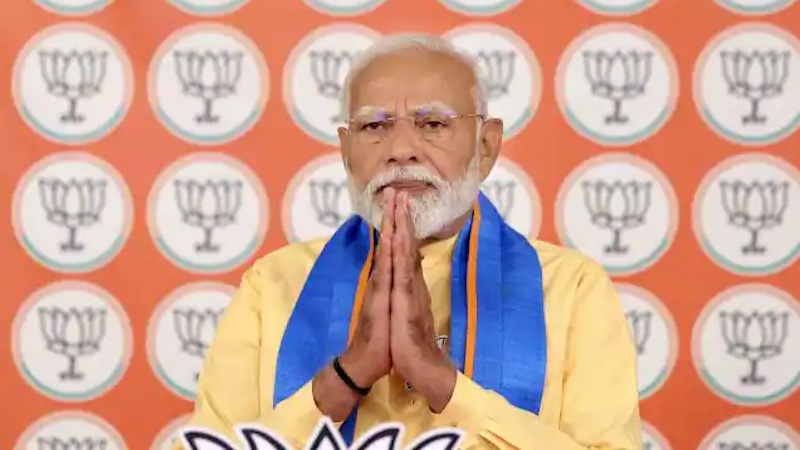
India's Prime Minister Narendra Modi. Photo Credit: narendramodi.in

By Baria Alamuddin

India’s lengthy voting process, one of the most polarizing and divisive rounds of elections in modern times, will come to an end with the declaration of results on Tuesday.

Polls indicate that the issues concerning voters include soaring youth unemployment at nearly 50 percent and a vast wealth gap. But with the ruling Bharatiya Janata Party fearing a dip in turnout, populist Hindu nationalist politicians have instead focused on demonizing and disenfranchising minorities as a means of juicing the vote.

Some of the most blatant abuses have been in BJP-governed states with substantial minority populations. Non-Hindu communities have suffered from “bulldozer justice,” with entire districts demolished for allegedly lacking proper permits, and have found themselves inexplicably removed from voter rolls.

In several locations in Uttar Pradesh, the police attacked and dispersed non-Hindus who turned up to vote. Violence against voters was even more blatant in Kashmir, where the 2019 law revoking the region’s special autonomous status has motivated higher anti-BJP voter turnout. Oppositionists accused the police of detaining and intimidating party workers and deliberately suppressing the vote.

In Assam state, a gerrymandering process known as “delimitation” has required some non-Hindu communities to travel over 100 kilometers to their nearest voting center. Opposition parties warn that delimitation has “ensured no Muslim candidate can win in the future.”

The BJP has also aggressively gone after opposition groups, with the Congress party’s bank accounts frozen in February over tax payments and senior oppositionists jailed on a variety of flimsy charges, and there has been a purge of media outlets perceived to be insufficiently favorable, including the BBC. Meanwhile, a phalanx of supportive media institutions have been dedicated to promoting the prime minister and the BJP. These elections could also set records for the avalanche of AI deep-fake content and online misinformation unleashed by all sides.

India’s foreign policy is riven with contradictions: Prime Minister Narendra Modi for a long time looked to China as a key economic partner, until Xi’s Jinping’s own expansionist nationalism became too conspicuously detrimental to India’s sovereign interests. In the Biden administration’s desperation to cultivate India as an ally against the likes of China, Russia and Iran, there has been a tendency to turn a blind eye to the country’s democratic shortcomings. India has furthermore sought to have it both ways on Ukraine and other global threats, particularly given India’s dependence on oil from Russia and Iran. India has sought to cultivate stronger ties with GCC states, but Modi is also one of few world leaders who have pursued closer ties with Israel since the Gaza war.

Much attention has been focused on divisive and inflammatory comments made by the prime minister himself, with Modi telling one rally: “When they were last in power, the Congress said that Muslims have the first right to the nation’s resources. What does that mean? If they come to power, that means they will collect all the wealth. And who will they give it to? Those who have more children. To infiltrators.”

Along with the demonisation of Indian Muslims as “infiltrators” and the ubiquitous slur that their families are having more children in order to displace Hindus in India, political speeches and election propaganda have repeatedly emphasized the mantra of “Love Jihad” — the myth of Hindu women being seduced and forcibly converted. Evoking this specter, BJP state governments have introduced anti-conversion legislation and encouraged police crackdowns on interfaith couples. A recent Bollywood film, “Kerala Story,” which was promoted by BJP politicians, claimed that 32,000 women in Kerala state had been forcibly converted to Islam before being recruited into the ranks of Daesh. This is one of a flood of recent propagandistic Bollywood films that have demonised non-Hindu demographics.

Although extremist Hindu nationalists have gone after secularists, Sikhs, Christians and others, India’s more than 200 million Muslims are viewed by the BJP as the primary threat to their monolithic vision of Hindu supremacy, and consequently face growing discrimination in employment and education, along with increasingly systematic barriers to social advancement.

Modi’s India is often portrayed as an economic miracle, with its massive infrastructure projects and widening citizens’ access to technology, banking and consumer goods. Although the proportion of those living in extreme poverty has fallen, from 18.7 percent in 2015 to 12 percent in 2021, social inequalities have dangerously widened, with the top 10 percent of the population holding 77 percent of national wealth. India’s 2019 citizenship law wields the power to make millions stateless.

BJP-aligned right-wing organizations have enjoyed impunity for embarking on bouts of communal violence, and lynching non-Hindus accused of smuggling beef. BJP politicians openly celebrate notorious Hindu vigilantes accused of murderous attacks on minorities. Hate speech has soared, with one research group finding that 75 percent of recent instances occurred in BJP-ruled states.

Throughout Europe, the US, and elsewhere in the world, we also see populists and fascists whipping up communal and religious hatreds as the surest route to political power.

I had the bittersweet pleasure of interviewing Indira Gandhi in 1984, just hours before the prime minister was assassinated by her Sikh bodyguard. Gandhi told me of her love of hiking in Kashmir’s mountains, and extolled the importance of her nation’s inherent diversity: India must be a state for all its peoples, she told me, not a democracy for only one segment of the population.

Few doubt that the BJP’s tactics for maximising turnout among the Hindu majority will prevail, but when victory carries such dangerously high costs, all segments of society risk losing from the resulting social turmoil.

• Baria Alamuddin is an award-winning journalist and broadcaster in the Middle East and the UK. She is editor of the Media Services Syndicate and has interviewed numerous heads of state.


Categories
South Caucasus News

Debunking eight common myths about climate change | UNEP


Here’s a closer look at some of the most popular misconceptions around the climate crisis.

Categories
South Caucasus News

StanChart’s Iran transactions subject of fresh whistleblower claims – Financial Times


StanChart’s Iran transactions subject of fresh whistleblower claims  Financial Times

Categories
(@mikenov) / Twitter

@anders_aslund: RT by @mikenov: “Jessie Benton, who worked for the pro-Trump super PAC and was a longtime aide to former GOP Rep. Ron Paul, was convicted by a federal jury in November on several charges, including conspiring to solicit an illegal foreign campaign contribution. Both the Trump campaign and Trump…


Categories
(@mikenov) / Twitter

@anders_aslund: RT by @mikenov: “Jessie Benton, who worked for the pro-Trump super PAC and was a longtime aide to former GOP Rep. Ron Paul, was convicted by a federal jury in November on several charges, including conspiring to solicit an illegal foreign campaign contribution. Both the Trump campaign and Trump…


Categories
(@mikenov) / Twitter

@Jerusalem_Post: RT by @mikenov: In the aftermath of October 7, Jewish progressives were shocked to learn that “death to Jews” means all Jews, on and off campus


Categories
(@mikenov) / Twitter

@Jerusalem_Post: RT by @mikenov: In the aftermath of October 7, Jewish progressives were shocked to learn that “death to Jews” means all Jews, on and off campus