

Categories
South Caucasus News

AI’s Tectonic Shift: Redefining Work, Wealth, And Workforce In 2024 And Beyond – OpEd


AI’s Tectonic Shift: Redefining Work, Wealth, And Workforce In 2024 And Beyond – OpEd

artificial intelligence privacy woman digital

The integration of artificial intelligence (AI) into the global socioeconomic fabric is no longer a distant prospect but an accelerating reality. The year 2024 marks a watershed moment, as AI’s transformative power reshapes industries, economies, and the very nature of work itself. This technological revolution is not merely augmenting human capabilities; it’s redefining how we live and work, creating both unprecedented opportunities and complex challenges that demand our attention. 

The Rise of Intelligent Automation

The most immediate and visible impact of AI is the acceleration of automation. McKinsey & Company’s latest research suggests that nearly half of all work activities could be automated with current technologies. This isn’t confined to blue-collar jobs; white-collar professions like law, medicine, and finance are also experiencing a wave of AI-driven disruption. Algorithms are now capable of drafting legal documents, diagnosing diseases, and managing financial portfolios, tasks once thought to be the exclusive domain of highly trained professionals. 

However, the narrative of “robots stealing jobs” is overly simplistic. While some roles are undoubtedly at risk, AI is simultaneously creating new career paths in fields like data science, machine learning engineering and AI ethics. The World Economic Forum’s Future of Jobs Report 2023 predicts that AI will create 97 million new jobs by 2025, outpacing the 85 million jobs it is expected to displace. Additionally, AI is augmenting existing roles, allowing workers to focus on higher-level tasks that require uniquely human skills like creativity, critical thinking and emotional intelligence. 

A New Economic Paradigm

AI’s influence on the global economy is nothing short of transformative. A recent PwC report estimates that AI could contribute up to $15.7 trillion to the global economy by 2030, more than the current output of China and India combined. This isn’t merely about increased efficiency; it’s about unlocking new sources of value and reshaping entire industries. 

The “AI economy” is already taking shape. Tech behemoths like Google, Microsoft, and Amazon are pouring billions into AI research and development, while AI-powered startups are disrupting established markets with innovative products and services. This has sparked a global race for AI supremacy, with nations vying for leadership in this transformative technology. The rise of the AI economy is expected to create new markets, drive innovation and lead to unprecedented economic growth, but it also raises concerns about inequality and the concentration of power in the hands of a few tech giants. 

The Productivity Paradox Revisited

AI’s potential to enhance human productivity is a subject of intense debate. While some studies point to significant gains in output and efficiency, others suggest a “productivity paradox,” where the full benefits of AI have yet to materialize. This paradox may be due to the time it takes for businesses to adapt to new technologies, the need for significant investments in infrastructure and training and the challenge of integrating AI into existing workflows. 

However, there are promising signs that this paradox is beginning to resolve. Companies that have successfully implemented AI are reporting significant productivity gains, improved decision-making, and enhanced customer experiences. For instance, in the healthcare sector, AI algorithms are analyzing medical images to detect early signs of diseases like cancer with greater accuracy than human radiologists, leading to faster diagnoses and improved patient outcomes. In the financial sector, AI-powered robo-advisors are providing personalized investment advice at a fraction of the cost of traditional financial advisors, democratizing access to wealth management services. Meanwhile, in the retail industry, AI-driven recommendation engines are personalizing shopping experiences and boosting sales, while AI-powered inventory management systems are optimizing stock levels and reducing waste. 

Ethical Crossroads and Societal Implications

As AI becomes more deeply embedded in our lives, ethical considerations are taking center stage. Algorithmic bias, job displacement, and the potential for AI to be weaponized are raising profound questions about how this technology should be governed and used. There are also concerns about the impact of AI on privacy, autonomy, and human dignity. 

Governments, industry leaders and civil society organizations are grappling with these complex issues. The development of ethical frameworks, transparent AI systems and robust regulations will be essential to ensure that AI benefits humanity as a whole. Additionally, there is a growing need for public discourse and education about AI to ensure that its development and deployment are aligned with societal values. 

The Road to an AI-Powered Future

The AI revolution is still in its early stages but its trajectory is clear. Work as we know it is being redefined, economic landscapes are shifting and the very nature of human productivity is evolving. Embracing this change with a focus on education, upskilling and ethical considerations will be key to navigating this new era. 

Governments and educational institutions must invest in training programs to equip workers with the skills needed to thrive in the AI-powered economy. Businesses must adopt responsible AI practices, prioritizing transparency, fairness and accountability. And individuals must embrace lifelong learning to adapt to the changing demands of the workplace. 

The future of work isn’t about humans versus machines; it’s about humans and machines collaborating to achieve unprecedented levels of innovation and prosperity. Embracing AI with a clear-eyed understanding of its potential and pitfalls is the key to thriving in this new era. The road to an AI-powered future is paved with both challenges and opportunities, and it’s up to us to navigate it wisely, ensuring that AI serves humanity and creates a more equitable and prosperous world for all.

Categories
South Caucasus News

Taliban Need To Change Their Ways – Analysis


Taliban Need To Change Their Ways – Analysis

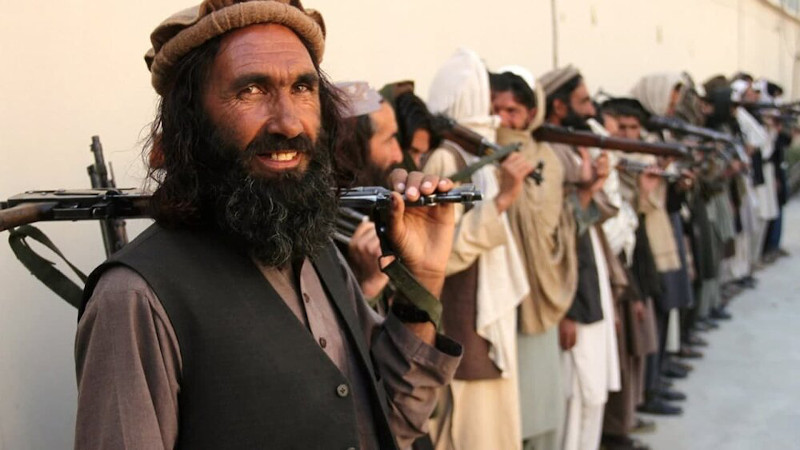
Taliban fighters in Afghanistan. Photo Credit: Mehr News Agency

By Luke Coffey

Last month, Afghanistan was hit by yet another major natural disaster. There was significant flooding in the northern provinces of Badakhshan, Baghlan, and Takhar. Estimates vary but it is thought that hundreds of people died and thousands were displaced from their homes.

This latest catastrophe comes on the heels of a series of earthquakes in western parts of the country late last year that left at least 2,000 people dead and 150,000 in dire need of humanitarian aid.

The effects of these disasters on Afghans are particularly bad because of the lack of good governance and economic development in the country. Since the Taliban took back power in August 2021, Afghanistan has been on a downward spiral. Basic medical supplies are in short supply. Millions of people are affected by food insecurity. The Taliban, who proved to be very effective as insurgents, have been unable to govern effectively since regaining power.

This terrible humanitarian situation is worsened by another issue: the Taliban’s inability to earn formal diplomatic recognition from the international community. Not one country has formally recognized the Taliban as the legitimate government of Afghanistan so far. The effect of this, in part, is that the economic investment and international aid that would otherwise be available to the country simply does not exist. These are things the Afghan people desperately need.

While many countries have indirect or de facto engagement with the Taliban, all stop short of formal recognition. This is because the Taliban have done nothing to reassure the international community that they have changed their ways from their rule during the 1990s.

Many of the promises they made in the lead-up to their takeover in 2021 have not been honored. Girls are still not allowed to attend school. Terrorist groups such as Al-Qaeda freely roam the country. Women have been removed from the workplace.

Further complicating matters, splits within the top ranks of the Taliban movement mean the international community is not sure with whom it should engage. All these factors make formal recognition of the Taliban difficult, if not impossible.

Where there has been international engagement with the Taliban, it is usually for pragmatic reasons of national self-interest. For example, northern neighbors in Central Asia engage with Kabul purely for economic and security reasons. Kazakhstan recently signed trade deals with the Taliban worth about $200 million and lifted travel bans placed on senior Taliban officials.

Meanwhile, Turkmenistan and Uzbekistan’s engagements with the Taliban are driven by border security and counterterrorism concerns.

Surprisingly, Iran is probably the country in the region that has the best relationship with the Taliban. This unorthodox mix of Shiite and Sunni sectarian extremism is driven purely by national self-interest and geopolitics. One of the main drivers of Tehran’s relations with the Taliban is access to water from the Helmand River, which originates in Afghanistan but flows into Iran. Regional dynamics between Iran and its Sunni

Arab neighbors have led Tehran to believe its best counterbalance is engagement with the Sunni Taliban.

Furthermore, and in a twist of geopolitical irony, the Taliban and Pakistan are now at odds after years of cooperation, and border skirmishes occur from time to time. With relations between Tehran and Islamabad also experiencing difficulties, the unusual Iranian-Taliban relationship is not so surprising.

Other powers on the Eurasian landmass, such as China and Russia, have chosen to engage with the Taliban for geopolitical reasons, too. From the perspective of Moscow and Beijing, the fact that the Taliban defeated the West in Afghanistan is enough of a reason to maintain cordial relations with Kabul.

Furthermore, Russia naively sees the Taliban as a possible bulwark against Daesh, while China views Taliban-controlled Afghanistan as a potential source of mineral resources.

The Taliban have also been frozen out of regional and international organizations. Regional blocs such as the Shanghai Cooperation Organization and the South Asian Association for Regional Cooperation, all of which pre-Taliban Afghanistan participated in, have excluded the country. The same is true of international organizations such as the UN and the World Health Organization. In fact, the UN has a number of Taliban leaders still under international sanctions.

If the Taliban are having problems with international recognition, they are not the only ones in Afghanistan. Major anti-Taliban groups also come up short when it comes to persuading the international community to recognize them.

The most prominent and largest organization of this kind, the National Resistance Force of Afghanistan, has had no formal engagement from any country other than Tajikistan, and even that takes place quietly and carefully.

Even though many countries will, as noted, indirectly deal with the Taliban there is no such equivalent engagement with the NRF. If countries such as the US and others can engage with the Taliban indirectly, there should be no reason why they cannot do the same with opposition groups such as the NRF.

Until the Taliban starts governing responsibly in Afghanistan, while also demonstrating to the international community that it can be a trusted partner, few countries, if any, will establish diplomatic relations.

And for as long as the Taliban remain international pariahs, the Afghan people will continue to suffer as a result of the lack of economic investment in the country and the mere trickle of international humanitarian aid that can be provided.

The fastest way for the suffering of the Afghan people to end is for the Taliban to live up to their promises, reject terrorism, protect the rights of women and minorities, and form an inclusive government that represents the interests of all Afghans.

Sadly, the Taliban have shown no desire to change their ways and, once again, the Afghan people are the ones who suffer.

  • Luke Coffey is a senior fellow at the Hudson Institute. X: @LukeDCoffey

Categories
Audio Review - South Caucasus News

@Newsweek: RT by @mikenov: Donald Trump verdict unlikely to survive in federal court—Legal analyst newsweek.com/donald-trump-h…


Donald Trump verdict unlikely to survive in federal court—Legal analyst https://t.co/amu2N0vw2v pic.twitter.com/cBzOFbIBZQ

— Newsweek (@Newsweek) June 1, 2024


Categories
Audio Review - South Caucasus News

@BarakRavid: RT by @mikenov: Israel confirms Gaza hostage-ceasefire deal proposal details laid out by Biden. My story on @axios axios.com/2024/06/01/isr…


Israel confirms Gaza hostage-ceasefire deal proposal details laid out by Biden. My story on @axios https://t.co/5DcUENh6li

— Barak Ravid (@BarakRavid) June 1, 2024


Categories
Audio Review - South Caucasus News

@TimesofIsrael: RT by @mikenov: Ben Gvir and Smotrich vow to bolt coalition if Netanyahu backs hostage-ceasefire deal timesofisrael.com/liveblog-june-…


Ben Gvir and Smotrich vow to bolt coalition if Netanyahu backs hostage-ceasefire dealhttps://t.co/cRtbuuJ5pd

— The Times of Israel (@TimesofIsrael) June 1, 2024


Categories
Audio Review - South Caucasus News

@Sandbagger_01: RT by @mikenov: Other than the same old picture issues, the idea that the agencies have been told to “refocus” on 🇷🇺🇨🇳🇮🇷 neglects the fact that there already has been a growing % on state level threats in recent years – and the agencies are fully aware of the threat. telegraph.co.uk/news/2024/06/0…


Other than the same old picture issues, the idea that the agencies have been told to “refocus” on 🇷🇺🇨🇳🇮🇷 neglects the fact that there already has been a growing % on state level threats in recent years – and the agencies are fully aware of the threat.
https://t.co/qc2IqJXk9v

— Dr. Dan Lomas (@Sandbagger_01) June 1, 2024


Categories
Audio Review - South Caucasus News

@Jerusalem_Post: RT by @mikenov: Finance Minister Bezalel Smotrich , and National Security Minister Itamar Ben-Gvir condemned the proposed outline for a hostage and ceasefire deal Saturday evening, and threatened to leave the government if PM Benjamin Netanyahu accepted the deal. jpost.com/breaking-news/…


Finance Minister Bezalel Smotrich , and National Security Minister Itamar Ben-Gvir condemned the proposed outline for a hostage and ceasefire deal Saturday evening, and threatened to leave the government if PM Benjamin Netanyahu accepted the deal.https://t.co/aSAdx0Pcvh

— The Jerusalem Post (@Jerusalem_Post) June 1, 2024


Categories
South Caucasus News

@Newsweek: RT by @mikenov: Donald Trump verdict unlikely to survive in federal court—Legal analyst newsweek.com/donald-trump-h…


Donald Trump verdict unlikely to survive in federal court—Legal analyst https://t.co/amu2N0vw2v pic.twitter.com/cBzOFbIBZQ

— Newsweek (@Newsweek) June 1, 2024


Categories
South Caucasus News

@BarakRavid: RT by @mikenov: Israel confirms Gaza hostage-ceasefire deal proposal details laid out by Biden. My story on @axios axios.com/2024/06/01/isr…


Israel confirms Gaza hostage-ceasefire deal proposal details laid out by Biden. My story on @axios https://t.co/5DcUENh6li

— Barak Ravid (@BarakRavid) June 1, 2024


Categories
South Caucasus News

@TimesofIsrael: RT by @mikenov: Ben Gvir and Smotrich vow to bolt coalition if Netanyahu backs hostage-ceasefire deal timesofisrael.com/liveblog-june-…


Ben Gvir and Smotrich vow to bolt coalition if Netanyahu backs hostage-ceasefire dealhttps://t.co/cRtbuuJ5pd

— The Times of Israel (@TimesofIsrael) June 1, 2024