Categories
South Caucasus News

The Next Front In The Battle Over Georgia’s ‘Foreign Agent’ Law – Analysis


The Next Front In The Battle Over Georgia’s ‘Foreign Agent’ Law – Analysis

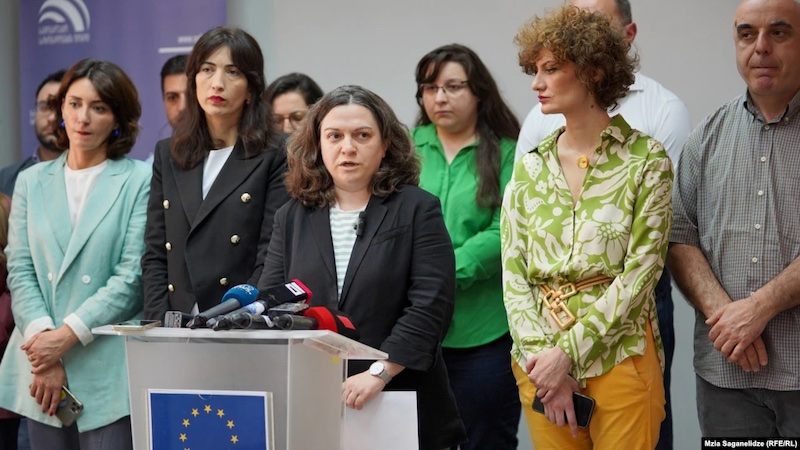
At a press conference in Tbilisi on May 30, representatives from Georgian NGOs said that they would fight the new "foreign agent" law in the courts. Photo Credit: RFE/RL

By Andy Heil

(RFE/RL) — Mika Dzidziguri realized just a few years ago that people from outside the country could help Georgian society turn a corner.

UNICEF and other foreign-based donors and aid organizations were working with her and other parents of children with Down syndrome to raise awareness, correct misconceptions about children with disabilities, and help find jobs for affected young people.

Their work — aided by international organizations that provided grants and support — made up for the desperate lack of services in this Caucasus nation of around 3.7 million. Past research has suggested that Georgian civil society groups get some 95 percent of their funding from abroad and frequently “last for only a project or two.”

“This wouldn’t be possible without the support of international organizations,” Dzidziguri told RFE/RL’s Georgian Service.

But now she and other community-based activists in Georgia might lose that critical help, after lawmakers overrode a presidential veto to enact a controversial “foreign agent” law to publicly name, and seemingly shame, foreign-backed NGOs as “serving the interests of a foreign power.”

“This law is a signal to us that if someone doesn’t like our speech or statement, they can shut us down very easily,” Dzidziguri said.

Critics of the new law have warned of its potentially devastating effect on the country’s 10,000 or so nonprofits, active in areas ranging from antidiscrimination and childhood cancer to local theater and sheltering stray animals.

Dzidziguri’s special-needs daughter, Lile, is now an adolescent, and the nonprofit her mother represents, the Georgian Down Syndrome Association, has founded two more organizations to help more kids with disabilities “live in dignity.”

Since the passing of the law, Dzidziguri said that her association and its offshoots intend to continue their activities, but “we don’t know whether or not we’ll be registered as organizations serving the interests of a foreign power.”

Legal Options

With the threat of not being able to continue their work hanging over their heads, NGOs in Georgia are looking at their legal options, helped by public-interest lawyers and legal-aid groups who, for a while now, have been planning the pivot from the streets to the courtroom.

Guram Imnadze of the Social Justice Center, a Tbilisi-based NGO that provides rights-related legal assistance to the public, told RFE/RL in mid-May that his and around 30 other groups had been working in task forces, including one to “analyze possible legal strategies.”

“We’ll try to use all the legal remedies in order to tackle this legislation,” he said.

But Imnadze and others recognize that legal battles take time — his center’s own 2017 constitutional challenge of a law on secret surveillance is still pending — and they know this can pose an existential problem for community-based NGOs in particular.

Imnadze’s and around 150 other NGOs have described the registration requirement under the new law as unfair and “degrading” and vowed not to comply.

“Of course, we are not going to register ourselves,” Imnadze said. “[But] these community-based organizations…can’t easily declare that they won’t register themselves” because it could endanger their “well-being, their existence.”

Smaller NGOs were already seeking advice from the Social Justice Center well before the “foreign agent” law’s adoption.

“Their main concerns and questions are about legal aspects: What kind of legal ways are there to avoid this registration, and how can they proceed with their daily work if this law is adopted?” Imnadze said.

The new law presents all foreign-funded NGOs with the same stigmatization dilemma, he said, but the penalties for noncompliance can make it “almost impossible” for smaller ones to operate.

Organizations will undoubtedly face increased administrative burdens. And due to initially undisclosed late-hour amendments, both organizations and individuals can face substantial fines of 25,000 lari (around $9,000) per month or even higher for noncompliance.

Personal Information Requests

Georgian Prime Minister Irakli Kobakhidze and other Georgian Dream officials say the new law will promote “transparency” and national sovereignty, although NGOs were already required to disclose their funding to the government.

Even the most outspoken critics of foreign-funding levels among Georgian NGOs acknowledge that the law will ensnare far more groups than its Georgian Dream architects suggest.

“Those NGOs that steered well clear of partisan politics, tried to be mission-driven and not donor-driven, practiced genuine solidarity, and respected citizens’ agency will get caught up in a policy that wasn’t even aimed at them,” Almut Rochowanski, a longtime civil society activist and former grant writer and reviewer in the region, wrote recently.

Final decisions on legal strategies, Imnadze said, will have to wait until enforcement begins. He cited the right to privacy guaranteed by the Georgian Constitution, including the proper handling of individuals’ personal information.

“Nobody, including state institutions, should have unlimited access to this kind of information,” Imnadze said.

Under the new law, the Justice Ministry has the power to request personal information about individuals associated with an “organization serving the interests of a foreign power,” including details about a person’s political views, ethnicity, religious beliefs, or sex life.

Imnadze also said that describing organizations as foreign threats simply because they receive financial aid from foreign partners is discriminatory, especially when numerous state agencies get similar funding.

Fighting The Law At Home And Abroad

One of the most pressing questions for those organizations affected by the new law is whether to fight the legislation in national courts, which are seen by many as highly politicized and influenced by the ruling party, or plan straightaway for a challenge before the European Court of Human Rights (ECHR), the Council of Europe’s international court.

For now, the answer may well be both: On May 30, a group of Georgian NGOs declared their intention to initiate legal proceedings at the country’s Constitutional Court to challenge the validity of the act. At the same time, they said, they will also file a complaint with the ECHR.

“[We] will use all domestic and international mechanisms to impede its operation until the law is unconditionally repealed,” the group said in a statement read out at a news conference in the Georgian capital, Tbilisi.

Those targeted by the law have already been looking to the international legal community for help. Another Council of Europe body, the Venice Commission, provided considerable international legal ammunition in a nonbinding “urgent opinion” on May 14.

It cited “fundamental flaws” in the law that “involve significant negative consequences for the freedoms of association and expression, the right to privacy, the right to participate in public affairs, as well as the prohibition of discrimination.”

The commission’s legal opinion also “stressed” the effect of Georgia’s “foreign influence” law on civil society organizations in the context of earlier “foreign agent” legislation in Russia and a “transparency” law passed and eventually repealed in EU wild child Hungary.

The Russian legislation, approved in 2012, laid out criteria in the Criminal Code for a “foreign agent” designation for NGOs that receive outside support and has since been ratcheted up and expanded to include media and individuals. It has been used to crack down relentlessly on critics of Russian President Vladimir Putin and his policies, including with an amendment this month disqualifying “foreign agents” from elected office.

In 2017, five years into the Russian experiment, Hungarian lawmakers avoided using the term “foreign agent” in their own legislation, taking aim at civil society by instead focusing on “transparency.”

It took three years before the European Court of Justice (ECJ), the European Union’s highest court in matters of EU law, ruled that the Hungarian legislation contravened the bloc’s law. It took nearly another year and an EU threat of further action before the Fidesz party of Hungary’s populist right-wing Prime Minister Viktor Orban eventually repealed it. Experts say a newer law on “sovereignty protection” appears aimed at casting a similar pall over NGOs and an even broader segment of Hungarian society.

In its legal opinion, the Venice Commission said that the situation in Georgia is largely similar to that of Hungary, as it singles out “certain entities as ‘organizations pursuing the interests of a foreign power’ on the mere ground of their receiving foreign funding.”

This, the commission said, has the “potential of tarnishing the reputation of such entities and creating an atmosphere of mistrust towards them.”

Imnadze called “this stigma aspect the biggest similarity” between the Georgian bill and its Russian and Hungarian counterparts, and one that drives home the perils of compliance. It’s also a lesson, he said, that Georgian Dream learned from the withdrawal under public pressure of its earlier “foreign agent” bill a year ago.

“The [new] version doesn’t include this wording; it’s substituted by the actual explanation of what the word ‘agent’ means,” Imnadze said. “So, in that regard, nothing has changed.”

Written and reported by Andy Heil in Prague with additional reporting by RFE/RL’s Georgian Service.

  • Andy Heil is a Prague-based senior correspondent covering central and southeastern Europe and the North Caucasus, and occasionally science and the environment. Before joining RFE/RL in 2001, he was a longtime reporter and editor of business, economic, and political news in Central Europe, including for the Prague Business Journal, Reuters, Oxford Analytica, and Acquisitions Monthly, and a freelance contributor to the Christian Science Monitor, Respekt, and Tyden. 
Categories
Selected Articles

Hezbollah fighters shoot down an Israeli drone in Lebanon and fire rockets at an Israeli base – The Associated Press


Hezbollah fighters shoot down an Israeli drone in Lebanon and fire rockets at an Israeli base  The Associated Press

Categories
Selected Articles

Quieting the nuclear rattle: Responding to Russia’s tactical nuclear weapons exercises – European Leadership Network


Quieting the nuclear rattle: Responding to Russia’s tactical nuclear weapons exercises  European Leadership Network

Categories
Selected Articles

Ukraine war: Can using Western weapons on Russia change the war? – BBC


Ukraine war: Can using Western weapons on Russia change the war?  BBC

Categories
Selected Articles

@PStyle0ne1: RT by @michaeldweiss: Russian channels panicking 🚨 Ukraine might have launched a counterattack in North Kharkiv


Russian channels panicking 🚨

Ukraine might have launched a counterattack in North Kharkiv pic.twitter.com/nKy9K2oGaY

— PS01 (@PStyle0ne1) June 1, 2024


Categories
South Caucasus News

NPR News: 06-01-2024 7PM EDT


NPR News: 06-01-2024 7PM EDT

Learn more about sponsor message choices: podcastchoices.com/adchoices

NPR Privacy Policy


Categories
Selected Articles

Biden administration eases some economic restrictions on Cuba – The Washington Post


Biden administration eases some economic restrictions on Cuba  The Washington Post

Categories
South Caucasus News

He Fought The Law: Will The Law Win? – OpEd


He Fought The Law: Will The Law Win? – OpEd

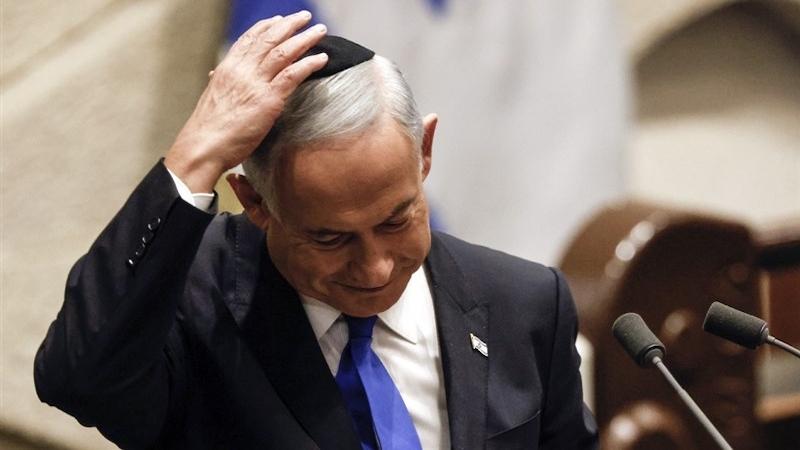
File photo of Israel's Benjamin Netanyahu. Photo Credit: Matty Stern / U.S. Embassy Jerusalem

Benjamin Netanyahu’s face may soon be on Wanted posters around the world.

In Israel, the prime minister has been charged with various counts of corruption. But now that the International Criminal Court has requested a warrant for Netanyahu’s arrest on war crimes, he may become a global outlaw as well.

It’s not a done deal. The chief prosecutor has requested the warrants. Next, it’s up to the ICC judges to determine whether the evidence is sufficient to issue those warrants.

Netanyahu is not alone. The latest ICC application for warrants applies to Israeli Defense Minister Yoav Gallant as well as three leaders of Hamas.

The statement scrupulously avoids making any claims of moral equivalence. It begins by accusing the Hamas leadership in no uncertain terms of extermination, murder, rape, torture, and taking hostages in its attack in Israel on October 7. The second half of the statement condemns Israel for its actions after October 8. According to Khan, Israel was “causing extermination, causing starvation as a method of war, including the denial of humanitarian relief supplies [and] deliberately targeting civilians in conflict.”

The Israeli government predictably condemned the statement, with Netanyahu saying that Karim Khan “takes his place among the great antisemites in modern times.”

Meanwhile, the Israeli army undercut Netanyahu’s rebuttal and confirmed the ICC’s initial determination when, as part of its continuing assault on the southern city of Rafah, it bombed a Palestinian tent encampment in Gaza this week, killing dozens of women and children. An apology from Netanyahu about the civilian losses has done little to assuage international public opinion, particularly given all the previous Israeli military assaults that have led to over 36,000 Palestinian deaths so far in this war.

Stalin once reportedly said of the Pope and his criticisms of Soviet treatment of Catholics, “How many divisions does he have?” The ICC, similarly, doesn’t have an army at its disposal to enforce its rulings. But international law has a certain institutional power that can accumulate over time.

Which leaves open the question: How long can Netanyahu hold out politically against criticisms from within Israel and outside its borders?

Bibi Besieged

Nearly three out of four Israelis want Netanyahu to resign and new elections to be held. Even though most Israelis support the war in Gaza, they are furious at their prime minister for the security lapses that allowed the October 7 attacks to happen and for not negotiating the return of the remaining hostages taken on that day.

So far, Netanyahu has resisted calls from even those within his own cabinet to step down and hold new elections. That’s no surprise, given that his Likud Party polls well behind the opposition alliance.

Then there are the criminal cases still pending against Netanyahu. Like Trump, he argues that the multiple charges are examples of political persecution. Also like Trump, Netanyahu has deployed multiple strategies to drag these cases out over the last four years. A conviction in any of the three bribery and corruption cases would force Netanyahu to step down. Or a plea deal could be reached that would trade jail time for an end to Netanyahu’s political career.

Perhaps the ICC announcement is a lifeline for Bibi. Perhaps the Israeli public will rally around Netanyahu—he may be a jerk, but he’s our jerk—and seek to protect him from outside prosecution. Those angling to replace Netanyahu—Benny Gantz, Yair Lapid—have indeed rushed to defend Bibi.

Less clear has been the impact of the ICC statement on Israel’s voting population. The human rights organization B’Tselem said this about the ICC statement: “The international community is signalling to Israel that it can no longer maintain its policy of violence, killing and destruction without accountability.” But B’Tselem is not exactly the mainstream of Israeli public opinion.

Outside Israel, Netanyahu can count on a dwindling number of allies.

Israel’s insistence on pushing forward with the attacks in Gaza prompted Norway, Spain, and Ireland this week to recognize an independent Palestinian state. Much of the Global South stands with Palestine as well, as evidenced by both demonstrations on the ground and various states like South Africa, Chile, and Mexico bringing complaints to international bodies. Although the Biden administration denounced the ICC’s statement, Americans are also increasingly fed up with Netanyahu’s actions.

These international institutions are often called “authorities”—but how much authority do they really have? Last week, the International Court of Justice ordered Israel to halt its assault on Rafah. Israel ignored the ruling.

In some cases, however, these international rulings acquire authority over time.

The Case of Milošević 

Serbian strongman Slobodan Milošević was first indicted on charges of war crimes in Kosovo by the Hague Tribunal in March 1999. Those charges were later expanded to include his actions during the wars he promoted in Bosnia and Croatia.

It would take more than two years before Milošević was taken into custody. First, he had to lose an election. Then the United States had to pressure the newly elected government not only to arrest the former leader but deliver him to The Hague. In 2002, Milošević went on trial, which lasted for four years. He died in 2006 before a final verdict was reached.

When the charges were first filed against Milošević, he looked invincible. In May 1999, opposition leaders in Serbia reported that “the government continues to draw strength from the war and…there is little prospect for widespread political unrest.” They added that “serious protest against Milošević would have to wait until after the war.”

But Milošević miscalculated after the war was over, passing a law to allow himself to run again for the presidency and then setting the date of the elections earlier to catch the opposition unprepared. But the opposition was very well prepared. And eventually Milošević found himself on trial at The Hague.

Although Milošević was never sentenced, the trials at The Hague did bring a measure of justice to those who suffered in the wars in former Yugoslavia. The tribunal indicted 161 individuals and sentenced 90 of them. Although most of those indicted were Serbian, there were also cases against those who committed crimes against Serbs.

The process of dealing with the Yugoslav wars was necessarily flawed, but it also gave a shot in the arm to international law and the attempts to prosecute human rights violations at the global level. The tribunal sent a signal to leaders everywhere that they cannot equate sovereignty with impunity.

Today, however, we live in an era of sovereignistas. These leaders insist that they can do whatever they want within their own national borders, international law be damned. Benjamin Netanyahu certainly claims this privilege. Has international law been weakened sufficiently by the successive onslaughts of Vladimir Putin, Viktor Orbán, Narendra Modi, Donald Trump, and others such that Netanyahu can avoid the fate of Milošević?

The Israeli leader seems to believe that he can stay in power as long as he keeps his country at war. The crazies in his cabinet will accept nothing less. In the back of his mind, perhaps, he also believes that he can liberate the remaining hostages by force and regain the respect of the voters. As long as the war is ongoing, he can use the current “state of emergency” as a way to stay out of jail and remain beyond the clutches of the ICC.

Netanyahu doesn’t believe in the rule of law. After all, he isn’t trying to arrest the leaders of Hamas, he is trying to kill them. Bringing Netanyahu to justice would be a repudiation of his “rule of the jungle” ethos. It would also signal to the sovereignistas that borders are no protection against prosecution for war crimes. His whole life, Netanyahu has fought the law. Let’s hope that, in the end, the law will win.


Categories
South Caucasus News

Netanyahu Must Abandon Blind Ideology And Face Reality – OpEd


Netanyahu Must Abandon Blind Ideology And Face Reality – OpEd

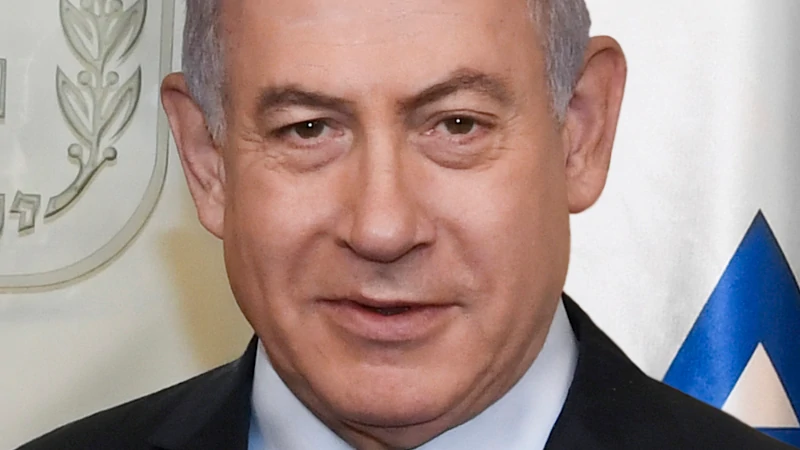
Israel's Benjamin Netanyahu. Photo Credit: Tasnim News Agency

The Israeli Prime Minister Benjamin Netanyahu remains elusive about the endgame in Gaza but time is closing in on him. He has a solemn obligation to tell his fellow citizens what will be the fate of Gaza once the war is over and what his plans are for a solution to the Israeli-Palestinian conflict.

By Dr Alon Ben-Meir

Hamas’ October 2023 attack and Israel’s massive retaliation have shredded every script that Prime Minister Netanyahu and his followers wrote in their fictitious play that portrays the Palestinians as an irredeemable foe, citing Hamas’ attack as proof to support their contentious claim.

From this, they concluded that Hamas will not be allowed to reconstitute itself in Gaza, which is justified given Hamas’ obdurate existential threat to Israel, but then they stick to their old scripts and insist that no Palestinian Authority (PA) of any stripe should have a say about the future governance of Gaza.

And while ruling out even the prospect of a new moderate PA to rule Gaza, Netanyahu is not saying who should or what the ultimate solution should be that can mitigate rather than further intensify the Israeli-Palestinian conflict.

Here, blind ideology and dubious beliefs clash head-on with reason and reality. Netanyahu, who formed a messianic government and shares his extremist partners’ burning lust to possess the whole land from the Mediterranean to the Jordan River, seems to have lost not only his way but also his soul. He placed his political fortunes ahead of his country’s future survival.

Hence, regardless of how perilous it is for Israel to impose indefinite military rule in post-war Gaza, as several of his disturbed ministers demand, Netanyahu seems to be yielding to their whims. It suits him to be shielded by a monstrous government of his creation, trying to avoid the unavoidable. Still, neither time nor circumstances will accommodate his lack of courage or design.

Regardless of how much longer Netanyahu can prolong the agony of not making a decision, he must face the bitter truth sooner than later. The leader of the National Unity party, Gantz, who joined the war cabinet, could not have put it more succinctly when he recently addressed Netanyahu, stating, “Personal and political considerations have begun to invade the holy of holies of Israel’s security. Prime Minister Netanyahu, the choice is in your hands.

If you prioritize the national above the personal, you will find us to be partners to the battle, but if you choose the path of zealots and lead the entire country to an abyss—we will be forced to quit the government.” Gantz further committed to this view by submitting on May 30 a bill to dissolve the Knesset and hold an early election.

Adding to that, Netanyahu’s Defense Minister Yoav Gallant has also called on Netanyahu “to make a decision and declare that Israel will not establish civilian control over the Gaza Strip.”

Every keen observer of the history of the Israeli-Palestinian conflict will agree that there is now a historic opportunity for a breakthrough to bring closure to the Israeli-Palestinian conflict, albeit the road to peace is long, winding, and treacherous. How the Gaza war ends and what governing authority will be in place will shape Israel’s future for generations.

Netanyahu, who does not want to resign or be forced out and craves to end the war triumphantly and leave his post as a hero, must act now. Without the prime minister’s office, he will face a commission of inquiry about how Hamas’ horrific October 7 attack took place under his watch, on top of the prospect of jail time on three criminal charges that are still pending.

The question is, what can Netanyahu do, and what would it take to end the Gaza war in a manner that would meet Israel’s ultimate national objectives as well as serve the Palestinians’ best interests?

It is clear that if Israel wants to emerge victorious from the war and justify the horrific cost that Israel and the Palestinians have paid, it must first prevent Hamas from ever reconstituting itself in Gaza, categorically rule out a prolonged military and administrative rule, facilitate a newly elected Palestinian Authority to assume power in Gaza, and finally, pave a clear path that leads to the establishment of a Palestinian state.

Forming a new government

Given the composition of the current Israeli government, which includes several messianic ministers who vehemently insist on imposing military rule in Gaza while continuing the occupation of the West Bank, Netanyahu must dissolve his government and establish a new one that supports the above general outline, prior to June 8, Gantz’s deadline for quitting the government. As Gantz stated, “A small minority took over the bridge of the Israeli ship and is sailing it toward a wall of rocks.”

The new coalition government, still led by Netanyahu, would include Likud with 32 mandates, Lapid’s Yesh Atid (24), Deri’s Shas (11), Gantz’ National Unity (8), Sa’ar’s New Hope (4), and Labor (4). This coalition will have an overwhelming majority of 83 mandates in the Israeli Knesset. Potentially, Lieberman’s Yisrael Beytenu, with six mandates, could also join.

Admittedly, this may well be extremely difficult to achieve, as there are many reservations on behalf of leaders of various parties, especially Yesh Atid, which has ruled out sitting in a government with Netanyahu. Nevertheless, every member of such a unity government, including Netanyahu himself, will have to show considerable flexibility and must make all the necessary compromises to meet Israel’s historic fateful hour if they want to save the country, a the situation in Israel today warrants a complete departure from their old positions.

If Netanyahu manages this transition, he could emerge from this dire situation with some integrity by demonstrating that he put the country’s interest above his own, which he is being accused of, and he may even earn himself a pardon for the three crimes he has been indicted for.

Agree on an immediate ceasefire

The government must agree on a temporary ceasefire for six weeks to achieve several critical objectives. First, facilitate the flow of food, drinking water, medicine, and fuel in quantities and speed to prevent the humanitarian crisis from becoming a complete catastrophe.

Second, release as many hostages as possible, and third, make a supreme effort to provide safe passage and shelter to the more than one million Palestinians who fled to Rafah and seek to relocate to central and northern Gaza. It is a monumental task. Should Hamas refuse to accept these terms, Israel must still implement measures one and three.

Prevent Hamas from ever reconstituting itself

The massive sacrifices that Israel and the Palestinians have made will all be in vain unless Israel ensures that Hamas will never be allowed or able to reconstitute itself in Gaza. Israel should not agree to a permanent ceasefire until Hamas is totally defeated in Rafah and achieves that surgically to prevent collateral damage, even at the expense of risking some Israeli lives.

Preventing Hamas from re-governing Gaza is not only the best outcome for Israel but also for the Palestinians who have been used, abused, and deprived of decent living for nearly 20 years under Hamas’ merciless rule.

To disabuse the Palestinians of Hamas’ portrayal of the Israelis as the most vicious enemy and the cause behind their suffering, Israel must genuinely exhibit compassion and care while making it clear that it is fighting Hamas, not the Palestinian people. In the end, as David Ben-Gurion, Israel’s founder and first prime minister, stated, “The State of Israel will be judged not by its wealth, nor by its army, nor by its technology, but by its moral character and human values.”

Reaching a US-Israel agreement on an end-game

Israel and its most indispensable ally, the US, must agree on the endgame. It is not too early to plan for the only feasible long-term solution, which is for a newly-elected Palestinian Authority to assume power in Gaza after at least a year, to allow the Palestinians to organize politically. Both sides should also agree on an international peacekeeping force’s size, composition, and duration while the PA assumes administrative responsibility.

The length of the Israeli military presence in Gaza should be limited to a maximum of a year while the PA is preparing to take charge of security in full coordination with the Israeli military, which must continue beyond the withdrawal of all Israeli forces.

Raising billions for the reconstruction of Gaza

A major international effort led by the US and Saudi Arabia to raise billions for the reconstruction and rehabilitation of Gaza must begin now, even before the war comes to an end. This will signal to the Palestinians that there is hope and that the losses and suffering they endured will end, and create a new, promising, and prosperous future.

Negotiating Saudi-Israeli normalization of relations

Once this process begins and to encourage Israel to embrace the above, Saudi Arabia should resume the negotiations over the normalization of relations with Israel. Although at that time, the Saudis were willing to embrace an enhanced autonomous rule for the Palestinians, short of a full-fledged independent state as an intermediate step, after the Israel-Hamas war broke out, the Saudis have now been insisting that there will be no normalization of relations with Israel unless a clear path is established that leads to a two-state solution. Israel, the US, Saudi Arabia, Egypt, and Jordan must begin to lay the foundation for peace negotiations that lead to that end.

Turkey and Qatar play a mediating role

It would be an illusion to assume that after Hamas has been militarily crushed in Gaza, it will neither survive as a radical movement nor resort to terror to disrupt any prospective peace process. Turkey and Qatar, who have a special relationship with and can exert pressure on Hamas, should start a dialogue with Hamas to help them internalize the fact that Israeli-Palestinian coexistence is irreversible and there will be no Palestinian state unless the Palestinians, including Hamas, accept Israel’s unshakable reality and permanently cease violent resistance. Losing their rule over Gaza and the massive death and destruction they sustained will not be lost on Hamas.

Facing a historic point of departure

There is no neat way to end the Gaza war and satisfy all the players’ wants and aspirations. Israel must realize that it can win a thousand battles and still lose the war. The Palestinians can lose every battle and never win a war, but still endure, rise again, and violently resist Israel’s occupation and subjugation regardless of how high the price may be and how long it will take. To be sure, the Israeli-Palestinian conflict will never be resolved by violence, and peaceful coexistence under a two-state offers the only sustainable solution.

This is the time when leadership matters the most. Netanyahu has a historic opportunity to seize the moment and rise to the occasion if he can only muster the courage. Some will say that what I have suggested above is naïve, as Netanyahu will never change his political stripes and ideological convictions. True, knowing his background and his political position over the years, one will have to agree.

But then, in his heart, Netanyahu cares deeply about Israel’s future and its place among the nations. The crisis in which he finds himself, which in part is of his own doing, may awaken him to listen to Gantz’s and Galant’s advice and face reality.

This may well be Netanyahu’s last chance not only to redeem himself but also to prevent Israel from becoming a theocracy, a pariah, and an apartheid state, reviled by the community of nations and living by the sword.

A state that betrayed its founder’s vision—the fulfillment of the Jews’ millennia-old dream to be free, grow, and thrive in a state of their own and become a lasting beacon of hope to all people who yearn to be free.

  • Dr. Alon Ben-Meir is a retired professor of international relations, most recently at the Center for Global Affairs at NYU. He taught courses on international negotiation and Middle Eastern studies.

Categories
South Caucasus News

Zelenskyy Attends Security Meeting, Seeks Support For Ukraine Peace Summit


Zelenskyy Attends Security Meeting, Seeks Support For Ukraine Peace Summit

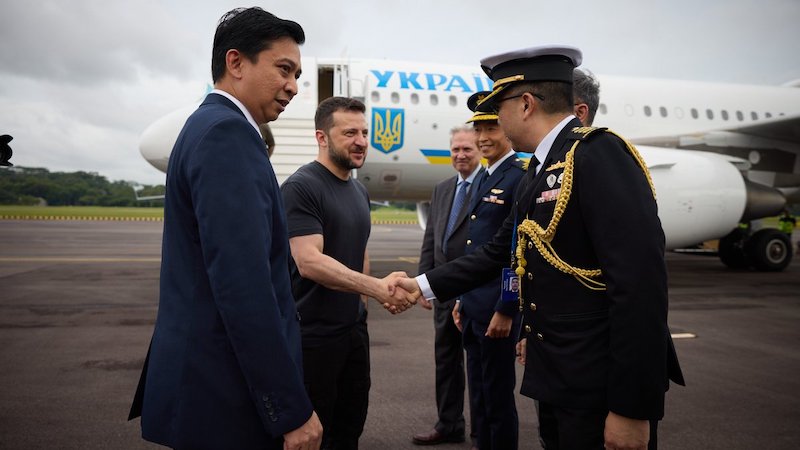
Ukraine's President Volodymyr Zelenskyy arrives in Singapore to attend the Shangri-La Dialogue. Photo Credit: Volodymyr Zelenskyy, X

Ukrainian President Volodymyr Zelenskyy is attending the Shangri-La Dialogue security conference Saturday in Singapore, where he will try to raise support from Asia-Pacific countries for the Ukraine peace summit in Switzerland later this month.

That summit will focus on the withdrawal of Russian troops from Ukraine and the restoration of Ukraine’s 1991 borders.

“Global security is impossible when the world’s largest country disregards recognized borders, international law, and the U.N. Charter,” Zelenskyy wrote in a post on social media platform X, referring to Russia, which invaded Ukraine in 2022.

Zelenskyy and Ukrainian Defense Minister Rustem Umerov are set to meet with U.S. Defense Secretary Lloyd Austin “to discuss the current battlefield situation in Ukraine and to underscore the U.S. commitment to ensuring Ukraine has what it needs to defend itself against ongoing Russian aggression,” according to a U.S. official.

Zelenskyy also is to participate in a discussion forum Sunday on global peace and regional stability, according to the International Institute for Strategic Studies, which organizes the event.

This is Zelenskyy’s second trip to Asia since Russia’s invasion of Ukraine in February 2022. Russia has not attended the Shangri-La Dialogue since the invasion.

Use of Western weapons

The Singapore visit was announced shortly after a U.S. decision to partially lift restrictions on Ukraine using U.S.-provided weapons to strike inside Russia, which Zelenskyy hailed as a “step forward.”

Germany also agreed Friday to allow Ukraine to fire German-delivered weapons at targets within Russia.

Support is growing among NATO allies for allowing Ukraine to use Western-donated weapons to strike inside Russian territory — but Italy opposes the move.

Italian Foreign Minister Antonio Tajani warned against “rash” moves.

“It is a very delicate moment, we must not make false steps” and must avoid “rash steps and declarations,” he told a meeting in Rapallo, Italy, according to the AGI and ANSA news agencies.

Tajani added that Italy would send another package of aid to Ukraine within “weeks,” but he repeated that “we will not send even one Italian soldier to fight in Ukraine because we are not at war with Russia,” AGI reported.

Russian President Vladimir Putin has warned of “serious consequences” if Western countries gave such approval to Ukraine.

Russian attacks

Meanwhile, Russia targeted Ukraine’s power grid overnight with 100 missiles and drones, injuring at least 19 people across the country, local officials said.

The Ukrainian military reported it had downed 35 out of the 53 missiles launched at targets across the country overnight on June 1, as well as 46 out of 47 attack drones.

Twelve people, including eight children, were hospitalized after a strike close to two houses where they were sheltering in the Kharkiv region, said Governor Oleh Syniehubov.

This was the sixth attack on Ukraine’s largest private energy company, DTEK, in 2½ months. DTEK said two of its power plants have been seriously damaged.

Ukrainian Energy Minister Herman Halushchenko said in a statement on social media that the energy infrastructure in the Zaporizhzhia, Dnipropetrovsk, Donetsk, Kirovohrad and Ivano-Frankivsk regions also had been targeted.

The attacks have caused Kyiv to institute nationwide rolling blackouts and prompted Zelenskyy’s appeal to allies for additional air defense systems to protect Ukraine from a spate of Russian assaults.

“Our partners know exactly what is needed for this. Additional Patriot and other modern air defense systems for Ukraine. Accelerating and expanding the delivery of F-16s to Ukraine. Providing our warriors with all the necessary capabilities,” he said in a post Saturday on X, formerly Twitter, and added, “Civilians, infrastructure and energy facilities. This is what Russia is constantly at war with.”

Ukrainian offensive

In the Russian-occupied Donetsk region, five civilians died amid Ukrainian shelling and three more were injured, according to the area’s Moscow-installed leader, Denis Pushilin.

The Russian Defense Ministry said it shot down two Ukrainian drones Saturday morning over Russia’s Belgorod region. No casualties were reported.