Categories
South Caucasus News

Remarks By President Biden On The Middle East, Donald Trump


Remarks By President Biden On The Middle East, Donald Trump

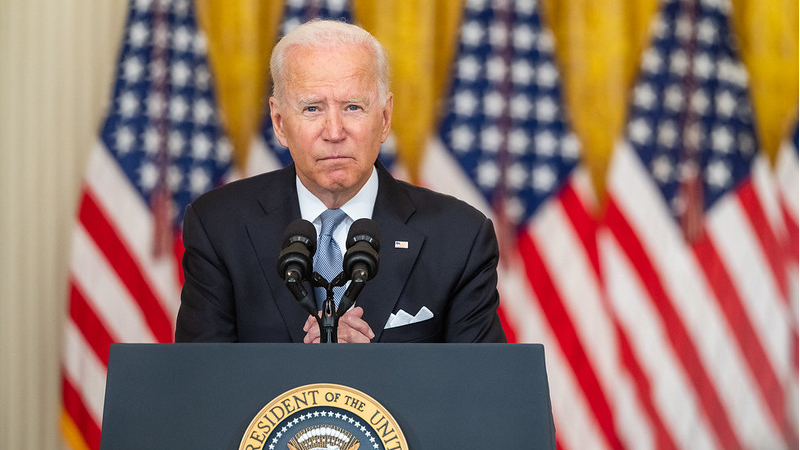
File photo of US President Joe Biden. (Official White House Photo by Adam Schultz)

Hello, folks.
 
(The President checks his watch.)  Just checking it’s afternoon.  (Laughter.)  Good afternoon.  Before I begin my remarks, I just wanted to say a few words about what happened yesterday in New York City.
 
The American principle that no one is above the law was reaffirmed.
 
Donald Trump was given every opportunity to defend himself.
 
It was a state case, not a federal case.  And it was heard by a jury of 12 citizens — 12 Americans, 12 people like you.  Like millions of Americans who served on juries, this jury was chosen the same way every jury in America is chosen.  It was a process that Donald Trump’s attorney was part of. 

The jury heard five weeks of evidence — five weeks.  And after careful deliberation, the jury reached a unanimous verdict.  They found Donald Trump guilty on all 34 felony counts.  Now he’ll be given the opportunity, as he should, to appeal that decision just like everyone else has that opportunity.
 
That’s how the American system of justice works. 
 
And it’s reckless, it’s dangerous, and it’s irresponsible for anyone to say this was rigged just because they don’t like the verdict.
 
Our justice system has endured for nearly 250 years, and it literally is the cornerstone of America — our justice system.
 
The justice system should be respected, and we should never allow anyone to tear it down.  It’s as simple as that.
 
That’s America.  That’s who we are.  And that’s who we’ll always be, God willing.

Now to another issue.  I — I want to give an update on my efforts to end the crisis in Gaza.
 
For the past several months, my negotiators of foreign policy, intelligence community, and the like have been relentlessly focused not just on a ceasefire that would eve- — that would inevitably be fragile and temporary but on a durable end to the war.  That’s been the focus: a durable end to this war. 
 
One that brings all the hostages home, ensures Israel’s security, creates a better “day after” in Gaza without Hamas in power, and sets the stage for a political settlement that provides a better future for Israelis and Palestinians alike.
 
Now, after intensive diplomacy carried out by my team and my many conversations with leaders of Israel, Qatar, and Egypt and other Middle Eastern countries, Israel has now offered — Israel has offered a comprehensive new proposal.

It’s a roadmap to an enduring ceasefire and the release of all hostages.
 
This proposal has been transmitted by Qatar to Hamas. 
 
Today, I want to lay out its terms for the American citizens and for the world.
 
This new proposal has three phases — three.
 
The first phase would last for six weeks.  Here’s what it would include: a full and complete ceasefire; a withdrawal of Israeli forces from all populated areas of Gaza; a release of a number of hostages — including women, the elderly, the wounded — in exchange for the release of hundreds of Palestinian prisoners.  There are American hostages who would be released at this stage, and we want them home.
 
Additional, some remains of hostages who have been killed would be returned to their families, bringing some degree of closure to their terrible grief.
 
Palestinians — civilians — would return to their homes and neighborhoods in all areas of Gaza, including in the north.
 
Humanitarian assistance would surge with 600 trucks carrying aid into Gaza every single day.
 
With a ceasefire, that aid could be safely and effectively distributed to all who need it.  Hundreds of thousands of temporary shelters, including housing units, would be delivered by the international community.
 
All of that and more would begin immediately — immediately.
 
During the six weeks of ph- — of phase one, Israel and Hamas would negotiate the necessary arrangements to get to phase two, which is a permanent end to hostol- — to hostilities.
 
Now, I’ll be straight with you.  There are a number of details to negotiate to move from phase one to phase two.  Israel will want to make sure its interests are protected.

But the proposal says if the negotiations take longer than six weeks for phase one, the ceasefire will still continue as long as negotiations continue.
 
And the United States, Egypt, and Qatar would work to ensure negotiations keep going — all agreements — all agreements — until all the agreements are reached and phase two is able to begin.  
 
Then phase two: There would be an exchange for the release of all remaining living hostages, including male soldiers; Israeli forces would withdraw from Gaza; and as long as Hamas lives up to its commitments, a temporary ceasefire would become, in the words of the propo- — the Israeli proposal, “the cessation of hostilities permanently,” end of quote.  “Cessation of hostilities permanently.”
 
Finally, in phase three, a major reconstruction plan for Ga- — for Gaza wou- — would commence.  And any final remains of hostages who have been killed would be returned to their families. 
 
That’s the offer that’s now on the table and what we’ve been asking for.  It’s what we need. 
 
The people of Israel should know they can make this offer without any further risk to their own security because they’ve devastated Hamas form- — forces over the past eight months.  At this point, Hamas no longer is capable of carrying out another October 7th, which — one of the Israelis’ main objective in this war and, quite frankly, a righteous one.
 
I know there are those in Israel who will not agree with this plan and will call for the war to continue indefinitely.  Some — some are even in the government coalition.  And they’ve made it clear: They want to occupy Gaza, they want to keep fighting for years, and the hostages are not a priority to them. 
 
Well, I’ve urged the leadership in Israel to stand behind this deal, despite whatever pressure comes. 
 
And to the people of Israel, let me say this.  As someone whose had a lifelong commitment to Israel, as the only American president who has ever gone to Israel in a time of war, as someone who just sent the U.S. forces to directly defend Israel when it was attacked by Iran, I ask you to take a step back and think what will happen if this moment is lost. 
 
We can’t lose this moment.  Indefinite war in pursuit of an unidentified notion of “total victory” will not bring Israel in — will not bring down — bog down — will only bog down Israel in Gaza, draining the economic, military, and human- — and human resources, and furthering Israel’s isolation in the world. 
 
That will not bring hostages home.  That will not — not bring an enduring defeat of Hamas.  That will not bring Israel lasting security.
 
But a comprehensive approach that starts with this deal will bring hostages home and will lead to a more secure Israel.  And once a ceasefire and hostage deal is concluded, it unlocks the possibility of a great deal more progress, including — including calm along Israel’s northern border with Lebanon. 
 
The United States will help forge a diplomatic resolution, one that ensures Israel’s security and allows people to safely return to their homes without fear of being attacked. 
 
With a deal, a rebuilding of Gaza will begin [with] Arab nations and the international community, along with Palestinian and Israeli leaders, to get it done in a manner that does not allow Hamas to re-arm.
 
And the United States will work with our partners to rebuild homes, schools, and hospitals in Gaza to help repair communities that were destroyed in the chaos of war. 
 
And with this deal, Israel could become more deeply integrated into the region, including — it’s no surprise to you all — including no — a po- — potential historic normalization agreement with Saudi Arabia.  Israel could be part of a regional security network to counter the threat posed by Iran. 
 
All of this progress would make Israel more secure, with Israeli families no longer living in the shadow of a terrorist attack. 
 
And all of this would create the conditions for a different future and a better future for the Palestinian people, one of self-determination, dignity, security, and freedom.  This path is available once the deal is struck. 
 
Israel will always have the right to defend itself against the threats to its security and to bring those responsible for October 7th to justice.  And the United States will always ensure that Israel has what it needs to defend itself.
 
If Hamas fails to fulfill its commitments under the deal, Israel can resume military operations.  But Egypt and Qatar have assured me and they are continuing to work to ensure that Hamas doesn’t do that.  And the United States will help ensure that Israel lives up to their obligations as well. 
 
That’s what this deal says.  That’s what it says.  And we’ll do our part. 
 
This is truly a decisive moment.  Israel has made their proposal.  Hamas says it wants a ceasefire.  This deal is an opportunity to prove whether they really mean it.
 
Hamas needs to take the deal.
 
For months, people all over the world have called for a ceasefire.  Now it’s time to raise your voices and to demand that Hasa- — Hamas come to the table, agrees to this deal, and ends this war that they began.
 
Of course, there will be differences on the specific details that need to be worked out.  That’s natural.  If Hamas comes to negotiate ready to deal, then Israel negotiations must be given a mandate, the necessary flexibility to close that deal.
 
The past eight months have marked heartbreaking pain: pain of those whose loved ones were slaughtered by Hamas terrorists on October 7th; hostages and their families waiting in anguish; ordinary Israelis whose lives were forever marked by the shattering event of Hamas’s sexual violence and ruthless brutality.
 
And the Palestinian people have endured sheer hell in this war.  Too many innocent people have been killed, including thousands of children.  Far too many have been badly wounded.
 
We all saw the terrible images from the deadly fire in Rafah earlier this week following an Israeli strike against — targeting Hamas.  And even as we work to surge assistance to Gaza, with 1,800 trucks delivering supplies these last five days — 1,800 — the humanitarian crisis still remains.
 
I know this is a subject on which people in this country feel deep, passionate convictions.  And so do I.  This has been one of the hardest, most complicated problems in the world.  There’s nothing easy about this — nothing easy about it. 
 
Through it all, though, the United States has worked relentlessly to support Israelis’ security, to get humanitarian supplies into Gaza, and to get a ceasefire and a hostage deal to bring this war to an end. 
 
Yesterday, with this new initiative, we’ve taken an important step in that direction. 
 
And I want to level with you today as to where we are and what might be possible.  But I need your help.  Everyone who wants peace now must raise their voices and let the leaders know they should take this deal; work to make it real, make it lasting; and forge a better future out of the tragic terror attack and war. 
 
It’s time to begin this new stage, for the hostages to come home, for Israel to be secure, for the suffering to stop.  It’s time for this war to end and for the day after to begin. 

Thank you very much.

Categories
South Caucasus News

China Launches Large Military Exercises Around Taiwan, Calls It A Warning Against Separatists


China Launches Large Military Exercises Around Taiwan, Calls It A Warning Against Separatists

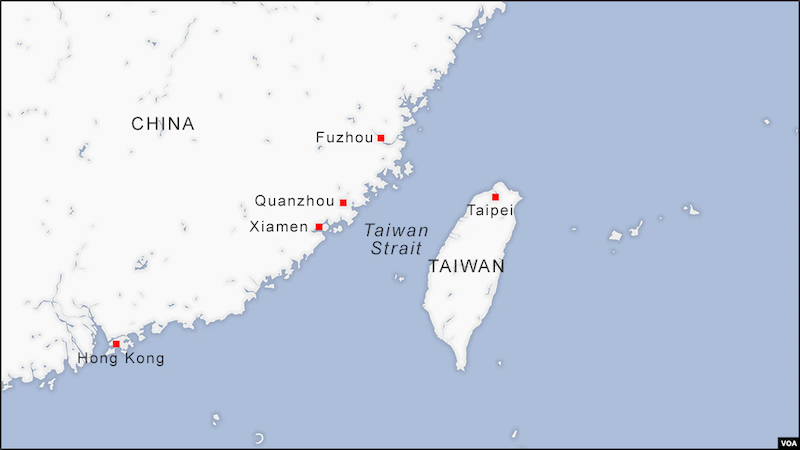
China and Taiwan Strait. Credit: VOA

Chinese Armed Forces and the nation’s Coast Guard launched a massive two-day military exercise surrounding Taiwan and its outlying islands in the Pacific Ocean on May 23. The government claimed the exercise is a warning against separatist elements in Taiwan and their international backers.

The exercises were launched as a response to newly sworn-in President Lai Ching-te’s claims of Taiwan’s independence. Ching-te was elected as president of Taiwan in January 2024 and he took the oath of office on May 20. During his inaugural speech, he claimed Taiwan (officially the Republic of China) is an “independent and sovereign” nation and denied it being part of China.

The military drill, “Joint Sword-2024A,” started early on May 23 and concluded on May 24. It is one of the largest such exercises in recent history, involving all segments of Chinese armed forces, army, navy, air force, and rocket forces along with the Chinese Coast Guard, Chinese military spokesperson Colonel Li Xi said on May 23.

The military exercise was carried out under China’s Eastern Theater Command. It involved all the latest weapons, including J-20 stealth fighter jets and advanced maritime warfare technology.

According to the Chinese military, the vessels participating in the drill on Thursday also ventured inside what the Taiwanese administration called “restricted waters,” which China maintains is Chinese territory.

As per China’s People’s Liberation Army, the objective of the exercise is to “punish” separatist elements as part of the “Taiwan Independence” movement and to send a warning to its international backers.


Categories
South Caucasus News

Biden Pushes For Cease-Fire Deal As Israel Digs Deeper Into Rafah


Biden Pushes For Cease-Fire Deal As Israel Digs Deeper Into Rafah

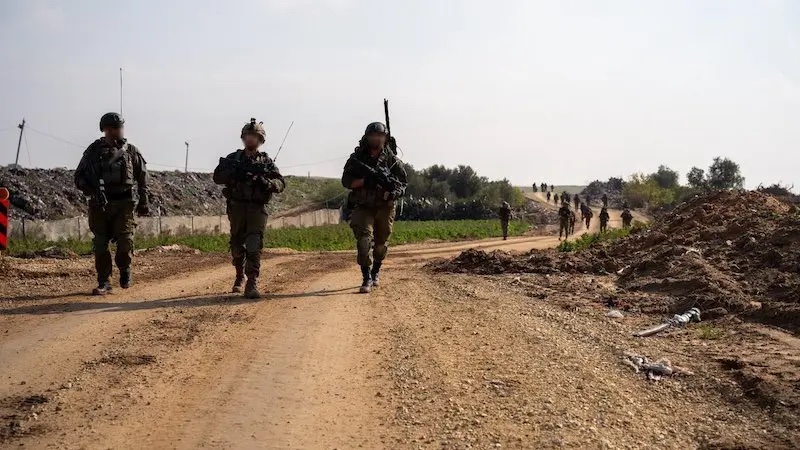
Israeli soldiers in Gaza. Photo Credit: IDF, X

By Patsy Widakuswara

As Israeli forces push deeper into the southern Gaza city of Rafah, President Joe Biden is pushing for a three-phase cease-fire deal agreed upon by Israel that begins with a six-week temporary pause in fighting and leads to a more permanent cessation of hostilities with Hamas.

The first phase would include a “full and complete cease-fire,” Biden said in remarks at the White House on Friday. That would mean the withdrawal of Israeli forces from all populated areas of Gaza and the release of some hostages, including women, the elderly, the wounded and American citizens, in exchange for the release of hundreds of Palestinian prisoners from Israeli jails. 

In addition, Israel would allow more humanitarian assistance into Gaza and the return of Palestinian citizens to their homes and neighborhoods in all areas of Gaza, including in the north. 

After the initial six-week pause, the path forward would be more complicated, Biden warned. 

“I’ll be honest with you, there are a number of things to be negotiated to move from phase one to phase two,” he said. 

The president said that as long as negotiations continue, however, the cease-fire would hold even if talks dragged out past the initial six weeks, vowing that mediators from the United States, Egypt and Qatar would continue until all the agreements are reached. 

Phase two would see the release of all remaining hostages held by Hamas, including male Israeli soldiers. Israeli forces will withdraw from Gaza, and as long as Hamas lives up to its commitments, Biden said, the Israelis have agreed to the cessation of hostilities “permanently.” 

In the third and final phase, a “major reconstruction plan for Gaza would commence, and any final remains of hostages who’ve been killed will be returned to their families,” he said. 

“The people of Israel should know they can make this offer without any further risk to their own security, because they’ve devastated Hamas forces over the past eight months,” the president said. 

Negotiations to halt the fighting have been deadlocked for weeks, with each side blaming the other. 

On Thursday, Hamas said it had informed mediators that they are “prepared to reach a comprehensive agreement” that includes a full hostage and prisoner exchange deal if Israel stops its war in Gaza. 

“Hamas and the Palestinian factions will not accept to be part of this policy by continuing [cease-fire] negotiations in light of the aggression, siege, starvation and genocide of our people,” the Hamas statement read. 

“Today, we informed the mediators of our clear position that if the occupation stops its war and aggression against our people in Gaza, our readiness [is] to reach a complete agreement that includes a comprehensive exchange deal.” 

Biden on Friday urged Hamas to take the deal. “We can’t lose this moment,” he said. 

Rafah operation

Despite U.S. warnings against a full-scale offensive and an order by the top United Nations court for Israel to halt its assault on Rafah, the Israel Defense Forces, or IDF, is moving farther into the southern Gaza city. 

With the operation in central Rafah, the IDF is widening its invasion in the city after earlier this week seizing control of the Philadelphi Corridor, a strategic territory along Gaza’s border with Egypt. The IDF says the capture is meant to cut off tunnels used by Hamas to smuggle weapons and other goods, despite a years-long blockade imposed by Israel and Egypt. 

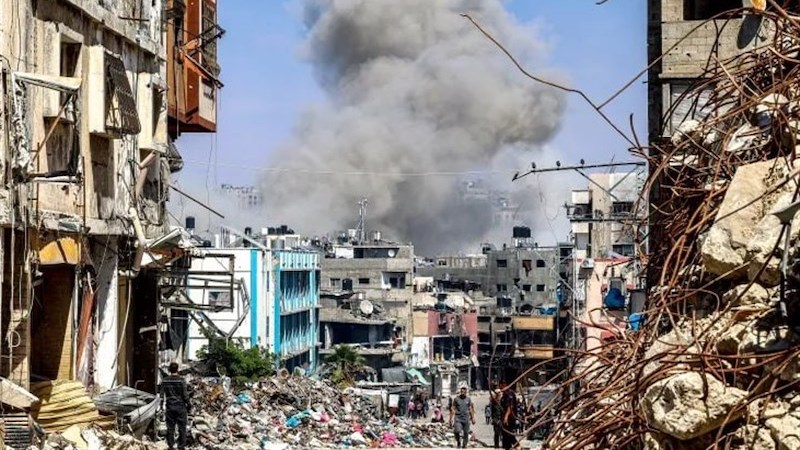
Israel’s Rafah offensive has drastically cut off the flow of humanitarian aid, causing widespread hunger among the population. According to estimates by the United Nations, close to a million people have left the city, most of whom had been displaced earlier in the war. 

Biden is under growing international calls to pressure its close ally to allow more humanitarian aid in and to halt operations that have caused a high toll of civilian deaths.

The calls have grown louder since Israel’s airstrike on Sunday killed at least 45 people in a nearby makeshift tent encampment designated as a safe zone. 

“Palestinian people have endured sheer hell in this war,” Biden said of the strike. 

Following the strike, diplomats at the United Nations Security Council are backing a new resolution this week that would demand an immediate cease-fire and a halt to Israel’s military operations in Rafah. The resolution was drafted by Algeria, the only Arab representative in the current makeup of the Security Council. The U.S has signaled it would not support the resolution in its current form.

Independent media investigations showed remnants of the munitions used in the strike, a GBU-39, an American-made 113 kg bomb with a net explosive payload of 17 kg that is intended to be more targeted and accurate. 

“The GBU-39 small diameter bomb is created to be precise, created to be low collateral damage, but there’s still both a science and an art to employing these munitions,” said Wes Bryant, a former U.S. Air Force Special Operations targeting professional. 

“You can’t just drop a precision low collateral damage weapon in an area saturated with civilians and expect no civilian casualties,” he told VOA. 

Israel called the strike a “tragic accident” and has promised an investigation. But horrifying images of charred bodies and people including children burned alive has renewed global outrage and added more pressure on Biden to make good on his threat to suspend U.S. delivery of offensive weapons to Israel if it went into “population centers” in Rafah without credible protections for civilians. 

Administration officials said Israeli strikes on Rafah have not crossed Biden’s red line, which they defined as a “major ground operations” in Rafah. In a briefing earlier this week, White House National Security Council spokesman John Kirby said the use of GBU-39 would be “indicative of an effort to be discreet and targeted and precise,” by the Israelis. 

Many in Biden’s own party have been outraged at what they see as his misguided support for Israel. In a recent speech to the People’s Conference for Palestine in downtown Detroit, Democratic Congresswoman Rashida Tlaib slammed Biden and urged him to do more to stop what she calls the “genocide” in Gaza. 

“Where’s your red line, President Biden?” she said in remarks. 

Earlier in May, Biden halted a shipment of thousands of larger bombs — weighing almost a ton and a quarter ton — that have inflicted high civilian casualties throughout Israel’s campaign. Beyond that, Biden has been reluctant to wield much pressure on Israeli leaders to force a change in policy in the eight months since the war started.

According to the health ministry in Gaza, at least 36,284 Palestinians have been killed in the Palestinian enclave since the beginning of the war that was triggered by Hamas’ October 7 terror attack inside Israeli soil that killed 1,200 people and took more than 250 hostages. 

Combatant and civilian casualties are not distinguished in the total death toll, which includes at least 60 deaths over the past 24 hours.


Categories
South Caucasus News

The Stuffing Of Crime: Israel’s Rafah Strike – OpEd


The Stuffing Of Crime: Israel’s Rafah Strike – OpEd

Israeli airstike on Rafah, Gaza. Photo Credit: Tasnim News Agency

It was much like witnessing a boy killing flies, with a slight afterthought of apology.  The spokesman for the Israeli Defense Forces, Rear Admiral Daniel Hagari, did little to acquit himself, or the cause, as to why more Palestinian civilians had been indulgently killed in yet another Israeli air strike. “Despite our efforts to minimize civilian casualties during the strike, the fire that broke out was unexpected and unintended … Our investigation seeks to determine what may have caused such a large fire to ignite.”  

The release commences with the usual garnish.  The strike, despite resulting in deaths in a camp of displaced Palestinians in Tal al-Sultan, was soberly designated and professionally targeted.  It was successful.  Two Hamas terrorists had been procedurally “eliminated” (in the social media release, the IDF proudly places the word upon the heads of Yassin Rabia and Khaled Nagar).  “The strike was based on precise intelligence,” Hagari tells us.  Those killed had, in turn, killed Israelis.  They were having a meeting.  “Their deaths saved lives.”

Away from the glove handling reflections of Hagari, the returns of the May 26 strike showed that Palestinian civilians were also seen as miscellaneous detritus, fundamentally dispensable.  The butchery is now a matter of record: 46 dead civilians, including 23 women, children and the elderly.  All on a sliver of territory fast becoming the most famous real estate of death on the planet.  It’s a particularly bloody ratio for killing two alleged terrorists.

In a statement on May 29 from the UN Office of the High Commissioner for Human Rights, various rapporteurs, including such figures as Francesca Albanese, responsible for the situation of human rights in the Palestinian territories occupied since 1967, to Ben Saul, charged with the task of promoting human rights and fundamental freedoms while countering terrorism, expressed their dismay.  “Harrowing images of destruction, displacement and death have emerged from Rafah, including infants torn apart and people burnt alive.”  Such reports indicated “that the strikes were indiscriminate and disproportionate, with people trapped inside burning plastic tents, leading to a horrific casualty toll.”

The Israelis have been told by a number of international bodies, entities, and sympathisers, with repeated urgency, that its current murderous efforts are simply not worth it.  The Rafah front presents further calamitous risks.  The toll, notably in striking camps of civilians displaced by prior bombings and military engagements, would be too great.  The reputational toll, likewise.  The slaughter that pads out and packs morgues; the bodies of women and children that seem to multiply with pestilential cruelty; the incidents of pure callousness dressed in a décor of euphemism: We target, and we target well; the rest is accidental or unavoidable.

The International Court of Justice, in yet another ruling on Israel’s campaign in Gaza, recently concluded that the military offensive in Rafah, along with “any other action in the Rafah governorate, which may inflict on the Palestinian group in Gaza conditions of life that could bring about its physical destruction in whole or in part” be “immediately” halted.  It also ordered Israel to open the Rafah crossing and permit UN officials to enter Gaza and report back to the court within a month to verify compliance.

The ICJ also noted the concerns of UN officials about the risks arising from any military assault on Rafah, one that would put “hundreds of thousands of people … at imminent risk of death”.  Such risks had already “started to materialize and will intensify even further if the operation continues”.

Israel’s politicians and military personnel – at least those lacking candour – always hit upon the same formula in such instances.  It is one noted by such unflagging scribes as the late Robert Fisk: the justification of violence with seemingly sound process, decency with the stuffing of crime.  A trained pupil in such efforts is Israeli Prime Minister Benjamin Netanyahu.  “Despite our utmost efforts not to harm innocent civilians, last night, there was a tragic mistake.”  When compared with his previous statements equating all Palestinians to actors behind a terrorist cause, one that would, in turn, give birth to a terrorist state, the element of mistake is less relevant than the desire to conclude the task at hand.  

The next instalment of the performance involves the mandatory investigation that yields no culprits, no charges, and no prosecutions.  “The details of the incident are still under investigation, which we are committed to conducting to the fullest extent,” gabbled Major-General Yifat Tomer-Yerushalmi at a news conference, noting that the IDF “regrets any harm to non-combatants during the war.”

Such a method is also approved by Israel’s staunchest ally.  “You cannot reach a conclusion about the results of these investigations in the middle of a conflict,” reasoned White House spokesman John Kirby.  Why, it should be asked, bother?

The Israeli response to attacks on its citizens on October 7 last year, increasingly enfeebled by reality, long ago moved into the realm of farce.  But farce and advertising tend to be part of the same show, and the advertising about the ongoing campaign in Gaza by the Israeli forces continues to rattle the swill bucket. 


Categories
South Caucasus News

‘Tough-On-Crime’ Doesn’t Apply To People Like Trump – OpEd


‘Tough-On-Crime’ Doesn’t Apply To People Like Trump – OpEd

Former US President Donald Trump. Photo Credit: Tasnim News Agency

Trump’s conviction is not proof that the criminal justice system works. The joy and disbelief we may be feeling is because it was never intended to ensnare people like him.

Many Americans are celebrating the news of Donald Trump’s conviction on 34 felony charges in a hush-money incident that took place ahead of the 2016 presidential election. Newspaper headlines screamed “TRUMP GUILTY ON ALL COUNTS” and media reports relied on superlatives such as “historic” and “unprecedented” to label the unanimous jury verdict. Given that Trump has been unusually adept at avoiding accountability for a staggering number of alleged crimes, the verdict felt like a long-overdue comeuppance.

It was even more shocking than the news of Derek Chauvin’s conviction in the murder of George Floyd four years ago—but not by much. The United States criminal justice system was not designed to be applied equally across race and class. It was designed to protect men like Trump and Chauvin—powerful elites who bend laws to suit their purpose and the henchmen who serve them.

This is why the fact that Trump is now officially a “felon” feels so earth-shattering. For years people convicted of felonies were unable to vote in elections in many states. Felony disenfranchisement disproportionately impacts Black voters. According to Dyjuan Tatro, an alumnus of the Bard Prison Initiative, as of 2016 “Black Americans [were] disenfranchised for felony conviction histories at rates more than four times those of all other races combined.” It is highly unlikely that the U.S. would tolerate the disproportionate (or even proportional) disenfranchisement of wealthy whites.

Although many states are slowly overturning the loss of voting rights for people who have finished serving their sentences, in the vast majority of U.S. states people still cannot vote while incarcerated. Republicans tend to back felony disenfranchisement, perhaps because of the assumption that those marginalized populations that our criminal justice system targets tend not to favor them.

Florida, the state where Trump officially resides, has been ground zero for the battle over felony disenfranchisement. When Floridians in 2018 voted to restore the voting rights of those convicted of felonies, the state’s Republican governor, Ron DeSantis, effectively overturned the measure by forcing it to apply only to those who have paid off their debts. It was a clearly classist move, one that prison reform advocates dubbed “pay-to-vote.” Given the preservation of felony disenfranchisement in Florida, some have speculated that Trump may not be able to vote for himself in November depending on the sentence he is handed. But given that he was convicted in New York, he may ironically be able to cast a ballot in Florida thanks to New York’s banagainst felony disenfranchisement laws.

Incredibly he can still run for president in spite of being labeled a “felon,” and could even be elected from within prison walls. But if he was a low-income person of color merely looking to rent an apartment or apply for a job as a janitor or schoolteacher, he would have likely been barred from doing so freely.

States have generally enabled legalized discrimination against people convicted of felonies. Aside from the loss of voting rights, it is acceptable to engage in housing and employment discrimination against them. It’s no wonder that the label “felon,” has been considered by human rights advocates in recent years as deeply dehumanizing. The same is true for terms such as “inmate,” “parolee,” “offender,” “prisoner,” and “convict.”

This is why Trump’s conviction is so astonishing. And this is why abolitionists—those who want to dismantle the entire criminal justice system and replace it with a system based on equity and the sharing of collective resources as a means of promoting public safety—are watching with bated breath if the former president will actually be ensnared by a system intended to reward people like him and instead serve prison time. In general, we live in a system where “the rich get richer and the poor get prison.” It is a rare exception for someone of elite status to be criminalized.

Each felony count against Trump carries a maximum sentence of four yearswhich could be served concurrently. He could also be sentenced to house arrest or be put on probation. The minimum sentence is zero. The Associated Press is reporting that “Manhattan District Attorney Alvin Bragg declined to say whether prosecutors would seek prison time.” In other words, in spite of Trump’s clear guilt, it is possible he could face no punishment whatsoever. His fate lies in the hands of Judge Juan Merchan who will hold a sentencing hearing on July 11.

“Without law and order, you have a problem,” said Trump in 2016 months before he won enough electoral college votes to be deemed president. “And we need strong, swift, and very fair law and order,” he added. Such rhetoric remains common among Republicans (as well as centrist Democrats such as current president Joe Biden). It is the sort of language that marginalized people understand is aimed at them. But in rare instances when the system functions in the way it was never meant to—when it ensnares powerful elites or law enforcement—the “tough-on-crime” crowd shows its hand in myriad ways.

Those who are emotionally invested in the notion that we live in a society with equal justice under the law see it as proof that the system works, even if it can benefit from some reforms. Trump’s verdict is apparently “a triumph for the rule of law.” But, it has been eight years since the Wall Street Journal first reported that Trump arranged to pay off Stormy Daniels in exchange for her silence over their affair. Since then, he has remained free, even as low-income people of color are jailed before trial at the drop of a hat for far lesser alleged crimes.

Others, such as Republican supporters of the former president, see Trump’s verdict as a “shameful” exception that proves the system is “corrupt and rigged”—against the wealthy and powerful, not the untold numbers of wrongfully convicted Black and Brown people.

Meanwhile, Trump has engaged in ethical breaches and criminal acts faster than the system can respond. Just weeks before his conviction, Trump was reported to have overtly demanded a $1 billion bribe from oil and gas executives at a fundraiser. Barely did Senate Democrats have time to launch an investigation into the apparent quid-pro-quo when he did it again. His hubris stems from an implicit belief that the system was never designed to hold people like him accountable. He’s right, it wasn’t.

Erica Bryant at the Vera Institute of Justice pointed out that the U.S. would be “one of the safest nations in the world” if mass incarceration was an effective way to protect us from crime. “[W]hy do we have higher rates of crime than many countries that arrest and incarcerate far fewer people?” she asked. A Vera Institute poll found that a majority of U.S. voters prefer a “crime prevention” approach to safety rather than a system based on punishment, one that prioritizes fully funding social programs rather than traditional “tough-on-crime” policies like increased policing and mass incarceration.

Those of us who understand that Trump’s conviction is neither welcome proof that a “tough-on-crime” approach works, nor evidence that it’s rigged against elites are nonetheless celebrating the headlines. It is akin to watching an overzealous and greedy hunter step into one of his own traps. The ultimate goal is to end the hunt even as it feels incredibly satisfying to see Trump cut down to size.

Trump’s emergence in the U.S. political system and his (nearly) successful avoidance of accountability for so long is clear evidence that our democracy and its criminal justice system are rigged against us in favor of wealthy elites. The fact that there is still no guarantee that he will be punished or even disqualified from the presidency in a nation that zealously criminalizes marginalized communities ought to be all the proof we need that our criminal justice system does not deserve our faith.


Categories
South Caucasus News

Abkhazia to Open Embassy in Damascus – Asharq Al-awsat – English


Abkhazia to Open Embassy in Damascus  Asharq Al-awsat – English

Categories
South Caucasus News

Iran reveals it received message from Israel – Middle East Monitor – Middle East Monitor


Iran reveals it received message from Israel – Middle East Monitor  Middle East Monitor

Categories
South Caucasus News

2fvnk: @SouthCaucasus @lilithiumm_ @eurasianet They beheaded people, bombed schools, hospitals and Armenian churches that have been there for centuries. For a full report visit this site: https://t.co/tBnjsWpbAN


@SouthCaucasus @lilithiumm_ @eurasianet They beheaded people, bombed schools, hospitals and Armenian churches that have been there for centuries. For a full report visit this site:

https://t.co/tBnjsWpbAN


Categories
South Caucasus News

2fvnk: @SouthCaucasus @lilithiumm_ @eurasianet https://t.co/RB1wyTRY7D


https://t.co/RB1wyTRY7D

— 2fvnk (@2fvnk) May 31, 2024


Categories
South Caucasus News

Protesters, Police in 4-Hour Standoff at Foreign Ministry


YEREVAN (Azatutyun.am)—Demonstrators led by Archbishop Bagrat Galstanyan scuffled with riot police in Yerevan on Friday as they continued to campaign for Prime Minister Nikol Pashinyan’s resignation.

One day after trying to surround the seat of Pashinyan’s government, the protesters marched to the nearby building of the Armenian Foreign Ministry to demand a meeting with Foreign Minister Ararat Mirzoyan.

Galstanyan said Mirzoyan or other senior ministry officials must explain what he described as their failure to respond to “humiliating” anti-Armenian statements made by Azerbaijan’s leaders.
The top diplomats refused to receive Galstanyan and opposition lawmakers accompanying him, leading the protest leader to demand that the police officers let him enter the building to “get the answers.”

“Either they will come out or we will go in,” he told hundreds of supporters blocking the main entrance to the building guarded by a comparable number of police officers.

After repeatedly threatening to use force during a four-hour standoff with the protesters, security forces tried to push the crowd back from the entrance. The protesters, including Galstanyan, resisted, jostling with the policemen.

The Armenian Interior Ministry said afterwards that at least 29 people were detained as a result. They reportedly included two deacons of the Armenian Apostolic Church. One of them was seriously injured, according to Galstanyan.

Aram Hovannisyan, the chief of the national police who personally led the security forces at the scene, accused the outspoken archbishop of provoking the clash.

Galstanyan, who claimed to have been kicked by one of the officers, blamed the police as well as Mirzoyan for the violence.

“Let the police know that they can’t intimidate us. This is just a prelude,” he said before leading the crowd back to the city’s St. Anne Church, the starting point of his daily protests aimed at forcing Pashinyan to step down.

The 53-year-old cleric backed by the Armenian opposition began his rallies in Yerevan on May 9 after leading protests in the northern Tavush province against Pashinyan’s decision to cede several border areas to Azerbaijan. Pashinyan has said that the territorial concessions are necessary for preventing Azerbaijani military aggression against Armenia. His detractors say he is creating additional security risks for the country and encouraging Baku to demand more territory.