Categories
South Caucasus News

What Happened To Our Ape Ancestors? – Analysis


What Happened To Our Ape Ancestors? – Analysis

Proconsul africanus was an ape which lived from about 23 to 14 million years ago during the Miocene epoch. Credit: Mauricio Antón, published with Alan Turner, Wikipedia Commons

Millions of years ago, in the Miocene Epoch (23 to 5.3 million years ago), about 100 species of apes roamed Europe, Asia, and Africa. Just a few million years later, this number had drastically declined, presenting fascinating questions for today’s paleoanthropologists.

What happened to the extinct species, which have been identified in Eurasian fossil remains over recent decades? How did some apes of these species persist and evolve? And, the most hotly debated question: Did the apes who were our human ancestors originate in Africa or Eurasia?

The traditional view, following Darwin, hypothesizes an African origin for both humans and modern apes. More recent fossil evidence supports a Eurasian origin for the ancestors of humans and modern apes, which migrated back into Africa, about 7 to 9 million years ago, before modern humans evolved from them. But even proponents of this Eurasian origin view acknowledge that not enough is known yet to be certain.

The Miocene Environment

The Miocene Epoch is known for its abundance of fossils from different geographical regions, including a wide variety of mammals. Over the epoch’s nearly 18-million-year span, the Earth’s climate and geography changed dramatically. The beginning of the epoch was warmer than the prior Oligocene, the mid-Miocene period is known as the Miocene Climatic Optimum, and the late Miocene was marked by cooling.

Over this epoch, the continents, seas, and elevations were shifting toward their present positions. As sea levels dropped around 16.5 million years ago, a land bridge between Africa and Eurasia permitted a migration of many species from Africa to Eurasia including apes. Fossil evidence suggests that some ape species made their way from Africa through Saudi Arabia.

Over a few million years in their new Eurasian environment, ape species proliferated and thrived, developing new physical characteristics, including larger brains. Toronto University anthropologist David R. Begun described these evolutionary changes as a preadaptation to “coping with the problems of a radically changing environment.”

Later in the Miocene, the seas rose and cooler temperatures transformed the subtropical forest habitat in Eurasia into dry grasslands with more seasonal conditions. The many species of apes that had flourished in Eurasia no longer had an abundant food supply of fruits and an ape-friendly habitat. As Begun wrote in a 2006 Scientific American article, “Climate changes in the Late Miocene brought an end to this easy living.”

The available Eurasian fossil data indicate that many ape species died out by about 9 million years ago. But a few species, including our human hominid ancestor, were able to adapt to the vast environmental changes and made their way south, back to Africa. (Hominid is the term for great apes, humans, and all their fossil relatives.)

The fossil record from Eurasia provides clues to how some ape species developed those traits that allowed them to adapt to climate and environment changes, in order to migrate into Eurasia and later back to Africa.

Who Were the Miocene Apes?

Paleoanthropologists identify ape population groups from millions of years ago by meticulously analyzing data from fossil remains, often only from fossil fragments. From teeth, jaw, brain size, bone shape, slope of skull and nose, and other physical clues, scientists differentiate species, characterize evolutionary changes, and infer behavior.

Some fossils of Miocene apes have characteristics that begin to resemble those of humans, such as more modern teeth and jaw structure or whether they got around via ground or treetops. Paleoanthropologists have systemized lists of species and families on timelines, but interpretations of the role of Miocene apes in hominid history vary, and uncertainties persist.

David Begun identified the genus (family of closely related species) of Griphopithecus as “the best candidate for the earliest hominid” in his 2010 analysis of Miocene hominids in the Annual Review of Anthropology.

Griphopithecus appeared about 16 million years ago in Germany and Turkey. Their thickly enameled teeth and powerful jaws, Begun suggests, gave them the ability to take advantage of resources in varied environments. When the climate became drier, the Griphopithecus could adapt from eating soft fruit to a harder food supply like nuts and roots.

Our Human Ancestors

Other Miocene ape families also developed characteristics that make them our potential human ancestors. The Dryopithecus genus had physical aspects that resemble those of early humans, such as a face profile that tilts downward and a larger brain case. A related Miocene ape found in Greece, Ouranopithecus, also had some more modern ape characteristics.

More recently, a finding from central Anatolia in Turkey, reported in Communications Biology in 2023, presents more evidence of ape development in the Miocene with more human-like characteristics. A well-preserved skull initially thought to be Ouranopithecus, was found to have distinctive enough characteristics to be named Anadoluvius.

Many questions remain. For example, when did the adaptations (like knuckle-walking) occur that precede bipedalism, getting around upright on two feet?

Paleoanthropologist Robert Foley suggests that “[t]he significant factor that is key to understanding the emergence of the early bipedal hominins is the change in climate and environment that occurs at the end of the Miocene and into the Early Pliocene.” He explains that it led to a pronounced global cooling, and generally in Africa, a drier climate that reduced forest cover and expanded the number of savanna environments. This provided a general evolutionary “basis for adaption to terrestrial environments,” rather than arboreal ones.

A Plausible Scenario

The overall picture of when the specific characteristics of our human ancestors appeared has a plausible answer:

The proliferation of ape families and species in Eurasia, as documented in hundreds of fossils, supports the scenario that apes migrated from Africa around 16 million years ago, thrived and diversified in Eurasia along with many other animals, and then, using their evolutionary adaptations, began to make their way back to Africa at the end of the Miocene, about 7 million years ago, when the climate changed.

This is a round-trip scenario. Apes originated in Africa and migrated to Eurasia where they developed the preconditions for evolving into humans. Then the ape species that survived climate change returned to Africa where the human lineage developed.

Another piece of evidence supporting this hypothesis is that there is no fossil evidence of great apes in Africa between about 13.5 million years ago and 7 million years ago—the period when families of these apes proliferated in Eurasia. This is despite many known African fossil sites from that period.

A Continuing Evolution

The scenario presented here took place over millions of years. Paleoanthropologists are not in complete agreement about where human-like characteristics developed. It will take the discovery of many more fossils from Eurasia and Africa to settle this history.

Meanwhile, as some have pointed out, there’s a lesson here for today’s evolving humans facing climate change, other environmental changes, and the challenge of space exploration. How will today’s human beings adapt?

  • About the author: Marjorie Hecht is a longtime magazine editor and writer with a specialty in science topics. She is a freelance writer and community activist living on Cape Cod.
  • Source: This article was produced by Human Bridges.
Categories
South Caucasus News

Russia to Repair Flood-Damaged Railway


Prime Minister Nikol Pashinyan announced Thursday that the Russian Railway Company has assured that it will repair the railway tracks that were damaged in last weekend’s deadly floods in Armenia’s Lori and Tavush provinces.

Deputy Prime Minister Mher Grigoryan contacted the railway company and what Pashinyan said “Russian colleagues” to receive the assurances of a timely repair of the key rail link in the region.

Armenia’s Territorial Administration and Infrastructure Minister Gnel Sanosyan reported to the cabinet that it will take a long time to restore the railway from Ayrum Station to Alaverdi city.

“The railway is damaged in Georgia also. I spoke with the Deputy Prime Minister of Georgia, the railway will work by Tuesday,” Sanosyan added, in particular.

According to him, about 250 volunteers are currently working in Alaverdi.

Heavy rainfall unleashed floods on Saturday, as a result of which four residents died. The floods also caused significant damage in the affected areas, including to 15 bridges.

“I think that we should ask our [international] partners to provide concrete assistance, especially in the field of bridge construction,” Pashinyan said in response to Sanosyan’s briefing during Thursday’s cabinet meeting.
Pashinyan and Foreign Minister Ararat Mirzoyan said that some of those partners have already expressed readiness to assist Armenia in the post-flood reconstruction.

“We need to clarify as quickly as possible what exactly we expect from international partners,” Mirzoyan said, urging Sanosyan’s ministry to come up with relevant proposals.

Meanwhile, Russia said it is ready to help Armenia in the restoration of flood affected areas.

“We have seen a positive response, and we repeat that all proposals are relevant… And as allies, we are always ready to lend a hand based on the needs of Yerevan,” Russian foreign ministry spokesperson Maria Zakharova said during a press briefing on Thursday.

She added that the Russian-Armenian Center for Humanitarian Response had immediately joined the relief efforts and transferred the necessary equipment to the Armenian authorities.

Zakharova said that the Russia’s Defense Ministry has also offered help through its 102nd military base in Gyumri.

A number of Russian companies operating in Armenia—in particular, the South Caucasus Railway company which serves the Yerevan-Tbilisi route—are also discussing the matter of providing assistance.

“These days we are actively engaged in restarting railway transport. Specialists with various backgrounds and expertise were sent to the location. Together with the Ministry of Territorial Administration and Infrastructure, they are looking for solutions to complex problems,” Zakharova explained.


Categories
South Caucasus News

Don’t Listen To The Elites: Trump’s Conviction Is Not A ‘Victory’ For The Rule Of Law – OpEd


Don’t Listen To The Elites: Trump’s Conviction Is Not A ‘Victory’ For The Rule Of Law – OpEd

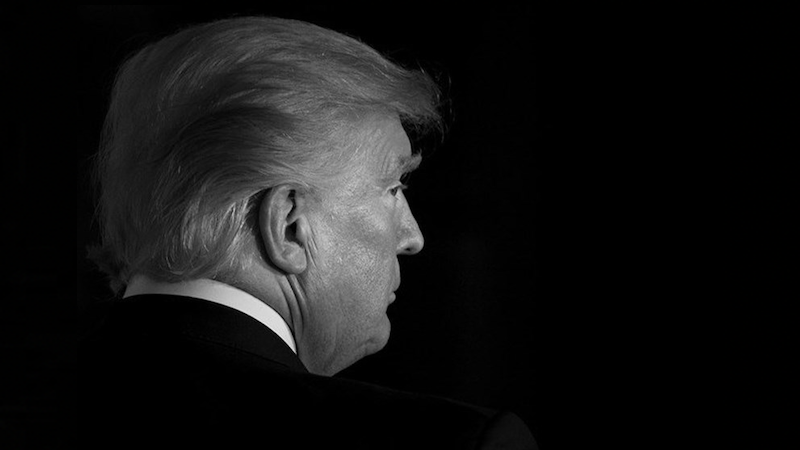
File photo of former US President Donald Trump. Photo Credit: Tasnim News Agency

By William L. Anderson

A Manhattan jury’s decision to convict Donald Trump of falsifying business records to break federal election law is being heralded by The Usual Suspects as a moment in which “no one is above the law.” Indeed, both prosecutor Alvin Bragg, who brought the charges, and Judge Juan Merchan, who acted as a member of the prosecution, have proven that they themselves are above the law and can act well outside legal boundaries because no one will set boundaries for them.

Beyond the hoopla and celebration by Democrats for this “victory” over their hated adversary, one suspects that the U.S. Supreme Court will overturn the verdict even after the appeals court and supreme court of New York State will surely uphold it. Should that happen – and I predict it will – then we will be treated to more political angst in which Democrats will claim that SCOTUS is illegitimate and nothing more than a Trump political ally willing to do his dirty work.

Beyond the rhetoric, however, we need to understand what is happening and why we should expect this kind of thing to be a future norm in our body politic. When Bragg first indicted Trump a year ago April, I wrote that his actions were reminiscent of something done in banana republics where those in power find ways to jail or kill political rivals. The events afterward confirmed my fears, as Democratic prosecutors, both state and federal, have indicted Trump for various alleged offenses, all done in state and federal districts dominated by Democratic Party voters, almost guaranteeing juries that consist of mostly, if not all, Democrats.

Before going further, I need to point out that nothing in this article is an endorsement of Donald Trump for office or even is an attempt to paint Trump as an innocent victim of Democratic Party dirty tricks. Trump has achieved something I would have thought impossible, and that is being the target of questionable criminal charges, yet still making himself appear to be an unsavory character.

As former federal prosecutor Andrew C. McCarthy has pointed out, Trump’s attorneys have been less-than-competent throughout the trial – and perhaps we should not be surprised. Despite Trump’s wealth, his overbearing personality and micromanagement style do not mesh with how good criminal defense attorneys like to present their cases. But to make matters worse, as McCarthy notes, Trump’s attorneys generally stood by while Judge Juan Merchan stacked the deck in favor of the prosecution:

With Merchan’s help, and not much resistance from defense lawyers, Bragg’s team has shrewdly conflated two very different things: (1) the knowing and intentional burying of politically damaging information through NDAs (non-disclosure agreements), which is legal, and (2) the knowing and intentional flouting of FECA (Federal Election Campaign Act) regulations — which would be illegal if prosecutors could prove it, but of which there is no evidence against Trump. (Emphasis mine)

The gist of the case was as follows: Bragg alleged that by arranging for Stormy Daniels to receive $130,000 in exchange for being quiet about her having sex with Trump (and these agreements are legal, as McCarthy has written), the way the payments were entered into his business records amounted to falsification of those records, which normally is a misdemeanor under New York State law. However, if that falsification is done to enable someone to break another law, then the falsification can be charged as a felony.

However, one must be able to prove in a proper court of law that the other law actually was broken, and here is where the case falls apart. The law Bragg alleges was broken is federal law, and the Biden Department of Justice already decided not to prosecute Trump on that charge. A state court is NOT the proper jurisdiction to determine if a federal law was broken, as a state jury has no legal standing to decide on federal law.

Thus, at best, a New York state jury can only express an opinion as to whether they believed Trump broke federal law, and an opinion is not proof. At the very least, the charges are unconstitutional, as they cobble together federal and state law into an unwieldy set of criminal charges. In other words, Alvin Bragg engaged in legally questionable behavior because he knew that no Democratic judge (and all judges in Manhattan are Democrats) would rule against him.

In a recent column, David French of the New York Times, a staunch never-Trump writer, questioned the validity of the charges while simultaneously condemning Trump for his behavior. Wrote French:

…the underlying legal theory supporting the prosecution’s case remains dubious. The facts may be clear, but the law is anything but — and that could very well mean that the jury convicts Trump before the election, an appeals court reverses the conviction after the election, and millions of Americans, many of them non-MAGA, face yet another crisis of confidence in American institutions.

French, who also is an attorney, continued:

Mark Pomerantz, a former prosecutor in the Manhattan D.A.’s office, said that the case was “too risky under New York law” and noted that “no appellate court in New York has ever upheld (or rejected) this interpretation of the law.” Numerous legal analysts, including people who are no friends of Trump, have expressed grave reservations about the case, in large part because of the difficulty of linking the falsified records to an additional, separate crime.

If Trump were convicted, French goes on, the aftermath would be bleak no matter what happened on appeal:

To be clear, an untested legal theory is not the same thing as a weak or specious theory. If Trump is convicted, his conviction could well survive on appeal. The alternative, however, is dreadful. Imagine a scenario in which Trump is convicted at the trial, Biden condemns him as a felon and the Biden campaign runs ads mocking him as a convict. If Biden wins a narrow victory but then an appeals court tosses out the conviction, this case could well undermine faith in our democracy and the rule of law.

He wrote further:

But there are deeper issues at stake. Our court system does not exist to guarantee political results, no matter how much one might want Trump to lose the election. And defeating Trump with an assist from a criminal prosecution that falls apart on appeal would exacerbate the mistrust that helped make Trump president in the first place and sustains his hold on the Republican Party. (Emphasis mine)

This is not the only case Democratic prosecutors have brought against Trump and given the political dynamics and the makeup of potential juries, Trump well could be convicted in any or all of those cases. Furthermore, by using the criminal courts as a pure political weapon, the Democrats have opened the proverbial Pandora’s Box, as Republican prosecutors may well retaliate against Democratic office holders.

Even if SCOTUS were to overturn the New York guilty verdict, it cannot declare Trump not guilty, but only remand the case back to trial with new instructions and limitations. Given the political dynamics, one can see Bragg looking for other ways to bring criminal charges against Trump in a never-ending legal nightmare. I fear we are only at the beginning of a long legal and political nightmare that has no good ending.

  • About the author: William L. Anderson is Senior Editor at the Mises Institute and retired professor of economics at Frostburg State University. He earned his MA in economics from Clemson University and his PhD in economics from Auburn University, where he was a Mises Research Fellow.
  • Source: This article was published by the Mises Institute

Categories
South Caucasus News

Why Is Russia Promoting A Type Of Logistics That Could Be Seen As Reasonable Mostly In Case Of Conflict With Kazakhstan? – OpEd


Why Is Russia Promoting A Type Of Logistics That Could Be Seen As Reasonable Mostly In Case Of Conflict With Kazakhstan? – OpEd

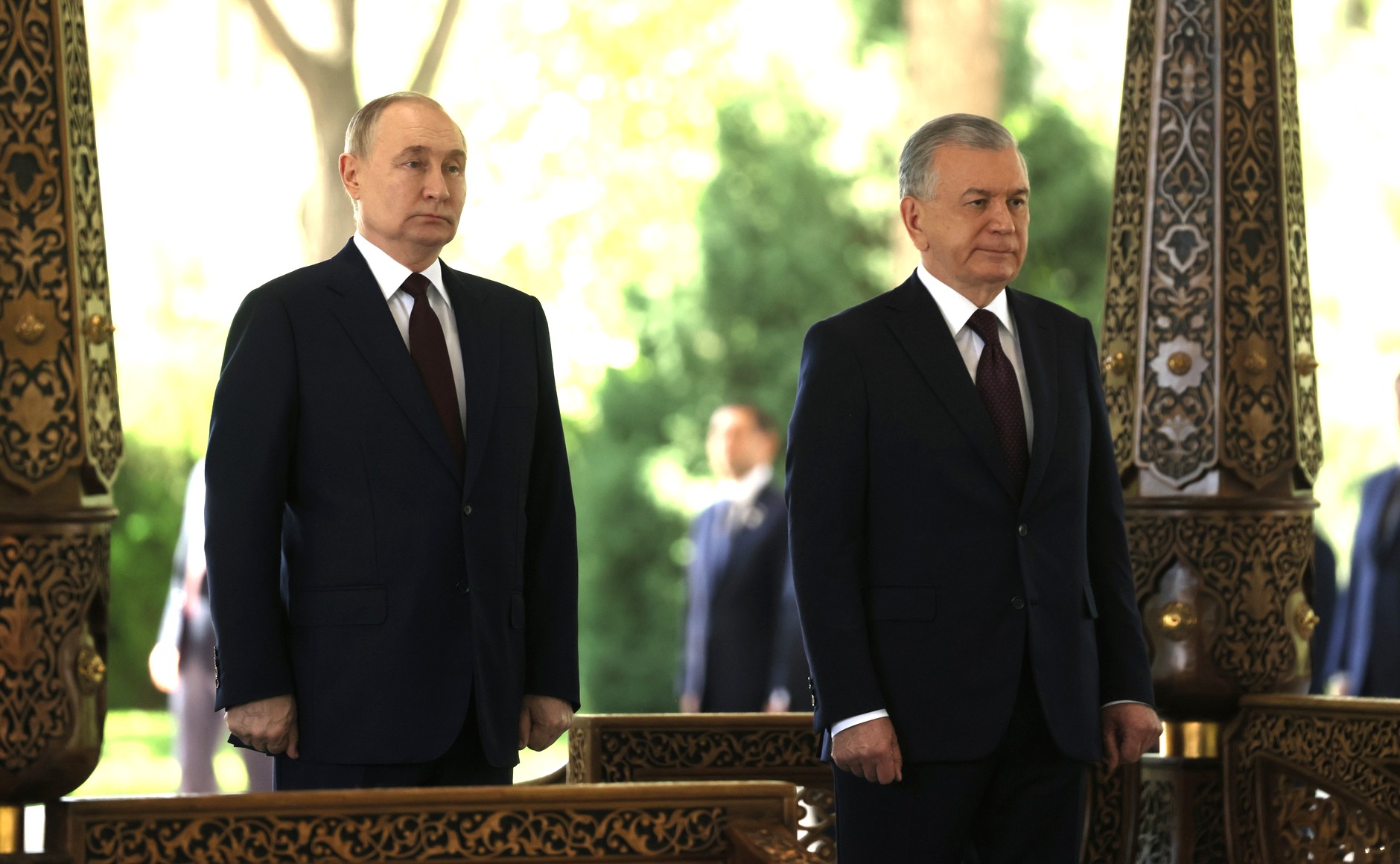
Russia's President Vladimir Putin with President of the Republic of Uzbekistan Shavkat Mirziyoyev. Photo Credit: Kremlin.ru

Arriving in post-Soviet Uzbekistan on May 26, Russian President Vladimir Putin met with his counterpart Shavkat Mirziyoyev before the commencement of official negotiations. Russian news outlets said that they traveled in a single car together immediately after the friendly hugs at the ramp at the airport in Tashkent.

On this occasion, Vladimir Putin was accompanied by Russian government officials and heads of some 20 provinces of the Russian Federation. Among the latter was also Igor Babushkin, the Governor of the Astrakhan Province. According to mass media reports, he and Prime Minister of the Republic of Uzbekistan Abdulla Aripov discussed opportunities for delivering Uzbek cargo by water through the International Port of Turkmenbashy [in Turkmenistan] to the ports of the Astrakhan Province. The negotiations were held during the visit of the Russian delegation to Tashkent, reports the Virtual Customs edition with reference to the press service of the government of the Astrakhan Province. The parties viewed options to deliver goods from Uzbekistan to Russia by sea route. Currently, they are delivered to Astrakhan by road and rail via Kazakhstan. Igor Babushkin suggested that Uzbek companies and entrepreneurs could use the transit opportunities of Astrakhan to supply goods from Uzbekistan to Russia.

In particular, he and Abdulla Aripov discussed the prospects of delivering goods from Uzbekistan to Russia through the maritime component of the ‘North-South’ corridor in the direction of ‘Port of Turkmenbashy – ports of the Astrakhan Province’. If you call things by their names, it only means one thing: efforts to lay the way from Uzbekistan to Russia through Turkmenistan instead of Kazakhstan.  There seems to be only one idea: to create that kind of transport connection between Russia and Uzbekistan, as well as Kyrgyzstan, Tajikistan, and Turkmenistan that would allow them all to bypass Kazakhstan. It has been in the air for quite a long time. Anyway, it now is no longer mere words. Measures have been and are being taken to apply it in practice.

Early last year, negotiations between representatives of four countries – Russia, Turkmenistan, Kyrgyzstan and Uzbekistan – were held in Astrakhan on the organization of regular maritime transport lines between the port of Turkmenbashy [in Turkmenistan] and Russian ports in the Caspian Sea. In November 2023, Kyrgyzstan, Uzbekistan and Russia agreed to create and develop a transport corridor bypassing the territory of Kazakhstan. The corresponding memorandum was signed in Tashkent by the heads of the relevant ministries of the three countries following the results of the transport forum of the SCO (Shanghai Cooperation Organization) countries.

Under the new conditions, the choice should be made in favor of Turkmenistan as a transit country instead of Kazakhstan. Never mind that Turkmenistan, unlike Kazakhstan, is not a member of the Russia-led Eurasian Economic Union, and a Russian, Uzbek, and Kyrgyz are required to obtain a visa for transiting goods through that country.

But here’s the amazing part. A hundred and fifty years ago, after the Russian Empire had conquered the Central Asian feudal states, the Khanate of Kokand, the Emirate of Bukhara, and the Khanate of Khiva, Krasnovodsk (renamed in 1993 by President for Life Saparmurat Niyazov, after his self-proclaimed title Turkmenbashy – “Leader of all Turkmen”) became the tsarist Russia’s springboard for the exploitation and development of the Turkestan Gubernia (which back then covered the present-day territories of Uzbekistan, Turkmenistan, Tajikistan, Kyrgyzstan and Southern Kazakhstan). Construction of the Trans-Caspian Railway began back in 1879. Originally the line started from Uzun-Ada on the Caspian Sea, but the terminus was later shifted north to the harbor at Krasnovodsk (now Turkmenbashy). The Railway reached Samarkand via Bukhara in 1888, where it halted for ten years until extended to Tashkent and Andijan in 1898. In 1905, a ferry service connected Krasnovodsk (now Turkmenbashy) to the European part of the then-Russia, Baku.

The Trans-Caspian Railway and ferry service between Krasnovodsk (Turkmenbashy) and Baku then were the main transport artery connecting Central Asia with the rest of Russia. The railway network in Kazakhstan and other Central Asian republics had been significantly expanded during the Soviet years and the trans-Caspian transport routes from Central Asia as a whole to Russia lost their former importance because of the new economic realities. Russia now seems to be attempting – based on political motivations and with support from Kazakhstan’s Central Asian neighbors – to revitalize the logistic system that existed over a hundred years ago and adapt it to the new reality.

The reasons are called different. However, the key reason seems to be the tightened cargo transit rules introduced by Astana by the end of 2022, agreed upon with Washington and Brussels.

Anyway, it looks like Russia is promoting a type of logistics that could be seen as reasonable mostly in case of real conflict with Kazakhstan.


Categories
South Caucasus News

India’s PM Invites Ridicule By Claiming He Is ‘God Sent’


India’s PM Invites Ridicule By Claiming He Is ‘God Sent’

India's PM Narendra Modi at the Pran Pratishtha ceremony of Shree Ram Janmaboomi Temple in Ayodhya, Uttar Pradesh on January 22, 2024. Photo Credit: India PM Office

By Nirendra Dev

(UCA News) — Indian Prime Minister Narendra Modi’s recent statement that he is “god sent” and that the energy he musters during his election campaign does not come from his “biological body,” has invited ridicule and strong reactions.

“After my mother passed away, upon reflecting on all my experiences, I was convinced that god had sent me,” he told a female television anchor during a boat ride on the Ganges river in Varanasi, his parliamentary constituency.

“This energy could not be from my biological body but was bestowed upon me by God… whenever I do anything, I believe God is guiding me… I am nobody, I am just an instrument,” he added.

Opposition Congress leader Rahul Gandhi said an average person saying this would be asked to “go see a psychiatrist.”

Congress chief spokesman Jairam Ramesh said Modi’s remarks reflect “an unprecedented level of delusion and arrogance.”

Some Bharatiya Janata Party (BJP) leaders tried defending the prime minister by calling him “the epitome of hard work and dedication.”

“He can work hard… He can address two rallies, participate in two road shows in the summer heat, and then return to Delhi and give full-scale TV interviews to senior journalists,” said BJP leader Sanju Verma.

Modi’s critics say his “divinity” is “purely political.” He is aware this would go down well during poll season.

“There is also an added significance to his sense of timing and venue,” said rationalist Tushar Bhadra, who is based in Varanasi.

Political analyst Ashutosh Talukdar believes that India’s English media and their Western counterparts will be mistaken if they try interpreting what Modi said through a Christian idiom.

“Jesus is believed to be the son of God. Modi is nowhere saying so,” he said.

Talukdar stressed that the Indian prime minister was addressing his countrymen, who believe “everything happens as destined by God and humans are merely an instrument or excuse. So, whatever is happening, or whatever I [Modi] am doing, is God’s wish.”

Modi’s extremely shrewd appeal is to encourage Indians to vote for his party and thus contribute to fulfilling God’s will.

A BJP leader in West Bengal, who did not want to be named, said comparing a leader with gods or goddesses was nothing new in India.

He reminded how Idris Ali, a parliamentarian from Trinamool Congress had compared his leader and West Bengal Chief Minister Mamata Banerjee to Saraswati, the Hindu goddess of learning.

After the creation of Bangladesh in the 1970s when India defeated the Pakistan army, the late Prime Minister Indira Gandhi was compared to Durga, the Hindu goddess known as a slayer of evil, by her political rival Atal Bihari Vajpayee.

Vajpayee, a top leader of the pro-Hindu BJP, became prime minister in the 1990s.

Modi is continuing the tradition. “I am convinced that Parmatma [god] sent me for a mission. Once the mission is accomplished, my work will be done. He will not call me before that… This is why I have completely dedicated myself to god,” the prime minister told another news channel.

Political analyst Vidyarthi Kumar said Modi understands the importance of religion in India, especially among Hindus.

“God and religion are dominant themes of the BJP’s politics,” Kumar explained.

Modi has “deliberately promoted Hinduism,” and he led the opening of the Ram temple in Ayodhya on Jan 22.

The prime minister merely demonstrates that “I am nothing but an instrument” of the divine.


Categories
South Caucasus News

Navigating The Ethical Landscape Of Neural Implants And Biotechnology – OpEd


Navigating The Ethical Landscape Of Neural Implants And Biotechnology – OpEd

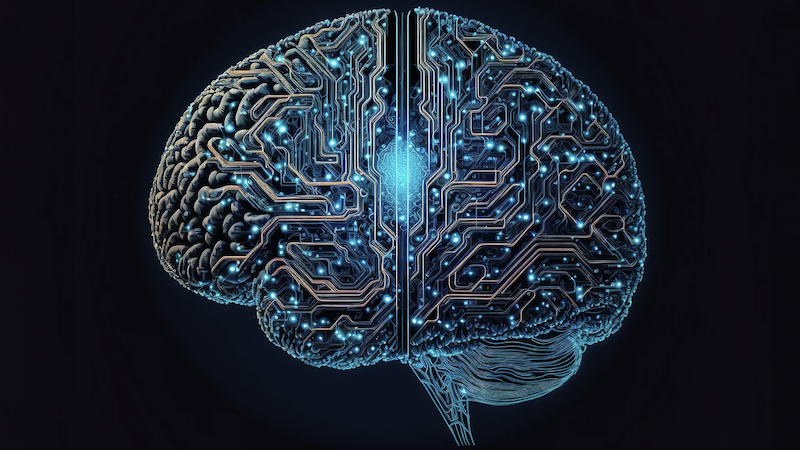
Cyber brain Computer artificial intelligence

By Rafael Hernandez de Santiago

In the bustling metropolis of Techville, where Silicon Valley meets the cityscape, the latest buzz is not about the newest iPhone or the most advanced electric car. No, dear citizens, it is about something far more intricate and potentially invasive: The ethics of artificial intelligence.

Enter Ms. Sophie Smart, the quintessential Techville resident, armed with a keen intellect, a penchant for coffee, and concerns aplenty. As she navigates the city’s labyrinthine streets, her musings on the intersection of technology and morality have become the stuff of legend.

“I mean, sure, AI is all well and good until it starts deciding what burger I should order for dinner,” Sophie quips, her brow furrowing in mock seriousness. “But when we start talking about implanting chips in humans and animals, well, that’s when things get dicey.”

And dicey they have become, indeed. With advancements in neural implants and biotechnology, the prospect of enhancing cognitive abilities or even interfacing directly with the digital realm is no longer the stuff of science fiction.

But as philosopher Friedrich Nietzsche once said: “He who fights with monsters should look to it that he himself does not become a monster in the process.”

The ethical implications of such technologies are as vast and complex as the digital networks they inhabit. On one hand, proponents argue that chip implants could revolutionize health care, allowing for real-time monitoring of vital signs and immediate intervention in case of emergency.

“It’s all about efficiency,” says Dr. Max Liver, a leading researcher in the field of neuroinformatics. “With chip implants, we could potentially save countless lives by detecting health issues before they become critical.”

But for every potential benefit, there is a lurking shadow of concern. Privacy advocates worry that implanting chips in humans could lead to unprecedented levels of surveillance, with every thought and action monitored and analyzed by unseen algorithms.

“I don’t know about you, but the idea of some AI snooping around in my brain gives me the heebie-jeebies,” Sophie remarks, shuddering theatrically. “I value my privacy, thank you very much.”

And then there is the question of equality. As philosopher John Stuart Mill famously opined: “The worth of a state, in the long run, is the worth of the individuals composing it.” Will chip implants create a new class of enhanced humans, leaving the rest of us mere mortals in the dust?

“It’s like the Olympics, but for brains,” Sophie says, a wry smile playing at the corners of her lips. “Pretty soon, we’ll have gold, silver, and bronze medals for cognitive performance.”

But it is not just humans who stand to benefit — or suffer — from the rise of AI and chip implants. Animal rights activists have raised concerns about the potential exploitation of our furry and feathered friends in the name of scientific progress.

Indeed, the prospect of implanting chips in animals raises a host of ethical dilemmas. While some argue that such technology could help track and protect endangered species, others fear that it could be used to control and manipulate animal behavior for human gain.

“It’s a slippery slope,” Sophie notes, her tone turning serious. “We have to tread carefully and consider the consequences of our actions, both for humans and for the creatures who share our world.”

As the sun sets over the glittering skyline of Techville, one thing is clear: The debate over AI and ethics is far from over. Whether we embrace the future with open arms, or approach it with caution and skepticism, one thing remains certain: The chips are down and the stakes have never been higher.

• Rafael Hernandez de Santiago, viscount of Espes, is a Spanish national residing in Saudi Arabia and working at the Gulf Research Center.


Categories
South Caucasus News

Jury Finds Trump Guilty On All 34 Felony Counts


Jury Finds Trump Guilty On All 34 Felony Counts

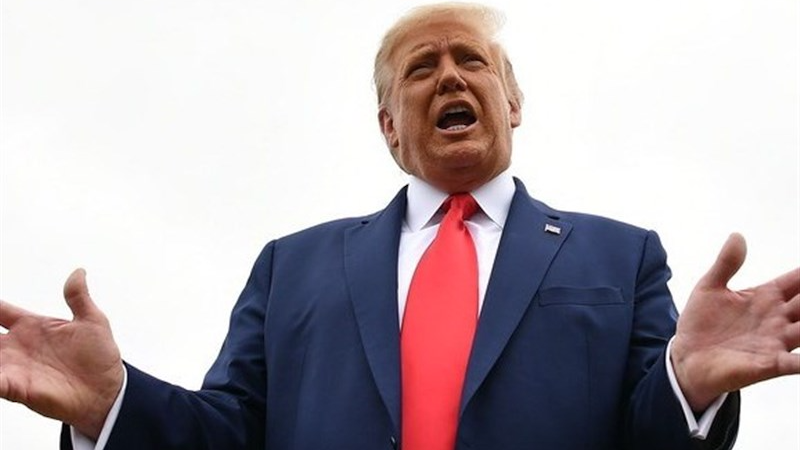
Former US President Donald Trump. Photo Credit: Tasnim News Agency

By Ken Bredemeier

A New York jury on Thursday convicted former U.S. President Donald Trump of illegally trying to influence the outcome of the 2016 election that sent him to the White House, unanimously finding him guilty on all 34 felony charges he faced.

The 12-member jury deliberated for two days before returning the verdict against Trump, 77, in the first-ever criminal trial of an American president.

Trump is the presumptive 2024 Republican presidential nominee in the November election against President Joe Biden, the Democrat who defeated him in the 2020 election, but he now also faces the possibility of being placed on probation or imprisoned up to four years.

Trump’s sentencing was set for July 11, in the middle of his campaign to return to the White House and just days before the opening of the Republican National Convention on July 15, where he would be formally nominated as the party’s 2024 presidential candidate.

Trump defense lawyer Todd Blanche asked that the verdict be overturned, but New York Supreme Court Justice Juan Merchan quickly rejected his request.

Trump is certain to appeal and can continue to run for the presidency. There is no U.S. constitutional prohibition against his becoming president as a convicted felon.

Trump is facing three other indictments, including two accusing him of illegally trying to upend his 2020 election loss. But all three cases are tied up in legal wrangling between his lawyers and prosecutors. As a result, the New York case may be the only one decided before the November election.

Trump was convicted after Michael Cohen, his onetime political fixer-turned-acidic critic, testified that Trump told him to “just do it” — pay $130,000 in hush money days ahead of the 2016 election to adult-film actress Stormy Daniels to silence her claim she had a one-night sexual encounter with Trump a decade earlier.

Trump had denied any liaison with Daniels but did not testify in his own defense, as was his right.

A hush money deal is not illegal, but Trump was convicted of all charges in a 34-count indictment accusing him of falsifying business records at his Trump Organization real estate conglomerate to hide the 2017 reimbursement of the hush money payment to Cohen, which Trump claimed was for money owed to Cohen for his legal work.

The Trump defense team claimed Cohen, on his own volition and without Trump’s knowledge, wired the hush money to Daniels’ lawyer.

The former president had denied the entirety of the indictment against him.

The jury, all New Yorkers chosen randomly from voter registration lists, heard five weeks of testimony from 22 witnesses. Then, on Monday, it listened to hours of starkly contrasting views of the case offered by Blanche and prosecutor Joshua Steinglass.

Blanche, in a three-hour closing argument, assailed Cohen, who testified that he wanted Trump convicted.

The defense lawyer called Cohen, a convicted perjurer and disbarred lawyer, “the greatest liar of all time” and “the human embodiment of reasonable doubt” about the charges against Trump.

Blanche said Cohen’s suspect testimony, his theft of $60,000 from Trump’s company and a history of lying over the years, which was often on Trump’s behalf, gave the jury ample reason to acquit the country’s 45th president.

Steinglass, in a nearly five-hour closing argument, acknowledged Cohen’s shortcomings but contended they were a “sideshow,” saying that Trump engaged in a conspiracy “to corrupt the 2016 election.”

The prosecutor argued that an August 2015 deal cut by Trump and Cohen with David Pecker, then the publisher of the grocery store tabloid National Enquirer, to buy and bury unflattering stories about Trump and write negative and embellished ones about his political foes amounted to a “subversion of democracy” and led to the hush money payment to Daniels.

The jurors reached their verdict after hearing key testimony from the August 2015 meeting – characterized by prosecutors as the “Trump Tower conspiracy” – reread to them at their request on Thursday morning before resuming their deliberations.

Steinglass said the newspaper was effectively a “covert arm” of the 2016 Trump campaign because it paid $30,000 to a doorman at a Trump building in New York to hide his ultimately false claim that Trump had fathered an illegitimate child, and $150,000 to Karen McDougal, a Playboy model who claimed she had a monthslong affair with Trump in 2006 and 2007.

Trump denied McDougal’s claim as well, although Pecker testified that Trump inquired about her well-being as they walked the White House grounds in 2017 after he became president.

As for Daniels’ claim of an encounter with Trump, Steinglass told the jurors, “You may say, ‘Who cares if Mr. Trump slept with a porn star 10 years before the 2016 election?’ Many people feel that way. It’s harder to say the American people don’t have the right to decide for themselves whether they care or not.”

Blanche had told the jurors, “President Trump is innocent. He did not commit any crimes, and the district attorney has not met their burden of proof — period.”

He said the jury hearing the case should render “a very quick and easy not guilty verdict.”

But Steinglass told the jury “to remember to tune out the noise and to ignore the sideshows. And if you’ve done that … you will see the people have presented powerful evidence of the defendant’s guilt.”

“The law is the law, and it applies to everyone equally,” Steinglass said. “There is no special standard for this defendant.”


Categories
South Caucasus News

Coalition Calls on Chairman McCaul to Advance Legislation to Stop Aid to Azerbaijan and Sanction Aliyev Officials … – Asbarez Armenian News


Coalition Calls on Chairman McCaul to Advance Legislation to Stop Aid to Azerbaijan and Sanction Aliyev Officials …  Asbarez Armenian News

Categories
South Caucasus News

Protesters Attempt to Surround Armenian Government Building – Asbarez.com – Asbarez Armenian News


Protesters Attempt to Surround Armenian Government Building – Asbarez.com  Asbarez Armenian News

Categories
South Caucasus News

3000 rally in Armenia against PM over territorial concessions – newagebd.net


3000 rally in Armenia against PM over territorial concessions  newagebd.net