Categories
South Caucasus News

Whose Business Is It To Shape The Mekong’s Geopolitical Landscape? – Analysis


Whose Business Is It To Shape The Mekong’s Geopolitical Landscape? – Analysis

Mekong Vietnam Boat Environment Fish The Fishermen Fishing

By Yunkang Liu

The Mekong subregion is a geoeconomic hub within ASEAN, comprising Thailand, Cambodia, Laos, Vietnam and Myanmar. Its strategic location and abundant resources have enhanced its appeal to multinational corporations and great powers, situated at the intersection of major infrastructure development programs such as the Asian Development Bank’s Economic Corridor projects and China’s Belt and Road Initiative.

The region is covered by trade agreements such as the ASEAN Free Trade Area, the ASEAN Plus Free Trade Area framework and the Regional Comprehensive Economic Partnership. But action among major powers in the Mekong subregion has gradually shown signs of shifting from geopolitical manoeuvring to a geoeconomic battleground.

Historically, major powers have competed for influence in this strategic region to gain access to key resources, trade routes and geopolitical leverage. Among major players, Chinese, Japanese and South Korean companies have long been investors in the Mekong, underscoring the increasingly pivotal role of geoeconomics in shaping power dynamics in the Mekong.

The establishment of the Greater Mekong Subregion program by the Asian Development Bank in 1992 encompasses the Mekong countries and China, particularly its Yunnan province and Guangxi Zhuang Autonomous Region, and is aimed at bolstering regional economic relations. This gives China an advantage in cross-border trade and economic activities in the subregion compared with other powers such as the United States and Japan. China’s Belt and Road initiative and Lancang–Mekong Cooperation mechanism have become the primary driving forces behind economic activities in the Mekong.

In addition to the financing and construction of hydropower dams along the Mekong River, in 2022 a railway costing over US$6 billion tied the fate of land-locked Laos to China. Private enterprises have also begun to exert their presence in the region. Japan, a long-standing player through the Mekong–Japan Partnership framework, has intensified its economic involvement.

Huawei plans to establish an artificial intelligence and cloud computing training centre in Thailand and has expanded its market share in smartphones. Other Chinese smartphone brands have also performed well in Myanmar. Former Vietnamese president Vo Van Thuong met Huawei Chairman Liang Hua in Beijing on 19 October 2023, expressing confidence that Huawei’s involvement would boost Vietnam’s digital economy.

While Western companies exited Myanmar following the 2021 military coup, Chinese enterprises have moved in to fill the economic gap. But they have faced resistance from some local protesters in Myanmar, due to allegations on social media that Beijing supported the military government that took power in the 2021 coup. Others argue that China does not like the coup, with the Chinese ambassador to Myanmar Chen Hai stating that the situation is ‘not what China wants to see’.

Chinese vehicle manufacturer, Great Wall Motors, has invested in new energy vehicle production bases in Vietnam and Thailand. Thailand is also one of Japan’s largest business bases in Southeast Asia, with Japanese automaker Toyota announcing a US$4.34 billion investment in Thailand and starting a partnership with Commercial Japan Partnership Technologies and Thailand’s Charoen Pokphand Group on a hydrogen fuel project.

Since September 2020, following the Great Wall purchase of a car manufacturing plant in Rayong province, Thailand, the company has pursued a differentiation strategy that places greater emphasis on electric vehicles to compete against existing car manufacturers. Chinese automakers have gradually succeeded in the Thai market by implementing localisation strategies, which involve collaborating with local partners. Thailand’s motor industry has become a Japan–China battleground. Leading US electric vehicle manufacturer, Tesla, has also shown interest in investing in Thailand after visiting in December 2023.

In December 2020, the Korea–Myanmar Industrial Complex began construction, aiming to build economic links between South Korea and Myanmar. Despite the 2021 coup, 70 per cent of Japanese companies have retained or expanded their operations in Myanmar. In 2023, Japan indicated its intention to increase investment in the Eastern Economic Corridor projectin Thailand. Then in February 2024, Japan announced its plan to move forward with establishing Japanese Special Economic Zones in Cambodia to help attract more investors from Japan.

Vietnamese leaders have sent encouragement to Japanese companies to enhance Vietnam’s manufacturing competitiveness, building upon the consensus established through the Japan–Vietnam Joint Initiative Agreement signed in 2003.

The expanding commercial interests in the Mekong subregion are set to yield economic benefits — but will require careful management of various challenges and risks. The success of market-oriented business strategies will impact the major powers’ influence in the Mekong, as their business endeavours are likely to facilitate the expansion of geostrategic influence for their respective home countries.Companies can strengthen economic interdependence or diplomatic relations between their home country and host countries through its commercial and corporate diplomatic activities. But this change will prompt debates as to whether the business actions are also equally beneficial to the various stakeholders within the Mekong.

Mekong countries can benefit economically from companies’ commercial activities and can play a constructive role in fostering cooperation among major powers. Mekong stakeholders need to examine how to achieve strategic hedging in the business field, while companies may also need to adapt their business strategies to navigate the Mekong’s evolving geopolitical landscape.

  • About the author: Yunkang Liu is a PhD student in Politics and International Relations at the School of Social Sciences, the University of New South Wales, Sydney. He previously served as a consultant at UNESCO.
  • Source: This article was published by East Asia Forum
Categories
South Caucasus News

COP29 Hosts Propose Fossil Fuel Levy to Boost Climate Finance – Bloomberg


COP29 Hosts Propose Fossil Fuel Levy to Boost Climate Finance  Bloomberg

Categories
South Caucasus News

NPR News: 05-30-2024 8PM EDT


NPR News: 05-30-2024 8PM EDT

Learn more about sponsor message choices: podcastchoices.com/adchoices

NPR Privacy Policy


Categories
South Caucasus News

Russia to Repair Flood-Damaged Railway – Asbarez.com – Asbarez Armenian News


Russia to Repair Flood-Damaged Railway – Asbarez.com  Asbarez Armenian News

Categories
South Caucasus News

Georgian organization says it will take controversial media law to the constitutional court – PBS NewsHour


Georgian organization says it will take controversial media law to the constitutional court  PBS NewsHour

Categories
South Caucasus News

Kremlin-affiliates Hold Another Conference in Tbilisi – Civil Georgia


Kremlin-affiliates Hold Another Conference in Tbilisi  Civil Georgia

Categories
South Caucasus News

The New Tale Of Two Cities: Hong Kong And Singapore Under De-Globalization – Analysis


The New Tale Of Two Cities: Hong Kong And Singapore Under De-Globalization – Analysis

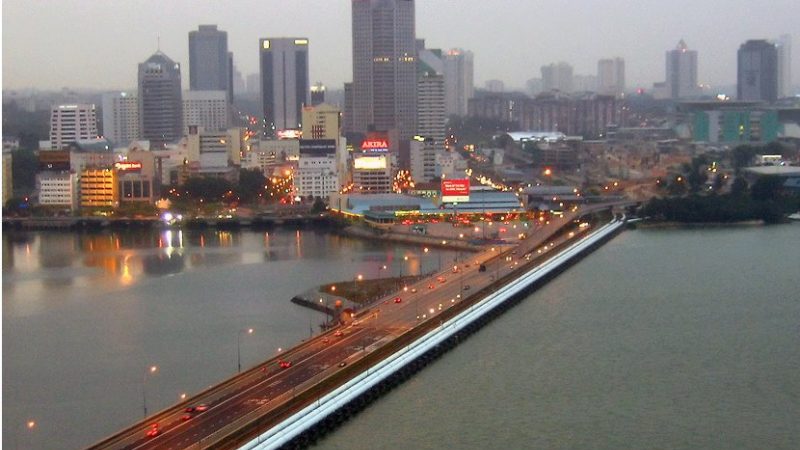
The Singapore-Johor causeway, spanning across the Johor Straits. It is one of two bridges which connect Singapore to Malaysia and Continental Asia. Photo Credit: Calvin Teo, Wikipedia Commons.

By He Jun

Hong Kong and Singapore are two Asian city-state economies that have often been compared. The former is recognized as a regional international financial center, while the latter is a functional international financial center within ASEAN. Before 2019, Hong Kong held a higher status as an international financial center compared to Singapore, where it had a larger capital market and more comprehensive financial services.

However, since 2019, the situation has changed significantly. In 2019, Hong Kong experienced nearly a year of social unrest, which severely impacted its image as a free and secure international financial center. Starting in 2020, the three-year COVID-19 pandemic, combined with the increasingly severe anti-globalization wave and geopolitical conflicts, has greatly affected Hong Kong as well. Over the past five years, the development trajectories of Hong Kong and Singapore have diverged, with Hong Kong declining and Singapore rising.

The changes in the environment and circumstances that Hong Kong faces as an international financial center are not of its own choosing but are dictated by the times and global trends. For instance, the social unrest in Hong Kong in 2019 can be seen as a projection of the U.S.-China geopolitical rivalry onto it. For the United States and the United Kingdom, maintaining Hong Kong as a “free port” in the Western view was desirable, and failing that, they would rather see it become a “democratic battlefield” in the name of democracy. For the Chinese government, it was imperative not to allow Hong Kong, which had returned to the Mainland, to become chaotic under Western interference. With the implementation of the National Security Law, the city effectively underwent a “second return”. In this context, Hong Kong is inevitably caught in the crossfire of the U.S.-China rivalry.

As an influential international financial center, Hong Kong’s prosperity is tied to its proximity to Mainland China. However, this prosperity has primarily been achieved under the influence of Western markets. Hong Kong serves as a “super-connector” between Mainland China and the outside world, operating under a linked exchange rate system with free capital movement. It is a “city-state” with a capitalist market economy that attracts numerous multinational companies, and benefits from special tariff policies from several Western countries.

When the U.S.-China geopolitical rivalry intensified, the external environment for Hong Kong’s development underwent a dramatic change. The U.S. not only revoked Hong Kong’s special tariff status but also imposed a series of sanctions and restrictions. Consequently, Hong Kong’s status and the factors that support its role as an international financial center were altered. For instance, some Western multinationals, concerned about geopolitical risks, have withdrawn; international capital has flowed out of the island due to risk considerations; and some wealthy individuals, worried about the safety of their assets, have moved their wealth to Singapore. This has impacted local asset prices and even cause economic and financial activities to stagnate.

Singapore has been a major beneficiary of these changes in Hong Kong. For a long time, the Southeast Asian nation has pursued a balanced “small country, big diplomacy” strategy, being a unique entity that is politically authoritarian but economically highly liberalized. If capital from the Greater China region seeks to relocate without moving to culturally different countries like the U.S. or the UK, Singapore often becomes an attractive option. In recent years, many wealthy individuals from Mainland China have chosen to immigrate to Singapore based on these considerations. Over the past few years, there is the decline of Hong Kong and the rise of Singapore.

In recent years, Hong Kong has indeed faced significant challenges, with the outflow of some economic and financial elements weakening its prosperity. However, the world is still evolving against the backdrop of de-globalization, and everything is in flux. This new “tale of the two cities” between Hong Kong and Singapore remains undecided. We believe that in maintaining its status as an international financial center and developing its capital markets, Hong Kong should not be underestimated. Its advantages still can be leveraged for further growth.

For example, in the stock market, Hong Kong has a substantial advantage over Singapore. According to the Financial Times, the Singaporean government is having its “battles to revive struggling stock market”. As it stands, the number of listed companies there has decreased from nearly 800 a decade ago to about 600 currently, with a total market value of approximately HKD 5.7 trillion, less than the combined market value of Hong Kong’s three heavyweight stocks. It is safe to say that the stock market in Singapore faces an existential crisis.

In 2023, the Hong Kong Stock Exchange (HKEX) fell to eighth place globally in IPO fundraising, with only 70 new listings and a total fundraising amount of about USD 6 billion, causing concern about the future of the Hong Kong stock market. However, comparisons highlight the situation: in Singapore, considered a rival to Hong Kong, the Singapore Exchange (SGX) had only 7 new listings in 2023, with a total fundraising amount of just USD 300 million, only one-tenth and one-twentieth of Hong Kong’s figures, respectively. More surprisingly, the SGX saw over 20 de-listings last year, reducing the number of listed companies from 651 at the end of 2022 to 632 by the end of 2023. As of the end of March this year, the latest number of listed companies in Singapore is 624, indicating that the “shrinkage trend” continues.

In addition to the number of companies, the gap between the “two cities” becomes even more apparent when comparing the total market capitalization of listed companies. Currently, the total market capitalization of the Singapore stock market is approximately USD 735.1 billion (about HKD 5.7 trillion), whereas the total market capitalization of Hong Kong stocks is as high as HKD 33.4 trillion. Just the combined market value of three heavyweight stocks, i.e., Tencent, Alibaba, and China Mobile amounts to HKD 6.6 trillion, exceeding the entire market capitalization of the Singapore stock market. In terms of liquidity, the average daily turnover on the SGX in March was USD 1.19 billion (about HKD 9.3 billion), while the HKEX had an average daily turnover of HKD 112.3 billion during the same period, more than ten times that of SGX.

Singapore’s weakness in stock market development is inherent and challenging to overcome. As a city-state with a population of several million, it lacks extensive territory, market space, strong support like that from Mainland China, and a sufficient number of large companies for listings. Its economy is highly dependent on international markets, and major geopolitical risk events and turmoil in the region can immediately impact the Singapore market. In contrast, Hong Kong has advantages in these very areas. Therefore, if Hong Kong can weather the current various ebb tide impacts and wait for the pendulum of globalization to swing back to a more balanced position from its extreme irrationality, there is a significant chance for Hong Kong to return to a path of prosperity. Although the future prosperity of Hong Kong may differ from its past, achieving renewed prosperity to a certain extent would still be considered a success for Hong Kong.

Final analysis conclusion:

De-globalization and geopolitical rivalries have significantly impacted Hong Kong, which is still experiencing an outflow of economic, financial, corporate, and talent resources. Singapore, on the other hand, has been the biggest beneficiary of this process. However, Hong Kong should not be underestimated. If it can overcome the current difficulties and leverage its inherent advantages, given time, Hong Kong may not necessarily fall significantly behind Singapore in the unfolding “new tale of two cities”.

  • He Jun is Director of China Macro-Economy Research Center and Senior Researcher at ANBOUND, an independent think tank.

Categories
South Caucasus News

Why Does The Federal Government Borrow? – OpEd


Why Does The Federal Government Borrow? – OpEd

dollar eye Benjamin close up

By Thomas Savidge 

Recently, White House Council of Economic Advisers Chair Jared Bernstein was featured in a viral clip in which he appears to flub a basic question about his job. The interviewer asked, “Like you said, they print the dollar, so why does the government even borrow?” Here’s the clip of his answer. 

In all fairness to Mr. Bernstein, he was asked a loaded question. The interviewers phrased the question to make it sound like the institution that issues debt and the institution that prints money are one in the same. That is not the case. The US Treasury borrows while the Federal Reserve prints money. The separation of these two institutions is designed to prevent the government from using the money printer to pay for government spending and the inflationary consequences that come with it. 

As my colleague Thomas Hogan noted, advocates of Modern Monetary Theory (MMT) intentionally blur the lines between the Treasury and the Fed. For example, in Stephanie Kelton’s The Deficit Myth, she claims, “Both the US Treasury and its fiscal agent, the Federal Reserve, have the authority to issue dollars.” This claim stems from the Bureau of Engraving and Printing, within the Department of the Treasury, having the authority to print our paper currency. What Kelton omits, however, is that those notes are distributed by the Fed through its network of regional banks. 

It’s important to note that the relationship between the Treasury and the Fed is far from total independence. Throughout its history, the Fed has succumbed to political pressure from elected officials on both sides of the aisle, bureaucrats, and academics. The Fed currently operates under a policy of “constrained discretion,” where Fed officials to stick to rules during “ordinary” times while giving them the ability to act with discretion during emergencies or crises. It’s during emergencies where interest groups can most easily exert influence over monetary policy. For example, during the COVID-19 pandemic, the Fed opened numerous facilities to allocate credit, which ultimately blurred the line between fiscal and monetary policy. The policy of “constrained discretion” has led to the mess we’re seeing now. 

Advocates of MMT want to blur the line between fiscal and monetary policy even more than what we have now. If they accomplish this, it will spell disaster for the American people. 

What Happens When Government Uses the Money Printer to Finance Spending? 

This question has been asked and answered throughout economic history. Adam Smith discusses this point in Book V of The Wealth of Nations

It occasions a general and most pernicious subversion of the fortunes of private people; enriching in most cases the idle and profuse debtor at the expence of the industrious and frugal creditor, and transporting a great part of the national capital from the hands which were likely to increase and improve it, to those which are likely to dissipate and destroy it.

Smith comments that attempting to pay down debt with newly printed money is a “juggling trick” used to avoid default. This trick comes at the expense of everyday citizens, as the inflation brought about by money printing destroys the purchasing power of the money they hold. 

George Selgin made similar warnings in his book The Menace of Fiscal QE. Fiscal QE refers to the policy of the Federal Reserve purchasing assets and expanding its balance sheet to support government spending. Selgin notes that while Fiscal QE is extremely tempting it casts doubt on the central bank’s independence and creates an unaccountable back door for spending. 

This question was also explored in a 2021 research paper by AIER Senior Fellow Joshua Hendrickson, titled “What Happens When Governments Pay for Spending with Money Creation? Lessons from the Early Riksbank” In the paper, Hendrickson discusses a historical example of mid-1700’s Sweden when the Swedish parliament controlled both the government budget and the central bank (known as the Riksbank), bringing both fiscal and monetary policy decisions under one governing body. Results from Hendrickson’s research as well as others show that the government was able to finance its spending using money creation but at the cost of rising inflation and no impact on inflation-adjusted economic activity. The government gained at the expense of the people. Economists cite similar results in Germany following World War I, Argentina over the past 25 years, and Turkeyunder President Erdoğan. The clear takeaway is that just because a government can finance spending with money printing doesn’t mean it should. 

In the case of the United States, where the US dollar is currently the world reserve currency and the US Treasury security is the global reserve asset, we’d still see similar results despite what the advocates of Modern Monetary Theory (MMT) claim. The “world reserve” status depends on investors’ faith in the US government to keep its promises. If policymakers were to openly embrace MMT, it would face all of the knowledge problems that other attempts at government intervention have faced before. Ultimately, the knowledge needed to organize an economy is decentralized and not easily quantified, because much of it is contingent on time and place. The closest the US came to this arrangement was during the late 1960s and early 1970s when the Fed funded deficits using expansionary monetary policy, resulting in stagflation

Furthermore, there would be rampant cronyism if the federal government were to openly embrace MMT. The logic of collective action would play out. Politicians, eager to win political support, would promise to use the money printer for small, vocal groups seeking to concentrate benefits for these groups and disperse costs among the American people. When inflation results from this policy, don’t be surprised when politicians blame it on corporate greedprice gouging, and anything else besides themselves. 

So Why Does the Government Borrow? Look at the Incentives! 

If the government can’t use the money printer to spend, why borrow instead of raising taxes? This is another point Adam Smith discusses in Book V of The Wealth of Nations

The government of [a commercial state of society] is very apt to repose itself upon this ability and willingness of its subjects to lend it their money on extraordinary occasions. It foresees the facility of borrowing, and therefore dispenses itself from the duty of saving.

Smith’s discussion of devaluation and inflation above as well as his comments on public debt here show that there’s nothing new under the sun. Policymakers have an incentive to finance spending with money printing and debt to hide the cost of spending from taxpayers. These costs cannot be hidden forever, though, as inflation and tax increases to pay for yesterday’s unproductive spending will eventually follow. 

You don’t need to read Adam Smith to understand that raising taxes is politically unpopular. A politician’s top two priorities are to get elected and then get reelected, so raising taxes on their voters is to be avoided at all costs. At the same time, voters also love to be the recipients of government money. Government debt offers a politician the ability to win over voters with increased spending and put off the sting of tax increases until later. Politicians also can rest assured that the government has willing lenders that are happy to purchase government debt knowing that they’ll be paid back with interest. 

As my colleague Peter Earle and I noted, the government taking on debt has a two-fold effect. In the short term, private capital is diverted away from the productive private sector and into the unproductive public sector. As economist James M. Buchanan put it, spending that is funded by debt is “in effect chopping up the apple trees for firewood, thereby reducing the yield of the orchard forever.” The second effect, Buchanan also noted, is that debt-financed spending also shifts tax burdens from present to future generations. While bond investors trust that their loan will be paid back with interest, future generations will bear the cost of the government spending undertaken today. 

Don’t be fooled by anyone saying there is no cost to printing money or that deficits and debt do not matter. History has clearly shown that when the government decides to finance spending by printing money or taking on massive amounts of debt, it is the average person who is bound to get hit the hardest.

  • About the author: Thomas Savidge is a Research Fellow at the American Institute for Economic Research. He earned his Master in Public Policy from George Mason University and a Bachelor of Arts in Political Science and Philosophy from SUNY New Paltz.
  • Source: This article was published by AIER

Categories
South Caucasus News

Will Indonesian President-Elect Prabowo Stay True To Jokowi’s Policies? – Analysis


Will Indonesian President-Elect Prabowo Stay True To Jokowi’s Policies? – Analysis

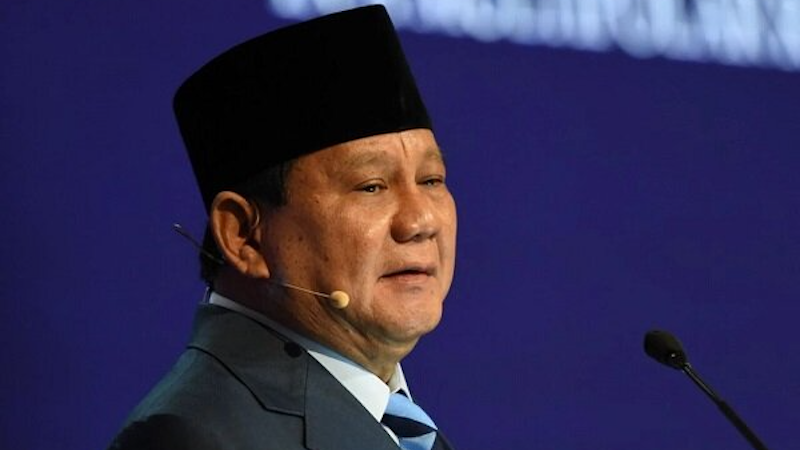
Indonesia's Prabowo Subianto. Photo Credit: Mehr News Agency

By Pizaro Gozali Idrus

Indonesian President-elect Prabowo Subianto has vowed to uphold the legacy of his predecessor Joko “Jokowi” Widodo, but he will be “no mere puppet” in office and is likely to quickly assert his independence, analysts say.

The 72-year-old defense minister swept to victory in Indonesia’s Feb. 14 election on the coattails of the extraordinarily popular Jokowi, whose tacit support for his former rival proved decisive in his win.

For many observers, the question now is will Prabowo stay true to Jokowi’s policies after assuming power in October?

Muradi, a political analyst at Padjadjaran University in Bandung, said that Prabowo was likely to break from Jokowi’s influence within months as he seeks to establish his own presidential legacy. 

“Prabowo has long dreamed of becoming president,” Muradi, who goes by one name, told BenarNews.  “He wants to be seen as his own man. I predict their alliance won’t last long after he takes office, 100 days tops.”

Prabowo, a fiery ex-general born into Indonesia’s political elite, is cut from a very different political mold than Jokowi, a former furniture salesman from central Java who improbably reached the country’s highest office. 

“Fundamentally, these two individuals have distinct characters – different perspectives, visions and obsessions,” said Siti Zuhro, a political analyst at the National Research and Innovation Agency.

“It wouldn’t be Prabowo if he didn’t assert his unique approach, especially now that he holds the highest office. He will undoubtedly be more assertive and decisive,” she said, adding he would probably maintain some of Jokowi’s programs to bolster his legitimacy as president.

Prabowo, who was married to the daughter of longtime dictator Suharto, lost to Jokowi in the 2014 and 2019 presidential elections, before accepting an invitation to join his rival’s cabinet as defense minister.

During this year’s election, Prabowo chose Jokowi’s eldest son Gibran Rakabuming Raka as his vice-presidential nominee – a move that was perceived as an attempt by the outgoing president to maintain power after leaving office. 

Though Jokowi, who is barred from a third term, did not explicitly endorse a candidate, his numerous public appearances alongside Prabowo during the campaign period and refusal to back the candidate from his own Indonesian Democratic Party of Struggle (PDI-P), sent a clear signal to the electorate. 

Jokowi’s ambitious infrastructure initiatives, including the relocation of Indonesia’s capital from Jakarta to a new city on Borneo island named “Nusantara,” are the most visible aspects of his political legacy.

Prabowo has vowed to maintain many of these, but the president-elect has staked his name on numerous policies of his own.

Chief among them is a pledge to provide free lunches to all 82 million Indonesian school children, a project with a price tag that dwarfs Prabowo’s proposed annual budget for the construction of the new national capital.

Prabowo’s team estimates the program will require an initial investment ranging from $6.2 billion to $7.4 billion in the first year.

In contrast, Prabowo said in early May that his government planned to allocate $1 billion annually for the construction of Nusantara. 

Basic infrastructure, including roads, dams, bridges and government buildings, are expected to be completed by year-end. But the entire project is not expected to be finished until 2045.

Nusantara has been dogged by challenges since its inception. Slow construction progress, delays in land acquisition, limited investment interest and concerns about environmental impact have plagued the endeavor. 

The site of the news city on Borneo, rich in biodiversity, has raised fears that construction will irreparably harm its delicate ecosystem.

Zuhro said Prabowo might restructure the Nusantara project. 

“This move would ensure that the Nusantara capital project remains non-controversial under his leadership,” she said. 

Trubus Rahadiansyah, a public policy observer from Trisakti University in Jakarta, said Prabowo’s decision to allocate approximately about $1 billion annually for the new capital project falls significantly short of Jokowi’s administration, which disbursed $1.8 billion in 2023 and set a budget ceiling of $2.8 billion for 2024. 

Prabowo is expected to evaluate other high-cost policies from Jokowi’s government, including the plan to extend the China-funded Jakarta-Bandung high-speed train to Surabaya, Trubus said.

“Prabowo is likely to take an instrumental approach to policy. If a policy demonstrates effectiveness, it will be maintained; otherwise, it will be reevaluated,” he told BenarNews.

Ambang Priyonggo, a political observer at Multimedia Nusantara University, said Prabowo was not someone who was easily swayed.

“Prabowo won’t settle for being a mere puppet leader,” he said.

However, economic interests, particularly land concessions and project contracts related to the Nusantara capital project, could significantly shape Prabowo’s policy decisions, Ambang said. 

“Behind the scenes, those who secure land concessions and projects [related to the national capital construction] align themselves with Prabowo’s camp,” he said.

Muradi, of Padjadjaran University, said that Prabowo might even seek support from the PDI-P, which has strained relations with Jokowi. 

PDI-P secretary general Hasto Kristiyanto has indicated the party’s willingness to engage with Prabowo, stating that chair and former president Megawati Sukarnoputri is open to a meeting. 

Prabowo’s spokesman, Dahnil Anzar Simanjuntak, did not respond to a request for comment on the speculation from BenarNews.

Dahnil told CNN Indonesia on Monday that certain factions were sowing discord between Prabowo, Jokowi and Megawati, without providing details.

Ultimately, Prabowo faces a delicate task of balancing policy ambitions with fiscal realities, according to Ali Sahab, a political lecturer at Airlangga University in Surabaya.

He will have to navigate between fulfilling his own promises and proceeding with Jokowi’s programs, Ali said. 

“The challenge is not merely about Prabowo imprinting his own style on the government, but rather ensuring there’s enough money,” Ali told BenarNews. 

Nazarudin Latif in Jakarta contributed to the article. 


Categories
South Caucasus News

Ukraine Military Situation: Russian May Be Preparing To Reinforce Offensive Combat Operations In Kharkiv – Analysis


Ukraine Military Situation: Russian May Be Preparing To Reinforce Offensive Combat Operations In Kharkiv – Analysis

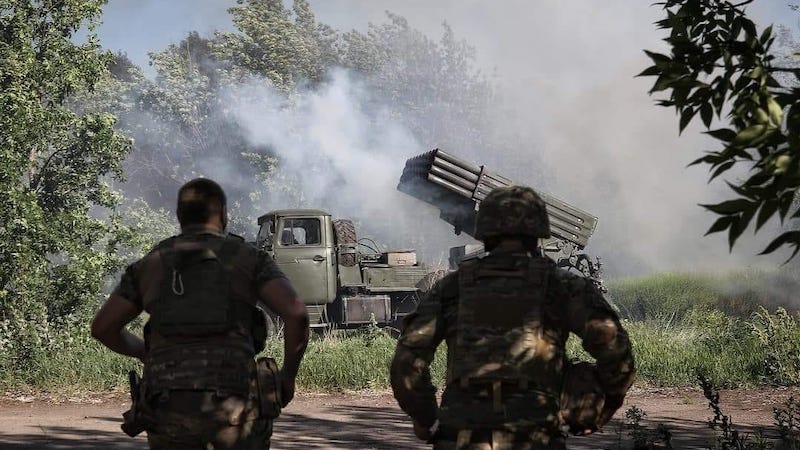
Ukrainian soldiers fire rocket launcher. Photo Credit: Ukraine Defense Ministry

By Can Kasapoğlu

Battlefield Assessment

This week Russia targeted the Ukrainian city of Kharkiv with growing intensity. The Kremlin’s war machine has been simultaneously pursuing three principal objectives there: deliberately targeting civilians to depopulate the area, advancing into the city’s outer ring to bring its urban core within tube artillery range, and forcing the Ukrainian Armed Forces to allocate troops for defensive efforts. While Russia has not yet scored a breakthrough, it presses on.

Kharkiv remains contested at the tactical and strategic levels. President Volodymyr Zelenskyy said that Ukraine has deployed its 82nd Air Assault Brigade and 57th Motorized Brigade to run defensive combat operations. Visuals from the battleground depict the 82nd Air Assault Brigade using Stryker infantry fighting vehicles to combat the Russian invasion in Vovchansk. The Ukrainian General Staff’s initial assessment concluded that Kyiv’s combat formations have stabilized the situation following quick Russian gains along the front lines.

Clashes have also intensified in Vovchansk, Tykhi, and Lyptsi. Battlefield reports suggest that the Russian military has been pouring troops, firepower, and new platforms into the fight. Moreover, Ukrainian President Zelenskyy recently indicated that the Russian military is amassing another grouping of forces near the Kharkiv sector. Depending on the size of these follow-on forces, the situation could become even more perilous for Ukraine.

Since its attacks in the 1990s on the Chechen city of Grozny, Moscow has employed the strategy of intentionally depopulating a city before staging a full-scale incursion. It is now implementing that tactic in Kharkiv with overwhelming air salvos. On May 25, the Russian Aerospace Forces attacked a Kharkiv mall, deliberately targeting Ukraine’s civilian population. President Zelenskyy personally notified the nation of this strike, which caused many civilian casualties. In another incident during the night of May 22, Russian forces struck Kharkiv with dozens of missiles and glide bombs, killing seven people. Russia also hit Vivat, one of Ukraine’s most prominent publishing houses. This incident highlights the cultural dimension of the war—signaling Russia’s intent to destroy Ukraine’s heritage as well as its buildings.

In other sectors, Moscow continued to launch drone and missile strikes against Ukraine’s infrastructure. General Mykola Oleshchuk, the commander of the Ukrainian Air Force, reported that Russia launched barrages of Iranian-originated Shahed-136 and Shahed-131 drones from Primorsko-Akhtarsk, Krasnodar Krai, Kursk Oblast, and occupied Crimea. In recent weeks, Ukrainian air defenses scored high interception rates against Iranian drone warfare systems employed by Russian forces.

Despite this air defense success, the Russian military could completelycapture the tactically critical eastern Ukrainian town of Chasiv Yar. While Russian troops have been unable to enter the city thus far, they have managed to depopulate the town and secure key footholds there.

Last week, Ukraine continued to capitalize on its asymmetrical advantage over Russia’s Black Sea Fleet. According to Western assessments, over one-third of the fleet has been taken out of action, showcasing Kyiv’s success against Russia’s critical naval capabilities. Per Ukrainian official sources, on May 19 Ukrainian forces employed US-supplied Army Tactical Missile Systems (ATACMS) to sink the Russian missile corvette Tsiklon.

Ukraine’s indigenous naval drones and Western long-range strike assets, such as Storm Shadow missiles and ATACMS, continue to exert a significant strain on Russia’s naval forces. In addition, Ukraine is constantly innovating to maximize the efficiency of its existing assets. Ukrainian unmanned surface vehicles (USVs), such as the headline-making Sea Baby, now feature multiple launch rocket systems (MLRS), providing the vehicles more firepower against Russian naval platforms.

Meanwhile, Ukraine’s new mobilization law has come into effect, allowing tens of thousands of new personnel to join the fight. As such, the Ukrainian military’s need for mechanized platforms will also increase. Recent defense assistance packages from the West have provided only temporary help for Ukraine’s acute problems. Kyiv’s army still lacks artillery shells, anti-tank missiles, air defense interceptors, and High Mobility Artillery Rocket Systems (HIMARS) rockets. Forthcoming transfers from Ukraine’s Western allies will need to include large numbers of armored personnel carriers and infantry fighting vehicles to ensure that Ukraine has the force protection capabilities that its newly formed combat formations require. This is important as Kyiv will likely be unable to execute another mobilization before the end of the war.

Russia Kicks Off Tactical Nuclear Drills

Last week, Russia initiated the first stage of tactical nuclear drills designed to send a threatening message to the North Atlantic Treaty Organization and the European Union amid their member states’ deepening support for Ukraine.

Featuring dual-use Iskander tactical ballistic missiles and Kinzhal aeroballistic missiles, the drills showcased Russia’s tactical nuclear delivery capabilities. Reports by the Russian Ministry of Defense suggest that its forces are practicing tasks that involve obtaining special ammunition for the Iskander tactical missile system, equipping the missiles with launch vehicles, and covertly advancing to designated positions in preparation for launches.

The location and the scope of these drills are also telling. Directed by the 12th Main Directorate of the Russian Ministry of Defense, the first stage of the exercises kicked off in Russia’s Southern Military District adjacent to Ukraine, as well as in regions of illegally annexed Ukrainian territory. Belarus, reported to be a potential springboard for Russia’s tactical nukes, will be assuming a more visible and active role in the next stages of the exercise. Previous editions of this report have drawn attention to the Kremlin’s plans to use Belarus to house nuclear weapons on NATO’s border.

Russia’s nuclear doctrine defines one role of the country’s nuclear deterrent as “the preclusion of the escalation of military actions and their cessation . . . on conditions acceptable to the Russian Federation.” At the outset of its invasion of Ukraine, the Kremlin placed Russia on a nuclear footing, ordering high combat alert for its strategic forces. Ahead of NATO’s July 2024 summit in Washington, DC, the alliance should design a firmer approach to Russia’s nuclear bullying and assume escalation dominance against the last generation of the former Soviet intelligence apparatus to control Russia.

Russia’s Defense Technological and Industrial Base (DTIB) Is Recovering More Quickly Than the West Expected

Certain segments of Russia’s defense technological and industrial base (DTIB) are recovering their capabilities despite two years of war, alarming NATO leaders. Both Russia’s current and projected rates of artillery shell production, for example, outpace those of Europe and the US combined. Moscow’s heavy armor and missile manufacturing capabilities also have shown resilience.

Several factors are fueling the recovery of Russia’s defense industries. First, a top-down hierarchy guides the Kremlin’s military and strategic affairs. This strict and authoritarian structure helps Russia rebuild its fighting forces at an alarming pace through mobilization and conscription. Second, thanks to a three-fold increase in its defense budget, Russia is now able to replace lost military hardware and boost salaries in relevant industries. At President Vladimir Putin’s direction, Moscow is now spending some six percent of its GDP on defense. The recent reshuffle in the Russian Ministry of Defense indicates how much the Kremlin prioritizes the recovery of its defense industry.

Third, with the help of Iran, China, and North Korea, Russia has managed to repair its platforms and meet its production requirements in critical segments such as artillery shells and loitering munitions. Besides partnering with these nations to bolster its defense industry, the Kremlin has used its allies to evade Western sanctions and access the materials it needs.

The Russian military is still dangerous, and the assumption that it cannot sustain a long war is as naïve as it is flawed. Russia will continue to pose a formidable threat to NATO for the foreseeable future.

  • About the author: Can Kasapoğlu is a Hudson Senior Fellow
  • Source: This article was published by the Hudson Institute