

Categories
South Caucasus News

Slugs And Snails Love The City, Unlike Other Animals


Slugs And Snails Love The City, Unlike Other Animals

Red-shouldered hawk (Buteo lineatus) perched on a telephone pole in urban Los Angeles. CREDIT: Nurit. D. Katz, CC-BY 4.0

Most native species avoid more urbanized areas of Los Angeles, but slugs and snails may actually prefer these environments, according to a study published in the open-access journal PLOS ONE by Joseph Curti from the University of California, Los Angeles, and colleagues.

Urban areas continue to grow around the world, putting pressure on native species that find it difficult to tolerate the habitat changes and pollution it brings. To conserve and even increase biodiversity in cities, scientists and city planners need large-scale data on the ecological communities present, but this is time consuming and difficult to collect. Researchers used data from iNaturalist, a large database of species observations contributed by scientists and community scientists, to investigate the tolerance of animal species to urban environments. They calculated an urban tolerance score for 512 terrestrial animal species native to southern California. Species were divided into taxonomic groupings including mammals, reptiles and amphibians, birds, butterflies and moths, spiders, bees and wasps, and slugs and snails, among others. Next, they assessed the occurrence of urban-tolerant and intolerant species across a grid of squares covering Los Angeles. They combined this with data on the level of urbanization in different grid cells across the city, such as light and noise pollution.

On average, native species preferred less urbanized locations. Snails and slugs were the exception — the five mollusk species included in the study were more common in more urbanized areas. Butterflies and moths, on the other hand, were the least urban-tolerant group. Mammals and reptiles and amphibians were also relatively intolerant of urban environments, while lady beetles, spiders and birds had less strong preferences – though still preferred less urbanized areas overall.

The analysis could help city planners to increase urban biodiversity. For example, butterfly observations could be used to identify target locations for conservation initiatives to support endangered species like the Palos Verdes blue butterfly. The study also provides baseline data to assess the success of local biodiversity initiatives. Although crowd-sourced data has limitations, for example because not all species are easy for members of the public to detect, the authors note that it can also provide a rich database to help manage and promote biodiversity in cities.

The authors add: “In collaboration with the City of Los Angeles, we sought to understand how native species were distributed across the city and to describe their association with urban intensity. We found that native species in Los Angeles were on average negatively associated with urban intensity, and that areas of the city with higher urban intensity typically contained more urban tolerant native species. The methodology developed for this research project is intended to be reevaluated in order to track efforts to increase urban native species within the City of Los Angeles.”

Categories
South Caucasus News

Urban Office Buildings Pump Out Volatile Chemicals To The Outdoors, Comparable To Traffic Emissions


Urban Office Buildings Pump Out Volatile Chemicals To The Outdoors, Comparable To Traffic Emissions

skyscrapers city

The air coming out of office buildings in urban areas may be more polluted than once believed, Purdue University researchers say.

A research team led by Brandon Boor, associate professor in the Lyles School of Civil Engineering, published a new study in the journal Cell Reports Sustainability that states modern buildings continually release volatile organic compounds (VOCs) to outdoor air and are likely to be an important contributor to the VOC burden of the urban atmosphere. The team conducted direct measurements of outdoor-indoor air pollutant exchange in a high-performance office building using state-of-the-art air quality instrumentation and an advanced building automation platform.

“We traditionally think of filtering the outdoor air entering our buildings. Based on the findings of our study, we now need to consider cleaning the air leaving our offices, homes and schools to reduce VOC emissions to the outdoor environment,” Boor said.

The aim of this research, Boor said, is to accurately measure VOCs in the air coming in and out of urban buildings and to use the data to understand how human occupancy and building operation impact VOC transport between indoor and outdoor air. Boor said that the influence of air exchange between indoor and outdoor atmospheres on urban air pollution is still not well understood — nor had it been fully explored before in a modern office building with a sophisticated ventilation system.

“A fundamental understanding of the fate and transport of urban air pollutants is important for developing mitigation strategies and policies that can improve urban air quality and reduce adverse impacts on human health and the climate,” Boor said. “Numerous studies have demonstrated the significant impact of traffic, industrial and biogenic emissions on urban air pollution. However, the influence of urban air pollutant interactions with buildings has often been overlooked.”

Modern public and commercial buildings are typically equipped with heating, ventilation and air conditioning (HVAC) systems to provide improved indoor air quality and thermal comfort. When urban air is mechanically circulated throughout buildings, its composition can significantly change due to interactions with HVAC components, indoor air, occupants and indoor surfaces.

“Buildings account for a significant fraction of the land area in cities and provide a significant amount of occupied indoor space,” said Tianren Wu, first author on the study and an assistant professor in the University of Cincinnati’s Department of Civil and Architectural Engineering and Construction Management. “To meet building ventilation and thermal comfort requirements, a substantial amount of air is actively exchanged between a building and its proximate urban atmosphere. This dynamic air exchange may have important implications for urban air quality due to both indoor-to-outdoor and outdoor-to-indoor transport and transformations of pollutants, especially in densely populated cities.”

Building materials, interior furnishings, and occupants and their activities — such as cooking, cleaning, and using consumer and personal care products — can release a variety of gaseous and particulate contaminants which can be directly exhausted into the urban atmosphere via a building’s HVAC system. Boor’s research found that indoor VOC concentrations are 2 to 15 times higher than outdoors and that per unit area, building emissions of VOCs are comparable to traffic, industrial and biogenic emissions.

Notably, the team found the office to be a significant emission source of reactive monoterpenes and siloxanes to the outdoor environment. Siloxanes are widely used in deodorants, perfumes, lotions and hair care products. A recent study led by Purdue’s Nusrat Jung, assistant professor of civil engineering, found everyday hair care routines to release large amounts of siloxanes to outdoor air via bathroom exhaust, further demonstrating how buildings can impact outdoor air pollution.

“The building source-sink behavior changed dynamically with occupancy and building ventilation conditions,” Boor said. “Our results demonstrate that buildings can directly influence urban air quality due to substantial outdoor-indoor air exchange.”

As for what can be done to mitigate VOC emissions from buildings, Boor said a greater focus on removing VOCs in HVAC systems using carbon filters and other air cleaning technologies is needed. Using consumer and personal care products with low VOC emissions will also help, Boor said.


Categories
South Caucasus News

Hitting The Target With Non-Invasive Deep Brain Stimulation: Potential Therapy For Addiction, Depression, And OCD


Hitting The Target With Non-Invasive Deep Brain Stimulation: Potential Therapy For Addiction, Depression, And OCD

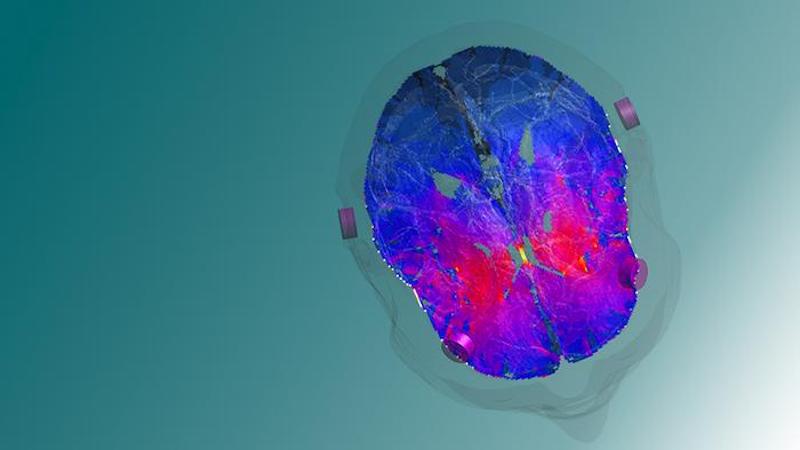
A model image of the targeted deep brain zone, the striatum, a key player in reward and reinforcement mechanisms. CREDIT: EPFL

Neurological disorders, such as addiction, depression, and obsessive-compulsive disorder (OCD), affect millions of people worldwide and are often characterized by complex pathologies involving multiple brain regions and circuits. These conditions are notoriously difficult to treat due to the intricate and poorly understood nature of brain functions and the challenge of delivering therapies to deep brain structures without invasive procedures.

In the rapidly evolving field of neuroscience, non-invasive brain stimulation is a new hope for understanding and treating a myriad of neurological and psychiatric conditions without surgical intervention or implants. Researchers, led by Friedhelm Hummel, who holds the Defitchech Chair of Clinical Neuroengineering at EPFL’s School of Life Sciences, and postdoc Pierre Vassiliadis, are pioneering a new approach in the field, opening frontiers in treating conditions like addiction and depression.

Their research, leveraging transcranial Temporal Interference Electric Stimulation (tTIS), specifically targets deep brain regions that are the control centers of several important cognitive functions and involved in different neurological and psychiatric pathologies. The research, published in Nature Human Behaviour, highlights the interdisciplinary approach that integrates medicine, neuroscience, computation, and engineering to improve our understanding of the brain and develop potentially life-changing therapies.

“Invasive deep brain stimulation (DBS) has already successfully been applied to the deeply seated neural control centers in order to curb addiction and treat Parkinson, OCD or depression,” says Hummel. “The key difference with our approach is that it is non-invasive, meaning that we use low-level electrical stimulation on the scalp to target these regions.”

Vassiliadis, lead author of the paper, a medical doctor with a joint PhD, describes tTIS as using two pairs of electrodes attached to the scalp to apply weak electrical fields inside the brain. “Up until now, we couldn’t specifically target these regions with non-invasive techniques, as the low-level electrical fields would stimulate all the regions between the skull and the deeper zones—rendering any treatments ineffective. This approach allows us to selectively stimulate deep brain regions that are important in neuropsychiatric disorders,” he explains.

The innovative technique is based on the concept of temporal interference, initially explored in rodent models, and now successfully translated to human applications by the EPFL team. In this experiment, one pair of electrodes is set to a frequency of 2,000 Hz, while another is set to 2,080 Hz. Thanks to detailed computational models of the brain structure, the electrodes are specifically positioned on the scalp to ensure that their signals intersect in the target region.

It is at this juncture that the magic of interference occurs: the slight frequency disparity of 80 Hz between the two currents becomes the effective stimulation frequency within the target zone. The brilliance of this method lies in its selectivity; the high base frequencies (e.g., 2,000 Hz) do not stimulate neural activity directly, leaving the intervening brain tissue unaffected and focusing the effect solely on the targeted region.

The focus of this latest research is the human striatum, a key player in reward and reinforcement mechanisms. “We’re examining how reinforcement learning, essentially how we learn through rewards, can be influenced by targeting specific brain frequencies,” says Vassiliadis. By applying stimulation of the striatum at 80 Hz, the team found they could disrupt its normal functioning, directly affecting the learning process.

The therapeutic potential of their work is immense, particularly for conditions like addiction, apathy and depression, where reward mechanisms play a crucial role. “In addiction, for example, people tend to over-approach rewards. Our method could help reduce this pathological overemphasis,” Vassiliadis, who is also a researcher at UCLouvain’s Institute of Neuroscience, points out.

Furthermore, the team is exploring how different stimulation patterns can not only disrupt but also potentially enhance brain functions. “This first step was to prove the hypothesis of 80 Hz affecting the striatum, and we did it by disrupting it’s functioning. Our research also shows promise in improving motor behavior and increasing striatum activity, particularly in older adults with reduced learning abilities,” Vassiliadis adds.

Hummel, a trained neurologist, sees this technology as the beginning of a new chapter in brain stimulation, offering personalized treatment with less invasive methods. “We’re looking at a non-invasive approach that allows us to experiment and personalize treatment for deep brain stimulation in the early stages,” he says. Another key advantage of tTIS is its minimal side effects. Most participants in their studies reported only mild sensations on the skin, making it a highly tolerable and patient-friendly approach.

Hummel and Vassiliadis are optimistic about the impact of their research. They envision a future where non-invasive neuromodulation therapies could be readily available in hospitals, offering a cost-effective and expansive treatment scope.


Categories
South Caucasus News

Balancing on the border: Armenian PM Nikol Pashinyan maintains control despite pressure from Moscow, Baku, and … – theins.ru


Balancing on the border: Armenian PM Nikol Pashinyan maintains control despite pressure from Moscow, Baku, and …  theins.ru

Categories
South Caucasus News

Prosecutors’ strategy and evidence against Menendez | Video – NJ Spotlight News


Prosecutors’ strategy and evidence against Menendez | Video  NJ Spotlight News

Categories
South Caucasus News

“Our common goal is stable peace in the South Caucasus.” Borell – radar.am


“Our common goal is stable peace in the South Caucasus.” Borell  radar.am

Categories
South Caucasus News

Aliyev says Azerbaijan to start resettling capital of Karabakh region in September – StreetInsider.com


Aliyev says Azerbaijan to start resettling capital of Karabakh region in September  StreetInsider.com

Categories
South Caucasus News

Mirzoyan and Iran’s Acting Foreign Minister Hold Phone Call


Foreign Minister Ararat Mirzoyan held a telephone conversation with his acting Iranian counterpart Ali Bagheri Kani on Wednesday.

Bagheri Kani was appointed to the position, following the deaths of Iran’s President Ebrahim Raisi and Foreign Minister Hossein Amir-Abdollahian who were killed last week in a deadly helicopter crash.

Prime Minister Nikol Pashinyan traveled to Tehran to take part in memorial services for the deceased Iranian leaders and met with, among others, Iran Supreme Leader Ayatollah Ali Khamenei.

Mirzoyan once again expressed his condolences to his counterpart regarding the passing of the Iranian leaders, according a statement issued by Armenia’s foreign ministry.

During the phone call, the two emphasized that relations “between the two countries and peoples are deep, strong, and will continue.”

Mirzoyan and Bagheri Kani discussed bilateral and regional issues, stressing their mutual willingness to implement the agreements reached so far and ensure the continuity of the current programs.

The Armenian foreign ministry said Bagheri Kani offered condolences for the casualties and losses suffered over the weekend as a result of the deadly floods in Armenia’s Lori and Tavush provinces.


Categories
South Caucasus News

ARF Bureau Announcement


The unprecedented and vulgar behavior demonstrated in recent day by the various divisions of Armenia law enforcement authorities, which have included illegal arrests and violence, are evidence that terrorism is being carried at a state level. It is undeniable that democracy and human rights are being violated in Armenia.

Following the provocations and attack a day before on headquarters of the ARF Supreme Council of Armenia and a group of ARF members, including the president of ARF Supreme Council of Armenia, parliament member Ashot Simonyan, yesterday we witnessed a new example of the illegal and shameful behavior by the police.

On Independence Day, during the visit by His Holiness Karekin II, Catholicos of All Armenians and religious order of Holy Etchmiadzin to the Sardarabad Monument, the efforts by Nikol Pashinyan’s and his regime’s security services and police to block the pontiff’s entry and their general behavior are grave insult not only to the Catholicos and the Church, but also the entire faithful Armenian people.

The criminal and illegal actions by the police cannot go unanswered and not have consequences. It is imperative that the public deliver a clear response to this disrespectful behavior. All those responsible for this disgraceful action must comprehend that no crime will go unpunished all guilty parties will be held accountable, according to the rule of law.

We call on all Armenians to continue their struggle against the dishonorable regime that has forsaken the homeland, honor and sanctity.

Our collective aspiration to have a free, independent, strong and democratic state is unwavering.

ARF Bureau
May 29, 2024


Categories
South Caucasus News

Exclusive: US to boycott UN tribute to Iran leader killed in helicopter crash – Reuters


Exclusive: US to boycott UN tribute to Iran leader killed in helicopter crash  Reuters