
Day: May 29, 2024
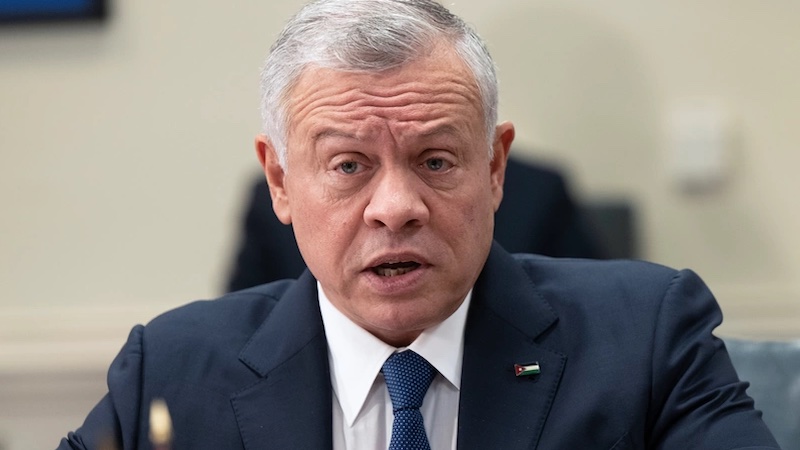
Jordan’s King Abdullah is caught between a rock and a hard place.
Hamas and its regional supporters, as well as Israeli politicians and vigilantes, are pressuring King Abdullah from both ends of the political spectrum.
Iranian-backed Syrian and Iraqi militants seek to draw the kingdom, in which Palestinians account for at least 50 per cent of the population, into the Gaza war.
Hamas, the Muslim Brotherhood, and Iran want to turn Jordan into a regional flashpoint and funnel for weapons for Palestinian militants on the West Bank.
“The Iranians have instructions to recruit Jordanians and penetrate the Jordan arena through agents. Their recruitment efforts span all segments of society,” said Saud Al Sharafat, a former senior Jordanian intelligence official.
In support of Hamas, Iranian-Iraqi groups in January attacked a US military base, killing three American soldiers and wounding at least 34 others.
Iran was quick to rein in the militias after the United States retaliated with a series of airstrikes.
At the other end of the political spectrum, vigilante Israeli settlers have attacked Jordanian humanitarian truck convoys as they traversed the West Bank en route to Gaza.
At the same time, Israeli politicians, with far-right National Security Minister Itamar Ben Gvir in the lead, complicate King Abdullah’s life with provocative visits to the Jordanian-administered Temple Mount or Haram ash-Sharif, Islam’s third holiest site. Jordan is Haram ash-Sharif’s custodian.
King Abdullah has put himself in the firing line by intercepting Iranian drones traversing Jordanian airspace in the Islamic Republic’s massive April 19 drone and missile attack on Israel and cracking down in March and April on pro-Palestinian demonstrations.
King Abdullah defended the downing of Iranian drones violating Jordanian airspace as an act of self-defense, insisting “Jordan will not be a battlefield for any party.”
Even so, King Abdullah, dependent on US military and economic support, may not have had a choice but to take down the drones.
Critics posted concocted images on social media of the king wrapped in an Israeli flag or donning an Israeli military uniform with comments such as “traitor” and “Western puppet.”
Hamid Jahanian, an engineer, congratulated King Abdullah, “who not only failed to support the fellow Arab Palestinians but also took the extra mile to support their genocidal murderer.”
The crackdown and assistance in Israel’s defense have drowned out the fact that Jordan is the only Arab country to have withdrawn its ambassador to Israel and consistently sends aid to Gaza. Jordan is one of five Arab countries that maintain diplomatic relations with Israel.
Meanwhile, Jordanian sources assert the Muslim Brotherhood organised the protests.
With an unemployment rate of approximately 22 per cent and nearly half of young people unable to find a job, officials feared that the pro-Palestinian demonstrations could morph into social and economic protests.
Long a close US ally, King Abdullah’s predicament highlights the Gaza war’s potential to further destablise the Middle East.
Jordan’s geography doesn’t help with the West Bank on its Western border, Syria in the north, and Iraq in the east.
The pressure on King Abdullah comes as politics could spark paradigm shifts in several key Middle Eastern states, including Israel and Iraq.
King Abdullah likely sees benefit in Binyamin Netanyahu’s space to maneuver narrowing as a result of mounting Israeli public pressure to free Hamas-held hostages by ending the Gaza war and international courts acting to force Israel to halt its offensive in Gaza and hold the prime minister and Defence Minister Yoav Gallant accountable for its war conduct.
Hamas’s recent rocket attack on Tel Aviv will probably offer Mr. Netanyahu a brief relief, if at all.
King Abdulla may also see mileage in popular Iraqi Shia cleric Moqtada Al Sadr’s decision to reenter politics and compete in next year’s elections in a move that would challenge the pro-Iranian Coordination Framework, the backbone of Prime Minister Mohammed Shia al-Sudani’s government.
For now, King Abdullah’s crackdown on mass pro-Palestinian protests has reduced domestic pressures, even if widespread anger continues to bubble at the surface.
Even so, Jordan sources said earlier this month that security services had foiled a suspected Iranian-led plot to smuggle weapons into the kingdom to help King Abdullah’s opponents carry out acts of sabotage.
The sources said an Iranian-backed Syrian militia had sent the weapons to Jordanian Palestinian members of the Muslim Brotherhood with links to Hamas, a Brotherhood affiliate.
In March, Israel’s Shin Bet domestic security agency said it had foiled attempts by Iran to smuggle large amounts of advanced weapons into the West Bank.
Shin Bet said the smuggling was organized by Unit 4000, the intelligence unit of the Special Operations Division of the Islamic Revolutionary Guards Corps, and the Special Operations Unit 18840 of the Guards’ Quds Force in Syria.
The agency said Munir Makdah, a senior Lebanon-based official of Palestinian President Mahmoud Abbas’ Al Fatah movement, was involved in the foiled smuggle.
It said the weapons cachet included fragmentation bombs, anti-tank landmines with fuses, grenade launchers, shoulder-launched anti-tank missiles, RPG launchers and rockets, and C4 and Semtex explosives.
In response to the most recent plot, Hamas insisted it had “no ties to any acts targeting Jordan.” A Jordanian Muslim Brotherhood official said its arrested members had acted independently.
Even so, Hamas leaders have repeatedly called on Jordanians since the Gaza war erupted in October to step up to the plate.
“We call on our brothers in Jordan, in particular, to escalate all forms of popular, mass, and resistance action. You, our people in Jordan, are the nightmare of the occupation that fears your movement and strives tirelessly to neutralize and isolate you from your cause.,” said Hamas military spokesman Abu Obeida.
Senior Doha-based Hamas official Khaled Mishaal, who survived an Israeli assassination attempt in Amman in 1997, told a women’s gathering in Jordan in a video address that “Jordan is a beloved country, and it is the closest to Palestine, so its men and women are expected to take more supportive roles than any other people towards the land of resistance and resilience.”
Iranian-backed Iraqi militants asserted in April that they stood ready to arm 12,000 fighters of the Islamic Resistance in Jordan that would open a new front against Israel.
Abu Ali al-Askari, a Kataib Hezbollah security official, suggested Hamas and Palestinian Islamic Jihad’s assessment that all Jordanian militants needed was access to weapons inspired the offer.
There is no evidence of an Islamic fighting force in tightly controlled Jordan despite mounting public anger, a limited number of border incidents, and the efforts by Hamas, the Muslim Brotherhood, and Iranian-backed groups.
Much of the threat of renewed protest and increasing militancy may be more bluster than real.
Scholar and journalist Rami Khouri suggested Jordan was managing a delicate balance, “but it’s always been there. The Jordanians have always figured it out… The situation is not going to threaten the stability of the country as long as you still have the large-scale American military (and) financial support for Jordan.”
All observers of the post-Soviet space know that millions of Central Asians have left their countries to work in the Russian Federation and further afield as they can earn more there than they can in their impoverished homelands. These observers are equally aware, especially in the wake of the Crocus City Hall terrorist act, that the presence of Central Asians in Russia has sparked a sharp increase in xenophobia—something Central Asian labor migrants have felt and regional media have widely reported on (see EDM, March 26, May 15; Vlast.kz, April 1).
Far fewer, however, are aware that tens of thousands of South Asian immigrants have come to Central Asia to fill the jobs left vacant in the region by those working abroad or to acquire a cheaper education, especially in medicine (Rus.azattyq.org, May 22). Now, those who have ignored this potentially explosive pattern are being forced to confront it after a violent pogrom against South Asian migrant workers shook Bishkek on May 17 and 18 (Vb.kg; Rus.azattyq.org, May 18; The Diplomat, May 23).
This event and the official response have raised new questions about the capacity of Bishkek to cope with other issues, including Islamist threats from Afghanistan, territorial disputes with Tajikistan, and Russian and Chinese pressure on Kyrgyzstan in the future. In the past, all these have provoked protests by the Kyrgyz population and a simultaneously populist and repressive response from Bishkek (see EDM, January 28, April 8, 2019, October 20, 27, 2020, September 20, November 3, 2022)
The events of May 17 and 18 had their immediate roots in a fight that broke out between Kyrgyz and Pakistani workers at a pizza parlor on May 13, widely covered on Kyrgyz social media. Four days later, in the middle of the night, approximately 1,000 Kyrgyz attacked South Asian workers and students in their hostels and the factories where they were employed, wounding many and forcing the factories to close. These attacks led to the evacuation of 5,000 South Asians to their homelands and even threatened the survival of medical schools where more than 20,000 South Asians were enrolled and paying full freight for their coursework, unlike Kyrgyz students, who are heavily subsidized. An estimated 60,000 South Asian workers were in Kyrgyzstan before the attacks, though that number is disputed. (For the official chronology of events, see Kyrgyz Ministry of Internal Affairs, May 18; for discussions providing more details, see Rus.azattyq.org, May 18; Orda.kz, May 19; Svodka.akipress.org, May 24)
The proximate causes of these events can be found in the tradition of spring protests in Kyrgyzstan (Vb.kg, May 18). Additionally, the situation has been further inflamed by Bishkek’s decision to keep increasing quotas for immigrant workers despite the widespread belief that the number of illegal migrants has grown too quickly due to a lack of proper enforcement of regulations and widespread official corruption. Some senior Kyrgyz officials, including the current president, have claimed they have no choice but to do so as the population will not take jobs that foreigners are eager to fill. The experience of immigrants in Russia in recent months, specifically the harsh treatment of Kyrgyz workers, also served to push tensions to a boiling point (Kaktus.media, November 17, 2023).
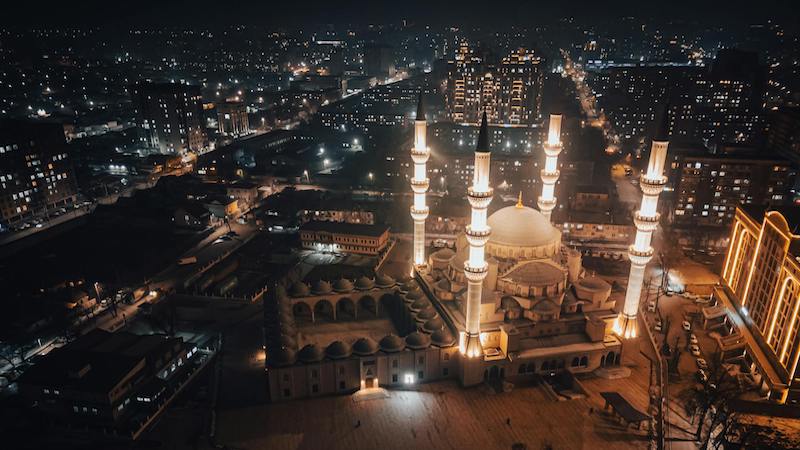
Other deeper economic and sociopolitical causes are certain to continue to play out in the future. Since acquiring independence in 1991, Kyrgyzstan has become more Kyrgyz, more Islamic, and less welcoming to outsiders. The share of ethnic Russians in the population, for example, has dropped from 21.5 to 5.9 percent, a reflection of both higher birthrates among the Kyrgyz and the departure of a million of them for work abroad. As a sign of Islamization, more mosques dot Kyrgyzstan’s landscape than schools do. Many were built in the last 15 years, not in the 1990s as elsewhere in Central Asia (Stan Radar, May 4, 2023; Qmonitor.kz, May 29, 2023).
These trends have worsened rather than improved relations between the Kyrgyz and the Russians. The Kyrgyz population has experienced or knows about Russian mistreatment of Kyrgyz immigrants in Russia, and the Russians who have come to Bishkek since Moscow launched its expanded war against Ukraine have found far greater hostility to themselves than ever before (Stan Radar, July 26, 2022).
Russians are far from the only outsiders against whom the Kyrgyz have become more hostile. In the past, Kyrgyz residents have attacked Chinese businesses in Bishkek, resentful of Beijing’s use of corruption against Kyrgyz elites and its repression of the Kyrgyz in China (Ia-centr.ru, November 11, 2020). As the latest events in Bishkek show, the Kyrgyz are increasingly prepared to act on their resentment of South Asian workers and students as well. Lying behind this factor is yet another that may be even more important: many of the residents of Kyrgyz cities, including Bishkek, have only recently arrived from rural areas and are more traditionally Kyrgyz in their language use and views. Thus, they are generally less tolerant of outsiders (Rus.azattyq.org, May 18, 22).
In this case, as in the past, Bishkek’s official approach has only worsened the situation. On the one hand, more than any other government in Central Asia, Bishkek has allowed for admittedly incomplete but nonetheless real multi-party democracy and referenda have been held on key issues such as border accords. Kyrgyzstan has been celebrated for this progress, but it has also encouraged protest and led some members of the elite to engage in populist rhetoric and take counterproductive actions.
One potentially disastrous example of the latter was Bishkek’s decision in 2022 to make it easier for residents to own guns, implicitly acknowledging its own weakness and opening the way for opponents to arm themselves, as some did on May 17 and 18 (Cabar.asia, November 23, 2022). On the other hand, the Kyrgyz authorities have then engaged in massive but incomplete repressions against opponents and protesters. That ineffective policy has continued in the current case and has only increased the hostility of many in the population and some in the elite to those currently in power (Ritmeurasia.org, November 24, 2022; Kabar.kg, May 18).
This pattern means that the events in Bishkek on May 17 and 18 may well be the harbinger of even more radical actions in the future. Such acts may be taken by the people and government not only of Kyrgyzstan but also elsewhere in the post-Soviet space, whose commentators are paying close attention to these events—even as some in the West are still inclined to view the attacks as a minor matter (Svpressa.ru, May 19).
- This article was published at The Jamestown Foundation’s Eurasia Daily Monitor Volume: 21 Issue: 81
US will remove Biden’s $320M Gaza pier because it is ‘sinking’ https://t.co/3dq4VLOxs0 pic.twitter.com/cnZJTeaQxY
— Michael Novakhov (@mikenov) May 29, 2024