
Day: May 29, 2024
Armenia’s Foreign Intel Chief: Risk of Azerbaijani Attack Persists, Other Countries Also Pose Threat Armenian News by MassisPost
Categories
NPR News: 05-29-2024 8PM EDT
The 1936 Robinson-Patman Act (RPA), once a lynchpin of antitrust enforcement actions, because the government almost always won under its convoluted terms, has been all-but abandoned for decades. As Alden Abbott has recently reported, the 2007 Report of the Antitrust Modernization Commission recommended its repeal. Before that, the last RPA enforcement action was in 2000, and the last before that was in a 1988 case dismissed by the court.
But there is now renewed interest in its revival. As reported by The Capitol Forum, there is currently a “Bipartisan Push in the House to Designate $10 Million of FTC Budget for Enforcement of Robinson-Patman.” Unfortunately, that is an ominous prospect for American consumers, because as former FTC Chairman Timothy J. Muris has noted, the efforts to enforce RPA “were abandoned for good reason: they harmed consumers.”
So what does RPA prohibit? Among other restrictions limiting the means of creating economies of scale and extending such savings to consumers (i.e., to keep more efficient producers and suppliers from outcompeting less efficient ones, to the detriment of buyers), it outlaws “price discrimination between customers not based on provable cost differences, “where the effect of such discrimination may be to substantially lessen competition or tend to create a monopoly.” Its most important historical application was to large-volume discounts, particularly involving large chain stores that were revolutionizing product distribution (RPA was commonly called the “anti-chain-store act” and A&P, the largest chain store when RPA was adopted, was the main target).
While the words of the act read like a defense of competition, the effect of its restrictions is to reduce competition, because it puts in the antitrust enforcers’ crosshairs the quantity discounts and other efficiency enhancing mechanisms that advance consumers’ well-being by reducing retail prices.
How do quantity discounts help consumers? Consider the chain-stores that were the original RPA targets. To get lower wholesale prices, such chain stores had to find a way to successfully market a very large volume of products. What did they do to succeed in that effort? Lower retail prices, wider selection and deeper inventory, more rapid responsiveness to changes in conditions and consumer tastes, more stores, etc. And consumers proved they benefited by their increased patronage of such stores. So RPA’s supposed defense of competition was actually an attack on consumers, by threatening to prosecute successful competitors, as a form of protectionism for the less efficient.
Rulings under the act have often erroneously conflated harm to rivals who lose out to better offerings with harm to the competitive process. The essential reason is straightforward. Superior offerings from competitors, which is the goal of competition in the area Americans have most in common–our roles as consumers — also necessarily “harm” less efficient rivals in the process of benefiting consumers.
The language of RPA supposedly allows firms to defend their quantity discounts by showing that specific cost savings justify different prices. But such cost savings are more of a chimera than a reality, because from the court’s perspective, as Richard Posner put it “cost savings to the manufacturer could not be demonstrated with the precision required.”
Why was that the case? Because as economists harp on about, the costs (the value to the decision-makers of the best opportunities forgone) that are relevant to the choices being made are subjective. And they cannot be made objective in the face of a challenge. Consider just some of them. Accounting data is backward looking, but the relevant costs are forward looking. If you have a multi-product firm, even more than for one with a single product, there is no definitive “right” way to allocate overhead costs, depreciation, advertising costs, storage costs, or marketing costs, just to name a few. In Hamilton Walton’s analysis, “No accountant has been able to devise a method yielding…figures which does not embody a dominance of arbitrariness and guesswork.”
That, in turn, may go far to explain resurgent interest in reviving RPA. If the government can get the courts to again accept the false claim that large, successful competitors harm competition when they compete customers away from competitors, then the more successful producers in customers’ eyes would have to return to the cost defense. And given the court’s historic refusal to accept cost defenses, not because of their logic but because accounting data is insufficient to “prove” exactly what forward-looking cost savings there are, the targeted firms would lose, even when consumers gain. That is borne out by the fact that “successful” RPA cases almost always resulted in higher consumer prices, which is the goal of inferior competitors who pushed such suits.
RPA’s derivation proves no kinder interpretation, either. It grew out of the Supreme Courts’ rejection of Roosevelt’s National Industrial Recovery Administration, which essentially cartelized much of American industry to every consumer’s detriment, as unconstitutional. RPA tried to recreate the NIRA codes, but could not get enough votes. Only then did supporters turn to RPA and its language that Timothy Muris summarized as “vague, frequently self-contradictory, and subject to varying interpretations.” But laws that are vague to the point of indecipherability cannot be seriously defended as the basis for advancing what the Constitution called our “General Welfare.”
In fact, RPA was, and efforts to resurrect its use now are, attempted violations of what a law should be. It strips consumers’ freedom to choose for themselves in an area they are far more competent at than government “enforcers,” combined with the chutzpah of claiming that its purpose is to benefit competition. One need only look to whose complaints led to RPA prosecutions to see that. It was not the consumers, who knew they gained from those superior offerings. It was out-competed rival sellers. That is why resurrecting RPA would bring about a resurgence of recognition of what Ronald Reagan meant when he quipped that the nine most terrifying words in the English language were “I’m from the government and I’m here to help.” Americans would benefit from burying such help rather than giving it new life.
- This article was published at AIER
By Scott A. Boykin
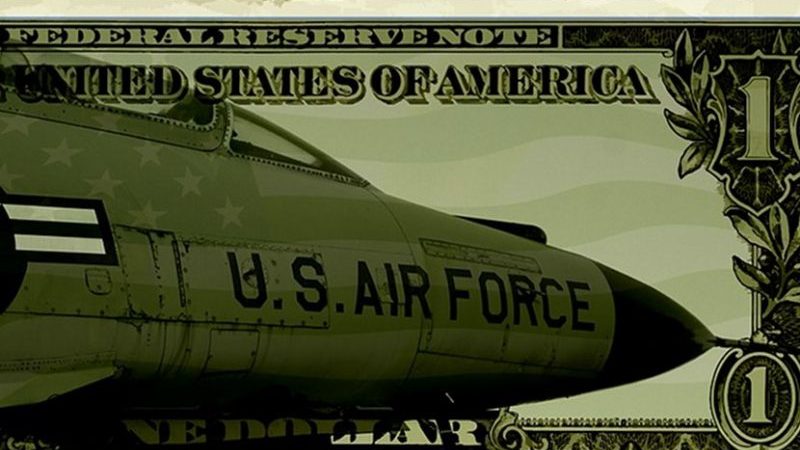
The Biden administration’s recent decision to pause an arms sale to Israel elicited predictable reactions from advocates for both sides of the Gaza War represented in the United States, and while that decision did not stop other arms shipments to Israel, it underscores the political significance of arms sales as an instrument of US foreign policy and intervention in foreign conflicts. Joe Biden’s Department of State recommended the pause in arms sales over concerns that Israel may have breached international law in conducting the war without due care for noncombatant casualties. I am not going to weigh the evidence here; instead, I consider this decision as a reminder of the legal, political, and moral implications of US arms sales to foreign governments.
In February 2024, the White House issued National Security Memorandum 20 at the request of Congress members concerned over the level of violence in the Gaza War and its relation to US arms transfers to Israel. National Security Memorandum 20requires the administration to pause or halt arms sales to belligerents that may be committing human rights abuses in violation of international law. The Leahy Law amendments to the US Foreign Assistance Act of 1961 prohibit security assistance to foreign militaries that have committed gross violations of human rights, though the law has often been conveniently ignored. The US has delayed or terminated arms sales to foreign governments before due to human rights abuses committed by the military forces of those governments, such as in Nigeria in 2021 (only to renew sales in 2022) and Cameroon in 2019 (only to renew them in 2021). Sometimes the US continues the arms sales after reports of abuses without even a pause, such as to Saudi Arabia in its war against the Houthi rebels in Yemen.
Whether it halts arms sales or continues them, there is a legal basis in international law for ending such sales where a government arms purchaser targets noncombatants. The Fourth Geneva Convention, adopted by the United Nations General Assembly in 1949 and ratified by the United States in 1955, prohibits states and nonstate belligerents from targeting noncombatants or failing to take due care to minimize noncombatant casualties in the conduct of war.
In spite of its endorsement of international human rights law, the US employs arms sales as a tool in its foreign policy, which may make the US an accomplice to human rights violations. Foreign military sales are approved by Congress and Departments of State and Defense, and they are a key component of US foreign policy. The US may use arms sales to develop political bonds with other countries, as it did throughout the Cold War in competition with the Soviet Union in the developing world. The US also uses arms sales to influence outcomes or fight proxy wars as it does today in the Middle East, Africa, and Ukraine. That there are also US special operations forces in at least some of these places deepens US involvement in foreign wars and threatens to escalate the US’s role to that of an active combatant in wars where the American interest is debatable and where, as in the case of US involvement in numerous countries in the Middle East and Africa, there is no real debate and little awareness of American voters to hold officials accountable.
But those officials are accountable to firms with a vested interest in war. American arms sales come in the form of foreign military sales, which are government-to-government transactions, private sales to foreign militaries, and US security assistance, which are transfers of weapons and equipment from the US to foreign militaries. Arms sales to foreign powers are big business, and US-based arms manufacturers sold a record $238 billion in 2023. Political action committees affiliated with arms manufacturers and exporters donated over $50 million to American politicians eager to keep the campaign money rolling in, including several hundred thousand dollars each to members of key congressional committees that influence the fortunes of arms dealers, and spent nearly $138 million in lobbying in 2023 alone. President Biden recently touted foreign arms sales as a way to stimulate demand in the US economy. Fueling war is a big business indeed for the US arms industry and its politicians.
The US cannot directly control the uses to which the weapons it sells are put, so the weapons it sells to foreign governments are sometimes used to commit human rights abuses that violate international law. There are good reasons for Americans to care about this. For one thing, the US aids and abets those crimes when its government permits arms sales to foreign governments, and it does so in the name of the American people. For another, foreign arms sales corrupt the political system by linking private profits with US foreign policy decisions. Finally, these sales involve the US in foreign wars, any of which could escalate to direct US involvement. World War III in 2024 is a real possibility. What President Dwight Eisenhower called the military-industrial complex is genuinely dangerous.
- About the author: Scott A. Boykin is Professor of Political Science at Georgia Gwinnett College.
- Source: This article was published by the Mises Institute
The idea of a world war should not be relegated to science fiction. Western escalations in Ukraine could lead to conflict with a nuclear power.
“Constant escalation can lead to serious consequences. If these serious consequences occur in Europe, how will the United States behave, bearing in mind our parity in the field of strategic weapons? It’s hard to say – do they want a global conflict?”
Vladimir Putin
Joe Biden is a very dangerous man indeed. In his many years of public service, first in the United States Senate then as Vice President, and now President, he was never thought of as being very smart. He was always a doctrinaire cold warrior wedded to the idea that the United States must have “primacy,” that is to say, dominate the whole world. He is a racist and a mediocrity who rose to the presidency by reassuring the ruling class that he would be forever loyal to their interests.
Having said that, perhaps he differs from other presidents and the rest of the political class only in his hapless manner, and his obvious cognitive impairments. Thirty years of an effort to as Secretary of Defense Lloyd Austin said, “weaken Russia” has now come down to the runt of the presidential litter. Recent escalations in the Ukraine proxy war show a very dangerous trajectory that is getting far too little attention.
All of Biden’s white house predecessors have tried various means to subjugate the Russian Federation to the will of western nations. Bill Clinton relentlessly expanded NATO into eastern Europe, surrounding Russia with once friendly states that were turned into enemies. George W. Bush first publicly stated an intention to include Ukraine in NATO, knowing full well that such an action was a “red line ” for Russia. Next was Barack Obama, who worked with Ukraine’s right wing forces to actually overthrow the government of an elected Ukrainian president and make war on its Russian speaking region of Donbass. When Donbass resisted he and European leaders negotiated the Minsk Agreements which were supposed to provide regional autonomy and bring peace.
But Obama and the Europeans saw what should have been an effort to cooperate and resolve differences as a stalling tactic to arm Ukraine. They had no intention of abiding by what they had agreed to do. Trump differed from the others only in wanting Ukraine to pay its own way. If nothing else he was serious about his America first rhetoric, and saw no reason for the United States to spend money. Despite claims of being aligned with Russia, and his own mishandling of contacts with Ukraine, Trump eventually decided to arm that nation, which even his predecessors wouldn’t do.
Then Joe Biden came to the presidency with a team of revolving door Obama administration holdovers including Antony Blinken, Victoria Nuland, and Jake Sullivan. They are all hard line neocons determined to sever any connections between Russia and western Europe. They did that quite literally when the Nord Stream pipeline, which provided Europe with an inexpensive and reliable source of natural gas, suddenly exploded in 2022 after Biden publicly said, “We will stop it,” and Nuland told a Senate hearing that she was glad Nord Stream was a “hunk of metal at the bottom of the sea.”
Now the proxy war which makes Ukraine a hostage of cold war politics is moving in Russia’s direction. Ukraine lacks men, so much so that they are being dragged off the street and press ganged into service. It also cannot compete with Russia’s ability to manufacture armaments. The end result is a quagmire at best and a defeat at worst.
The desperation shown by the U.S. and its allies are an indication that the tide is not going in their direction. Victoria Nuland, recently retired from the State Department, is suddenly making public statements about bases within Russia being “fair game ” for Ukraine. She may be unofficially part of the administration, but her words are an indicator of where Washington stands. Jens Stoltenberg , NATO Secretary General, is making the same kinds of noises proclaiming, “…to deny Ukraine the possibility of using these weapons against legitimate military targets on Russian territory makes it very hard for them to defend themselves.” Publicly the Biden team are saying little but it is unlikely that Nuland and NATO are speaking without Washington’s knowledge and approval.
Project Ukraine has failed. Sanctions didn’t “turn the ruble to rubble.” Thousands of young Ukrainian men are dead. Scuttling the 2022 peace talks allowed Russia to take possession of nearly 20% of Ukraine’s territory. Vladimir Putin continues to state that he is willing to talk, but now he isn’t willing to give up territory, something he did consider in the early days of the conflict.
Now we have amateurs in Washington and Europe threatening escalation against another nuclear power. British Foreign Secretary David Cameron was among those threatening to strike inside Russia and the Russian foreign ministry reminded him that Russia could strike back. “(Ambassador) Casey was warned that in response to Ukrainian attacks on Russian territory with British weapons, any British military facilities and equipment on the territory of Ukraine and abroad…” could be targeted.
Russia went further than issuing warnings when it conducted nuclear drills near the Ukrainian border announcing that they were in response to “…provocative statements and threats of certain Western officials regarding the Russian Federation.”
The response cannot be dismissed as mere tit for tat. Article 5 of the NATO treaty makes clear that an attack on one member is considered to be an attack on all members who then have a responsibility to act. A high ranking former U.S. official, the NATO General Secretary, and the UK Foreign Secretary are making very ominous statements that can clearly lead to escalation between Russia and the collective west.
This war of words has gone unnoticed in corporate media that act like scribes for the state. The members of congress who act in concert to support imperialist adventures also say nothing, including “progressives” who claim to be anti-war. It is left to observers like this columnist to connect these dots which are going unnoticed.
Israel’s war crimes and genocide in Gaza receive the lion’s share of media and public attention. Yet congress recently joined together in all of their bipartisan glory to hand another $61 billion to the military industrial complex to wage a losing war in Ukraine. Democrats and republicans thanked one another profusely and republicans who had been expressing skepticism about the endless war got their minds right when ruling class interests told them what to do. The end result was Donald Trump and the progressive squad being on the same page.
But back slapping in Washington may not be the end result. Desperate people who, as the saying goes, get high on their own supply, pose a threat to the whole world as they insist their failed fantasy will become a reality if they just escalate enough. They still believe that they can suddenly do what they have failed to do in the last two years and subdue Russia or bring about regime change or gain a military victory. Fantasy foreign policy is quite dangerous.
It deserves just as much public attention in Ukraine as it does in Gaza. The two crises are related, as the U.S. insists that it can and should control nations and events all over the world, even when facts prove otherwise. But members of congress visit the site of Trump’s criminal trial, and try to outdo one another in being subservient to Israel, and rig the presidential debates to make sure no one else is heard. In the meantime very few people know that so-called leaders are taking actions that could lead to armageddon.
While Trump is demonized as a fascist who cannot be permitted near the white house again, the current occupant is also a fascist who is rarely called upon to explain his dangerous policies. The term World War III is generally used as a plot device in movies, but imperialists committed to continued violence and folly could make it a reality. A presidential election will be held in five months but it doesn’t seem that the risk the U.S. poses to all life on earth is a subject of much interest. It would be if the public were aware of the dangers planned in their name. Of course, that is why they aren’t told. The political class wants to act without interference from the people who don’t realize the democracy they are told to vote to uphold is just a sham meant to keep them quiet.