
Searching for people missing in connection with the 1992-1993 armed conflict in Abkhazia The National Tribune
Day: May 29, 2024

On May 24, 2024, the leadership of Paraguayan Ministry of Foreign Affairs and the Organization of American States (OAS) held a major coordination meeting in Asuncion, as the Guarani nation is preparing to host the 54th Regular Session of the OAS General Assembly that will be held in Asunción, from June 26 to 28. Technical teams and renowned diplomats of the Americas and from Paraguay’s Foreign Affairs Ministry held meetings and tours of the convention places where the main activities will be carried out. The Vice Minister of Foreign Affairs of Paraguay Ambassador Víctor Alfredo Verdún Bitar and national coordinator of the organization of this event, led the coordination meetings with the visiting technical teams. This will be the third time that Paraguay will host the organization’s main annual meeting, after 1990 and 2014.
Paraguay’s Ministry of Foreign Affairs has begun to work on the organization of two large-scale international events that will take place in Asunción in the first and second half of the year, the 54th edition of the Assembly of the Organization of American States (OAS). and the Summit of Heads of States of Mercosur and Associated States, which still does not have a confirmed date, but will be in the month of July. The OAS General Assembly will take place from June 26 through 28, where more than 150 delegations are expected to participate.
In a parallel fashion, civil society meetings will also be held under the auspices of the OAS. They seek to add valuable voices to the solution of crucial social, economic and environmental issues for the region.
At the beginning of the second half of 2024, Asuncion will also host the MERCOSUR Summit, in which the presidents of Brazil, Argentina, Uruguay, and Paraguay will participate, as well as representatives from other invited countries such as Bolivia and Chile. The agenda of the meeting will be quite broad and includes, in addition to regional issues, agreements with the European Union and other markets in Southeast Asia.
Public Tenders
Within the framework of these meetings, the Ministry of Foreign Affairs called for bids for the contracting of logistical services for both major regional events, as well as the acquisition of gifts and decorations, such as the one awarded to the Prime Minister of Japan, Fumio Kishida, in his latest official visit to Paraguay; on May 3rd, 2024. [1]
Mr. KISHIDA Fumio, Prime Minister of Japan, during his official visit to the Republic of Paraguay, held a summit meeting with H.E. Mr. Santiago PEÑA PALACIOS, President of the Republic of Paraguay. After the meeting, Prime Minister Kishida made a joint press announcement with President Peña. Prime Minister Kishida, along with Japanese business representatives accompanying him, attended a dinner hosted by President Santiago Peña. The overview of the meeting is as follows.
At the outset, President Peña explained the history of Paraguay and welcomed Prime Minister Kishida’s first visit to Paraguay. He also expressed his desire to further strengthen bilateral relations with Japan, an important friend of Paraguay. In his statement, Prime Minister Kishida expressed his desire to take the friendly and cooperative relations of more than 100 years with Paraguay to new heights through this visit, as Paraguay is an important partner that shares values and principles with Japan such as freedom, democracy, human rights and the rule of law.
The two leaders exchanged views on the situation in East Asia and confirmed that attempts to unilaterally change the status quo by force will not be tolerated and that the two countries will continue to work together to maintain and strengthen a free and open international order. The two leaders also shared the view that cooperation between the two countries is important in addressing various issues in the international arena such as disarmament, non-proliferation and UN Security Council reform.
President Peña expressed his appreciation for the development cooperation projects implemented by Japan over the past 60 years in a wide range of areas. In response, Prime Minister Kishida stated that Japan would like to have support from the Government of Paraguay so that Japan would be able to continue to conduct development cooperation that will lead to Paraguay’s economic development and investment promotion.
Prime Minister Kishida also spoke of the presence of the Nikkei (Japanese immigrants and descendants) community of approximately 10,000 in Paraguay and expressed his gratitude to the Paraguayan society for its warm welcome to Nikkei over the past 88 years since the start of the migration in 1936. In response, President Peña expressed his respect for and gratitude to the Japanese immigrants for their contribution to the development and growth of Paraguay, particularly in the agricultural sector.
The two leaders welcomed memorandums of cooperation in various fields in both the public and private sectors being signed on the occasion of Prime Minister Kishida’s visit to Paraguay this time, including in the fields of information and communications as well as space, which would deepen cooperation in new fields beyond the areas of conventional development cooperation. The two leaders concurred on the further expansion of the scope of cooperation and exchanges between the two countries in the future. [2]
UNESCO session
In addition to the two aforementioned meetings, the Ministry of Foreign Affairs is also supporting the National Secretariat of Culture for the 19th Session of the Intergovernmental Committee for the Safeguarding of the Cultural and Intangible Heritage of UNESCO, which will be held in Asunción from December 2 to 7, 2024. This event will mark a milestone for Paraguay as it will be the first time it will host this meeting.
Furthermore, Paraguay is shaping a new Country Association Framework with the Kingdom of Spain. The first meeting for the construction of this agreement was held on April 25, 2024, in Asuncion. This new framework of cooperation will establish the bases of the strategic partnership between Paraguay and Spanish Cooperation for the next four years (for the period 2024-2028). On this occasion, Ambassador Helena Felip highlighted the role of Spanish cooperation in supporting the sustainable and inclusive development of Paraguay over the last 3 decades. For her part, the ambassador of Spain, Carmen Castiella Ruiz de Velasco, highlighted the real impact of Spanish cooperation in areas such as public health, education, social cohesion, human rights, peace and justice, and institutional strengthening. On the other hand, the general coordinator of Spanish Cooperation in Paraguay, Rafael Ruipérez Palmero, presented the evaluation of the previous MAP 2020-2023 and the recommendations to be considered for the new framework. [3] The results of some programs sponsored by the AECID were also presented in areas such as water and sanitation, maternal and neonatal health, retributive justice, and restoration of Jesuit missions and in the Chaco Pantanal. A roadmap was established for the preparation of the new MAP 2024-2028, including technical workshops and the participation of institutions, civil society, academia and the private sector.
Resources:
[2] https://www.mofa.go.jp/la_c/sa/py/pageite_000001_00339.html
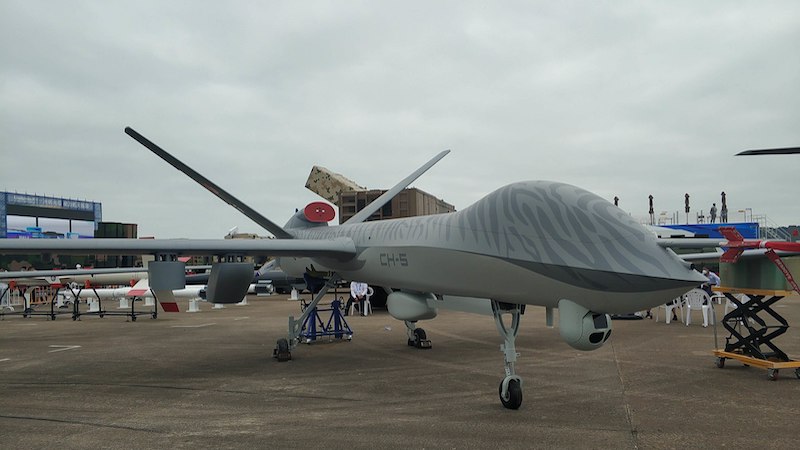
After numerous breakthrough contracts with various military equipment suppliers to strengthen up its armaments, Indonesia is currently eying the ANKA, Chinese CH-4, and Bayraktar MALE drone. For a country as big as Indonesia, it only has 6 UCAVs in its 51st Air Force Squadron’s storage, all Chinese CH-4B MALE. After sealing a deal with the French for its Rafale jet fighters, and the PPAs with Italy, why are UCAVs still needed? Before we dive deep trying to answer the question, we probably should dig into why Indonesia is interested in those UCAVs mentioned above.
CH-4
Although it looks similar to the US MQ-9 Reaper, CH-4 is the Chinese home-made recipe excellent for conducting a reconnaissance or offensive operation. With a maximum altitude of 5000 metres and able to carry up to 6 weapons with a maximum of 345 kg payload, it feels like taking a whole Chinese food set-meal and not sharing it with your friends, an absolute satisfaction. Operating at 5000 metres means it could operate safely outside an anti-aircraft gun. While the MQ-9 Reaper have a price tag of $16 million, the CH-4 is tagged with $2 million each making a good deal for countries like Indonesia that want to modernise its armaments.
ANKA
Although it’s not clear which ANKA Indonesia would like to procure, ANKA should not be underestimated. Imagine walking on a sunny day around Istanbul, drinking a cup of tea on the side of the Bosphorus Strait, the feeling of happiness is when you are able to see your foes from 9000 metres altitude undetected. ANKA UAV is mainly for reconnaissance and surveillance, which is crucial for mapping and detecting. However, assuming Indonesia is to procure the newest ANKA-3 UCAV, it would be a banger for the Indonesian side. With a maximum payload of 1,2 tons, it could be carrying multi-operations from 12000 metres (40000 feet). Indeed, too good to be true.
BAYRAKTAR
Bayraktar has become a hot topic of conversation when it comes to spearheading Ukraine’s efforts to fend off or attack Russian forces. For some experts, the Bayraktar is battle-proven. As we know, Turkey was active in sending TB2 UAVs to Ukraine and also became a lethal weapon in the Nagorno-Karabakh conflict. With up to 27 hours endurance, pair of hardpoint for ammunitions and 27000 feet maximum deployment altitude, TB2 have been classified as more tactical UAV then merely to conduct surveillance and reconnaissance operation.
Based on those list of UAVs above, we can indeed have a picture of their crucial role in modern conflict; it’s unmanned, hard to detect, effective and efficient. Then the question would be, does Indonesia need them?
Defending Indonesia
Indonesia is one of the biggest archipelagic countries in the world with nearly 18 thousand islands, making them one of the biggest maritime countries in the world. In the north, Indonesia borders Malaysia, the Philippines, Singapore, and the South China Sea. Papua New Guinea is in the east, East Timor, and Australia is in the south.
Unlike Australia which already formulated its northern part as the crucial part to be defended, deciding which part of Indonesia should be prioritized for being defended heavily is a hard thing. Not only because they did not have adequate official publications on this subject, uneven distribution and inadequate numbers of armaments also became a contributing factor. Furthermore, much of the terrain in Indonesia is not able to accommodate the Indonesian military vehicles to traverse, making military operations hard to conduct.
Thus, if we are about to use the concept of risk assessment, several conclusions erupted. Simply put variables like capabilities, intentions, and vulnerabilities, we can find out why some defence equipment is urgently needed by Indonesia, especially drones. Col. Myers explained that there is a dynamic relationship between the three variables when applied to both our side and the adversaries. Simply put, if we have high vulnerability due to a lack of intentions and capabilities, the threat level will be higher, and vice versa.
Recalling the Indonesian defence white paper, Indonesia is facing a massive threat due to the presence of both internal and external problems. Let’s focus on internal issues such as the insurgency in Papua, the eastern part of Indonesia. There have been many cases of ambushes that have resulted in casualties among Indonesian personnel. As explained earlier, the geographical conditions in Papua is a contributing factor to why military operations are challenging to carry out. Compared to the rebels there, Indonesian personnel are less skilled in mastering the terrain. This situation certainly increases the level of vulnerability of Indonesian personnel, of course, as explained above, it will also increase the level of threat.
Thus, UAVs will be needed to sweep rugged terrain, including reconnaissance and surveillance operations which are very important for counter-insurgency. Of course, this is not to say that Indonesia never deployed its Drone to Papua. Indonesia has been using drones in Papua since late 2023. However, the type of drone they have been using is unknown; what if they’re using non-military drones? Will it still be beneficial in terms of deterrence? Would it be as strong as the military drones? Furthermore, defending Indonesia is not only by protecting our territory from the rebels but also from external threats. The South China Sea is a massive area at risk of escalation, and UAVs would be beneficial for Indonesia in maintaining its deterrence. In addition, the proximity of the new capital of Indonesia in Borneo and the South China Sea should be taken into consideration for further protection. The presence of UAVs will be a breath of fresh air to improve a country’s military capability, introducing more efficient military operations and reducing threats toward personnel—especially in Indonesia, with its vast territory and threats located in difficult geographical areas.
- Gufron Gozali is a research assistant and Master’s in International Relations Program, Universitas Muhammadiyah Yogyakarta. Gufron has a focus on China’s foreign policy, and political and security studies. Muhammad Rayhan Faqih Syahfa, is a master’s graduate from Macquarie University on Security and Strategic Studies

The commemoration of significant historical events often serves as a powerful reminder of a nation’s journey, evoking feelings of pride and accomplishment. Among the illustrious landmarks in Pakistan’s history stands Youm-i-Takbir, a day forever etched in the annals of time as the moment when Pakistan conducted its first nuclear weapons tests in 1998. Yet, the genesis of this momentous achievement lies in a narrative that spans decades, a narrative rooted in the twin aspirations of peace and security, even amidst the most formidable challenges.
Initiated in the 1950s, Pakistan’s nuclear program embarked on a trajectory initially emphasizing peaceful applications of nuclear energy. However, as the geopolitical landscape evolved, marked by the stark realities following Pakistan’s independence in 1947, a gradual shift towards military applications emerged in the 1970s. The precarious position Pakistan found itself in, was juxtaposed against a larger, resource-rich, and militarily potent neighbor. Despite the odds stacked against it, Pakistan managed to defend its sovereignty, until the traumatic events of 1971 unfolded, leading to the separation of the eastern wing in the wake of India’s military intervention during internal political turmoil.
This watershed moment proved to be a clarion call for introspection among Pakistani leadership, prompting a sober reckoning of the nation’s security imperatives. With the widening gap in conventional military capabilities vis-à-vis India becoming increasingly apparent, coupled with India’s burgeoning nuclear arsenal, Pakistan found itself standing at a pivotal crossroads. The imperatives of nuclear deterrence loomed large, compelling Pakistan to address this asymmetry and safeguard against potential nuclear coercion from its neighbor. Thus, in 1972, amidst deliberations convened by President Zulfiqar Ali Bhutto, Pakistan embarked on a deliberate path towards developing a nuclear weapons option.
There is a nuanced distinction between possessing a mere option and attaining a tangible capability. Initially, Pakistan’s objective was to acquire the requisite technological prowess necessary to wield nuclear weapons, thereby transforming this option into a tangible reality. However, India’s 1974 nuclear test, disguised as a “Peaceful Nuclear Explosion,” cast a pall of uncertainty over the region. Despite global ambivalence, Pakistan steadfastly refuted India’s claims, astutely recognizing the dual-use nature inherent in nuclear technology.
In response, Pakistan proactively proposed a Nuclear Weapon-Free Zone in South Asia, advocating for regional disarmament through diplomatic channels. However, India’s strategic calculus diverged, viewing nuclear prowess as a potent symbol of global stature. Undeterred by skepticism and adversity, Pakistan’s relentless pursuit of nuclear capability stands as a shining testament to its resilience and determination.
Pakistan’s nuclear policy, characterized by principles of restraint and responsibility, starkly contrasts with India’s assertive nuclear posture. The economic dividends of nuclear capability are palpable, evidenced by the relative decline in defense expenditure since the late 1990s. This reduction, juxtaposed against enhanced security, underscores the strategic value of nuclear deterrence for Pakistan.
Yet, the significance of nuclear technology extends far beyond military applications. In Pakistan, nuclear technology has emerged as a critical component in addressing the nation’s energy needs. Through nuclear power plants harnessing the power of nuclear fission, Pakistan contributes significantly to its energy mix, thereby enhancing energy security and fostering economic growth. Currently, six nuclear power plants operate within Pakistan, collectively generating 10-12% of the total installed power capacity.
Moreover, nuclear technology finds diverse applications across various sectors, including agriculture, healthcare, water resource management, and industry. In agriculture, it facilitates radiation breeding and isotopic techniques, thereby enhancing crop productivity and quality. In healthcare, nuclear medicine techniques play a pivotal role in disease diagnosis, treatment, and research, particularly in cancer care. Additionally, nuclear technology plays a crucial role in managing underground water resources, ensuring sustainable access to clean water, and advancing industrial processes through material science applications.
Aligned with Sustainable Development Goals (SDGs), Pakistan harnesses the power of nuclear technology to achieve objectives spanning affordable and clean energy, industry, innovation, infrastructure, quality education, and health and well-being. By integrating nuclear technology into these sectors, Pakistan endeavors to promote sustainable development, improve the well-being of its populace, and adhere to international standards for the safe and responsible use of nuclear technology.
In conclusion, Pakistan’s quest for nuclear capability serves as a poignant testament to the triumph of national resilience and determination. It underscores the imperative of safeguarding national security amidst regional challenges, while also heralding the transformative potential of nuclear technology in fostering socio-economic development. As Pakistan navigates the complexities of the global arena, its nuclear policy remains firmly anchored in principles of restraint and responsibility, ensuring stability in an increasingly volatile geopolitical environment.
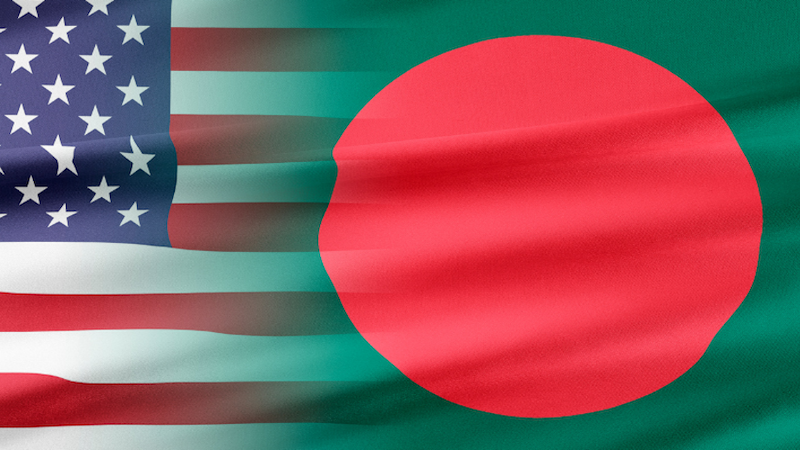
On 14–15 May, the United States (US) Assistant Secretary of State for South and Central Asian Affairs Donald Lu visited Bangladesh, met with government leaders, representatives of the civil society, social media influencers and other Bangladeshis, and stated that Washington is willing to reset, rebuild and strengthen its decades-old partnership with Dhaka. This presents an appropriate context to revisit some positive dynamics of the US–Bangladeshi relations since the independence of the latter in 1971.
Economic Collaboration
During the Bangladeshi War of Independence, the US opposed the Bangladeshi independence movement owing to geopolitical calculations rooted in the Cold War. However, during the war, more than 9 million refugees from the erstwhile East Pakistan took shelter in India, and the Indian government was hard-pressed to accommodate the refugees. The US accorded $8.9 million ($69 million in 2024 value) for the Bengali refugees in India through the United Nations (UN), and thus, it was the foremost in providing financial aid for the refugees.
After the war, the US was quick to adjust to the new reality and emerged as the primary source of external aid for war-ravaged Bangladesh. By March 1973, the US had provided Bangladesh with $318 million in aid, surpassing the Union of Soviet Socialist Republics (USSR) and India, which were the main backers of Bangladesh during the war. In fact, since 1971, the US and the World Bank (where the US has the most voting power) collectively provided the largest amount of foreign aid to Bangladesh.
Also, the US has assisted Bangladesh in implementing health and economic development programs. For instance, the US Peace Corps deployed its personnel to Bangladesh for assisting the country’s health, education, community development and other sectors. Moreover, the US provided the country with food aid under Public Law 480 (PL 480). In 1984, the provision of US food aid to Bangladesh played a crucial role in averting a serious food crisis in the country. Thus, the US has been a crucial source of economic and food aid for Bangladesh for decades.
However, as Bangladesh steadily built up its economy to emerge as the 35th largest economy of the world, the pattern of US–Bangladeshi economic interactions shifted from aid to trade. At present, the US is the largest export market for Bangladeshi products and the largest source of foreign direct investment (FDI) in Bangladesh. In addition, it has surpassed Saudi Arabia as the largest source of remittances for Bangladesh.
Humanitarian Concord
The US has been one of the leading states in providing Bangladesh with humanitarian assistance, particularly during natural disasters. For instance, on 29–30 April 1991, Bangladesh was struck by a devastating cyclone (named Marian), which killed more than 139,000 people and made millions homeless. Following the cyclone, the US undertook a sea-based disaster relief operation, codenamed Operation Sea Angel, to assist the beleaguered country. During the operation, US troops provided Bangladeshi citizens with approximately 4,021.5 tons of relief supplies and 266,000 gallons of purified water, as well as treated some 15,000 Bangladeshis. Similarly, following the cyclone Sidr on 15 November 2007, US troops conducted a similar disaster response operation in Bangladesh, dubbed Operation Sea Angel II.
In addition, during the COVID-19 pandemic, the US was the largest source of COVID-19 vaccines for Bangladesh. In fact, Bangladesh was the largest recipient of US-donated vaccines under the COVAX program. Under this initiative, the country received more than 114 million doses of COVID-19 vaccines free of cost. This helped the country substantially in implementing one of the world’s largest COVID-19 immunization program.
On its part, Bangladesh, with its limited capability, has been steadfast in providing similar kind of support to the US in dealing with humanitarian crises. For instance, the Eastern US was hit by hurricane Katrina, which killed some 1,392 US citizens and caused material damage worth $190 billion. Following the hurricane, Bangladesh provided the US with $1 million in financial aid and offered to send rescuers. Thus, Dhaka and Washington have always closely cooperated with each other in tackling humanitarian crises.
Technological Cooperation
The US has accorded substantial cooperation to Bangladesh in implementing several high-technological endeavours. For instance, following Bangladesh’s signing and ratification of the Nuclear Non-Proliferation Treaty (NPT) in 1979, Washington promised Dhaka cooperation in the development of civilian nuclear facilities. Under this arrangement, the US helped establish the first nuclear research reactor in Dhaka in 1985. Moreover, the Bangabandhu-1, the first Bangladeshi communications and broadcasting satellite, was launched on 12 May 2018 by the US company SpaceX from the John F. Kennedy Space Center in the US state of Florida. Thus, the US has assisted Bangladesh in making strides towards technological advances.
Security Partnership
Since the 1980s, Bangladesh and the US have gradually built up a comprehensive security partnership in numerous areas, including counterterrorism, maritime security, border security, peacekeeping, defense trade, and defense institution-building. The first visit of the Commander of the US Pacific Command (currently, the US Indo-Pacific Command) to Bangladesh in 1985 was an watershed event in this regard. During the Gulf War (1990–1991), Bangladesh participated in the US-led coalition against Iraq and sent a 2,300-strong military contingent to Saudi Arabia and Kuwait. In the ensuing years, 270 Bangladeshi servicemen lost their lives while involved in demining Kuwait. This bolstered the US–Bangladeshi security ties. Since 1992, the two states have regularly held joint military exercises.
In the early 21st century, the US Department of State included Bangladesh in its Anti-terrorism Assistance Program. Bangladesh is one of the top troop-contributing countries (TCCs) to the UN peace operations, and accordingly, the US has provided the country with nearly $44 million since 2005 to enhance its peacekeeping capabilities. The US also provided economic assistance to the Bangladesh Institute of Peace Support Operation Training (BIPSOT), an institution operated by the Bangladesh Armed Forces and aimed at providing standardized training to peacekeepers.
Since 2014, the US has accorded Bangladesh $78.45 million in Foreign Military Financing (FMF) and $14.5 million in International Military Education and Training (IMET) assistance. Moreover, the US has supplied Bangladesh with patrol boats, other patrol vessels, cutters, mine-resistant ambush-protected (MRAP) vehicles, and other military equipment. Furthermore, Dhaka has expressed its willingness to acquire advanced military hardware, including Apache helicopters, from the US.
Meanwhile, Dhaka and Washington have held nine bilateral security dialogues since 2012 in order to further enhance their security partnership. Also, negotiations over the conclusion of the General Security of Military Information Agreement (GSOMIA) between the two countries are at the final phase, and another military cooperation treaty, the Acquisition and Cross-Servicing Agreement (ACSA), is being negotiated. Hence, Dhaka’s security partnership with Washington is growing at a rapid pace.
Envisioning A Cooperative Future
An overview of the history of the US–Bangladeshi relations demonstrates that Dhaka and Washington have always preferred pragmatic cooperation to mutual antagonism in their bilateral ties. The two countries have cooperated with each other in every sector, ranging from economy to technology to security. Thus, Washington’s willingness to bring about a ‘reset’ in its relations with Dhaka is symptomatic of its traditional positive partnership with Bangladesh, and under the current circumstances, the two states are likely to continue their cooperation in the near future.
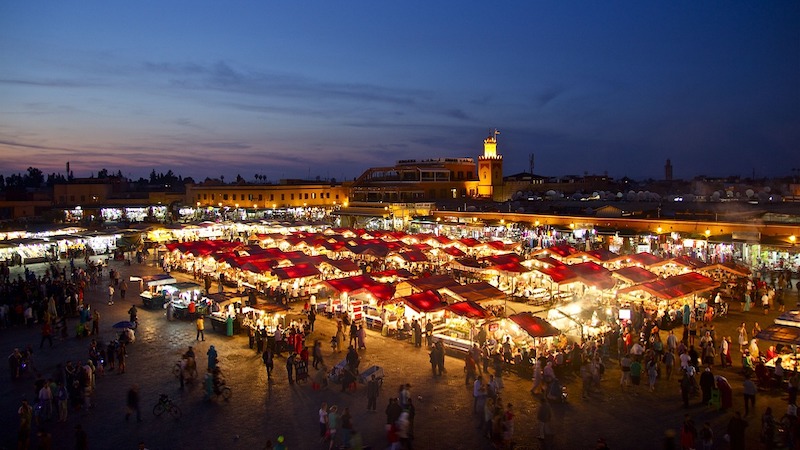
On May 28, 2024, Mr. Nizar Baraka, Morocco’s Minister of Equipment and Water, stood alongside the Saudi Arabian Ambassador in Marrakech to inaugurate the sixth edition of the Construction and Public Works Forum and Exhibition. This event, organized by the National Association of Construction and Public Works in partnership with multiple Moroccan ministries and under the auspices of His Majesty King Mohammed VI, represents more than a mere convergence of industry experts. It embodies the forward-thinking ethos necessary to propel Morocco into a future defined by sustainable development and robust infrastructure.
In his keynote address, Mr. Baraka underscored the forum’s pivotal role as a crucible for the exchange of experiences, expertise, and cutting-edge technologies within the construction and public works sectors. This gathering of minds provides an essential platform for serious discourse on critical themes, such as the national vision for 2030, regional challenges, and the innovative management of water resources amid the pressing reality of climate change.
The timeliness and importance of this meeting cannot be overstated. As Mr. Baraka rightly pointed out, the recommendations emerging from this forum will be instrumental in shaping the roadmap for Morocco’s construction and public works sector. This blueprint is not just about addressing current demands but also about anticipating and preparing for future challenges and opportunities.
One of the most ambitious undertakings highlighted by Mr. Baraka is Morocco’s commitment to hosting major international events, including the 2025 African Cup of Nations and the 2030 FIFA World Cup. These events are not just sporting spectacles; they are catalysts for significant infrastructural and economic development. The collaboration between Morocco and the United Arab Emirates, encapsulated in a comprehensive agreement spanning from 2024 to 2029, further underscores this point. This agreement, marked by a well-defined timeline and a holistic vision, aims to drive investments in construction, renewable energy, green hydrogen, industrial sectors, and education.
However, realizing these grand projects requires more than just ambition. It demands a collective commitment to meet high standards and navigate the complexities inherent in such large-scale endeavors. Mr. Baraka emphasized that success hinges on our collective ability to execute these projects on time, maintain the requisite quality, and ensure all necessary resources are available to keep the works progressing smoothly. This involves a proactive approach to overcoming the various challenges facing the sector.
The early signs are promising. Mr. Baraka revealed that Morocco’s construction and public works sector experienced a significant revival in the first quarter of 2024, with a growth rate of 7.3% compared to the previous year. This resurgence is a testament to the resilience and potential of the sector, bolstered by strategic planning and international cooperation.
In conclusion, the sixth edition of the Construction and Public Works Forum and Exhibition serves as a beacon of what is possible when innovation, collaboration, and strategic vision come together. As Morocco strides forward, it is these principles that will guide its journey towards a future where infrastructure development not only meets present needs but also lays the foundation for sustainable growth and prosperity. The roadmap drawn from this forum’s discussions will be pivotal in navigating this path, ensuring that Morocco remains at the forefront of construction and public works excellence.