
Will the GAY dead Russian soldiers be resurrected too? – Selected Articles https://t.co/rqR0yKIaVK – https://t.co/Z89WRLxJCH
— Michael Novakhov (@mikenov) May 29, 2024
Day: May 29, 2024
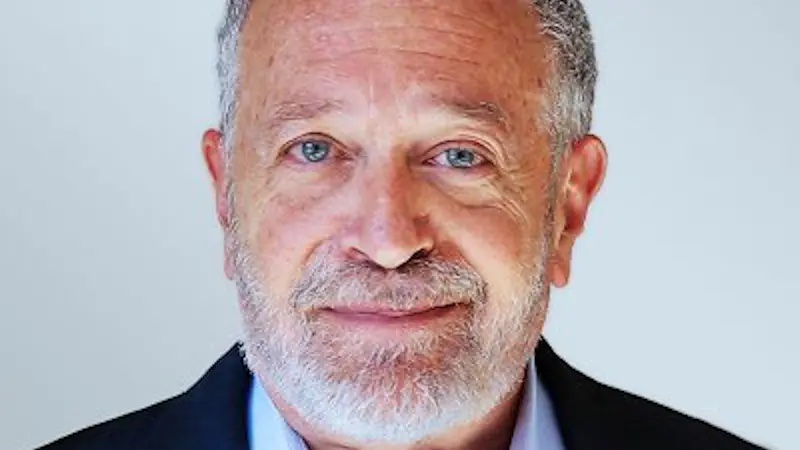
Elon Musk and entrepreneur and investor David Sacks reportedly held a secret billionaire dinner party in Hollywood last month. Its purpose: to defeat Joe Biden and reinstall Donald Trump in the White House. The guest list included Peter Thiel, Rupert Murdoch, Michael Milken, Travis Kalanick, and Steven Mnuchin, Trump’s Treasury secretary.
Meanwhile, Musk is turning up the volume and frequency of his anti-Biden harangues on his X platform.
According to an analysis by the New York Times, Musk has posted about President Biden at least seven times a month, on average, this year. He has criticized Biden on issues ranging from Biden’s age to his policies on heath and immigration, calling Biden “a tragic front for a far left political machine.”
The Times analysis showed that over the same period of time, Musk has posted more than 20 times in favor of Trump, claiming that the criminal cases Trump now faces are the result of media and prosecutorial bias.
This is no small matter. Musk has 184 million followers on X, and because he owns the platform he’s able to manipulate the algorithm to maximize the number of people who see his posts.
No other leader of a social media firm has gone as far as Musk in supporting authoritarian leaders around the world. In addition to Trump, Musk has used his platform in support of India’s Narendra Modi, Argentina’s Javier Milei, and Brazil’s Jair Bolsonaro.
Some of this helps Musk’s business interests. In India, he has secured lower import tariffs for Tesla vehicles. In Brazil, he has opened a major new market for Starlink, SpaceX’s satellite internet service. In Argentina, he has solidified access to lithium, the mineral most crucial to Tesla’s batteries.
Musk has slammed Biden for his decisions on electric vehicle promotion and subsidies, most of which have favored unionized U.S. auto manufacturers. Musk and his Tesla are viciously anti-union.
But something deeper is going on. Musk, Thiel, Murdoch, and their cronies are backing a movement against democracy.
Peter Thiel, the billionaire tech financier, has written, “I no longer believe that freedom and democracy are compatible.”
Hello? If freedom is not compatible with democracy, what is it compatible with?
Thiel donated $15 million to the successful Republican Ohio senatorial campaign of J.D. Vance, who alleged that the 2020 election was stolen and that Biden’s immigration policy meant “more Democrat voters pouring into this country.” (Vance is now high on the list of Trump vice presidential possibilities.)
Thiel also donated at least $10 million to the Arizona Republican primary race of Blake Masters, who also claimed Trump won the 2020 election and admires Lee Kuan Yew, the authoritarian founder of modern Singapore.
Billionaire money is now gushing into the 2024 election. Just 50 families have already injected more than $600 million into the 2024 election cycle, according to a new report from Americans for Tax Fairness. Most of it is going to the Trump Republican Party.
Stephen A. Schwarzman, the billionaire chairman and chief executive of the Blackstone Group — who had called the January 6 attack on the U.S. Capitol an “insurrection” and “an affront to the democratic values we hold dear” — is backing Trump because he believes “our economic, immigration and foreign policies are taking the country in the wrong direction.”
Trump recently solicited a group of top oil executives to raise $1 billion for his campaign, promising that if elected he would “immediately” reverse dozens of environmental rules and green energy policies adopted by President Biden. According to The Washington Post, Trump said this would be a “deal” for them “because of the taxation and regulation they would avoid thanks to him.”
Speaking from the World Economic Forum’s confab last January in Davos, Switzerland, Jamie Dimon — chair and CEO of JPMorgan Chase, the largest and most profitable bank in the United States, and one of the most influential CEOs in the world — heaped praise on Trump’s policies while president. “Take a step back, be honest,” Dimon said. Trump “grew the economy quite well. Tax reform worked.”
Rubbish. Under Trump the economy lost 2.9 million jobs. Even before the pandemic, job growth under Trump was slower than it’s been under Biden.
Most of the benefits of Trump’s tax cut went to big corporations like JPMorgan Chase and wealthy individuals like Dimon, while the costs blew a giant hole in the budget deficit. If not for those Trump tax cuts, along with the Bush tax cuts and their extensions, the ratio of the federal debt to the national economy would now be declining.
Clearly, some of the increasing flow of billionaire money to Trump and his Republican Party is motivated by the prospect of additional tax cuts and regulatory rollbacks under Trump.
But not all. A larger goal of these American oligarchs is to roll back democracy.
When asked if he was becoming more political, Musk admitted (in a podcast in November), “if you consider fighting the woke mind virus, which I consider to be a civilizational threat, to be political, then yes. Woke mind virus is communism rebranded.”
Communism rebranded?
A former generation of wealthy American conservatives backed candidates like Barry Goldwater because they wanted to conserve American institutions.
Musk, Thiel, Murdoch, and other billionaires now backing the anti-democracy movement don’t want to conserve much of anything — at least not anything that occurred after the 1920s, including Social Security, civil rights, and even women’s right to vote. As Thiel wrote:
“The 1920s were the last decade in American history during which one could be genuinely optimistic about politics. Since 1920, the vast increase in welfare beneficiaries and the extension of the franchise to women — two constituencies that are notoriously tough for libertarians — have rendered the notion of ‘capitalist democracy’ into an oxymoron.”
If “capitalist democracy” is becoming an oxymoron, it’s not because of public assistance or because women got the right to vote. It’s because billionaire capitalists like Musk and Thiel are intent on killing democracy by supporting Trump and the neofascists surrounding him.
Not incidentally, the 1920s marked the last gasp of the Gilded Age, when America’s robber barons ripped off so much of the nation’s wealth that the rest of America had to go deep into debt both to maintain their standard of living and to maintain overall demand for the goods and services the nation produced.
When that debt bubble burst in 1929, we got the Great Depression. Benito Mussolini and Adolf Hitler then emerged to create the worst threats to freedom and democracy the modern world had ever witnessed.
If America learned anything from the first Gilded Age and the fascism that grew like a cancer in the 1930s, it should have been that gross inequalities of income and wealth fuel gross inequalities of political power — as Musk, Thiel, and other billionaires are now putting on full display. Inequalities of power in turn generate strongmen who destroy both democracy and freedom.
Under fascist strongmen, no one is safe — not even oligarchs.
If we want to guard what’s left of our freedom, we must meet the anti-democracy movement head on with a bold pro-democracy movement that protects the institutions of self-government from oligarchs like Musk and Thiel and neofascists like Trump.
- This article was published at Robert Reich’s Substack
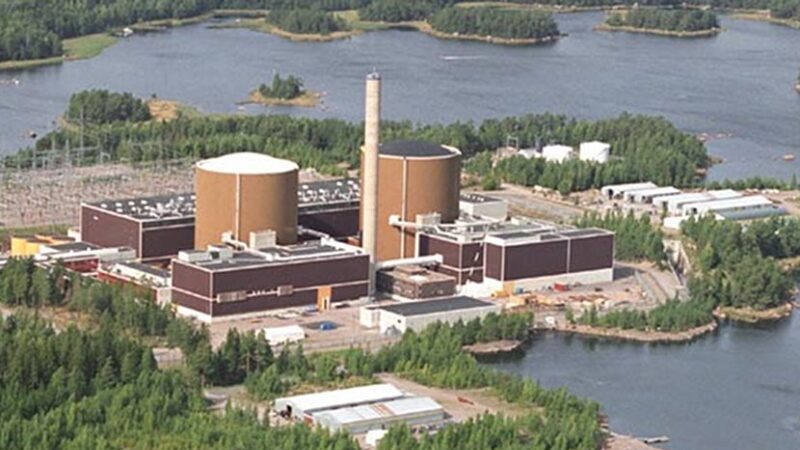
Fortum said Wednesday its Loviisa nuclear power plant’s low-pressure turbines will be modernised. The modernisations, starting in 2026, are part of the lifetime extension-related investments consisting of continuous improvements to ensure reliable electricity production until the end of the plant’s lifetime. The modernisation of the turbines will also increase the total capacity of the plant by approximately 38 megawatts, increasing the output of the power plant during its lifetime by approximately 7 terawatt-hours.
In February 2023, the Finnish Government granted a new operating license for the power plant until 2050. As a result, the Finnish society will receive stable, carbon-free and secure supply of electricity from Loviisa well into the future. Over the course of the new licence period, the power plant is expected to generate up to 177 terawatt-hours (earlier: 170) of emission-free electricity.
”Extending the lifetime of the power plant is a major investment with a positive impact – both economically and in terms of employment. Modernising the low-pressure turbines is our first significant investment in preparation for the lifetime extension. Our aim is for the power plant to operate during the new operating licence period just as stably, reliably and safely as it has so far,” says Sasu Valkamo, Senior Vice President of Loviisa power plant.
It is estimated that the investments related to the lifetime extension will amount to approximately one billion euros by 2050. Over the past five years, Fortum has invested approximately 200 million euros in refurbishing the Loviisa power plant.
Doosan Škoda Power selected as the supplier
Fortum has signed an agreement for the turbine modernisation with Doosan Škoda Power. The modernisation will be carried out in conjunction with the normal annual outages.
”Doosan Škoda Power is a seasoned turbine supplier, and we have good experiences working with them. In our previous modernisation project, Doosan Škoda Power also supplied us with high-pressure turbines,” Valkamo notes.
”Fortum is our long-term customer and we are very proud to be part of this new important modernisation project at the Loviisa nuclear power plant. Nuclear power is a strategic segment for us, and this contract is further confirmation that we are on the right track,” says Radek Trněný, Head of Sales Nuclear at Doosan Škoda Power.
In the turbine project, eight low-pressure turbine housings and their internal parts will be renewed. The project will significantly improve the efficiency of the turbine plant’s electricity production without increasing the thermal output of the reactor. The modernisation is targeting only the turbines, so it won’t impact the reactor plant or nuclear safety.
The total electricity production capacity of the units at the Loviisa power plant is currently 1,014 megawatts.
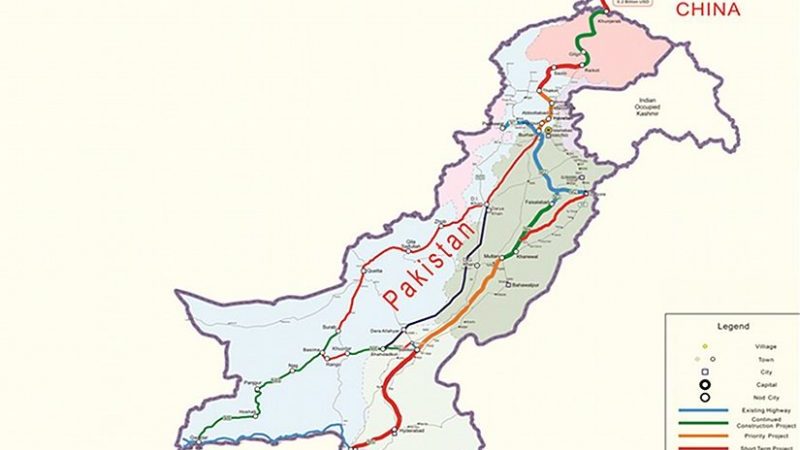
Beijing and Islamabad celebrated the tenth anniversary of the ambitious USD 62 billion China-Pakistan Economic Corridor [CPEC] last year and complimented each other for the spectacular progress this project has made. While this project has promoted infrastructural development in the power generation and surface communication sectors, it most certainly hasn’t measured up to Beijing’s oft-repeated claim of being a ‘game changer’ for Pakistan.
Au contraire, CPEC has been viscously plagued by time overruns resulting in burgeoning budgetary escalations. To add to these woes, inexplicable opaqueness in the terms and conditions of contracts as well as interest rates on loans extended to Islamabad by Beijing makes an accurate cost-benefit analysis of this project extremely difficult. Nevertheless, information available in the public domain does suggest that things may not be as hunky -dory as being portrayed by both Beijing and Islamabad.
On paper, CPEC is a brilliantly conceived initiative incorporating “early harvest” projects for speedy provision of basic facilities to the people of Pakistan and simultaneously generating income for the government into three phases [short, medium and long-term]. While the short-term phase [2015-2022] focussed on infrastructure, energy and port development projects, creation of 33 special economic zones [SEZs] were planned to be executed in the medium phase. The third phase has yet to commence formally.
While several independent power projects [IPPs] being operated by Chinese companies have come up in the first phase, electricity is still not available to many living in remote areas due to inadequate power distribution infrastructure. To make matters worse, instead of generating revenue for the government, CPEC’s power generation project has created a ‘circular debt’ in Pakistan due to unpaid government subsidies and this leads to debt accumulation in power distribution companies.
Quoting data released by Pakistan’s Power Division of the Ministry of Energy, Dawn, has disclosed the total circular debt of Pakistan [as on March 2024] was a whopping Rs 3,000 billion. There have been several allegations of over invoicing by IPPs resulting in exorbitant per unit cost of electricity as well as huge transmission losses. Furthermore, thermal power plants created as part of CEPC utilise imported coal and the regular requirement of foreign exchange to procure the same further depletes Pakistan’s already woefully scarce foreign exchange reserves.
Port Qasim Electric Power Company Ltd, an ‘early harvest’ IPP owned by China’s Sinohydro Resources and Qatar’s Al Mirqab Capital Ltd which runs a 1,320 megawatts power plant using imported coal. The fact that in May last year, this IPP served a payment default notice of USD 263.5 million on Pakistan’s Central Power Purchasing Agency, illustrates how CPEC is slowly turning out to be a liability of sorts. It also indicates that the patience of Pakistan’s ‘Iron brother’ is fast running out and this isn’t the first such incident.
In September 2021, while presiding over Pakistan’s Senate Standing Committee on Planning and Development, its chairman Saleem Mandviwalla disclosed that the “Chinese ambassador has complained to me that you have destroyed CPEC and no work was done in the past three years.” [Emphasis added]. Beijing has also publicly expressed its annoyance on several occasions as regards the Pakistan army’s dismal failure to prevent attacks by Baloch separatists on its nationals working on CPEC projects.
Another issue riling Pakistanis is that the promise of employment opportunities on a large scale has turned out to be a damp squib. While some data has been furnished by Beijing and Islamabad, but in absence of any independent verification, the same can’t be relied upon as there’s a wide disparity in the official data. While Chinese official state media estimates that about 1,55,000 Pakistanis are working on various CPEC projects, Pakistan’s erstwhile minister for planning, development and reforms Ahsan Iqbal estimated that CPEC has created more than 2,30,000 jobs!
Excessive restrictions on movement and frequent military operations in Balochistan, purportedly for ensuring security of CPEC projects and Chinese workers, result in indiscriminate arrest of innocents and enforced disappearances on mere suspicion cause untold miseries to locals. In addition, with Chinese fishing mafia using sophisticated trawlers in the area, the traditional fishermen of Gwadar have been deprived of their traditional vocation, while security fencing in this area has literally made Gwadar ‘out of bounds’ to locals.
Institutional repression of Baloch people has not only led to an escalation in attacks on CPEC assets and Chinese workers but also inspired the immensely popular ‘Haq Do Tehreek Balochistan’ [give us our rights movement of Balochistan] non-political mass public campaign. The fact that Baloch women who traditionally avoided participation in public rallies and stayed indoors came out in great numbers to protest against the Pakistan army’s highhandedness indicates the gravity of the prevailing situation. Speaking in the Senate, PML-N’s Senator Kulsoom Parveen lamented that “the people of Balochistan have not gained anything from the [CPEC] project” and aptly echoing their disillusionment by adding that “Maybe, the people of Balochistan will only be given jobs to fix punctured tires”!
While CPEC has undoubtedly brought about development, the costing of this mammoth project is one of the major factors responsible for pushing Pakistan into the inextricable morass of financial instability. So, the question arises is- whose interests does the CPEC primarily serve? A quick project intention internet search of CPEC offers two answers.
Popular Indian educational technology company BYJU’S opines that “The project intention of CPEC is to rapidly upgrade Pakistan’s important infrastructure and strengthen its economy by the construction of energy projects, special economic zones, ports, and transportation networks.” [Emphasis added]. However, even after more than a decade, neither has CPEC resulted in a rapid infrastructure upgrade, nor has it strengthened Pakistan’s economy.
On the other hand, Wikipedia maintains that “This sea-and-land-based corridor is aimed to secure and reduce the passage for China’s energy importsfrom the Middle East by avoiding the existing route from the Straits of Malacca between Malaysia and Indonesia which, in case of war could be blockaded, and thus hamper the Chinese energy-dependent economic avenues.” [Emphasis added]. Being a more practical assessment, this reasoning is certainly more convincing.
Accordingly, while it would be incorrect to consider CPEC a white elephant for Pakistan, it would also be equally naïve to believe that the driving force behind this extremely cost-intensive project is Beijing’s love for its ‘iron brother’ Pakistan. The harsh reality is that CPEC is primarily meant to serve Beijing’s commercial interests and any benefits from it that may come Pakistan’s way are just incidental.
Because had CPEC indeed been truly Pakistan centric, then why [in the words of the Chinese ambassador], “no work [on CPEC] was done in the past three years” by Islamabad? And if this project was not primarily meant to serve Beijing’s interests, then why did the Chinese ambassador get so agitated and complain to the Chairman of Pakistan’s Senate Standing Committee on Planning and Development that “you have destroyed CPEC”?
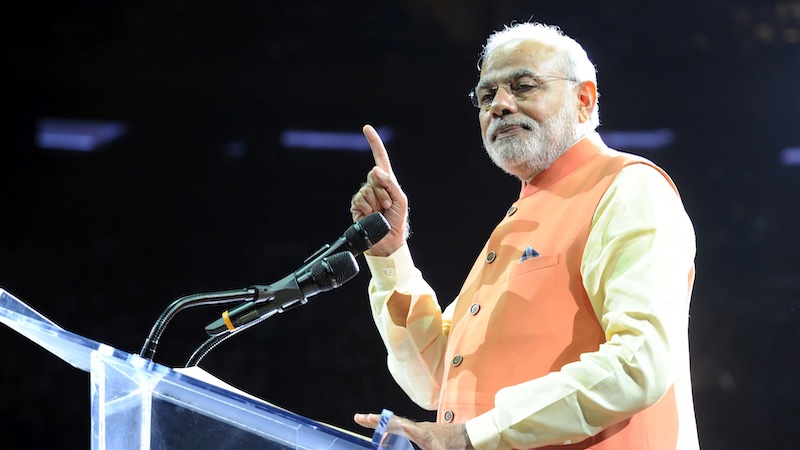
Now that the curtain has almost been drawn on India’s parliamentary election, the toxic speeches delivered by leaders of political parties have virtually disturbed India’s social and political climate. In any case, this appear to be the scenario in every democratic country including USA and UK on the eve of the elections.
Around 28 opposition parties in India which call themselves as INDI Alliance have not coordinated their efforts with firm policy programmes to oppose Mr. Modi and a few of them have been fighting against each other in a few state elections. Some unimplementable promises like providing Rs.1 lakh annually to the poor and controversial promise of providing reservation for muslim in government jobs have been made by a few opposition parties.
However, the main criticism against Modi government by the opposition parties is centred around unemployment scenario, the so called threat of Modi government tampering with the provisions of constitution of India, motivated actions against some opposition leaders based on corruption allegations, and increasing disparity in income between various sections of the people
Amidst the heated debates and noise made during the election campaign, discerning observers cannot miss the fact that Mr. Modi’s governance has been largely on the right track during the last ten years and his continued leadership would result in a great leap forward for India.
Exaggerated unemployment scenario
The charge of the opposition parties about the intensity of unemployment level in India appears to be exaggerated.
The fact is that unemployment level exist in India to some extent just as in several other countries and it is debatable question as to whether this is a problem of such intensity as made out by the opposition parties.
The ground reality is that there is more of what is termed as under employment rather than unemployment in India. Millions of people are sel- employed. In many cases, it is seen that those who think that they are under employed and sometime self employed people also seek better job avenues and register their names with the employment exchange. Number of such people desire to get government jobs, in view of liberal working conditions and good salary and perks. Such people also register their names in the employment exchange.
There are several job openings in India at various levels which are not being filled due to lack of skill at adequate level amongst the job seekers. It is a common complaint in India by employers and even in households that it is difficult to get skilled people in adequate number to attend to various jobs.
To tackle this issue, Modi government has organised several skill development programme in the last few years. In the 2024 budget speech, Government of India claimed that 14 million individuals were trained under the Skill India Mission, which included upskilling and reskilling 5.4 million. People.
Obviously, Modi government has been doing whatever is possible to reduce unemployment in India in the given circumstances. Several infrastructure projects that are underway have also considerably created direct and indirect job avenues.
Obviously, the opposition parties have no firm figures on what they term as grim unemployment scenario and they seem to be banking on some second hand study made by international agencies , published just as the election campaign were in progress.
In any case, there is no particular unrest amongst the people about the so-called unemployment scenario.
Disparity in national income
It is said that inequality in income in India is at an all time high. It is further said that one percent of India’s population corners 22% of national income and owns 40% of nation’s assets. The income share of top one percent is among the highest in the world.
While the above figures may not be accurate, the fact is that number of billionaires in India have gone up in recent years.
At the same time, it has to be noted that the extreme poverty level in India has almost been eliminated now. Income of many persons who belong to below poverty line earlier have now improved and perhaps, they are in the lower income group category. In the last ten years, Modi government has implemented several socio economic welfare schemes and reform measures that are providing considerable relief to the people in the lower income group.
The essential requirement for economic growth and social betterment in any country is growth in wealth generation and GDP growth. Wealth generation can happen only by more investment, adoption of better technology in industrial and commercial projects and augmentation of production and services.
The initiatives of individuals and encouragement for private enterprises are the essential need to achieve a state of wealth generation climate. This means that aspirations of individuals to earn more income and acquire wealth has to be recognised and encouraged, so that the initiative of individuals will lead to overall national development and growth. History has repeatedly proved that suppressing the individual ownership and initiatives to prevent accumulation of wealth by individuals , has resulted in overall setback to the economic growth. This has been seen in several communist countries which ultimately resulted in the collapse of communism in several countries including Russia.
In the so called communist country China, large encouragement of private sector and investment by multinational companies have enabled China to achieve spectacular growth. In communist China too, there are several billionaires today and their numbers are increasing in tune with China’s economic growth.
It is very impressive to speak about one percent population holding huge national income but the fact is that every sector of economy has been growing in India during the last ten years of Modi government. When the rich become richer, they inevitably invest in several projects, which spur development, promote employment opportunity , lead to technology growth and contribute to overall growth in national income. The rich industrialists do not keep their money in the locker but invest ,as seen in the case of several industrial houses such as Adani group, Ambani group. The contribution of such industrial grous for national growth should not be belittled.
The disparity in income is a non issue and highlighting this issue amount to talk in vacuum.
Overall scenario
One of the promises made by Mr. Modi before and at present is that he would root out corruption in India. Several corrupt businessmen and politicians have been raided, exposed and brought before the court. The fact is that while the investigating agencies find out the corrupt dealings, the ultimate punishment for the corrupt people are delivered by judiciary and not by Modi government.
The allegations that Modi government would tamper with the constitution is absolutely condemnable, as Mr. Modi has not done such things in the last ten years.
The ultimate judges in India are the people and who exercised their franchise in the massive election process in India. When majority of people would vote for Modi government, it obviously would mean that Mr. Modi government is on the right track
 Archbishop Bagrat Galstanyan addresses supporters of the “Tavush for the Homeland” movement at the Sardarabad memorial complex (Photo: Hoory Minoyan, May 28, 2024)
Ever since Archbishop Bagrat Galstanyan with his thousands of followers started marching towards Yerevan, many wondered what would happen on May 9 once they reached Republic Square where Prime Minister Nikol Pashinyan’s offices are located.
After arriving in Yerevan, Srpazan (Archbishop) Bagrat gave Pashinyan one hour to resign. When the hour was over and Pashinyan did not resign, Srpazan announced that there would be acts of civil disobedience throughout the country beginning the next day. He urged his followers to act peacefully and not to commit any acts of violence.
Pashinyan was hoping that the number of protesters would dwindle over time and the movement would fizzle out. The regime did everything in its power to vilify and defame Srpazan and the protesters. Government propagandists announced that there were merely around 20,000 protesters in the Republic Square on May 9, whereas most observers estimated the crowd to be several times larger. After misleading the Armenian public for six years with thousands of lies, Pashinyan continued his deceptive practices by claiming without any evidence that the protesters are Kremlin’s agents who were paid money to participate in these protests. Government leaders ridiculed not only Srpazan, but also the Armenian church, an institution that has shepherded the nation ever since 301 AD, particularly during the absence of an Armenian state.
To the disappointment of the prime minister’s diminishing number of supporters, as his rating has gone down from 80-percent six years ago to eight-percent now, Srpazan held a second rally in Republic Square with tens of thousands of followers in attendance. Despite the brutal actions of Pashinyan’s police, who viciously attacked the peaceful protesters, the movement grew stronger rather than fizzling out. During the past week, Srpazan held separate meetings with groups of lawyers, doctors, retired military officers, artists and dozens of opposition leaders.
Srpazan proved the falsehood of Pashinyan followers’ repeated mantra that no one else can replace the prime minister. Srpazan succeeded in uniting the various opposition groups for the first time under his leadership. Large segments of the public, livid at Pashinyan’s defeatist concessions to Azerbaijan, responded enthusiastically to Srpazan’s peaceful but urgent message for change.
Finally, Srpazan’s long-awaited big rally took place on May 26, during which several important announcements were made. The crowd was told that Srpazan would temporarily replace Pashinyan after which a coalition government would be formed, followed by parliamentary elections that would choose a new prime minister. Even though the Constitution requires that the prime minister be exclusively a citizen of Armenia for the preceding four years, Srpazan’s followers believe that his dual citizenship of Armenia and Canada would not prevent him from temporarily acting as prime minister. Srpazan made the commitment that he would be guided exclusively by legal requirements. Ironically, Pashinyan’s regime, which has violated just about every existing law, is demanding that the protesters comply with the laws of the country.
During the May 26 rally, Srpazan also announced that after consulting with other high-ranking clergymen and Catholicos Karekin II, it was decided that he would freeze his 30-year-long spiritual service in order not to combine political activities with his religious position.
Srpazan is attempting to topple Pashinyan the same way the latter toppled Prime Minister Serzh Sargsyan. Pashinyan and his followers violated dozens of laws to come to power, blocking the streets, the parliament building and the courthouse and smashing the locked doors of the Armenian radio station. However, Pashinyan thinks that he is the only one who can get away with breaking the law. Amazingly, he even boastfully proclaimed: “Is there a judge in Armenia who cannot do what the prime minister says?” If anyone else does what he did, his barbaric police are ordered, as he himself announced during the parliamentary campaign in 2021 while holding a hammer in his hand, to smash the heads of his Armenian opponents, even though he falsely claims to be a democrat. Ironically, Pashinyan never uses such vile language against the real enemies of Armenia — Azerbaijan and Turkey — whose leaders make the most offensive comments about Armenia.
At the end of the mass rally in the Republic Square on May 26, Srpazan marched with his followers to the prime minister’s mansion and demanded that he meet with them and resign. However, it turned out that Pashinyan was not at home but was visiting the flooded areas of northern Armenia.
Srpazan then led the large crowd back to the Republic Square, where the rally had started several hours earlier. He urged his followers to engage in acts of civil disobedience throughout the country to pressure Pashinyan to resign.
This is Armenia’s last chance to save the country from Pashinyan, a defeated and incompetent leader, who is willing to follow Aliyev and Azerbaijan’s orders and make illegal and endless one-sided concessions, until the total loss of Armenia — after the loss of Artsakh!
Author information

Harut Sassounian
California Courier Editor
Harut Sassounian is the publisher of The California Courier, a weekly newspaper based in Glendale, Calif. He is the president of the Armenia Artsakh Fund, a non-profit organization that has donated to Armenia and Artsakh one billion dollars of humanitarian aid, mostly medicines, since 1989 (including its predecessor, the United Armenian Fund). He has been decorated by the presidents of Armenia and Artsakh and the heads of the Armenian Apostolic and Catholic churches. He is also the recipient of the Ellis Island Medal of Honor.
|
The post Rather than fizzling out, the movement to replace Pashinyan is gaining strength appeared first on The Armenian Weekly.
The European Union has urged Azerbaijan to release all individuals imprisoned for exercising their fundamental rights.
In a statement, the EU also called on the Azerbaijani government to ensure prisoners have dignified and safe conditions, including full access to healthcare and independent legal services.
“On May 25, Azerbaijani President Ilham Aliyev signed a decree pardoning 154 convicts. Unlike previous years, this year’s decree did not include individuals imprisoned for exercising their fundamental rights,” the EU’s statement read.
The EU has noted a concerning rise in arrests of independent journalists, human rights defenders, and political activists on politically motivated charges in Azerbaijan. Independent media outlets such as “AbzasMedia,” “Toplum TV,” “Kanal 11,” and “Kanal 13,” as well as political movements like the III Republican Platform, labor rights groups, and organizations such as the Institute of Democratic Initiatives, have been targeted.
“The prison terms of many have been repeatedly extended. We are particularly concerned about the health conditions of Gubad Ibadoglu and Alasgar Mammadli. We again urge Azerbaijani authorities to lift the travel ban on Mr. Ibadoglu so he can receive urgent medical treatment.”
The statement also referenced the upcoming UN Global Conference on Climate Change, which Azerbaijan will host in November. The EU emphasized the importance of civil society participation in such events:
“COP29 is an opportunity for Azerbaijan to affirm its commitment to its international obligations and to create conditions for a free and independent civil society. This aligns with Azerbaijan’s commitments as a member of the Eastern Partnership, as reiterated in the Declaration of the Eastern Partnership Summit in December 2021.”
The European Union expressed its commitment to ongoing dialogue with Azerbaijan on key cooperation areas, including human rights and the rule of law, for the benefit of all people in Azerbaijan.
On May 25, President Ilham Aliyev signed a decree pardoning 154 convicted individuals, including 63 who were released from the unserved portions of their sentences. The list did not include any political prisoners.
The post EU appeals for release of Azerbaijani journalists and activists appeared first on MEYDAN.TV.