
Iran may receive a virtually intact American MQ-9 Reaper drone through Yemen’s Houthis Army Recognition
Day: May 29, 2024
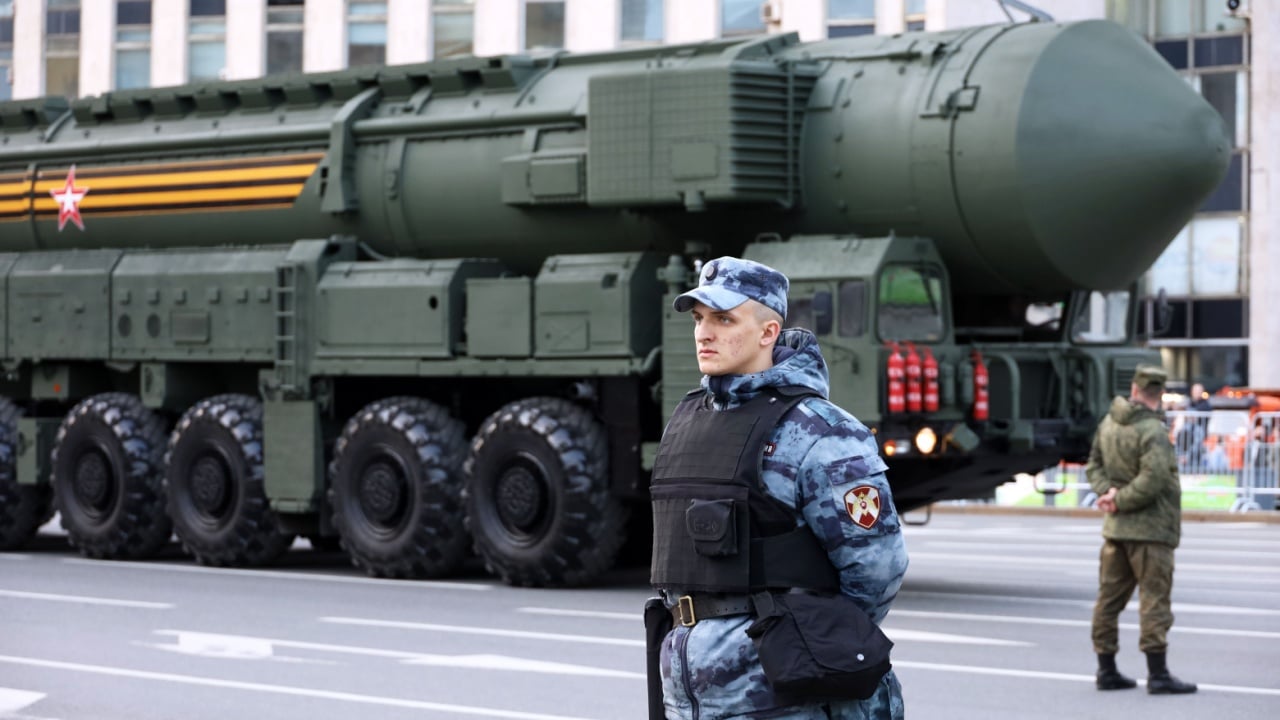
In response to what he termed “threats” from the West, Russian president Vladimir Putin ordered into effect rehearsals for the deployment of tactical nuclear weapons on May 6. According to the Russian defense ministry, during the exercises, “a set of measures will be carried out to practice the issues of preparation and use of non-strategic nuclear weapons.” The same day, Russia also summoned the British ambassador to the Russian Foreign Ministry, warning that Ukrainian strikes on Russian territory with British-supplied weapons could result in retaliatory attacks on British targets in Ukraine or elsewhere. The Russian so-called snap exercises were scheduled to take place in the Southern Military District headquarters in Rostov-on-Don, which borders Ukraine.
Russian diplomatic exertions and military maneuvers have also been exacerbated by French president Emmanuel Macron, who has said more than once that he does not exclude the option of sending French troops to Ukraine. Some sources have reported that French Foreign Legionnaires have already been deployed there, though the French government has denied this. It would be safe to assume that other North Atlantic Treaty Organization (NATO) countries have also deployed operatives of various sorts in Ukraine or in neighboring countries, but not military forces in publicly acknowledged roles.
In addition, Congressman Hakeem Jeffries (D-NY), Democratic Minority Leader in the U.S. House of Representatives, stated in an interview with CBS News, “We can’t let Ukraine fall because if it does, then there’s a significant likelihood that America will have to get into the conflict—not simply with our money, but with our servicewomen and our servicemen.” With regard to comments made by Macron and by British foreign secretary David Cameron, former Russian president and deputy head of Russia’s security council Dmitri Medvedev warned of a possible “global catastrophe” if Western escalation continued. On the other hand, a spokesman for the Military Intelligence Agency of Ukraine commented on national television: “Nuclear blackmail is a usual practice of Putin’s regime; it does not constitute major news.” Nuclear arms control expert Pavel Podvig assessed that the Russian nuclear drills are “of course, a signal,” and urged the international community to avoid “getting sucked into this.” According to Podvig, the correct response is to “double down on ‘nuclear threats are inadmissible’ and rally everyone around that.”
Non-Strategic Nuclear Weapons
Russia’s non-strategic or tactical nuclear weapons are distinguished from their strategic nuclear weapons by their respective missions, assigned launchers, and destructive power. Strategic nuclear weapons are assigned to U.S. and Russian land-based intercontinental ballistic missiles (ICBMs), submarine-launched ballistic missiles (SLBMs), or heavy bombers of intercontinental or transoceanic range. Tactical nuclear weapons are designed for battlefield use over shorter ranges and have less destructive power compared to strategic weapons. In Russia’s case, five to fifty-kiloton tactical nuclear warheads can be mounted on 9M723-1 ballistic missiles or 9M728 cruise missiles. Warheads of similar yield can also be assigned to the air-launched Kh-47M2 Kinzhal ballistic missiles and the Kh-32 cruise missiles carried by Russian bombers. Tactical nuclear warheads with yields of two to two-and-a-half kilotons can also be delivered by a number of artillery systems. Experts have estimated the total number of Russian non-strategic or tactical nuclear weapons to be approximately 1,558. Still, estimates are complicated by the fact that many launchers are capable of firing both conventional and nuclear-armed weapons.
The assumption that tactical nuclear weapons are usable on the modern battlefield has been contested since the early days of the Cold War. U.S. tactical nuclear weapons were deployed in Europe during the Cold War due to the assumed superiority of Soviet conventional forces located in Eastern Europe compared to those available to NATO. Even then, it was not entirely clear whether these NATO tactical nuclear weapons would be seen as tripwires that could automatically escalate a conventional war into Armageddon or as firebreaks between limited and total nuclear war.
Since the end of the Cold War, the situation with respect to conventional military power has reversed. NATO now holds the high cards with respect to capabilities for technologically advanced, high-end conventional warfare, and Russia’s tactical nukes are considered to be compensation for its inferiority in conventional forces. The United States currently deploys roughly 100 air-delivered nuclear weapons in five NATO member states: Belgium, Germany, Italy, the Netherlands, and Turkey. In addition, the United Kingdom and France have their own independent nuclear retaliatory forces deployed on various platforms. Nuclear release authority for U.S. weapons deployed abroad would presumably have to come from the American president after having consulted with NATO allies.
U.S. non-strategic nuclear weapons deployed in Europe are deterrents until one moves close to the immediate threshold of a decision by Moscow for nuclear first use, at which point those weapons also become potential hostages. Russian intelligence will be on the lookout for telltale signs that NATO decided to raise its alert levels and initiate preparatory moves to upload munitions from storage sites onto delivery systems. Assuming that NATO can do so in a timely and coordinated manner, Russia will be under pressure to initiate strike plans for preemption against assumed NATO plans to do the same.
Russia will know that it can destabilize, if not fully destroy, NATO’s tactical nuclear deterrent by taking out the six air bases with conventional weapons, presumably long-range missiles or aircraft. Russia can also strike military headquarters, as well as other targets in NATO-Europe, with conventional long-range precision fires and with a pre-established array of special operations for sabotage and destruction that have been prepared and continuously rehearsed since the Cold War era. What this means is that, in the middle of a crisis in which nuclear first use is a possibility but not a certainty, Russia might gain significant tactical advantages from the military threat or execution of conventional preemption against vital NATO forces and infrastructure supported by a capability for nuclear first use as a tool for political coercion.
Would this recipe for pre-nuclear deterrence by Russia, consisting of a credible threat of conventional preemption supported by a capability for nuclear first use, work under the circumstances of highly alerted NATO and Russian forces and tightly wound political leadership? No one can say for sure: outcomes in war and crisis management are dependent upon the particular circumstances of the moment. Some might argue that NATO, with its overall conventional forces superior to those of Russia, could execute the preceding recipe to its advantage. But that argument falls flat due to NATO’s deficiencies relative to Russia in the numbers of available tactical nuclear weapons based in theater for war in Europe. How significant is this gap for deterrence or defense, if need be? Some argue that Russia’s advantage in theater nuclear forces gives them a more convincing deterrent because flexible options for tactical nuclear first use are more believable than the threat of jumping directly from a conventional war to a strategic nuclear first strike. According to the Final Report of the Congressional Commission on the Strategic Posture of the United States:
Russian strategy and doctrine as written envisions limited first use of theater nuclear weapons to, inter alia, coerce war termination on terms acceptable to Russia, and larger scale use of theater nuclear forces to defeat NATO conventional forces if Russia is decisively losing a war with NATO. Russian strategy and doctrine rely on strategic nuclear forces to deter a large-scale U.S. nuclear response against the Russian homeland while Russia can escalate to limited nuclear war in theater if it chooses.
On the other hand, the deterrent effect of tactical nuclear weapons lies, at least partly, in the possible expansion of tactical into strategic nuclear warfare. The assumption that so-called theater nuclear warfare in Europe would take place in a sealed compartment, against further escalation into mutually assured destruction, is hopeful but challenging in the face of much military history. Obviously aware of this, Biden administration officials in 2022 and 2023 messaged Russia to the effect that, in case of any Russian nuclear first use against Ukraine, the United States and its allies “would for the first time engage Russian forces in Ukraine directly, targeting those forces with a devastating campaign of air strikes and missiles.” The presumption was that this “devastating” response was to be accomplished with conventional forces, although nuclear responses were not necessarily precluded. In addition to American allies, the United States also enlisted nontraditional partners and competing great powers (e.g., India and China) to come out with declaratory policies against nuclear first use by Russia.
Going Forward
Instead of navigating the slippery slope of fightable and winnable limited nuclear wars, the United States and Russia (and perhaps eventually China) could attempt to re-energize a serious nuclear arms control dialogue. Russia has stated that it has temporarily suspended its participation in the discussions about New START and possible successor regimes. But Russia has stopped short of formal withdrawal from the treaty and has decided, for the time being, to abide by agreed-upon New START limits on the numbers of operationally deployed warheads and launchers for strategic nuclear forces.
In response to what he termed “threats” from the West, Russian president Vladimir Putin ordered into effect rehearsals for the deployment of tactical nuclear weapons on May 6. According to the Russian defense ministry, during the exercises, “a set of measures will be carried out to practice the issues of preparation and use of non-strategic nuclear weapons.” The same day, Russia also summoned the British ambassador to the Russian Foreign Ministry, warning that Ukrainian strikes on Russian territory with British-supplied weapons could result in retaliatory attacks on British targets in Ukraine or elsewhere. The Russian so-called snap exercises were scheduled to take place in the Southern Military District headquarters in Rostov-on-Don, which borders Ukraine.
Russian diplomatic exertions and military maneuvers have also been exacerbated by French president Emmanuel Macron, who has said more than once that he does not exclude the option of sending French troops to Ukraine. Some sources have reported that French Foreign Legionnaires have already been deployed there, though the French government has denied this. It would be safe to assume that other North Atlantic Treaty Organization (NATO) countries have also deployed operatives of various sorts in Ukraine or in neighboring countries, but not military forces in publicly acknowledged roles.
In addition, Congressman Hakeem Jeffries (D-NY), Democratic Minority Leader in the U.S. House of Representatives, stated in an interview with CBS News, “We can’t let Ukraine fall because if it does, then there’s a significant likelihood that America will have to get into the conflict—not simply with our money, but with our servicewomen and our servicemen.” With regard to comments made by Macron and by British foreign secretary David Cameron, former Russian president and deputy head of Russia’s security council Dmitri Medvedev warned of a possible “global catastrophe” if Western escalation continued. On the other hand, a spokesman for the Military Intelligence Agency of Ukraine commented on national television: “Nuclear blackmail is a usual practice of Putin’s regime; it does not constitute major news.” Nuclear arms control expert Pavel Podvig assessed that the Russian nuclear drills are “of course, a signal,” and urged the international community to avoid “getting sucked into this.” According to Podvig, the correct response is to “double down on ‘nuclear threats are inadmissible’ and rally everyone around that.”
Non-Strategic Nuclear Weapons
Russia’s non-strategic or tactical nuclear weapons are distinguished from their strategic nuclear weapons by their respective missions, assigned launchers, and destructive power. Strategic nuclear weapons are assigned to U.S. and Russian land-based intercontinental ballistic missiles (ICBMs), submarine-launched ballistic missiles (SLBMs), or heavy bombers of intercontinental or transoceanic range. Tactical nuclear weapons are designed for battlefield use over shorter ranges and have less destructive power compared to strategic weapons. In Russia’s case, five to fifty-kiloton tactical nuclear warheads can be mounted on 9M723-1 ballistic missiles or 9M728 cruise missiles. Warheads of similar yield can also be assigned to the air-launched Kh-47M2 Kinzhal ballistic missiles and the Kh-32 cruise missiles carried by Russian bombers. Tactical nuclear warheads with yields of two to two-and-a-half kilotons can also be delivered by a number of artillery systems. Experts have estimated the total number of Russian non-strategic or tactical nuclear weapons to be approximately 1,558. Still, estimates are complicated by the fact that many launchers are capable of firing both conventional and nuclear-armed weapons.
The assumption that tactical nuclear weapons are usable on the modern battlefield has been contested since the early days of the Cold War. U.S. tactical nuclear weapons were deployed in Europe during the Cold War due to the assumed superiority of Soviet conventional forces located in Eastern Europe compared to those available to NATO. Even then, it was not entirely clear whether these NATO tactical nuclear weapons would be seen as tripwires that could automatically escalate a conventional war into Armageddon or as firebreaks between limited and total nuclear war.
Since the end of the Cold War, the situation with respect to conventional military power has reversed. NATO now holds the high cards with respect to capabilities for technologically advanced, high-end conventional warfare, and Russia’s tactical nukes are considered to be compensation for its inferiority in conventional forces. The United States currently deploys roughly 100 air-delivered nuclear weapons in five NATO member states: Belgium, Germany, Italy, the Netherlands, and Turkey. In addition, the United Kingdom and France have their own independent nuclear retaliatory forces deployed on various platforms. Nuclear release authority for U.S. weapons deployed abroad would presumably have to come from the American president after having consulted with NATO allies.
U.S. non-strategic nuclear weapons deployed in Europe are deterrents until one moves close to the immediate threshold of a decision by Moscow for nuclear first use, at which point those weapons also become potential hostages. Russian intelligence will be on the lookout for telltale signs that NATO decided to raise its alert levels and initiate preparatory moves to upload munitions from storage sites onto delivery systems. Assuming that NATO can do so in a timely and coordinated manner, Russia will be under pressure to initiate strike plans for preemption against assumed NATO plans to do the same.
Russia will know that it can destabilize, if not fully destroy, NATO’s tactical nuclear deterrent by taking out the six air bases with conventional weapons, presumably long-range missiles or aircraft. Russia can also strike military headquarters, as well as other targets in NATO-Europe, with conventional long-range precision fires and with a pre-established array of special operations for sabotage and destruction that have been prepared and continuously rehearsed since the Cold War era. What this means is that, in the middle of a crisis in which nuclear first use is a possibility but not a certainty, Russia might gain significant tactical advantages from the military threat or execution of conventional preemption against vital NATO forces and infrastructure supported by a capability for nuclear first use as a tool for political coercion.
Would this recipe for pre-nuclear deterrence by Russia, consisting of a credible threat of conventional preemption supported by a capability for nuclear first use, work under the circumstances of highly alerted NATO and Russian forces and tightly wound political leadership? No one can say for sure: outcomes in war and crisis management are dependent upon the particular circumstances of the moment. Some might argue that NATO, with its overall conventional forces superior to those of Russia, could execute the preceding recipe to its advantage. But that argument falls flat due to NATO’s deficiencies relative to Russia in the numbers of available tactical nuclear weapons based in theater for war in Europe. How significant is this gap for deterrence or defense, if need be? Some argue that Russia’s advantage in theater nuclear forces gives them a more convincing deterrent because flexible options for tactical nuclear first use are more believable than the threat of jumping directly from a conventional war to a strategic nuclear first strike. According to the Final Report of the Congressional Commission on the Strategic Posture of the United States:
Russian strategy and doctrine as written envisions limited first use of theater nuclear weapons to, inter alia, coerce war termination on terms acceptable to Russia, and larger scale use of theater nuclear forces to defeat NATO conventional forces if Russia is decisively losing a war with NATO. Russian strategy and doctrine rely on strategic nuclear forces to deter a large-scale U.S. nuclear response against the Russian homeland while Russia can escalate to limited nuclear war in theater if it chooses.
On the other hand, the deterrent effect of tactical nuclear weapons lies, at least partly, in the possible expansion of tactical into strategic nuclear warfare. The assumption that so-called theater nuclear warfare in Europe would take place in a sealed compartment, against further escalation into mutually assured destruction, is hopeful but challenging in the face of much military history. Obviously aware of this, Biden administration officials in 2022 and 2023 messaged Russia to the effect that, in case of any Russian nuclear first use against Ukraine, the United States and its allies “would for the first time engage Russian forces in Ukraine directly, targeting those forces with a devastating campaign of air strikes and missiles.” The presumption was that this “devastating” response was to be accomplished with conventional forces, although nuclear responses were not necessarily precluded. In addition to American allies, the United States also enlisted nontraditional partners and competing great powers (e.g., India and China) to come out with declaratory policies against nuclear first use by Russia.
Going Forward
Instead of navigating the slippery slope of fightable and winnable limited nuclear wars, the United States and Russia (and perhaps eventually China) could attempt to re-energize a serious nuclear arms control dialogue. Russia has stated that it has temporarily suspended its participation in the discussions about New START and possible successor regimes. But Russia has stopped short of formal withdrawal from the treaty and has decided, for the time being, to abide by agreed-upon New START limits on the numbers of operationally deployed warheads and launchers for strategic nuclear forces.
One decade ago, there were no comprehensive programs in Armenia for the prevention and early intervention of diabetes and its many negative consequences despite the large number of diabetics among the country’s population. Vision loss or blindness as one of the major complications for diabetes was especially concerning for the Armenian EyeCare Project, given its mission to eliminate preventable blindness in Armenia.
This changed when AECP began its work with the World Diabetes Foundation to develop a diabetes program in Armenia that would use a more systemic approach to management of the disease and focus on reducing the rate of blindness and vision impairment.
Now the World Diabetes Foundation is extending its support of AECP’s Diabetes Program and its accomplishments by funding a $780,000 grant so the organization may continue its sight-saving work in this sector. The grant will provide the necessary resources to AECP and the Republic of Armenia to carry on and further develop the revolutionary program over the course of the next three years.
 Medical staff in Armenia uses cutting-edge equipment to diagnose diabetes-related eye disease
News of this grant was announced in May during a visit to Armenia by WDF. From May 13-17, representatives from the foundation, which is based in Denmark, visited various provinces throughout Armenia alongside AECP and Armenia’s Ministry of Health to get better acquainted with the important components of this project.
While in Armavir, they visited AECP’s recently developed diagnostic eye clinic – the Don H. and Vardi Vanitzian Diagnostic Eye Clinic – which includes the capacity to diagnose potentially blinding eye diseases. WDF representatives were able to witness in-depth eye examinations and see how diagnostics are carried out in the facility using artificial intelligence (AI) to diagnose diabetic retinopathy as a complication of diabetes. Additionally, representatives observed how AECP practices diabetes management techniques among patients with diabetes with the use of glycosylated hemoglobin tests.
The group also visited the AECP Mobile Eye Hospital to see the further steps of detailed examinations and treatment. In some cases, patients learned about their diabetes only through these screenings when the fundus of the eye had already been affected by the disease. In the villages of Gegharkunik province, WDF was able to observe eye and diabetes screenings in action and had the opportunity to discuss the work of AECP, Armenia’s Ministry of Health and WDF with local physicians and people with diabetes.
 Some of the cutting-edge equipment available thanks to the WDF grant
“This program is a continuation of the cooperation started in 2017,” said AECP Country Director Nune Yeghiazaryan. “The program has expanded over the years, increasing the scope of care for patients as well as working toward improving Armenia’s healthcare policy and strengthening local capacities both through training and provision of equipment.”
Yeghiazaryan also elaborated on the innovative ways in which AECP has implemented its Diabetes Program in Armenia. This includes diagnosis through AI; data collection and analysis online; the creation of an online database and the ability to check glycosylated hemoglobin with mobile devices.
“Starting this year, widespread diabetic foot screening will be implemented for the first time in Armenia,” Yeghiazaryan added. “As well, an institutionalized approach to the development of a diabetes school will be introduced, as part of Armenia’s National Diabetes Strategy, which was also developed thanks to this cooperation.”
“This joint initiative is the result of eight years of cooperation in Armenia, the aim of which is to support the implementation of a comprehensive diabetes strategy and transform diabetes care delivery in the country,” Kirza Buch Kristensen, Head of Strategy and Business Development at the World Diabetes Foundation, said.
“The previous projects achieved notable success, surpassing targets and contributing to the improvement of diabetes service delivery in Armenia. With a strong foundation in place, we are committed to continuing the program nationally and continuing to make a meaningful difference in the lives of those affected by diabetes,” Kristensen added.
Armenia’s Ministry of Health also acknowledges the great benefit that this diabetes program has provided. “This cooperation is very effective. It was especially important that we created a National Diabetes Strategy and action plan. With this new program, we will be able to implement a number of key measures together,” said said Nora Pahlevanyan, a representative from Armenia’s Ministry of Health, adding that the Ministry hopes to “continue this joint work with our partners through new, interesting programs and innovative models to prevent the complications of diabetes in Armenia and contribute to the better health of our patients.”
In the span of the three-year grant, from 2024 to 2027, eye examinations of more than 40,000 residents in Armenia, including those forcibly displaced from Artsakh, will be performed; laser eye treatments and surgeries will be performed on thousands of patients throughout the country; a diabetic foot screening program will be conducted for the first time in Armenia; 60 regional medical facilities in the country will be strengthened through updated equipment and tools to detect and treat diabetes and diabetes-related eye disease; training for approximately 1,500 medical workers in the country will be organized including guidelines and protocols related to diabetes management and its complications; and several diabetes schools will be established in the provinces of Armenia.
As well, the AECP will work closely with Armenia’s Ministry of Health throughout the duration of this program to update the country’s current National Diabetes Strategy and develop a roadmap for the future, ensuring the greatest benefit for the country of Armenia and its residents.
The AECP, together with WDF, has been implementing diabetes and diabetes complications prevention programs since 2017. During this period, about 30,000 people with diabetes have undergone eye examinations, of which more than 10,000 were diagnosed as having diabetic retinopathy or another diabetic eye disease; more than 3,000 Armenians have received eye surgery in relation to their condition; thousands of healthcare workers in the country have been trained; and medical centers have been outfitted with equipment, data collection and analysis systems, professional and public education trilingual online platforms and many educational materials.
The AECP is grateful that they may continue their sight-saving work in Armenia through this exceptional grant provided by WDF. Better yet, those in Armenia who need pre-diabetes and diabetes care will be able to receive it, as well as play an active role in its management. Assuredly, in terms of a strategy for diabetes, Armenia has come a long way.
To learn more about the AECP, visit the website.
#Israel : Ex-#Mossad -Chef soll Chefanklägerin des Strafgerichtshofs gedroht haben – DER SPIEGEL https://t.co/7oScuI9xJP
— Presseclub (@Mediainfodienst) May 29, 2024
Categories
NPR News: 05-29-2024 5PM EDT
These look like normal paintings. You misled me by calling them Georgian paintings
— Apsua “ხეცი” Refugee (@refugee977) May 29, 2024