Categories
South Caucasus News

The Tiznit-Dakhla Expressway: A Beacon Of Progress For Morocco’s Southern Provinces – OpEd


The Tiznit-Dakhla Expressway: A Beacon Of Progress For Morocco’s Southern Provinces – OpEd

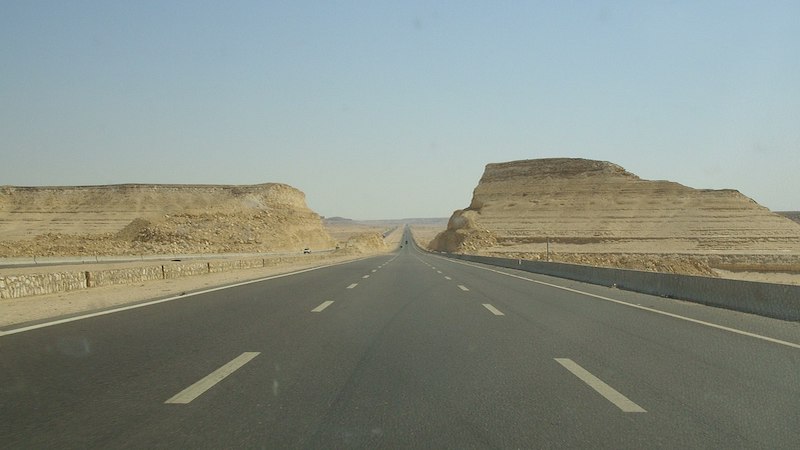
Expressway in Morocco. Photo Credit: KaiAbuSir, Wikipedia Commons highway freeway

In an era where infrastructure forms the backbone of socio-economic development, Morocco stands at the cusp of a transformative journey with the Tiznit-Dakhla expressway project. Launched by His Majesty King Mohammed VI to commemorate the 40th anniversary of the Green March, this ambitious endeavor promises to reshape the southern provinces, fostering unprecedented growth and connectivity.

Spanning 1055 kilometers, the Tiznit-Dakhla expressway is not merely a road but a lifeline that will invigorate the regions it traverses. The project, an 8.5 billion dirham partnership forged in February 2015 between three key Ministries and four regions, marks a significant investment in the future of Morocco. Its completion, initially slated for 2021, has involved meticulous planning and phased implementation: from studies concluded between 2016 and 2018, to the launch of construction in 2017.

This expressway is segmented into two main parts, each with unique technical, natural, and socio-economic characteristics. The first segment, from Tiznit to Laâyoune, includes the Tiznit-Guelmim section, featuring new alignments and bypasses to navigate mountainous terrain. The Guelmim-Laâyoune section, meanwhile, aligns closely with the existing RN1, requiring careful adjustments to mitigate geographical challenges. The second segment involves the expansion of the RN1 from Laâyoune to Dakhla, enhancing the route’s capacity and resilience.

The scale of this project is monumental. It encompasses the construction of 13 major engineering structures, the duplication of three existing ones, and the creation of city bypasses. This infrastructure upgrade is designed to international standards, ensuring safety and efficiency. It aims to reduce travel times, prevent road closures due to natural events, and streamline the transport of goods. Rest areas and truck parking facilities will further support logistics, enhancing the overall utility of the expressway.

Beyond its physical dimensions, the Tiznit-Dakhla expressway symbolizes a leap towards economic prosperity. By connecting southern cities to major national production and distribution centers, it will unlock new avenues for trade and investment. This project is poised to benefit over 2.2 million inhabitants across 10 provinces, directly impacting their quality of life and economic opportunities.

The broader implications of this development are profound. The regions of Souss-Massa, Guelmim-Oued Noun, Laâyoune-Sakia El Hamra, and Dakhla-Oued Eddahab will witness accelerated socio-economic progress. The expressway will act as a catalyst for investment, drawing industries and businesses to these regions. Improved connectivity will also bolster tourism, opening up the scenic southern landscapes to greater numbers of visitors.

The Tiznit-Dakhla expressway is more than an infrastructure project; it is a strategic initiative that embodies Morocco’s vision for balanced regional development. As this mega project unfolds, it promises to bridge gaps, foster unity, and drive forward the nation’s ambition for a more integrated and prosperous future. The road ahead is one of promise and potential, leading Morocco’s southern provinces towards a brighter, more connected tomorrow.


Categories
South Caucasus News

AP Headline News – May 28 2024 20:00 (EDT)


28013281


Categories
South Caucasus News

AP Headline News – May 28 2024 19:00 (EDT)


28013281


Categories
South Caucasus News

@SouthCaucasus: @ESK001 @Giorgibachil And here Mr Kuroptev sums up the problem!! I agree … It is an uncomfortable truth. And in my opinion, it is difficult to talk about it, especially in Europe. To self-critically evaluate their lack of strategy so far. One could charitablely say that they repress it unconsciously


@ESK001 @Giorgibachil And here Mr Kuroptev sums up the problem!! I agree … It is an uncomfortable truth. And in my opinion, it is difficult to talk about it, especially in Europe. To self-critically evaluate their lack of strategy so far. One could charitablely say that they repress it unconsciously

Categories
South Caucasus News

‘Big Oil’ Companies Face Mounting Legal Challenges From Climate-Obsessed Groups – OpEd


‘Big Oil’ Companies Face Mounting Legal Challenges From Climate-Obsessed Groups – OpEd

Suing the ONLY supply chain source for the products and fuels DEMANDED by humanity is financial stupidity!

Never bite the hand that feeds you without a replacement to support the products demanded by our materialistic society.

After the discovery of crude oil, and humanity’s ingenuity to manufacture that black cruddy looking tar substance into oil derivatives, the growth began of various products and fuels made from those derivatives. Those “products” have seen increasing acceptance that has grown into outright demands by society. 

Those “products” became the basis of various infrastructures and modes of transportation that did not exist before the 1800’s. The world then populated from 1 to 8 billion in less than 200 years, AFTER the introduction of a supply chain source for the products and fuels demanded by humanity. 

Shockingly, 80% of the 8 billion on this planet — more than six billion people — live on less than $10 a day, and almost half the world — over three billion people — live on less than $2.50 a day, and struggle to stay alive.

The few in wealthy societies have been enabled over the last 200 years by coal, oil and natural gas PRODUCTS that have provided the leisure — and the funding — for numerous environmentalist groups to focus on “climate change” ! 

Many developing nations do not share the Western elite’s obsession with reducing emissions. Since life for most people on earth is still a battle against poverty, hunger and disease, many countries, particularly India and much of Africa, will continue to focus on becoming richer through fossil fuels and the many products that have made richer countries have a more comfortable living lifestyle.

Now, environmentalists in the affluent countries obsessed with “climate change” are demanding a halt to oil exploration, but “Big Oil” only exists because of the wealthier countries being addicted to the products and fuels that are manufactured from fossil fuels that makes THEIR lives more comfortable! 

“Big Oil” companies are facing mounting legal challenges with allegations ranging from violations of state laws to demands for reparations and criminal charges. A wide range of organizations and communities are battling against oil majors as governments worldwide start putting the environment first and the economy last.

The number of lawsuits against oil and gas companies has risen significantly over the last few years. In the U.S. there are currently at least 32 lawsuits targeting fossil fuel companies to pay for the climate disasters caused by the products that are demanded by humanity and stop the development of fossil fuel projects and protect the environment. The companies accused of these damages include the oil majors Exxon Mobil, BP, Chevron, Sunoco, Suncor, Shell, ConocoPhillips, Koch Industries, and the American Petroleum Institute.

Demands of society for smaller and faster electronics, and for bigger and faster planes, ships, and launches into outer space have made fossil fuels the foundation for our lifestyles and economy. Living standards, health, and longevity – and over 6,000 vital products, including pharmaceuticals, cosmetics, cell phones, eyeglasses, fertilizers, wind turbine blades, plastics, paints, and tires are just a sampling of our materialistic demands.

So-called “earth-friendly” electricity generation from wind and solar in the few healthy and wealthy countries of Germany, Australia, USA, Great Britain, New Zealand, Canada, Japan, and all the EU, representing about 12% of the eight billion of the world’s population, only generate occasional electricity from breezes and sunshine as they CANNOT manufacture anything.  Wind and solar are NOT a supply chain source for the products and fuels demanded by humanity as they ONLY generate electricity.

Wind turbines and solar panels blanket millions of acres of farmland, scenic areas, and wildlife habitats; require billions of tons of ores; generate billions of tons of toxic water and air pollution from mining and manufacturing that is out-of-site, as it’s all done in poor developing countries that inflict atrocities to the working poor labor force of yellow, brown, and black skin people, and inflict environmental degradation to “their” landscapes.

Since the world has yet to identify the replacement for the fossil fuels that are the basis of the supply chain for every product and fuel in society, that did not exist 200 years ago, let’s “Never Bite The Hand That Feeds You” UNTIL you have a replacement.

The elephant in the room is that energy literacy conversations are avoided by the ruling class, powerful elite, and media, as the end of fossil fuels that are manufactured into all the products and transportation fuels that built the world from one to eight billion in less than 200 years, would be the end of civilization as we know it. “Unreliable electricity” from breezes and sunshine cannot manufacture anything. Remember, wind turbines and solar panels only generate electricity as they CANNOT make anything!

Stupidly, without a backup source, this trend is likely to continue, with governments and consumers putting increasing pressure on companies to improve their Environmental, Social and Governance (ESG) practices and support a transition to JUST occasional electricity generation from wind and solar. 

Thus, before we chastise “Big Oil” for impacting climate change, we need to ask ourselves “How dare WE to continuously demand the products and fuels made from oil that makes OUR life more comfortable”?

These lawsuits blame “Big Oil” for everything wrong with the environment even though they only exist to meet humanities’ addiction to the products and fuels that are manufactured from fossil fuels. For these lawsuits and others to follow, there are two outcomes, both bad as they are introducing additional costs that will financially impact the interests of financially challenged people who need the abundant and affordable transportations fuels for planes, ships, vehicles, space exploration, and the more than 6,000 products manufactured from fossil fuels:

  • Lawsuits may win financial awards and force some Majors out of business, reducing the supply chain of products and fuels, and thus increasing the cost of all the products and fuels demanded by developed countries and manufactured by the surviving fossil fuel companies.
  • Fossil fuel majors pay the fines and continue their business, increasing their cost of doing business, which will increase the cost of all those products and fuels demanded by the users.

Both above outcomes from suing The Hand That Feeds You, have the same results: With fossil fuels being the basis of virtually all the products and fuels in society that did not exist 200 years ago, there will be further inflationary costs added to everything that the users demand from fossil fuels.

These lawsuits deny the world’s poorest people access to the products for disease control, sanitation, and agriculture that makes modern living standards, healthcare, and life itself possible in wealthier countries.

Looking back at the history of the petroleum industry, it illustrates that the black cruddy looking crude oil was virtually useless, unless it could be manufactured (refineries) into oil derivatives that are now the basis of transportation fuels and for the oil derivatives that are the basis of products, such as silicon based semiconductor chips, plastics, lubricants, and medications, that are essential for supporting modern lifestyles. 

Thus, before we abandon crude oil and introduce shortages of all those PRODUCTS supporting the economy and the 8 billion now on this planet, a crude oil replacement must be identified as the world needs a back-up plan that supports the supply chain of the PRODUCTS demanded by our materialistic society.

Categories
South Caucasus News

Emerging Concept: Drone Wall Defending Borders? – OpEd


Emerging Concept: Drone Wall Defending Borders? – OpEd

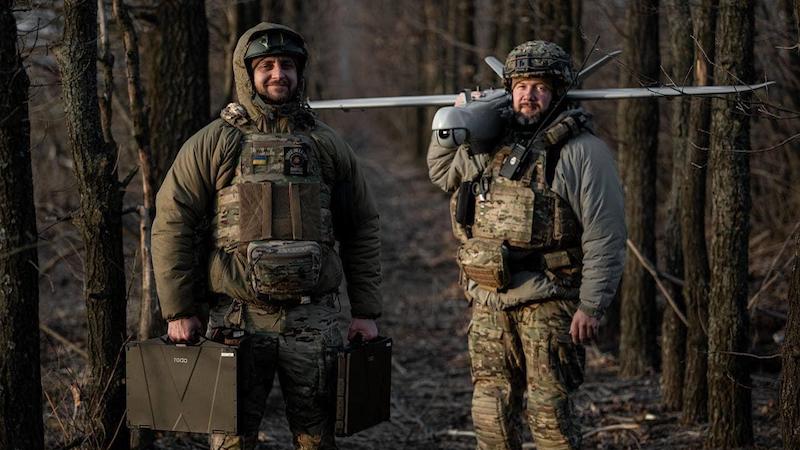
Ukrainian soldiers pose with a drone. Photo Credit: Anton Sheveliov, Ukraine Ministry of Defence

Six NATO countries—Finland, Norway, Poland, Estonia, Latvia, and Lithuania—are planning to build a coordinated drone defence system loosely called the “Drone Wall,” because of increased security worries and tensions along their borders with Russia. This call to action comes at a time when the security landscape is becoming increasingly complex, particularly with Russia’s heightened activities along its borders. Russian decree proposing revised maritime borders with Lithuania and Finland in the Baltic Sea sparked concern in the region.

Many NATO countries believe Russia could test NATO’s border within the next five to 10 years, while intelligence services have uncovered a number of assumed sabotage operations on their soil. Russia’s war against Ukraine has highlighted the importance of drones, with both sides using them in attacks with great success. Several NATO countries have responded by setting up or intensifying their drone warfare units. More than two years of war in Ukraine has spurred on lightning-fast innovations in airborne, land-based, and waterborne drones. Drones fill the skies above Ukraine, with both Russia and Ukraine battling it out to stay ahead of the other.

Lithuanian Interior Minister Agnė Bilotaitė said; “We still have a lot of questions; we need to look at all those algorithms. Drills would be very valuable as we would look at things, evaluate them and we would strengthen our preparedness.”

Drones yield an offensive advantage. The idea for the “Drone Wall,” came about during ongoing wars, like the one in Ukraine. The 2020 Nagorno-Karabakh war between Azerbaijan and Armenia provides that employment of Turkish drones in this conflict was a “game changer.” And now the Ukraine-Russia war has shown their Ups and Down for both the users. The need for this kind of defence has been made clear by repeated cases of GPS jamming, sabotage, and other unfriendly actions that NATO believes are Russian attempts to make bordering countries vulnerable. However, Ukraine War has shown that the Drones along with emerging technologies yield an offensive advantage as such technologies make attacking easier than defending. 

Drone Wall: Offensive–Defence

In my perception this so called the “Drone Wall,” will be part of other Early Warning (EW) systems and other emerging EW technologies. So, an offensive drone will be launched once the other EW systems provide the information of enemy movement along with their equipment both of offensive and logistic nature. Armed drones from the assets of the so called the defensive “Drone Wall” will be launched towards “Offensive–Defence” on, along or across the border meaning that the “Drone Wall” in reality is a wall for active “Offensive–Defence” as part of the integrated air defense systems of the nation along the borders and sharing of information. 

The current-generation of drones do not yield any offensive advantage against the existing generation of air defense systems which rely on multiple airborne and ground-based sensors and shooting platforms, including ground-based and airborne early warning radars, target acquisition radars, interceptor aircraft, and fixed and mobile short- and long-range air defense systems. The integration of data gathered by multiple types of sensors including human intelligence minimizes the probability that a target will be missed.

NATO’s Enhanced Forward Posture

This Strategic Initiative will be a very important part of Poland and the Baltic states’ defence as part of NATO’s Enhanced Forward Presence, which began in 2017. In the Arctic, Norway and Russia share a 198 km border. This is an area where NATO often does military drills. NATO sees the 60 km long Suwalki Gap as a vital corridor. It is the border between Poland and Lithuania. This regional project fits in with NATO’s larger strategy goal of making member countries’ air and missile defence stronger. Recently, Poland joined the European Sky Shield Initiative. The goal is likely to build an integrated air defence system like Israel’s Iron Dome. The project involves 21 NATO countries. This shows that the EU is serious about protecting its territories from drones and missiles. All NATO countries that border Russia will be covered by the planned drone wall system, which will go from Norway to Poland. The NATO-EU is likely to fund the “Drone Wall” initiative.

Since Russia took over Crimea in 2014, several NATO member states have spent a lot of money on their militaries to make their border defences stronger against Russia.  Poland has significantly raised the amount it spends on defence. In 2004, Estonia, Latvia, and Lithuania joined NATO, making the eastern border of the alliance stronger. Finland became NATO’s 31st member country on 4th April 2023. 

The next-generation of drones is likely to have an offensive advantage but may not be comparable to the classical role of defensive next-generation air defense of other systems. The drones are likely to continue with their offensive dominance role being economical than to shift to the role of defense dominance of the “Drone Wall.” This is a completely new concept of a Drone Border beyond a Fenced Border along with multiple types of sensors. 

Moscow rejects the myth of a Russian threat used by Western leaders to scare their people into funding the military-industrial complex. Russian President Vladimir Putin has repeatedly given assurance that the Russian nation “has no interest… geopolitically, economically or militarily” to justify waging war against NATO member states.

The proposal for a “Drone Wall” comes amid heightened tensions and security concerns due to Russia’s actions in Ukraine and its broader geopolitical stance. “Drone Wall” in the final analysis is just a name getting in jointness by using technology to enhance border security using advanced surveillance systems, including drones, along its borders to monitor, prevent incursions and use drones in an “Offensive–Defence” manner. The concept is still in its infancy on the drawing board with no timeline!


Categories
South Caucasus News

A New Partnership Or ‘Our Man In Africa’? – OpEd


A New Partnership Or ‘Our Man In Africa’? – OpEd

Kenya's President William Ruto with US President Joe Biden. Photo Credit: POTUS, X

In politics, particularly in international relations, the most crucial elements of agreements are often those that remain unspoken or unwritten. The agreement that secured Kenya’s status as a Major Non-NATO Ally amidst growing anti-Western sentiments across Africa and geopolitical strategic restructuring in many parts of the world is no different. 

In the short-term, as it was stated, the agreement may set the stage for Kenya and US cooperation in ‘technology’ and ‘peace and security.’ It may also facilitate access to IMF and World Bank and ensure VIP invitations to the global forums, but in the long-term Kenya is likely to pay a hefty price for two reasons. First, in the American playbook, economic development with global south means compelling partners to reserve a wide market space for predatory capitalists. Second, trying to swim against the tides of Africa’s newly found consensus on reclaiming all rights to its own resources and seeking fair market value would subject Kenya to new challenges. 

US’ Image In Africa 

According to a Gallup poll conducted in 2023, US has been losing the soft-power war to China.  Moreover, US have been trailing behind Turkiye and Russia in establishing strategic partnerships with key countries in the continent, especially with countries in the geopolitical center of gravity- the Horn of Africa. Worse, US has been losing close allies. The latest being Niger and Ethiopia. The former ordered 1000 American troops out by September of this year. The latter, though domestically in turmoil, has embraced China and Russia and joined BRICS- the economic bloc projected to end the Western domination of the international financial system and establish a new law-based international order.

Ironically, it wasn’t that long ago when Kenya’s President William Ruto himself was at the forefront of the Neo-Africans’ diplomatic revolt intended to de-Westernize Africa by rejecting certain Western values such as accepting the public display and celebration  of LGBTQ rights- a matter that many African countries believe is being shoved in their collective throat.  Now that he has signed a strategic agreement whose conditional clauses promote the very same values that majority of his countrymen oppose, Ruto could be declared a compromised man.    

Filling Ethiopia’s Shoes 

Choosing Kenya to fill the vacuum left by Ethiopia was a natural selection that the war-mongering foreign policy drivers in Washington could only thank their lucky star for. Nairobi is reminiscent of Vienna during the Cold War. Especially in the past few decades after collapse of the Somali government and the evils that ensued, Nairobi became where corrupt influential politicians, international/domestic NGOs, intelligence spooks, mercenaries, security experts, narrative creators, and guerrilla diplomats often rendezvous negotiate deals agreements. Kenya is already part of ATMIS that is in charge of Somalia’s security and peace-keeping. Kenya is also in the final stage of deploying 1000 ‘police force’ to stabilize Haiti and guard US interest there, as it has been in some other countries in Africa where the West has been losing ground. 

More importantly, Kenya is offering the US a military base in Lamu and an open invitation to deploy US forces. A US military base has three appeals for Kenya: revenues from the leasing and other related services, de facto reinforcement of Kenya’s rejection of ICJ—UN’s highest court—”to grant Somalia control of disputed waters in the Indian Ocean”, and to establish new military facts on the ground that would ultimately secure Kenya’s long sought buffer-zone or annexation of part of Somalia’s territory.  

Now that its previously attempted acquisition of the strategic port of Berbera (Somalia) has proven more complex than previously thought, US found a more attractive deal with Kenya. A military base in Wajir where US could conduct special operations with a limited number of US soldiers, international mercenaries, and local counter-terrorism contingent that is similar to DANAB in Somalia. The current Wajir Military Airbase was built by Israel between 1977 and 78. 

The deal also includes a military a floating military base at Lamu where AFRICOM could find a permanent home, ample access to the Indian Ocean, and beautiful tropical beaches for periodical stress-relief. The tourist town of Malindi is only 85 miles to the south of Lamu. And al-Shabaab’s command center in Jilib, Jubbaland that ought to be called the Black House is only 175 miles north of it. How about that for irony?

Boots On The Ground

Ruto reiterated that all too familiar al-Shabaab pretext and the importance of keeping that seemingly perpetual cash-cow known as ATMIS. Kenya has 5000 troops in ATMIS that currently cost more than 40,000 Somali soldiers. This contingent is already trained well enough to advance many overt and covert operations for the right deal. 

We have “serious security challenges” that will result from ATMIS phase out that is “calendar-based and not condition-based,” said Ruto. He also affirmed that both he and President Hassan Sheikh Mohamud of Somalia are eager for US intervention. “Our position is that United States should step-in and change the trajectory,” said Ruto. Never mind that al-Shabaab is neither monolithic in vision and identity nor is it empowered by legitimacy of public support as did the Taliban. 

After successive strategic failures in Afghanistan, Ukraine, and Israel, the Biden administration is hard pressed to secure a gate-opener deal in Africa. And that deal had to be secured before the presidential election which is coming this November. 

Ruto’s Appeal 

Could Ruto, who has three years before facing election, become the BRICS-buster that successfully lures key African countries back into the arms of their old Western masters? 

Ever since France was kicked out of many of its former colonies in Africa, paranoia has been dominating the power brokers and strategic planners in the US and across Europe. Finger-pointing at the top level is already underway. “It is the imbecility of Emmanuel Macron that opened the eyes of Africans. One thing is for sure: if France loses its colonies, our children and grandchildren will have to go Africa to search for their livelihood,” said France’s former Economic Minister, Thierry Breton. If you could manage to ignore his unabashed racist entitlement, you may appreciate his irrefutable confession to the exploitative relationship that his country had with its former colonies. 

Business As Usual

It is an open secret that the neocons whose only contribution to the world has been a bloody scam named Global War on Terrorism for perpetual exploitation and to advance Israel’s interests are dominating the Biden administration. Though Israel has prominent intelligence and political presence in Kenya, it is nervous about losing many of its African friends due to the sadistic genocide it has been carrying out against the Palestinians of Gaza. Countries such as South Africa that filed the genocide case against Israel at the ICJ and Algeria are adamant about keeping Israel at bay. Against that backdrop, the neocons want to make Israel the gate-keeper that vets African leaders- similar to the role it has been playing in the Middle East. 

These are the same neocons that pressured the ICC in 2007 to charge Ruto with crimes against humanity for his role on a post-election violence. A decade later, the case was declared a mistrial for “troubling incidence of witness interference and intolerable political meddling.” Ruto may be smart, articulate, and self-confident, but he is no Paul Kagame of Rwanda when it comes to putting his country’s interest before his own. But how he may turn out is a matter for historians to document. 

In 1962, only two years after Somalia’s independence and at the peak of the Cold War, Prime Minister Abdirashid Ali Sharmarke was invited by President John F. Kennedy for a State Visit. While the optics were fantastic and the rhetoric grandiose, the Kennedy administration made two deal-breaking errors that compelled Sharmarke to immediately establish strategic partnership with now defunct Soviet Union as soon as he departed the US. First, Sharmarke was denied assistance to build an army for Somalia- an initiative that Ethiopia considered a threat. Second, though more subtle, his Islamic values were offended when Kennedy offered a toast to Sharmarke. Here is that moment as archived in the Kennedy Library. 

A glorified version of ‘Our Man In Africa’ status at this heightened stage of steadily growing push-back against Western economic exploitation could potentially prove a kiss of death for Ruto’s political future and could make Kenya more insecure.      

In due course, Ruto will face challenges both in Kenya, the region, and in the continent as a whole. He may fire-up his opposition and be systematically sidelined by his fellow neo-Africans who would likely question his loyalty. However, the real day of reckoning for Ruto is likely to emerge when the growing young generation realizes that much of the economic development and aid monies that the US promises will not guarantee them real jobs with real income.


Categories
South Caucasus News

Taiwan Condemns Provocative Chinese Military Drills – OpEd


Taiwan Condemns Provocative Chinese Military Drills – OpEd

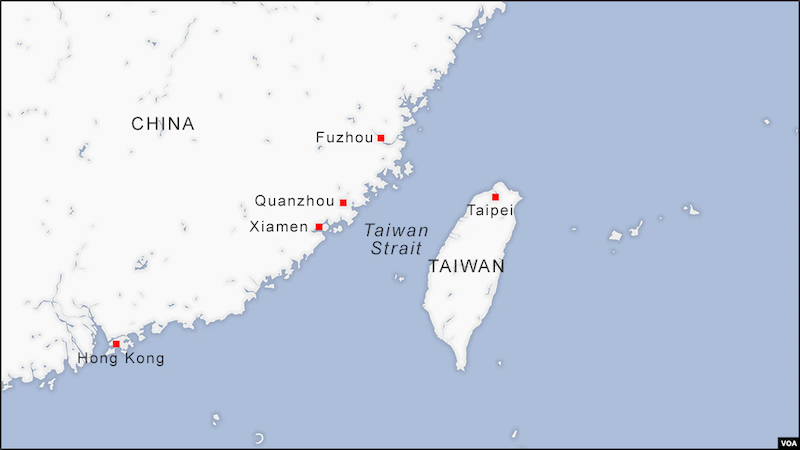
China and Taiwan Strait. Credit: VOA

aiwan has condemned strongly China’s last week’s joint military drills around Taiwan because they were a big threat to peace and stability in the Taiwan Strait and the Indo-Pacific region. 

During the drills, which began on May 23 and ended on May 24, Chinese fighter jets loaded with live ammunition scrambled towards targets and bombers formed formations to combine with warships to simulate strikes against important targets. China called the drills “Joint Sword 2024-A”. It looked like a rehearsal of how China would take Taiwan. 

According to The Japan Times newspaper, the drills focused on joint sea-air combat-readiness patrols, joint seizure of comprehensive battlefield control and joint precision strikes on key targets. 

Dozens of fighter jets carrying live missiles later conducted mock strikes against high-value military targets in coordination with warships.

Taiwanese coast guard vessels along with air and ground-based missile units were put on alert, particularly around the Taiwan-controlled island chains of Kinmen and Matsu just off China’s coast. 

According to the BBC, Taiwan’s Ministry of Defense recorded on May 23, 49 Chinese aircraft, 19 naval ships and seven coast guard vessels close to Taiwan’s territorial waters. 

These drills really threaten the peace and stability in the region.

“Provocation and irrational action damaged peace and regional stability, and also the peace and stability in the Indo-Pacific region. The government of Taiwan has concerned about China’s hegemonic nature and condemned China’s  action. Protection of peace and stability in the Taiwan Strait has become the consensus of international community,” the Taipei Economic and Trade Office (TETO) in Indonesia said in a press release on May 26.

Taiwan’s new President Lai Ching-te, who is from Taiwan’s Democratic Progressive Party (DPP), said on May 26 that he was still ready to work with China, despite last week’s military drills around the self-ruled Taiwan. 

Lai told reporters that he wanted Taiwan and China to “jointly shoulder the important responsibility of regional stability”.

“I also look forward to enhancing mutual understanding and reconciliation through exchanges and cooperation with China… and moving towards a position of peace and common prosperity,” the france24.com website reported quoting Lai as saying in Taipei.

Lai, who was sworn in on May 20, earlier called on China to maintain peace and he is ready to face Beijing’s bullying.

 “Facing external challenges and threats, we will continue to maintain the values of freedom and democracy,” the Associated Press reported quoting Lai as saying.

Taiwan’s National Defense Ministry strongly condemned the exercises, calling them “irrational provocations and actions that undermine regional peace and stability,” adding that it had dispatched sea, air and ground forces in response.

“We stand ready, with firm will and restraint. We seek no conflicts, but we will not shy away from one. We have the confidence to safeguard our national security,” The Japan Times reported quoting a statement from the Taiwan’s Ministry of National Defense.

Indonesia, which follows “One China” policy, do not have diplomatic relations but has strong economic relations with Taiwan. Around 400,000 Indonesians live presently in Taiwan. If any conflict breaks out between China and Taiwan the lives of these 400,000 Indonesians are at a high risk.

“Taipei Economic and Trade Office (TETO) in Indonesia appeals to all layers of Indonesian society to support the maintenance of status quo of peace in Taiwan Strait and demand China to control itself rationally and stop one-sided military drills which can damage peace and stability in the Indo-Pacific region,” the TETO said in the press release.

“Chinese military activities continue to disturb regional peace and stability, they not only damage peace in the Taiwan Strait but also threaten the safety of Indonesians in Taiwan”.

Communist China says that democratic Taiwan is a renegade province and it wants to unite it with mainland by force if necessary while Taiwan calls itself as a self-ruled independent country.

Last week’s China’s military drills were aimed at punishing President Lai, who got elected in January 2024 election, for his separatist and independent views. It calls Lai a “dangerous separatist”. 

Lai said in his inauguration speech that Taiwan would not be “subordinate” to China.

He pledged to protect stability and maintain the status quo in the island’s fraught relationship with China, and called on Beijing “to cease their political and military intimidation” amid rising fears of conflict.

The Global Times newspaper, according to the BBC,  had already described him as “arrogant” and “reckless”, and CCTV wrote that he “will certainly be nailed to the pillar of shame in history” and lambasted him for “selling the two-nation theory”. 

Lai’s alleged crime is that in his inaugural speech he used the word China to describe China. Beijing says that in doing so Lai revealed his true thinking that Taiwan is not China, and they are two different countries. It is, in their eyes, an admission of his “separatist” ideology.

According to the Associated Press news agency, the Pentagon said the United States was “monitoring very closely” the joint Chinese drills. It said Beijing’s actions “are reckless, risk escalation, and erode longstanding norms that have maintained regional peace and stability for decades.”

“We strongly urge Beijing to act with restraint,” it said. 

Chinese Foreign Ministry spokesperson Wang Wenbin dismissed the U.S. calls for China to exercise restraint in relation to the latest drills. The U.S. “is in no position to make such irresponsible remarks,” the Associated Press reported quoting Wang as saying in Beijing. 

The U.S. has been aiding in the upgrading of Taiwan’s equipment and training, even while its official policy remains ambiguous on whether American troops and those of regional allies would be dispatched to defend Taiwan in the event of a Chinese attack. 

Meanwhile, a Japanese government’s top spokesman stressed the need for speaking frankly with China on the Taiwan issue.

“It is important for Japan to continue to communicate directly and firmly with the Chinese side on the necessity for peace and stability in the Taiwan Strait, and to work closely with the United States and other partners to clearly convey this position,” The Japan Times reported quoting Chief Cabinet Secretary Yoshimasa Hayashi as saying at a news conference in Tokyo.

Taiwan has increasingly become the target of coercive activities that resemble China’s gray-zone activities in the South China and East China Seas. The Chinese air force has conducted nearly three times as many incursions into Taiwan’s Air Defense Identification Zone since January 2022 as it did between 2018 and 2021, according to Taiwan’s Ministry of National Defense. 

China must think twice about an invasion of Taiwan. It could be a high risk for China as the external forces like the U.S., Japan, Australia and others may come to the rescue of Taiwan.


Categories
South Caucasus News

Georgia adopts ‘foreign influence’ law despite protests | National News | mydailyrecord.com – The Daily Record


Georgia adopts ‘foreign influence’ law despite protests | National News | mydailyrecord.com  The Daily Record

Categories
Selected Articles

@mikenov: yossi cohen


yossi cohen – Google Search https://t.co/prYsxNyL1m pic.twitter.com/SZOgAUwAdk

— Michael Novakhov (@mikenov) May 28, 2024