Categories
South Caucasus News

South Korea’s Yoon Strives To Stay Afloat – Analysis


South Korea’s Yoon Strives To Stay Afloat – Analysis

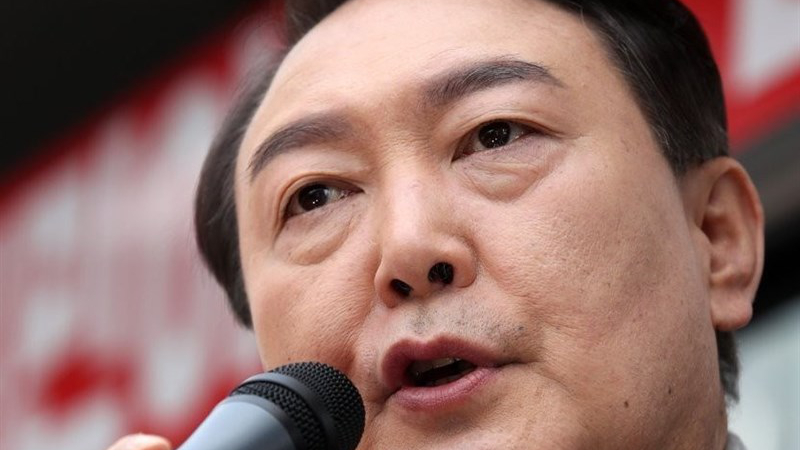
South Korea's Yoon Suk-yeol. Photo Credit: Tasnim News Agency

By Jong Eun Lee

South Korean President Yoon Suk Yeol has grappled with a divided government since his election in 2022. Fuelled by a contentious relationship with the opposition-controlled National Assembly, the legislative process has devolved into what is sometimes called a ‘vetocracy’ — dysfunctional rule by veto.

The Yoon administration has hoped that conservatives would retake the Parliament for the first time since 2012 and finally break through the gridlock. But his People Power Party (PPP) was trounced by the opposition, which won 192 out of 300 National Assembly seats in the 10 April elections. Though the Democratic Party of Korea (DPK) and its allies in opposition fell short of a veto-proof two-thirds majority, Yoon is now the only South Korean president to govern without a legislative majority for the entirety of a 5-year presidential term.

In the six weeks since the electoral defeat, the government has attempted to improve its political communication. President Yoon acknowledged that his administration was inadequate in both communicating its policies and listening to voters’ concerns. On 29 April 2024, he held his first official meeting with DPK leader Lee Jae-myung and has expressed openness to meeting with other opposition parties’ leaders. On 9 May, Yoon held a formal press conference marking the second anniversary of his presidency. At the conference, Yoon publicly acknowledged his past shortcomings to the press, and responded to a wide range of questions on domestic and foreign policy issues. He pledged to be more responsive to domestic challenges such as the declining birth rate, describing it as a ‘national emergency’ and announcing that a new cabinet ministry would be established to tackle the issue.

The President has also sought to partially compromise with the opposition’s demands. Following the April elections, the PPP and the DPK approved special investigation into the October 2022 crowd crush in central Seoul that killed nearly 160 — mostly young — people. Yoon previously vetoed similar legislation but is supportive of this bipartisan deal.

But the electoral defeat does not mean Yoon will cede ground on every issue. The President has reiterated his opposition to the DPK’s cash handout plan that would see each citizen receive 250,000 won (US$183). The administration also remains unamenable to opposition parties’ demands for special investigations into the allegations surrounding First Lady Kim Keon-hee and the drowning of a South Korean marine in 2023.

While Yoon publicly apologised for his wife’s conduct, he has already vetoed a special counsel bill that would trigger an investigation of her. On 21 May, Yoon also vetoed a bill passed by the National Assembly on mandating a special probe into the marine’s death. Yoon has reiteratedspecial probes are unnecessary and premature, as police and the Corruption Investigation Office for High-ranking Officials are already conducting investigations.

The opposition has criticized the Yoon government’s post-election statements and activities as insincere and inadequate. They warned that the President’s continued use of the veto powerwill escalate confrontations with the National Assembly, even threatening the possibility of impeachment.

On foreign policy, Yoon sought to reassure concerns about his government’s strategic alignment with the United States and Japan. At his press conference, he said South Korea would manage relations with Russia ‘as amicably as possible’ and pursue bilateral cooperation on a ‘case-by-case basis’. Yoon also reiterated Seoul’s restraint in sending lethal aid directly to Ukraine in its war against Russia. The Ministry of Foreign Affairs announced in a separate statement that Seoul would host a trilateral summit with Japan and China at the end of May — the first such summit since 2019.

But Yoon’s detente with the Japanese government, could become even harder for the administration to defend after a hacking incident led Tokyo to demand that South Korean tech company Naver sell its shares in Line Yahoo — Japan’s leading messaging service. This has galvanized the opposition’s criticism that South Korea has little to show for its efforts to improve relations with Japan.

The public reaction to Yoon’s press conference has so far been cool. His approval rating cratered to a new low immediately after the election and remains below 30 per cent. The majority of voters support the opposition’s calls for special investigations — a risk to the Yoon administration if it hopes to signal improved political responsiveness. Yoon has an opportunity to demonstrate his commitment to change when he nominates a new prime minister possibly in June 2024. This nominee must receive strong public support as the nomination is subject to confirmation by the National Assembly.

President Yoon’s political challenges might be compared with those faced by then-US-president Bill Clinton after his Democratic Party lost both houses of Congress in the 1994 midterm elections. The Clinton administration responded with the ‘triangulation’ strategy in which it compromised with the Republican-controlled Congress on some policy issues while maintaining confrontation on others.

Yoon must similarly balance compromise and confrontation with the opposition. It remains to be seen whether he can effectively communicate his renewed commitment to cooperation with the legislature and societal groups, while successfully defending his administration from what he perceives as politically motivated attacks from the opposition.

If Yoon fails, he risks a years-long lame-duck presidency. But if he convinces the public that the opposition is more responsible for the partisan gridlock, the shift in public opinion could provide crucial leverage for his government to achieve meaningful political ‘wins’ — even in a divided government.

  • About the author: Jong Eun Lee is Assistant Professor of Political Science at North Greenville University.
  • Source: This article was published by East Asia Forum

Categories
South Caucasus News

The Martyrdom Of Jimmy Lai – OpEd


The Martyrdom Of Jimmy Lai – OpEd

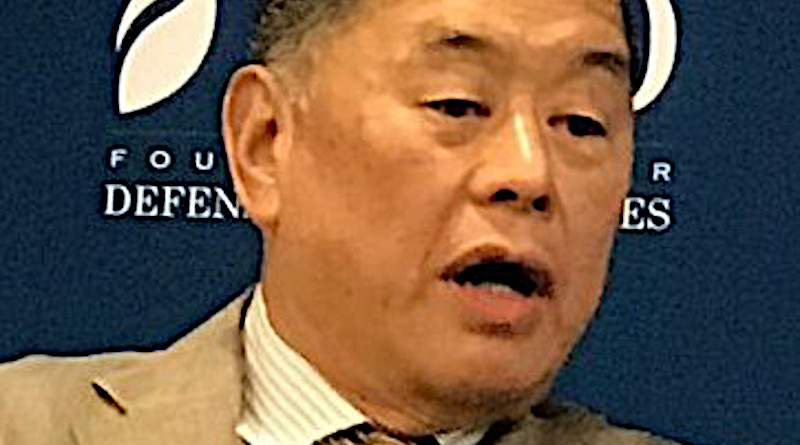
Jimmy Lai. Photo Credit: 美国之音莉雅, Wikimedia Commons

By Jon Miltimore 

When Jimmy Lai was a child working the streets of Canton (Guangzhou), China, in the 1950s, he received a bar of chocolate as a tip for carrying a man’s bags at a train station.

Poor and hungry, he immediately bit into the treat. He had never tasted anything like it, and he asked the traveler where he was from.

“Hong Kong,” the man replied.

Lai had never heard of Hong Kong, but he knew it was a place he wanted to be. So a few years later, at age 12, he stowed away on a fishing vessel and escaped mainland China for Hong Kong.

Lai immediately realized there was something different about the territory. He had never seen so much food or wealth before, and he quickly found work at a factory. Over several years, he worked, saved, and invested, and eventually as a young man Lai scraped up enough money to purchase a bankrupt clothing company and started manufacturing sweaters.

Lai’s entrepreneurship paid off. He prospered and diversified. He bought properties in Canada, and in the early 1980s launched the popular clothing brand Giordano (a name he picked up from a napkin from a New York City pizza joint). He later started newspapers, including the popular Next Magazine, which he founded in 1990, and the Apple Daily, which for years was the only pro-democracy daily newspaper printed in Chinese.

By 2008, Lai had become a billionaire and was on Forbes’s list of the wealthiest entrepreneurs. But at some point in his rags-to-riches story, Lai realized that wealth was not his ultimate goal.

Preserving the freedom of Hong Kong had become his life’s mission. “Without freedom, we have nothing,” Lai has often said.

In his quest to save Hong Kong’s rapidly fading freedom, however, Lai has sacrificed his own. The entrepreneur and media mogul currently sits in a Chinese prison, charged with “conspiracy to collude with foreign forces” and “conspiracy to publish seditious publications.”

Lai’s story was the subject of a 2023 documentary produced by the Acton Institute. How it will end remains unclear.

A Brief History of Hong Kong

To understand the political persecution of Jimmy Lai, one must first understand the history of Hong Kong.

In 1898, following years of colonial rule under the British Empire that began after the First Opium War (1839–1842), China leased Hong Kong to Great Britain for 99 years. For the next century, the small peninsula and islands that jutted into the South China Sea operated under British rule.

This changed in 1997, when the United Kingdom’s claim on the territory came to an end. But during its 156 years under British rule, Hong Kong developed a distinctly Western character. Property rights, free speech, and free markets helped turn Hong Kong into one of the most prosperous places on earth, a land far wealthier than neighboring Communist China.

“In 1987, Hong Kong…had a per capita income of $8,260,” author Robert A. Peterson observed prior to the handover. “Just a few miles away, across the Sham Chun River — in Communist China — people of the same racial stock, living in the same subtropical climate on shores washed by the same South China Sea, were able to produce a per capita income of only $300.”

As Jimmy Lai would say, the British didn’t give Hong Kong democracy. But they did give Hong Kongers valuable institutions of freedom: free markets, the rule of law, free speech, and other human rights. And much like West Germany became a destination for immigrants seeking to flee the yoke of socialism following World War II, Hong Kong became a destination for Chinese immigrants following Mao’s takeover of China in 1949.

From Freedom to Authoritarianism

Because of how diametrically different these two systems were, there was always some uncertainty about what would happen to Hong Kong when the British handed it back over to China. Technically, the agreement made Hong Kong a special administrative region (SAR) of China, which came with certain guarantees, including a democratically elected legislative system, constitutional rights, and the promise of Hong Kong autonomy for the next 50 years.

The idea was “One country, two systems,” a concept that stretched back to the 1980s, that granted Hong Kong would its own economic and administrative system separate from Communist China. But even as the ink on the handover agreement dried, China began to encroach on Hong Kong’s autonomy. And in 2012, following the rise of Xi Jinping, Communist officials began to secretly circulate a policy known as Document No. 9 (the Communiqué on the Current State of the Ideological Sphere), which said the Chinese government must wage war against “Western values,” including free speech, media freedom, and judicial independence.

This did not bode well for Hong Kongers.

“Hong Kong’s bad luck was that it exemplifies all those Western values in a Chinese form,” said Chris Patten, the last British governor of Hong Kong.

As if to demonstrate its commitment to this war on “Western values,” the government in Beijing soon arrested Gao Yu, a female journalist who was accused of publishing Document No. 9. She was found guilty in a secret trial and sentenced to seven years in prison for “leaking state secrets” to a Hong Kong media organization.

The crackdown on freedom in Hong Kong continued, eventually prompting the Umbrella Protests of 2014. Further protests in 2019–2020 were sparked by a bill that would allow Beijing to extradite to mainland China Hong Kongers accused of crimes.

The state’s violent crackdown on the 2019 protests garnered international attention and spawned the National Security Law that criminalized what the Chinese government defined as secession, subversion, and collusion. This included “subversive” messages suggesting that Hong Kong is a separate system from China that should be ruled democratically.

“The law was really about ensuring Beijing’s authority over Hong Kong and making sure it wasn’t subject to the same threats it was during the 2019 protests,” Michael Cunningham, a Research Fellow in the Heritage Foundation’s Asian Studies Center who lived in mainland China when the 2019 protests erupted, told me. 

‘Hong Kong Is Dying’

As Hong Kong slipped slowly into authoritarianism, Jimmy Lai did something extraordinary: he continued to resist Beijing.

Wealthy and politically connected, Lai could have continued to speak out against Communist tyranny from London or New York or some other city with strong free speech protections. But he refused to abandon his fellow Hong Kongers, and remained committed to peaceful resistance.

“If we use violence, we’ll lose the moral authority we have,” Lai said.

While many Hong Kongers were scrubbing their online profiles of pro-democracy sentiments, Lai and journalists at the Chinese-language Apple Daily continued to publish and speak out against the Chinese government’s encroachments. 

“He did all this knowing he was in the crosshairs,” said Cunningham. 

Amid the global chaos of the COVID-19 pandemic, the Chinese Communist Party saw its opportunity to take down the face of Hong Kong’s freedom movement.

On August 10, 2020, Hong Kong Police raided the headquarters of the Apple Daily. Some 200 officers wearing masks searched the offices of the popular pro-democracy tabloid, collecting journalists’ documents, and arresting several people, including Lai.

Lai, whose arrest was live-streamed, was frog-marched out of the office by police in plain clothes. He was charged with colluding with a foreign country and then released on bail. Several months later, he was arrested again.

Even with Lai behind bars, the Apple Daily continued to print, and the newspapers flew off newsstands. In response, Beijing seized the newspaper’s funds (and Lai’s), and on June 23, 2021, the Apple Daily printed its last newspaper.

There’s no question that Lai’s imprisonment and the collapse of a free press in Hong Kong mark a turning point in a territory once noteworthy for its prosperity and commitment to classical liberalism.

“It feels like Hong Kong is dying,” one anonymous Hong Kong resident says in the documentary.

To make matters worse, many of the leaders who might help lead resistance against Beijing have fled, since they are now targets of the state.

“I was wanted by the Hong Kong court for joining the June 4 candlelight vigil,” said Sunny Cheung, a Hong Kong activist now in exile.

Cheung has no intention of returning. If found guilty, he would face a maximum sentence of life in prison for attending that vigil.

“This isn’t a legal system in any sense that we understand,” said David Alton, a member of the British House of Lords and human rights advocate, “because it’s a foregone conclusion you’re going to be convicted.”

‘The Rest of His Life in Prison’?

Jimmy Lai’s future is unknown.

The 76-year-old freedom fighter remains in solitary confinement in a Chinese prison after receiving a nearly 6-year sentence in December 2022 on various charges. But he is still awaiting trial on charges related to China’s National Security Law, and a Hong Kong appellate court recently upheld a ban that prevents his British counsel from participating in the trial.

As I watched the Acton Institute’s incredible documentary on Lai — first once and then a second time — I felt a wave of emotions. And the same thought kept hitting me. How hadn’t I heard about this before?

Lai’s life and sacrifice is one of the most powerful stories I’ve watched in years, yet somehow it was a story I knew nothing about. The lack of international outcry over Lai’s political persecution is something I can’t get my mind around, and I’m not the only one. Many of Lai’s supporters expressed similar sentiments.

“Why haven’t the United Kingdom and the United States tabled resolutions in the United Nations?” asked Alton.

George Weigel, a senior fellow of Washington’s Ethics and Public Policy Center, was also perplexed.

“It’s a great puzzle to me why the Vatican, which is constantly emphasizing the rule of law in international affairs, is not more vocally concerned,” said Weigel.

The lack of attention Lai’s imprisonment is receiving is troubling. Lai’s words make it clear that he is risking his life to save Hong Kong based at least in part on his belief that others care as much about liberty as he does, and they would be spurred to action by his persecution.

“[Hong Kong] gave me freedom. I owe freedom my life,” says Lai. “The more pressure I have, the greater the voice I should have so the world will pay notice.”

Lai has done his part. After suffering years of intimidation, state spies, and attacks that included a Molotov cocktail thrown at his home, he is currently a political prisoner in a Chinese cell. But the world is not doing its part. We are not doing our part. 

No groundswell movement demanding freedom for Jimmy has managed to take hold. No social media campaign has gone viral. As someone who follows the news and works for an organization dedicated to economic freedom, I feel embarrassed and convicted that I knew so little of Lai, who in 2021 received the Truman-Reagan Medal of Freedom from the Victims of Communism Memorial Foundation.

Cunningham told me that Lai’s imprisonment is receiving more international attention than it is in the US, but there are some doubts about what exactly the international community can do regarding China’s Lai’s imprisonment and encroachment on the rule of law in Hong Kong. 

“They need to be held to account for violating the British sign-over agreement,” he said.

Whatever political leverage or groundswell movement that can bemustered to influence China must be found quickly. If not, Jimmy Lai could end up paying the ultimate price for the West’s ambivalence.

“He may very well spend the rest of his life in prison,” says Benedict Rogers, the founder of Hong Kong Watch.

‘The Book Changed My Life’

Anyone who watches the documentary on Lai’s life is likely to find himself asking a question: Would I have the courage to do what Jimmy Lai is doing?

The answer is likely no, if we’re being honest. This is not so much an indictment of our own courage, but the recognition that the world is witnessing martyr-like bravery from Lai, who became a Christian in 1997.

The Bible was not the only book that shaped Lai, however. He credits another: F. A. Hayek’s The Road to Serfdom.

“The book changed my life,” Lai says of the Nobel Prize-winning author’s magnum opus.

This should perhaps come as no surprise. In a sense, Lai didn’t just read The Road to Serfdom. He lived it.

As a child, Lai saw the poverty and cruelty of the Communist system that took everythingfrom his once-wealthy father after Mao claimed power in October 1949. Lai was able to flee that system and prosper in a free-market economy, only to watch, in a cruel twist, the CCP usher in its policies of serfdom into his adopted land.

This, I think, is what fortified Lai with such rare courage. He isn’t just fighting for freedom in an abstract sense. He’s fighting for freedom in the most practical of senses, the freedom that allows a poor child in China to reach a nearby land of opportunity — just like Lai did when he escaped to Hong Kong aboard a fishing boat after tasting a bar of chocolate.

“By saving Hong Kong, you are saving the value of the free world,” Lai says.

Lai doesn’t just believe these words are true. He knows them to be true. This is why he’s risking his life for freedom. And his remarkable life shows that heroes still walk among us.

The world right now isn’t paying attention to his sacrifice. But I believe it will. And CCP officials who think they can lock Jimmy Lai up and throw away the key would do well to remember a bit of wisdom the Apple Daily shared in its final printing:

“When an apple is buried beneath the soil, its seeds will become a tree filled with bigger and more beautiful apples.”

  • About the author: Jonathan Miltimore is the Managing Editor of FEE.org and a Senior Writer at AIER. His writing/reporting has been the subject of articles in TIME magazine, The Wall Street Journal, CNN, Forbes, Fox News, and the Star Tribune.
  • Source: This article was published by AIER

Categories
South Caucasus News

Global Warming And The ‘Threat’ Of Cheap TVs – OpEd


Global Warming And The ‘Threat’ Of Cheap TVs – OpEd

netflix television tv

Suppose the G-7 finance ministers sat down and worked out a plan to spend tens of billions of dollars a year to subsidize developing countries in their transition to a green economy. Many of us might think this is a good idea since global warming poses a real threat to the planet.

Unfortunately, the G-7 finance ministers seem to have done the exact opposite. According to the coverage in the New York Times, they discussed ways to retaliate against China over its own plans to subsidize the transition to a green economy.

The article tells us:

“Policymakers worry that a flood of heavily subsidized Chinese green energy technology products will cripple the clean energy sectors in the United States and Europe, leading to lost jobs and reliance on China for solar panels, batteries, electric vehicles and other products.”

….

“’We need to stand together and send a unified message to China so they understand it’s not just one country that feels this way, but that they face a wall of opposition to the strategy that they’re pursuing,’ Ms. Yellen said at a news conference at the opening of the meetings.”

It is worth distinguishing two separate issues here. The G-7 countries do have sophisticated manufacturing sectors that are producing EVs, batteries, and other items needed for a green transition. It is understandable that they would want to provide some protection to these sectors so that they don’t become completely dependent on China. Also, in the near term, tens of thousands of jobs are potentially at stake.

However, this does not change the thrust of what China is doing. According to the allegation in the article, China is looking to massively subsidize its exports of green technology. Those who are concerned about global warming might see this as a good thing, sort of like if the G-7 countries were prepared to cough up the dough to help save the planet.

Rather than treating China as an outlaw country it might make sense to take advantage of China’s subsidized exports and direct them to countries where they would not be competing with domestic industries. That would accurately describe much of the developing world.

Countries in Africa, Latin America, and South Asia could benefit from low-cost EVs as well as solar panels, batteries and other items needed for a transition to a green economy. This would not only have a large impact in reducing greenhouse has emissions, it would also substantially reduce other pollutants in these countries, improving health and increasing life-expectancy.

This would be a great win-win story, but of course that would only be true if we cared about the future of the planet, something apparently not on the agenda at the G-7 meeting.

  • This first article appeared on Dean Baker’s Beat the Press blog.

Categories
South Caucasus News

Can Data By Itself Inform Us About The Real World? – Analysis


Can Data By Itself Inform Us About The Real World? – Analysis

technology data software electronics programming

By Frank Shostak

In order to make the data “talk,” economists utilize a range of statistical methods that vary from highly complex models to a simple display of historical data. It is generally believed that one can organize historical data through quantitative methods into a useful body of information, which in turn can serve as the basis for assessing the economy.

Now, it has been observed that declines in the unemployment rate are associated with a general rise in the prices of goods and services. Should we then conclude that decreases in the unemployment rate trigger price inflation? To confuse the issue further, it has also been observed that price inflation is well-correlated with changes in money supply.

What are we to make out of all this? How are we to decide which is the right theory? According to Milton Friedman, we cannot know the facts of reality. In this way of thinking, the criterion for the selection of a theory should be its predictive power. If the model (theory) “works,” it is regarded as a valid framework assessing the economy. Once the model (theory) breaks down, we look for a new model (theory). If the model fails to produce accurate forecasts, it is modified by adding some other explanatory variables. By this way of thinking, anything goes, as long as the model can yield good predictions.

Two Kinds of Economists

The view that we can never be certain about anything has given rise to two groups of economists. In one camp, there are the so-called theoreticians, or “ivory-tower economists,” who generate various imaginary models and use them to form an opinion on the world of economics. As a rule, these models are dressed in sophisticated mathematics to make them look credible.

In the other camp, we have the so-called practical economists, who derive their views solely from the data. The “practical” economists hold that if one “tortures” the data by means of quantitative methods long enough, it will ultimately confess, and the truth will reveal itself.

Quantitative methods, however, cannot ascertain the essence of economic activity. Quantitative methods can only compare the movements of historical pieces of information. These methods cannot identify the driving forces of economic activity. Likewise, models that are based on economists’ imaginations are not of much help either since these theories don’t come from the real world.

Contrary to popular thinking, economics is not about gross domestic product, the Consumer Price Index, or other economic indicators but about human activities that seek to promote people’s lives and well-being. One can observe that people are engaged in a variety of activities like performing manual work, driving cars, walking, or dining in restaurants. The distinguishing characteristic of these activities is that they are all purposeful.

Purposeful action implies that individuals assess the means at their disposal against their ends. At any point, people have an abundance of ends that they would like to achieve but are limited by the scarcity of means. Hence, once more means become available, a greater number of ends, or goals, can be accommodated, increasing people’s living standards.

The Knowledge That Human Action Is Purposeful Helps to Make Sense of Data

To undertake the identification of data, one must reduce it to its ultimate driving force, which is purposeful human action. For example, during an economic slump, we observe a general decline in the demand for goods and services. Do we then conclude that the decline in demand causes the economic recession?

We know that people persistently strive to improve their lives. Their demands or goals are thus unlimited. It is quite likely that the fall in people’s general demand is because of their inability to support their demand. Problems on the production side, or means, likely cause an observed general decline in demand.

Knowing that individuals pursue purposeful actions permits us to evaluate the popular way of thinking that holds that the “motor” of the economy is consumer spending—that is, demand creates supply. We know, however, that without means, no goals can be met. However, means do not emerge out of the blue; they must first be produced. Hence, contrary to popular thinking, the driving force is supply and not demand.

The fact that man pursues purposeful actions implies that causes in the world of economics emanate from human beings, not from outside factors. For instance, contrary to popular thinking, individual outlays on goods are not caused by real income as such. In his own unique context, every individual decides how much of a given income will be used for consumption and how much for investment. While it is true that people respond to changes in their incomes, the response is not automatic. Every individual assesses the increase in income against the particular set of goals he wants to achieve, such as deciding that it is more beneficial for him to raise his investment in financial assets rather than to raise consumption.

That people pursue purposeful actions is always valid. Anyone attempting to suggest this is not true engages in contradiction since those that argue that human action is not purposeful are actually engaging in purposeful action.

Statistical analysis without establishing the meaning of a particular economic activity cannot tell us what is going on in the world of human beings. All the statistical analysis can do is to describe things; it cannot explain, however, why people are doing what they are doing. Without the knowledge that human actions are purposeful, it is not possible to make sense out of historical data.

Is Predictive Capability a Valid Criterion for Accepting a Model?

The popular view that claims that predictive capability is the criterion for accepting a model creates problems. For example, a theory employed to build a rocket stipulates certain conditions that must prevail for its successful launch. One is good weather. Would we then judge the quality of a rocket propulsion theory based on whether it can accurately predict the date of the launch of the rocket?

The prediction that the launch will take place on a particular date in the future will only be realized if all the stipulated conditions are met, which cannot be known in advance. For instance, on the planned day of the launch, it may be raining. All that the theory of rocket propulsion can tell us is that if all the necessary conditions will hold, then the launch of the rocket will be successful. The quality of the theory, however, is not tainted by the inability to make an accurate prediction of the date of the launch.

The same logic also applies to economics. We can say confidently that, all other things being equal, an increase in the demand for bread will raise its price. This conclusion is true and not tentative. Will the price of bread go up tomorrow, or sometime in the future? This cannot be established by the theory of supply and demand. Should we then dismiss this theory as useless because it cannot predict the future price of bread?

Fanciful Assumptions

The assessments, which are based on “purely” theoretical models that derive their foundation from economists’ imaginations, are likely to be detached from the facts of reality. A model, which is not derived from reality, cannot possibly explain the real world.

For example, to explain the economic crisis in Japan, economist Paul Krugman employed a model that assumes that people are identical and live forever and that output is given. While admitting that these assumptions are not realistic, Krugman nonetheless argued that somehow his model can be useful in offering solutions to the economic crisis in Japan.

Conclusion

Popular economics asserts that because we cannot know the essence of economic reality, then in order to find out what is going on in the real world, we should rely on models that produce accurate predictions. We suggest that to be applicable, an economic theory must emanate from the essence of what drives human conduct. We suggest that the essence is purposeful action.

  • About the author: Frank Shostak is an Associated Scholar of the Mises Institute. His consulting firm, Applied Austrian School Economics, provides in-depth assessments and reports of financial markets and global economies. He received his bachelor’s degree from Hebrew University, his master’s degree from Witwatersrand University, and his PhD from Rands Afrikaanse University and has taught at the University of Pretoria and the Graduate Business School at Witwatersrand University.
  • Source: This article was published by the Mises Institute

Categories
Audio Review - South Caucasus News

CoE Secretary General on Final Adoption of Agents Law: Free and Fair Election Environment Could Be Jeopardized


Following the Presidential veto override and subsequent final passage of the foreign agents law, Council of Europe Secretary General Marija Pejčinović Burić issued a statement, “strongly deploring” the decision of the Georgian Parliament to finally adopt the law “despite criticism by international partners as to its incompatibility with European standards,” noting the negative impact the law will have on democracy in Georgia, including the environment for free and fair elections.

The CoE Secretary General regrets that with this decision the Georgian authorities gave up “an ultimate occasion” to withdraw the law and have refused to engage in meaningful dialogue. She also noted that with this decision, the Georgian authorities have disregarded the opinion of the Venice Commission, which recommended the repeal of the law.

Secretary General Burić expresses “deep concern” about the law’s “adverse impact on informed public debate, pluralism, and democratic checks and balances,” adding that it “could potentially jeopardize also the environment for free and fair elections.”

In addition, the CoE Secretary General says that she remains worried about the “apparent impunity” for reported cases of intimidation, disproportional use of force and stigmatisizing narratives against the CSOs, activists and peaceful protestors. “These acts must be investigated without delay and those responsible for rights abuses should be held accountable, in view of discouraging such practices that have no place in a democratic society,” the statement stresses.

“The Council of Europe remains fully supportive of the Georgian people’s European aspirations,” the statement concludes.

Also Read:


Categories
South Caucasus News

CoE Secretary General on Final Adoption of Agents Law: Free and Fair Election Environment Could Be Jeopardized


Following the Presidential veto override and subsequent final passage of the foreign agents law, Council of Europe Secretary General Marija Pejčinović Burić issued a statement, “strongly deploring” the decision of the Georgian Parliament to finally adopt the law “despite criticism by international partners as to its incompatibility with European standards,” noting the negative impact the law will have on democracy in Georgia, including the environment for free and fair elections.

The CoE Secretary General regrets that with this decision the Georgian authorities gave up “an ultimate occasion” to withdraw the law and have refused to engage in meaningful dialogue. She also noted that with this decision, the Georgian authorities have disregarded the opinion of the Venice Commission, which recommended the repeal of the law.

Secretary General Burić expresses “deep concern” about the law’s “adverse impact on informed public debate, pluralism, and democratic checks and balances,” adding that it “could potentially jeopardize also the environment for free and fair elections.”

In addition, the CoE Secretary General says that she remains worried about the “apparent impunity” for reported cases of intimidation, disproportional use of force and stigmatisizing narratives against the CSOs, activists and peaceful protestors. “These acts must be investigated without delay and those responsible for rights abuses should be held accountable, in view of discouraging such practices that have no place in a democratic society,” the statement stresses.

“The Council of Europe remains fully supportive of the Georgian people’s European aspirations,” the statement concludes.

Also Read:


Categories
South Caucasus News

President Ilham Aliyev addresses participants of International Conference on Small Island Developing States – REPORT.az


President Ilham Aliyev addresses participants of International Conference on Small Island Developing States  REPORT.az

Categories
South Caucasus News

NPR News: 05-28-2024 1PM EDT


NPR News: 05-28-2024 1PM EDT

Learn more about sponsor message choices: podcastchoices.com/adchoices

NPR Privacy Policy


Categories
South Caucasus News

PM Pashinyan’s helicopter makes unplanned landing in Vanadzor due to adverse weather – ARMENPRESS


PM Pashinyan’s helicopter makes unplanned landing in Vanadzor due to adverse weather  ARMENPRESS

Categories
South Caucasus News

U.S. Secretary of State congratulates Azerbaijan on Independence Day


U.S. Secretary of State Antony Blinken congratulated the people of Azerbaijan on Independence Day, according to Azerbaijan in Focus, reporting AzerTac.

“On behalf of the United States of America, I wish the people of Azerbaijan a happy Independence Day.

We value our relationship with Azerbaijan, having built a partnership over the last 32 years on mutual interests relating to security and energy cooperation. We appreciate the opportunity to deepen our engagement in these areas, and also on increasingly critical global issues, such as climate change and the green energy transition. The United States welcomes Azerbaijan hosting COP29 in Baku, and we look forward to working closely together with the government of Azerbaijan to make the COP a success to deliver a more sustainable and resilient climate future for our children and grandchildren,” the US Secretary of State said in his statement.

“Our cooperation will continue to go hand in hand with a commitment to Azerbaijan’s democratic development and respect for human rights and fundamental freedoms consistent with Azerbaijan’s constitution. The United States welcomes the work that has been made toward a durable and dignified peace between Armenia and Azerbaijan, and we continue to stand ready to support these efforts, to turn the page on the longstanding conflict, and to build a better future. We are fully committed to this goal, which will enhance connectivity and deliver economic benefits to the entire region. On this important holiday in honor of Azerbaijan’s independence, I reaffirm the United States’ support for Azerbaijan’s independence, territorial integrity, and sovereignty,” he added.

The post U.S. Secretary of State congratulates Azerbaijan on Independence Day appeared first on Azerbaijan In Focus.