
New report filed by the Guardian, +972 Magazine and Local Call reveals a pattern of spying, hacking, and intimidation tactics employed by Israel’s intelligence agencies to undermine the ICC’s investigation into alleged war crimes in Gaza / @RachelSFink https://t.co/Hwth8P25vj
— Haaretz.com (@haaretzcom) May 28, 2024
Day: May 28, 2024
The broadcast of the Russian First Channel in the territory of #Armenia has been stopped. Armenia’s Minister of High-tech Industry Mkhitar Hayrapetyan answered the question of “Armenpress” to clarify the reasons.
– Mr Minister, information has been spread on social networks… pic.twitter.com/zEKlPO3kus
— Robert Ananyan (@robananyan) May 28, 2024
YEREVAN (Azatutyun.am)—Police tried to stop the supreme head of the Armenian Apostolic Church, Catholicos Karekin II II, from visiting a war memorial on Tuesday as Prime Minister Nikol Pashinyan led there an official ceremony to mark the 106th anniversary of an independent Armenian republic.
The short-lived republic was officially set up on March 28, 1918 as Armenian army and militia units defeated Ottoman Turkish forces trying to occupy Yerevan and the rest of modern-day Armenia. The decisive battle was fought from May 22-29, 1918 around Sardarabad, a village about 50 kilometers west of Yerevan.
The anniversary has been a public holiday in Armenia, called Republic Day, since the Soviet collapse. The country’s current and former leaders have marked it at a memorial built near Sardarabad in the late 1960s. The official ceremonies there have traditionally been held in the morning.
Pashinyan and other top state officials visited the memorial in the afternoon this time around apparently because it was occupied on Monday night by hundreds of antigovernment protesters demanding his resignation. The protesters led by Archbishop Bagrat Galstanyan spent the night there in what looked like an attempt to disrupt the anticipated ceremony. They returned to Yerevan at around noon on Tuesday after celebrating the holiday with patriotic songs and a speech delivered by Galstanyan.
Karekin II and other senior clergymen arrived at Sardarabad a couple of hours later. Amateur videos shot at the scene showed them running into lines of riot police that kept them a hundred meters from a monument where Pashinyan addressed officials, soldiers and border guards on the occasion.
They managed to get through the police cordon after a brief altercation with the policemen. Karekin II then laid a wreath and prayed at the memorial.
In a statement released later in the day, the Etchmiadzin-based Mother See of the Armenian Church deplored the “condemnable behavior” and “violent actions” of the security forces. It described the incident as “yet another manifestation of shameful and anti-national activities of the authorities.”
The ancient church, to which the vast majority of Armenians belong, officially voiced support for Galstanyan and his supporters on May 7 as they marched from the Tavush province to Yerevan to protest against Pashinyan’s territorial concessions to Azerbaijan. The outspoken archbishop demanded Pashinyan’s resignation when he rallied tens of thousands of people in the capital two days later. His continuing campaign for regime change has been joined or endorsed by virtually all Armenian opposition groups.
Pashinyan rejected the demands, defending the land transfer to Baku. He and his political allies have attacked Galstanyan and the church as a whole over the past month, threatening to impose new taxes on it.
Galstanyan acknowledged on May 21 that he regularly discusses the protest movement with Karekin II. During another mass rally held on Sunday, the 53-year-old archbishop, who has until now headed the church’s Tavush Diocese, announced that he has asked the Catholicos to suspend his “spiritual service” in view of his political activities. Karekin II’s office announced on Monday that Galstanyan has been relieved of his “ecclesiastical and administrative” duties while retaining his episcopal rank.
The protest leader on Tuesday pledged to continue the antigovernment protests. He urged supporters to gather outside a Yerevan church for that purpose on Wednesday morning.
Pashinyan’s relationship with the church has increasingly deteriorated since the 2020 war in Nagorno-Karabakh. Karekin II and other senior clergymen joined the Armenian opposition in calling for Pashinyan’s resignation following Armenia’s defeat in the six-week war. They have also blamed Pashinyan for Azerbaijan’s September 2023 recapture of Karabakh and the resulting mass exodus of the region’s ethnic Armenian population.
Pashinyan and his entourage have boycotted Christmas and Easter liturgies led by Karekin II for the past three years. They accuse the clergy of meddling in politics. Karekin II and his bishops say they cannot stay silent in the face of what they call existential threats to Armenia resulting from Pashinyan’s misrule.
BY REV. DR. VAHAN H. TOOTIKIAN
May 28, 1918 is a glorious day in the history of the Armenian Nation, and an unforgettable landmark for the Armenian people.
Almost nine centuries after the fall of Bakradouni Kingdom in Armenia, and almost six centuries after the collapse of the Armenian Kingdom in Cilicia, the birth of the Republic of Armenia was nothing but a miracle. The dimmest moment in our history became the brightest, when the Armenian nation, rose like the mythological phoenix, renewed, from its ashes, established a state on the plains of Mount Ararat.
With Western Armenia obliterated, because of the Turkish genocide of the Armenians, Eastern Armenia forged its own destiny, ready to participate as a sovereign member in the family of nations, leading the Armenian people to new horizons.
How was the new Republic of Armenian created? What were the circumstances under which it was created?
During World War I, while hundreds of thousands of Armenians in the Ottoman Empire were forcibly deported to the Syrian and the Mesopotamian deserts and systematically massacred, there were thousands of other Armenians in the Russian Empire, serving in the Russian army, who were promised that, if the Russians would win the war against the Turks, they would create an independent Armenia on the historic Armenian territories. Based on that promise, under the auspices of Catholicos Kevork IV, an Armenian National Bureau and a Military Council were formed, which, among other thingssponsored the creation of seven voluntary brigadesfighting against the Turks. By the beginning of 1917, the Russian army, with the help of Armenian forces succeeded in driving the Turks out of Western Armenian provinces and occupied them.
Although the Russians were able to crush the Turkish forces in the South, they suffered several humiliating defeats in the West by the Germans, who were the powerful allies of the Turkish government.
In the meantime, the Bolshevik Revolution was born and gradually infiltrated into the Russian government. Eventually, it toppled Czar Nicholas II, on March 14, 1917 and brought the Romanov Dynasty to an end, after ruling the Russian Empire for 300 years.
There followed a great turmoil in the country. There was civil unrest in Russia. The Russian army’s frontlines began to crumble. The government of Young Turks took advantage of this unstable situation and exerted great pressure on the socialist government of Russia. In an effort to disengage Russians from the war, the Russians and the Turks signed the Treaty of Brest-Litovsk. As a consequence, Lenin, the leader of the Russian Socialist government, ordered the Russian troops to abandon the Western Armenian territories and return home. The defense of the expansive Turkish front was left to the Armenians.
While Russia was preoccupied with civil unrest, the three regions of its empire in the Caucasus—Armenia, Georgia and Azerbaijan—were obliged to be Transcaucasian Federative Republic (later called the “seim”). This federation, which was created in February of 1918, came apart within a few months, because the three nations, with their mutually contradictory interests and sensitivities, began to secretly plot against one another. The Azeris, or the Tatars, being of Islamic religion, tried to ease the Turkish army’s invasion into Azerbaijan, in order to realize their plan for pan-Turanism. Pan-Turanism was the plan of the Young Turks to unite all the Turkish speaking people throughout Turkey, the Russian Caucasus and Central Asia. The Georgians, though like the Armenians, desired to occupy territory to the detriment of the Armenians. Seeing this situation, the Turkish army advanced, taking Kars and Alexandropol (Gyumri). Meanwhile the Georgians declared independence on May 26, 1918. One day later, on May 27 Azerbaijan also announced its independence.
The Turks were delighted at these declarations of national independence, because this way, the Caucasus was severing its ties with the Russians, and thus, Turkey would be able to have its own way. The Turkish government could even obliterate the Armenians of the Caucasus, just as it had endeavored to obliterate the Western Armenians.
Turkish forces mobilized an army of 35,000 men and advanced on Armenia. They captured Hamamlu (modern Spitak) and Alexandropol (Gyumri). In an attempt to seize the rest of Armenia, they began a three-pronged attack. They directed one toward Kara Kilise (modern Kirovakan), the other towards Bash Abaran (modern Abaran), and the third towards Sardarabad.
The Armenian troops were under the command of General Tovmas Nazarbekian, a former Russian Armenian general, who had resigned his commission when Czarist policy turned against the Armenians, but returned to the army when Russia abandoned its anti-Armenian stance. He defended the Kara Kilise front and assigned general Dro (Dramastad Ganayan) to defend Bash Abaran and General Movses Silikian to defend the city of Sardarabad. The strategy was to prevent the Turkish march towards Erevan.
It was a critical time of life and death. General Silikian made an emotional appeal to the people, saying, “Arise all Armenians! Fight for your honor and the integrity of your country. Fight the way your ancestors fought to defend their lives and property.”
Although outnumbered and outgunned, the Armenian people realized that their very survival was at stake, thus multitudes of people —farmers, workers, intellectuals, clergy, young and old, even women — fought along with the Armenian soldiers and drove out the invading Turkish army.
Following the decisive Battle of Sardarabad, on May 28, 1918, the Armenian National Council declared the independence of Armenia. The new state was in chaos. There was no organized administrative machinery, no means of transportation, no trained experts for the three branches of government. The food supply was exhausted. Famine and sickness were widely spread. In the words of the prime minister of the Republic, Hovhannes Kachaznouni, “The government has to start from scratch. It must create everything from a heap of ruins and absolute chaos… a condition which can be described by one word — catastrophic.”
Despite all internal and external problems, the creation of a state out of chaos and calamity was nothing but a miracle. May 28 was that miracle. It laid the foundation of the modern state of Armenia.
May 28 became, and still is, the symbol of Armenia’s national hope and aspirations. It is a testimony of struggle for liberty and independence, of the sacrifices of brave men and women to whom the ideals and honor of their nation was dearer than life.
Moreover, May 28 is also a lesson, teaching us that cherishing the valor and sacrifices of our ancestors is not enough; that each generation has its role and responsibilities; each generation has its patriotic duties; that the future of the Republic of Armenia depends on our commitment to give our time, talent and treasure for the growth and development of our beloved Homeland.
Finally, May 28 is also a reminder that the Republic that we love today has been bought at the cost of our martyr’s blood. The Republic of Armenia rests upon the foundations cemented in place by the sacrifice of numerous Armenian soldiers and citizens. Its reservation and perpetuation as a democratic and progressive state is our challenge and responsibility.
Rev. Dr. Vahan H. Tootikian is the Minister Emeritus of the Armenian Congregational Church of Greater Detroit and the Executive Director of the Armenian Evangelical World Council.
The number of supporters of the bill on sanctions against #Azerbaijan circulating in the US Congress is rising. As of now, 32 congressmen support the draft law imposing sanctions against #Aliyev‘s administration’s continuous violations of human rights, including crimes against… pic.twitter.com/VBGBOO5sVD
— Robert Ananyan (@robananyan) May 28, 2024
The month of June promises to be a family affair at Gallery Z in Rhode Island, as it hosts an extraordinary exhibit featuring works from four generations of the Elibekian family. This showcase highlights the artistic legacy and diverse styles of Vagharshak, Henry, Robert and Areg Elibekian, offering visitors a unique glimpse into nearly a century of artistic tradition.
A legacy of artistic excellence
The Elibekian family’s dedication to painting spans almost a century, beginning with patriarch Vagharshak Elibekian, born in 1910 (deceased 1994) in Tbilisi, Georgia. Vagharshak made significant contributions to the world of art, not only through his paintings but also as the director of Tbilisi’s Armenian Theatre. His works, celebrated for their depiction of traditional Georgian customs, architecture and lifestyles, were honored with a retrospective at the National Gallery of Armenia in 2010 to commemorate his 100th birthday. Vagharshak’s artistic legacy continued through his two sons.
The late Henry Elibekian, born in 1936 (deceased 2019) also in Tbilisi, graduated from Yerevan’s Institute of Art & Drama with a degree in painting. Henry was a multifaceted artist who explored acting, directing, sculpture, graphics and design alongside his primary passion for painting.
Robert Elibekian, born in 1941, followed in his brother’s footsteps, moving to Yerevan and graduating from the same institute. Known for his colorful expressionist paintings, Robert’s work often portrays beautiful women and lively indoor scenes. His canvases have been exhibited in prestigious museums worldwide, including the National Gallery of Armenia, Yerevan Museum of Modern Art, Tretyakov Gallery and the White House in Washington, among others.
The youngest of the generations, Areg Elibekian, son of Robert, represents the youngest artist in this exhibit. Born in Yerevan, Armenia in 1970, Areg graduated from Yerevan’s Institute of Drama & Fine Arts in 1992. He currently resides in Montreal and teaches at the Montreal Museum of Fine Arts. Areg spends his summers in Paris, painting alongside his father. His works are featured in various private and public collections and have been showcased in solo exhibitions across the globe, including in Yerevan, Montreal, Paris, Beirut, Boston, Brussels, Antwerp, Manhattan and Dallas.
In 2008, the Museum des Maitres Artisans du Quebec organized an exhibition titled “One Name, Three Generations,” celebrating the Elibekian family’s rich artistic heritage.
Gallery Z invites art enthusiasts and the public to a special reception for the Elibekian family exhibit on Saturday, June 29, from 12-5 p.m. This event offers a rare opportunity to explore the distinct yet interconnected works of these talented artists.
Gallery Z is located at 100 Bellows Street, Unit 8, Warwick, Rhode Island, 02888. Regular gallery hours are Thursdays and Saturdays from 12-5 p.m., or by appointment. For those interested in a private tour, please contact Gallery Z Director Berge Ara Zobian.
Don’t miss this chance to experience a remarkable collection of fine art that spans generations and geographic boundaries. Come celebrate the enduring legacy of the Elibekian family and immerse yourself in their captivating world of art.
Visit www.GalleryZProv.com or call 401-454-8844 for more information. Gallery Z is a tax-free zone, making your art acquisition even more rewarding.
Author information

Guest Contributor
Guest contributions to the Armenian Weekly are informative articles or press releases written and submitted by members of the community.
|
The post Elibekian family art exhibit at Gallery Z: A celebration of generations appeared first on The Armenian Weekly.
May 28, 1918 is a glorious day and an unforgettable landmark in the history of the Armenian nation.
Almost nine centuries after the fall of the Bakradouni Kingdom in Armenia and six centuries after the collapse of the Armenian Kingdom in Cilicia, the birth of the Republic of Armenia was a miracle. The dimmest moment in our history became the brightest, when the Armenian nation, like the mythological phoenix, rose renewed from its ashes and established a state on the plains of Mount Ararat. With Western Armenia obliterated by the Armenian Genocide, Eastern Armenia forged its own destiny, ready to participate as a sovereign member in the family of nations, leading the Armenian people to new horizons.
How was the new Republic of Armenia created, and under what circumstances?
During World War I, while Armenians in the Ottoman Empire were forcibly deported to the Syrian and the Mesopotamian deserts and systematically massacred, thousands of Armenians in the Russian Empire were serving in the Russian Army. They were promised that if the Russians won the war against the Turks, they would create an independent Armenia on historic Armenian lands. Based on that promise, under the auspices of Catholicos Kevork IV, an Armenian National Bureau and a Military Council were formed, which, among other things, sponsored the creation of seven voluntary brigades to fight against the Turks. By the beginning of 1917, the Russian Army, with the help of Armenian forces, succeeded in driving the Turks out of Western Armenian provinces.
Although the Russians crushed the Turkish forces in the South, they suffered several humiliating defeats in the West by the Germans, the powerful allies of the Turkish government.
In the meantime, the Bolshevik Revolution was born and gradually infiltrated the Russian government. Eventually it toppled Czar Nicholas II on March 14, 1917 and brought the Romanov Dynasty to an end, after ruling the Russian Empire for 300 years.
Great turmoil in the country followed. The Russian army’s frontlines began to crumble. The government of Young Turks took advantage of this unstable situation and exerted great pressure on the socialist government of Russia. In an effort to disengage Russia from the war, the Russians and Turks signed the Treaty of Brest-Litovsk. As a consequence, Vladimir Lenin ordered the Russian troops to abandon the Western Armenian territories and return home. The defense of the expansive Turkish front was left to the Armenians.
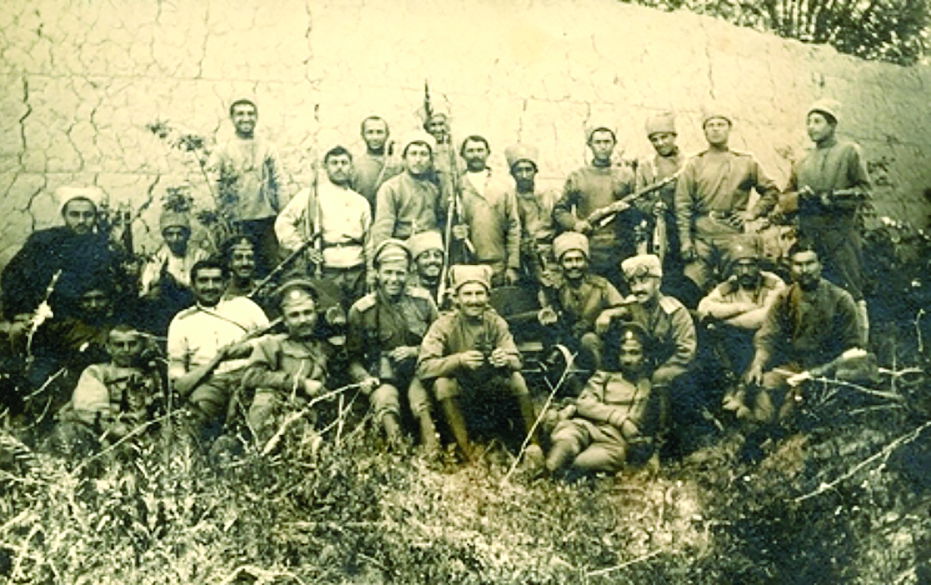 Armenian volunteers participating in the Battle of Sardarabad, 1918 (Wikimedia Commons)
While Russia was preoccupied with civil unrest, the three regions of its empire in the Caucasus, Armenia, Georgia and Azerbaijan, were obliged to form the Transcaucasian Federative Republic (later called the seim). This federation, created in February of 1918, came apart within a few months, because the three nations, with their mutually contradictory interests and sensitivities, began to secretly plot against one another. The Azeris, or the Tatars, being of Islamic religion, tried to ease the Turkish army’s invasion of Azerbaijan, in order to realize their plan for pan-Turanism. (Pan-Turanism was the plan of the Young Turks to unite all the Turkish speaking peoples throughout Turkey, the Russian Caucasus and Central Asia). The Georgians, though similar to the Armenians, desired to occupy territory to the detriment of the Armenians. Seeing this situation, the Turkish army advanced, taking Kars and Alexandropol (Gyumri). Meanwhile, the Georgians declared independence on May 26, 1918. One day later on May 27, Azerbaijan also announced its independence.
The Turks were delighted at these declarations of national independence, since the Caucasus was severing its ties with Russia, and Turkey could have its own way. The Turkish government could even obliterate the Armenians of the Caucasus, just as it had endeavored to obliterate the Western Armenians.
Turkish forces mobilized an army of 35,000 men and advanced on Armenia. They captured Hamamlu (modern Spitak) and Alexandropol (Gyumri). In an attempt to seize the rest of Armenia, they began a three-pronged attack, directed toward Kara Kilise (modern Kirovakan), Bash Abaran (modern Abaran) and Sardarabad.
The Armenian troops were under the command of General Tovmas Nazarbekian, a former Russian Armenian general. He had resigned his commission when Czarist policy turned against the Armenians, but returned to the army when Russia abandoned its anti-Armenian stance. He defended the Kara Kilise front and assigned general Dro (Dramastad Ganayan) to defend Bash Abaran and General Movses Silikian to defend Sardarabad. The strategy was to prevent the Turkish march towards Yerevan.
It was a critical time of life and death. General Silikian made an emotional appeal to the people: “Arise all Armenians! Fight for your honor and the integrity of your country. Fight the way your ancestors fought to defend their lives and property.”
Although outnumbered and outgunned, the Armenian people realized that their very survival was at stake. Multitudes of people — farmers, workers, intellectuals, clergy, women, young and old — fought alongside the Armenian soldiers and drove out the invading Turkish army.
Following the decisive Battle of Sardarabad, on May 28, 1918, the Armenian National Council declared the independence of Armenia. Yet the new state was in chaos. There were no organized administrative machinery, means of transportation or trained experts for the three branches of government. The food supply was exhausted. Famine and sickness were widespread. In the words of the prime minister of the Republic, Hovhannes Kachaznouni, “The government has to start from scratch. It must create everything from a heap of ruins and absolute chaos…a condition which can be described by one word — catastrophic.”
May 28 has become the symbol of Armenia’s national hope and aspirations. It is a testimony to the struggle for liberty and independence, to the sacrifices of brave men and women for whom the ideals and honor of their nation were dearer than life.
Despite the internal and external problems, the creation of a state on May 28 out of chaos and calamity was nothing short of a miracle. It laid the foundation of the modern state of Armenia.
May 28 has become the symbol of Armenia’s national hope and aspirations. It is a testimony to the struggle for liberty and independence, to the sacrifices of brave men and women for whom the ideals and honor of their nation were dearer than life.
Moreover, May 28 is a lesson that cherishing the valor and sacrifices of our ancestors is not enough. Each generation has its role, responsibilities and patriotic duties. The future of the Republic of Armenia depends on our commitment to give our time, talent and treasure for the growth and development of our beloved homeland.
Finally, May 28 is a reminder that the republic that we love today was bought at the cost of our martyrs’ blood. The Republic of Armenia rests upon the foundations cemented in place by the sacrifices of Armenian soldiers and citizens. Its reservation and perpetuation as a democratic and progressive state are our challenge and responsibility.
Author information
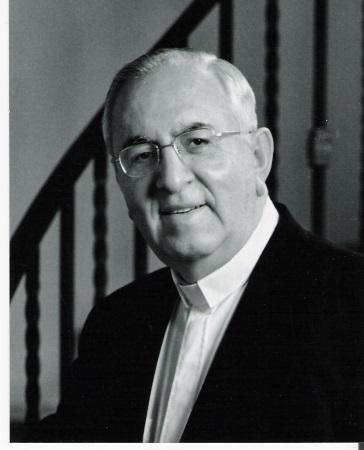
Rev. Dr. Vahan Tootikian
Rev. Dr. Vahan H. Tootikian is the Executive Director of the Armenian Evangelical World Council.
|
The post May 28, a glorious anniversary appeared first on The Armenian Weekly.
So now:
– UK
– France
– Denmark
– Finland
– Lithuania
– Sweden
– Czechia
Have all said or implied their weapons can be used in strikes on Russian soil. Have I missed anyone? https://t.co/C6dlfsOtJA— Shashank Joshi (@shashj) May 28, 2024