Categories
South Caucasus News

The US Senate is preparing lists of individuals “undermining Georgia’s Euro-Atlantic integration” for stringent sanctions


Sanctions for Georgian officials and lawmakers

US Senators Jeanne Shaheen (Democrat) and Jim Risch (Republican) have introduced a bill on May 24th requiring Secretary of State Antony Blinken to present Congress with lists of “individuals undermining Georgia’s Euro-Atlantic integration” within 120 days of the bill’s passage.

🟥 The bill calls for stringent sanctions against these individuals and their family members.

Statement of Policy

It shall be the policy of the United States to support the constitutionally stated aspirations of Georgia to become a member of the European Union and the North Atlantic Treaty Organization, which (1) is made clear under Article 78 of the Constitution of Georgia; and (2) is supported by 86 percent of the citizens of Georgia.

It is the sense of Congress that:

(1) acts of blocking Euro-Atlantic integration in Georgia, due to undue influence from corrupt or oligarchic forces, constitute a form of corruption;

(2) the United States should consider travel restrictions or sanctions on individuals responsible for any actions preventing Georgia from moving toward Euro-Atlantic integration, which include acts of violence or intimidation against Georgian citizens, members of civil society, and members of an opposition political party;

(3) the United States, in response to recent events in Georgia, should reassess whether recent actions undertaken by individuals in Georgia should result in the imposition of sanctions by the United States for acts of significant corruption and human rights abuses;

(4) the United States should consider revoking the visas of nationals of Georgia and their family members who— (A) live in the United States; and (B) are determined to meet the criteria described in section 103(a).

Overall, the bill outlines the following categories:

  • Inadmissibility of officials of government of Georgia and certain other individuals involved in blocking Euro-Atlantic integration.
  • Imposition of sanctions with respect to undermining peace, security, stability, sovereignty, or territorial integrity of Georgia.
  • Sanctions with respect to broader corruption in Georgia.
  • Review of foreign assistance to Georgia
  • Sense of congress regarding suspension of United States-Georgia strategic dialogue.
  • Defense cooperation with Georgia.
  • Additional measures to support the Georgian people
  • Democracy and rule-of-law programming.
  • Report on disinformation and corruption in Georgia.


Who will face sanctions if found to be obstructing Georgia’s Euro-Atlantic integration?

Not later than 90 days after the date of the enactment of this Act, the Secretary shall identify and make a determination as to whether any of the following foreign persons has knowingly engaged in significant acts of corruption, or acts of violence or intimidation in relation to the blocking of Euro-Atlantic integration in Georgia:

1.

Any individual who, on or after January 1, 2012, has served as a member of the Parliament of the Government of Georgia, as a senior staff member of the Parliament of the Government of Georgia, or as a current or former senior official of a Georgian political party.

2.

Any individual who is serving as an official in a leadership position working on behalf of the Government of Georgia, including law enforcement, intelligence, judicial, or local or municipal government.

3.

An immediate family member of an official described in paragraph (1) or a person described in paragraph (2).

Current visas revoked

🟥 The visa or other entry documentation of any alien described in subsection is subject to immediate revocation regardless of the issue date of such visa or documentation.

Not later than 90 days after the date of the enactment of this Act, the Secretary shall submit a written report to the Committee on Foreign Relations of the Senate and the Committee on Foreign Affairs of the House of Representatives that— (1) lists any foreign person for whom the Secretary has determined has knowingly engaged in an activity described in subsection (a); and (2) a detailed justification for each such positive determination.

Imposition of sanctions with respect to undermining peace, security, stability, sovereignty, or territorial integrity of Georgia

(1) The sanctions described in subsection shall be applied to any foreign person the President determines, on or after the date of the enactment of this Act is responsible for, complicit in, or has directly or indirectly engaged in or attempted to engage in, actions or policies, including ordering, controlling, or otherwise directing acts that are intended to undermine the peace, security, stability, sovereignty, or territorial integrity of Georgia;

(2) Is or has been a leader or official of an entity that has, or whose members have, engaged in any activity described in paragraph (1);

🟥 (3) Is an immediate family member of a person subject to sanctions for conduct described in paragraph (1) or (2) who benefitted from such conduct.

Sanctions described

(1) BLOCKING OF PROPERTY.

Notwithstanding the requirements under section 202 of the International Emergency Economic Powers Act (50 U.S.C. 1701), the President shall exercise all authorities granted under the International Emergency Economic Powers Act (50 U.S.C. 1701 et seq.) to the extent necessary to block and prohibit all transactions in property and interests in property of a foreign person subject to subsection (a) if such property and interests in property are in the United States, come within the United States,

🟥 or are or come within the possession or control of a United States person.

(2) INELIGIBILITY FOR VISAS, ADMISSION, OR PAROLE.

  • An alien described in subsection shall be inadmissible to the United States;
  • ineligible to receive a visa or other documentation to enter the United States;
  • and otherwise ineligible to be admitted or paroled into the United States or to receive any other benefit under the Immigration and Nationality Act (8 U.S.C. 1101 et seq.).

(3) CURRENT VISAS REVOKED.

🟥 The visa or other entry documentation of any alien described in subsection (a) is subject to revocation regardless of the issue date of the visa or other entry documentation.

The President may waive the application of sanctions under this section with respect to a foreign person for renewable periods not to exceed 180 days if, not later than 15 days before the date on which such waiver is to take effect, the President submits to the appropriate committees of Congress a written determination and justification that the waiver is in the national security interests of the United States.

Sanctions with respect to broader corruption in Georgia

Not later than 180 days after the date of the enactment of this Act, the President shall submit to the appropriate committees of Congress a report that includes a list of all foreign persons about whom the Secretary has made a positive determination pursuant to [previous] section.

SANCTIONS DESCRIBED

The sanctions described in this subsection are sanctions applicable with respect to a person for acts of significant corruption, involvement in human rights abuses, or harmful foreign activities in Georgia;

🟥 (1) Under Executive Order 14024 – 50 U.S.C. 1701 note, relating to blocking property of certain persons with respect to specified harmful foreign activities of the Government of the Russian Federation;

(2) Executive Order 13818 – 50 U.S.C. 1701 note; relating to blocking the property of persons involved in serious human rights abuse or corruption.


United States strategy toward Georgia

It is the policy of the United States to express that if the Government of Georgia proceeds to pass the foreign agents law and other legislation further inhibiting its ability to advance its accession into the European Union the United States Government’s policy toward Georgia should take into consideration these updated circumstances.

🟥 The United States should review all forms of foreign and security assistance made available to the Government of Georgia;

And to reevaluate its policy toward the Government of Georgia if the Government of Georgia takes the required steps:

(A) to reorient itself toward its European Union accession agenda;

and (B) to advance policy or legislation reflecting the express wishes of the Georgian people.

Not later than 90 days after the date of the enactment of this Act, the Secretary of State and the Administrator of the United States Agency for International Development, in coordination with the heads of other relevant Federal departments and agencies, shall submit to the appropriate congressional committees a detailed strategy which shall:

(1) outline specific objectives for enhancing bilateral ties which reflect the current domestic political environment in Georgia;

(2) determine what tools, resources, and funding should be available and

🟥 assess whether Georgia should remain the second-highest recipient of United States funding in the Europe and Eurasia region;

(3) determine the extent to which the United States should continue to invest in its defense partnership with Georgia;

(4) explore how the United States can continue to support civil society and independent media organizations in Georgia;

(5) determine whether the Government of Georgia remains committed to expanding trade ties with the United States and Europe and whether the United States Government should continue to invest in Georgian projects.

Report on review of foreign assistance to Georgia

Not later than 60 days after the date of the enactment of this Act, the Secretary, in coordination with the USAID Administrator and other relevant Federal agencies, shall submit a report to the appropriate congressional committees that outlines all assistance provided by any United States Government agency to the Government of Georgia that are not explicitly focused on democracy or rule of law.

🟥 Suspension of projects

Not later than 60 days after the date on which the report required under subsection (a) is submitted, the Secretary shall (1) suspend all projects in Georgia carried out by the Department of State or other United States Government agencies that primarily provide material aid, reputational advantage, or sustenance to state actors, officials, or their proxies who undermine the democracy of Georgia and enable Russian aggression within and outside of Georgia;

🟥 Reprogramming

The Secretary may reprogram any amounts that cannot be absorbed to support democracy and rule-of-law initiatives in Georgia to other initiatives taking place in other countries in the Europe and Eurasia region after notifying the appropriate congressional committees.

No amounts appropriated or otherwise made available by the Act entitled ‘‘An Act Making emergency supplemental appropriations for the fiscal year ending September 30, 2024, and for other purposes’’, approved April 24, 2024 (Public Law 118–50) may be obligated or expended for any assistance to Georgia unless the Secretary certifies to the appropriate congressional committees that;

  • (A) such obligation or expenditure is in the vital national security interest of the United States;
  • or (B) the Government of Georgia is taking measures to represent the democratic wishes of the citizens of Georgia; and to uphold its constitutional obligation to advance membership in the European Union and NATO.

Sense of congress regarding suspension of United States-Georgia strategic dialogue

It is the sense of Congress that the Secretary should suspend the United States-Georgia Strategic Partnership Commission, established through the United States-Georgia Charter on Strategic Partnership on January 9, 2009, until after the Government of Georgia takes measures:

(1) to represent the democratic wishes of the citizens of Georgia;

(2) to uphold its constitutional obligation to advance the country towards membership in the European Union and NATO.

Defense cooperation with Georgia

It is the sense of Congress that the United States is proud of the strong defense relationship between the United States and Georgia, which was cemented in 2002 through a Defense Cooperation Agreement; and further enhanced in October 2021 by the Georgia Defense and Deterrence Enhancement Initiative.

Congress is grateful to the Georgian Defense forces for their contributions to international peacekeeping missions, including:

  • (the NATO-led Kosovo Force mission;
  • the European Union Military Operation in the Central African Republic;
  • its deployment of forces in support of United States forces in Iraq from 2006 to 2008;
  • is grateful to the Georgian Ministry of Defense’s contributions toward the NATO-led International Security Assistance Force (referred to in this section as the ‘‘ISAF’’) in Afghanistan, whereby Georgia was one of the largest contributors of troops per capita for a non-NATO 25 country;
  • and 32 Georgian soldiers died and 280 Georgian soldiers were wounded in support of the ISAF mission.

Not later than 120 days after the date of the enactment of this Act, the Secretary of Defense shall conduct a defense review.

🟥 It should to determine whether the United States, in response to recent political developments in Georgia, should continue to support the military needs of Georgia.

Additional measures to support the Georgian people

  • It is the policy of the United States:
  • to continue supporting the ongoing development of democratic values in Georgia, including free and fair elections, freedom of association, an independent and accountable judiciary, an independent media, public-sector transparency and accountability, the rule of law, countering malign influence, and anticorruption efforts;
  • to support the sovereignty, independence, and territorial integrity of Georgia within its internationally recognized borders;
  • to continue to support the Georgian people and civil society organizations that reflect the aspirations of the Georgian people for democracy and a future with the people of Europe;
  • to continue supporting the capacity of the Government of Georgia to protect its sovereignty and territorial integrity from further Russian aggression or encroachment;
  • to support domestic and international efforts, including polling, pre-election and election-day observation efforts, to support the execution of free and fair elections in Georgia in October 2024;
  • to continue supporting the right of the Georgian people to freely engage in peaceful protest, determine their future, and make independent and sovereign choices on foreign and security policy, including regarding Georgia’s relationship with other countries and international organizations, without interference, intimidation, or coercion by other countries or those acting on their behalf.

🟥 And to underscore the unwavering bipartisan support from Congress in supporting the democratic aspirations of the Georgian people.

Funding

From the amounts appropriated to the Assistance for Europe, Eurasia and Central Asia account under the Department of State, Foreign Operations, and Related Programs Appropriations Act, 2024, or under the comparable appropriations Act for fiscal year 2025,

🟥 not less than $50,000,000 shall be made available to strengthen democracy and civil society in Georgia.

Including:

  • for transparency,
  • independent media,
  • rule of law,
  • anti-corruption efforts,
  • countering malign influence,
  • good governance initiatives;
  • to support the Georgian people’s efforts to advance their aspirations for membership in the European Union and Euro-Atlantic integration.

Increased support for civil society and media

In response to the passage of the foreign agents law, the Secretary and the Administrator of the United States Agency for International Development shall undertake a review of efforts to determine:

🟥 (1) how best to continue providing support to civil society and independent media organizations in Georgia;

(2) whether additional funds should be allocated to the National Endowment for Democracy for initiatives in Georgia.

Report on disinformation and corruption in Georgia

Not later than 120 days after the date of the enactment of this Act, the Secretary, in coordination with such agencies as the Secretary considers relevant, shall submit to the appropriate congressional committees a report that includes:

🟥 an assessment of efforts within and outside of Georgia to spread disinformation within Georgia to mischaracterize or undermine the bilateral relationships between the United States and Georgia and the European Union and Georgia;

● a list of sources that have played an active role in advancing disinformation campaigns to erode public support for the United States, the European Union, and NATO within Georgia;

● efforts undertaken by the Government of Georgia to sanction actors involved in the spread of disinformation that limits its Euro- Atlantic aspirations;

● an assessment of the extent to which corrupt actors are undermining the ability of political parties and democratic institutions in Georgia to uphold and adhere to the principles of transparency and good governance;

● a list of policy options to assist the Government of Georgia in helping protect democracy and the rule of law by punishing bad actors;

● a list of actors responsible for (A) the suppression of a free and independent media in Georgia; or harassment and intimidation of civil society in Georgia;

🟥 an assessment of the Russian Federation’s influence and information operations in Georgia;

🟥 an assessment of the People’s Republic of China’s influence and information operations in Georgia;

● connections between the influence and operations described and the broader agenda of the Russian Federation and People’s Republic of China in the region. (b) FORM.

Report on political prisoners in Georgia

Not later than 120 days after the 25 date of the enactment of this Act, the Secretary, in coordination with relevant Federal agencies, as determined by the Secretary, shall submit a report to the Committee on Foreign Relations of the Senate and the Committee on Foreign Affairs of the House of Representativesa that includes:

🟥 a list of prisoners within the Georgian prison system that the Department of State considers to be imprisoned for political reasons or otherwise wrongfully detained, especially those who have been detained since March 2024;

● a description of efforts to work with Georgian authorities to advocate for the release of such prisoners.

Sanctions for Georgian officials and lawmakers


Categories
South Caucasus News

East European Nations Are Losing Their Identity To The Autocratic West – OpEd


East European Nations Are Losing Their Identity To The Autocratic West – OpEd

The eastern states of Europe have eluded the “Bear” only to be ensnared by the seductive lure of Europa. And the “Nymph” is intent on keeping them in her grasp.

The “Wall” was torn down 35 years ago; for the sake of Eastern Europe and its future it needs to be reassembled, on its western border.

Eastern Europe has troubles, and while some are internal, a fair measure of them are not. These externals are all driven by powerful political forces seeking to fulfill their own political agendas–and for the latter that’s about control–economic and political.

The attempted assassination of Slovak Prime Minister Robert Fico may not be an isolated situation. It may be, as some have suggested, a sign of instability in the political regimes of Eastern Europe. This could portend that stable democratic institutions have not been achieved in the region. Moreover, it could further point to the failure of the central focus the West set for itself after the Cold War: to stabilize (meaning democratize) the countries formerly under the influence of the old Soviet state. Dissatisfaction with political decisions should not lead to assassinations of prime ministers, if democratic institutions are stable. In Slovakia, this may not bode well for its future (Pantarhei, “The end of political stability in Europe,” September 21, 2022).

But the Fico incident could also reflect something potentially more sinister at work. And this could be a valid premise especially when external forces in the country want a political regime in power more amenable to the designs of the West.

Certainly, the assassination attempt is not an isolated occurrence endemic to just one region or state; instances like this have happened in more than a few European cities in recent years – from the former balkanized republics of Yugoslavia, Serbia, to northern countries like Sweden and Holland (Reuters, “Killings and attempted assassinations of leaders in Europe,” May 15, 2024). And history evinces how the West is not immune to the dark side of politics. US presidents McKinley, Lincoln and Kennedy all fell to such malevolence, and Reagan barely survived the ordeal. 

But the efforts to subvert the US, tragic as they were, were the product of specific circumstances endemic to domestic politics in the US at the time. They were of little import to the broad sweep of history. If history is our guide, however, an attack on a president or prime minister in Eastern Europe can, and has, led to serious regional, and potentially international, crises. 

But, as has been alluded to, the troubles in these countries are not all internal; they have become a battleground for powerful external forces seeking to exert a measure of control in them. And this occurs because East European countries are not sufficiently stable, historically, to keep in check foreign economic and political influence . They have not yet achieved a critical mass in the experience and expertise required of “nation-state building.” The latter requires acceptance by the vast majority of the populace as to the importance of creating and respecting democratic institutions. For a state, without the latter, protecting itself and its citizens is impossible. The question is: 

Can these countries succeed as democratic nation-states, given the external economic and political forces which plague them?

There is something striking about the reaction to the attempted assassination of Prime Minister Fico. In the European press and other Western centers of power the first comments made were not over local or even regional concerns; rather, they were about history–the history of an empire and the summer of 1914. Western political pundits immediately correlated the incident with the assassination of Austrian Archduke Ferdinand in Sarajevo, which triggered a series of reciprocal agreements precipitating the outbreak of the First World War. But it could also reveal something deeper, perhaps a signal that Eastern Europe, itself, is viewed from a historical perspective with its roots being grounded within empires (El Pais, “Robert Fico, or the unpredictable consequences of assassinations in Europe,” Guillermo Altares, May 16, 2024).

Perhaps, history is where politicians in the West turned to first, because they know that what happens in these states is not strictly an internal matter. And history illustrates what can happen when foreign elements are at work fomenting unrest. Powerful external forces, as was the case historically, are forever busy. Thus what happens in these states is often beyond their control. Their destiny is often influenced if not controlled or even determined by other more powerful nation-states with their own political agendas. And the latter are about control.

Prime Minister Fico has apparently survived the attack and will hopefully resume his duties as health permits. But resuming his responsibilities could be perilous when foreign elements consider East European states merely a means to further their own global agendas. We are referring in this instance to the United States and its British allies, for whom their concerns with Russia and China take precedence.  Beyond their rather shortsighted Anglocentric view of foreign relations, the worth of each state or region is predicated upon its utility in their aim of global hegemony. Foreign affairs is based on how other countries can be used like pawns in a “chess game” that has little to do with what is in the interest of these politically vulnerable East European countries.

Eastern nations experience a political divide with elitist politicians (as opposed to the balance of the populace) making decisions that affect a country’s future. The problem is that these decisions depend on the devise of a foreign power. And the verbal and written expression of this caprice is manifest through Western media. With the latter always willing to exercise its access to the public to manufacture consent in the minds of the populace. British newspaper, The Guardian, recently labeled on its front page Prime Minister Fico as a “Putin ally,”(The Guardian, “At a stroke, Slovakia could soon become Russia’s newest ally,” John Kampfner, September. 5, 2023).

It should also be noted that, one way or another, finance and economics play major roles in the foreign power dynamics brought to bear on East European countries. The IMF, World Bank and other Western institutions are utilized as instruments to effect economic and, therefore, political decisions to their own advantage. Western actors–individual, corporate and government–are simply buying the loyalty of a sector of the regional elite, which, when it comes to foreign policy, view the wishes of the population as irrelevant. 

With regard to the issue of finance, specifically, there is plenty of hypocrisy, especially from the West.  Georgia’s efforts to adopt its own law on the disclosure of foreign agent funding sources in the country has produced major pushback in the West, even to the point of threats. The law, of course, will make influence peddling through corruption much more difficult for those with money to spread around, and that would be the West (Reuters, “Georgian parliament passes ‘foreign agent’ bill, prompting US anger, new protests,” Felix Light, May 14, 2024).

But all this is only a consequence of the general geopolitical position of East European countries. The great powers of international politics were already established when former provinces or territories of this region became states. Russia, Germany, France and Britain at the beginning of the last century were empires with established political cultures and traditions. And even with the relatively young United States of America, the lack of a long history and traditions was addressed through its Enlightenment Era cultivation of statehood and its relatively secure “insular” position in world politics. Eastern Europe developed with no political culture or significant national tradition of its own. And the tumultuous events of the 20th century further distanced it from achieving any serious progress towards this end. 

In the period after the Second World War little more than “organized” chaos emerged in the region. Great divisiveness prevailed wherein many supporters of the Third Reich or former government officials fled to the West and actually engaged in subversive activities from abroad. From the era of Stalin until the “Wall” came down, Eastern Europe had no democratic institutions developed or processes created to perpetuate them. 

Any feelings giving rise to elation or hope surrounding the post-1989 period healed neither old wounds nor political divisiveness.  They merely brought to power individuals who were thoroughly disenchanted (or disgusted) with the old communist regimes. The countries of Eastern Europe, therefore, experienced being psychologically transported from one sphere of influence to another, but without any meaningful change for them internally. These states remained the same incomplete and somewhat dependent countries they had been for decades. Since then they have only become more pronounced in their dependency on elements who promise prosperity and security but have delivered little of either.

One can readily appreciate how, given the history of the East, the politics of leaders like a Robert Fico or a Viktor Orban are a major challenge (if not enemy) not only to external control from Washington or London, but to the whole pattern of political life in the region. Leaders with nationalistic hearts, such as these,  are not just important for Eastern Europe, they are an imperative–even if they are historically an anomaly. East European nations are at a turning point in their history. Either stay with the status quo of history or reclaim their identity. To do the former is easy. But to do the latter they must rely on being the courageous people they have always been and rid themselves of their historical dependency on others. George Bernard Shaw once wrote, “Salvation…what price salvation?” The East Europeans have a choice to make about their identity and who they are:

Master of their own consciousness 
or slave to another’s 


Categories
South Caucasus News

What Sort Of A Meaningless Term Is ‘Brahmanical’? – OpEd


What Sort Of A Meaningless Term Is ‘Brahmanical’? – OpEd

people crowd culture

I followed the news item where, during a talk at JNU, Delhi, the critic and theorist Gayatri Chakravarty Spivak attempted to correct a student who mispronounced the name of W. E. B. Du Bois, a prominent thinker whose influence can be seen in almost all major anti-colonial movements across the world. Apparently, the question that the student wished to ask was: “Spivak claims to be middle class. She said in her lecture that Du Bois was an upper-class elite. How is she as a great granddaughter of Bihari Lal Bhaduri, a close friend of Ishwar Chandra Vidyasagar, supposed to be middle class?” He also referred to himself as the “Founding Professor of the Centre for Brahmin Studies”. 

However rude the student’s attempts to pose the question might have seemed, I think Spivak should have responded to him. If the student is accusing her of being privileged, I don’t think, in itself, privilege is a bad thing. Nothing is wrong with being born into privilege. It is what you do with your position of privilege that really matters. If she’s a professor at Columbia University, it’s obvious that she enjoys a certain amount of privilege. But, to be fair to her, she used her privilege correctly. She dedicated her writing to deconstructing power. This is not to suggest that she did not earn her global reputation as a formidable intellectual through hard work and commitment. 

Therefore, for an 82-year-old woman professor to be asked the question, implicitly presupposing that she is concealing her class, is a bit too much to take. She responded to his rudeness with a subtler kind of assertiveness that manifested in the way she corrected his pronunciation and evaded the question. I don’t blame her. No one likes to be treated with condescension. Someone should tell the boy that he cannot treat people as if they owe him an explanation for who they are and what their background is. Nothing gives you the right to ask me a question with regard to who I am unless I have given you such a right. She is an 82-year-old woman scholar. The least he could do is pose his question a little respectfully. Would he speak in the same manner if she belonged to a marginal community? Not that it makes it any better. Then, why talk to her as if she’s a five-year old who is caught hiding a sweet in her hand? 

This tendency to constantly attack people for belonging to a certain community or for their social background is popular in universities which have a leftist culture. How is it my fault that I am born in a certain caste? How is it your fault that you are born in a certain caste? It works both ways. The Brahmin did not commit a sin by being born a Brahmin for exactly the same reason that the Dalit did not commit a sin by being born a Dalit. This is the reason why I am opposed to the use of the word ‘Brahmanical’. The more appropriate word is ‘casteism’ or ‘casteist.’ 

Brahmin is both a caste and a varna. If ‘Brahmanical’ means upper caste supremacism, why should it be restricted to Brahmins? Are there no members in other social groups who are casteist? Some of them even fall under the category of OBCs. In my view, ‘Brahmanical’ is a term of abuse that is used randomly to refer to people whose views we assume represent mainstream Hindu thought and culture. I remember an honest and upright Muslim professor being called ‘Brahmanical.’ And the man was anything but that.

This culture of spewing venom against professors and students in universities through the use of the term ‘Brahmanical’ is unpardonable to say the least. It’s a form of harassment which, in its extreme form, is called persecution. Indian public universities are fountains of toxicity where there is a group of teachers and students, self-professed activists, who make it their full-time business to attack people in the most disrespectful terms possible. The justification for it is the caste and sometimes the minority card. ‘I come from an oppressed community.’ ‘I’ll abuse you.’ ‘I’ll file atrocity cases against you.’ ‘I’ll basically spoil your reputation and make you look like a casteist or a communal person’. This ‘perpetual victim syndrome’ (PVS) of marginal communities, which sometimes includes minorities as well, is the bane of Indian universities.

From my own experience, in 2016, an extremely toxic student filed an SC/ST atrocity case against me in the nearest police station because he claimed that I evicted him from the English and Foreign Languages University campus on Ambedkar Jayanti. Until the police officer called and told me on phone that an atrocity case had been filed against me, I did not know that the boy was a Dalit. There was nothing in his appearance or name which vaguely suggested he was Dalit. Caste, unlike race, is a hidden signifier. The other thing is that he never called me to find out if I had actually given a verbal instruction to the security officer in question. The security officer, a literal-minded man, made the decision on his own. Had he asked me, of course, there is no way I would have asked him to evict the student from the campus on a special occasion such as Ambedkar Jayanti. The student did everything possible to destroy my reputation in as many ways as possible. Needless to say he had ample support from so-called leftist teachers and students from a certain department that professes to teach culture and from other universities as well. Likewise, with some other students who lied through their teeth and got away with the online abuse that I was subjected to, because, as a rule, I don’t like to get back at students for their stupidity.

The Rohith Vemula case of a Dalit student who committed suicide in 2016, was closed recently and then reopened with some pressure on the Congress government in Telangana. I don’t intend to go into the details of whether he was or wasn’t a Dalit. What is important is that he took his own life which in itself is a tragedy. However, I would like to go with the reason for the suicide as stated in the note left behind: “No one is responsible for my this act of killing myself. No one has instigated me, whether by their acts or by their words to this act. This is my decision and I am the only one responsible for this.”

(I’m not a BJP supporter by any definition of the term. This is the party that is directly and indirectly responsible for me losing my job. The VC who removed me from service used ABVP, RSS and BJP connections to ensure that there was no response from the Ministry of Education with regard to complaints on my removal from service. The VC even went to the extent of taking an article of mine written in 2013, where I was critical of the hanging of Afzal Guru, and sent it to every ABVP, RSS and BJP personage he knew and he even used it even in the High Court of Telangana to spoil my case, calling me a “communist” and “urban naxal”, only to cover up his own criminal misdeeds. He succeeded while I lost my job.)

Therefore, I have no special affection for the then Vice-Chancellor of the University of Hyderabad (where Rohith Vemula studied) Prof. Appa Rao Podile, the BJP member of parliament, Mr. Bandaru Dattatreya or Ms. Smriti Irani, who happened to be the education minister. Certainly there were issues on the campus between the right-wing ABVP students and the Ambedkar Students’ Association (ASA). Yet, I’ve no doubt in my mind that all of the accused in this case were innocent of Rohith Vemula’s suicide. Prof. Appa Rao Podile was virtually subjected to every abuse imaginable, short of burning him at the stake. Again, the man mishandled the issue by not calling for a dialogue between both groups of students. But, to crucify a man for no fault of his and ensure that his reputation is destroyed for life is a bit too much in my view.

This is the kind of poisonous culture behind the arrogant casteist epithet, “Founding Professor of the Centre for Brahmin Studies”. Members of the upper castes among teachers, a disgruntled lot who like to pretend that they are beyond caste, and bleeding-heart white liberals with a savior complex, are usually behind this kind of bullshit with teachers and students from marginalized groups. The bottom line is that you must get a degree, earn a position and use your position to correct discrimination wherever it happens. You cannot alienate everybody by playing the ‘lower’ caste and the victim card all the time. You cannot be filing false cases against people who belong to other groups simply because you are a full-time activist who has made it your business to target people who are opposed to your views.

There are white American and European Christians who happen to be racist. That’s not the fault of Christianity. There are Hindus who are casteist and their casteism needs to be challenged. It doesn’t mean you call every Hindu a casteist or see Hinduism synonymous with casteism. It doesn’t mean you randomly target people because in your mind you are convinced that they are casteist. What sort of a meaningless term is ‘Brahmanical’? Or another equally nonsensical term ‘savarna’? It’s offensive and reverse casteist as well. There are good people everywhere (though in significantly small numbers) just as every community has its share of hardened criminals. Why specially target Brahmins or any group for that matter? Why say that Hinduism and the caste system are one and the same thing? They are not. I know a lot of devout Hindus who are anything but casteist, either in their private or their public lives.

I think it’s high time that Dalits and minorities, especially in universities, realize that this culture of spewing venom on members of other groups is going to work against their interests, both in the short and in the long run. They are going to isolate themselves and this is going to damage their progress in a big way. Fighting discrimination is not a bad thing. But it has to be fought in a just way. Not through abuse and by making constant claims of victimization without concrete reasons. Exclusion cannot be answered with exclusion, but with inclusion. Just as you want to be trusted and respected it is only fair that the other person expects the same amount of trust and respect from you. But I blame their leadership and their so-called spokespersons for burning bridges between groups. If communal and caste discrimination would come to an end a lot of these people would be without jobs. They made their careers by playing the caste and victim card. That too is privilege in a way. Why would they want to give it up now?


Categories
South Caucasus News

God’s Gift Of Sakina-Shekinah Peace, Trust And Assurance – OpEd


God’s Gift Of Sakina-Shekinah Peace, Trust And Assurance – OpEd

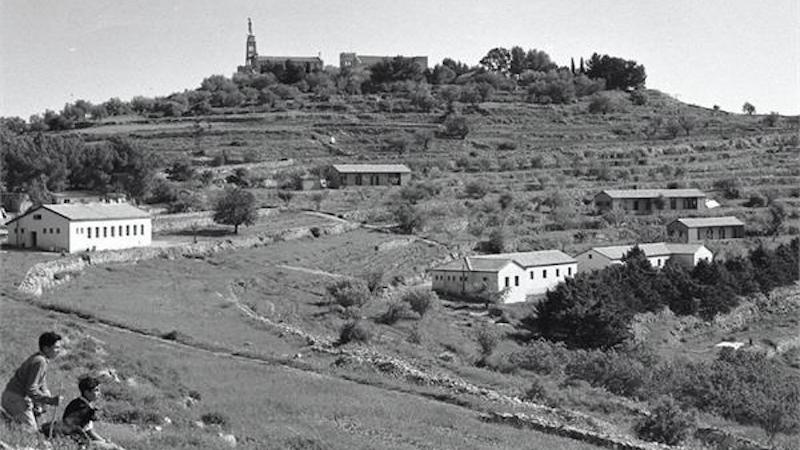
Kiryat Ye'arim in 1937 in the Jerusalem District of Israel with the Church of Our Lady of the Ark of the Covenant on the hill behind. Photo by Abraham Malevsky, Wikipedia Commons

A massive 8th century BCE man-made platform discovered at a Catholic convent in central Israel several years ago, may be an ancient shrine for the Ark of the Covenant, which is referred to three times in the Qur’an. In the Qur’an the actual Ark of the Covenant is called ‘Tabut’ and the Covenant itself  is called ‘Sakina’, [Shekinah in Hebrew].

The Quran states, “And their Prophet [Samuel] said to them [the Children of Israel]: “A Sign of his [King Saul/Talut] authority is that there shall come to you the Ark (Tabut), and in it Sakina (a Covenant) with security from your Lord, and the relics left by the family of Moses and the family of Aaron, carried by angels. In this is a symbol for you if you indeed have faith”. (2:248)

The remains of the monumental elevated site were unearthed on a hilltop long associated with the location of Biblical Kiriath-Jearim, which was the 20-year home of the Ark of the Covenant until it was taken by King David and paraded to Jerusalem. 

Modern Kiryat Ye’arim is bordered by Abu Ghosh, an Israeli-Arab village six miles west of Jerusalem. Today the hill is carved up by terraced slopes dotted with olive trees, which provide an evergreen relief to the stone construction of the old 1906 convent, slightly later hostel, and the 1924 Catholic Church of Our Lady of the Ark of the Covenant. 

The archaeological dig is unusual because it is located on private Catholic church property under the protection of the French government. Today the site is occupied by the Sisters of St. Joseph of the Apparition.

Kiriath-Jearim is mentioned in several books of the Hebrew Bible, including a detailed story in the first book of Chronicles; in which King David jubilantly transports the ark to Jerusalem: “And David went up, with all of Israel, to Ba-allah, that is, to Kiriath-jearim, which belonged to Judah, to bring up from there the ark of God… David and all the Israelites celebrated with all their might before God, playing songs, with harps, timbrels, cymbals and  trumpets” (13:5-8)  

Note that the Arabic name of the site, Deir el-ʿAzar, ” a variation of ‘The Monastery of Eleazar,’ probably the name of a Byzantine monastery on that spot, named in honor of Eleazar, who as the second High Priest, succeeding his father Prophet Aaron after he died, and also performed the ritual of the cow, referred to in the Qur’an (al-Baqara, v.67-71) He was also a nephew of Prophet Moses.  

The author of Tafsir Uthmani writes, “(The Ark of the Covenant, Tabut Sakina) contained some holy relics of Hazrat Musa and other Prophets. The Bani Israel (Children of Israel) put this box in the front line in times of war, and Allah gave them victory by its auspices.” (Tafsir Uthmani, Allama Shabbir Ahmad Uthmani, trans. Muhammad Ashfaq Ahmad. Bombay: Taj Publishers, 1992. Vol. 1, p.140)

As the author of Tafsir Uthmani wrote, this Ark contained the Covenant (Sakina), assurance of help from the unseen, in the form of Prophetic relics. The relics it (the Ark) contained were connected to Prophetic authority, which represented the Vicegerency of God on earth by His Prophets and Messengers.

At the dig’s conclusion in a few years, the sisters will be faced with the decision of whether to open up the site to tourists. The nuns have been very accommodating, but as the discoveries mount, are increasingly concerned about their peace of mind.

Perhaps instead of a tourist site, it could become a joint Catholic/Islamic/Jewish institute of Sakina-Shekinah peace, trust and assurance from the three combined Abrahamic religions; so that we may live up to God’s holy words: 

“Righteous is not that you turn your faces toward the east or the west, but  righteous is [in] one who believes in Allah, the Last Day, the angels, the Book, the Prophets; and gives wealth in spite of love for it, to relatives, orphans, the needy, the traveler, those who ask [for help], and for freeing slaves; [and who] establishes prayer and gives Zakah; fulfilling their promise when they promise; and are patient in poverty, hardship and during battle. These are the ones who have been true, and it is these who are the righteous.” (Qur’an 2:177)

As the Qur’an states: “‘Believers, be steadfast in the cause of God and bear witness with justice. Do not let your enmity for others turn you away from justice. Deal justly; that is nearer to being God-fearing.” (5:8)

And as Prophet Isaiah states: “In that day there will be a highway from Egypt to Assyria. The Assyrians will go to Egypt and the Egyptians to Assyria. The Egyptians and Assyrians will worship together. On that day Israel will be the third, along with Egypt and Assyria, a blessing on the earth. The Lord Almighty will bless them saying, “Blessed be Egypt my people, Assyria my handiwork, and Israel my inheritance.”” (Isaiah 19:23-5) 


Categories
South Caucasus News

From Deterrence To Development: The Legacy Of Youm-E-Takbeer – OpEd


From Deterrence To Development: The Legacy Of Youm-E-Takbeer – OpEd

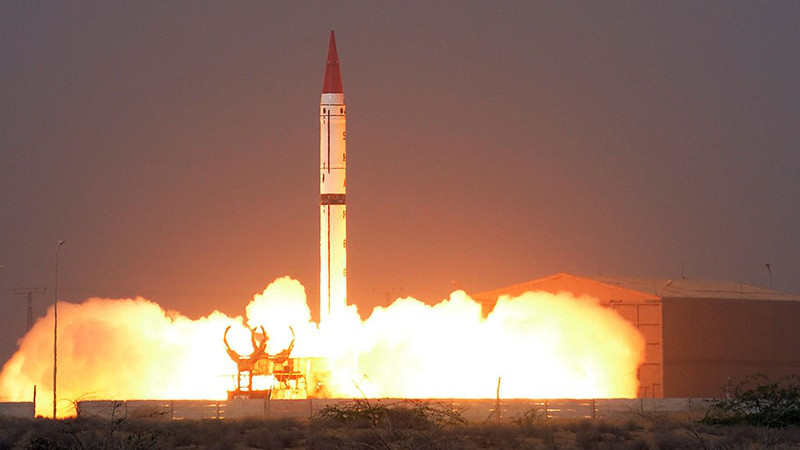
File photo of Pakistan launching a Shaheen-III Missile. Photo Credit: Inter Services Public Relations (ISPR)

Youm-e-Takbeer, meaning “The Day of Greatness,” is celebrated annually as a reminder of Pakistan’s difficult but necessary decision to ensure its defence despite immense international pressure.

28 May 2024 will mark the 26th anniversary of that pivotal moment in Pakistan’s history. On this day in 1998, Pakistan conducted nuclear tests in the Chagai district of Balochistan, a decision made in response to India’s nuclear tests earlier that month. This event was not just a demonstration of military might but a significant turning point in Pakistan’s security strategy and regional dynamics, symbolizing the nation’s resolve to protect its territorial integrity, independence, and sovereignty while maintaining strategic balance in South Asia. By successfully conducting these tests, Pakistan became the seventh nuclear power in the world. 

India’s nuclear tests left Pakistan with no choice but to display its nuclear capability to restore strategic stability. Following India’s tests in May 1998, Indian politicians and the public believed they had a nuclear monopoly in the region. Leaders like India’s Prime Minister Atal Bihari Vajpayee and Deputy Prime Minister LK Advani issued thinly veiled threats to Pakistan, urging it to reconsider its policies, especially regarding Kashmir, and to adopt a more conciliatory stance considering India’s newfound military power. Consequently, without international assurances against the nuclear threat from India, Pakistan felt compelled to proceed with its tests.

The responsibility for the nuclear arms competition in South Asia primarily rests with India. Pakistan has consistently proposed various measures to India aimed at maintaining peace and nuclear restraint in the region. Since 1974, Pakistan has suggested numerous initiatives, including the establishment of a nuclear-free zone, mutual inspections of nuclear facilities, and adherence to non-proliferation treaties. These proposals culminated in the suggestion of a Strategic Nuclear Restraint Regime in 2011, focusing on missile restraint, peaceful conflict resolution, and conventional balance. However, India has refused to engage in any dialogue regarding these proposals.

According to the SIPRI 2024 report, India remains the world’s largest arms importer, developing a range of nuclear arms to assert its regional dominance. Conversely, Pakistan’s leadership advocates for peace and security in the region through arms control rather than an arms race. Pakistan actively participates in global initiatives to reinforce international arms control, non-proliferation, and disarmament regulations, adhering to modern guidelines on nuclear safety, security, and export controls.

Despite being barred from global nuclear cooperation; Pakistan has made impressive strides in developing indigenous nuclear technology for peaceful purposes. The country has effectively harnessed nuclear technology in various civilian sectors, including energy production, healthcare, agriculture, and research and development. Pakistan has set its sights on achieving a nuclear power generation capacity of 40,000 MW by 2050 under its Nuclear Energy Vision, with plans to deploy 32 nuclear power plants to fulfil the nation’s energy requirements. This ambitious goal is pursued under the vigilant supervision of the International Atomic Energy Agency (IAEA), which has consistently commended Pakistan for maintaining exemplary safety and security standards at its nuclear power plants. During his visit to Pakistanin February 2023, DG IAEA Rafael Grossi lauded the world-class safety measures implemented at Pakistani nuclear power plants.

As an energy-deficient nation and the 7th most vulnerable country to climate change, Pakistan urgently needs to transition to clean and environmentally sustainable energy sources. In 2023, nuclear power plants supplied 22,372 million kWh, constituting 17.2% of Pakistan’s total electricity mix. However, expanding nuclear energy could significantly address the country’s growing energy needs without worsening environmental degradation.

The Pakistan Atomic Energy Commission (PAEC) operates 19 nuclear medicine centres in the healthcare sector, providing state-of-the-art diagnostic and treatment services to over 800,000 patients annually. These centres play a crucial role in treating chronic diseases, showcasing the substantial impact of nuclear technology on public health.

Agriculture, a cornerstone of Pakistan’s economy, has also greatly benefited from nuclear technology. By applying nuclear techniques, particularly radiation-induced mutations, PAEC has developed several high-yield, disease-resistant crop varieties, including wheat, cotton, and rice. These advancements have markedly improved agricultural productivity. Furthermore, nuclear technology has enhanced pest control methods, plant nutrition, and food preservation, significantly boosting the agricultural sector’s overall efficiency.

To maximize the benefits of its civilian nuclear program, Pakistan should establish a comprehensive framework that promotes the indigenization of nuclear power generation and fosters public-private partnerships in developing nuclear technology for peaceful purposes. Reducing reliance on foreign technologies, particularly in the health and power sectors, will enhance national self-sufficiency. Close collaboration with the IAEA can facilitate the transfer of international expertise to various sub-sectors where nuclear technology can have a profound socio-economic impact. Additionally, Pakistan can leverage the IAEA platform to share its indigenous nuclear advancements with the global community, supported by the robust oversight of the Pakistan Nuclear Regulatory Authority (PNRA).

While 28th May is a day to celebrate Pakistan’s nuclear deterrent capabilities, the vital contributions of peaceful nuclear technology to the country’s socio-economic development also deserve greater recognition. Given the persistent regional instability and the prevailing narrative focused on nuclear weapons in South Asia, the achievements of Pakistan’s civilian nuclear program often remain in the shadows. It is essential to educate the public about the diverse and beneficial applications of nuclear technology in fields such as medicine and agriculture.

Developed countries have long benefited from nuclear power, thanks to stringent safety standards and advanced technologies that minimize the risk of nuclear accidents. Pakistan, adhering to global safety protocols, has maintained exemplary safety records at its nuclear power plants for over four decades. This proven record suggests that Pakistan is well-positioned to increase its reliance on nuclear energy, providing a sustainable and environmentally friendly solution to its energy challenges. By exploring all available options, including international cooperation and technical assistance from the IAEA, Pakistan can fully harness the potential of nuclear technology to drive socio-economic progress.

Thus, Youm-e-Takbeer is a significant day in Pakistan’s history, symbolizing the nation’s commitment to a robust defence strategy in response to India’s aggression. Pakistan remains dedicated to promoting peace and stability both regionally and globally, upholding principles of mutual respect, cooperation, and peaceful coexistence with its neighbours and the international community. By embracing a holistic approach that balances defence imperatives with socio-economic aspirations, Pakistan can continue to secure its future while contributing positively to regional and global peace.


Categories
South Caucasus News

Art Of Diplomacy In 21st Century: Navigating Challenges And Fostering Cooperation – OpEd


Art Of Diplomacy In 21st Century: Navigating Challenges And Fostering Cooperation – OpEd

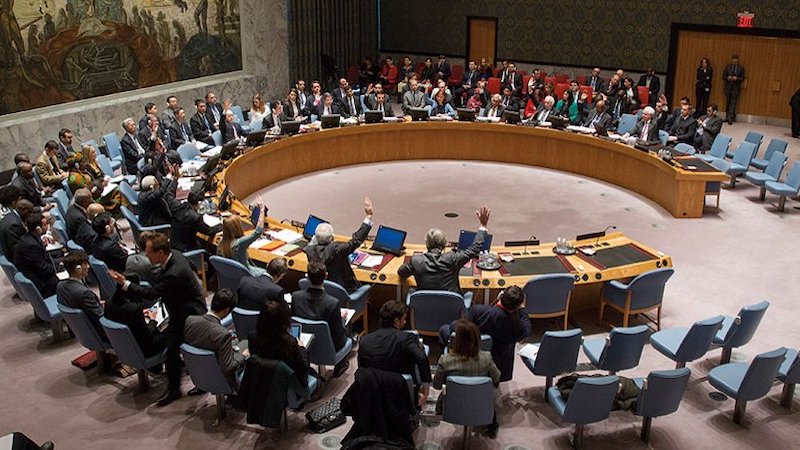
United Nations Security Council unanimously adopts Resolution 2199 (February 12, 2015) condemning any trade, in particular of oil and oil products, with ISIL (Daesh), Al-Nusrah Front, and any other entities designated as associated with al Qaeda (Courtesy UN/Loey Felipe)

The significance of diplomacy holds immense weight in the contemporary and interconnected world we inhabit. Seemingly insignificant occurrences possess the potent ability to yield widespread repercussions and global instigate or regional crises.

Diplomats assume a crucial role in molding intergovernmental affairs as they serve as representatives of their nations engage in negotiations aimed at treaties forging and agreements and tackle pressing global concerns such as climate change. While these challenges may manifest differently across nations they ultimately constitute issues of a universal nature impacting humanity at large.

Accordingly, it is pertinent to unpack the obstacles diplomats encounter in shaping the diplomatic landscape of the present century necessitating their adept navigation through intricacy while leveraging mediation as means a to foster tranquility. Diplomacy is an indispensable component of international relations serving as a catalyst for cooperation and diplomatic efforts between nations on critical global issues such as pandemics change climate and terrorism. Diplomats assume the responsibility of facilitating diplomatic dialogue with foreign leaders and negotiating agreements that benefit all involved parties including addressing change climate.

Moreover, diplomats play a pivotal role times in crises such as pandemics by establishing contact and representing their nation’s interests working towards the preservation of human rights development and the resolution of war crimes with other countries to maintain favorable international relations. 

In the contemporary era, diplomats have assumed a paramount role in resolving global conflicts peacefully promoting collaboration in addressing global problems through diplomacy. Achieving successful outcomes in this realm necessitates a delicate balance of power establishment the of reasonable expectations and the adept utilization of diplomatic tools.

The primary objective of diplomats is to foster international cooperation diplomacy and convert troubled states’ aspirations into productive conversations. Their efforts revolve around the pursuit of fair agreements provision of aid and safeguarding the environment ultimately fostering trust and forging positive relationships among diverse societies. This encompasses to efforts prevent and resolve disputes amicably; however, diplomats also possess agency in global organizations to promote national interests and offer a political solution to issues such as drug trafficking illiteracy terrorism, and environmental degradation.

Diplomats play a pivotal role in the universal advancing recognition of fundamental international principles including rights human and sustainable development. They firmly believe that differences on such ideological matters can be bridged through transparent discussions that incorporate public participation. Consequently recognize the significance of engaging through people various mediums, such as television the internet, and direct public involvement. By effectively communicating and taking necessary action they remain optimistic that contentious aspects can be identified and properly addressed. 

This approach to diplomacy often accompanied by economic assistance has individual empowered states and smaller countries to exert greater influence on the global stage. Diplomats comprehend that in contemporary diplomacy embracing constructive criticism is preferable to being perceived as an adversary. They aim to exert influence not to intimidate. Diplomatic efforts can take various forms ranging from behind-the-scenes negotiations high high-level summits. A skillful diplomat acknowledges the potential pitfalls of communication and comprehends how power dynamics impact peace.

Effective communication paramount is particularly when with dealing issues about criminal activities. Diplomats collaborate with close law enforcement sharing agencies’ information and coordinating investigations to dismantle criminal networks and fortify security global. Given the imperative to promote peace worldwide diplomats must maintain a global presence and demonstrate competence in the of art diplomacy. 

Diplomacy is an arduous profession that carries numerous responsibilities. These responsibilities include assisting with aid programs promoting conflict resolution and addressing pressing global challenges. The essence of diplomacy lies in establishing connections between conflicting parties through diplomatic avenues striving for just and equitable resolutions. Diplomatic engagement demands a conciliatory mindset characterized by empathy cooperation success and across diverse contexts and for varying purposes. Diplomats must possess the skills necessary to effectively manage situations. The ultimate goal of diplomacy in the 21st century is to actively engage in conflicts and work relentlessly towards the attainment of peace thereby cultivating a global harmonious order. 

In conclusion, government officials experts, and diplomats continue to grapple with significant global issues including climate change terrorism pandemics, and transnational crime which may give rise to a multitude of challenges. Thus it is imperative for them to actively pursue their interests while also fostering a collaborative approach towards shared objectives through engaging in various dialogues. Conversation advocacy efforts and the formulation of appropriate or bilateral multilateral strategies play crucial in the role of diplomats as they strive to public ensure safety global peace, and sustainability progress.

The opinions expressed in this article are the author’s own.

References

  1. Diplomacy: Theory and Practice” by Joseph Nye Jr. (2008). Princeton University Press. 
  2. “Climate Change and International Relations: A Century of Transnational Relations” edited by Paul Harris (2015). Routledge. 
  3. “Pandemic Diplomacy: How Nations Responded to COVID-19” by John Mearsheimer (2021). Oxford University Press. 
  4. “Terrorism and Diplomacy: Negotiating with Terrorists” by Daniel Byman (2019). Harvard University Press. 
  5. “Globalization and Its Discontents” by Joseph E. Stiglitz (2003). W.W. Norton & Company. 
  6. “The Art of Diplomacy: Defining Foreign Policy” by Nicholas Burns (2019). Yale University Press. 

Categories
South Caucasus News

NPR News: 05-25-2024 8PM EDT


NPR News: 05-25-2024 8PM EDT

Learn more about sponsor message choices: podcastchoices.com/adchoices

NPR Privacy Policy


Categories
South Caucasus News

Azerbaijan’s female para athlete crowned four-time World champion – News.Az


Azerbaijan’s female para athlete crowned four-time World champion  News.Az

Categories
South Caucasus News

Protests in Georgia as MPs set to override veto on ‘foreign influence’ law – Port Lavaca Wave


Protests in Georgia as MPs set to override veto on ‘foreign influence’ law  Port Lavaca Wave

Categories
South Caucasus News

NPR News: 05-25-2024 7PM EDT


NPR News: 05-25-2024 7PM EDT

Learn more about sponsor message choices: podcastchoices.com/adchoices

NPR Privacy Policy