Categories
South Caucasus News

Tough Times For The Voices Of Freedom In Georgia – OpEd


Tough Times For The Voices Of Freedom In Georgia – OpEd

The voices of freedom in the Republic of Georgia (the former Soviet republic, not the home of the Bulldogs) will be substantially less audible thanks to a new law passed by Parliament. Organizations receiving more than 20% of their funding from foreign sources must be designated as “agents of foreign influence.”

Nonprofits in Georgia that have advocated for freedom and free markets receive a substantial share of their funding through grants from foreign foundations. That is likely to come to an end.

This article offers some details on the new law, which is similar to a law in Russia that brands organizations that receive foreign funding as foreign agents. Most Georgians appear opposed to the law, and the real foreign influence here is Russia. As the article notes, Georgia has been trying to move away from the sphere of Russian influence and toward the EU, but that move is proving difficult.

Some readers may know that after the dissolution of the Soviet Union in 1991, Georgia was one of the more corrupt former Soviet republics. That changed in the mid-2000s when new leadership brought free-market reforms, more freedom on all fronts, and, as a result, growing prosperity.

Those reforms were supported by Georgian nonprofits that promoted the ideas of freedom. A Georgian friend of mine tells me that the politicians who are promoting this legislation are branding those organizations as “enemies of the state,” resulting in attacks, sometimes violent attacks, on those who are so accused.

This law will mute the voices of freedom in Georgia and turn the country, which for two decades moved away from Russian influence toward the West, back toward heavy-handed Russian-style governance.

Why would Georgia’s political leadership turn their backs on the institutional reforms that have shown such success for two decades? The main goal of those who have political power is to maintain and increase their power. The well-being of the masses is, at best, a secondary consideration. We can hope for the sake of the Georgian people that this is not the first step that will turn Georgia into another Venezuela.


Categories
South Caucasus News

Squad And The Rise Of Minilateralism In The Indo-Pacific – Analysis


Squad And The Rise Of Minilateralism In The Indo-Pacific – Analysis

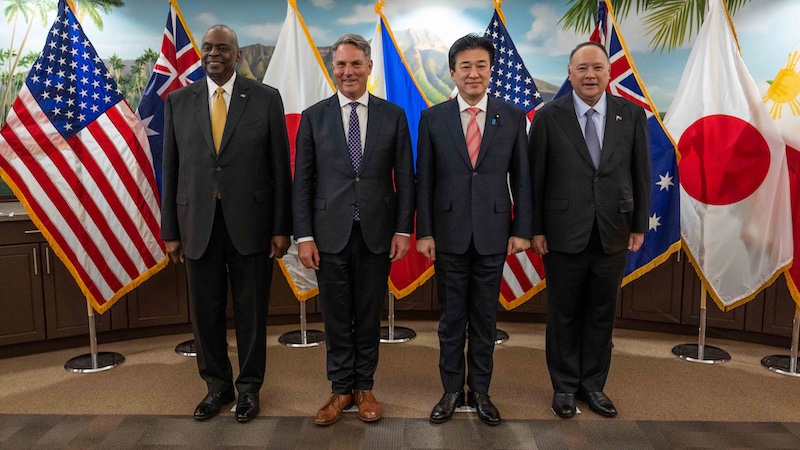
Left to right: Secretary of Defense Lloyd Austin III, Australian Deputy Prime Minister and Defense Minister Richard Marles, Japanese Defense Minister Kihara Minoru, and Secretary of National Defense of Philippines Gilbert Teodoro pose for a group photo at U.S. Indo-Pacific Command headquarters, Camp H.M. Smith, Hawaii, May 2, 2024. Photo Credit: Air Force Tech. Sgt. Jack Sanders, DOD

By Sayantan Haldar and Abhishek Sharma

The Indo-Pacific security landscape has emerged as a critical flashpoint for geopolitical contests. Growing Chinese naval aggression in the South China Sea (SCS) has long been a major concern for countries with strategic stakes in the region. The United States (US) and other like-minded countries have increasingly looked to bolster efforts to counter the imminent threats posed by China’s increased naval activities.

Much of the Chinese aggression in recent months has been targeted at the Philippines, a US treaty ally, which is confronting Beijing’s maritime misconduct in the SCS on a regular basis. Therefore to further strengthen the Philippines’ maritime security, the Defense Ministers of the US, Japan, Australia, and the Philippines met in Hawaii to discuss ways of advancing and continuing maritime cooperation. As per media reports, this grouping of four has been named ‘Squad’ by Pentagon officials.

Squad, security, and South China Sea  

Beijing’s continued efforts to reclaim contested maritime spaces through aggressive naval posturing in the SCS have been instrumental in intensifying the geopolitical contest in the region. In recent times, tensions between China and the Philippines have been the focal point of conversations about the evolving geopolitics in the SCS. The West Philippine Sea, which Manila claims to have jurisdiction over, has emerged as the hotbed of the Sino-Filipino contest.

However, confrontation between China and the Philippines is not new. In 2016, Manila moved to the Permanent Court of Arbitration against Beijing, challenging its historical claims over the nine-dash line—a critical maritime passage—key to Chinese maritime interests for the free flow of trade and resources. Tensions peaked earlier in March, in the aftermath of a physical confrontation between Chinese and Philippine soldiers which injured Manila’s soldiers and damaged their vessels. This prompted Philippines President Ferdinand Marcos Jr. to pledge to initiate countermeasures proportional to Chinese aggressions in the contested waterways.

President Marcos Jr., who assumed office in 2022, appears to have brought a shift in Manila’s strategy to deal with China. Marcos Jr. has further aligned with the US in its efforts to counter China. Amidst the ongoing tensions, Manila appeared to indicate its willingness to pursue a robust approach to dealing with China by way of joining the US-Japan-Philippines trilateral in 2024, which held its first leader’s summit in Washington on 11 April 2024.

Furthermore, US Secretary of Defense Lloyd Austin, on May 03, 2024, convened a meeting with his counterparts from Australia, Japan, and the Philippines emphasising their collective commitment to advance collaboration to counter Chinese conduct of obstructing the Philippines’ freedom of navigation in the South China Sea. The coming together of this grouping has been popularised as the formation of ‘Squad’. Nonetheless, the second meeting between the Defense Ministers of the Squad countries followed the first meeting which was held on 3 June 2023, where they discussed the same issue.

Besides Squad, the other minilateral and bilateral groupings feature in the maritime security thinking of the Philippines. These include the US-Japan-Philippines trilateral, and the Philippines’ bilateral defence relations with the US and Japan. Australia’s addition stops short of going beyond just holding joint military exercises, or what it called, maritime cooperative activity.

Thus, Squad’s emergence should be seen in two contexts, first is the failure of multilateral institutions like ASEAN in the region and the unwillingness of many ASEAN members to condemn Chinese coercive action outrightly; second, by way of establishing new complementary frameworks to strengthen the maritime security in West Philippine Sea through a mesh of a viable security arrangement, both bilateral and trilateral. Squad’s role in the present context is limited in scope and space as compared to other frameworks that exist.

Minilateralism and the logic of maritime security 

The formation of this new minilateral grouping has prompted some important questions.  Why are such configurations emerging in the Indo-Pacific? What explains the rise of minilaterals in the region? Further, with US, Japan, and Australia involved in this grouping, and being named ‘Squad’, naturally, references have been drawn to the already existing Quad.

Firstly, it would be inaccurate to view the emergence of the Squad as an outcome at the cost of the already existing Quad. Needless to mention, the leadership at Washington, Canberra. Tokyo and New Delhi continue to highlight the importance of the Quad, and no indication in contrast to this has emerged yet. The synergy among the Quad countries is directed towards fostering a secure and stable Indo-Pacific.

On the other hand, the Squad should be seen in the context of the specific contests that have characterized the SCSregion, and even more specifically the West Philippine Sea. India, and by extension, Quad’s role in the SCS, though relevant, remains limited in this specific sub-geography. The operational focus of any minilateral grouping is grounded on the geographies of their collective interests. For its part, the Quad has made promising progress in expanding realms of cooperation for maritime security. This is further evidenced by the joint naval cooperation—the Malabar Exercise, which has been conducted by the navies of the Quad countries routinely in important geographies in the Indo-Pacific.

Secondly, the question of rising minilaterals merits critical attention. The Indo-Pacific is a vast maritime geography. In this context, it is only natural that several countries are likely to have a varied focus on specific sub-regions which is determined by several factors. First, the geographical location is a key variable that shapes the contours of the strategic focus of various countries. Second, the geographies of strategic partnerships that a country pursues are a major variable. Third, interests in global trade, energy security, and marine resources also tend to dictate the specific subregions in which a country chooses to remain active. This is evident in the case of the Indo-Pacific as well. For example, the US has directed most of its focus towards the subregions in the Indo-Pacific towards the Pacific.

On the other hand, for India, the Indian Ocean, including the Western Indian Ocean has been its primary theatre of security interests. Australia appears to be expanding its focus towards the Indian Ocean under the Indo-Pacific rubric. Likewise, for the Philippines, its immediate maritime periphery, the SCS has been at the centre of its maritime security thinking in the Indo-Pacific context. Moreover, in the case of the Squad, like AUKUS, all the countries involved are largely security treaty partners of the US. Therefore, a security-oriented arrangement with a specific focus on a subregion is likely to emerge.

Further, due to the limited geographic scope of operations, minilateral groupings require a specific focus with less number of players involved. In a minilateral grouping, all the players involved are likely to be equally committed to cooperation and collaboration due to the similar nature of threat perception. These serve as an important foundation for players in minilateral initiatives to bolster cooperation due to their shared goals. In many ways, this explains the rise of minilateral groupings in the Indo-Pacific, in the place of a broader multilateral grouping involving players who have varied geographies of strategic and security interest. Additionally, minilateralism has also emerged as an important medium of bolstering cooperation for small and developing countries, who often are mindful of not positioning themselves at the crossroads of great-power contests. In this way, minilaterals are also useful in the construction of security architectures in specific subregions sensitive to the maritime security interests of players involved in the region.

The rise of Squad has, among other things, prompted a much-required debate on the rise of minilateralism in the Indo-Pacific. The proliferation of such groupings has come as a boon to several players involved in the broader geopolitics ensuing in the region. Minilateral groupings are seen as helpful as they aid in the making of maritime security architectures based on the strategic and security compulsions of the players involved in the region providing them with more space and agency to manoeuvre the complex challenges at sea. This is a natural outcome of the very nature in which geopolitics in the Indo-Pacific has evolved, involving maritime spaces with varied strategic environments, and countries with wide-ranging interests.


About the authors:

  • Sayantan Haldar is a Research Assistant with the Strategic Studies Programme at the Observer Research Foundation
  • Abhishek Sharma is a Research Assistant with the Strategic Studies Programme at the Observer Research Foundation

Source: This article was published by the Observer Research Foundation


Categories
South Caucasus News

Gold Prices Rise As The Dollar Slowly Dies – OpEd


Gold Prices Rise As The Dollar Slowly Dies – OpEd

gold bar

By Daniel Lacalle

The money supply is rising again, and persistent price inflation is not a surprise. Price inflation occurs when the amount of currency increases significantly above private sector demand. For investors, the worst decision in this environment of monetary destruction is to invest in sovereign bonds and keep cash. The government’s destruction of the purchasing power of the currency is a policy, not a coincidence.

Readers ask me why the government would be interested in eroding the purchasing power of the currency they issue. It is remarkably simple.

Monetary inflation is the equivalent of an implicit default. It is a manifestation of the lack of solvency and credibility of the currency issuer.

Governments know that they can disguise their fiscal imbalances through the gradual reduction of the purchasing power of the currency and with this policy, they achieve two things: Inflation is a hidden transfer of wealth from deposit savers and real wages to the government; it is a disguised tax. Additionally, the government expropriates wealth from the private sector, making the productive part of the economy assume the default of the currency issuer by imposing the utilization of its currency by law as well as forcing economic agents to purchase its bonds via regulation. The entire financial system’s regulation is built on the false premise that the lowest-risk asset is the sovereign bond. This forces banks to accumulate currency—sovereign bonds—and regulation incentivizes state intervention and crowding out of the private sector by forcing through regulation to use zero to little capital to finance government entities and the public sector.

Once we understand that inflation is a policy and that it is an implicit default of the issuer, we can comprehend why the traditional sixty-forty portfolio does not work.

Currency is debt and sovereign bonds are currency. When governments have exhausted their fiscal space, the crowding-out effect of the state on credit adds to the rising taxation levels to cripple the potential of the productive economy, the private sector, in favor of constantly rising government unfunded liabilities.

Economists warn of rising debt, which is correct, but we sometimes ignore the impact on currency purchasing power of unfunded liabilities. The United States’s debt is enormous at $34 trillion, and the public deficit is intolerable at nearly $2 trillion per year, but that is a drop in the bucket compared with the unfunded liabilities that will cripple the economy and erode the currency in the future.

The estimated unfunded Social Security and Medicare liability is $175.3 trillion (Financial Report of the United States Government, February 2024). Yes, that is 6.4 times the GDP of the United States. If you think that will be financed with taxes “on the rich,” you have a problem with mathematics.

The situation in the United States is not an exception. In countries like Spain, unfunded public pension liabilities exceed 500% of GDP. In the European Union, according to Eurostat, the average is close to 200% of GDP. And that is only unfunded pension liabilities. Eurostat does not analyze unfunded entitlement program liabilities.

This means that governments will continue to use the “tax the rich” false narrative to increase taxation on the middle class and impose the most regressive tax of all, inflation.

It is not a coincidence that central banks want to implement digital currencies as quickly as possible. Central Bank Digital currencies are surveillance disguised as money and a means of eliminating the limitations of the inflationary policies of the current quantitative easing programs. Central bankers are increasingly frustrated because the transmission mechanisms of monetary policy are not fully under their control. By eliminating the banking channel and thus the inflation backstop of credit demand, central banks and governments can try to eliminate the competition of independent forms of money through coercion and debase the currency at will to maintain and increase the size of the state in the economy.

Gold vs. bonds shows this perfectly. Gold has risen 89% in the past five years, compared to 85% for the S&P 500 and a disappointing 0.7% for the US aggregate bond index (as of May 17, 2024, according to Bloomberg).

Financial assets are reflecting the evidence of currency destruction. Equities and gold soar; bonds do nothing. It is the picture of governments using the fiat currency to disguise the credit solvency of the issuer.

Considering all this, gold is not expensive at all. It is exceedingly cheap. Central banks and policymakers know that there will be only one way to square the public accounts with trillions of dollars of unfunded liabilities. Repay those obligations with a worthless currency. Staying in cash is dangerous; accumulating government bonds is reckless; but rejecting gold is denying the reality of money.


Categories
South Caucasus News

Armenia News – NEWS.am


Armenia News  NEWS.am

Categories
South Caucasus News

NPR News: 05-25-2024 9PM EDT


NPR News: 05-25-2024 9PM EDT

Learn more about sponsor message choices: podcastchoices.com/adchoices

NPR Privacy Policy


Categories
Audio Review - South Caucasus News

Ralph Nader: Joe Biden’s Deceptive-Declaration Zigs And Deadly-Deed Zags – OpEd


Ralph Nader: Joe Biden’s Deceptive-Declaration Zigs And Deadly-Deed Zags – OpEd

As the keynote speaker at Morehouse College in Atlanta last week, Joe Biden listened to the class Valedictorian’s call for a permanent ceasefire in Gaza. The President nodded and applauded with others in the assembly. In contrast, he had just approved another billion dollars in killer weapons for the genocidal Netanyahu regime to blow up what’s left of the Death Camps in Gaza. “Stop it, stop it now, Joe,” declared his wife, Dr. Jill Biden months ago.

Countless times Joe Biden has publicly urged Netanyahu to allow the waiting trucks carrying – food, water, and medicine – blocked at the Egyptian and Israeli borders to deliver this humanitarian aid. But Biden declined to demand sanctions and an end to the Israeli military blocking hundreds of trucks, paid for by the U.S., into Gaza to help the dying population. He could have draped American flags over these trucks and dared the Israeli state terrorists to stop them. Biden showed lethal weakness from an unused position of great presidential power. “Stop it, stop it now, Joe,” implored his wife Dr. Jill Biden as thousands of children are being killed who could have been saved.

Biden asked early on that Netanyahu comply with international law. His government commits daily overt numerous war crimes targeting civilians, homes, schools, markets, hospitals and health clinics, ambulances, fleeing refugees, and even Mosques and Churches. The Israeli regime also violates the international law that requires the conquerors to protect the civilian population. Biden, Blinken and Austin have refused to condemn such “crimes against humanity,” halt arms shipments and thereby obey five federal laws prohibiting the U.S. from sending weapons to countries that are violating human rights or being used for offensive purposes.

When Biden took his oath of office, he swore to uphold the laws of the land. That oath requires action. His State Department, in a required compliance report this month to Congress, disgracefully punted. “Stop it, stop it now, Joe,” beseeched Dr. Jill Biden.

From the beginning, Biden has backed a two-state solution publicly and in private conversations with Netanyahu. These words support a peaceful settlement. Yet whether under Obama as vice president for eight years or since 2021, as president, Biden has not connected to any action advancing the two-state proposal. Worse, he has never called out Netanyahu, with consequences, for bragging year after year to his Likud Party that he has been supporting the Hamas regime and helping to fund it because Hamas, like Netanyahu, opposes a two-state solution.

Biden is still rejecting the recognition of a Palestinian state by 143 of the 193 member states of the United Nations. This week Spain, Norway and Ireland said they would recognize a Palestinian state. Biden bizarrely insists statehood be negotiated with Israel. He knows, of course, how many Israeli colonies (so-called settlements) exist in the West Bank and East Jerusalem. Israel rejects outright any such Free Palestine. Weak Joe Biden is okay with that brutal occupation. “Stop it, stop it now, Joe,” says Dr. Jill Biden.

Joe Biden is always condemning anti-semitism against Jews, while he spends billions of dollars weaponizing Netanyahu’s violent anti-semitism against Arab semites in Palestine. This “other” anti-semitism has been violently inflicted, with very racist epithets, on defenseless, subjugated Palestinian families for over fifty-five years. The violence includes U.S. fighter planes bombing, ground troops smashing homes, and refugee camps, blowing up homes, imprisoning and torturing thousands of men, women and children, without charges, and hundreds of dictates, checkpoints, and other maddening harassments. (See the New York Times Magazine Sunday, May 19, 2024 piece “The Unpunished: How Extremists Took Over Israel”). Biden and Netanyahu are arm-in-arm anti-semites against Arabs. (See the “Anti-Semitism Against Arab and Jewish Americans” speech by Jim Zogby and DebatingTaboos.org).

Throughout his fifty-year political career, Biden has never said that “Palestinians have a right to defend themselves.” Only the overwhelmingly more powerful, occupying Israelis have this right, as he has repeated hundreds of times. “Stop it, stop it now, Joe,” advises Dr. Jill Biden.

Biden has expressed doubt about the Hamas Health Ministry’s fatality count in Gaza – itself a huge undercount. (See my column March 5, 2024 column: Stop the Worsening UNDERCOUNT of Palestinian Casualties in Gaza). His actions enabling the Israeli annihilations (“over the top” he once blurted) are moving the real fatality toll, especially with the Rafah invasion and starvation, to the fastest rate ever recorded in 21st century conflicts, according to experts. This includes the bloody, accelerating deaths of babies and children.

It’s the ongoing massacre of these little innocents – in their mother’s or father’s arms or in crumbling hospitals that led Dr. Jill Biden to admonish: “Stop it, stop it now, Joe.”

Still, Joe Biden conveys weakness to Netanyahu, to Netanyahu’s Congress and its omnipresent “Israel-can-do-no-wrong” lobby. Being weak on such a high visibility and protested genocide in Gaza is bad for your re-election, Joe. Even though Der Führer Donald is worse. Look at the latest polls in the swing states! A true leader doesn’t zig and zag when innocent people are being killed. “Stop it, stop it now, Joe.”


Categories
Audio Review - South Caucasus News

Putin’s Visit To Harbin Speaks Volumes About Growing Chinese Self-Confidence – OpEd


Putin’s Visit To Harbin Speaks Volumes About Growing Chinese Self-Confidence – OpEd

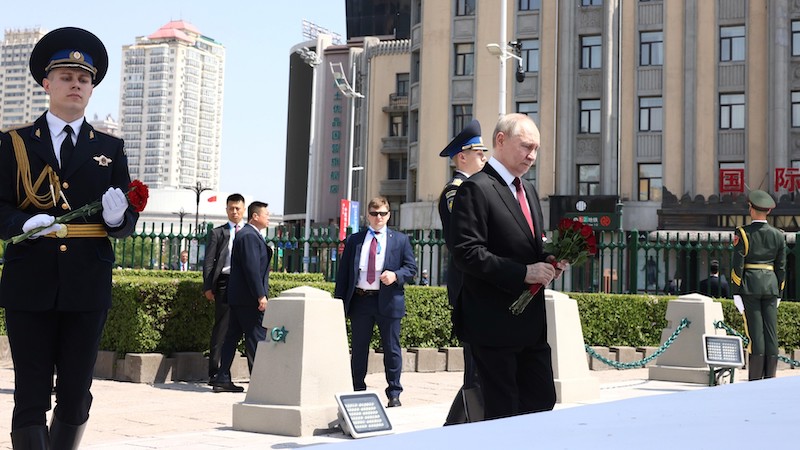
Russia's President Vladimir Putin laid flowers at the Monument to Soviet Red Army Soldiers who perished while liberating Northeast China. Photo Credit: Kremlin.ru

During his time in China, Vladimir Putin for the first time visited Harbin, a city in northeastern China near the Russian border that was founded by the Russian Empire in 1898 to house the headquarters of the Russian-owned Chinese Eastern Railroad and became an important center of the Russian emigration after the Bolshevik revolution. 

Because of these Russian ties and because the Russians in the city enjoyed extraterritorial status until 1920, Ivan Zuyenko, a China specialist at Moscow’s MGIMO says, Beijing did not like recalling let alone highlighting this past (profile.ru/abroad/kakoe-simvolicheskoe-znachenie-imelo-poseshhenie-putinym-harbina-1514585/).

“But in recent years, the situation has sharply changed,” the Russian scholar says. And now, “Harbin considers itself to be a cosmopolitan city for which the interrelationship of Russian and Chinese civilizations serves as a key element of identity” and even plays up its Russian past to attract tourists and visitors like Putin.

The Kremlin leader’s stay in Harbin was in complete conformity with all of that, Zuyenko says. Putin laid flowers on the war memorial to Soviet soldiers who died fighting the Japanese during World War II, but he then visited and made a gift to the Orthodox Church of the Intercession, the only operational Orthodox church there (rusk.ru/newsdata.php?idar=118313).

According to the MGIMO researcher, the Chinese side had originally proposed that Putin visit the Sofia Cathedral, the largest of the Russian churches there but now a museum and symbol of the city. Putin, however, preferred that he go to a working church and so he visited the Church of the Intercession instead. 

In the course of his visit, Putin met with students and staff of the Harbin Polytechnic and took part in the opening of the Russian-Chines EXPO and then spent the night at a villa on the banks of the Sungari River which was frequently celebrated in the works of Russian émigré writers.

Putin is not the first Russian president to come to Harbin. Yeltsin visited in 1997; but the first Russian leader’s visit was not a great success. Under the weather and possibly drunk, Putin kept the small group of survivors of the first Russian emigration there waiting for more than an hour and then met wit them for only about 90 seconds (kommersant.ru/doc/187449).

What Zuyenko did not mention in his article about Putin’s visit is the way in which Chinese attitudes about a Russian outpost on Chinese territory contrast so sharply with Muscovite ones about any foreign past on Russian territory be it in Kaliningrad or the Russian Far East or elsewhere.

Unlike Moscow, China is now sufficiently self-confident that it is prepared to call attention to that past rather than see it as something that has to be minimized less it threaten Beijing now or in the future, a completely different attitude that many in the Russian capital in Putin’s time have. 


Categories
Audio Review - South Caucasus News

Serbia: Electoral Struggle For Belgrade: Is The Opposition Seeking Power Without Elections? – Analysis


Serbia: Electoral Struggle For Belgrade: Is The Opposition Seeking Power Without Elections? – Analysis

belgrade people serbia file photo

On 2 June 2024, repeated local elections will be held in the capital city of Belgrade, as well as local elections in 14 cities and 74 municipalities.

Following the parliamentary elections on 24 December 2023, Serbia ushered in a new Government helmed by Prime Minister Miloš Vučević. In the recent parliamentary elections, the Serbian Progressive Party (SNS) clinched a resounding victory.

The report by the OSCE Office for Democratic Institutions and Human Rights (ODIHR) was published a full two and a half months after the elections were held. The report stated that  several key issues remain outstanding, including those related to ensuring a level playing field, measures to prevent misuse of public office and state resources, the separation between the official functions and campaign activities, and effective mechanisms to prevent intimidation and pressure on voters, including vote buying”

Following the unsuccessful formation of a government in Belgrade, new local elections for the capital city of Belgrade are scheduled for 2 June 2024. In the meantime, the National Assembly of the Republic of Serbia has adopted a package of amendments to the electoral law to allow simultaneous elections for Belgrade and other local government units. The largest opposition bloc, previously known as “Serbia Against Violence,”(Srbija protiv nasilja) has dissolved, with some of its former member parties deciding to participate in the elections. Six out of the nine opposition parties from the former “Serbia Against Violence” coalition are participating in the elections for the city of Belgrade and most other local government units.

The largest party within this bloc, the Party of Freedom and Justice (Stranka slobode i pravde-SSP) led by Dragan Djilas, has opted not to participate in the city elections in Belgrade and Niš. Djilas is aware of his unpopularity in these cities and believes his involvement could harm the opposition’s prospects. This strategy has been signalled by certain members of the international community.

According to this scenario, the objective is to lull the Serbian Progressive Party (SNS) into complacency and passivity, fostering the belief that the opposition will secure easy victories in Belgrade and Niš. This assumption is based on the idea that citizens in these cities lean towards the opposition and will vote against the SNS rather than in favour of a specific party. However, this scenario poses the greatest risk and trap for SNS voters, potentially leading them to become complacent and fall into the scheme devised by Djilas and certain international actors. The favourite in the upcoming elections in Belgrade and Niš is the coalition list led by the Serbian Progressive Party, operating under the banners “Aleksandar Vučić – Belgrade Tomorrow” (Beograd sutra) and “Aleksandar Vučić – Niš Tomorrow” (Niš sutra), respectively.

Is it possible to seize power without elections – the case of the Serbian opposition?

Political polarisation is a characteristic feature across all Western Balkan countries. These societies bear the burden of a challenging 30-year legacy, stemming from the dissolution of the former Yugoslavia. The consolidation of these states is still ongoing. A portion of the opposition has resorted to violence as a political tool, leading to further polarisation in society at a time when national unity was needed to address crucial national and state issues, such as the Kosovo question. A notable segment of the Serbian opposition has yet to grasp that their adversary isn’t Aleksandar Vučić (SNS) but rather political competitors.

Serbia stands out as one of the few countries to reduce the electoral threshold from 5% to 3%, while thresholds in other countries have typically increased to foster the consolidation and professionalisation of politics, thereby nurturing robust and credible political parties.

Traditionally in Serbia, a segment of the opposition boycotts elections, mainly consisting of parties aware that elections serve to test and confirm their strength and trust among citizens. They choose to boycott as a means of asserting their importance. However, the responsible portion of the opposition recognizes that political change can only be achieved through institutions, with parliament being the pinnacle of democracy in every state, and ultimately opts to participate in the elections.

Analysts believe that the upcoming local elections transcend the usual local significance. Political parties should ascend to and descend from power solely through elections, as they validate their strength and support, rather than through other means. Boycotting elections entails evading direct interaction with voters, casting doubt on their actual support among the electorate.

Analysts view the central demand of the protests as the removal of Serbian President Aleksandar Vučić and the Serbian Progressive Party (SNS) from power, a core objective of the opposition. However, the opposition lacks a coherent political program beyond the call for President Vučić’s departure. While some civil protests were justified, they were essentially orchestrated by a faction of the opposition and/or certain foreign power centers.

Excuses and justifications claiming that the media are under government control are only partially accurate, as there are numerous media outlets openly supporting and advocating for opposition political parties. While the media undeniably play an important role, elections are not won solely through media influence. Success primarily hinges on the results achieved, the programs presented, and the candidates offered to voters, who ultimately decide where to place their support and trust. It is imperative to calm political passions and organize peaceful, fair, and honest elections, ensuring an electoral campaign that provides equal treatment to all participants in the electoral process. Elections must be conducted without bias or violence, with transparency and integrity, allowing all political actors to express their views and present themselves to voters.

The campaign for local elections is overshadowed by the resolution on Srebrenica at the UN General Assembly, which has dominated headlines for weeks. Consequently, the story of local elections is not at the forefront, unlike in previous election cycles.

Serbia at the center of current events again

The recent visit of Chinese President Xi Jinping has brought Serbia back into the spotlight of global events. Serbia is striving to (re)position itself in the geopolitical vortex. The Chinese president stated that the “EU is a priority in Chinese foreign policy. China and the EU should maintain their committed partnership. Serbia also unequivocally asserts its aspiration for EU membership, a goal shared by the new government.

Serbia aims to leverage Chinese experiences with France regarding nuclear energy production to ensure energy stability, as it plans to shut down several thermal power plants in the foreseeable future. However, this will necessitate lifting the longstanding embargo on nuclear energy inherited from the former Yugoslavia.

Serbia can count on strong support from China on various issues within the United Nations framework, as demonstrated during the recent vote on the Srebrenica resolution at the UN General Assembly. Furthermore, the Free Trade Agreement between Serbia and China holds significant importance for Serbia’s economic future, particularly in terms of trade in goods and services.

Serbia faces unprecedented international pressures

Serbia is currently grappling with substantial international pressures in the efforts to normalize relations with Pristina, which refuses to establish the Community of Serbian Municipalities (ZSO). Serbia is also being urged to impose sanctions on Russia. Kosovo has received a recommendation for membership in the Council of Europe Parliamentary Assembly, which was not included on the agenda of the recent Committee of Ministers meeting of the Council of Europe due to the lack of progress in forming the ZSO.

The ban on the use of the Serbian dinar in Serbian communities in Kosovo is one form of pressure on Serbia to relinquish claims on Kosovo. The holding of repeated local elections in northern Kosovo municipalities of Mitrovica, Leposavić, Zubin Potok, and Zvečan is still pending. Conditions for the return of Serbian representatives to Kosovo institutions have yet to be met.

Serbia’s foreign policy rests on four pillars: the EU, the US, Russia, China, and the Non-Aligned Movement. Serbia is being asked to relinquish two pillars of its foreign policy, Russia and China. There are explicit demands for Serbia to impose sanctions on Russia due to the conflict in Ukraine, while prospects of Serbia’s EU membership remain uncertain. Additionally, Serbia is urged to distance itself from Milorad Dodik (SNSD) and the Republic of Srpska. The recent passing of a resolution on Srebrenica in the UN General Assembly, sponsored by Germany, Rwanda, and around 30 other countries, serves as an additional form of pressure on Serbia.

Amid the Ukraine conflict and the broader West-Russia confrontation, Serbia finds itself in a challenging international position as it refrains from implementing sanctions against Russia.

The policy of neutrality enforced by Aleksandar Vučić poses a significant mystery for major powers and presents a challenge for their intelligence sectors. The escalation of political events in Kosovo is tied to the upcoming elections in Serbia, aimed at testing the country’s political landscape with a focus on the political ratings and strength of Aleksandar Vučić and the SNS.

Certain politicians, tycoons, sections of the media, journalists, researchers, analysts, parts of civil society, professors, students, and criminals are involved in intelligence activities in Serbia – a wide spectrum of participants.

The security and intelligence apparatus of Serbia has largely identified and thwarted the activities of most intelligence services, allowing it to effectively counter their harmful actions and significantly impede their future operations.

Bulgarization of Kosovo

The current situation in which Serbia finds itself, coupled with the ongoing population census in Kosovo, is being exploited by Bulgaria, which is actively granting citizenship to Kosovo residents. The “Bulgarization” primarily targets Gorani, Serbs, and Bosniaks, but also extends to Albanians who, upon obtaining Bulgarian passports, become formal Bulgarian citizens. The end goal is for Bulgarians to gain recognition as a minority and potentially become the second-largest ethnic group in Kosovo after Albanians, displacing Serbs as the second-largest community.

Serbs largely abstained from participating in the population census. Bulgaria is implementing a similar initiative in Albania and has granted hundreds of thousands of citizenships to Macedonians from North Macedonia, claiming the right to regard these new citizens as Bulgarians. Most Macedonians took Bulgarian citizenship for pragmatic and existential reasons, as it provides EU citizenship, enabling them to work and live in the EU, rather than out of a sense of national allegiance to Bulgaria. The recent census in North Macedonia revealed that only a few thousand citizens identify as Bulgarians, undermining the Bulgarian claim of a significant Bulgarian presence in the country.


Categories
Audio Review - South Caucasus News

Biden: Range Of Missions Increasing As Pace Of World Change Accelerates


Biden: Range Of Missions Increasing As Pace Of World Change Accelerates

By David Vergun

The world is not only changing rapidly, the pace of change is also accelerating. The range of missions that service members are carrying out is also increasing, said President Joe Biden.

Biden, who spoke at the commencement address to the graduating cadets at the U.S. Military Academy, West Point, New York, today, provided some examples of change. 

U.S. forces are supporting Ukraine in its fight for freedom, not on the ground in Ukraine, but by keeping munitions and equipment flowing into the country, he said. “We are standing strong with Ukraine, and we will stand with them.” 

Alliances in the Indo-Pacific region are also being bolstered with nations that include Japan, South Korea, Australia and the Philippines, Biden said. 

The president touted the strength of the NATO alliance, applauding the newest members Finland and Sweden. 

“No country has allies like ours,” he said. 

The U.S. is standing up for peace and stability in the Taiwan Strait, he said. 

“I’ve always been willing to use force when required to protect our nation, our allies, our core interests. When anyone targets American troops, we will deliver justice to them,” Biden said. 

“Never forget Americans are strongest when we lead not only by our example of our power, but by the power of our example,” he said. 

“Every member of our armed forces must always be safe and respected in the ranks,” Biden said.  

For the first time, in nearly a decade, rates of sexual assault and sexual harassment have gone down across the active-duty forces, he said. “It’s long past time to end the scourge of sexual violence in the military once and for all, and we can do this.” 

Members of the armed forces take an oath to defend the Constitution, he said. Hold fast to your values: duty, honor, country. 

Freedom is not free. It requires constant vigilance, he said. 


Categories
Audio Review - South Caucasus News

Sri Lanka Embraces Tourists But Confronts Illegal Ventures – Analysis


Sri Lanka Embraces Tourists But Confronts Illegal Ventures – Analysis

sri lanka traditional dance culture women woman

By Amila Prasanga and Ganeshan Wignaraja

International tourism is again attracting controversy, this time due to visitors on tourist visas running businesses in developing Asian countries. Since the Russian invasion of Ukraine in 2022, Sri Lanka has allowed Russians and Ukrainians to enter the country without paying visa fees in a bid to boost tourism. Desperate for foreign exchange following its sovereign debt default in 2022, Sri Lanka has turned a blind eye to some of these visitors running businesses.

As many as 197,498 Russians and 5082 Ukrainians visited Sri Lanka in 2023 — 13.6 per cent of total tourist inflows. But data is lacking on how many have stayed beyond a 60-day tourist visalimit. In February 2024, Sri Lanka abruptly terminated visas for long-staying Russians and Ukrainians.

This was in response to massive public outrage over a so-called ‘white-only party’ at a nightclub, leading the Russian business owner to apologise and cancel the event. This incident had little effect on Sri Lanka’s neutral foreign relations with Russia and Ukraine but has sparked a policy debate on the benefits of tourists running businesses in developing Asian countries.

Cross-country data on the number of tourists running businesses in Asia is hard to come by. But there are many reported cases of tourists running small businesses in IndiaSri Lanka and Thailand. Some of these businesses are legitimately set up and largely adhere to domestic rules and regulations, while others operate as informal enterprises outside domestic regulatory reach, employing foreign nationals on tourist visas. Some of these illegal entities are temporary ventures that only operate during the tourist season, making them hard to regulate.

The practice of tourists setting up businesses may be linked to various factors.

One factor is the outflow of young people seeking new opportunities following disruptions caused by complex geopolitical conflicts. A conservative estimate suggests that between 500,000 and one million Russians have emigrated since the invasion of Ukraine, including desperate young men wanting to avoid the draft. Meanwhile, Ukraine has more than five million refugees residing internationally. Some of these refugees have gone to Sri Lanka and the rest of developing Asia.

Another factor is the lax enforcement of visa rules by overstretched immigration departments in some countries, many of which have poor online tracking systems.

Sri Lanka’s experience offers lessons to other developing countries in Asia. One is the potential benefits and costs of visitors on tourist visas running businesses. By identifying the trade-offs between economic benefits and security threats associated with extended-stay tourism, policymakers in developing Asia can develop national strategies that maximise economic gains while mitigating social and cultural tensions.

Such tourism can be considered a special case of micro or small enterprises investing on an extremely small scale. It offers development benefits by transferring skills, relying more on local suppliers than larger foreign investors and providing local jobs. Examples include small guest houses, restaurants with European cuisine and cafes in tourist areas.

There may also be costs associated with tourists illegally running businesses. One is the loss of national tax revenue, which deprives a developing country of public programs and projects related to infrastructure and social development. Another cost is escalating local land and property prices in tourist areas, which can outprice locals, leading to social tensions and the perception that foreigners are stealing local jobs. There is also the serious issue of rising crime in tourist areas, including money laundering, fraud, online gambling, drug trade and human trafficking.

To encourage short-stay tourists to evolve into legitimate long-stay investors, developing Asia should create a market-friendly business environment. This would require greater transparency and predictability in business start-up and operating procedures.

Cutting unnecessary business procedures and introducing digitisation of procedures would make it easier to register a business, get work permits for micro investors, hire local workers and pay taxes. This would reduce investment costs, the hassle factor involved and rent-seeking behaviour.

Reforming cumbersome business regulations and procedures can take some time. As an interim measure, national investment and tourism promotion organisations should jointly set up a help desk for micro investors to inform and guide them through the myriad of domestic start-up rules and regulations.

Developing Asia should also invest in tourism policing and modern national intelligence capabilities to tackle crime. Three policy priorities are important on the security front. Public-private partnerships should be enhanced by security services partnering with private security firms to ensure efficient and professional tourism security services. Developing Asian countries should promote cybersecurity awareness campaigns and invest in cybercrime prevention infrastructure to combat online threats. Regional intelligence-sharing platforms should also be developed among developing Asian countries to strengthen security and combat trans-border crime.

Legitimate long-stay micro foreign investors from Russia and Ukraine could bring net economic benefits to Sri Lanka and others in developing Asia. Economic and national security policies should be geared towards cautiously facilitating these investors rather than curtailing them through discriminatory heavy-handed state action.

About the authors:

  • Ganeshan Wignaraja is Visiting Senior Fellow at ODI and Professorial Fellow in Economics and Trade at Gateway House.
  • Amila Prasanga is Commander in the Sri Lanka Navy and Military Research Officer at the Institute of National Security Studies (INSS), the premier think tank on National Security in Sri Lanka established under the Ministry of Defence.

Source: This article was published by East Asia Forum

The opinions expressed are the authors own and do not reflect the views of the institutions to which they associated .