
PM Pashinyan addresses the nation – Public Radio of Armenia Public Radio of Armenia – Official Web site
Day: May 24, 2024
Azerbaijan Takes Control to Tavush Border Areas Ceded By Armenia – Asbarez.com Asbarez Armenian News
Rising sea levels and urban development are accelerating coastal erosion at an alarming rate in Southern California with significant ripple effects on the region’s economy, a USC study reveals.
The study, published in Communications Earth & Environment, predicts that Southern California’s coastal living costs will surge fivefold by 2050 as a direct result of beach erosion. This erosion will require more frequent and costly beach nourishment projects to maintain the state’s treasured shorelines, consequently driving up the cost of living along the coast.
“Our study presents compelling evidence of the rapid deterioration of Southern California’s coastal landscapes,” said Essam Heggy, a geoscientist in the Ming Hsieh Department of Electrical and Computer Engineering/Electrophysics at the USC Viterbi School of Engineering and the study’s corresponding author.
“The challenges facing Southern California mirror a growing threat shared by coastal communities worldwide. The environmental and economic implications of coastal erosion reach far beyond California’s shores and demand interdisciplinary, global solutions,” he said.
Coastal erosion: Cost of living sure to surge as sandy beaches disappear
To predict future changes along California’s sandy coastlines, the researchers focused on the Gulf of Santa Catalina, which stretches over 150 miles from the Palos Verdes Peninsula in Los Angeles County to the northern tip of Baja California in Mexico.
They used a combination of historical and recent satellite images as well as advanced algorithms to analyze coastline movement and predict future erosion based on different trends and environmental factors.
The study predicts a tripling of erosion rates by 2050, increasing from an average of 1.45 meters per year to 3.18 meters by 2100. Consequently, the annual sand requirement for beach nourishment could triple by 2050, with costs rising fivefold due to the global increase in sand prices. This will exacerbate economic and logistical pressures on coastal communities.
Beach nourishment is adding sand to an eroded beach to rebuild it and create a wider barrier against waves and storms.
“Our investigation suggests that coastal problems start inland due to the rapid growth of cities along the coast, which compromise inland sediment replenishment of sandy beaches,” said Heggy, whose research focuses on understanding water evolution in Earth’s arid environments.
“As our beaches shrink, the cost of maintaining them will rise. Finding innovative solutions is key to securing a sustainable future for our shores and local economies,” he said.
Coastal erosion in California: A case study for a global problem
Coastal cities in Southern California and those in North Africa bordering the Mediterranean Sea face a common challenge: a semi-arid climate year-round coupled with the growing threats of rising sea levels and eroding shorelines.
A significant portion of Earth’s landmass, roughly 41%, falls under arid or semi-arid classifications, and these areas support over a third of the global population.
To understand this global challenge, the researchers focused on two specific locations: Corona del Mar in Orange County, Calif. — an example of the typical Southern California coastline — and Hammamet North Beach in Tunisia. Both are densely populated and share similar climates, prone to increasing droughts, flash floods and unpredictable rainfall patterns. These characteristics mirror the challenges faced by countless coastal communities worldwide.
The findings showed that the average rate of shoreline retreat in these areas varies. In Southern California, beaches are receding between 0.75 and 1.24 meters per year. In Hammamet North Beach, the retreat rate ranges from 0.21 to about 4.49 meters annually.
“While beach nourishment can temporarily combat erosion, however, it presents significant challenges for developing countries,” said Oula Amrouni, a sedimentologist at the National Institute of Marine Sciences and Technologies at the University of Carthage, Tunis, Tunisia, and one of the study’s co-authors. “The high cost of acquiring the right sand, with the specific grain size, quality and composition, and the technical complexity of extracting and laying it are major hurdles. Additionally, worsening erosion in previously stable areas compels more frequent nourishment projects, straining already limited budgets and leading to unplanned expenditures for many communities.”
A new study led by Griffith University predicts that future climate change impacts could disrupt the krill-heavy diet that humpback whales in the southern hemisphere consume.
Dr Jasmin Groß, who conducted the study as a PhD candidate at Griffith’s Centre for Planetary Health and Food Security analysed fatty acids and stable isotopes from blubber and skin samples of five different humpback whale populations around the southern hemisphere.
These levels were then compared to those of their primary prey item, Antarctic krill.
The team found that although there were distinct differences in the biochemical profiles, the diet of all tested humpback whale populations was Antarctic krill, which provides a high fat content diet ideal for the migratory lifestyle of these populations, Dr Groß said.
“The migratory lifestyle of humpback whales requires predictable ecosystem productivity, and so, we can expect that populations feeding in areas that are subject to the strongest climate change impacts are more likely to show the first signs of a departure from their high-fidelity krill diet,” she said.
“At present, there is no evidence of a divergence from a high-fidelity krill diet, but the characteristic isotopic signal we discovered of whales feeding in productive upwelling areas or in the marginal sea-ice zone, implies that future reductions in sea-ice extent and duration, and rising ocean temperatures could impact their feeding ecology.”
Humpback whale blubber and skin biopsies were collected in August and September 2019 in or near their respective breeding grounds off Brazil, Western and Eastern Australia, New Caledonia and Colombia.
Krill samples were collected from feeding grounds onboard three different vessels between January and March 2019.
Dr Groß said the importance of this study in confirming that each population followed a high-fidelity Antarctic krill diet could be used as baseline knowledge to assess the extent of climate change impacts in the feeding grounds in future studies.
Dr. Groß’s PhD research was conducted as part of the Humpback Whale Sentinel Programme, a key surveillance initiative of the Antarctic Monitoring and Assessment Programme (AnMAP).
Water scarcity will intensify with climate and socioeconomic change, disproportionately impacting populations located in the Global South. So concludes a new Utrecht University article published in Nature Climate Change, which used a state-of-the-art global water quantity and quality model to estimate clean water scarcity until the end of the century.
Humans require clean water for drinking and sanitation purposes, but also for the production of food, energy and manufactured goods. As communities and policymakers grapple with water scarcity issues on the ground, researchers at Utrecht University aim to shed light on the escalating global clean water crisis.
Current and future water scarcity
Using simulations from a state-of-the-art water quantity and quality model, the authors assess present-day and future global water scarcity. “Climate change and socioeconomic developments have multi-faceted impacts on the availability and quality of, and demands for, water resources in the future,” says lead author Dr. Edward Jones. “Changes in these three aspects are crucial for evaluating future water scarcity.”
The study estimates that 55% of the global population currently lives in areas that experience a lack of clean water in at least one month per year. “By the end of the century, this may be as high as 66%,” remarks Jones.
Strong regional differences in future water scarcity
While global water scarcity is projected to intensify in the future, both the changes and impacts will not occur equally across all world regions. Future increases in water scarcity in Western Europe and North America, for example, are concentrated in just a few months of the year – predominantly driven by water quantity aspects. Conversely, water scarcity increases in developing countries are typically more widespread in space and persist for a larger portion of the year.
Jones remarks, “Increases in future exposure are largest in the Global South. These are typically driven by a combination of rapid population and economic growth, climate change and deteriorating water quality.”
Quality: the invisible part of water scarcity
Water quality – despite being crucial for safe water use – remains an under-represented component of water scarcity assessments. “Previous assessments still predominantly focus on water quantity aspects only,” explains Jones. “Yet, the safe use of water also depends on the quality.”
Therefore, a key aim of this study was also to normalise the inclusion of water quality in water scarcity assessments – and in the design of management strategies for alleviating water scarcity.
Jones concludes, “The lack of clean water presents a systemic risk to both humans and ecosystems, which is becoming increasingly difficult to ignore. Our work highlights that, alongside substantially reducing our water demands, we must place an equally strong focus on eliminating water pollution in order to turn the tide on the global water crisis.”

By Aisyah Llewellyn
Indonesian director Joko Anwar’s new horror film “Siksa Kubur” (“Grave Torture”) begins with a bang as a suicide bomber blows himself up at a bakery, killing the owners and many bystanders.
Joko has said in interviews that the dramatic opening was influenced by real-life events – one being a 2016 attack claimed by Islamic State militants that killed four civilians near a Jakarta shopping center.
In the film released in April, the bomber is portrayed as afraid of being tortured in his grave upon burial – some Muslims believe sinners suffer such a fate – and hopes a suicide attack would help him ascend straight to heaven.
This was the second film in four months that referenced a terror attack in Indonesia. One released in December, “13 Bom di Jakarta” (“13 Bombs”), was loosely based on the attack on the Jakarta Stock Exchange in 2000 by Jemaah Islamiyah (JI), a group affiliated with al-Qaeda, which left 15 people dead
While such strikes have dwindled significantly in recent years, their violence has had an enduring impact on the psyche of many Indonesians.
And while some former militants and terrorism and risk experts credit the government for a drop in such attacks, they caution that the threat remains although channels of radicalization may have changed.
An attack on a police station in neighboring Malaysia on May 17, in which two constables were killed, has caused consternation among security observers in both countries.
They expressed fear that JI, which had been long dormant in Malaysia, may be resurgent because police initially said the suspect may have been a member of the group. He was shot dead by officers during the attack.
The attacker’s father, though, was a known member of JI and the whole episode took place in an area of Johor state known for having allegedly harbored the group’s members in the late 1990s. Police arrested him and four other family members
On Friday, after a week of flip-flops by the Malaysian police – at one point they took back their allegation that the suspect may be a JI member – they rearrested the suspect’s family members under a more stringent national security law. Malaysian police said they needed to investigate the family members further because they “practiced radical ideologies and the father is a JI member.”
According to the man who coordinated the 2002 Bali bombings, which killed 202 people and was blamed on JI, the militant group was left in disarray by the mid-2000s, after the Indonesian authorities clamped down on hardline groups nationwide.
“There is no official leader of JI now. There are still former senior members of the organization, but they have not been able to agree on leadership and there is no one in charge,” Ali Imron, who is serving a life sentence, told BenarNews.
“My understanding is that there was an agreement between them that JI would not continue anymore, and no longer exist as an official organization.”
The Indonesian authorities outlawed JI in 2007, following a series of devastating and deadly bomb attacks dating to 2000.
While JI attacks may have come down, the most devastating terrorist attacks in Indonesia in recent years have been committed by members of groups inspired by the Islamic State group, including IS affiliate Jamaah Ansharut Daulah (JAD), which was founded in 2015. It has since been banned.
The group attacked a number of churches in Surabaya in 2018 and a cathedral in Makassar on the Christian festival of Palm Sunday.
In 2019, a lone attacker in Medan, who was also affiliated with JAD, detonated a bomb at the city’s police headquarters.
Still, there has not been a JAD strike since either.
That could be because of the government’s two counter-terrorism organizations, Densus 88 and BNPT, experts say.
Prior to the Bali bombings, Indonesia did not have specific anti-terrorism legislation, although this was quickly drafted and signed into law in 2003.
Also in 2003, Indonesia formed the elite Counterterrorism Detachment 88 (Densus 88) unit of the police, and received training and funding from the United States and Australia. In 2010, the government’s anti-terrorism body, the National Counterterrorism Agency (BNPT) was established.
Noor Huda Ismail, founder of the Institute for International Peace Building, told BenarNews that he doubts the perpetrator of the recent attack in Malaysia was a formal JI member.
“But, I would not discount the possibility of a terrorist attack in Indonesia, given the latent nature of the terrorist threat in the country,” he said.
“However, it is noteworthy that the Indonesian Detachment 88 has significantly enhanced its understanding of this threat, particularly regarding the activities of JI.”
Yet, Ismail noted that challenges still exist across the region, particularly as radicalization channels diversify.
“Despite the progress, the true challenge lies in combating online radicalization and addressing the potential for recidivism among terrorists who have been released without undergoing comprehensive rehabilitation programs,” he said.
Uday Bakhshi, an operations manager for the risk assessment company, APAC Assistance, said that while there was still a terrorist threat in Indonesia, the government appeared prepared for any attacks based on its recent successes.
“Densus 88 foiled an alleged plot to target the February general elections, and nearly 150 suspected terrorists were arrested in 2023,” he told BenarNews.
In his view, an attack in the near future in the region would be “an outlier.”
“JI has seemingly turned away from violence, and the ISIS supporting groups have lost capabilities and relevance,” he said.
Bali bomber Imron is not the only senior member of JI who now denounces his violent past.
Both Imron and Umar Patek, one of the bombmakers in the 2002 Bali blasts who was imprisoned for 20 years and released in 2022, have become involved in deradicalization programs created by the Indonesian authorities, as has Abu Bakar Bashir, the Indonesian cleric who founded JI in 1993 with fellow Indonesian Abdullah Sungkar.
Bashir was released from prison in 2021 after serving two-thirds of a 15-year sentence for supporting terrorist training camps and has since spoken out about the dangers of radical ideology.
In a video statement sent to BenarNews, Bashir said he “strongly condemned” the killing of the two police officers in Malaysia and was “shocked” by the incident.
“Absolutely, that is not the teaching of Islam. I don’t know if it was just blood-lust, or maybe the influence of the enemies of Islam who were using that young man,” he said.
He added that he wanted to advise “young Muslims” to follow the right path and not get involved in terrorism.
“Those who support Islam should do so only through dakwah (proselytization) and prayers, not through violence or bombs which are not in the teachings of Islam,” he said.
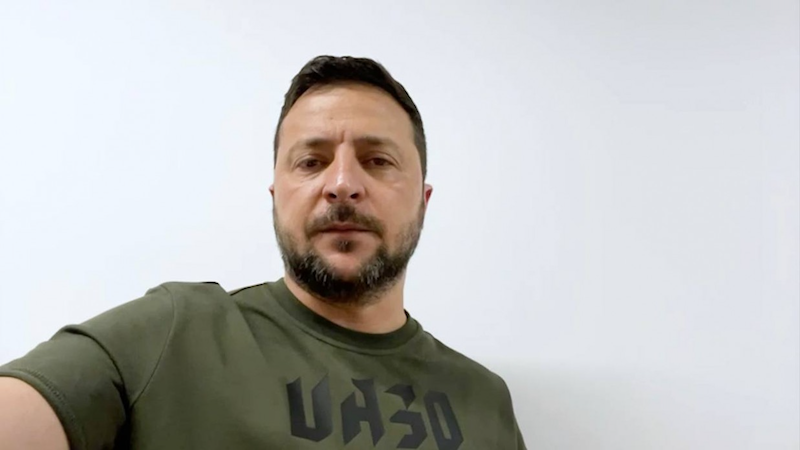
(RFE/RL) — President Vladimir Putin said on May 24 that Russia is willing to hold talks about the war in Ukraine, but questioned whether Ukrainian President Volodymyr Zelenskiy has the legitimacy to negotiate on Ukraine’s behalf.
Putin, who spoke in Minsk after meeting with authoritarian Belarusian leader Alyaksandr Lukashenka, said that Zelenskiy’s five-year term in office was supposed to end on May 20.
“Of course, we are aware that the legitimacy of the current head of state has ended,” Putin said at a joint news conference with Lukashenka. “We must be completely sure that we are dealing with legitimate authorities.”
Zelenskiy was inauguraged for a five-year term on May 20, 2019. An election was to have taken place on March 31 of this year but was postponed because the country is still under martial law.
Under the Ukrainian Constitution, Zelenskiy must continue to perform his duties until a new head of state is elected.
Ukraine has been under martial law since Russia launched its full-scale invasion in February 2022 and would have to amend the law in order to hold elections during a state of war.
When the question of Zelenskiy’s legitimacy was raised earlier this week, an EU spokesman said that the European Union had no doubt about Zelenskiy’s status as leader of Ukraine, and the spokesman for UN Secretary-General António Guterres said Zelenskiy “remains…the person with whom the secretary-general communicates when he needs to contact the Ukrainian leader.”
In his comments at the joint news conference, Putin, who was reelected to a fifth term in March in an election that the United States and other Western countries did not consider free and fair, failed to acknowledge the limitations on Ukraine holding an election while the country is regularly under Russian attack.
Putin reiterated that Russia “is for negotiations on Ukraine,” but said it would be possible to return to talks “only based on today’s realities in the special operations zone.”
Zelenskiy has rejected Moscow’s preconditions, including allowing Russia to retain the territory its forces have taken thus far in the war.
An international peace conference on Ukraine is to be held in Switzerland in June to discuss Zelenskiy’s peace plan, but Russia has not been not invited. Putin has dismissed the conference’s importance.
A U.S. diplomat, asked on May 24 about potential routes for peace in Ukraine, said Ukraine’s allies don’t view Putin as interested in peace right now.
“He has chosen a path of war, and it’s important that Ukraine have the opportunity to stabilize on the battlefield,” U.S. Assistant Secretary of State James O’Brien said in a call with reporters.
“We are always interested in seeing that when Ukraine is prepared to make peace that it’s able to do so on terms that are a success for Ukraine.”
Russia and Belarus, meanwhile, have increased their ties and continue to foresee eventually forming a so-called union state.
Lukashenka and Putin held one-on-one talks before the news conference for about 45 minutes.
Putin said that he and Lukashenka discussed “issues of formation of a unified defense space,” noting that a “joint regional grouping of troops, Russian defense complexes, and tactical nuclear weapons are deployed on Belarusian territory.”
He said Russia regularly conducted exercises of nuclear forces and “now they are conducted with Belarusian allies.”
Lukashenka has given Moscow permission to deploy Russian tactical nuclear weapons and troops to in Belarus, which shares a border more than 1,000 kilometera long with Ukraine.
Lukashenka said there was nothing special about the joint training, which he said was necessary because the because the world is “unstable” and “dangerous.”
“Despite everything, Minsk and Moscow maintain the course of strengthening integration. We support each other and will support each other in all directions,” he said.
Putin arrived in Minsk on a two-day visit on the evening of May 23. It is his second foreign visit since his inauguration on May 7. His first visit to a foreign country after his inauguration was to China.
Current situation | Locust Watch in Caucasus and Central Asia | 联合国粮食及 农业组织 Food and Agriculture Organization of the United Nations
posted at 21:31:31 UTC via “Gantz demands immediate formation of state commission of inquiry into Oct. 7 failures” – Google News

Haaretz
Michael Novakhov’s favorite articles on Inoreader
#Kanal13 #likekanal13 #subscribekanal13 #warinukraine
https://www.youtube.com/user/kanal13az?sub_confirmation=1 – SUBSCRIBE TO US!
The General Staff of Iran’s Armed Forces released the preliminary findings of the investigation into a helicopter crash that killed President Ebrahim Raisi and his delegation, Iranian news agencies Tasnim and Mehr reported.
An expert investigative committee arrived at the scene, the day after the fatal crash, and found no signs of bullet impacts or similar damage in the wreckage. The investigators determined that the aircraft had caught fire after it hit the ground, media reported, citing Iranian military officials.
Raisi’s helicopter did not deviate from its designated flight path, according to the findings. Around a minute and a half before the crash, the pilot communicated with the other two helicopters in the flight group, the report stated, adding that nothing suspicious was found in the conversations between the flight crew and dispatchers.
More details will be provided after further investigation, the committee added.
Raisi was flying in the northwestern Iranian province of East Azerbaijan when his aircraft crashed in the mountainous region, killing everyone aboard. Foreign Minister Hossein Amir-Abdollahian and Imam Mohammad Ali Ale-Hashem were also on the presidential helicopter.
“The complexity of the region, fog and low temperature,” slowed the search and rescue operation, forcing it to extend through the night, the investigators said. The exact crash site was found with the assistance of drones, they added.
Tehran announced that it will hold a presidential election on June 28. Vice President Mohammad Mokhber has become acting president in the meantime, with the approval of Supreme Leader Ayatollah Ali Khamenei.
The deaths of Raisi and Hossein Amirabdollahian come as Iran continues to back militia groups in the wider Mideast to pressure its enemies, namely Israel and the United States.
http://youtube.com/kanal13az/join – click here and support Kanal13 monthly for distributing more videos and independent journalism
Selected Articles – Michael Novakhov’s favorite articles on Inoreader – The News And Times
#Kanal13 #likekanal13 #subscribekanal13 #warinukraine https://www.youtube.com/user/kanal13az?sub_confirmation=1 – SUBSCRIBE TO US! The General Staff of Iran’s Armed Forces released the preliminary findings of the investigation into a helicopter crash that killed President Ebrahim Raisi and his delegation, Iranian news agencies Tasnim and Mehr reported….
Gantz demands immediate formation of state commission of inquiry into Oct. 7 failures The Times of Israel
Haaretz | Israel NewsAnalysis | Ebrahim Raisi’s crash: Neither Israel’s political leaders nor agencies like the Mossad would dare consider assassinating a foreign leader, not even of an enemy state like IranGet email notification for articles from Yossi Melman FollowMay 20, 2024Get email notification for articles from Yossi Melman FollowThe death…
U.S. may lift ban on Ukraine using American-supplied weapons to strike inside Russia PBS NewsHour
Putin arrives in neighboring Belarus for a two-day visit with a key ally The Associated Press
CIA Director Burns traveling back to Europe for ceasefire talks CNNThe post CIA Director Burns traveling back to Europe for ceasefire talks – CNN first appeared on JOSSICA – The Journal of the Open Source Strategic Intelligence and Counterintelligence Analysis.
posted 22h ago by Mike Nova via JOSSICA – The Journal of the Open Source Strategic Intelligence and Counterintelligence Analysis
Yahoo Singapore News
* В оккупированном Крыму местные жители сообщили о серии взрывов в разных районах полуострова. Назначенные Россией власти заявили о двух погибших. Видео момента атаки публикуют российские и украинские телеграм-каналы. В российском Минобороны утверждают, что силы ПВО сбивали ракеты ATACMS и беспилотники. * В России за месяц арестовали четырёх генералов,…
YET another Russian general faces prison over trumped-up bribery charges in a suspected purge by Vladimir Putin’s secret service cronies. And a further top brass defence official has been arrested over “corruption charges”, marking the latest move by a paranoid Putin to shake out his inner circle. Vadim Shamarin, the latest Russian general…
It began last month with the arrest of a Russian deputy defense minister. Then the head of the ministry’s personnel directorate was hauled into court. This week, two more senior military officials were detained. All face charges of corruption, which they have denied.The arrests began after President Vladimir Putin began his fifth term and shuffled…
U.S.WorldBusinessArtsLifestyleOpinionAudioGamesCookingWirecutterThe AthleticSKIP ADVERTISEMENTCredit…AFP/Getty ImagesBy John GhazvinianThe uncertainty ushered in by the death of Iran’s president, Ebrahim Raisi, in a helicopter crash, just weeks after an unprecedented exchange of military attacks with Israel, has brought a chilling question to mind:…
#news #popefrancis
Defense Secretary Lloyd Austin is returning to Walter Reed Army Medical Center on Friday evening for a “minimally invasive follow-up non-surgical procedure.” CBS News national security correspondent David Martin has more from the Pentagon. CBS News 24/7 is the premier anchored streaming news service from CBS News and Stations that is available free…
After a border reform bill failed to pass the U.S. House of Representatives, U.S. Rep. Mike Levin joins “NewsNation Now” to offer the Democratic response. The California congressman tells NewsNation he was not surprised the bill did not pass the House but said politicians need to work together to pass legislation that will make the U.S. southern border…
Cyberattacks against water utilities across the country are becoming more frequent, according to the Environment Protection Agency. Matt Hayden, a former Department of Homeland Security cyber security official, joins “NewsNation Now” to discuss why he believes cyberattacks are becoming more severe. #cyberattack #water #epa “NewsNation Now”…
#Kanal13 #likekanal13 #subscribekanal13 #warinukraine https://www.youtube.com/user/kanal13az?sub_confirmation=1 – SUBSCRIBE TO US! According to Ukrainian military-political observer Alexander Kovalenko, the Crimean Bridge will receive critical damage in the summer of 2024, but this requires appropriate conditions – they involve the creation of a…
#Kanal13 #likekanal13 #subscribekanal13 #warinukraine https://www.youtube.com/user/kanal13az?sub_confirmation=1 – SUBSCRIBE TO US! Russia is increasingly obstructing Ukraine’s Starlink service, using advanced technology to interfere with Elon Musk’s satellite internet service. This led to new disruptions on the northern front line. According to…
Does America have a mass incarceration problem? Zack Smith explains why mass incarceration is a MYTH. What America actually has is a violent crime problem.
May 23: IDF says Hamas battalion commander killed by Israeli forces in tunnel in northern Gaza The Times of Israel
Benjamin Netanyahu’s allies turn on IDF over its October 7 inquiry plans Financial Times
Jan. 5: Gallant warns time running out for diplomatic solution to Hezbollah tensions The Times of Israel
Oct. 12: Israel prepares for likely Gaza ground invasion The Times of Israel
Since the beginning of the year, the Cabinet of Ministers has allocated over UAH 500 billion for defence.
U.S. Attorney General Merrick Garland announces an antitrust lawsuit against Live Nation Entertainment during a press conference at the Department of Justice in Washington, U.S., May 23, 2024. REUTERS/Ken Cedeno Purchase Licensing Rights, opens new tabWASHINGTON, May 23 (Reuters) – U.S. Attorney General Merrick Garland on Thursday called former President…
Russian dictator Vladimir Putin is allegedly ready to stop the war against Ukraine and start negotiations on a ceasefire.
Putin still not ready for peace – Macron Ukrainska Pravda
Israel expands its operations in Rafah as one million people move out of city. Also on the show: global finance chiefs meet today for the G-7 in Italy; while the Chinese premier heads to Seoul to meet the Japanese and South Korean leaders, in their first trilateral talks in five years; and we discuss the optimism in South African financial markets ahead…
Russia signs decree allowing seizure of US assets in Russia JURISTPutin decree outlines Russian response to any US seizure of frozen assets ReutersPutin Signs Decree Allowing for Seizure of U.S. Property in Russia The Moscow Times
Revelation of secret Obama-era program casts doubt on stated reason for Trump Mar-a-Lago raid MSN
German far-right AfD kicked out of ID-group EURACTIV
The post AP Headline News – May 23 2024 18:00 (EDT) first appeared on The World Web Times.
Russian proxy reports strike on Sevastopol, media claim fire near military airfield Kyiv Independent The post Russian proxy reports strike on Sevastopol, media claim fire near military airfield – Kyiv Independent first appeared on The World Web Times.
US plan may boost NATO arms production for Ukraine Defense One The post US plan may boost NATO arms production for Ukraine – Defense One first appeared on The World Web Times.
… attack, as well as the Sandy Hook and Uvalde school shootings, the monograph illuminates three easily understood cognitive drivers of targeted attacks …
Trump says relationship with Putin will help win Gershkovich release AOL
Соцсеть должна предоставить СМИ данные о количестве просмотров, репостов и взаимодействий с публикациями.
Заседание Совета руководителей органов безопасности и специальных служб (СОРБ) государств — участников Содружества независимых государств пройдёт в Бишкеке в пятницу, сообщил Центр общественных связей (ЦОС) ФСБ РФ.
Russia urges Israel to stop the slaughter in Gaza and to negotiate Prensa Latina
CIA Director Burns traveling back to Europe for ceasefire talks Yahoo! VoicesThe post CIA Director Burns traveling back to Europe for ceasefire talks – Yahoo! Voices first appeared on JOSSICA – The Journal of the Open Source Strategic Intelligence and Counterintelligence Analysis.
posted 22h ago by Mike Nova via JOSSICA – The Journal of the Open Source Strategic Intelligence and Counterintelligence Analysis
The U.S. assertion this week that Russia has launched a satellite capable of inspecting and destroying other satellites prompted a denial from the Kremlin and concern from U.S. lawmakers. VOA Congressional Correspondent Katherine Gypson reports. Camera: Saqib Ul Islam.
EU Approves Use Of Frozen Russian Assets For Ukraine As Zelenskiy Claims ‘Tangible’ Results Radio Free Europe / Radio Liberty
The state of New York has not gone red in a presidential election since former President Ronald Reagan easily defeated Walter Mondale in 1984. Nevertheless, former President Donald Trump is in the south Bronx on Thursday for a campaign rally. CBS News chief election and campaign correspondent Robert Costa, NPR White House correspondent Deepa Shivaram,…
Zelenskyy: Russia can destroy Ukraine’s cities, lives because of restrictions on defense, lack of long-range weapons Gwara Media En
Thursday on the NewsHour, the White House considers allowing Ukraine to use American-supplied weapons to strike inside Russia. The Justice Department sues Ticketmaster and Live Nation, accusing the companies of blocking competition. Plus, the Supreme Court rejects a claim of racial gerrymandering in South Carolina, raising questions about future judgments…
“Netanyahu could be saved from the ICC by the very judicial system he tried to destroy” (@TheHillOpinion) https://t.co/8K6vWilso8— The Hill (@thehill) May 23, 2024
US House of Representatives Speaker Mike Johnson says Senate Majority Leader Chuck Schumer agreed to invite Netanyahu to speak before Congress.
Iran’s late president Raisi laid to rest in home city of Mashhad Yahoo! Voices
Biden administration straddles its own ‘red line’ on Rafah invasion The Washington Post
Thursday on the NewsHour, the White House considers allowing Ukraine to use American-supplied weapons to strike inside Russia. The Justice Department sues Ticketmaster and Live Nation, accusing the companies of blocking competition. Plus, the Supreme Court rejects a claim of racial gerrymandering in South Carolina, raising questions about future…
Biden dismisses International Criminal Court’s call for arrests of Israeli, Hamas officials Voice of America – VOA News
NPR News: 05-23-2024 8PM EDTLearn more about sponsor message choices: podcastchoices.com/adchoicesNPR Privacy Policy
Donald Trump went deep into one of the bluest counties in the country on Thursday for a rally in the Bronx that had large crowds of his excited MAGA supporters lining up in the NYC borough.
Vladimir Putin is ‘quite seriously ill’, says former spy who wrote Trump Russia dossier Yahoo Movies Canada
Biden did not order FBI to assassinate Trump 13newsnow.com WVEC
Sarah Longwell, founder of the group Republican Voters Against Trump blasts Nikki Haley for her endorsement of her former opponent Donald Trump in spite of her voters clearly signaling a desire for the party to move on from the ex-President » Subscribe to MSNBC: https://www.youtube.com/msnbc Follow MSNBC Show Blogs MaddowBlog: https://www.msnbc.com/maddowblog…
Far-right grouping in European Parliament expels high-flying Alternative for Germany party CT Insider
The speech will mark the second time Prime Minister Benjamin Netanyahu has addressed a joint session of Congress.
Opinion: Trump’s video referencing Nazi Germany isn’t exactly a surprise CNN
Biden did not order FBI to assassinate Trump KVUE.com
Trump’s $40 Million Texas Fundraising Haul Fueled by Oil Executives BloombergThe post Trump’s $40 Million Texas Fundraising Haul Fueled by Oil Executives – Bloomberg first appeared on Trump And Trumpism – The News And Times.
NEW YORK — If there are bragging rights associated with Donald Trump praising your legal acumen when he speaks after a day’s testimony at his criminal trial, Fox News analyst Andy McCarthy has already been cited at least a dozen times. The former president and current presidential candidate has routinely stepped to a metal barricade […] The post Trump…
All the Reasons Why Israel Couldn’t Have Been Behind Crash and Death of Iran’s President – Israel News Haaretz
Blinken Working With Congress To Punish Hague-Based ICC Authored by Dave DeCamp via AntiWar.com, Secretary of State Antony Blinken on Tuesday said he wanted to work with Congress on legislation to punish the International Criminal Court (ICC) for seeking arrest warrants for Israeli Prime Minister Benjamin Netanyahu and Defense Minister…
30% Of Americans Believe College Isn’t Worth It The value of a college education is spiraling lower as youngsters realize it’s a giant scam. Racking up $100k in college debt for worthless gender degrees in liberal indoctrination camps, only to graduate and land a job that didn’t require a degree—such as a realtor or bartender, as many…
Bryan Kohberger returns to court for Idaho murders hearing with ‘surprise witness’: Live updates MSN
Idaho murders: Moscow detective testifies on cell phone records in Kohberger’s court appearance KTVB.com
Biden did not order FBI to assassinate Trump KHOU.com
Xi is just like Putin, yet different. An evil dictator who thinks he can take any land, or sovereign country, when he so chooses. Putin is underway in invasion of Ukraine and the world intensely watches Xi. https://t.co/cI9q2aSbf7— William Evanina (@BillEvanina) May 24, 2024
A new COVID-19 variant is spreading this late spring season WDIO
The U.S. assertion this week that Russia has launched a satellite capable of inspecting and destroying other satellites prompted a denial from the Kremlin and concern from U.S. lawmakers. VOA Congressional Correspondent Katherine Gypson reports. Camera: Saqib Ul Islam.
Iran news: What we know about President Raisi’s helicopter CTV News
President Ilham Aliyev: We pay very big importance to visit of President of Albania AZERTAC News
Walt Bettinger, Charles Schwab co-chair and CEO, joins ‘Mad Money’ host Jim Cramer to talk quarterly results, what its hearing from clients, the state of the investing space and more.
Ex-FBI director James Comey says ‘zero chance of an acquittal’ in Trump’s hush money trial Yahoo New Zealand News
Trump woos voters in the Bronx in rare New York campaign stop: Watch live The Hill
Campaign 2024: Former President Trump Campaigns in the Bronx C-SPAN
Thousands come out for former President Donald Trump’s South Bronx campaign rally News 12 Bronx
Trump vows to ‘make NYC great again’ at boisterous Crotona Park rally New York Post
Thousands of Trump fanatics swarm Bronx park for his first NY rally since 2016: ‘He’s a real Nelson Mandela’ New York Post
США объявляют о всестороннем пересмотре двухстороннего сотрудничества с Грузией в связи с законом об иноагентах, заявил американский государственный секретарь Энтони Блинкен.
Fire Reported in Brooklyn Citizen
Yahoo Singapore NewsThe post AG Merrick Garland refutes Trump’s ‘false and extremely dangerous’ assassination attempt lie – Yahoo Singapore News first appeared on The Trump Investigations – trumpinvestigations.net – The News And Times.
posted 21h ago by mike nova via The Trump Investigations – trumpinvestigations.net – The News And Times
House Speaker Mike Johnson invites PM Benjamin Netanyahu to address Congress The Jerusalem Post
German far-right AfD party once again defeated in courts Le Monde
Hearing on Artificial Intelligence and National Security C-SPAN
На данный момент Ахмедов выведен в распоряжение.
Russia passes decree to allow seizure of U.S. assets The Hindu
Президент Украины Владимир Зеленский подталкивает партнеров к более прямолинейным действиям. Он хочет, чтобы страны НАТО помогали перехватывать российские ракеты над Украиной и позволяли Киеву использовать западное оружие против скапливающейся вблизи границы военной техники противника. Об этом в прямом эфире телеканала FREEДOM поговорили с военным аналитиком,…
Большую часть пути к членству в Евросоюзе Украина прошла еще зимой 2024 года. В Брюсселе по итогам скрининга дали Киеву “зеленый свет” и отметили высокий уровень соответствия украинского законодательства европейскому. Следующий шаг – начало официальных переговоров о вступлении через межправительственную конференцию. Об этом в прямом эфире телеканала…
Met Police charge ‘suspected UK spy’, 64 with assisting Russian intelligence service The Mirror
Сотрудник департамента Минобороны России по обеспечению государственного оборонного заказа Владимир Вертелецкий задержан по подозрению в коррупции.
На данный момент Ахмедов выведен в распоряжение.
Зачем Путин зачищает Генштаб? Всё ли на войне идёт по плану? И кого обвинят в неудачах на фронте? Обсуждаем с блогером Иваном Филипповым, с военным аналитиком Николаем Митрохиным, а также с военным экспертом Юрием Федоровым.
Следственный комитет обвинил его в злоупотреблении должностными полномочиями при выполнении госзаказа
I spoke with Norwegian Prime Minister @JonasGahrStore and thanked him for his concrete efforts to isolate Russia.We discussed the battlefield situation and our defense cooperation. Our teams have finalised the text of our bilateral security agreement, which we plan to sign at… pic.twitter.com/l3vlMawMIU— Volodymyr Zelenskyy / Володимир Зеленський (@ZelenskyyUa)…
Good. After 2 years of Russia’s genocidal invasion of #Ukraine – if Americans still have property or assets in Mordor, then they’re clearly devoid of all moral standards & dumber than dumb and dumber. https://t.co/t0n7qc6a9A pic.twitter.com/Wkl9aEDNKd— Glasnost Gone (@GlasnostGone) May 23, 2024
With Ukraine losing ground, allies debate how to squeeze cash for Kyiv out of frozen Russian assets Detroit News
Kremlin Condemns Calls For Kyiv To Use US Arms In Russia Barron’s
En cette période très troublée en Nouvelle-Calédonie, le groupe d’amitié France-Azerbaïdjan de l’Assemblée nationale fait profil bas. Un seul député y siégeant a trouvé le temps de répondre à nos questions. « Nous avons de grandes sociétés françaises qui travaillent en Azerbaïdjan, avance André Villiers, député Horizons de l’Yonne. Les intérêts français…
In an interview with Iranian media, the Chief of Staff of Iran’s late President Ebrahim Raisi recalled the final moments before the chopper ferrying Iran’s President disappeared. The official says there was no fog that day, the weather was clear, and they were able to get in touch with one of the passengers of the ill-fated chopper after it disappeared….
Iranians gather at Valiasr Square in central Tehran on May 20 to mourn the deaths of President Ebrahim Raisi, Foreign Minister Hossein Amir-Abdollahian and several others in a helicopter crash the previous day. …
Iran’s supreme leader and proxy militias pray for late president and others dead in helicopter crash
Ayatollah Ali Khamenei held the service at Tehran University, the caskets of the dead draped in Iranian flags with their pictures on them. Khamenei was joined by senior figures from Iran’s Revolutionary Guard, and the leader of Hamas Ismail Haniyeh. Following Khamenei’s service the coffins were loaded onto a semi-truck and a procession was held…
The deputy chief of the General Staff of the Armed Forces of the Russian Federation and head of its Main Directorate of Communications Vadim Shamarin has been detained on charges of “large-scale bribery”, Russian business news outlet RBC reported on Thursday morning. Russian business daily Kommersant first reported Shamarin’s detention, citing a source…
Biden, in attempt to beat Trump at his own game, lobs new insults USA TODAY
The leader of Russia’s Chechnya region, Ramzan Kadyrov, said early on Thursday he had met President Vladimir Putin in the Kremlin and offered to send more fighters to help Moscow in its more than two-year-old conflict in Ukraine. #russiaukrainewar #Putin #wion About Channel: WION The World is One News examines global issues with in-depth analysis….
Looks like @SecBlinken is leading the way in trying to convince the White House to lift the US ban on Ukraine using US supplied weapons to attack 🇷🇺 military targets in Russia https://t.co/bxF6ucgohG— KT “Special CIA Operation” (@KremlinTrolls) May 23, 2024
Mr. Trump is a Russian asset. pic.twitter.com/jJ0MqsS7uq— KT “Special CIA Operation” (@KremlinTrolls) May 23, 2024
Former FBI Director James Comey By Steve Neavling Former FBI Director James Comey warned Tuesday that Donald Trump “is coming” for the FBI and Justice Department. In an interview with MSNBC, Comey was asked about the implications for the bureau if Trump is elected to a second term. “Serious for the Justice Department and the FBI, because Trump…
Комітет з розвідки Палати представників США опублікував звернення групи конгресменів від обох партій до міністра оборони країни Ллойда Остіна. Представники Конгресу висловили “сильну підтримку” наданню дозволу Україні атакувати цілі на території Росії. Для цього конгресмени закликали парламент США пришвидшити постачання озброєння Україні. Окрім того,…
#Kanal13 #likekanal13 #subscribekanal13 #warinukraine https://www.youtube.com/user/kanal13az?sub_confirmation=1 – SUBSCRIBE TO US! Ukrainian aerial scouts have detected and targeted an armored personnel carrier carrying soldiers of the invading Russian army in the direction of Avdiivka town in eastern Donetsk region. Following the kamikaze drones…
Израильские военные завершили двухдневную военную операцию на Западном Берегу реки Иордан. По данным палестинского Минздрава, погибли как минимум 12 человек. ЧИТАТЬ ДАЛЕЕ : https://ru.euronews.com/2024/05/23/west-bank-israeli-military-operation #Nocomment
Политик и экономист Владимир Милов @Vladimir_Milov в новом видео на своем канале поднял вопрос о растущем глобальном конфликте, анализируя о его причины и возможные последствия, включая реальность перехода в Третью мировую войну. 24 Канал запускає подкасти! Шукайте нас на різних, зручних для вас платформах: https://linktr.ee/podcast24tv.ua #24канал…
Putin Begins Defense Ministry Purge Amid Nuclear Secrets Leak Rumor Newsweek
Russian general who criticised leadership arrested in corruption purge MSN
Putin’s Military Purge Ramps Up as General Gerasimov’s Top Deputy Arrested Newsweek
Putin’s Military Purge Ramps Up RealClearDefense
A deputy chief of the Russian military general staff has been arrested on charges of large-scale bribery, Russian news reports said Thursday, the latest in a series of bribery arrests of high-ranking military officials.The arrest of Lt. Gen. Vadim Shamarin followed the arrest this week of Maj. Gen. Ivan Popov, a former top commander in Russia’s offensive…
Norway to block entry for most Russian tourists EURACTIV
Norway Bans Entry to Russian Tourists The Moscow Times
Russian military deputy chief of staff jailed for bribery in latest arrest of high defense official NBC News
Trump Claims Putin Will Only Release Wall Street Journal Reporter If He Is Elected President Yahoo! Voices
Trump claims Putin will release jailed journalist Evan Gershkovich ‘for him’ Yahoo News Australia
Secretary General welcomes Latvian Foreign Minister to NATO Headquarters NATO HQ
Сейчас обвиняемый во взяточничестве находится в СИЗО.
Эта часть переговоров закрыта для СМИ.
Ранее в аэропорту Казани вводили временные ограничения для обеспечения безопасности.
Не исключены и новые фигуранты.
Под стражей Владимир Талаев будет находиться до 20 июля.
“Azerbaijan is a reliable friend and partner for Tajikistan. Our countries have time-tested relations,” said President of Tajikistan Emomali Rahmon during an expanded meeting with President of Azerbaijan Ilham Aliyev, according to Report.
A meeting was held between the Chairman of the State Tourism Agency of Azerbaijan, Fuad Naghiyev, and the Economic Development Minister of Russia, Maxim Reshetnikov in Moscow, on May 23, Report informs, citing the agency.
What do we know so far about the helicopter crash that killed Iran’s president and others? KSAT San Antonio
Scientists discover the possible origin of the sun’s magnetic field, and it’s not where they thought it was Livescience.comScientists say they’ve found where the sun’s magnetic field originates CNNWhen will the next big solar storm slam Earth? New discovery about sun’s magnetic field could improve forecasts CBS NewsThe origin of the sun’s magnetic…
On May 23, the OSCE Office for Democratic Institutions and Human Rights (ODIHR) Matteo Mecacci has held meetings with the President of Georgia Salome Zurabishvili and the Speaker of the Parliament of Georgia Shalva Papuashvili within the framework of the ODIHR’s mission’s visit to Georgia. During the meeting, the President discussed the potential…
France President Macron makes social media post in Armenian on Charles Aznavour’s 100th birth anniversary NEWS.amThe post France President Macron makes social media post in Armenian on Charles Aznavour’s 100th birth anniversary – NEWS.am first appeared on The South Caucasus News.
Qatari Emir, Gulf foreign ministers travel to Iran for President Raisi’s funeral Reuters.comThe post Qatari Emir, Gulf foreign ministers travel to Iran for President Raisi’s funeral – Reuters.com first appeared on The South Caucasus News.
The head of the Defence Intelligence of Ukraine, Kyrylo Budanov, regularly participates in military operations.
In the temporarily occupied Yevpatoria, guerrillas discovered military equipment of the Russian invaders at a freight station.
After Raisi’s death, a question: Who will succeed Supreme Leader Khamenei The Indian Express
Магомед Даудов ушёл с поста президента футбольного клуба “Ахмат”.Новым президентом стал 18-летний сын главы Чечни Ахмат Кадыров, которого накануне назначили региональным министром спортаhttps://t.co/aLm7o3aIC6— Радио Свобода (@SvobodaRadio) May 23, 2024
Zelensky: Russia taking advantage of slow arms delivery BBC.com
Judge questioned how Trump didn’t notice ‘classified marked documents’ in his bedroom NBC News
Comey Delivers Grave Warning That Trump ‘Is Coming’ for DOJ, FBI – Tickle The Wire ticklethewire.com
Should Ukraine attack Russian territory with western weapons? The debate in Nato is shifting Yahoo News UK
Власти Молдавии изменили формулировку вопроса, выносимого на референдум по вступлению республики в ЕС, из-за явного провала курса президента Майи Санду. Об этом на брифинге сегодня, 23 мая, заявила официальный представитель МИД России Мария Захарова.
According to reports from the New York Times, a second flag toted by rioters who stormed the Capitol on Jan. 6, 2021, was at one point displayed outside the vacation home of Supreme Court Justice Samuel Alito. https://t.co/ZJeKhQONnz— The Hill (@thehill) May 23, 2024
AP: Russian missiles slammed into Ukraine’s second-largest city in the northeast of the country and killed at least six civilians early Thursday, officials said, as Kyiv’s army labored to hold off an intense cross-border offensive by the Kremlin’s larger and better-equipped forces. At least 16 people were injured as…
Congressional Dems confront broken trust on border as Biden prepares to act alone POLITICO
President of Ukraine Volodymyr Zelenskyy makes phone call to President Ilham Aliyev AzerNews.Az
On May 21, President of Ukraine Volodymyr Zelenskyy made a phone call to President of the Republic …
ICC Prosecutor threatened: Court ‘built for Africa and thugs like Putin’ Middle East Monitor
Skip to contentSkip to site indexThe deaths of Iran’s president, Ebrahim Raisi, and foreign minister leave the country without two influential leaders at a particularly tumultuous moment of international tension and domestic discontent, although analysts and regional officials expect little change in Iran’s foreign or domestic policies.Mr. Raisi, 63,…
Iranian President Ebrahim Raisi, Foreign Minister Hossein Amirabdollahian, and other officials died in a helicopter crash Sunday near Iran’s northern border with Azerbaijan, Iranian state media said Monday morning.The helicopter was part of a convoy of three helicopters returning from an event inaugurating a joint dam project when it crashed in heavy…
At the Minnesota GOP Lincoln-Reagan Dinner in St Paul, Minnesota, former President Trump attacked Fulton County D.A. Fani Willis and Special Counsel Jack Smith. Fuel your success with Forbes. Gain unlimited access to premium journalism, including breaking news, groundbreaking in-depth reported stories, daily digests and more. Plus, members get a…
At a press briefing on Monday, Sec. Lloyd Austin was asked if Israel had a humanitarian plan for a potential invasion of Rafah. Fuel your success with Forbes. Gain unlimited access to premium journalism, including breaking news, groundbreaking in-depth reported stories, daily digests and more. Plus, members get a front-row seat at members-only events…
#Kanal13 #likekanal13 #subscribekanal13 #warinukraine https://www.youtube.com/user/kanal13az?sub_confirmation=1 – SUBSCRIBE TO US! http://youtube.com/kanal13az/join – click here and support Kanal13 monthly for distributing more videos and independent journalism http://t.me/kanal13tv & https://bit.ly/37BVMqU https://www.youtube.com/user/kanal13az?sub_confirmation=1…
Donald Trump’s hush money trial entered its final stretch as the prosecution’s star witness Michael Cohen returned to the stand Monday. (AP video by John Minchillo/Produced by Javier Arciga). Live updates: https://bit.ly/3K9WxLH #michaelcohen #donaldtrump #trump Subscribe: http://smarturl.it/AssociatedPress Read more: https://apnews.com…
Канал Бориса Тизенгаузена – @TIZENGAUZEN RU – Правда о смерти Раиси. Разбор последнего полета и подстава от Путина. А также почему теперь Лукашенко ходит и оглядывается, а Орбан боится подскользнуться на бананановой кожуре. Детальнее об этом и не только рассказал политтехнолог Борис Тизенгаузен. До сих пор не подписаны на УНИАН в Telegram? https://t.me/uniannet…
Iranian President Ebrahim Raisi killed in helicopter crash MSN
Iran’s hardliner President Ebrahim Raisi killed in helicopter crash MSN
Iranian President Ebrahim Raisi, hardline ally of Khamenei, killed in helicopter crash Reuters
Sydney Morning Herald

The News And Times Information Network – Blogs By Michael Novakhov – thenewsandtimes.blogspot.com
Nino Haratischwili liest aus ihrem Roman “Das mangelnde Licht”. Moderation: Nino Lejava @LejavaNino https://t.co/fhDazfOh1w via @BoellStiftung
— Notes from Georgia/South Caucasus (Hälbig, Ralph) (@SouthCaucasus) May 24, 2024