

Categories
South Caucasus News

Low-Income Countries Face Worst Debt Crisis Ever, Says New Report – OpEd


Low-Income Countries Face Worst Debt Crisis Ever, Says New Report – OpEd

Man Thinking Money Debt Mortgage Investment Sales

A new report on global economic governance says low-income countries are faced with the worst debt crisis they have ever encountered.

Currently, debt service eats up over 50 per cent of public revenue in Kenya; over 60 per cent in Morocco and over 70 per cent in Bangladesh. Meanwhile, Zambia defaulted in 2020 and has suspended debt service to most of its non-multilateral external creditors.

Released on May 23, the report exposes major shortcomings in global economic governance and the resulting impact on countries in the global south. It also makes a range of recommendations for reform.

Financing Development? An assessment of domestic resource mobilisation, illicit financial flows and debt management’ brings together an in-depth analysis of nine countries—Bangladesh, Ecuador, Grenada, Kenya, Morocco, Nepal, Peru, the Philippines and Zambia —as well as the global level structures impacting debt sustainability and illicit financial flows.

All of the focus countries, which range from least developed to middle-income economies, have been profoundly disadvantaged by costly debt crises and large-scale illicit financial flows.

The failure of bodies like the G20, OECD and IMF to tackle these issues has meant that many have not been able to adequately respond to climate extreme events or make much-needed progress towards the Sustainable Development Goals (SDGs).

Tove Maria Ryding, Tax Coordinator at the European Network on Debt and Development (Eurodad) and one of the authors of the report said: “This report shows that the availability of public resources for services like health and education at the national levels is being eroded by high costs for sovereign debt payments and by large-scale illicit financial flows”. 

“The fact is that governments are finding it increasingly difficult to mobilise the necessary financing to fulfill the sustainable development goals, and deliver their human rights and environmental objectives. This has clear, severe and direct impacts on the livelihoods and rights of people all over the world. 

“These challenges require global solutions, and must be addressed through transparent and inclusive intergovernmental processes where all governments can participate on an equal footing.

“The upcoming 4th UN Financing for Development Summit, as well as the ongoing UN Tax Convention negotiations, provide crucial opportunities for governments to take urgent action,” Ryding pointed out.

Key findings

Key findings from the report include:

  • The availability of financing for development continues to be heavily undermined by major shortcomings in the global economic architecture, including in relation to debt resolution, tax fairness and the fight against international tax abuse.
  • The systemic failures within the global architecture continue to undermine the prospects of governments to mobilise the necessary financing to fulfil the SDGs, human rights and environmental objectives.
  • The findings in the nine focus countries underline that several intersecting factors, including the COVID-19 pandemic, the geopolitical situation and the impacts of climate change, have exacerbated the situation in recent years.
  • Low-income countries are faced with the worst debt crisis they have ever encountered. Among the focus countries, debt service currently eats up over 50 per cent of public revenue in Kenya; over 60 per cent in Morocco and over 70 per cent in Bangladesh. Meanwhile, Zambia defaulted in 2020 and has suspended debt service to most of its non-multilateral external creditors.
  • The world still lacks a permanent multilateral sovereign debt resolution framework that ensures the primacy of human rights over debt service and a rules-based approach to orderly, fair, transparent and durable debt crisis resolution. Proposals to set up such a framework under the auspices of the UN continue to be blocked by global north countries.
  • Domestic resource mobilisation remains extremely difficult in developing countries, and the failure of global tax cooperation is at the heart of this problem. The findings from the focus countries reflect the global picture, which is that international tax abuse continues to cost governments around the world – in both richer and poorer countries – billions of dollars in lost tax income every year.
  • The lack of global cooperation and continued large-scale international tax abuse has created a political environment where governments are failing to apply effective and progressive taxes that can reduce inequalities. This is the case for taxes on wealth, but also corporate income taxes. This development is also very evident in the nine focus countries of this report. Whereas, in 1990, the average corporate tax rate among the nine countries was 38.7 per cent, it was down to 27.4 per cent by 2023 – a drop of over 10 percentage points.
  • While increasingly turning away from taxes on wealth and corporate profits, governments are instead relying on taxes that come with the risk of regressive impacts and can in fact result in increasing inequalities, including gender inequalities. This includes consumption taxes such as value added tax (VAT), and the heavy reliance on this type of tax is evident in all the focus countries.
  • In the context of the ongoing discussions about the new OECD corporate tax deals (Pillar 1 and Pillar 2), which would include a ban on digital services taxes, the findings from the focus countries illustrate that this is indeed a tax that some developing countries have already shown an interest in as a much-needed source of new revenue. Both Kenya and Nepal have thus introduced digital services taxes.
  • The environmental agenda is also bringing some newcomers to the world of taxes (and levies), but also here the trend is pointing towards tools that come with risks of regressive impacts.

Meanwhile, the findings also clearly illustrate the point that there has—until now—been no truly global process where all countries participate on an equal footing in the development of global tax standards.

For example, among the focus countries, two out of three of the least developed countries (Nepal and Bangladesh) are not a part of either the OECD’s Global Forum nor Inclusive Framework.

The recommendations outlined in the report include the immediate and unconditional cancellation of all unsustainable and illegitimate debts, to all countries in need, by all creditors, and the creation of a permanent multilateral sovereign debt resolution under the auspices of the UN.

It also urges all governments to join the current process to negotiate and adopt a UN Convention on Tax as a global framework for international tax cooperation. 

Categories
South Caucasus News

Libertarians Warily Welcome Trump To Their Convention


Libertarians Warily Welcome Trump To Their Convention

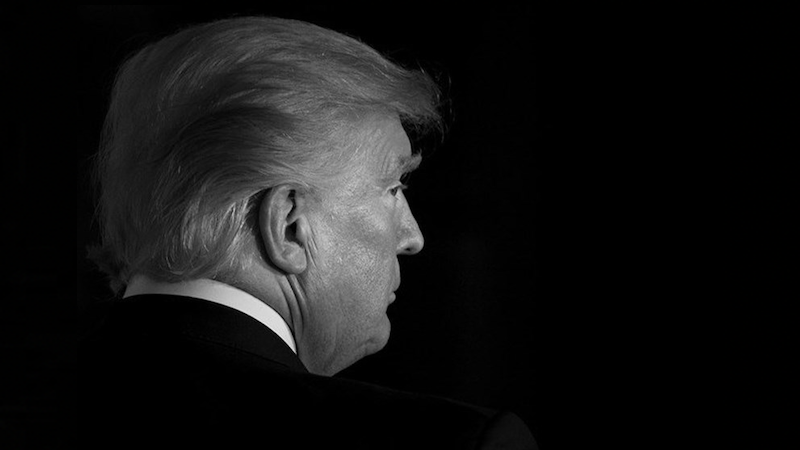
Former US President Donald Trump. Photo Credit: Tasnim News Agency

By Steve Herman

Every four summers in America comes the spectacle of nominating conventions for the two major political parties. This July, Republicans in Milwaukee are set to again place former President Donald Trump at the top of their ticket. The following month in Chicago, Democrats are to do the formalities for their incumbent, President Joe Biden. Less attention is being paid to another gathering that will nominate its presidential candidate Saturday night.

Compared to the behemoth conventions, the Libertarian’s nominating event is a rather low-key affair. Devoid of pageantry, its casually dressed delegates are nonetheless full of passion. And it is taking on new significance this year because it will place a presidential candidate on the ballots of most states.

With polls showing a very tight race between Biden and Trump — and independent Robert F. Kennedy Jr. beginning to poll above 10% in some swing states — a small number of votes for the Libertarian candidate could determine whether it is Biden or Trump who gets a second term.

None of the Libertarian Party’s presidential candidates are household names. They include New Orleans surgeon Charles Ballay; adult entertainment and tech entrepreneur Lars Mapstead; Georgia political activist Chase Oliver; and economist Mike ter Maat. It will be up to the approximately 1,000 delegates to decide who will appear on their national ballot.

“The Libertarian Party — it’s really kind of a big-tent party,” said Nathan Polsky, chairman of the Libertarian Party in Collin County, Texas.

“At the end of the day, you’ve got people that are on the right. You’ve got people that are on the left. But the one thing we all agree on is that the state has too much control and we want to roll back the level of power that the state has. Give it back to the people,” said Polsky, a cowboy hat atop his head as he surveyed the scene inside the Washington Hilton Hotel, site of this year’s Libertarian convention.

An unusual invitation

The party takes its name from the classic liberalism movement that profoundly changed the face of nations from the start of the 18th century, waging political battles in Europe and elsewhere against monarchs, slavery and religious persecution in the pursuit of individual freedom.

The present Libertarian Party in America, however, is facing turmoil inside its big tent. That ascendant faction, known as the Mises Caucus, generally supports as its presidential candidate a former Marxist scholar named Michael Rectenwald, who professes to a recent rightward shift that embraces radically free-market capitalism.

The Libertarians’ obscure presidential candidates and arcane philosophical infighting is now overshadowed by its unprecedented invitation to the presumptive nominee of another party to address them on Saturday night.

Donald Trump accepted the unusual offer.

“Trump recognizes that this election will be close and that just a few percentage points of the vote could make a real difference in some swing states,” said Seth Masket, a University of Denver political science professor who runs the school’s Center on American Politics.

“It is difficult to see Trump’s agenda as consistent with libertarian ideals of a smaller, less-invasive federal government. However, leaders of the Libertarian Party may find some other issues on which they are aligned,” Masket told VOA.

Some wary Libertarians view Trump wading into their political territory as merely another ploy to gain attention. They caution that the former president, used to addressing enthusiastic supporters at his MAGA rallies, may be surprised to find himself the target of some boos from the politically eclectic crowd.

“It’s a chance for him to speak and get his word out, and he can speak to a bunch of other people who probably would not normally listen to what he has to say,” said construction worker James St. John, a Libertarian delegate from Virginia. “That’s the main reason he’s doing it.”

Intra-party disagreements

The party is “hardly libertarian anymore,” according to Peter Goettler, president and chief executive of the Cato Institute, the most prominent libertarian think tank in the United States.

“Trump’s appearance this week says as much about the Libertarian Party as it does about him,” writes Goettler in a Washington Post opinion piece. “The party has had its ups and downs and some embarrassing moments throughout its history. But its problems more often arose from amateurism and fractiousness rather than malice, the inevitable effect of being a small third party in a two-party system.”

Addressing the National Rifle Association last week, Trump was pragmatic about courting Libertarians.

“Largely, they have so much of what we have,” Trump told the NRA. “You know, they are also people of common sense, generally speaking. They have a couple of things that are a little different. But we have to join with them, because they get their 3% every year no matter who’s running. And we have to get that 3% because we can’t take a chance on Joe Biden winning.”

Since the Libertarians’ first presidential ticket in 1972, their best performance was in 2016 when former New Mexico Governor Gary Johnson received 3.28% of the popular vote.

It is unlikely Trump can capture more than a sliver of that 3%, predicted Vermont Libertarian delegate Anne Lepeltier.

“Do I think he’s going to get the Libertarian vote? No. May some Libertarians vote for him? Surely, yes. Will I be one of them? Also, no,” she told VOA at the party’s convention.

Lepeltier said she is undecided about whether to attend Trump’s speech.

President Biden was also invited to address the Libertarian convention, but he declined the offer. His reelection campaign did not respond to repeated requests from VOA to comment on the Republican nominee’s outreach to the third party, or why Biden turned down equal time at the convention to that of Trump and Kennedy, who addressed the gathering Friday afternoon.

  • Steve Herman, formerly White House Bureau Chief, is now VOA’s Chief National Correspondent.

Categories
South Caucasus News

Armenia Returns Four Villages To Azerbaijan – Barron’s


Armenia Returns Four Villages To Azerbaijan  Barron’s

Categories
South Caucasus News

Central Bank of Armenia: exchange rates and prices of precious metals – 24-05-24 – ARMENPRESS


Central Bank of Armenia: exchange rates and prices of precious metals – 24-05-24  ARMENPRESS

Categories
South Caucasus News

Azerbaijan takes control of four villages on border with Armenia as part of deal – Investing.com


Azerbaijan takes control of four villages on border with Armenia as part of deal  Investing.com

Categories
South Caucasus News

Armenia returns four border villages to Azerbaijan – The News International


Armenia returns four border villages to Azerbaijan  The News International

Categories
South Caucasus News

Menendez Judge Bars Some Prosecution Evidence in Bribery Trial – The New York Times


Menendez Judge Bars Some Prosecution Evidence in Bribery Trial  The New York Times

Categories
South Caucasus News

NPR News: 05-24-2024 7PM EDT


NPR News: 05-24-2024 7PM EDT

Learn more about sponsor message choices: podcastchoices.com/adchoices

NPR Privacy Policy


Categories
South Caucasus News

In Address to Nation, Pashinyan Attempts to Justify Border Demarcation Decisions – Asbarez.com – Asbarez Armenian News


In Address to Nation, Pashinyan Attempts to Justify Border Demarcation Decisions – Asbarez.com  Asbarez Armenian News

Categories
South Caucasus News

International ANC Conference to Kick Off in Armenia – Asbarez.com – Asbarez Armenian News


International ANC Conference to Kick Off in Armenia – Asbarez.com  Asbarez Armenian News