
Jaw-dropping discovery: 450000-year-old tooth unearthed in Iran bne IntelliNews
Day: May 24, 2024
By David Gordon
Imagine that you come across this about the “education premium” on someone’s blog: “By going to college, you are more than tripling your chances for success in after life.” The statement is buttressed by a calculation of the extra lifetime earnings that a college degree will provide. Wouldn’t you think that the author is an economist? In fact, the author was a high school student, and he wrote this in 1927, before ever studying economics. As you will by now have guessed, the precocious student was Milton Friedman.
Jennifer Burns, a professor of history at Stanford, makes clear in her outstanding biography that many of Friedman’s characteristic intellectual traits were present at a very early age, as the anecdote above illustrates, and that these remained constant throughout his long life. Much of Friedman’s work in economics consists of statistical analysis, though of course carried out at a far more sophisticated level than his fledgling high school effort. As an undergraduate at Rutgers, he was trained in statistical analysis by Arthur Burns, a young professor whom Friedman idolized. Burns introduced Friedman to the method of business cycle research of his own teacher, Wesley Clair Mitchell, and also stressed the importance of Alfred Marshall’s Principles of Economics, a text that was to remain a touchstone of sound economics for Friedman. Years later, Friedman made original contributions to statistical theory. He helped develop “sequential analysis” and together with L.J. Savage worked on the analysis of utility and risk. “Although never lionized as part of Friedman’s Chicago gang, Savage was one of the few people whom Friedman openly called ‘a genius’ and their short-lived collaboration proved fertile for both.”
Friedman’s commitment to statistical analysis led him vehemently to oppose the economics of Ludwig von Mises and Friedrich Hayek, whom he regarded as the purveyors of a priori, “unscientific” theorizing. Although Friedman and Hayek were friends and colleagues at the University of Chicago, and Friedman admired Hayek as a political and social thinker, “when a motion was raised to grant Hayek a courtesy appointment in economics—generally an honorific with no real power—he was not a supporter.” Hayek’s Austrian economics was not empirical enough for Friedman.
Of course Friedman’s views on economics were not confined to methodology. From his graduate years at Chicago, he had firm ideas about policy as well, and these he absorbed from Frank Knight and Henry Simons. Both supported a competitive market, but they sharply differentiated between the “real” economy and the monetary and banking system. In the former, competition, firmly regulated by antitrust enforcement, was the order of the day, but not so in banking, which required centralized control by the government. To deal with depression, monetary expansion was required. This position too is at odds with the Austrian School, which views with alarm the machinations of the Fed.
Burns explains the views of the Chicago School on banking in this way:
“Galvanized by [FDR’s 1933] bank holiday, Chicago’s economists swung into action, drawing up the ‘Chicago plan’ for banking reform. . . . It shows clearly that Chicago economists, despite their neo-classical orientation, carved out a large role for the federal government in meeting the emergency. Chicago’s leading price theorists did not argue that the Depression was a necessary correction, or that economic activity would magically return to a desirable equilibrium. . . . Within ten days after the bank holiday began, the memo urged a significant expansion of federal power to meet the crisis. Broadly, it said that the federal government should attempt to increase the price level by around 15 percent. Specifically, it should take over the banking system, pass legislation breaking up the savings and lending functions of banks, and end the gold standard.”
Friedman absorbed the lessons of the Chicago economists, and emphasis on the need for monetary expansion to deal with depressions was a leitmotif of his career. Most notably, in A Monetary History of the United States, coauthored with Anna Schwartz, he blamed the severity of the Great Depression on the Fed’s contraction of the money supply:
“How did money affect business cycles? Friedman and Schwartz had an answer they considered definitive: money mattered. . . . Friedman knew the book would have an impact. He knew it was the best work he had ever done, or would ever do. . . .
“The book’s centerpiece was its stunning analysis of the Great Depression. Friedman and Schwartz’s data showed a precipitous 33 percent decline in the quantity of money during what they called ‘the great contraction.’ They convincingly argued that this lack of money transformed an unremarkable dip in the business cycle into a crisis of global proportions. . . . A Monetary History of the United States dwelled with the intensity of a psychologist upon the differences between the New York bankers George I. Harrison and Benjamin Strong Jr., men holding the power to redirect history itself. The absent hero was Strong, who died just before the crash. Examining Strong’s earlier career, Friedman and Schwartz argued that he would have reacted to the liquidity crisis with ‘strenuous and appropriate measures to head it off’ . . . Harrison acquiesced to a policy of monetary inactivity. The Fed stood by as money drained from the banking system and the economy collapsed.”
Strong was Friedman’s hero, but he was Murray Rothbard’s villain. Rothbard blamed Strong for the inflationary expansion of bank credit during the 1920s, which led to an artificial boom that, as the Austrian theory of the business cycle shows, must inevitably collapse. Rothbard developed his analysis in his magisterial America’s Great Depression (1963), but Friedman did not respond to it.
Why did these two major economists differ on the causes of the Great Depression, though both agreed, albeit in contrasting ways, that money matters? The answer is that methodology also matters, and this is the chief point I’d like to emphasize in this review. Methodology may strike some, eager to get down to practical issues, as arid and abstract, but it has consequences of the utmost importance.
The Austrian theory of the business cycle is based on a priori reasoning, which is then used to help interpret historical events. People often find the notion of a priori truth puzzling, but what is important for our purposes is not an account of why such reasoning is true, but rather the fact that if you start with an a priori true axiom and reason validly from it, your conclusion also is true. Friedman’s method is entirely different. His account of the business cycle is based entirely on statistical evidence, correlating changes in the quantity of money with employment and output. What this ignores is that statistical correlations do not by themselves suffice to establish causation. Friedman viewed theory in instrumentalist terms, seeing it as a way to generate predictions that could be experimentally tested. The intrinsic significance of the theory was of little or no concern to him, and even a theory with false assumptions could still be useful. “Friedman considered the realism of a theory’s assumptions beside the point. . . . Analytically, it wasn’t important if a business owner actually tried to maximize profits. It was only important that collectively, businesses could be understood ‘as if’ they were trying to do so. . . . Friedman was also comfortable with the idea that observation could never be truly neutral; the investigator had always a selection bias of some sort. The way out of the trap was a relentless focus on problem-solving. After observation came prediction.” It isn’t clear why Friedman imagined that bias would not also affect how predictions were interpreted. False assumptions combined with selection bias does not seem like a recipe for success.
- About the author: David Gordon is Senior Fellow at the Ludwig von Mises Institute. He was educated at UCLA, where he earned his PhD in history. He is the author of Resurrecting Economics,An Introduction to Economic Reasoning, An Austro-Libertarian View (three volumes), and Resurrecting Marx. He is also editor of Secession, State, and Liberty and coeditor of H.B. Acton’s Morals of Markets and Other Essays.
- Source: This article was published at the Mises Institute, Gordon, David, “The Last Conservative,” The Misesian 1, no. 1 (January / February 2024): 20–22.

Throwing caution to the wind, grasping the nettle, and every little smidgen of opportunity, Australia’s opposition leader, Peter Dutton, was thrilled to make a point in the gurgling tumult of the Israel-Hamas war. Israel’s leaders, he surmised, had been hard done by the International Criminal Court’s meddlesome ways. Best for Australia, he suggested, to cut ties to the body to show its solidarity for Israel.
Dutton had taken strong issue with the announcement on May 20 by ICC prosecutor Karim A.A. Khan that requests for five arrest warrants had been sought in the context of the Israel-Hamas War. They included Hamas chief Yahya Sinwar, the commander-in-chief of the Al-Qassam Brigades Mohammed Al-Masri, Ismail Haniyeh, head of the Hamas Political Bureau, Israeli Prime Minister Benjamin Netanyahu and Defence Minister, Yoav Gallant.
The measure was roundly condemned by Israel’s closest ally, the United States. US President Joe Biden’s statement called the inclusion of Israeli leaders “outrageous”. There was “no equivalence – none – between Israel and Hamas.” US lawmakers are debating steps to sanction ICC officials, while the US Secretary of State Antony Blinken has promised to cooperate with the measure.
The United Kingdom also struck the same note, “There is no moral equivalence between a democratically elected government exercising its lawful right to self-defence and the actions of a terrorist group,” declared UK Prime Minister Rishi Sunak during a Prime Minister’s Questions (PMQ) session in the House of Commons. When asked if he would, in the event of the warrants being issued, comply with the ICC and arrest the named individuals, a cold reply followed. “When it comes to the ICC, this is a deeply unhelpful development … which of course is still subject to final decision.”
Australia, despite being a close ally of Israel, has adopted a somewhat confused official response, one more of tepid caution rather than profound conviction. Australian Prime Minister Anthony Albanese thought it unwise to even take a formal stance. “I don’t comment on court processes in Australia, let alone court processes globally, that which Australia is not a party,” he told journalists.
In light of what seemed like a fudge, the Department of Foreign Affairs and Trade thought it appropriate to issue a clarifying statement that “there is no equivalence between Israel and Hamas.” Treasurer Jim Chalmers followed suit. “There is no equivalence between Hamas the terrorist organisation and Israel, we have it really clear in condemning the actions of Hamas on October 7, we have made it clear we want to see hostages released, and we want to see the Israeli response comply completely with international humanitarian law.”
Albanese’s opposite number preferred a punchier formula, coming out firmly on the side of Israel and donning gloves against the ICC and its “anti-Semitic stance”. The PM had “squibbed it”, while his response had tarnished and damaged Australia’s “international relationships with like-minded nations”. “The ICC,” Dutton insisted on May 23, “should reverse their decision and the prime minister should come out today to call for that instead of continuing to remain in hiding or continuing to dig a deeper hole for himself.”
Opposition Liberal MP and former Australian ambassador to Israel, Dave Sharma, is also of the view that Australia examine “our options and our future co-operation with the court” if the arrest warrants were issued. Swallowing whole the conventional argument that Israel was waging a principled war, he told Sky News that everything he had seen “indicates to me Israel is doing its utmost to comply with the principles of international humanitarian law”.
The ears of Israeli officials duly pricked up. Israel’s Strategic Affairs Minister and Observer of its War Cabinet, Ron Dermer, was delighted to hear about Dutton’s views. “I didn’t know the head of your opposition had said that,” Dermer told 7.30, “I applaud him for doing it.”
In a sense, Dutton and his conservative colleague are expressing, with an unintended, brute honesty, Australia’s at times troubled relationship with international law and human rights. Despite being an enthusiastic signatory and ratifier of conventions, Canberra has tended to blot its copybook over the years in various key respects. Take for instance, the brazen contempt shown for protections guaranteed by the UN Refugee Convention, one evidenced by its savage “Turn Back the Boats” policy, the creation of concentration camps of violence and torture in sweltering Pacific outposts and breaching the principle of non-refoulement.
On the subject of genocide, Australian governments had no appetite to domestically criminalise it till 2002, despite ratifying the UN Genocide Convention in 1949. And as for the ICC itself, wariness was expressed by the Howard government about what the body would actually mean for Australian sovereignty. Despite eventually ratifying the Rome Statute establishing the court, the sceptics proved a querulous bunch. As then Shadow Foreign Affairs Minister Kevin Rudd noted, “John Howard is neither Arthur nor Martha on ratification of the International Criminal Court.”
While serving as Home Affairs minister, Dutton preferred to treat his department as an annex of selective law and order indifferent to the rights and liberties of the human subject. For him, bodies like the ICC exist like a troublesome reminder that human rights do exist and should be the subject of protection, even at the international level.
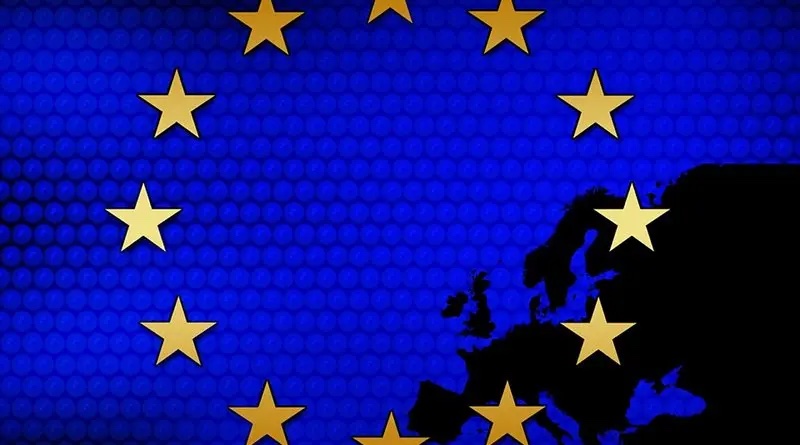
Empires historically possessed a unique ability to organize diversity and successfully rule over people quite different from one another. The national states that succeeded them in Europe were organized on the basis of nationality (real or imagined) where diversity in language, ethnicity, or religion was deemed a barrier to national unity. The negative consequences of celebrating unique national identities became clear after virulent nationalism led to the rise of Nazi Germany and World War II left Europe in ruins.
The European Union seeks to prevent this from happening again by restoring the cosmopolitanism, size, and economic clout of a multinational empire but without creating a unitary state in the process.
The EU is designed as a supranational polity where member states retain their national sovereignty and parochial identities but agree to be bound by its laws. They maintain their own armies, independent foreign policies, national parliaments and are free to leave if they so choose. The creation of such a chimeric political beast might appear unpreceded but it is not. The Holy Roman Empire successfully managed the affairs of central Europe by creating a similar composite political structure beginning in 962 under Otto I. In a bid to create unity in the German lands, where the Romans never ruled, the Holy Roman Empire proclaimed itself the successor to the long-dead Roman Empire as the defender of a Catholic Christian Europe. Lacking a single capital and imperial army, it did not seem to be much of an empire. However, its court system resolved disputes between member states, protecting the empire’s free cities and smaller estates (300+) against the more powerful ones. More unusually, it allowed individuals to seek redressals against local rulers who had violated their rights. Its Reichstag or Diet(legislature) met regularly to pass laws that were binding on all members and its emperorship was an elective position. That emperor’s power was limited because the estates within the empire remained responsible for governing their own territories. They were free to make alliances with outside powers as long as they were not detrimental to the empire or posed a danger to public peace.
That the Holy Roman Empire survived for 900 years suggests that it was on to something, and that the EU can be viewed as a secular reincarnation of it—minus only an emperor’s crown and Christian faith as symbols of its unity. However, other than making Charlemagne a symbol of European unity, it is a legacy that is largely unacknowledged and perhaps for good reason. Both the largely forgotten and derided Holy Roman Empire and the EU faced similar structural complexities and solved them in similar ways but the EU’s project was far more substantial—creating a polity that is now the world’s third-largest economy with a population of around 450 million people divided among 27 sovereign nations, which are spread across more than 4.2 million square kilometers.
Map of Post-Brexit European Union
The EU emerged as a post-World War II aspirational project designed to avoid the conflicts that had devastated the continent for centuries, first by integrating Western Europe into a single market and then creating a common political structure to administer it without eliminating the nationally sovereign governments of its member states. It then expanded into Central and Eastern Europe after the dissolution of the Soviet Union in 1991. Intellectually, the EU rooted itself in the idea that there was a common European culture that transcended the continent’s many different languages, national divisions, and religions. It would be a union with a formidable regulatory bureaucracy and court system but one without a military or single capital. Imaginary European-style buildings and bridges illustrated its euro banknotes to avoid having to choose among real ones.
Because a problem solved is a problem soon forgotten, it is barely remembered that the initial rationale for the nascent union was to end a Franco-German hostility that had led to three consecutive conflicts in 70 years: the Franco-Prussian War (1870-1871), World War I (1914-1918), and World War II (1939-1945). This union began with the integration of coal and steel industries in 1951 and took political shape in 1957 when the Treaty of Rome created a European Economic Community that was more formally merged in 1965. Its six founding members (Belgium, France, Luxembourg, Italy, the Netherlands, and West Germany) occupied the same territories as Charlemagne’s Carolingian Empire had during the 8th and 9th centuries, the only previous time that the German and French worlds shared a single governing institution with common cultural aspirations.
The new entity had no single capital but instead split its institutions among the cities of Brussels, Strasbourg, and Luxembourg. They were all nondescript places located in borderlands that the French and Germans had long fought over and lacked any taint of invidious past glory that characterized Paris, Rome, or a then-divided Berlin. By the 1970s, both Germany and France had so thoroughly embraced the integration of the community’s economies that any notion that it was designed to reduce hostility between them was relegated to a historical footnote. Their common vision now was to expand into other parts of Europe and create a peer European entity that could compete more equally with the U.S. and the Soviet Union, something no European state could hope to achieve alone.
Enlargement began with the addition of Great Britain, Ireland, and Denmark (1973), Greece (1981), and then Spain and Portugal (1986). In 1993, it was reorganized into the European Union before adding Sweden, Finland, and Austria in 1995. The withdrawal of Soviet troops from central Europe allowed Germany to reunite in 1990 and the collapse of the Soviet Union itself led to a further wave of new members in 2004: Estonia, Latvia, Lithuania, Poland, the Czech Republic, Cyprus, Malta, Slovakia, Hungary, and Slovenia. These were followed by Romania and Bulgaria in 2007, and Croatia in 2013. (Great Britain, after an unexpected negative referendum vote in 2016, left the EU in 2020.) But the successful establishment of the EU also depended on a fortuitous alignment in world politics. The U.S., following its maritime empire alliance template, was supportive of the European unity and the creation of a new economic bloc as big as its own. It not only did not hinder its emergence but the U.S. also provided the EU with a security framework through the NATO military alliance that left it free to focus entirely on its economic affairs. The Soviet Union, by contrast, had ensured that not even a modicum of economic or political autonomy would emerge in the areas it occupied—the default position historically when large states were in a position to dominate smaller ones.
In his excoriating 1667 book, De Statu Imperii Germanici, which saw more than 100,000 copies printed, Samuel Pufendorf had declared the Holy Roman (or German) Empire a “misshaped monster” because it lacked sovereignty over its component states. It also lacked a capital city and an army that emerging national states (and all other types of empires) deemed foundational. It turns out that this structure, so ill-adapted to a world of emerging nation-states that drove it to extinction, was perfectly designed for a union of sovereign states that governed as a supranational polity largely through administrative regulation and a rules-enforcing judicial system. The EU had its own revenue stream that included customs receipts, required member contributions, and a percentage of nationally assessed value-added taxes. The EU Parliament resembled the representative Diets of the Holy Roman Empire in their multiple meeting places and the disconnection between that body and a weak executive. While the Holy Roman Emperor was faulted for his inability to command the obedience of member states, the EU refused even to create a single chief executive officer. Instead, it had three separate presidencies whose priority depended on the issues involved: a rotating council of ministers’ presidency filled by a different member country every six months, a president of the European Commission, and a president of the EU Parliament.
A similarly decentralized Holy Roman Empire lasted close to a millennium in the German world and northern Italy but stood in sharp contrast to the centralized systems of government that developed in countries such as France or Britain where the state’s chief executive was the most important player. One reason for the lack of focus on an executive office in the EU was that it had no military forces to command. Defense responsibilities rested with national states themselves and with NATO on a Europe-wide basis. While the EU’s major players were members of the NATO alliance during the Cold War, smaller states with nonaligned policies were not. And while NATO had its large headquarters in Brussels and defending Europe was its core mission, it was distinct from the EU because it had many non-EU partners, including the U.S.—its dominant member—Canada, Iceland, Norway, and Turkey. When the EU expanded eastward in 1994, all of its new member states sought to join the NATO alliance to protect themselves from possible Russian aggression.
There were of course significant differences between the EU and its Holy Roman predecessor, the most distinctive of which was that the EU was resolutely secular. Its concept of European unity was cultural and economic rather than religious, but resistance to accepting Muslim Turkey as European enough to join the union demonstrated the persisting legacy of Europe’s long Christian history. Nor was the EU rooted in a nostalgia for a past that had most recently produced violent nationalism, which left scores of millions of people dead in World War II. Seeking to end such violence demanded new ways of thinking and future orientation. Appeals to nostalgia were left to anti-EU nationalist parties fighting a rearguard battle to dissolve it in order to make their own countries great again. It was an ambition that became ever more difficult to achieve as the majority of Europe’s population could no longer imagine a world in which it did not exist.
Most of the EU’s income was redistributed through subsidies and capital investments tilted toward its poorer members, giving it the power to curb uncooperative members if they refused to recognize the supremacy of EU law. If they needed any lessons on the consequences of breaking away, they had only to observe the ongoing turmoil that Britain endured leaving the EU that looked less likely to restore its former glory and more likely to lead to its own dissolution. In its wake, Scotland renewed its push for independence to rejoin, and the once-unthinkable prospect that the people of Northern Ireland might choose to reunify with EU member Ireland rather than stick with Britain became a distinct possibility. But perhaps the greatest difference between the Holy Roman Empire and any other empire was that the EU was a product of voluntary alliance and treaty-making and not a result of wars of conquest. Empires may have improved the lives of those who lived in them as they evolved, but these benefits were appreciated only by the descendants of those who survived their violent formation. The EU’s attempt to recreate the advantages of a multinational empire without its brutality or aggressiveness—a caffeine-free espresso if you will—sets it apart from the U.S., China, and Russia, which have not shaken off that habit. Whether it is a model that will have the longevity of the Holy Roman Empire remains to be seen.
- About the author: Thomas J. Barfield is professor of anthropology at Boston University. His new book, Shadow Empires, explores how distinctly different types of empires arose and sustained themselves as the dominant polities of Eurasia and North Africa for 2,500 years before disappearing in the 20th century. He is a renowned historian of Central Eurasia and the author of The Central Asian Arabs of Afghanistan, The Perilous Frontier: Nomadic Empires and China, 221 BC to AD 1757, Afghanistan: An Atlas of Indigenous Domestic Architecture, and Afghanistan: A Cultural and Political History (revised and expanded second edition 2022, Princeton University Press).
- Source: This article is distributed by Human Bridges, first published in the Sentinel Post.
For all those who wanted to hang me and my wife as modern day Rosenbergs: I forgive you. The court just dismissed our charges with prejudice.
— Jamie Henry (@JamieHe63096490) May 23, 2024
🧵 🚨 BREAKING: Osechkin’s source in Lefortovo prison in Moscow says they’ve been preparing a special section for impending mass arrests of military generals. The cells are equipped with high-tech listening devices to pick up even the quietest of whispers. https://t.co/6VztDH0ZzI pic.twitter.com/KrB3xf6uzx
— Igor Sushko (@igorsushko) May 23, 2024
For all those who wanted to hang me and my wife as modern day Rosenbergs: I forgive you. The court just dismissed our charges with prejudice.
— Jamie Henry (@JamieHe63096490) May 23, 2024
🧵 🚨 BREAKING: Osechkin’s source in Lefortovo prison in Moscow says they’ve been preparing a special section for impending mass arrests of military generals. The cells are equipped with high-tech listening devices to pick up even the quietest of whispers. https://t.co/6VztDH0ZzI pic.twitter.com/KrB3xf6uzx
— Igor Sushko (@igorsushko) May 23, 2024