

Day: May 23, 2024
Categories
NPR News: 05-23-2024 5AM EDT
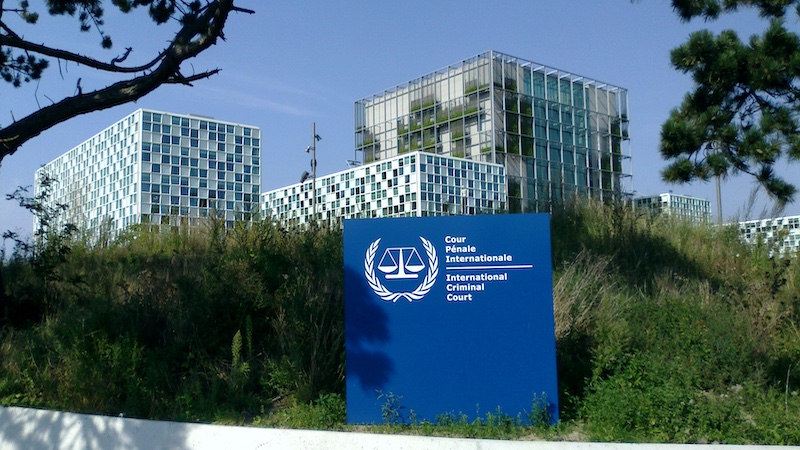
The application for arrest warrants by the Prosecutor of the International Criminal Court, Karim A.A. Khan in the Israel-Hamas War gives us a chance to revisit a recurring theme in the commission of crimes in international humanitarian law. Certain states, so this logic goes, either commit no crimes, or, if they do, have good reasons for doing so, be they self-defence against a monstrous enemy, or as part of a broader civilisational mission.
In this context, the application for warrants regarding Israeli Prime Minister Benjamin Netanyahu and his Defence Minister, Yoav Gallant, merits particular interest. Those regarding the Hamas trio of its leader Yahya Sinwar, Mohammed Al-Masri, the commander-in-chief of Al-Qassam Brigades, and the organisation’s political bureau head Ismail Haniyeh, would have left most Western governments untroubled.
From Khan’s perspective, the warrants for Netanyahu and Gallant will focus on policies of starvation, the intentional causing of “great suffering, or serious injury to body or health”, including cruel treatment, wilful killing or murder, intentional attacks on the Palestinian population, including extermination, persecution and other inhumane acts falling within the Rome Statute “as crimes against humanity”.
The ICC prosecutor’s assessment follows the now increasingly common claim that Israel’s military effort, prosecuted in the cause of self-defence in the aftermath of the October 7 attacks by Hamas, is not what it claims to be. Far from being paragons of proportionate warfare and humanitarian grace in war, Israel’s army and security forces are part of a program that has seen needless killing and suffering. The crimes against humanity alleged “were committed as part of a widespread and systematic attack against the Palestinian civilian population pursuant to State policy.”
The reaction from the Israeli side was always expected. Netanyahu accused the prosecutor of “creating a false symmetry between the democratically elected leaders of Israel and the terrorist chieftains”. He rejected “with disgust the comparison of the prosecutor in The Hague between democratic Israel and the mass murderers of Hamas”.
Israeli President Isaac Herzog also found “any attempt to draw parallels between these atrocious terrorists and a democratically elected government of Israel – working to fulfil its duty to defend and protect its citizens in adherence to the principles of international law […] outrageous and cannot be accepted by anyone.”
Israel’s staunchest ally, sponsor and likewise self-declared democracy (it is, in fact, a republic created by those suspicious of that system of government), was also there to hold the fort against such legal efforts. US President Joe Biden’s statement on the matter was short and brusque: “The ICC prosecutor’s application for arrest warrants against Israeli leaders is outrageous. And let me be clear: whatever this prosecutor might imply, there is no equivalence – none – between Israel and Hamas.”
The democracy-as-purity theme, one used as a seeming exculpation of all conduct in war, surfaced in the May 21 exchange between Senator James Risch, the top Republican on the Senate Foreign Relations Committee, and US Secretary of State Antony Blinken. Was the secretary, inquired Risch, amenable to supporting legislation to combat the ICC “sticking its nose in the business of countries that have an independent, legitimate, democratic judicial system”? (No consideration was given to the sustained efforts by the Netanyahu government to erode judicial independence in passing legislation to curb the discretion of courts to strike down government decisions.)
The response from Blinken was agreeable to such an aim. There was “no question we have to look at the appropriate steps to take to deal with, again, what is a profoundly wrong-headed decision.” As things stand, a bill is already warming the lawmaking benches with a clear target. Sponsored by Arkansas Republican Senator Tom Cotton, the Illegitimate Court Counteraction Act would obligate the President to block the entry of ICC officials to the US, revoke any current US visas such officials hold, and prohibit any property transactions taking place in the US. To avoid such measures, the court must cease all cases against “protected persons of the United States and its allies”.
The Austrian Chancellor Karl Nehammer similarly saw the prosecutor’s efforts as a pairing of incongruous parties. “The fact however that the leader of the terrorist organisation Hamas whose declared goal is the extinction of the State of Israel is being mentioned at the same time as the democratically elected representatives of that very State is non-comprehensible.”
From the outset, such statements do two things. The first is to conjure up a false distinction – that of equivalence – something absent in the prosecutor’s application. The acts alleged are relevant to each specified party and are specific to them. The second is a corollary: that democracies do not break international law and certainly not when it comes to war crimes and crimes against humanity, most notably when committed against a certain type of foe. The more savage the enemy, the greater the latitude in excusing vengeful violence. That remains, essentially, the cornerstone of Israel’s defence argument at the International Court of Justice.
Such arguments echo an old trope. The two administrations of George W. Bush spilled much ink in justifying the torture, enforced disappearance and renditions of terror suspects to third countries during its declared Global War on Terror. Lawyers in both the White House and Justice Department gave their professional blessing, adopting an expansive definition of executive power in defiance of international laws and protections. Such sacred documents as the Geneva Conventions could be defied when facing Islamist terrorism.
Lurking beneath such justifications is the snobbery of exceptionalism, the conceit of power. Civilised liberal democracies, when battling the forces of a named barbarism, are to be treated as special cases in the world of international humanitarian law. The ICC prosecutor begs to differ.
By Peter Isackson
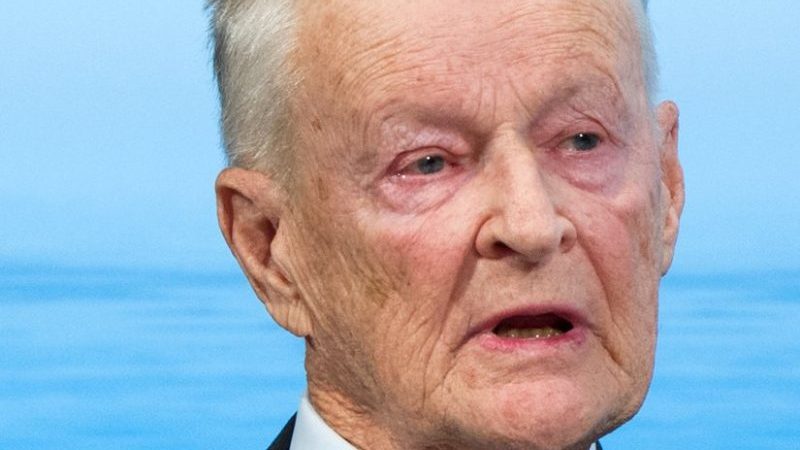
On December 30, 2008, MSNBC’s popular program Morning Joe invited seasoned geopolitical thinker Zbigniew Brzezinski for an interview. This made sense. After eight years of “war president” George W Bush, the world wondered how a new Democratic administration led by the “peace candidate” Barack Obama might handle some of the literally burning global issues.
As it underwent a financial meltdown that left the economy reeling, the US was still waging frustrating war in Afghanistan and Iraq. Who better than the author of the 1997 book The Grand Chessboard to clarify the new direction Obama might take after eight years of disastrous foreign policy under George W Bush?
To Scarborough’s surprise, the conversation quickly turned out to be slightly embarrassing. You can watch it here:
The discussion began with what even today every mainstream media commentator takes to be codified wisdom about Israel’s sacred right to self-defense when he solemnly asked his interlocutor, “What do we do the next time Israel is attacked from an outside force? What do we do at that point?”
Brzezinski brutally responded that it was “the wrong question.” Scarborough seemed shocked by his guest’s impertinence. Speaking from the position of regal authority that hosting a news show on MSNBC confers on him, Scarborough shot back by denying it was the wrong question before explaining what he believed to be the real problem: “We never get the condemnation of Hamas or Hezbollah. It’s always after Israel responds to defending itself.”
Brzezinski calmly responded, explaining that the conflict had “lasted for years and the United States has been largely passive, so the right question is not: ‘What do we do when things break down?’ The right question is: ‘What do we do to avoid a breakdown by being engaged seriously in the peace process.’”
Brzezinski then went on to explain that the failure to do so led to “the mess” that had become visible in 2009. This was too much for Scarborough, who had served as a Republican member of Congress from 1995 to 2001. Taking offense at the suggestion that Republicans had created the mess, he set the rules on what was and was not permitted. “You cannot blame what’s going on in Israel on the Bush administration.”
Unperturbed, the knowledgeable expert remained calm but couldn’t hold back. “You know, you have such a stunningly superficial knowledge of what went on that it’s almost embarrassing to listen to you.”
Today’s Weekly Devil’s Dictionary definition:
Stunningly superficial knowledge:
The entire set of talking points adopted and enforced by members of the corporate media in the United States, who consider it their duty to repeat those talking points endlessly, even in the face of visible facts on the ground or the honest discourse of truly informed observers that incontrovertibly reveal them to be false.
Contextual note
This interview contains a curious tragi-comic twist that could not have been apparent at the time. In early 2017, eight years later, Scarborough became secretly engaged to his co-host Mika Brzezinski, the diplomat’s daughter. In that same month of May, Zbigniew died. Six months later, the marriage took place. At the time of the interview, Mika’s father could not have guessed that he was insulting the man destined to become his future son-in-law. At the time, Joe was happily married, at least until his divorce in 2013.
This interview took place in the transitional period between Obama’s election and his inauguration. The “Gaza war” of 2008 had begun three days earlier, a three-week war that resulted in the death of 1,400 Gazans, 13 Israelis and the destruction of 46,000 homes, leaving 100,000 homeless.
The media at the time treated the exchange between Joe and Zbigniew as at best an amusing anecdote. It takes on vastly more significance today with a new war in Gaza threatens to trigger a new world war. Fifteen years on, it tells us more about how the media has evolved, or rather failed to evolve since then. This time, Joe’s father-in-law cannot be present to highlight the media’s — and not just Joe’s — stunning superficiality.
Half a century ago, in the age of Walter Cronkite on CBS and Huntley and Brinkley on NBC, a news media figure lecturing an expert would have been unthinkable. Those journalists treated the news with humility. They sought to hear what the experts they interviewed would say. They refrained from spouting the government’s slogans at them.
Today’s news hosts and interviewers tend to be eponymous stars of shows highlighting their names. Whether its Morning Joe, Piers Morgan, Rachel Maddow or Tucker Carlson, these personalities see their mission as converting the audience to their position on politics, which generally represents somebody’s party line. Brzezinski was right to call Scarborough’s lazy thinking the repetition of “slogans.”
Fifteen years later, Scarborough continues to demonstrate his allergy to any form of critical thinking. On May 12, he posted on X a piece of obvious fake news that was quickly debunked. Scarborough has still not retracted it. The tweet reads: “UN halves estimates of women and children killed in Gaza. Apparently, the Hamas figures repeatedly cited are false.”
Scarborough’s figures, not the UN’s, are false. “Superficial” would be too kind an epithet to use today.
Historical note
Zbigniew Brzezinski counseled President Lyndon Johnson on foreign policy between 1966 and 1968. He earned his media stripes and became known to the public eight years later when Jimmy Carter made him the his foreign policy wizard. He thus replaced Richard Nixon’s and then Gerald Ford’s Henry Kissinger as the “international brain” of the White House. The 1970s were that curious decade in which presidents felt obliged to feature a powerful thinker in their team to justify their foreign policy. Nixon had Kissinger; Carter chose Brzezinski.
Both achieved stardom thanks to their deep knowledge and strategic thinking. That doesn’t mean the policies they promoted were destined to prove more effective. They were simply better thought-out.
As a number of his obituaries last November revealed, many serious commentators today consider Kissinger an unmitigated war criminal. Brzezinski famously promoted the idea of the “Afghan trap” that pushed the US to support Afghan mujahideen fighters against the Soviets after their invasion. In retrospect, he was playing the sorcerer’s apprentice. That policy spawned the rise of Islamic fundamentalism as a powerful and uncontrollable political force throughout the Middle East that also spilled into Europe.
Kissinger’s promotion of the “peace process” in the Middle East may have had similar effects, leading to today’s genocidal campaign and existential crisis. “The genius of [Kissinger’s] peace process,” according to US diplomat, Martin S. Indyk, “is that it wasn’t designed to produce peace, but it was designed to produce order.” The order it produced “made it possible for Israel to buy time,” which ultimately nourished the hegemonic obsession of Israel’s leaders.
Our civilization has shown a talent for letting local problems, deemed to require hegemonic leadership, spin out of control. We see it in Ukraine. We see it again in Gaza. It’s time to begin asking itself a deeply embarrassing question about how we frame the problems we seek to address. Are subtle thinkers like Brzezinski and Kissinger more dangerous than stunningly superficial media figures like Joe Scarborough? If Morning Joe, Rachel Maddow and Piers Morgan were the voices guiding our leaders, would the outcomes be better?
In reality, the “great strategists” and the media people are playing out their respective roles in a spectacle that not only has room for both but has found subtle ways of getting them to work side by side within the same dysfunctional system, even when they disagree. That’s because politicians manage the space between the two. Brzezinski’s explanation of the peace talks should have definitively settled the question of Yasser Arafat’s supposed “refusal” of the two-state solutions. And yet Hillary Clinton gets mountains of airtime making the same false claim as Scarborough even today.
At the end of the 2008 interview, Scarborough sarcastically “admitted” that he was “listening to the mainstream media too much.” He had cited The New York Times, The Washington Post and Foreign Affairs as his sources that he would now have to abandon.
Would he had actually done so 15 years ago!
*[In the age of Oscar Wilde and Mark Twain, another American wit, the journalist Ambrose Bierce produced a series of satirical definitions of commonly used terms, throwing light on their hidden meanings in real discourse. Bierce eventually collected and published them as a book, The Devil’s Dictionary, in 1911. We have shamelessly appropriated his title in the interest of continuing his wholesome pedagogical effort to enlighten generations of readers of the news. Read more of Fair Observer Devil’s Dictionary.]
The views expressed in this article are the author’s own and do not necessarily reflect Fair Observer’s editorial policy.
- About the author: Peter Isackson is Fair Observer’s chief strategy officer . He is an author and media producer who has worked on ground-breaking projects focused on innovative learning technology. For more than 30 years, Peter has dedicated himself to innovative publishing, coaching, consulting and learning management. As a publisher, he has developed collaborative methods and revolutionary software tools based on non-linear logic for soft skills training. He has authored, produced and published numerous multimedia and e-learning products and partnered with major organizations such as the BBC, Heinemann and Macmillan.
- Source: This article was published at Fair Obvserver
Japan’s recovery from the devastation of World War II was assisted by another war. Japanese manufacturers and the service industries around military bases received a big lift when they helped U.S. forces during the Korean War.
A little over a decade later, South Korea got a similar boost when its manufacturers helped the U.S. military during the Vietnam War.
Both countries also followed a model of state-led industrialization that the United States would probably not have tolerated a generation later during the heyday of stricter trade rules and neoliberal investment regimes. The U.S. need for economically strong non-communist allies in the region, during and after the Korean and Vietnam Wars, also contributed to this tolerance for the “unorthodox” economic strategies of Japan and South Korea.
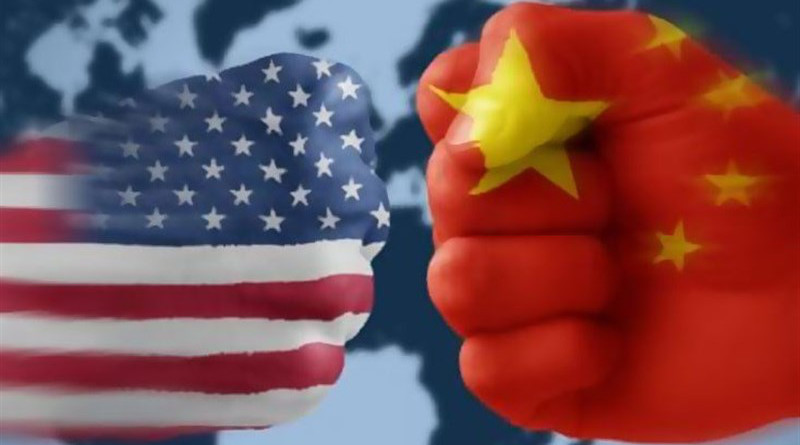
China is already the world’s second biggest economy. It doesn’t need a boost from the Ukraine war, but it is getting one anyway. Chinese exports to Russia, whose trade with many countries has been reduced by international sanctions, surged by nearly 70 percent in the first 11 months of last year. Chinese combustion-engine cars, which are no longer as popular among Chinese consumers, have now monopolized the Russian market, and China’s factories are benefiting from the cheap energy that Russia has difficulty selling elsewhere.
Meanwhile, China continues to engage in a state-led industrialization in which it chooses to subsidize winners (renewable energy) and withdraw support from losers (combustion-engine cars) in the marketplace.
The Biden administration is not happy with China’s stronger economic relationship with Russia or its economic strategy. The president recently announced additional tariffs against Chinese products, including steel and aluminum. The tariffs on Chinese electric cars will increase fourfold. In his press conference, Biden said:
For years, the Chinese government has poured state money into Chinese companies across a whole range of industries: steel and aluminum, semiconductors, electric vehicles, solar panels — the industries of the future — and even critical health equipment, like gloves and masks.
China heavily subsidized all these products, pushing Chinese companies to produce far more than the rest of the world can absorb. And then dumping the excess products onto the market at unfairly low prices, driving other manufacturers around the world out of business.
This, of course, is how many other countries managed to catch up to Western economies, by defying the economic laws of comparative advantage as well as market-determined levels of supply and demand. The United States tolerated its allies breaking the rules. It has no such patience for China.
The backlash from China to the new U.S. tariffs was predictable. According to one Chinese government official, “China opposes the unilateral imposition of tariffs which violate (World Trade Organization) rules, and will take all necessary actions to protect its legitimate rights.” It is an interesting reversal of the previous positions of the two countries, with China supporting the rules-based language of “free trade” and the United States backing the more parochial language of “protectionism.”
It is also a stark reversal for Biden himself. When Donald Trump announced tariffs against China five years ago, Biden called the move “short-sighted.” There were some expectations that the incoming Biden administration would lift those sanctions because they were hurting American consumers, farmers, and workers in industries hit with Chinese counter-sanctions. But the administration did little to reverse the Trump policy toward China.
Now that it’s election season again in the United States, China has become an easy political target. Trade unions support the sanctions, and Biden needs those votes in critical swing states like Michigan and Wisconsin. Biden has also won bi-partisan praise from Congress for the sanctions.
Despite this support, the sanctions are a terrible idea.
If you’re an average U.S. citizen, the tariffs will mean higher prices not only for products from China but for anything that depends on inputs from China. Farmers will continue to find it more difficult to sell their soybeans and corn to China. Manufacturers are going to have to pay more for high-performing components like batteries.
Biden himself understands the economic logic. In 2019, he said that Trump “thinks his tariffs are paid for by China. Any beginning econ student at Iowa or Iowa State could tell you the American people are paying his tariffs.” According to one estimate, the bill to consumers for Trump’s tariffs was $48 billion, with half paid by manufacturers.
If you’re a traditional environmentalist, the sanctions are penalizing exactly the economic products you want to encourage: those relying on renewable energy. Chinese subsidies have driven down the prices of solar panels. This is good news. The United States should be cooperating with China on how to push the world away from fossil fuels. Instead, Washington is putting short-term political gain over long-term planetary survival.
Finally, if you’re worried about world peace, the tariffs are only pushing China and Russia together, making a new Cold War into a self-fulfilling prophecy.
What’s the alternative?
The Biden administration should be telling China quietly that these tariffs are just a temporary measure that will be rolled back if the Democratic candidate wins the presidential election in November. Perhaps after the election, Beijing and Washington could engage in some political theater in which the former pretends to be conciliatory and the latter reciprocates, and the two sides negotiate down their mutual tariffs.
In his second term, Biden could work with China on how to make the transition away from fossil fuels affordable for the entire world. Sure, the two countries will still disagree about much. But the mutual challenge of climate change will ensure that a Cold War doesn’t descend upon the planet.
If Trump happens to win in November, all bets are off. The Republican candidate has promised a new round of tariffs against China, which will probably be all the higher given Biden’s recent move. Trump, moreover, is still committed to extracting every last drop of oil and natural gas on his way to making America a petro-state along the lines of Russia.
The future path is clear: the state has to be involved in pushing the market toward renewable energy, whether that state is “communist” or “capitalist” or something in between. The sooner Washington and Beijing can cooperate in doing this, the better it will be for all of us.
- Source: This article was published at FPIF and originally published in Hankyoreh.
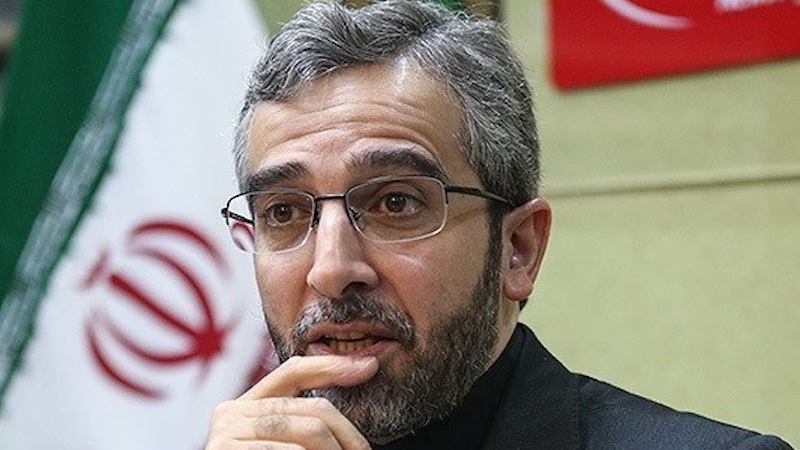
Ali Bagheri Kani played a prominent role in the negotiations with Western powers, rising to become a pillar of Iran’s foreign ministry.
Born in 1967, Ali Bagheri Kani is an Iranian politician and academic.
He served as assistant foreign minister for political affairs and his name was associated with the negotiations related to Tehran’s nuclear program, as he had led his country’s negotiating team in Vienna and a number of Arab capitals and is considered politically conservative.
Kani was an assistant to the Iranian chief negotiator Saeed Jalili. He played a prominent role in the negotiations with Western powers, rising to become a pillar of Iran’s foreign ministry.
He became a deputy foreign minister and the foreign minister in May 2024 after the death of Amir Hossein-Abdollahian in a helicopter crash on May 19.
Upbringing
Born in 1967 in the Kann district, north of the capital Tehran, Ali Bagheri Kani grew up in a conservative religious family, the son of prominent cleric Mohammad Bagher Bagheri Kani, a former member of the Assembly of Experts who was also a member of Iran’s parliament.
His uncle is Mohammad Reza Mahdavi Kani, Iran’s former prime minister, who headed the Assembly of Experts and was one of the most prominent conservative revolutionary figures.
His brother, Mesbah al-Huda Bagheri Kani, the son-in-law of Supreme Leader Ali Khamenei, married Hoda Khamenei and is considered one of the trusted figures in the Islamic Republic of Iran.
Kani married a relative in 1997 and has two daughters.
Education
Kani holds a PhD in Islamic Knowledge and Economics from Imam Sadiq University and is a student of his father, who was a professor at the same university, which was run by his uncle Mohammad Reza Mahdavi Kani.
Responsibilities
Bagheri Kani began his political career in 1989, when he was in his twenties, working in the General Secretariat of the Supreme National Security Council of Iran.
In 1994, he moved to the Iranian Radio and Television Corporation as a political analyst in the newsroom of the Iranian Radio, and spent only several months in this institution.
He officially began his diplomatic activity in the Department of Arab and African Affairs at the Iranian Ministry of Foreign Affairs, and then in the Department of European Affairs in 2005.
After the appointment of conservative politician Saeed Jalili as secretary of Iran’s National Security Council in 2007, Bagheri Kani moved alongside his old friend and served as assistant secretary of the council. He also became the second person in his country’s negotiating team on the nuclear file.
Nuclear Talks
The nuclear negotiations led by Saeed Jalili and Ali Bagheri Kani in 2013 under former President Mahmoud Ahmadinejad ended without an agreement.
After Iran’s Supreme Leader appointed President Ebrahim Raisi as head of the judiciary in 2019, Ali Bagheri Kani became close to him and appointed him deputy head of the judiciary for international affairs.
He also appointed him secretary of human rights, replacing Mohammad Javad Larijani, who had held the post for 14 years. The Secretariat for Human Rights is the diplomatic organ of the judiciary.
Minister of Foreign Affairs
Foreign Minister Hossein Amir-Abdollahian appointed him as his assistant in political affairs, succeeding Abbas Araqchi in 2021 after Ebrahim Raisi’s victory in the presidential election.
He rose through the ranks of responsibility until he became deputy foreign minister.
He was appointed a foreign minister to succeed Amir-Abdollahian after the latter died along with Raisi and other figures in a helicopter crash on May 19, 2024, in Iran’s northwestern province of East Azerbaijan.