
Georgian Military Police Department delegation visits Azerbaijan (PHOTO) Trend News Agency
Day: May 23, 2024
By Eldar Mamedov
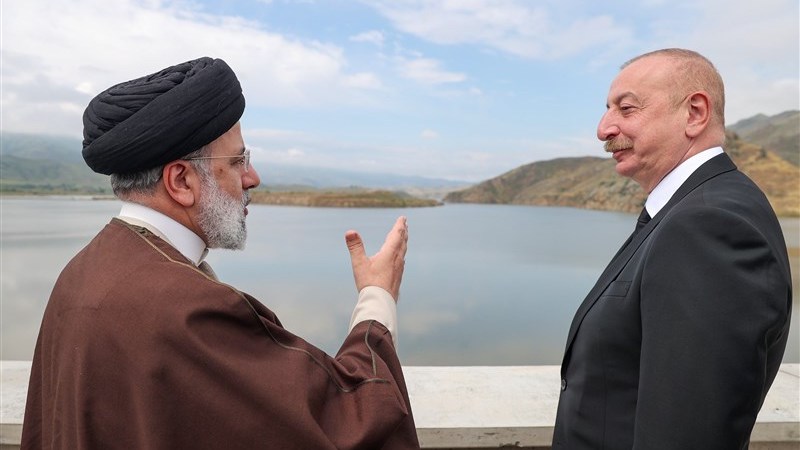
(Eurasianet) — Near the end of his fateful meeting with Ebrahim Raisi at the Iranian-Azerbaijani border, Azerbaijan’s president, Ilham Aliyev, touted the strength of the bilateral relationship.
“There will be many more meetings in the future,” Aliyev said, referring to his discussions with Raisi. “Iran-Azerbaijan unity and friendship is unshakable. No one can drive a wedge between us.”
There was no way that Aliyev could have known at the time that the Iranian president would be dead in a matter of hours, killed, along with others, including Iran’s foreign minister, when the helicopter they departed in crashed into a mountain not far from the meeting site. Raisi’s untimely death, however, will have little impact on the course of Iranian-Azerbaijani relations, or on Tehran’s general geopolitical approach in the South Caucasus.
The Raisi-Aliyev meeting highlighted Tehran’s and Baku’s mutual interest in improving bilateral ties. At the same time, it revealed roadblocks that continue to act as an irritant, specifically Azerbaijan’s strong strategic connection to Israel.
The two presidents traveled to the border area ostensibly to inaugurate a hydropower facility on the Araz River, which forms the frontier between the two countries. The facility, dubbed Giz Galasi, is the first of several such projects to start operating on the river with the dual aim of generating electricity for both countries, and facilitating irrigation for agriculture. “Such a beautiful project will increase the welfare and employment of our people and therefore will be the next step towards success,” Aliyev said in a speech at the May 19 ceremony. “I am sure that there will be many similar joint projects in the future.”
Aliyev outlined big plans for the areas just north of the ArazRiver, saying that they would become key components of a “green energy” zone that includes two 280-megawatt hydropower plants. The power generated by wind, water and sun in Azerbaijan’s green zone will “benefit the entire region,” Aliyev announced.
As Aliyev repeatedly underscored in his speech, trade and economics are the drivers of the expansion of bilateral Iranian-Azerbaijani ties. Iran features prominently in Baku’s plans to serve as a key trade hub for both East-West and North-South trade.
The May 19 meeting was a significant moment for Iran and Azerbaijan, a time when both countries signaled that they had moved past the not-so-subtle rancor that had marked bilateral relations in recent years and cemented a new pragmatism in place.
The Araz River ceremony capped months of work to finalize a variety of projects relating to power generation and connectivity, and, more broadly, to reset relations. Iran viewed Azerbaijan’s reconquest of Nagorno-Karabakh from 2020-23 as detrimental to its interests, given Baku’s close relationships with both Israel and Turkey. Ultimately, it appears policymakers in Tehran opted to set aside their concerns and pursue a closer relationship with Baku. While Raisi’s death may cause a behind-the-scenes succession struggle in Tehran that could have unsettling side effects in other areas, it is not expected to cause any significant change in Iran’s pragmatic approach towards Baku.
The Raisi-Aliyev meeting may have showcased mutual pragmatism, but it also provided important clues that the fundamental nature of Azerbaijan’s foreign policy will remain unchanged. Aliyev’s remarks on May 19 provided no indication that Azerbaijan is willing to downgrade its ties with Iran’s arch-enemy Israel.
In his speech at the ArazRiver ceremony, Raisi hinted at Tehran’s lingering vexation over Baku’s ties to Israel, making what can be seen as an aspirational plea for Azerbaijan to rethink the relationship.
“We would very much like to deepen cooperation in international organizations and show solidarity on some special issues, including the issue of Palestine,” Azerbaijan’s presidential website quoted Raisi as saying. “We, the people of Azerbaijan and Iran, do not hesitate in supporting the Palestinian people and the people of Gaza.”
Saeed Azimi, an observer of Iranian affairs, hinted that Raisi’s comment on Gaza could also be seen as indirect criticism of Aliyev’s close relations with Israel. The depth of Iran’s concerns over Azerbaijani-Israeli ties was also seen in comments by a prominent conservative commentator, Foad Izadi, who suggested that possible Israeli foul play should not be dismissed in the helicopter crash.
Azerbaijan appears zealously determined to preserve its strategic autonomy, taking advantage of the fact that the country is seen as a lynchpin in all sorts of trade and energy networks involving the big global and regional players: the United States, European Union, China, Russia and Iran. Such a fortuitous geopolitical position gives Azerbaijan the flexibility to resist pressure exerted by any one state. Baku is willing to buck even its closest ally, Turkey, on occasion. Azerbaijan so far has resisted joining a Turkish trade embargo on Israel over the ongoing fighting in Gaza. Azeri oil bound for Israel continues to ship out of Turkish ports, according to media reports.
It seems Iran is willing to tolerate Azerbaijan’s determination to act as a geopolitical wildcard in order to achieve its goal of developing the North-South trade corridor as an economic lifeline.
- Eldar Mamedov is a Brussels-based foreign policy expert
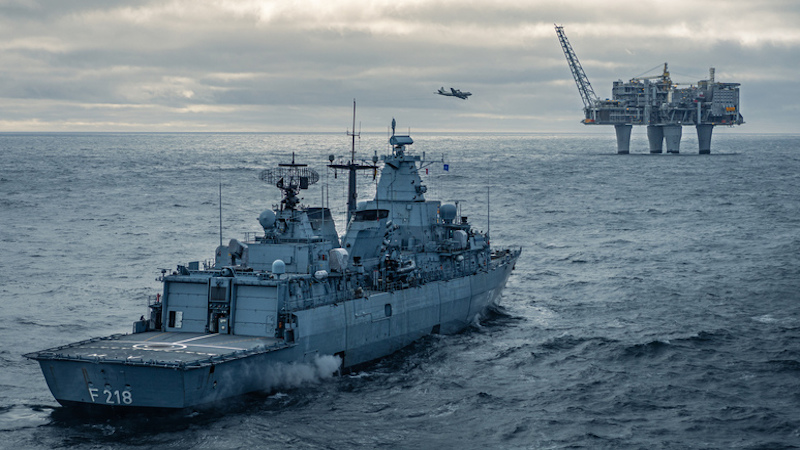
Leading experts from across the Alliance met at NATO Headquarters on Thursday (23 May 2024) for the first meeting of NATO’s new Critical Undersea Infrastructure Network. With rising challenges to undersea infrastructure, the Alliance is putting in place new tools to enhance the security of undersea cables and pipelines and to monitor potential threats.
NATO has warned for years about the security of undersea cables and Allies increased naval patrols near critical subsea infrastructure following recent incidents in the Baltic Sea. Secretary General Jens Stoltenberg, who opened the conference, said Allies must continue to step up.
“The increasing dependency of our societies on undersea infrastructure means we need to do more to enhance their security,” said Mr Stoltenberg. “NATO is well-placed to take on a greater role given our Allies’ unique military capabilities, vast intelligence network, and operational expertise,” he said, underlining that Russia is carrying out an intensifying hybrid campaign against Allies.
At the meeting, participants discussed ways to enhance information-sharing and situational awareness, as well as ways to deter and defend against threats to undersea infrastructure. They talked about using innovative technologies to enhance infrastructure security and resilience, including for the growing number of offshore wind farms that underpin the energy transition. The Alliance also continues to promote technological innovation – such as sea drones, new sensors and the use of AI – to better detect suspicious activity.
The one-day meeting follows the decision by NATO Defence Ministers in February 2024 to stand up the Critical Undersea Infrastructure Network. Allies are also establishing a Maritime Centre for the Security of Critical Undersea Infrastructure within NATO’s Maritime Command (MARCOM) in Northwood, UK. Thursday’s meeting was chaired by David van Weel, Assistant Secretary General for Innovation, Hybrid and Cyber. Industry representatives, including energy operators, also attended.
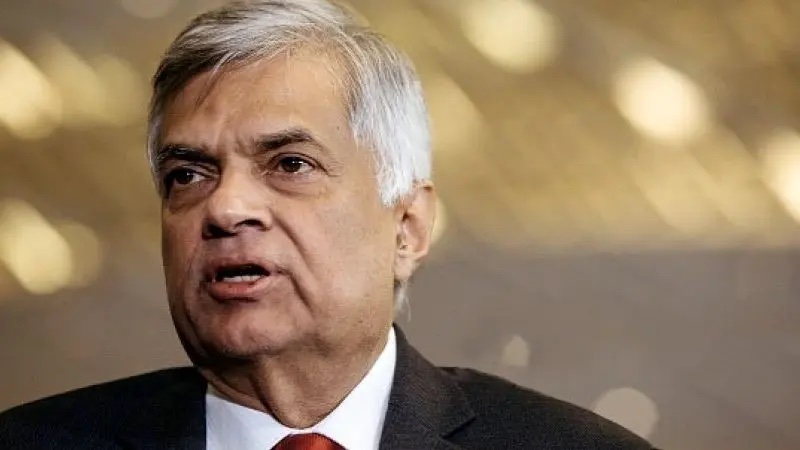
Sri Lanka’s President Ranil Wickremesinghe underscored the significance of Theravada Buddhism in addressing the challenges posed by a world rapidly advancing in science and technology. Speaking at the State Vesak Ceremony held at the Dharmaraja Piriven Viharaya in Matale virtually on Thursday, President Wickremesinghe stressed the importance of preserving the true essence of Theravada Buddhism and sharing its wisdom with the world.
Although President Wickremesinghe was scheduled to participate in the State Vesak Ceremony in person, adverse weather conditions prevented his attendance. Instead, he joined the State Vesak Ceremony virtually and extended his wishes to all Buddhists for a meaningful Vesak celebration.
“Today, the world is progressively moving away from superstition, directing increased focus towards science. The advent of new technologies is fundamentally reshaping our way of life, which has remained relatively unchanged for centuries. Notably, significant advancements have occurred in the medical and technological sectors. However, alongside the development of new knowledge about the cosmos and the rapid progress in artificial intelligence technology, we are confronted with several emerging challenges.” Wickremesinghe said.
Wickremesinghe continued: “Indeed, for those who adhere to Theravada Buddhism and comprehend its authentic essence, these challenges may not pose insurmountable obstacles. Theravada Buddhism offers a framework through which such issues can be addressed and resolved. Therefore, it is imperative that we concentrate our efforts on safeguarding and perpetuating the genuine spirit of Theravada Buddhism. Wishing everyone a joyous and meaningful Vesak celebration.”
The State Vesak Festival this year is being held centring the Matale district, under the theme “Attano wa avekkhyeya kathani akatani cha” (Let’s Focus on What We Have Done, Not What Others Have Done). The period from May 21st to 27th has been declared Vesak Week. This year’s festival is particularly special as Buddhist monks from 12 countries have arrived to participate in the State Vesak Festival, emphasizing the global significance and unity in celebrating this sacred event.
During the ceremony, Pooja Bhumi Scroll Memorandums were presented and gifts were exchanged by foreign delegations. Additionally, several significant actions were undertaken, including the issuance of a Vesak commemorative stamp, providing grants for temple development, providing grants from the Buddhasasana Fund, providing provision letters for Dhamma schools, symbolic distribution of book sets for lay monks and the distribution of Budu Puth Maapiya grant cheques.
A total of Rs. 22 million has been allocated for the development of 22 rural Buddhist temples in the Matale district. Additionally, Rs. 2.6 million has been earmarked for the development of 5 temples where programs are held in conjunction with the State Vesak festival. Another Rs. 0.4 million has been allocated for the reconstruction of 3 temples affected by disasters. Furthermore, Rs. 5 million has been dedicated to the development of 12 Dhamma schools. Under the Buddhasasana Fund, Rs. 32 million has been allotted to provide sanitary facilities for 32 challenging temples.
Simultaneously, development efforts for over 25 temples in the district have commenced with labour contributions from the Armed Forces and the Civil Defence Force.
The State Vesak festival has been orchestrated by the Samastha Lanka Shasanarakshaka Mandalaya, the Ministry of Buddhasasana, Religious and Cultural Affairs, the Department of Buddhist Affairs and the Matale District Secretariat.