Categories
South Caucasus News

‘Deegeen Arax’: A Tribute to a Centenarian


Catherine Yesayan (right) with Deegeen Arax (center)

BY CATHERINE YESAYAN

It doesn’t happen often that someone dear to you turns 100. I was invited to a celebration of life of a dear friend’s mom who turned 100 on December 12, 2023. The celebratory event was postponed a few tines due to unforeseen circumstances. Two months later, however, we finally celebrated “Deegeen” Arax Aslanian’s—our centenarian—birthday on February 17 at Phoenicia Restaurant in Glendale.

In attendance were nearly 100 guests. As I entered the banquet hall and made myself comfortable at my assigned table, I noticed that old family photos were being screened on two different monitors. Then, I saw our centenarian enter the hall, dressed in a formal dark blue outfit. Her hair was coifed in her natural white—very elegant for the occasion.

Deegeen Arax at her 100th birthday

After dinner was served, and a few speeches delivered, Deegeen Arax announced that she wanted to recite poetry. To everyone’s amazement, including myself, she shared a few poems in Armenian, and one in Farsi.

To tell you the truth, I was dumbfounded to hear her recite all of those poems. I had known Deegeen Arax for over half a century, yet I never knew that she had a special aptitude for poetry. I asked her daughter if this was preplanned, to which she said, “Last year, at her 99th birthday, she expressed interest to recite poems, and she did.” This year, her daughter asked if she’d like to, again, recite a few poems, and she happily said, “Yes.”

The first two Armenian poems wee heard are among the most popular in our literature. First, she recited Yeghishe Charents’ “Yes Im Anush Hayastani,” followed by “Tears of the Arax River,” which is a lament about the suffering of the Armenian people. These two poems were followed by another Armenian poem, which was unfamiliar to me, and then one in Farsi.

After listening to Deegeen Arax recite these poems from memory, I began scratching my head. I wanted to know how she was able to remember all what I had heard. Was that an innate talent? I believe it is, as it all seemed to come so naturally.

I asked Deegeen Arax if I could meet with her to learn more about this hidden talent of hers. However, after the birthday celebration, she felt quite exhausted for a few weeks. Two months later, I finally had the chance to sit with her for a chat.

I had a pressing question: I wanted to know how, at her age, she could recite all of those poems from memory. She explained that she had always had a special interest in learning poems.

Deegeen Arax in the 1950s

Deegeen Arax told me that when her kids were young and learning poems at their elementary school, she often repeated the poems with them, and can remember them still, today. She then recited two of her favorite poems, which she had learned with her kids, and my jaw dropped. Both poems were unfamiliar to me, and she remembered them word for word!

My next question was about these two poems. First, she told me the story about the Armenian poem written by Aram Garoné. Deegeen Arax knew Garoné personally, as he was principal of her elementary school years prior.

The poem, which is over-two-minutes long, is a conversation between the poet and Omar Khayam—an iconic Persian poet, who died 900 years ago.

The poet tells Khayam to rise from his grave and notice how Iran, due to efforts made by the new Shah, has transformed into a better place. 

Here, I will provide a brief history of Iran, in order to better understand the poem. In 1789, a new dynasty, called Qajar, was established in Iran, which turned the country into shambles. The rule of the Qajar dynasty ended when, in 1925, Reza Shah, a former brigadier-general, was assigned as the new Shah and began the modernizing the country. 

The final poem she recited was in Farsi, and, yet again, one I was hearing for the first time. The poem advised the listener that it’s better to have an enlightened foe than a dumb, brainless friend.

During my visit with Deegeen Arax, I learned that she was the oldest of the three, and was born on December 12, 1923 in the historic City of Yazd, Iran. Marco Polo—an Italian explorer and writer of 14th century—once called Yazd the “Nobel city of Yazd.”

There were not many Armenians in Yazd. Yet, her family was there because her father was the director of the city’s telephone and telegraph company. 

Deegeen Arax, her husband, and their two children in the 1950s

After Deegeen Arax was born, her family moved to Shiraz and then to Isfahan, where they had two other girls. She attended an Armenian elementary school, called Armenian School of Kermanshah, in Kermanshah, in western Iran, where she was a studios student.

Soon after graduating from elementary school, her family moved to Tehran, where she attended a school run by American Presbyterians, called Nour-Bakhsh, on Ghavam Al Saltaneh Street.

Sometime around 1936 and 1937, a decree was issued to close all Armenian and foreign language schools in Iran. Although the new law was only in effect for a few years, Deegeen Arax was unable to continue her studies at an Armenian school as a result.. 

While Deegeen Arax was still enrolled at the elementary school in Kermanshah, Aslan Aslanian, who was eleven years her senior, had set his eyes on her, telling his mother that he would one day marry her. When Deegeen Arax completed 9th grade, Aslan, who was an engineer at the time, proposed and they were soon married.  

The newlyweds moved to Qazvin, which was about one-and-half hours south of Tehran, due to Aslan’s job.

Deegeen Arax says that, in Qazvin, the Armenian school had a women’s committee that organized small-scale events. She often attended these gatherings with her husband, and would use them as opportunities to recite poetry.

Deegeen Arax surrounded by love letters written to her by her husband, Aslan

A love letter, in the form of a poem, from Aslan to his wife

While we were chatting, Deegeen Arax revealed that her husband had written her several love letters, in poetic form, before they were married. Coincidentally she had kept the letters and, with a little help from her daughter, was able to find them. She also divulged that her brother-in-law, “Ashot Aslan,” was a well-known poet.

Aslan provided Deegeen Arax, and their three children, with a happy and comfortable life. Although they started their life in Qazvin, they later moved back to Tehran, where Aslan was hired as a manager at the National Iranian Oil company. They stayed in Tehran until the Islamic Revolution, after which they left for the United States and made their new home in Glendale, California. After 66 years of marriage, Aslan died in 2006, He was 93.

“My father and mother’s relationship was truly based on a love story. My dad adored her and she did the same,” said their daughter.

Catherine Yesayan is a regular contributor to Asbarez, with her columns appearing under the “Community Links” heading. She can be reached at cyesayan@gmail.com.

Categories
South Caucasus News

Central Bank of Armenia: exchange rates and prices of precious metals – 23-05-24 – ARMENPRESS


Central Bank of Armenia: exchange rates and prices of precious metals – 23-05-24  ARMENPRESS

Categories
South Caucasus News

Rustam Badasyan and Vassilis Maragos toured the Margara checkpoint – ARMENPRESS


Rustam Badasyan and Vassilis Maragos toured the Margara checkpoint  ARMENPRESS

Categories
South Caucasus News

AP Headline News – May 23 2024 16:00 (EDT)


28013281


Categories
South Caucasus News

AP Headline News – May 23 2024 15:00 (EDT)


28013281


Categories
South Caucasus News

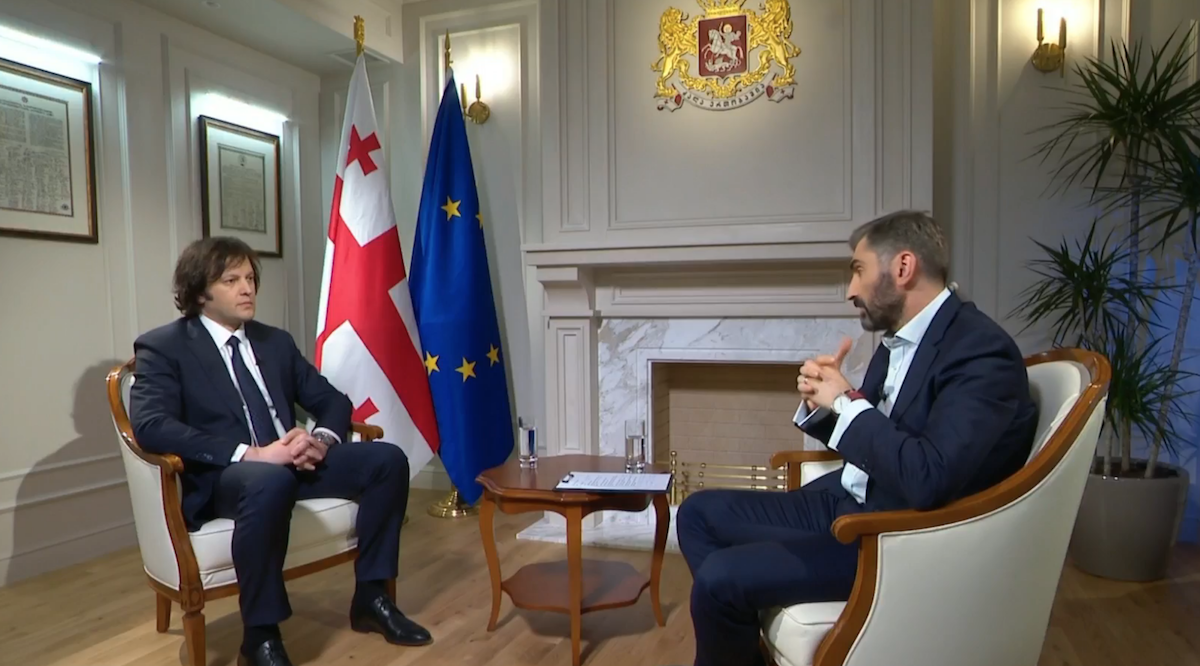
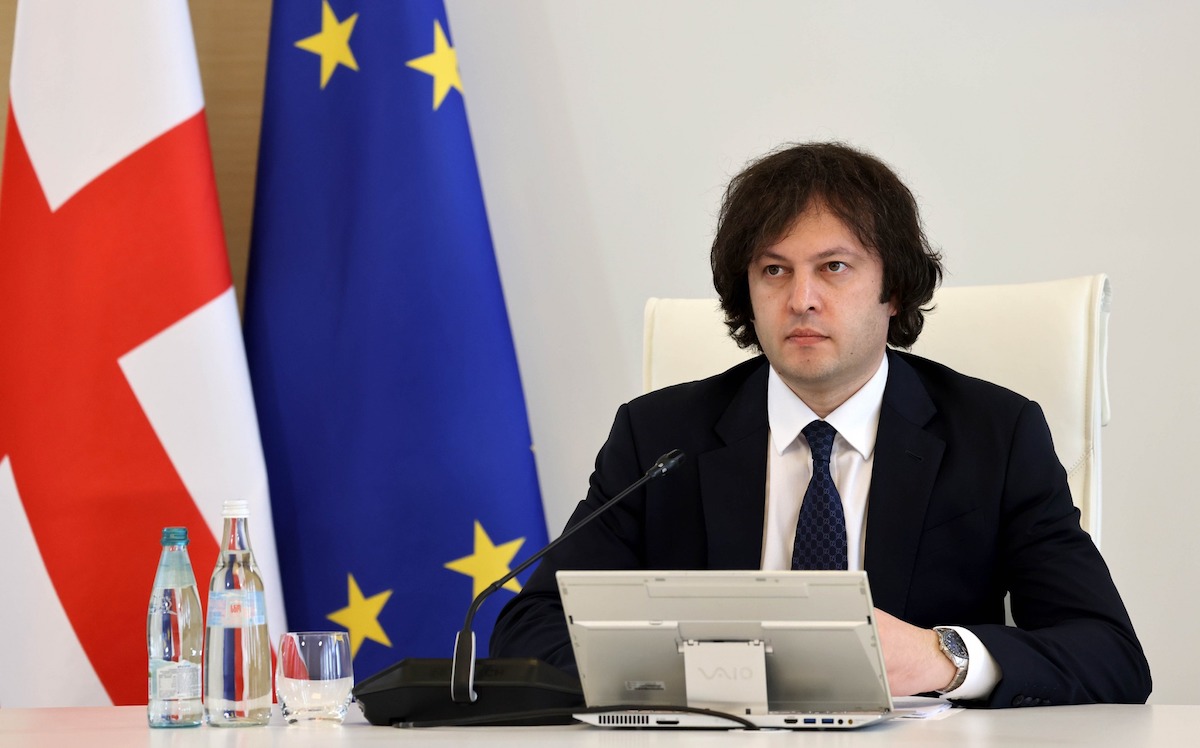
Georgian Prime Minister claims EU Commissioner threatened him with physical violence


Georgian PM accused the European Commissioner of threats

Georgian Prime Minister Irakli Kobakhidze claims an EU Commissioner threatened him with physical violence in a phone conversation, citing the recent assassination attempt on Slovakian Prime Minister Robert Fico.

Specifically, in the conversation, the EU Commissioner listed a series of measures that Western politicians might take after overcoming the veto on the transparency law [on foreign influence], and while listing these measures, he mentioned: ‘You saw what happened to Fico, and you should be very careful,‘” Kobakhidze recounted.

The assassination attempt on Robert Fico occurred on May 15. Juraj Cintula, a 71-year-old writer, fired several shots at him, but the Prime Minister survived. Fico has frequently criticized NATO and Western policies towards Ukraine, asserting that Slovakia would not ratify documents for Ukraine’s accession to NATO.

Society is watching the developments around the transparency law and sees that several high-ranking foreign politicians do not shy away from openly blackmailing the Georgian people and their elected government.

We have long grown accustomed to such insulting blackmail, and it has essentially lost its relevance for both society and the authorities,” says Irakli Kobakhidze.

He said the threat made in the conversation with the EU Commissioner shocked him.

Kobakhidze once again mentioned the Global Party of War—a mysterious organization that, according to the Georgian government, aims to prolong the war in Ukraine and spread it to other countries.

I want to emphasize that according to preliminary information, the intelligence services of one of the countries that are particularly closely linked to the Global War Party are behind the attack on the Slovak Prime Minister.

The parallel drawn with the attempted assassination of Robert Fitzo reminds us that in the person of the Global War Party we are dealing with an extremely dangerous force that will do anything to bring chaos to Georgia.

But I am sure that this time their plans will not succeed and Georgia will definitely preserve peace and political stability,” Kobakhidze states.

Georgian PM accused the European Commissioner of threats


Categories
South Caucasus News

ShalvaGaming: @refugee977 @SouthCaucasus cum-eatsioner gordon


cum-eatsioner gordon

— Garfield L’Zanya (@ShalvaGaming) May 23, 2024


Categories
Audio Review - South Caucasus News

Commissioner Várhelyi Denies Threatening PM Kobakhidze Over Agents’ Law


On May 23, European Commissioner for Neighbourhood and Enlargement, Olivér Várhelyi issued a statement denying accusations by Prime Minister Irakli Kobakhidze, who had stated earlier in the day that one of the EU Commissioners had “threatened” him during a phone call, reminding him of the May 15 assassination attempt on Slovak Prime Minister Robert Fico and telling him to be careful. Commissioner Várhelyi expressed “very sincere regret” that a certain part of the phone conversation with the Georgian Prime Minister “was taken out of context” and “presented to the public in a way which could give rise to a complete misinterpretation of the originally intended aim” of the phone call.

Commissioner Várhelyi noted that as the Commissioner responsible for Neighbourhood and Enlargement he is in regular contact with Georgian government officials, in an attempt to keep communication channels always open for “direct political exchanges”. The Commissioner noted: “In the current political situation of Georgia, I have been investing major efforts in dissuading the Georgian political leadership to adopt the Law on Transparency of Foreign Influence which can undermine Georgia’s EU path.”

The Commissioner stated: “Being fully aware of the very strong pro-EU sentiment of the Georgian society, during my phone conversation I felt the need to call the attention of the Prime Minister on the importance not to enflame further the already fragile situation by adopting this law which could lead to further polarisation and to possible uncontrolled situations on the streets of Tbilisi.  In this regard, the latest tragic event in Slovakia was made as an example and as a reference to where such high level of polarisation can lead in a society even in Europe.”

Commissioner Várhelyi emphasized his regret that part of the phone call was taken out of the context and presented to the public in a wrong way. He underlined: “I am still urging the Georgian authorities not to adopt this law. I ask this also as a well known and so far respected friend of Georgia. I am continuing to support Georgians working towards a European future.”

In his scandalous statement released earlier in the day, Prime Minister Kobakhidze emphasized that after the introduction of the Foreign Agents Law, there has been constant “open sabotage” and “blackmail” of the Georgian government by high-ranking foreign officials, which “has lost its meaning for the public and the government”. However, the Prime Minister notes that despite being used to this “blackmail”, it was still shocking for him to hear “one of the Commissioners” talking about all the measures that Western politicians might take if the veto on the Agents Law is overturned and saying “did you see what happened to Fico, you should be very careful”.

When the Prime Minister of Slovakia, who was a target of a terrorist attack a few days ago and is still undergoing treatment, is mentioned in the context of blackmail related to the Transparency Law, it is extremely disturbing to us. I would like to emphasize that according to preliminary information, the special services of one of the countries, which are particularly closely connected with the Global War Party, are behind the attack on the Prime Minister,” noted Prime Minister Kobakhidze.

PM Kobakhidze stated that he decided to share this information with Georgian society as a “preventive measure”, noting: “The parallel drawn with the attempted assassination of Robert Fico reminds us that we are dealing with an extremely dangerous force in the form of the Global War Party, which will do anything to bring chaos to Georgia. I am sure that their plans will not succeed this time either, and Georgia will definitely maintain peace and political stability, which is a necessary condition for the country’s development”.

Also Read:


Categories
South Caucasus News

Commissioner Várhelyi Denies Threatening PM Kobakhidze Over Agents’ Law


On May 23, European Commissioner for Neighbourhood and Enlargement, Olivér Várhelyi issued a statement denying accusations by Prime Minister Irakli Kobakhidze, who had stated earlier in the day that one of the EU Commissioners had “threatened” him during a phone call, reminding him of the May 15 assassination attempt on Slovak Prime Minister Robert Fico and telling him to be careful. Commissioner Várhelyi expressed “very sincere regret” that a certain part of the phone conversation with the Georgian Prime Minister “was taken out of context” and “presented to the public in a way which could give rise to a complete misinterpretation of the originally intended aim” of the phone call.

Commissioner Várhelyi noted that as the Commissioner responsible for Neighbourhood and Enlargement he is in regular contact with Georgian government officials, in an attempt to keep communication channels always open for “direct political exchanges”. The Commissioner noted: “In the current political situation of Georgia, I have been investing major efforts in dissuading the Georgian political leadership to adopt the Law on Transparency of Foreign Influence which can undermine Georgia’s EU path.”

The Commissioner stated: “Being fully aware of the very strong pro-EU sentiment of the Georgian society, during my phone conversation I felt the need to call the attention of the Prime Minister on the importance not to enflame further the already fragile situation by adopting this law which could lead to further polarisation and to possible uncontrolled situations on the streets of Tbilisi.  In this regard, the latest tragic event in Slovakia was made as an example and as a reference to where such high level of polarisation can lead in a society even in Europe.”

Commissioner Várhelyi emphasized his regret that part of the phone call was taken out of the context and presented to the public in a wrong way. He underlined: “I am still urging the Georgian authorities not to adopt this law. I ask this also as a well known and so far respected friend of Georgia. I am continuing to support Georgians working towards a European future.”

In his scandalous statement released earlier in the day, Prime Minister Kobakhidze emphasized that after the introduction of the Foreign Agents Law, there has been constant “open sabotage” and “blackmail” of the Georgian government by high-ranking foreign officials, which “has lost its meaning for the public and the government”. However, the Prime Minister notes that despite being used to this “blackmail”, it was still shocking for him to hear “one of the Commissioners” talking about all the measures that Western politicians might take if the veto on the Agents Law is overturned and saying “did you see what happened to Fico, you should be very careful”.

When the Prime Minister of Slovakia, who was a target of a terrorist attack a few days ago and is still undergoing treatment, is mentioned in the context of blackmail related to the Transparency Law, it is extremely disturbing to us. I would like to emphasize that according to preliminary information, the special services of one of the countries, which are particularly closely connected with the Global War Party, are behind the attack on the Prime Minister,” noted Prime Minister Kobakhidze.

PM Kobakhidze stated that he decided to share this information with Georgian society as a “preventive measure”, noting: “The parallel drawn with the attempted assassination of Robert Fico reminds us that we are dealing with an extremely dangerous force in the form of the Global War Party, which will do anything to bring chaos to Georgia. I am sure that their plans will not succeed this time either, and Georgia will definitely maintain peace and political stability, which is a necessary condition for the country’s development”.

Also Read:


Categories
South Caucasus News

President Aliyev: Azerbaijan working with oil-producing countries to create solidarity package prior to COP29 – News.Az


President Aliyev: Azerbaijan working with oil-producing countries to create solidarity package prior to COP29  News.Az