
https://t.co/EyVVzpXBp4
This boy looks quite Gay, by the way! Zi nu breed. #NewsAndTimes #NT #TNT #News #Times#World #USA #POTUS #DOJ #FBI #CIA #DIA #ODNI#Israel #Mossad #Netanyahu#Ukraine #NewAbwehr #OSINT#Putin #Russia #GRU #Путин, #Россия #SouthCaucasus #Bloggers…— Michael Novakhov (@mikenov) May 22, 2024
Day: May 22, 2024
Conversations with Ale-Hashemhttps://t.co/nqeMtjy6KA #NewsAndTimes #NT #TNT #News #Times#World #USA #POTUS #DOJ #FBI #CIA #DIA #ODNI#Israel #Mossad #Netanyahu#Ukraine #NewAbwehr #OSINT#Putin #Russia #GRU #Путин, #Россия #SouthCaucasus #Bloggershttps://t.co/O0SIgLVWzM… https://t.co/DEr74NfcLt
— Michael Novakhov (@mikenov) May 22, 2024
“Esmaeili himself made a second call and spoke to Ale-Hashem,
who told him: “I don’t feel good, I don’t know what happened, I don’t know where I am, I’m under trees, I don’t know, I don’t see anyone, I’m alone.” They took an ambulance with medical personnel and drove to the… pic.twitter.com/psXwRKNqxk— Michael Novakhov (@mikenov) May 22, 2024
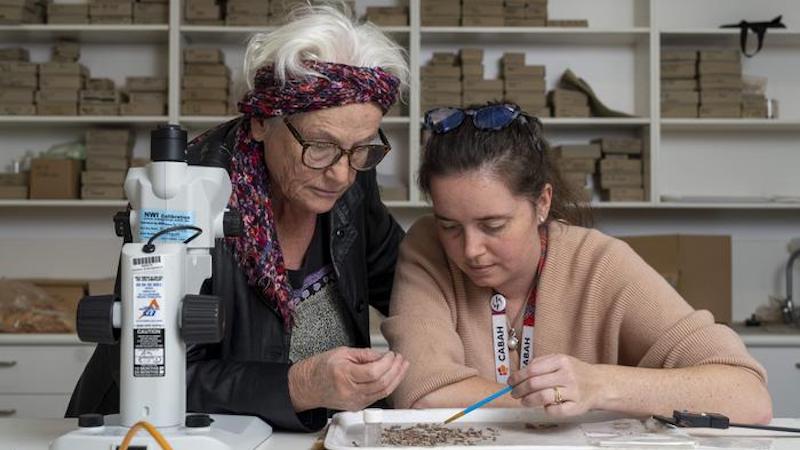
The discovery of thousands of stone artefacts and animal bones in a deep cave in Timor Island has led archaeologists to reassess the route that early humans took to reach Australia.
Researchers from The Australian National University (ANU), Flinders University, University College London (UCL) and the ARC Centre of Excellence for Australian Biodiversity and Heritage dated and analysed the artefacts and sediment at the Laili rock shelter in central-north Timor-Leste, north of Australia, to pinpoint the arrival of the colonists.
They detected a human “arrival signature” from about 44,000 years ago, suggesting there were no humans on the island prior to this time.
“Unlike other sites in the region, the Laili rock shelter preserved deep sediments dating between 59,000 and 54,000 years ago which showed no clear signs of human occupation,” Dr Shimona Kealy, from the ANU College of Asia and the Pacific, said.
“When we analyse and compare markers of human occupation from other sites across Timor-Leste and nearby Flores Island, we can confidently say humans were also absent throughout the wider region of the southern Wallacean islands.
“This is significant as these islands were most likely a gateway crossing for ancient humans making the crossing to Australia.”
Study co-author Professor Sue O’Connor, also from ANU, said Timor Island has long been considered a stepping stone island for the first human migration between mainland Southeast Asia and into Australia and New Guinea. But the new findings challenge this theory.
“The absence of humans on Timor Island earlier than at least 50,000 years ago is significant as it indicates that these early humans arrived on the island later than previously believed,” she said.
“This provides further evidence to suggest early humans were making the crossing to Australia using the stepping stone island of New Guinea, rather than Timor Island as researchers had previously suggested.
“In addition to prompting a re-evaluation of the route and timing of earliest human migration through Wallacea and into Sahul, our findings highlight the fact that migration into the islands was ongoing with occupation of the southern islands occurring thousands of years after the initial settlement of Australia.”
The sediment from the site was analysed at the Flinders Microarchaeology Laboratory by co-author Associate Professor Mike Morley.
“The shift from pre-occupation to intensive human activity at the site was very clear in the sediments,” Associate Professor Morley, from Flinders University, said.
“As soon as people arrived on the scene, their use of the cave was very intensive, with clear evidence of burning and trampling of the shelter floor underfoot.”
The research team unearthed lots of small stone tools during the excavation, as well as charred fish bones.
“We know these people specialised in making tiny stone tools, but we’re not 100 per cent sure what they were used for,” Dr Kealy said.
“Because a lot of their diet was either shellfish or small animals, you don’t really need big knives to gather that sort of food. But having small, fine tools is useful for things like stripping leaves to then weave into baskets, but also for creating wooden tools.”
Based on the sheer number of artefacts unearthed at the site, the researchers say the migration to Timor Island was a “major” one. According to the researchers, these ancient humans likely made the crossing to Timor from nearby Flores Island and mainland Southeast Asia.
“The traditional view held by researchers is that early humans who were making these significant water crossings were stumbling upon these islands by mistake, largely because it was so long ago,” Dr Kealy said.
“Their arrival on Timor was no accident. This was a major colonisation effort, evident through the sheer number of people who were making the journey.
“It’s a testament to these peoples’ level of maritime technology and the boats they created, but also their confidence and competence in braving maritime crossings.”
The research is published in Nature Communications. This work was led by Dr Ceri Shipton from UCL and also involved scientists from Griffith University and the University of Wollongong.
New research led by King’s College London has found that thousands of DNA sequences originating from ancient viral infections are expressed in the brain, with some contributing to susceptibility for psychiatric disorders such as schizophrenia, bipolar disorder, and depression.
Published in Nature Communications, the study was part-funded by the National Institute for Health and Care Research (NIHR) Maudsley Biomedical Research Centre and the US National Institutes of Health (NIH).
About eight percent of our genome is comprised of sequences called Human Endogenous Retroviruses (HERVs), which are products of ancient viral infections that occurred hundreds of thousands of years ago. Until recently, it was assumed that these ‘fossil viruses’ were simply junk DNA, with no important function in the body. However, due to advances in genomics research, scientists have now discovered where in our DNA these fossil viruses are located, enabling us to better understand when they are expressed and what functions they may have.
This new study builds upon these advances and is the first to show that a set of specific HERVs expressed in the human brain contribute to psychiatric disorder susceptibility, marking a step forward in understanding the complex genetic components that contribute to these conditions.
Dr Timothy Powell, co-senior author on the study and Senior Lecturer at the Institute of Psychiatry, Psychology & Neuroscience (IoPPN), King’s College London, said: “This study uses a novel and robust approach to assess how genetic susceptibility for psychiatric disorders imparts its effects on the expression of ancient viral sequences present in the modern human genome. Our results suggest that these viral sequences probably play a more important role in the human brain than originally thought, with specific HERV expression profiles being associated with an increased susceptibility for some psychiatric disorders”.
The study analysed data from large genetic studies involving tens of thousands of people, both with and without mental health conditions, as well as information from autopsy brain samples from 800 individuals, to explore how DNA variations linked to psychiatric disorders affect the expression of HERVs.
Although most genetic risk variants linked to psychiatric diagnoses impacted genes with well-known biological functions, the researchers found that some genetic risk variants preferentially affected the expression of HERVs. The researchers reported five robust HERV expression signatures associated with psychiatric disorders, including two HERVs that are associated with risk for schizophrenia, one associated with risk for both bipolar disorder and schizophrenia, and one associated with risk for depression.
Dr Rodrigo Duarte, first author and Research Fellow at the IoPPN, King’s College London, said: “We know that psychiatric disorders have a substantial genetic component, with many parts of the genome incrementally contributing to susceptibility. In our study, we were able to investigate parts of the genome corresponding to HERVs, which led to the identification of five sequences that are relevant to psychiatric disorders. Whilst it is not clear yet how these HERVs affect brain cells to confer this increase in risk, our findings suggest that their expression regulation is important for brain function.”
Dr Douglas Nixon, co-senior author on the study and and researcher at the Feinstein Institutes for Medical Research at Northwell Health, in the US, said: “Further research is needed to understand the exact function of most HERVs, including those identified in our study. We think that a better understanding of these ancient viruses, and the known genes implicated in psychiatric disorders, have the potential to revolutionise mental health research and lead to novel ways to treat or diagnose these conditions”.
https://t.co/GZycZalZlO
Deep and penetrating theory.
Mossad, it’s time to confess! #NewsAndTimes #NT #TNT #News #Times#World #USA #POTUS #DOJ #FBI #CIA #DIA #ODNI#Israel #Mossad #Netanyahu#Ukraine #NewAbwehr #OSINT#Putin #Russia #GRU #Путин, #Россия #SouthCaucasus…— Michael Novakhov (@mikenov) May 22, 2024
https://t.co/EyVVzpXBp4
This boy looks quite Gay, by the way! Zi nu breed. #NewsAndTimes #NT #TNT #News #Times#World #USA #POTUS #DOJ #FBI #CIA #DIA #ODNI#Israel #Mossad #Netanyahu#Ukraine #NewAbwehr #OSINT#Putin #Russia #GRU #Путин, #Россия #SouthCaucasus #Bloggers…— Michael Novakhov (@mikenov) May 22, 2024
Conversations with Ale-Hashemhttps://t.co/nqeMtjy6KA #NewsAndTimes #NT #TNT #News #Times#World #USA #POTUS #DOJ #FBI #CIA #DIA #ODNI#Israel #Mossad #Netanyahu#Ukraine #NewAbwehr #OSINT#Putin #Russia #GRU #Путин, #Россия #SouthCaucasus #Bloggershttps://t.co/O0SIgLVWzM… https://t.co/DEr74NfcLt
— Michael Novakhov (@mikenov) May 22, 2024
Esmaeili and Ale-Hashemhttps://t.co/nqeMtjy6KA #NewsAndTimes #NT #TNT #News #Times#World #USA #POTUS #DOJ #FBI #CIA #DIA #ODNI#Israel #Mossad #Netanyahu#Ukraine #NewAbwehr #OSINT#Putin #Russia #GRU #Путин, #Россия #SouthCaucasus #Bloggershttps://t.co/O0SIgLVWzM… https://t.co/DEr74NfcLt
— Michael Novakhov (@mikenov) May 22, 2024
“Esmaeili himself made a second call and spoke to Ale-Hashem,
who told him: “I don’t feel good, I don’t know what happened, I don’t know where I am, I’m under trees, I don’t know, I don’t see anyone, I’m alone.” They took an ambulance with medical personnel and drove to the… pic.twitter.com/nrJUGfR7XY— Michael Novakhov (@mikenov) May 22, 2024